
Continued from part 1, part 2, part 3, and part 4.
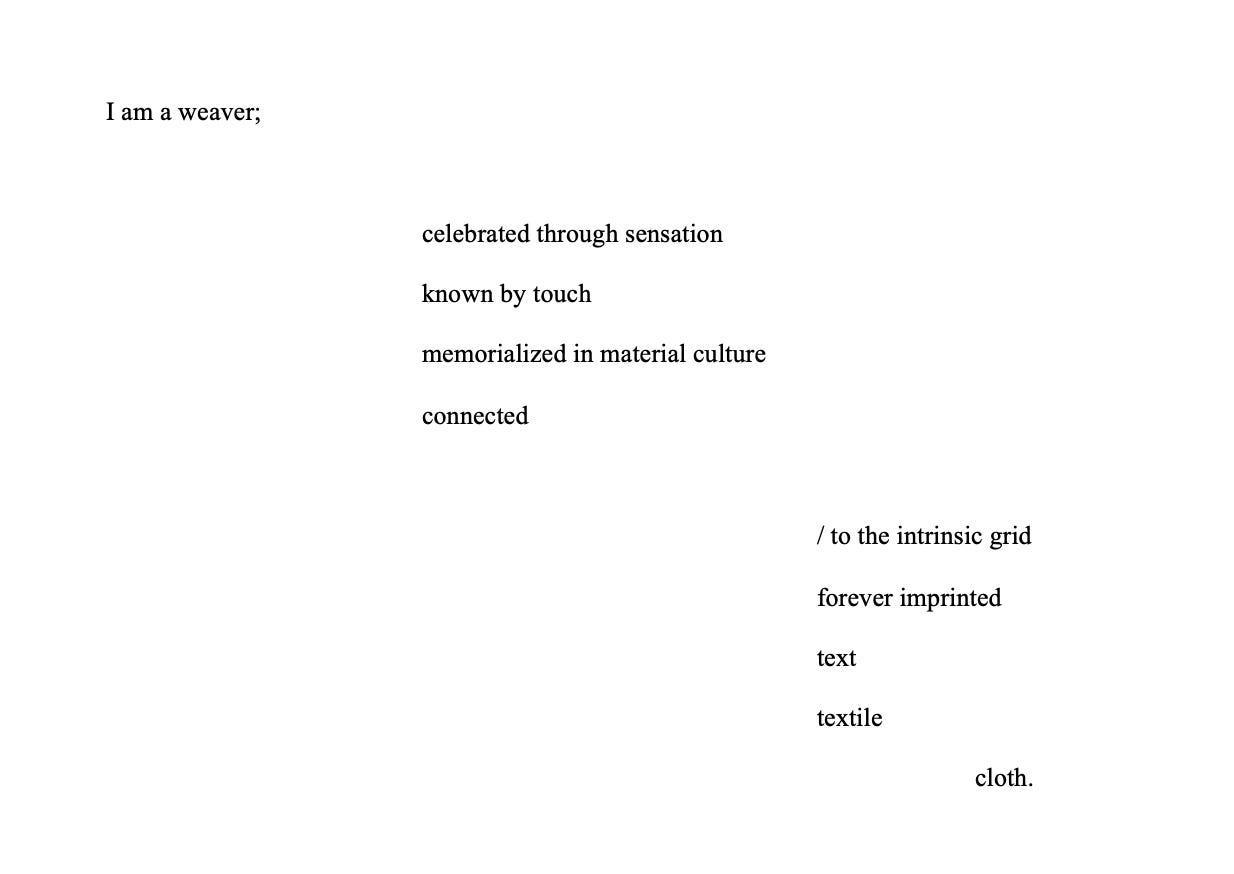
The grid is everywhere. This abstracted concept can be applied simply to lines created by man through structure and material, and figuratively by the matrix of 1’s and 0’s that compute space (the matrix, as expressed to be all that is around us, governing us and guiding us). In Rosalind E. Krauss’s book, The Originality of the Avant-Garde and Other Myths, the topic of the grid within modernist painting and sculpture is stated as all-encompassing:
Logically speaking, the grid extends, in all directions, to infinity. Any boundaries imposed upon it by a given painting or sculpture can only be seen — according to this logic — as arbitrary. By virtue of the grid, the given work of art is presented as a mere fragment, a tiny piece arbitrarily cropped from an infinitely larger fabric. Thus, the grid operates from the work of art outward, compelling our acknowledgement of a world beyond the frame.
When I read this many years ago, it helped me to articulate a feeling I had often while sitting at the loom.
I am not alone.
The infinite grid is a tie to place, and also a path to commemoration. It honors my practice at the loom while forming a common thread between myself and others, allowing my language to become part of a larger story. This concept resonates deeply within me, as it speaks to the way I see my father — in the whisper of the wind and roll of the ocean swell. We are all connected.
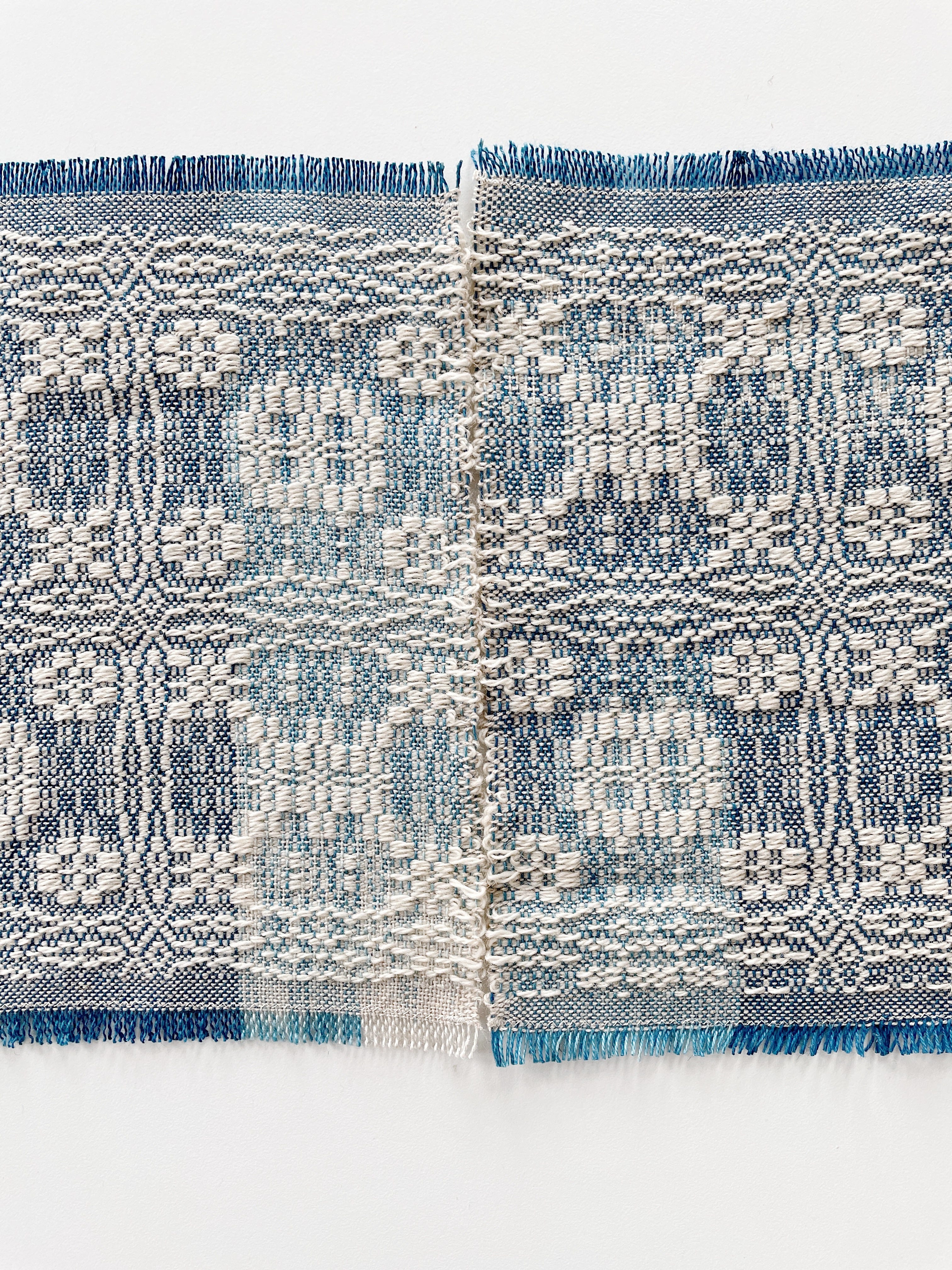
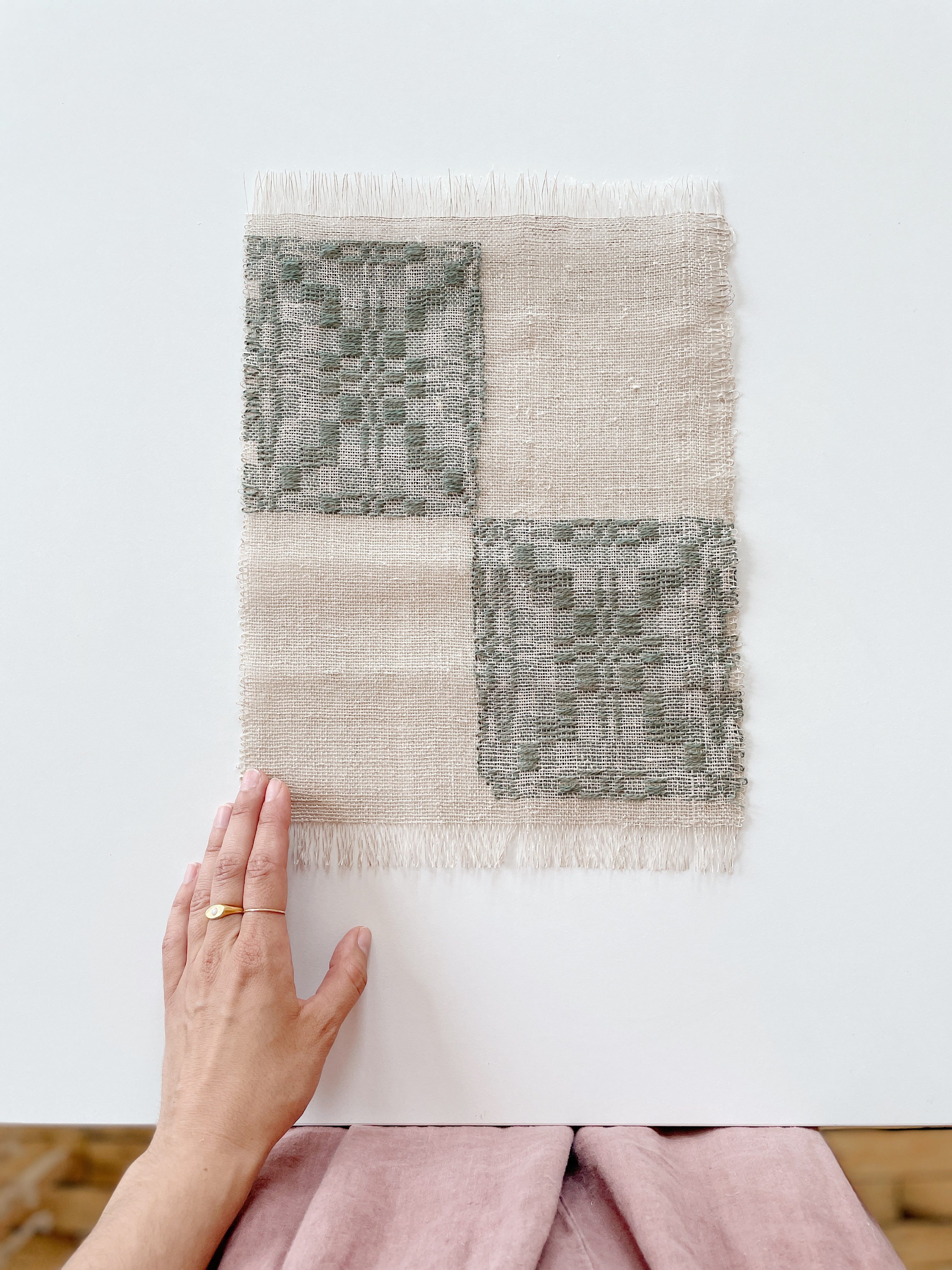
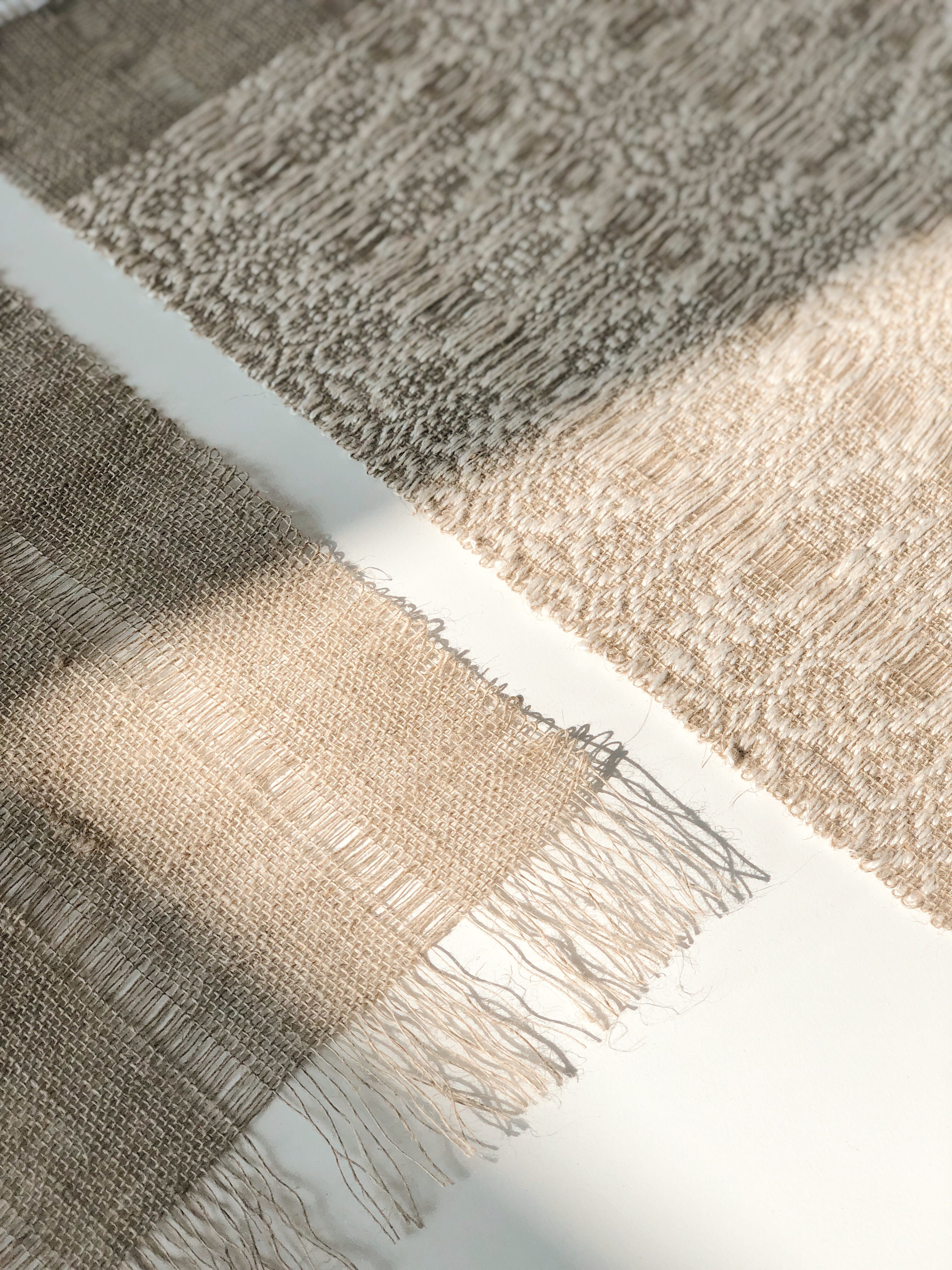
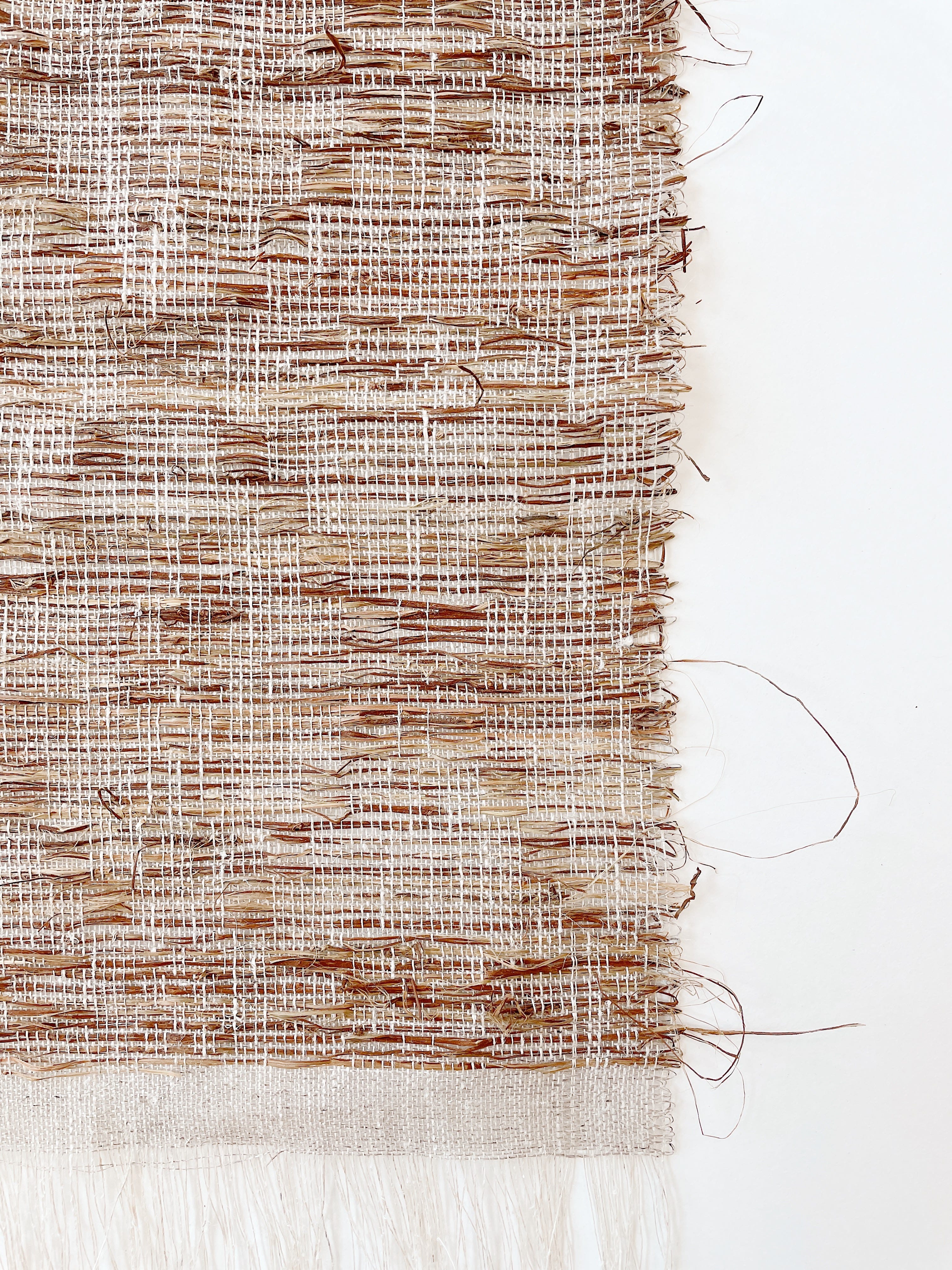
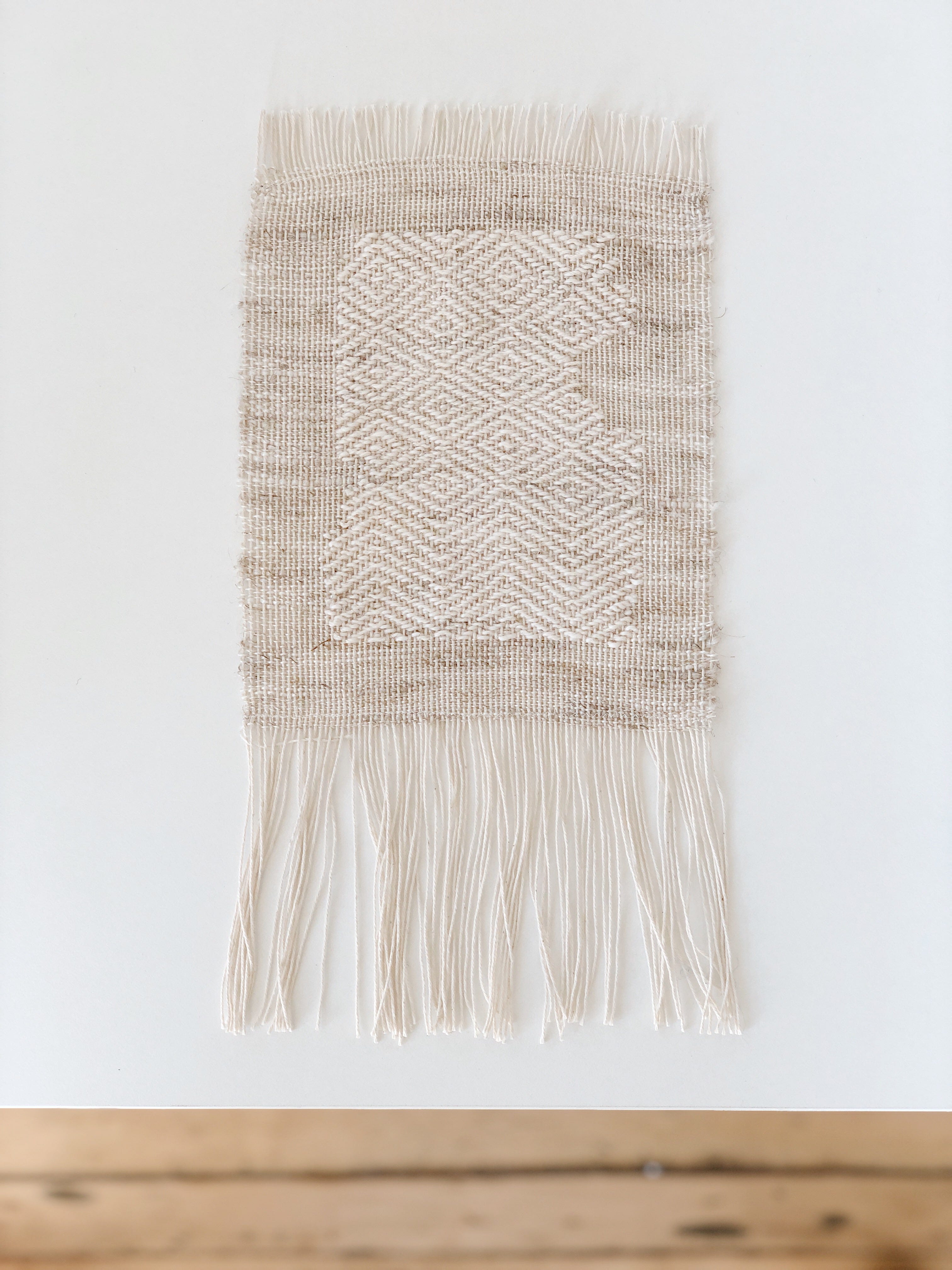
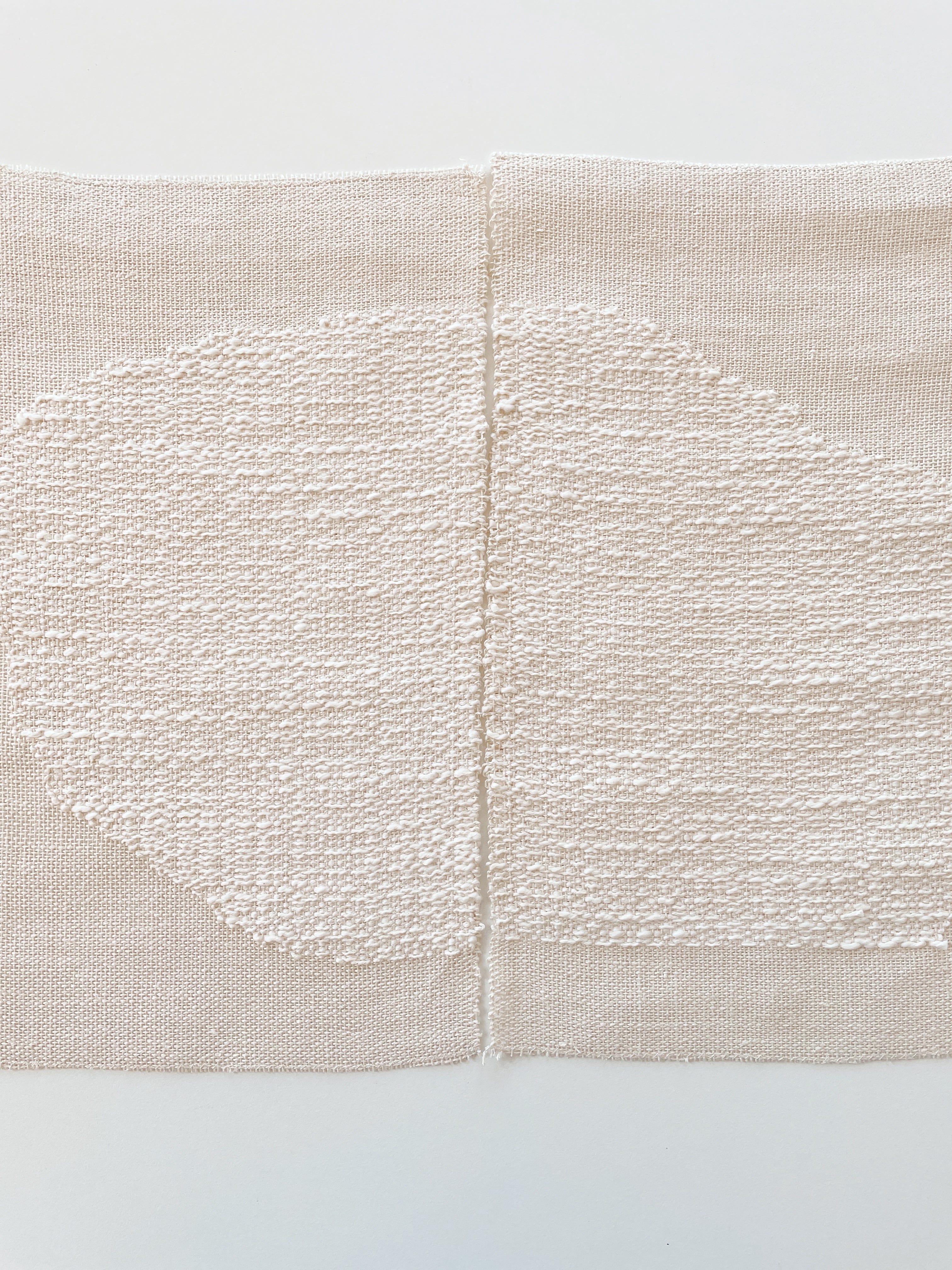
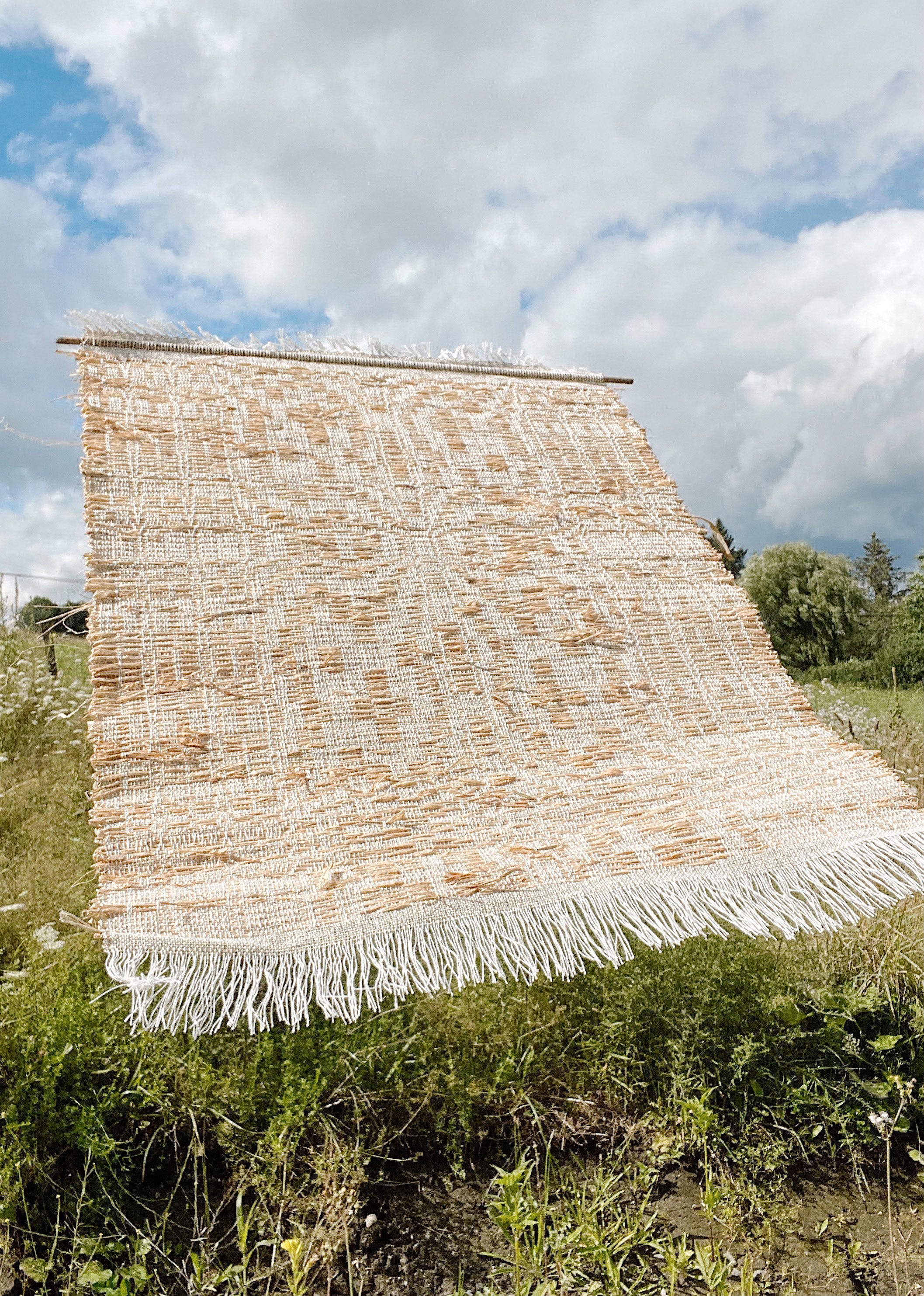
From a technical standpoint, the theory of the grid extending beyond — beyond being, structure, creation, art, tool, spatial language, and form — liberates the left and right web of the warp and weft. This allows me to redefine the coding of woven structure and create intuitively at the loom. In turn, I weave the land around me, my shuttle creating a line in space, and my thread a marker of the hand.
✻
As I weave, I think of the women who came before me. Seated at my loom, my bare feet move over the wooden treadles, my hand runs along the selvedge of the weaving cascading over the front beam, while my other hand holds a shuttle waiting to be thrown. I am one with the loom in rhythm and repetition, linked in body and breath.
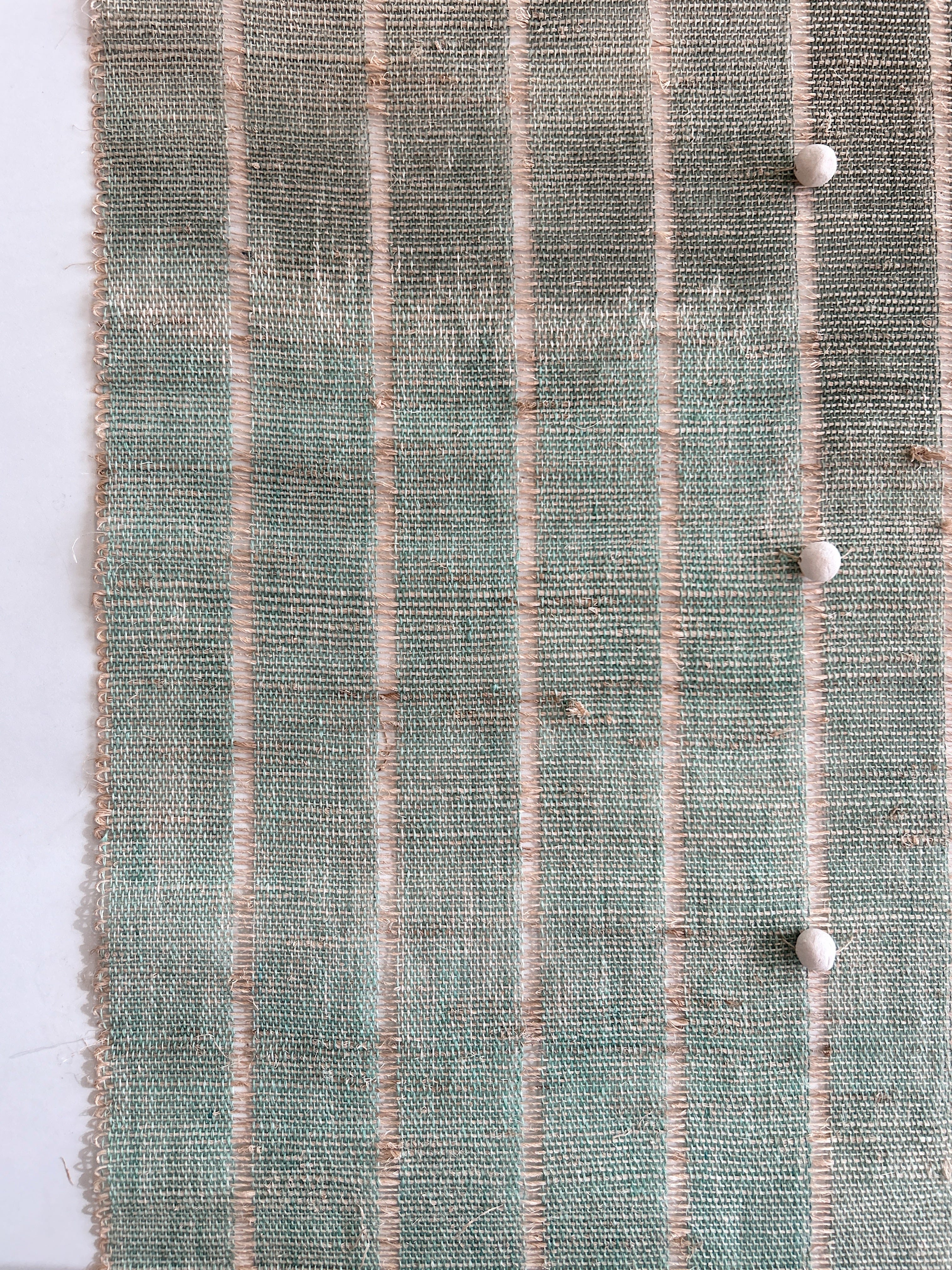
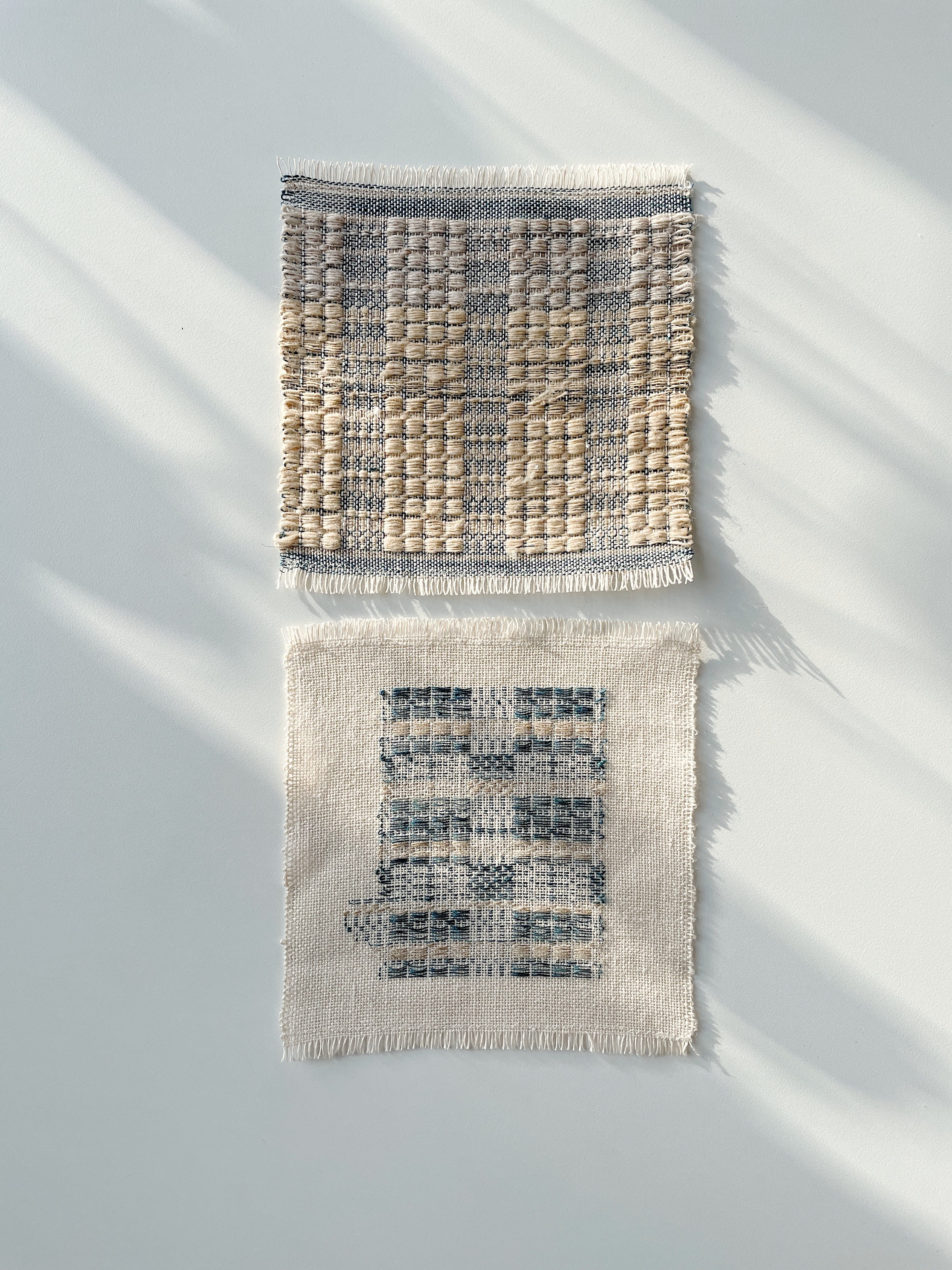
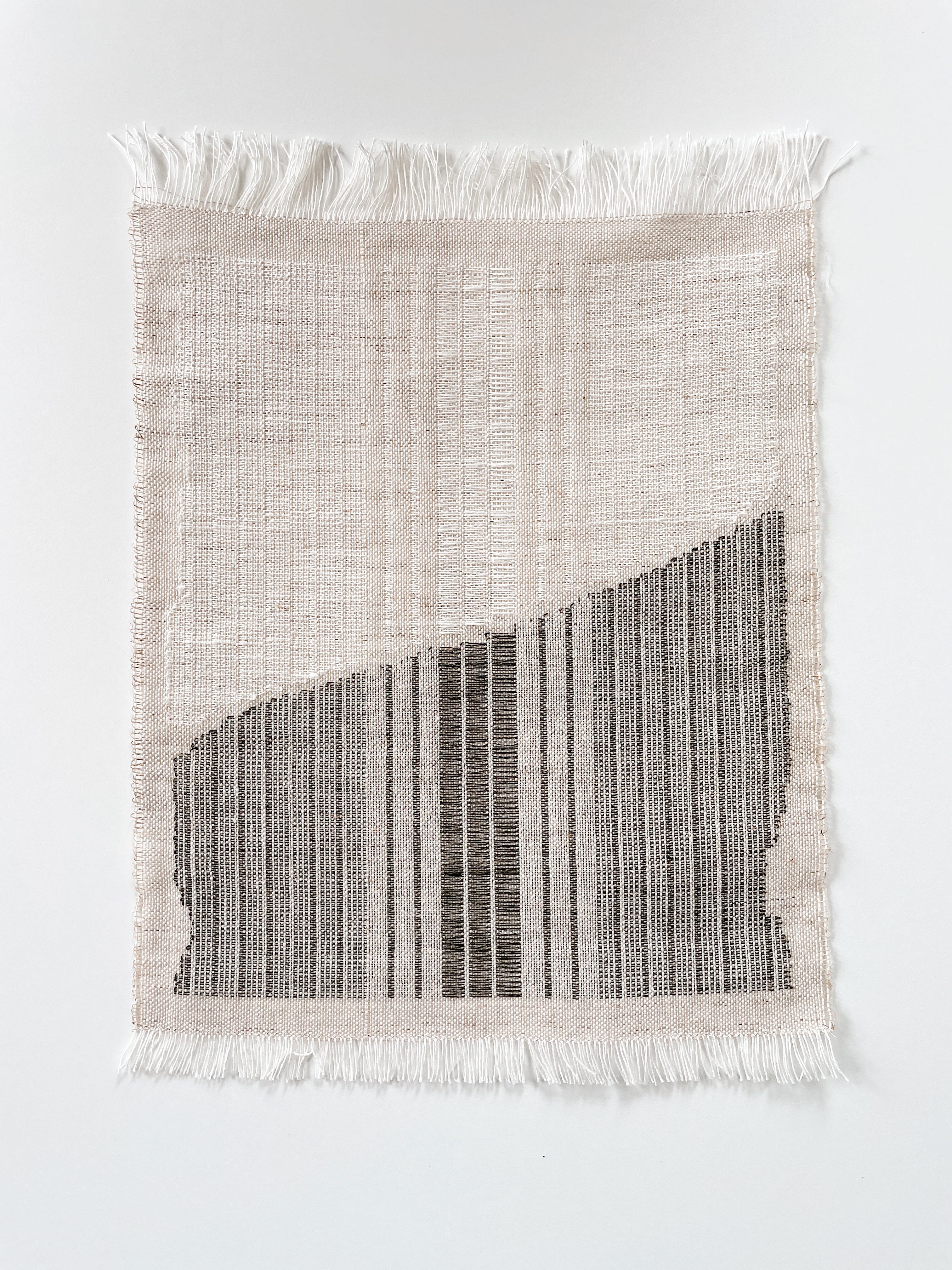
The practice of weaving is a relationship: between the loom and the hand, between lived experience and touch. Cloth provides an intimate way to engage with the world, helping to contextualize what it means to be human. As Anni Albers says, this awareness of touch is a “tactile sensibility.”
Textiles remember, unintentionally and by design, due to their fragility and naturally transient existence. Not dissimilar to people, cloth embraces a similar cycle of time, making it almost impossible to disengage human routine from a tactile influence. By touch, my weaving forms a tangible language (tactile blueprint), recording and remembering — becoming material evidence of my rite of passage.
The memory of touch reads like a poem,
fingertips brushing against linen
an ice cream stain on a worn cotton blouse / lingers, a warm summer day
grandma’s perfume dusting a patchwork quilt
the frayed edge
forever joined, embraced in a satin gown
a thread of remembrance, a witness.
Comments
Nothing yet. Say the first thing.
Sign in to join the conversation.