
Continued from part 1, part 2, and part 3.
When I lived in Chicago I had an apartment in the center of the city, known as The Loop. It was mostly a tourist area that cleared out after the last theater showing in the evening, becoming somewhat of a ghost town. In the dead of winter, headed home from a late evening out, I could walk off the train into my own magical snow globe.
The snow covering the sidewalks was untouched, reflecting off the windows of the skyscrapers looming overhead. It was eerily quiet for the city, and as I walked all I could hear was the sound of my boots crunching in the snow and my breath crystallizing in the cold. Looking behind me, the snow was a soft blanket except for the evidence of my passage — a meandering line of footprints; a marker of my presence.
It was as if the city belonged to me and only me. In those moments, I felt like anything was possible.
✻
I thought of the snow and the trail my footprints left behind me as I wove with one color years later. It was part of a graduate school assignment, the one color project, and I battled it as I did most of my school work. I hated being told what to weave. I chose cream.
I was pursuing my Master of Science in Textile Design at Philadelphia University, and while I was perpetually frustrated by the lack of conceptual thinking in the program, it provided me with an important tool I was lacking — technical knowledge. It also gave me structured time and access to tools, two resources that allowed me to flourish creatively.
Although I was in school and the purpose was to graduate with a degree, the experience felt different from my undergrad. I wasn’t discovering myself as an artist — I now knew I was a weaver. Instead I was fine-tuning my craft by bolstering my art practice with an intricate understanding of structure, yarn, and material development. I wove five important series during this time, before creating my final thesis: coverlet collection no. 1 & 2, ritual grid, tactile vessel, and memory cloth (the one color project).
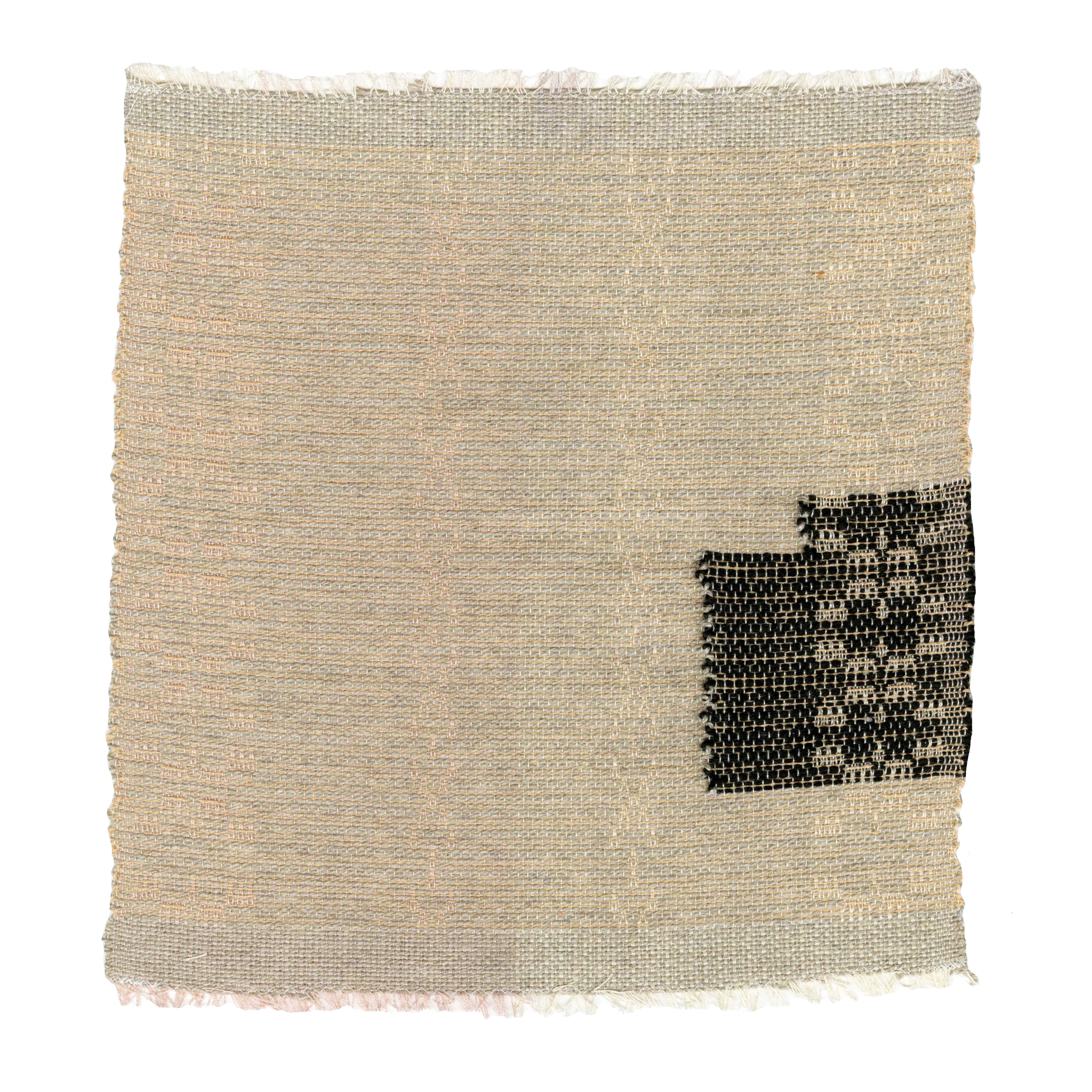
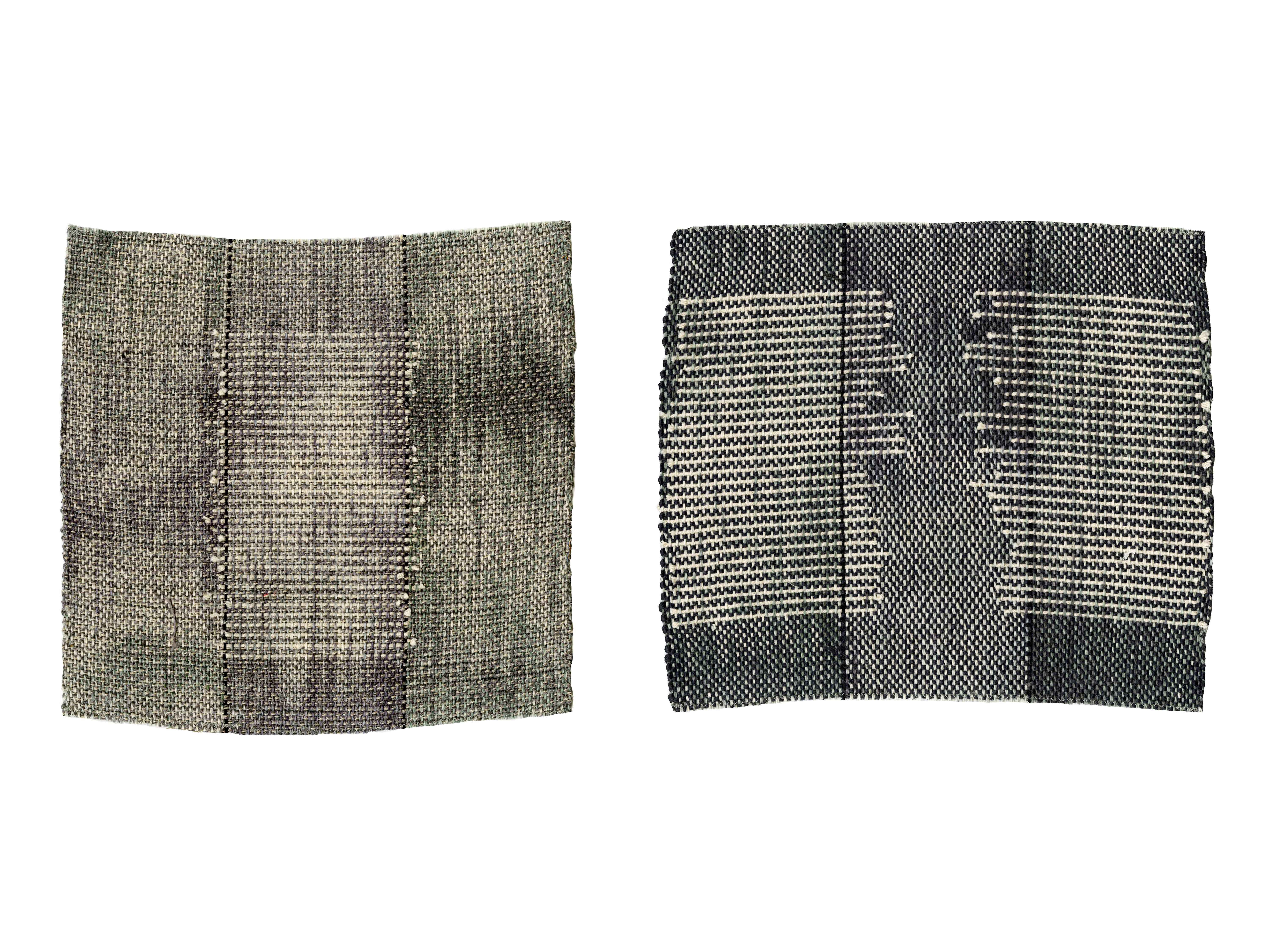
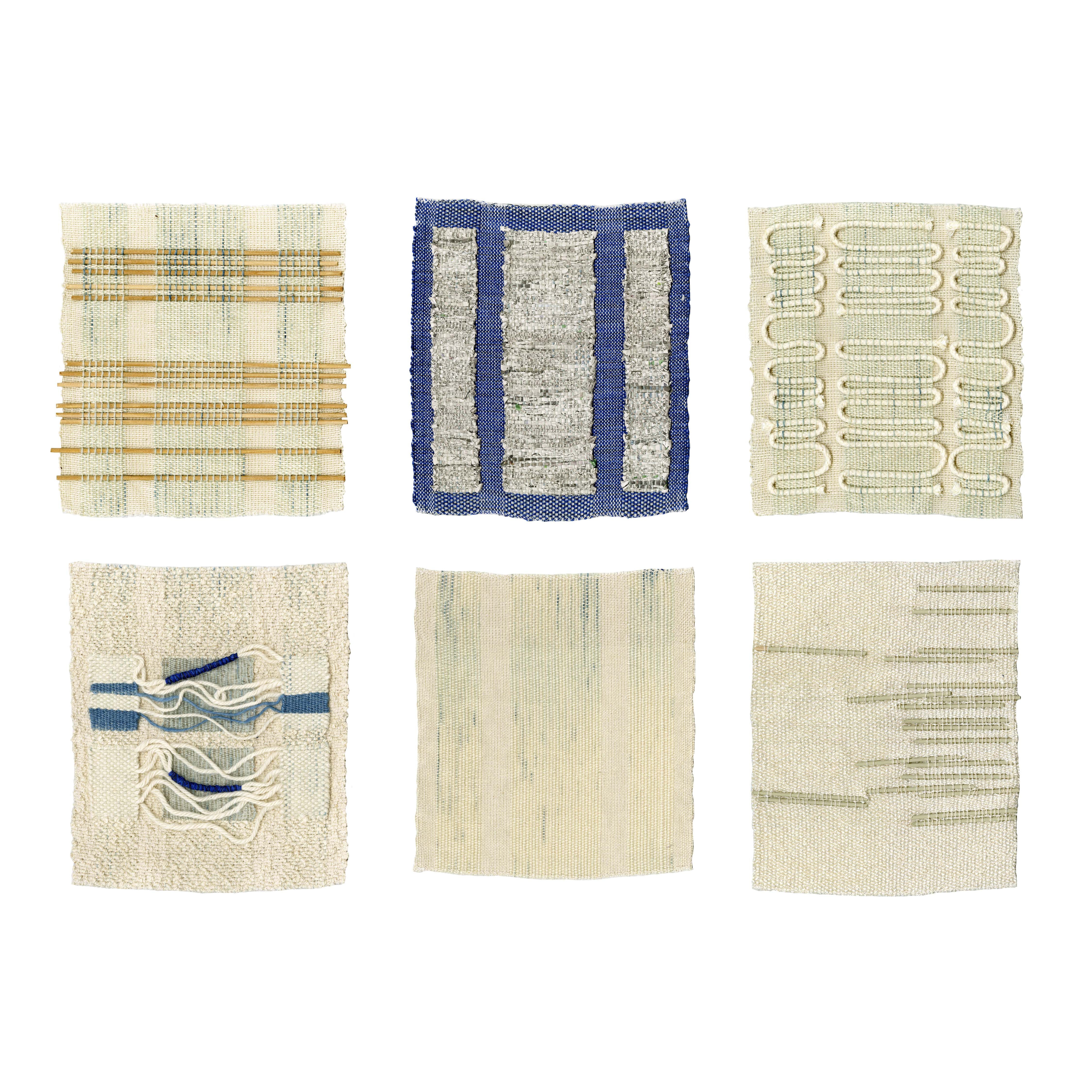
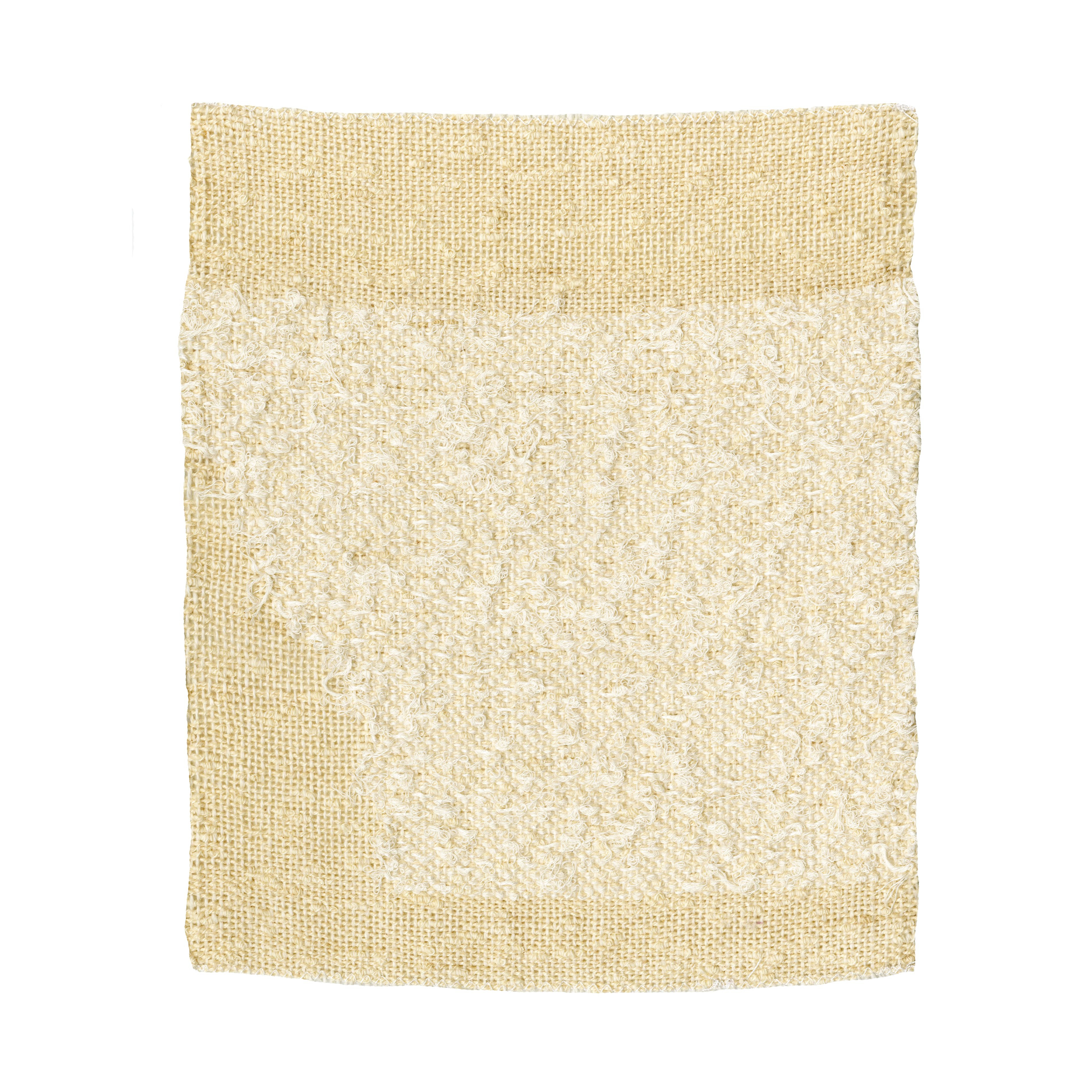
The interesting thing about weaving for a technical degree is that projects were seen as textile collections, not art pieces, and the deliverables were expected to be diverse. The goal was to experiment and push the boundaries of the loom, and a single warp held multitudes. I began to consider how one warp paired with one structure could contain endless variations, just by changing the weft yarn, the way the pattern was treadled, the beat, or even the sett (this is when I was introduced to the open reed®). All of the weavings pictured together below, as part of the memory cloth collection, were woven on the same warp.

Weaving in a series format created its own narrative, as these weavings were in conversation with each other — the one before informed the one after, and so on. I thought of it as a woven dialect, a part of my tactile language, but specific to this way of making. Paired with the structure overshot, I was able to “draw” and create abstract shape at the loom.
Although visually different, this work echoed what I began to explore in my Banner-Scapes. My thesis exhibition plaque read,
These textiles are objects of memory, meant to provoke physical feelings connected to specific places of meaning. Moments of wishing a place still existed, recreating lost spaces, spaces of personal value, and collections of places.
This body of work explores line as a symbol, highlighting the idea of drawing within the grid of weaving and referencing the sculptural and conceptual departure of the vessel. The texture, color, and subtleties of shape and imagery are driven by the idea of sacred spaces gone unnoticed in everyday place. The quarter-sized spot above the stove where the paint has peeled off revealing the wallpaper underneath, the chip in the old dresser, the crack in the sidewalk, or the bracelet with a missing bead.
This is the crux, where it all meets in textile language: weaving, the grid, body, place, land, sacred space, stillness, line, vessel, and memory. These weavings are the grid made permanent in relationship to the body and manipulated by line. They commemorate the imperfect as perfect, the sacred space of the loom, weaving in infinity, and the tactile vessel. They pay homage to the feeling of stillness in place and the symbolism of landscape. These textiles are made on the loom to conceptualize the grid, in order to craft a connection to body, and inspire religion of space apart from the loom.
This body of work, “I am, I am, I am,” is a dialect of my memory grounded in space, as a weaver, as a maker, as body and breath. They create a visual of my sacred space, the fragmented memories of my relationship to place, and a memorial to the intrinsic grid. They carry the power of my remembrances and the repetition of my body in motion. They are the preservation of my place in the non-relational matrix, creating material evidence, bearing witness. They are my identity, my routine, my rite of passage.
I am land, I am vessel, I am cloth.
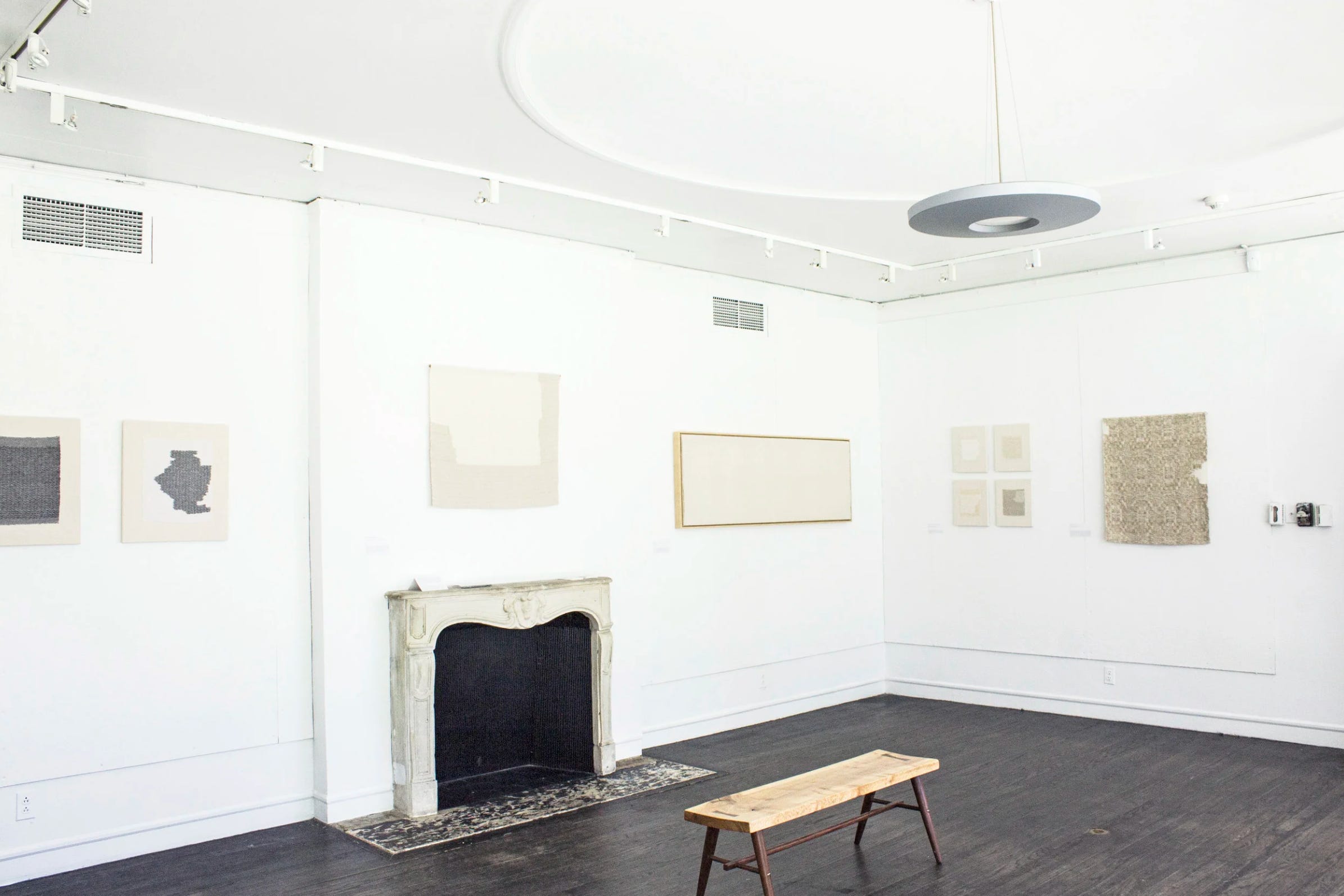
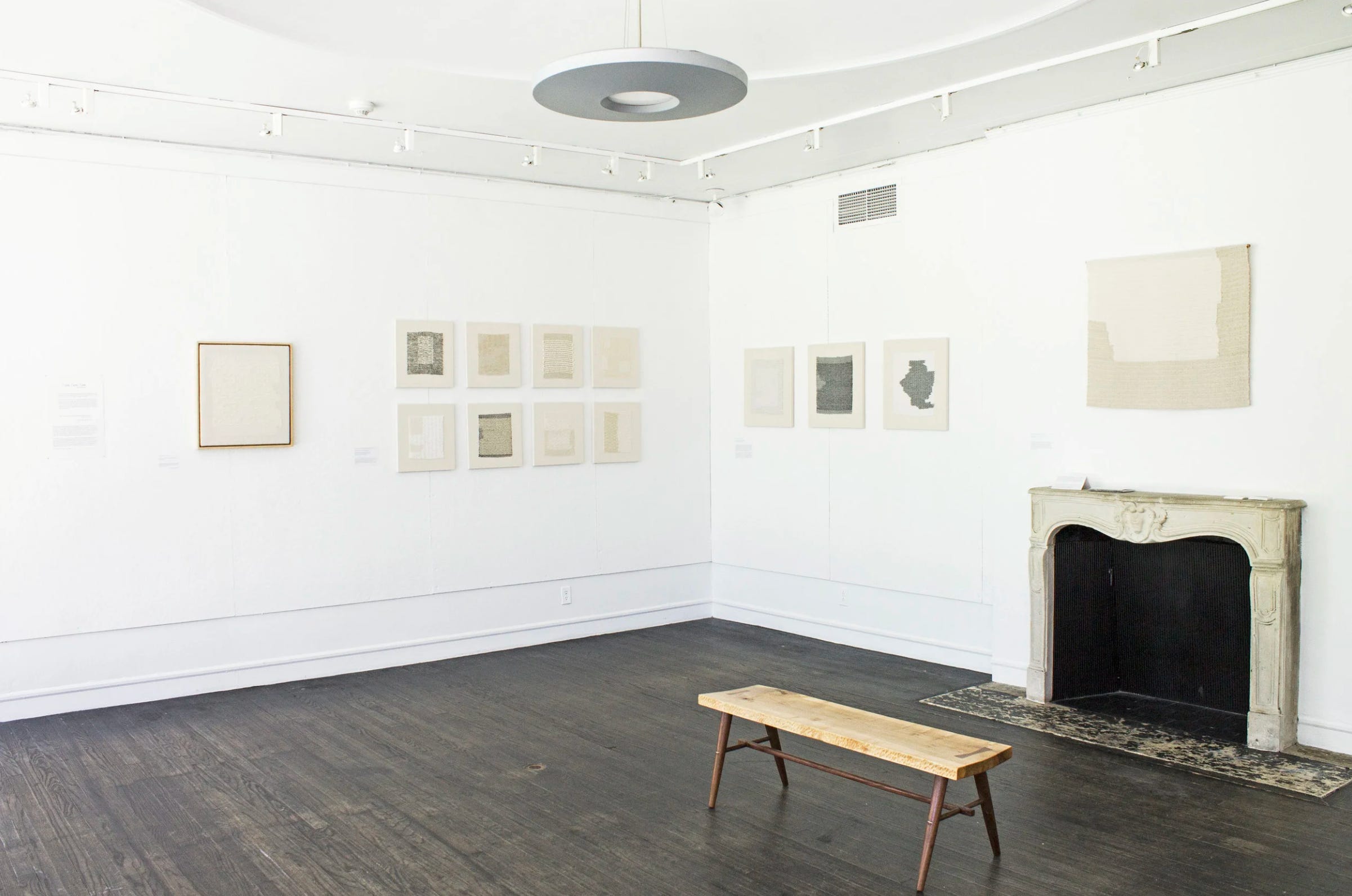
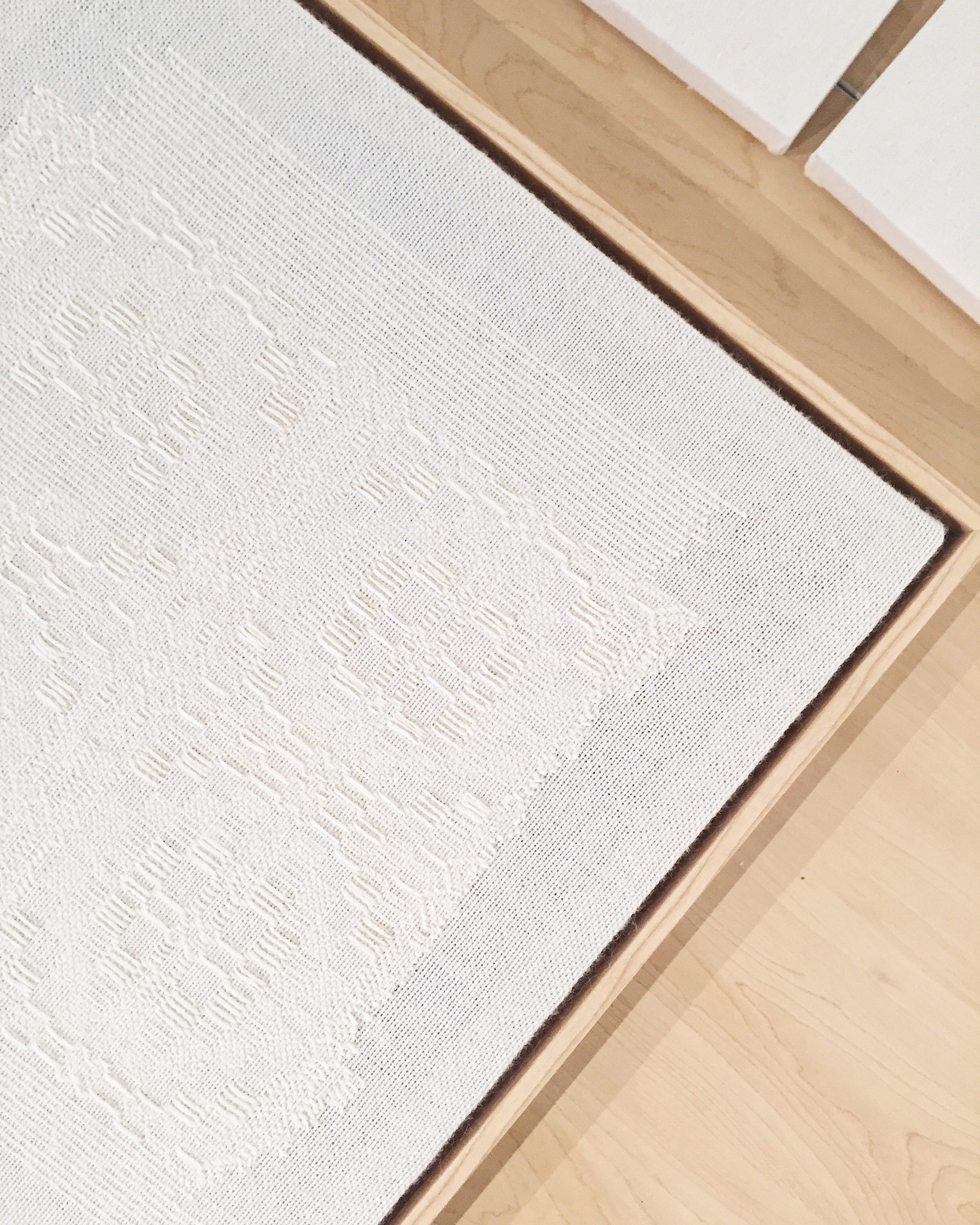
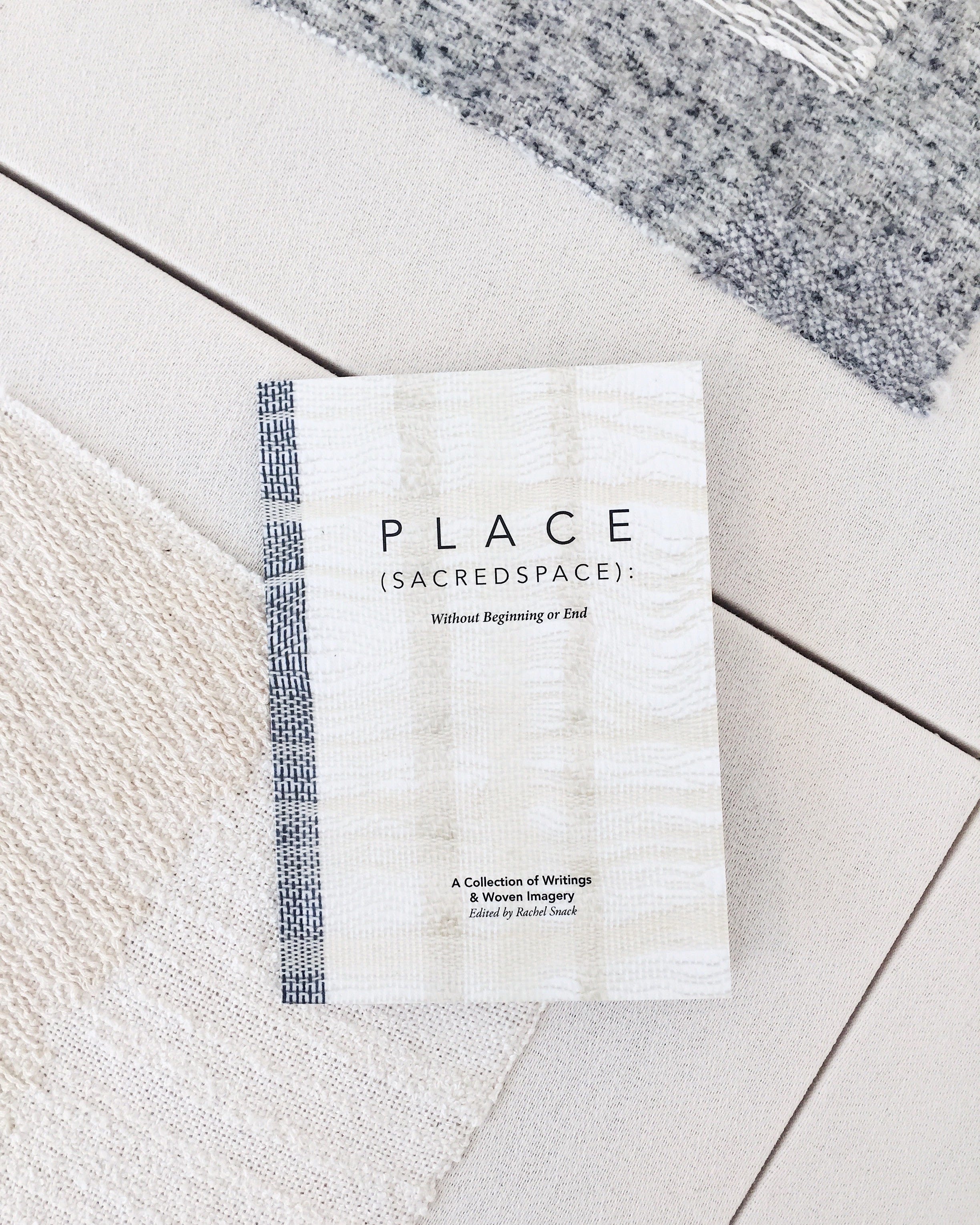
As my relationship to the woven grid expanded, so did I. I saw the grid in two ways: the intersection of the warp and weft, or the "web" of weaving (tangible), and the matrix of the infinite (intangible). This allowed me to explore the possibilities of expanding the physical grid — through line, shape, and design — while creating a marker of place apart from the loom.
To be continued in part 5.
Comments
Nothing yet. Say the first thing.
Sign in to join the conversation.