
Continued from part 1.
Two things happened when I returned home from Ireland — I developed all the 35mm film I had taken, and as part of my fall semester, I took an introductory natural dyes class with Marianne Fairbanks. I was also working for Frank Connet, a textile artist who utilizes shibori and dyeing in his work (amongst other techniques), and indigo was on my mind.
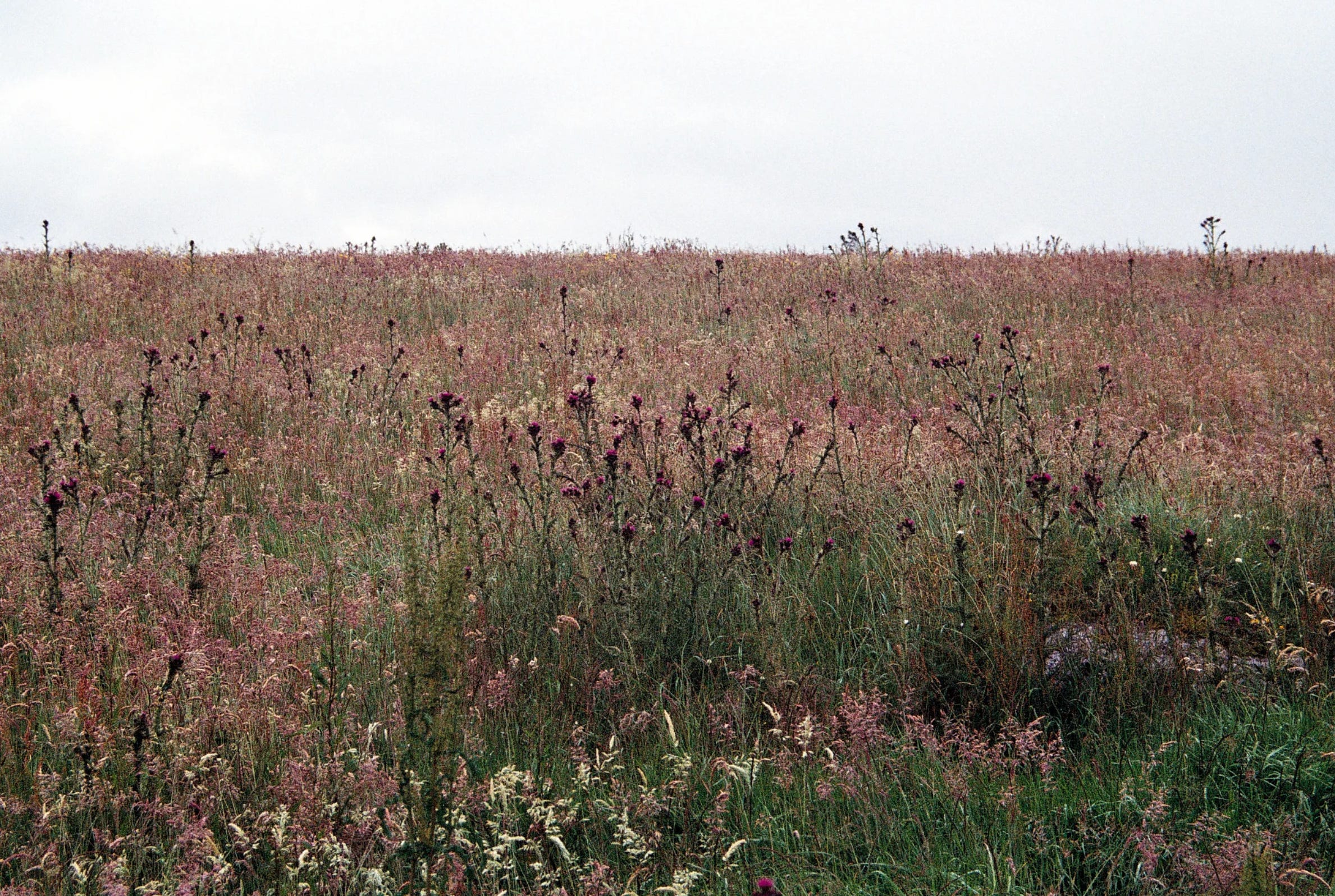
As I learned how to dye, I began to experiment with coloring my warps. Instead of painting (which I didn’t know was a possibility at the time) I created smaller warp bundles and dyed them in a vat in sections — dipping the yarns based on the rocky coastline of Maine or the field of flowers across from the Poulnabrone Dolmen. I also used ikat techniques to add areas of resist, including traditional ikat tape, along with braiding and knotting. In this process I was conceptualizing how I might interpret a landscape into a woven form.
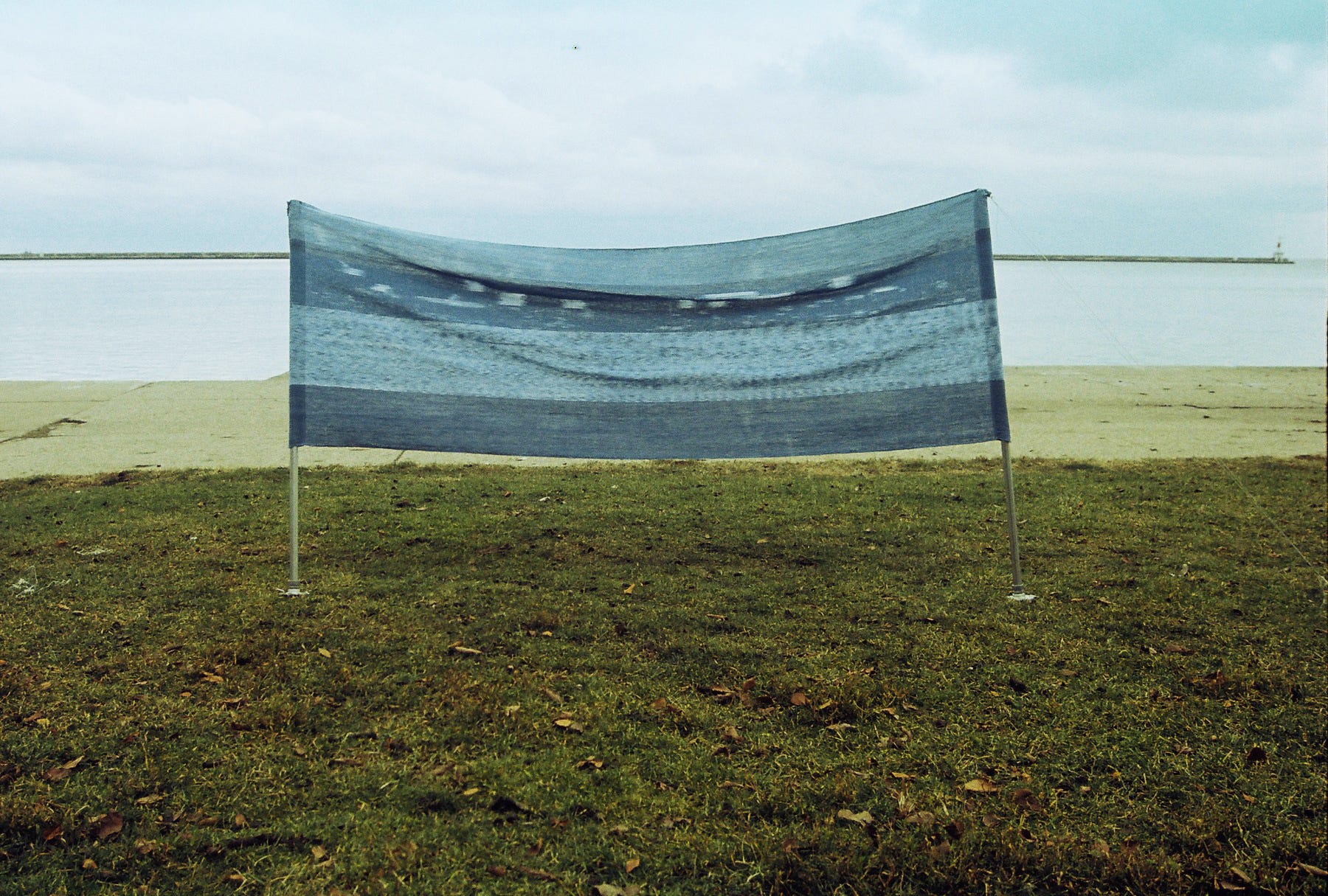
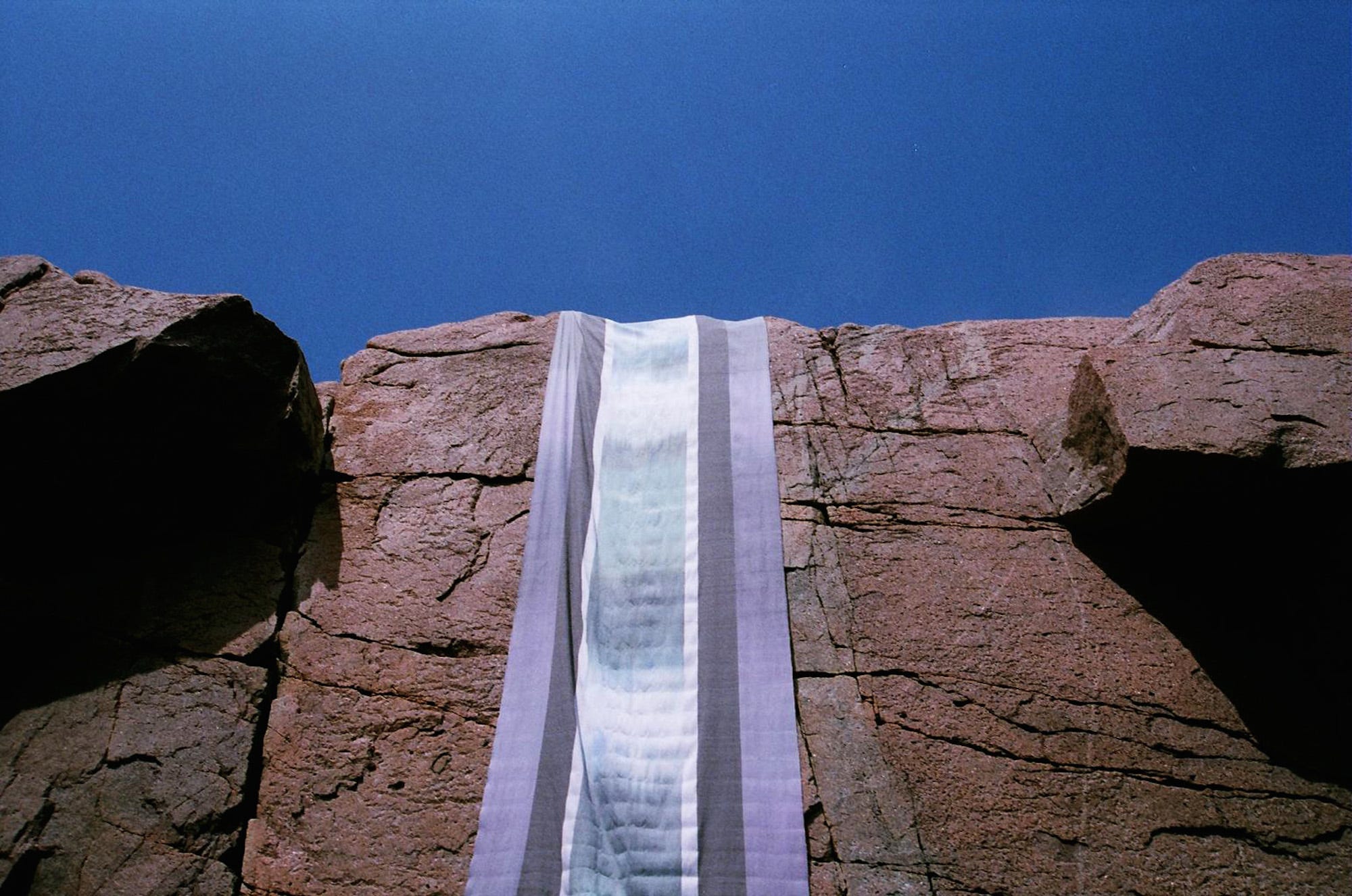
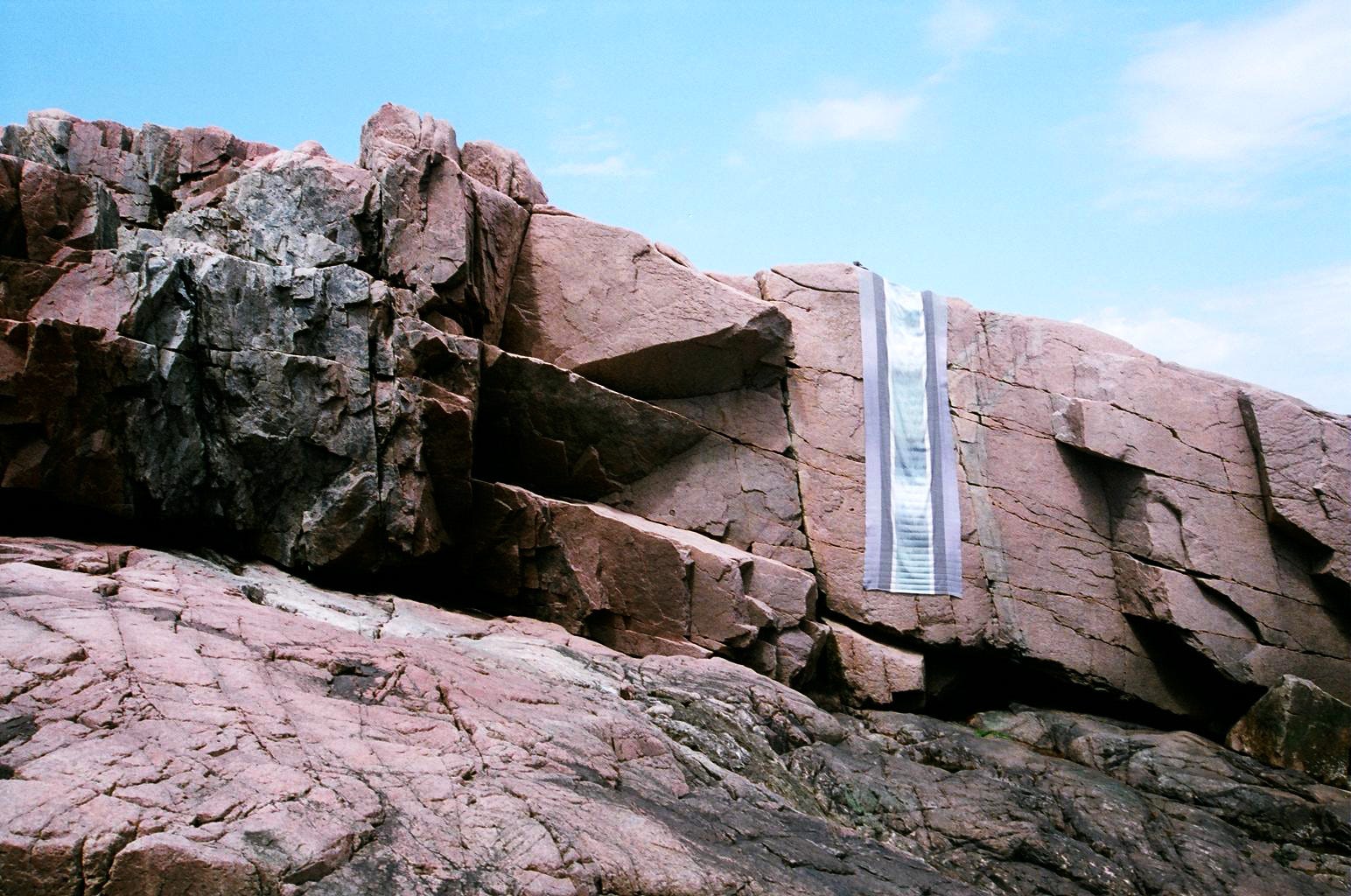
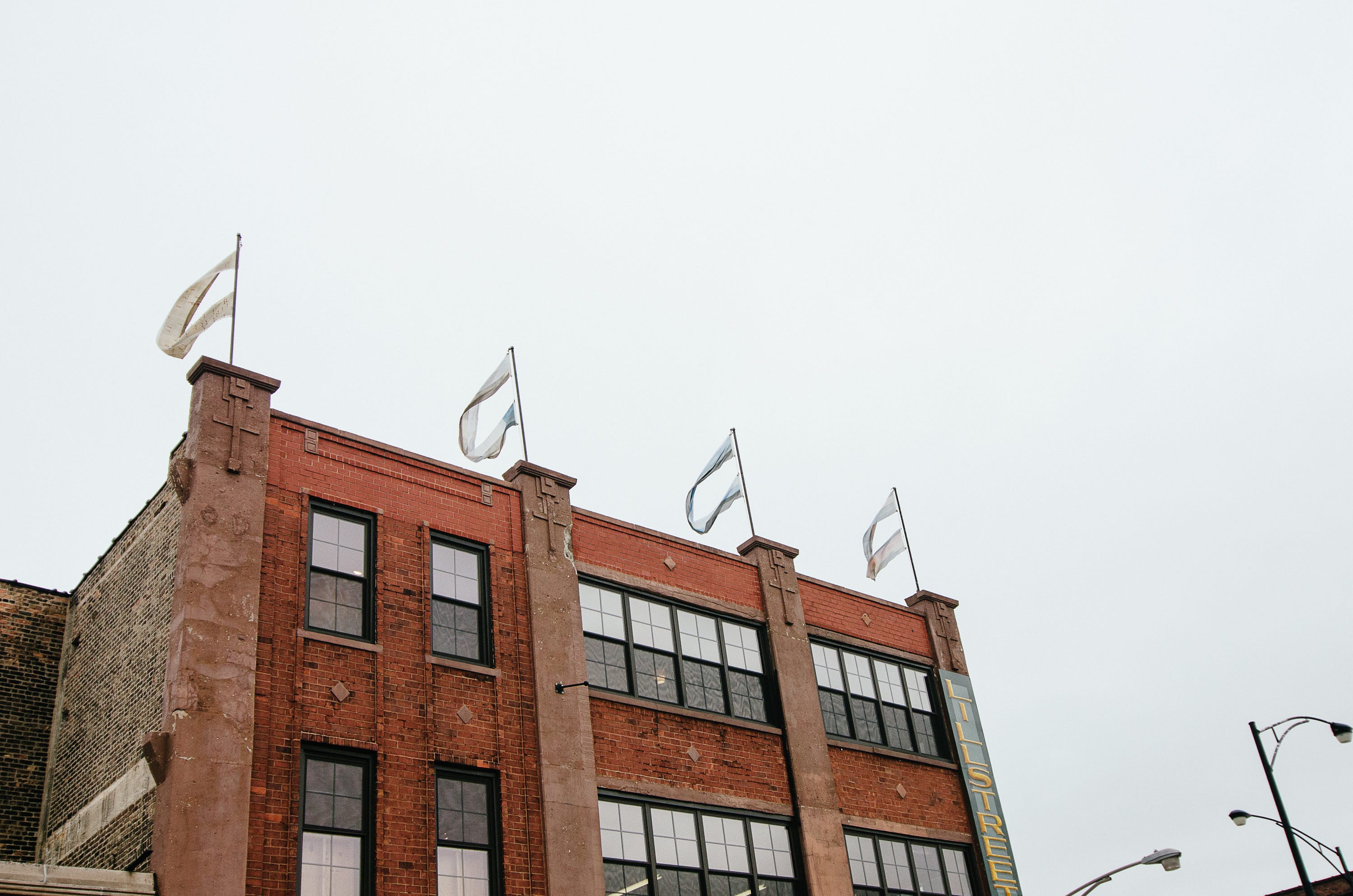
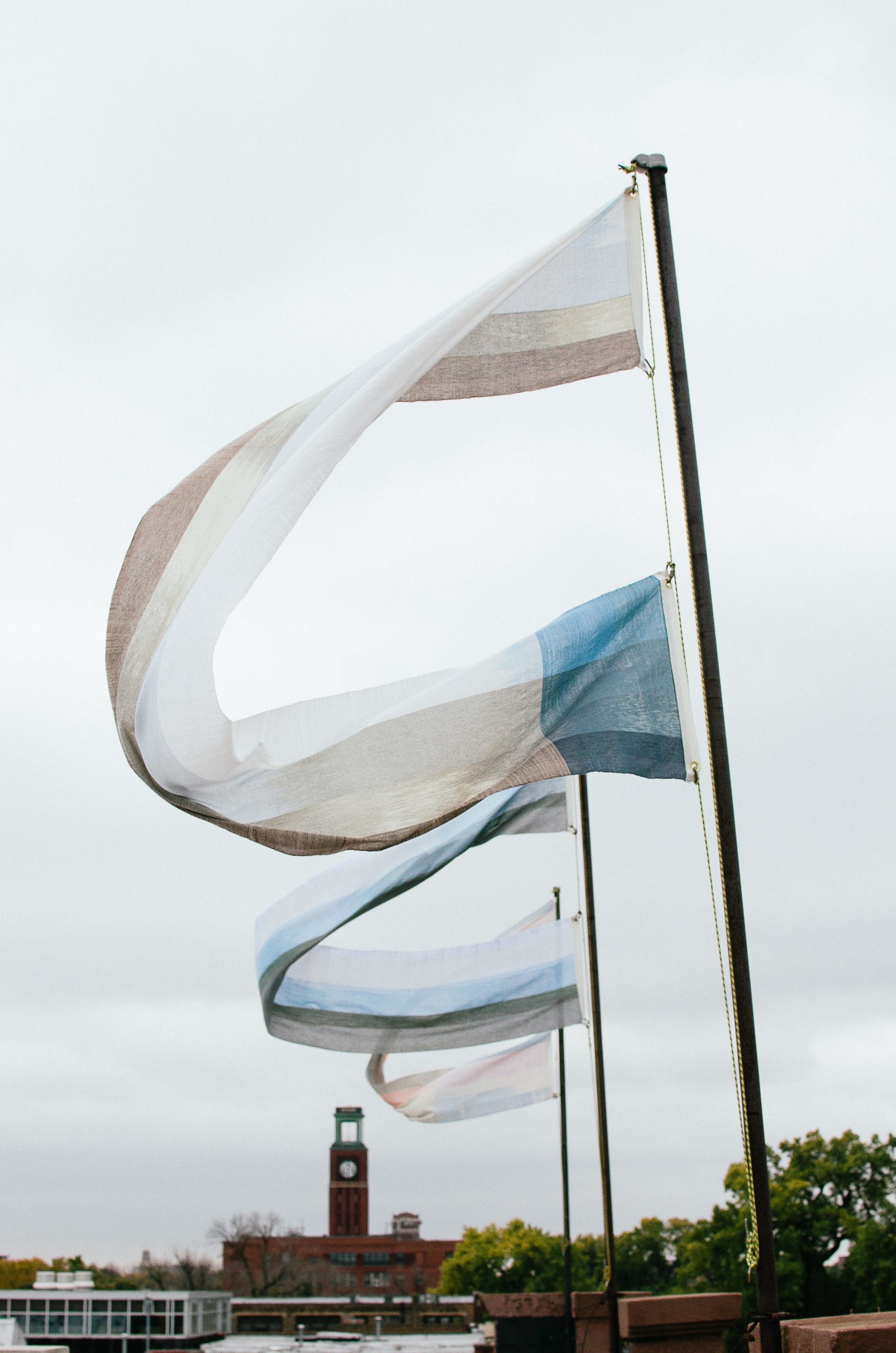
The first weaving I made in this series was based on the horizon line of Lake Michigan, a constant companion during my time at SAIC. It felt important to reincorporate the woven textile back into the landscape it was derived from, so I superimposed it on the water by installing it at the lake. With very little build experience, I unintentionally created a banner and therefore named the piece “banner-scape,” later becoming “Banner-Scape No. 1.”
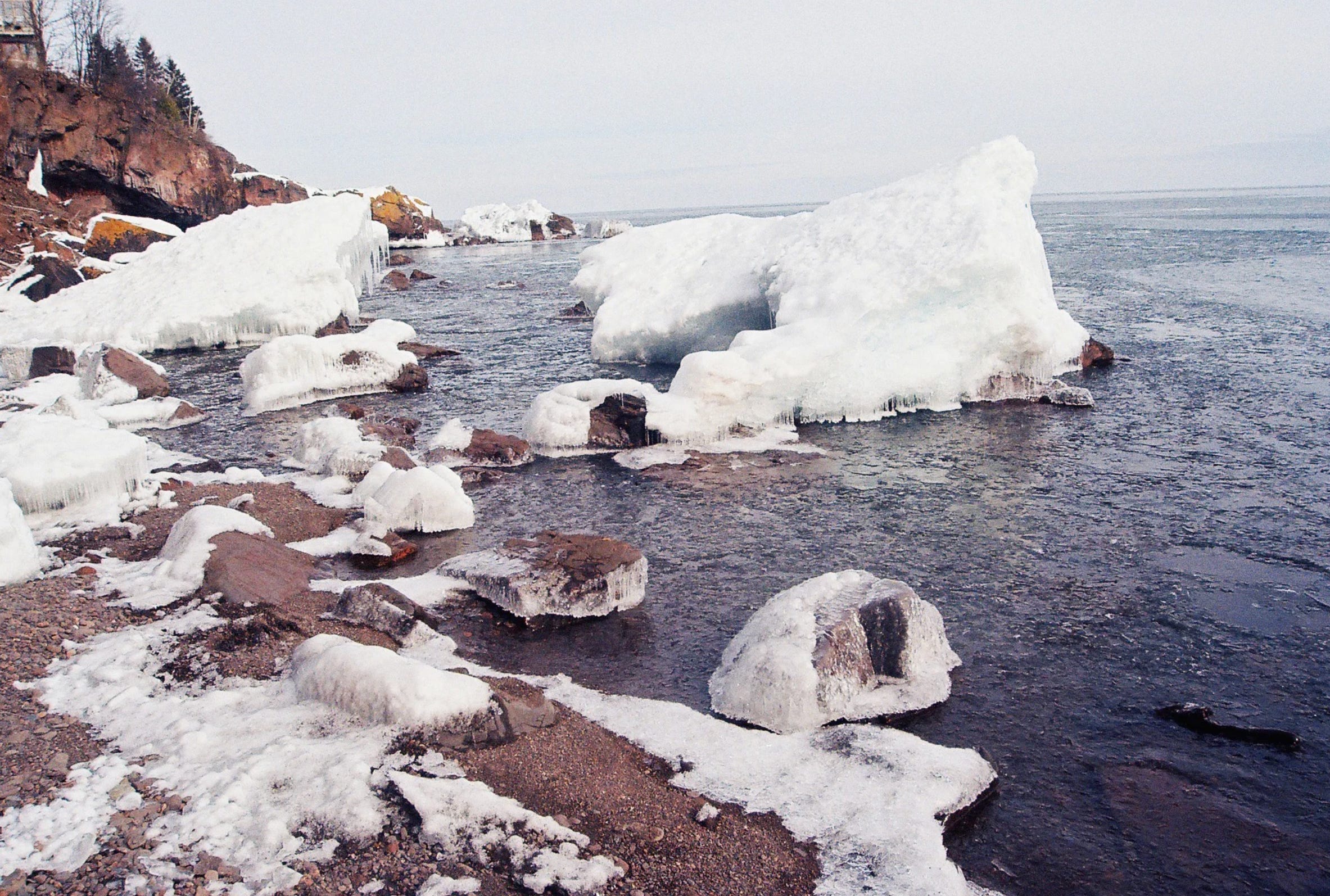
Although I found the weaving itself successful, I immediately knew the installation process needed to change (this was confirmed by my peers during a class critique). I tried again, bringing the weaving with me on a trip to Lutsen, Minnesota. My friend Elisabeth had a family cabin on the shore of Lake Superior and in the dead of winter, the land was covered in icy, sparkling snow.
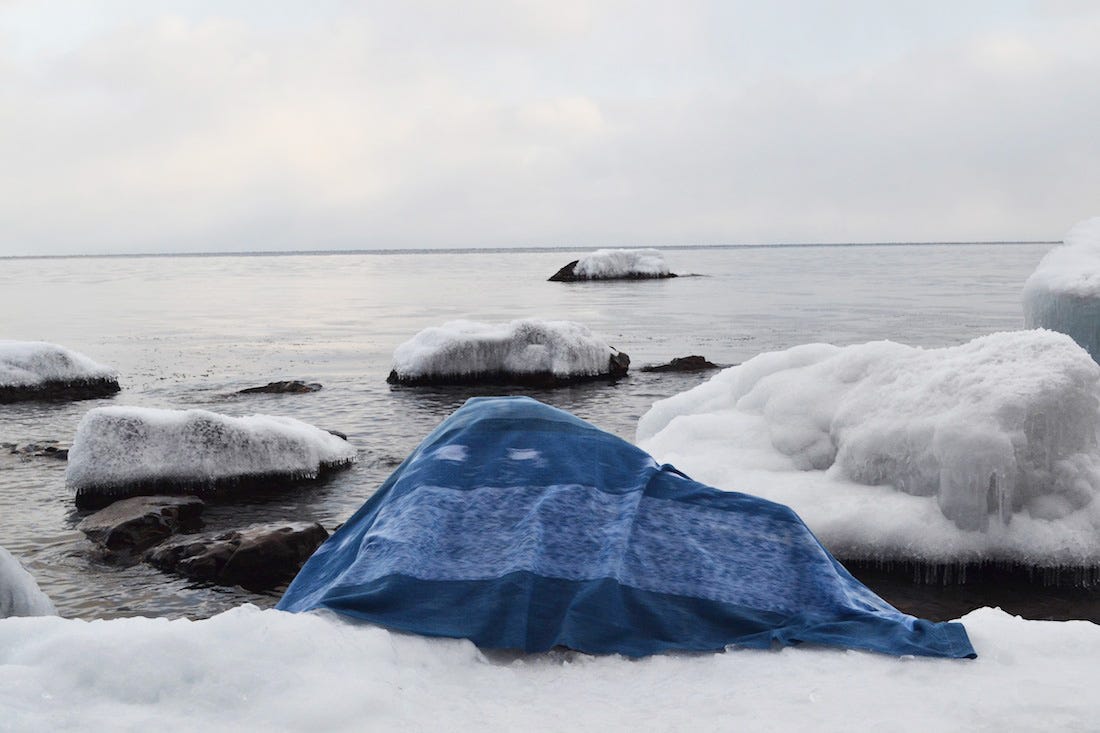
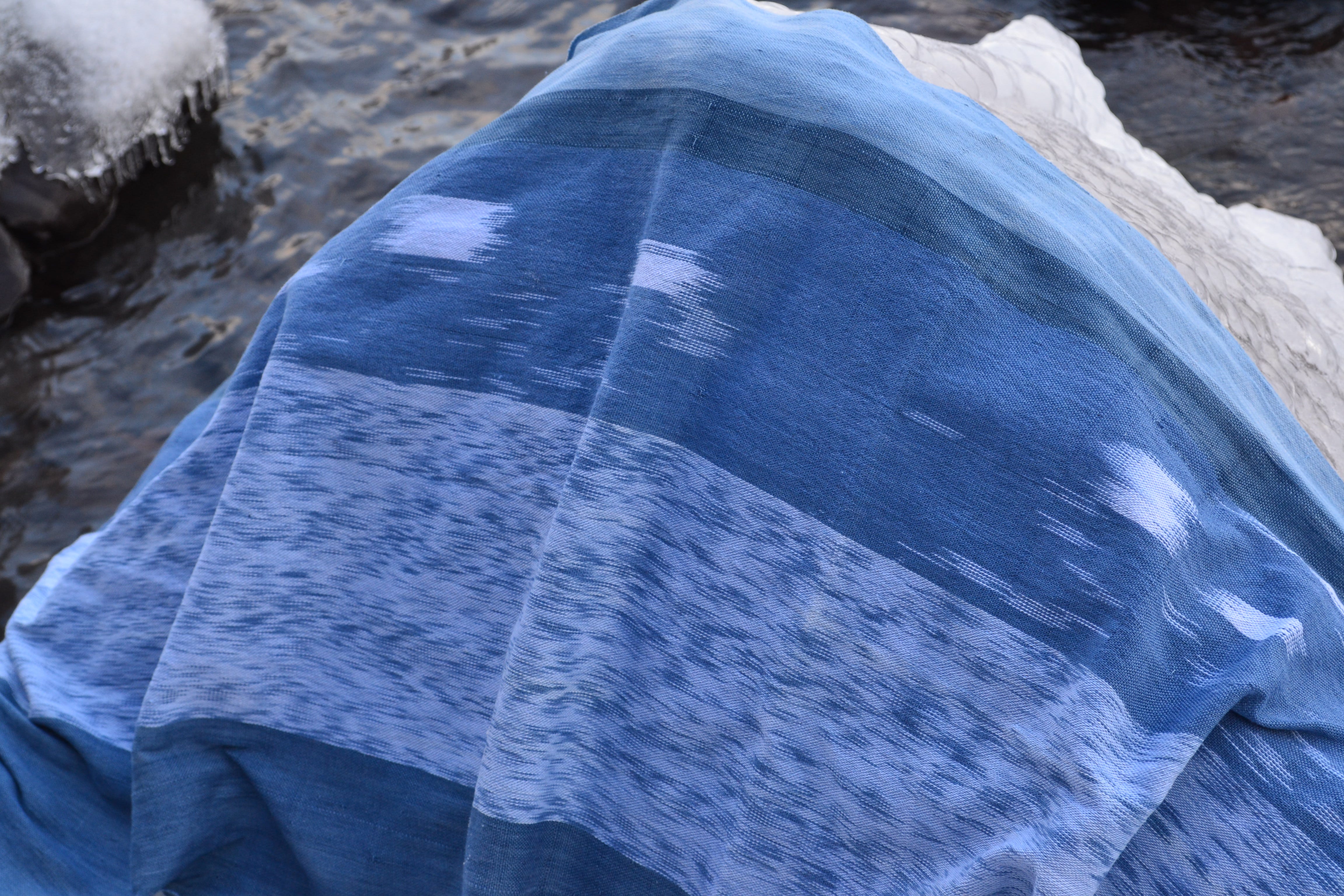
This version of the piece, which became the final artwork, felt more true to the feeling I was trying to express. There was something quiet, powerful, and vast about this stretch of Lake Superior, and the landscape sang a melody of whistling wind and lapping waves hitting snow-covered boulders, mixed with the sound of heavy boots on ice.
I began to think of the weaving as a preservation of memory, which could memorialize the landscape it was interpreted from, or create a new landscape by installing it away from its origin site. This weaving articulated the horizon line of Lake Michigan, but transformed into something entirely different when placed at the banks of Lake Superior.
In 2012 I wrote in my artist statement,
I create objects of memory, provoking physical feelings connected to specific places of meaning. Moments of wishing that a place like that still existed, re-creating lost spaces, spaces of personal value, and collections of places. I’m intrigued by the way memory can act as a resistance strategy, saving you from what you’ve lost. I have memories of the physicality of moments in my life connected to tragedy: the way concrete felt against my face after I had first heard that my father died.
Land has become my identity; or lack thereof. The small tidbits of memory that I have survive in sensual instants connected to places or objects. As a way to preserve these memories I have begun to collect landscapes. In my body of work ‘Explorations in Landscape’ I focus on the portable landscape, which I call the ‘banner-scape’. These banner-scapes serve as a moment captured, a memory trigger of structure and color. The material identity often starts in a painted watercolor that is then translated into cloth. The woven form that they take is an interpretive shape based on the landscape they are in conversation with. They can be placed in the space they were created to capture or be added into another landscape as a new memory. Superimposed, they become like my memories, specific and fragmented.
(This text has not been edited or updated since I originally wrote it, please forgive any grammatical errors.)
✻
I was now posed with a set of new questions — is the artwork itself site-specific, living on by way of documentation? Is there a way to create the same type of artwork, but for the gallery? How can I bring a physical manifestation of the landscape to the viewer?
I began building small forms out of wood and stretching muslin over them. I used cardboard, foam board, and tape to experiment with natural shapes. I once again considered the dimensionality of a fence and the concept of the “infinite grid.” I was becoming more confident in my natural dye capabilities and I revisited the film from Ireland. The photographs became my guide as I attempted to weave a likeness of place.
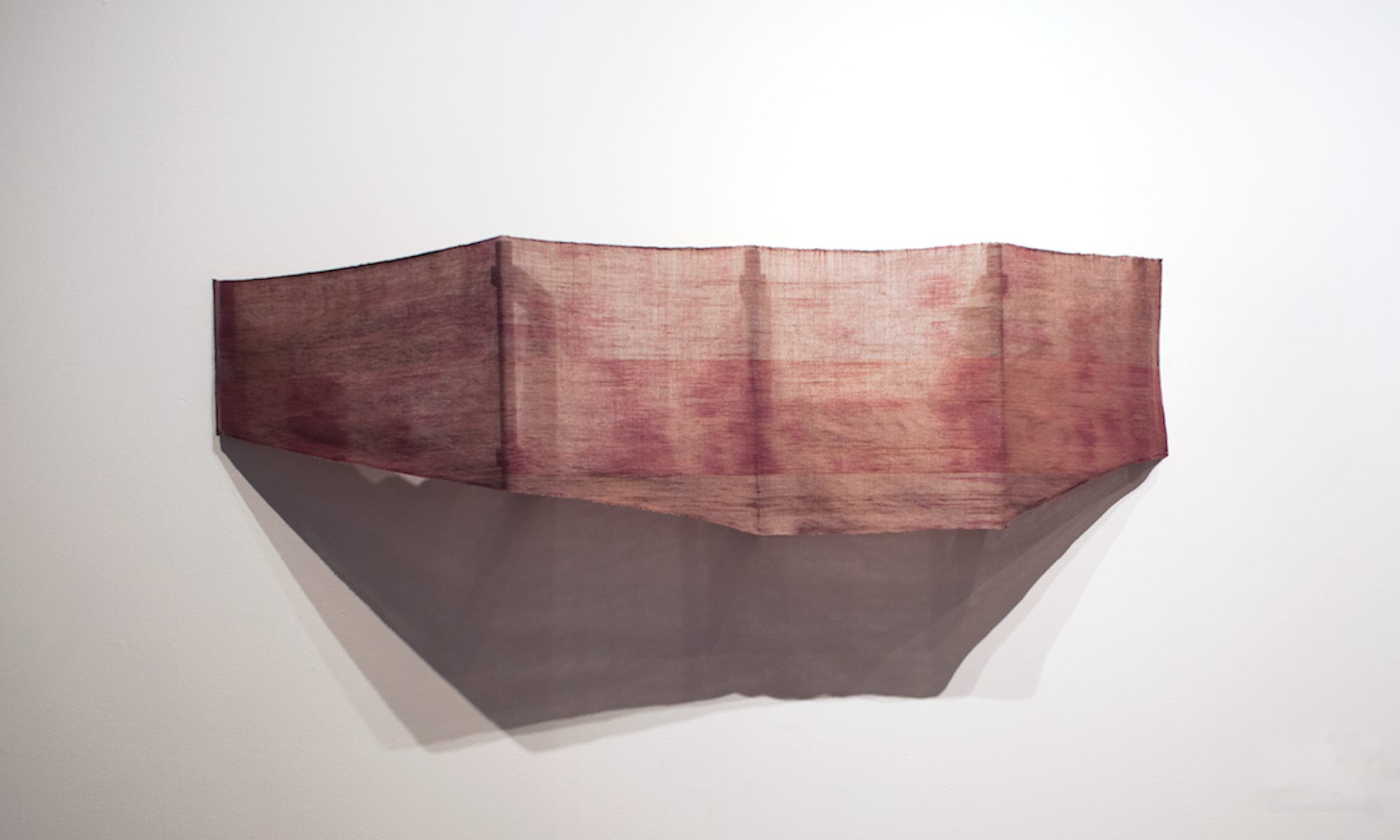
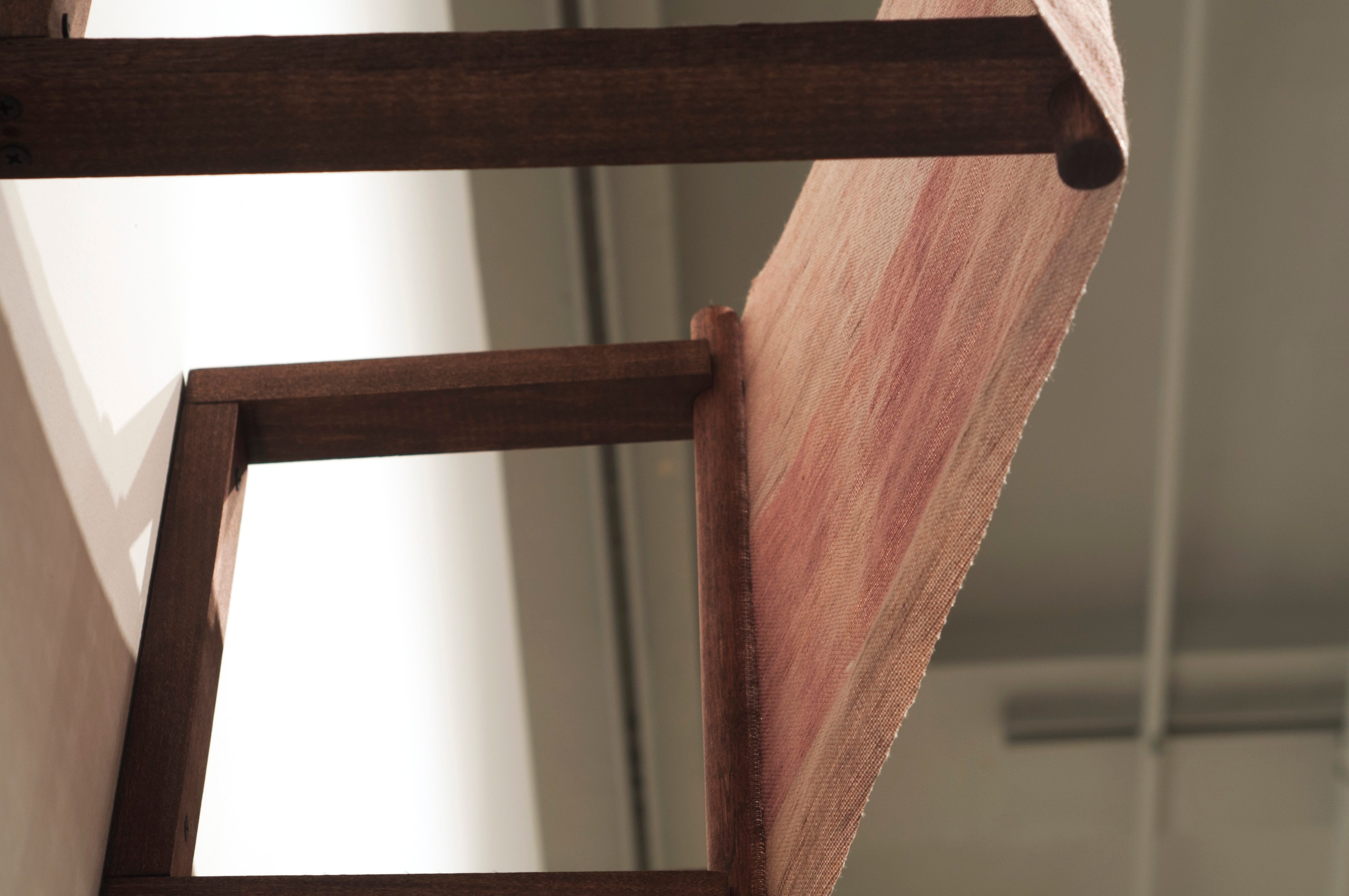
Banner-Scape No. 2: Across from the Poulnabrone Dolmen was created by constructing four wooden braces that were directly installed on the gallery wall. I wove the textile on the loom as a rectangle, but then traced a template I had made using cardboard to cut a shape into the weaving. I stretched the woven shape over the braces, composing a story of four elements: photograph, natural wood, woven textile, and the shape of light (the shadow). I remember looking at this piece after I had installed it, stepping back to consider it and thinking, I’ve created a monument.
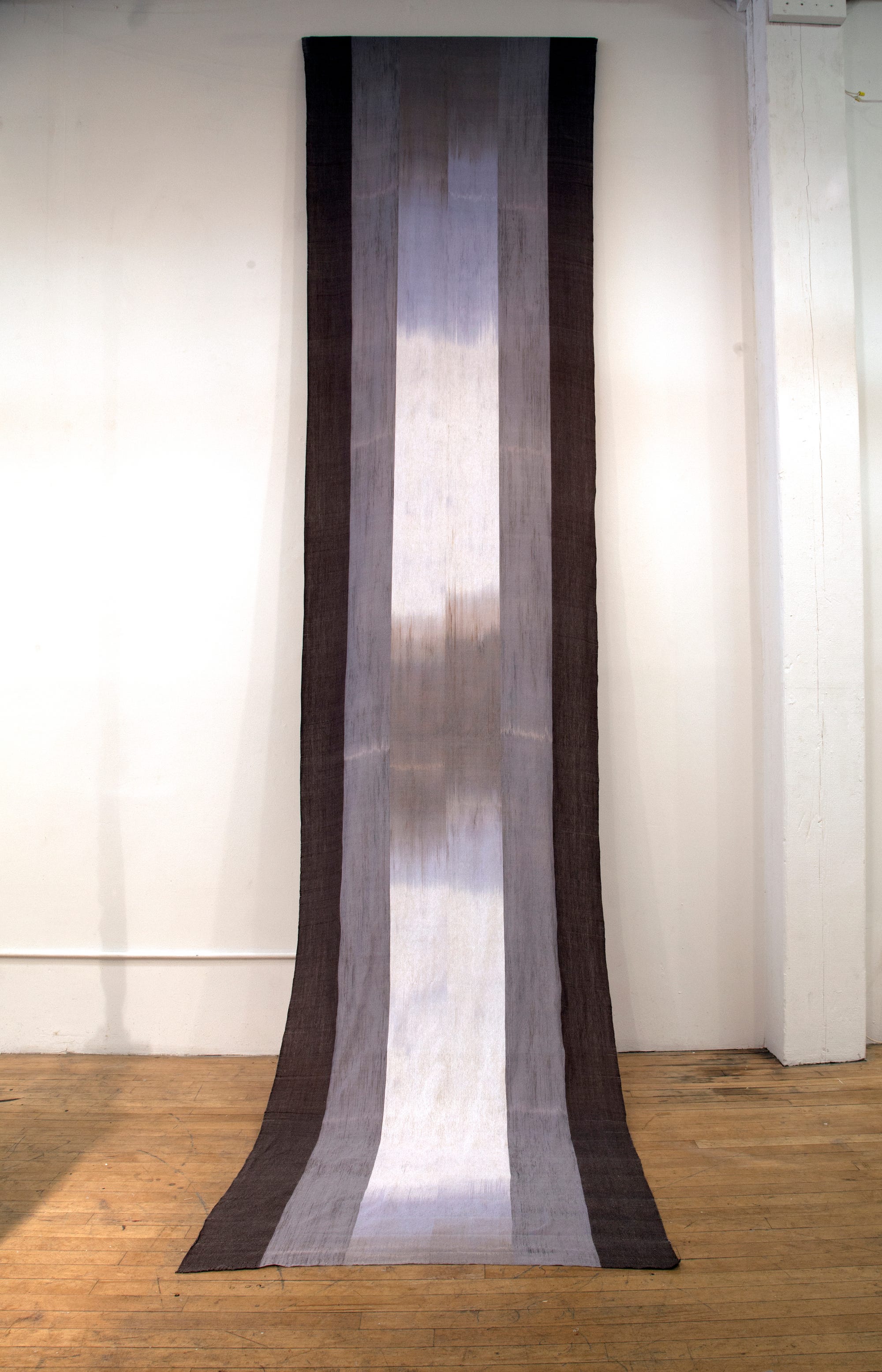
The word monument (in connection to memorial of place) led me to create Banner-Scape No. 3: Lake Superior, MN. I told my professor I was going to weave a piece that was 6 yards long in time for gallery installation and critique, and he joked that I was “unwell.” In an act of blind stubbornness and determination, I dyed, dressed, and wove all 18’ in the span of two weeks, unlocking a new language — the rhythm of loom, body, and breath. I realized that the process of weaving tabby at such scale allowed my body to enter into a meditative flow state, which I later described as my loom dance.
For long stretches of time my mind could still, and I lived solely in sensation, not dissimilar to my memories of sunflowers in my father's garden. The tactility of creating cloth became the feeling of the shuttle sliding from one hand to the other, the sound of yarn unrolling from the bobbin, the beat of the reed, the jingle of heddles falling with shafts, and the pattern of footwork. In this dance I began to craft my rite of passage, forming material evidence — my memory cloth.
To be continued in part 3.
Comments
Nothing yet. Say the first thing.
Sign in to join the conversation.