
Continued from part 1 and part 2.
In the summer of 2013 I moved home to New Jersey. As many young artists have also experienced after graduating from school, there is an existential reckoning to be had when you suddenly lose your community and studio access. I had been applying to textile brands across the United States, but I hadn’t received a single interview.
Instead, I was curated into two exhibitions in Chicago, and one of my Banner-Scapes was lost in transit.
I did some odd jobs in textile conservation.
I wove a few rag rugs to sell at markets.
I moved to Peru for an artist residency.
I sold my first Banner-Scape to an interior designer, for her client who was the drummer of a very famous band. My friends and I celebrated with boxed wine in the Sacred Valley.
I returned home and founded Weaver House, selling textiles I had sourced and repaired from my travels.
I considered graduate school.
I discovered that someone was haunting me.
✻
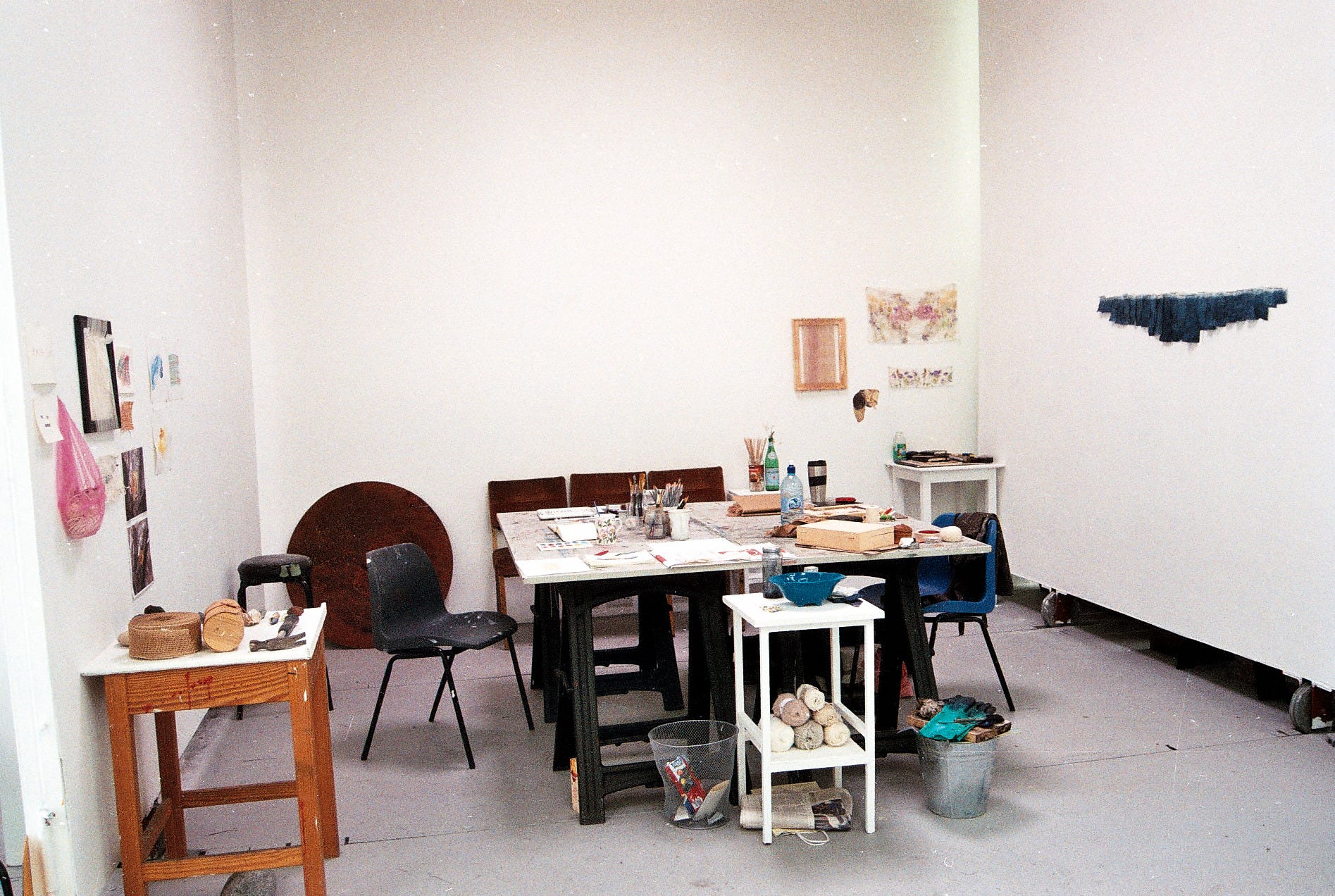
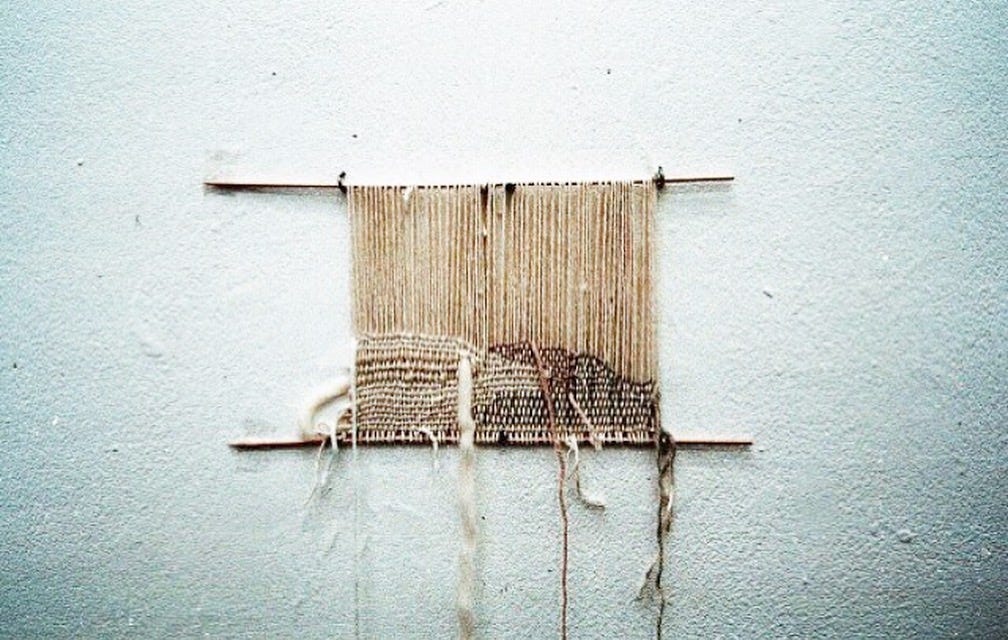
When I was in Ireland I shared a studio space with a graduate student studying art therapy at SAIC, who I’ll refer to here as SL. We became natural friends and shared our practices with each other — SL had some experience in weaving but expressed the desire to learn more, after I made a small loom on the wall of our studio. She created an indigo vat and shared her knowledge of natural dyes, and I told her about working with Frank Connet. We spent afternoons exploring rolling pastures, and hours making art side-by-side. We rode bikes together, gathered small stone mementos, and often walked the winding (and terrifyingly narrow) road down to the local pub at night. Her presence was easy, familiar.
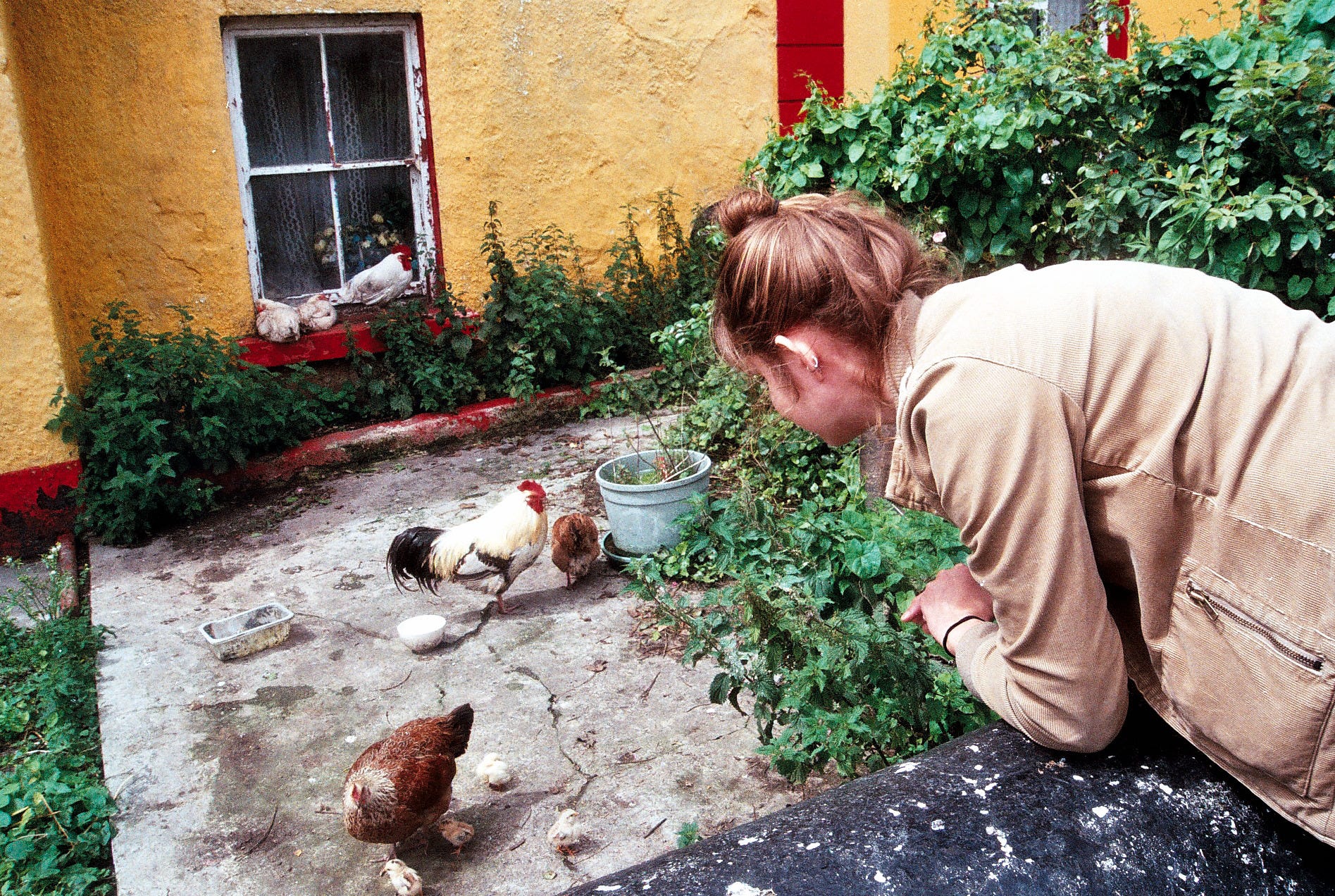
Our paths did not physically cross again once we returned to Chicago, but I thought of her fondly from time to time. Then a few years later a classmate tagged me in a group photo and when I opened it, I saw SL’s face. I immediately hoped to connect, to see what she had been up to since our time in Ireland. I clicked on her profile. My stomach dropped. A wave of anxiety hit me so hard that I couldn't breathe. This can’t be real.
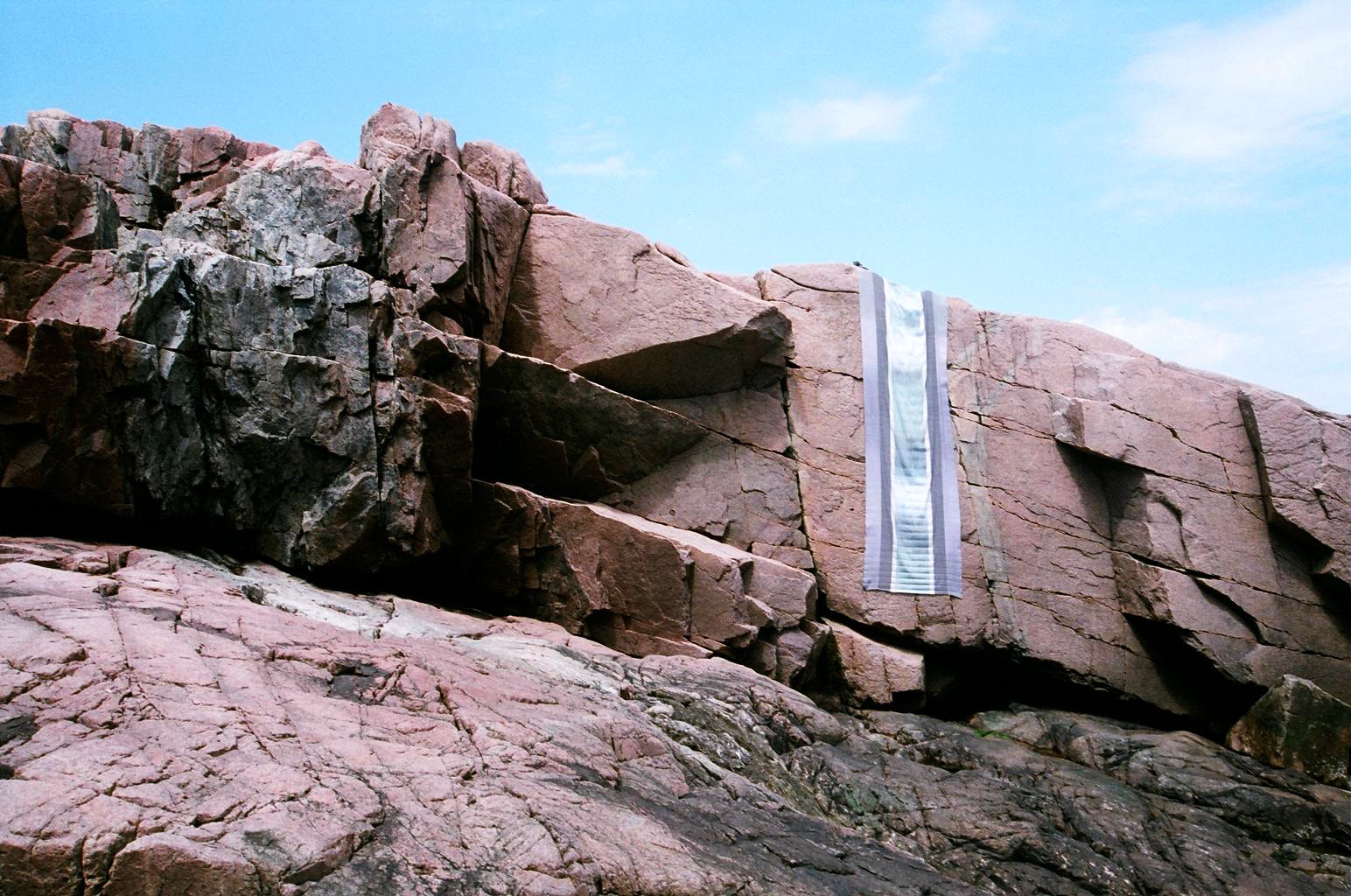
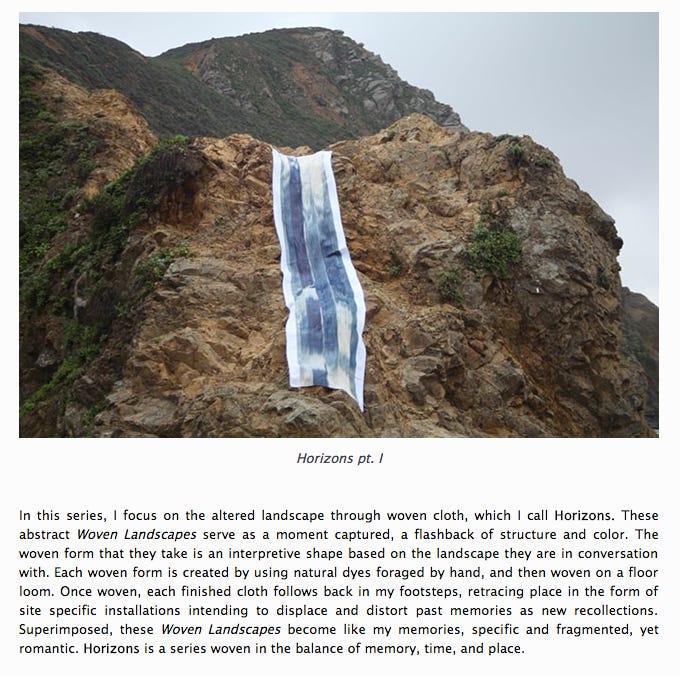
SL had copied me, but not in a way that makes you raise an eyebrow or sigh in frustration. She had copied everything online about me, as if she was attempting to siphon my artistic presence. Not only had she tried to re-weave my Banner-Scapes, she had stolen my artist statement, titles, artist biography, and documentation process. She had even chosen the same exact website template I used, and duplicated my layout and formatting.
The betrayal was easy to recognize, but something softer and more tender was forming beneath the surface. These artworks were the labored expression of a long and painful process to reconcile the loss of my father. They were my material identity, my rite of passage, and my memorial to sacred space. The words in my artist statement, however unpolished, were a vulnerable desire to be known and seen by others. And then, just like that, they weren’t mine anymore.
I emailed SL for an explanation. I never received a response, but a few days later her website was taken offline and she blocked me on Instagram. This cycle continued to play out over the last decade — in the beginning I checked frequently, as the injustice kept me up at night. Then less frequently, and sometimes years would go by. But without fail, SL continued to add these stolen artworks and my textile language back into galleries, residencies, and community spaces as her own. The last email I sent her was on June 10th, 2026, as I was considering this series — she once again deleted it all from her website without acknowledgement.
✻
I have been copied quite a bit over the years, as my weaving practice overlapped with the social media rise of Instagram and Pinterest. I often found my weavings shared (uncredited) on Pinterest, most notably by Anthropologie and Ralph Lauren. I was also selling my textile designs to home goods brands and could watch the trajectory of something popular move through the fashion conveyor belt. I licensed a textile to Williams Sonoma during graduate school that was manufactured into a plush alpaca blanket. A classmate later sent me a screenshot of a synthetic version she saw on Amazon for $19.99. She texted me, “Didn’t you weave this?”
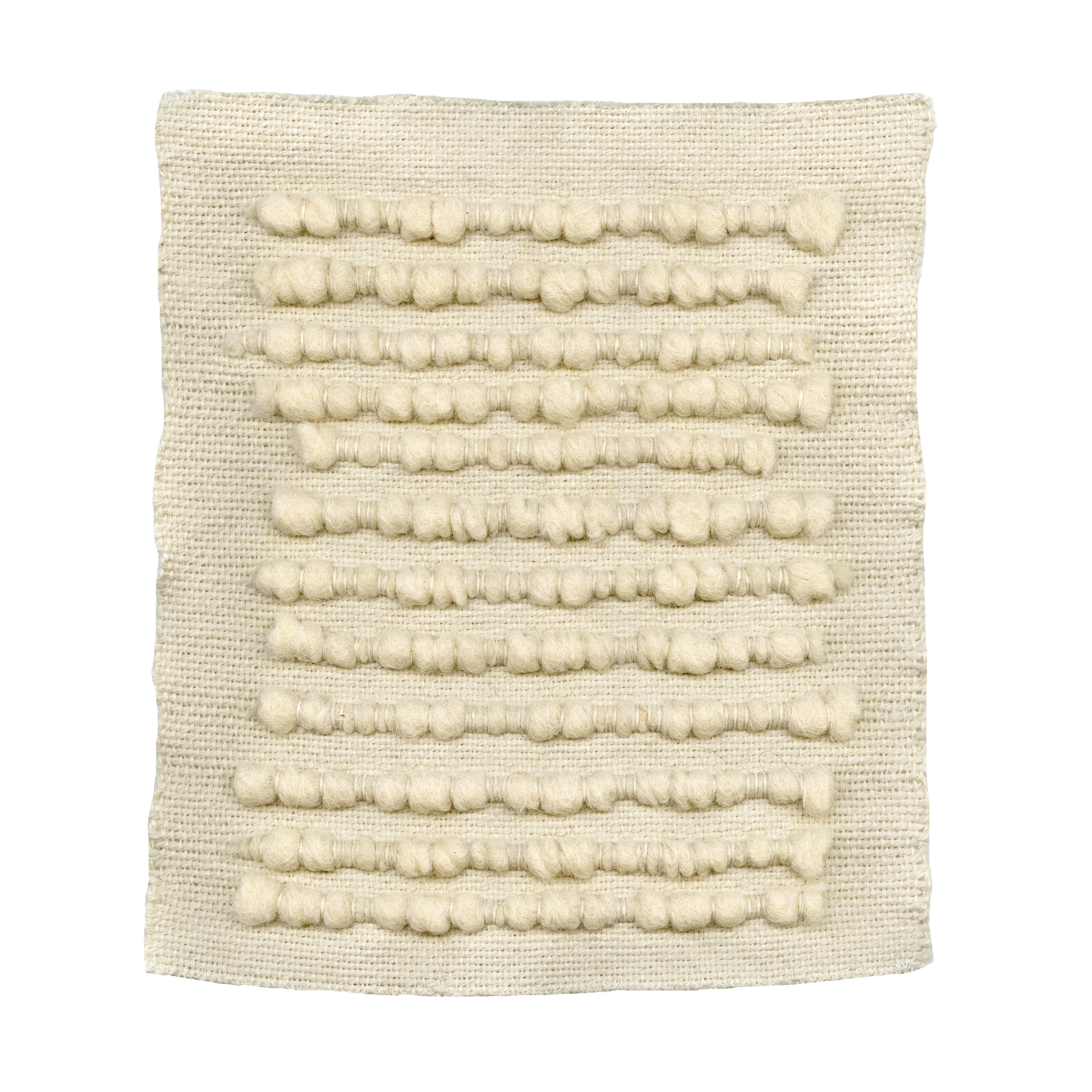
I’ve come to accept that making art in an information age built upon access means that some will take advantage. But I would be lying if I said it didn’t affect me and change the way I approached art-making in the past. I can’t argue it was an emotionally regulated response, but I stopped exhibiting my Banner-Scape series. I stopped weaving them altogether. At the time I felt powerless and frozen by the theft — it felt impossible to maintain the memorial to my father when SL was exhibiting them as her own.
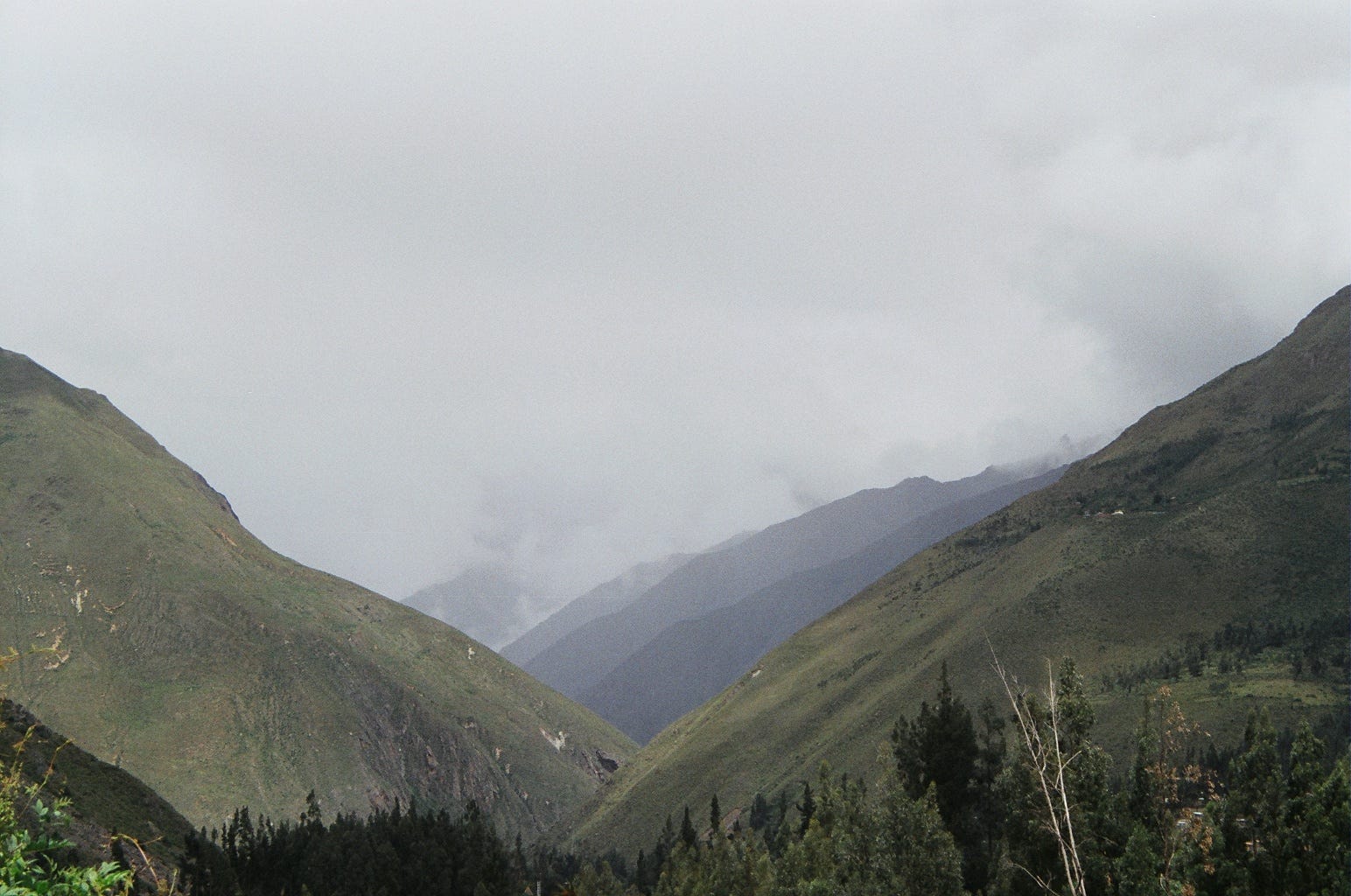
Instead, I shifted into a new tactile narrative.
To be continued in part 4.
Comments
Nothing yet. Say the first thing.
Sign in to join the conversation.