
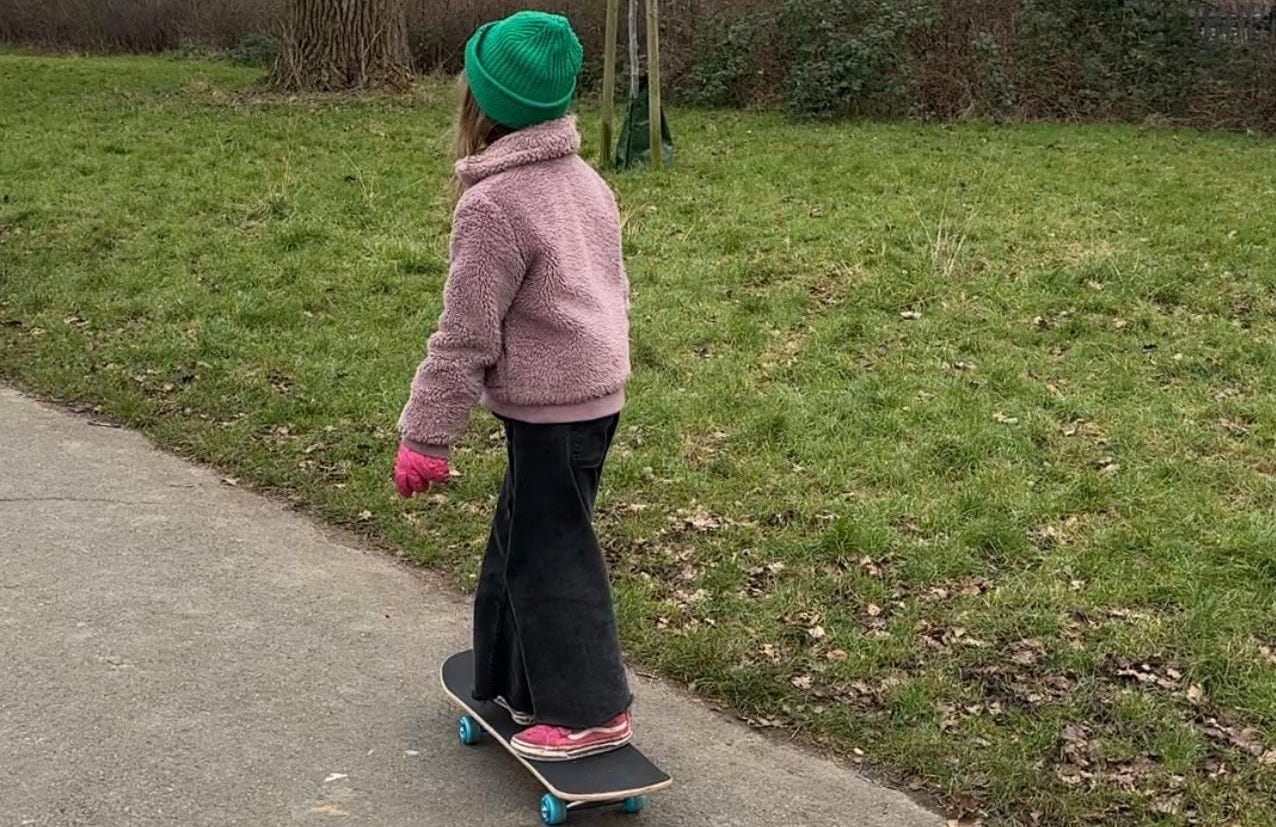
Children are recommended to take part in at least 60 minutes of physical activity per day. In our sedentary lifestyle, not many are achieving that.
It led me to count up how much my children do on a typical day, and it’s worth all of us doing so because it helps us recognise days when we may be too inactive (rainy, cold days, for instance…) and think more about how we can sneak in exercise throughout the day. And remember, exercise includes running around with friends in the park. It doesn’t only mean structured sports.
Aside from how to increase it (which is the focus of an upcoming piece), I want to focus today on why we should encourage more movement. We all know intuitively that exercise is good for our health, but what I find most fascinating is that it boosts our brain too - and not just our mental wellbeing, but how well we perform on cognitive tasks.
Children literally perform better at school if they are physically active. And as I recently covered for Bold, physical activity can help children overcome adverse experiences.
In one recent study researchers found that positive experiences, such as having close friends, supportive teachers and participating in sports or arts activities, were overwhelmingly associated with better cognition.
Those who had more positive experiences scored higher on tasks involving vocabulary, reading comprehension and memory. Enriching activities help us think, learn, and process information better.
Young people who had more positive experiences, despite experiencing adversity, were also less likely to be anxious, depressed, or aggressive. Positive experiences, in other words, may help improve socio-emotional skills, which children who have experienced adversity often struggle to develop.
That makes intuitive sense if you consider that when we are stressed, it puts a block on how well we think and even communicate - which can leave us feeling disempowered (as I covered in my book Breadwinners)
The neuroscience involved is equally fascinating - I’ve been speaking to several researchers over the past few weeks about what’s going on in the brain when we exercise.
Fascinatingly, even a brief bout can create “ripples” of activity in your brain that helps improve our memory. That’s because when we exercise, it strengthens an area of the brain important for memory, the hippocampus, which is why it can have a positive effect on our memory.
Until now it’s been difficult for scientists to understand the processes at play but very recently neuroscientists observed tiny bursts of electrical activity flowing between the brain cells, or neurons, that are known to be important for consolidating memories. These “brain ripples” are where many neurons activate together and they play a key role in how the brain packages and stores memories during sleep and periods of quiet rest.
The team monitored the brains of participants to see what would happen after a brief burst of activity. They found that after exercise, there was an increase in ripples in the hippocampus as well as other areas the hippocampus is connected to. Researchers believe this is what helps the brain consolidate memories.
Similarly, moderate exercise a few times a week has been found to increase the size of the hippocampus. Going for a walk can improve memory retention and subsequent retrieval.
Knowing all this I’m all the more mindful of fitting it in throughout the day and involving my children where possible too - knowing that their 15-minute cycle to and from school really benefits not only their health, but their learning too.
Breadwinners is packed with research, real-life stories, and practical advice for navigating the power dynamics at play in our lives. Buy it for a friend, or consider leaving a review or rating here (you don’t need to have bought it from there to do so).

You might also like:
No posts
Comments
Nothing yet. Say the first thing.
Sign in to join the conversation.