
The jobs of today may not look very different in five or ten years time, which is a common worry among my social circles, especially as companies are increasingly looking to outsource basic tasks to machines.
More of us are therefore thinking how we can best to grapple with how fast technology is changing, to both protect and equip our children to use it wisely.
This is something I think about a lot, so it was fascinating to research how AI chatbots can and do affect our brains.
It makes intuitive sense really, if we outsource our thinking or research, we’ll remember less, but what was most alarming to learn is that our brain waves react accordingly too, and not just in the moment but months later.
I spoke to researchers who explained that if we become too reliant on AI, it could affect the language we use and even our ability to do basic cognitive tasks. It could even contribute to cognitive decline as we age - because our brain thrives on challenge. The more we outsource, the less active our brain becomes, both in the moment and in the future.
It’s worth bearing in mind that the way we teach our children to interact with AI really matters for their future cognition. In short, if we use it as a tool for research and challenge the results, it can be beneficial. If we use it to generate without contributing ideas, it will literally make us stupider and potentially make our brain more vulnerable to cognitive decline.
A summary of my latest piece is below:
—
It’s well known that the tools we use can change how we think. But there is now growing alarm that as we offload even more of our thinking to LLMs and other forms of AI, the effects on our memories and ability to solve problems could get worse. Artificial intelligence tools can write convincing poetry, give financial advice and provide companionship. Students are increasingly outsourcing their own work to AI tools as well.
Studies have already shown that young people might be particularly vulnerable to the negative effects that using AI can have on key cognitive skills like critical thinking.
Reduced mental effort
A team at MIT Media Lab recruited 54 students to write short essays and split them into three groups. One was instructed to use ChatGPT. A second could use Google search, with AI-generated summaries turned off. The third didn’t use technology. Each student’s brainwaves were measured while they worked.
The essay topics were deliberately open-ended, meaning little research was needed for the task, with prompts including questions around loyalty, happiness or our daily life choices.
The results haven’t been published in a scientific journal yet, but they were none-the-less eye-opening, according to lead author Nataliya Kosmyna. Those who used their own minds had a brain that was “on fire”, showing widespread activity across many parts of the brain, she says. The search engine-only group still showed strong activity in the visual parts of the brain, but the ChatGPT group showed notably less brain activity – it was reduced by up to 55%.
“The brain didn’t fall asleep, but there was much less activation in the areas corresponding to creativity and to processing information,” says Kosmyna.
ChatGPT also affected people’s memories. After submitting their essays, people in the AI group were unable to quote from their essays, and several felt they had no ownership over the work. Other studies have also shown that people become less able to retain and recall information when they use AI tools such as ChatGPT.
While the findings are still undergoing peer review, they echo those from other studies. One study by researchers at the University of Pennsylvania suggests that some people undergo something they term “cognitive surrender“ when using generative AI chatbots. This means they tend to accept what the AI tells them with minimal scrutiny and even allow it to override their own intuition.
It’s clear that the more active our brain is, the more protected it is from cognitive decline. Ultimately, we should therefore be wary of cognitive shortcuts, which is something “our brains love”, Kosmyna says. Clearly, for long-term brain health we need to continue to challenge ourselves. Our minds, creativity and cognitive health will benefit in the process.
—
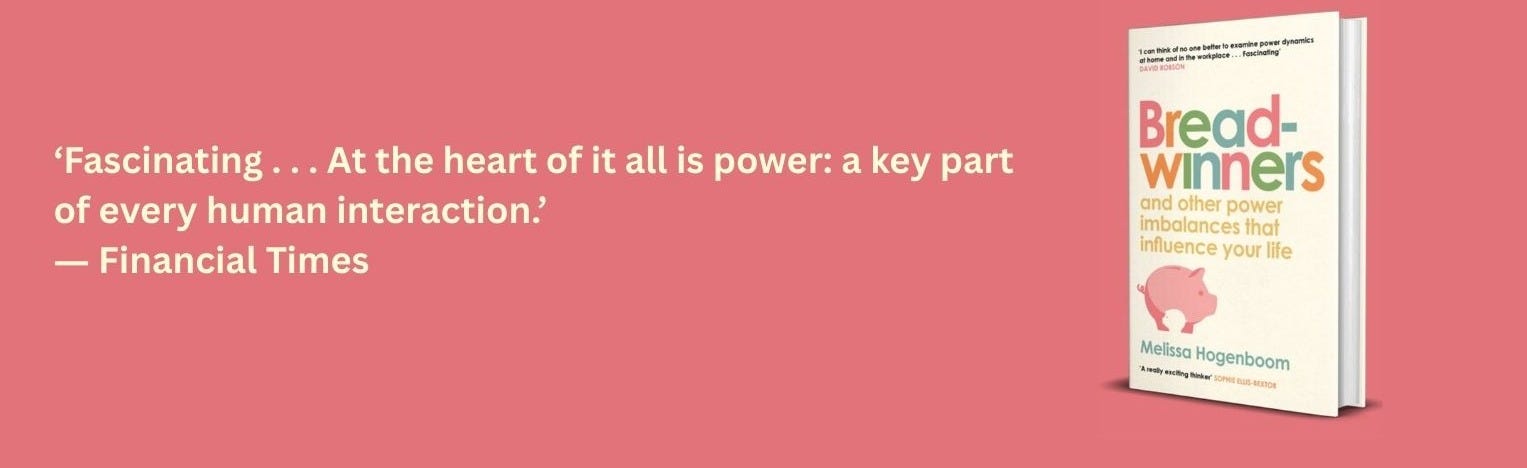
Breadwinners is packed with research, real-life stories, and practical advice for navigating the power dynamics at play in our lives. Buy it for a friend, or consider leaving a review or rating here (you don’t need to have bought it from there to do so).
No posts
Comments
Nothing yet. Say the first thing.
Sign in to join the conversation.