
“We don’t want to be Times Square,” said Christine Foster, Group VP of Commercial Strategy & Operations at Kroger Precision Marketing. “The goal is not to throw screens against every wall or in every aisle. We want to be really native to the environment and the mindset or the experience we want the customer to have.”
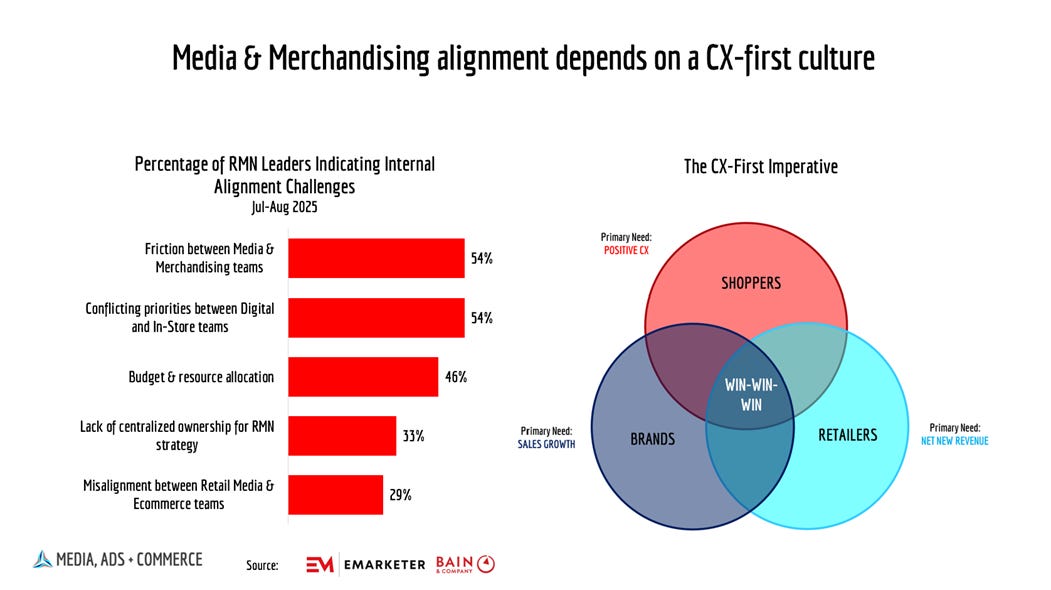
As US RMNs begin to roll out their in-store media networks, they understand that maintaining—or better yet, elevating—a positive customer experience (CX) is paramount. And because in-store retail media got off to something of a rocky start a few years back, retailers have been extra cautious in their approach. It’s imperative that retail media leaders establish a CX-first culture if they want continued buy-in from merchants, who may already be skeptical.
There’s good news for merchants, though. New research shows not only that US shoppers have a growing acceptance of in-store digital ads, they find it additive to the CX.
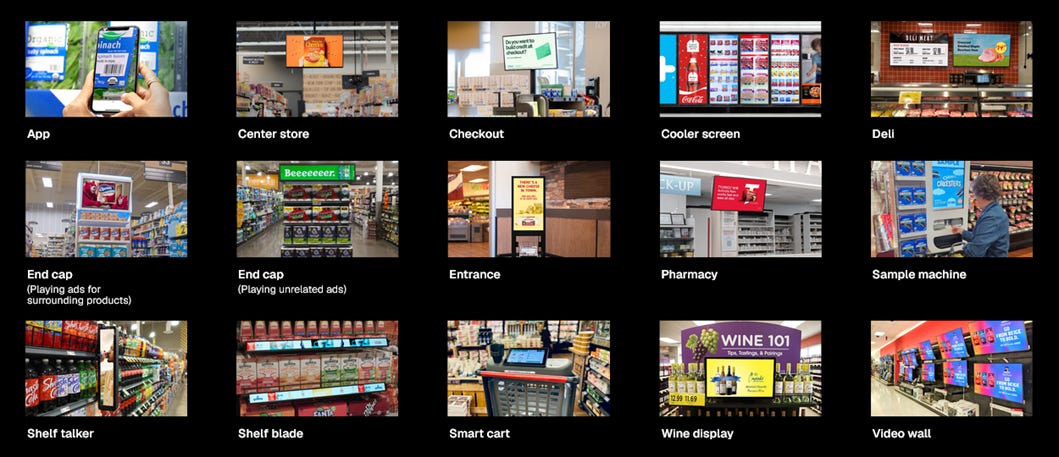
In March 2026, Grocery TV conducted a survey of 1,018 US consumers about their perceptions of in-store advertising digital displays at 15 store zones. For each format, respondents were shown a before-and-after photo of static vs. digital displays and asked whether the addition of a digital screen would have a positive, neutral, or negative effect on their shopping experience. The digital endcap was evaluated with advertising content both relevant and unrelated to the product on the shelf.
These results were compared to a parallel study conducted in June 2023 covering 10 digital displays that were in-market at the time.
In the survey, US shoppers were asked about in-store digital displays using visuals of current executions compared to existing analog versions of the displays. Respondents then indicated whether each instance of digitization represented a positive, neutral, or negative impact to existing store CX.
The displays that rated as overwhelmingly positive or neutral should be considered by retailers as safer options from a CX standpoint. According to that criteria, the Store Entrance was the top performing display with 88.5% of respondents indicating a positive/neutral response.
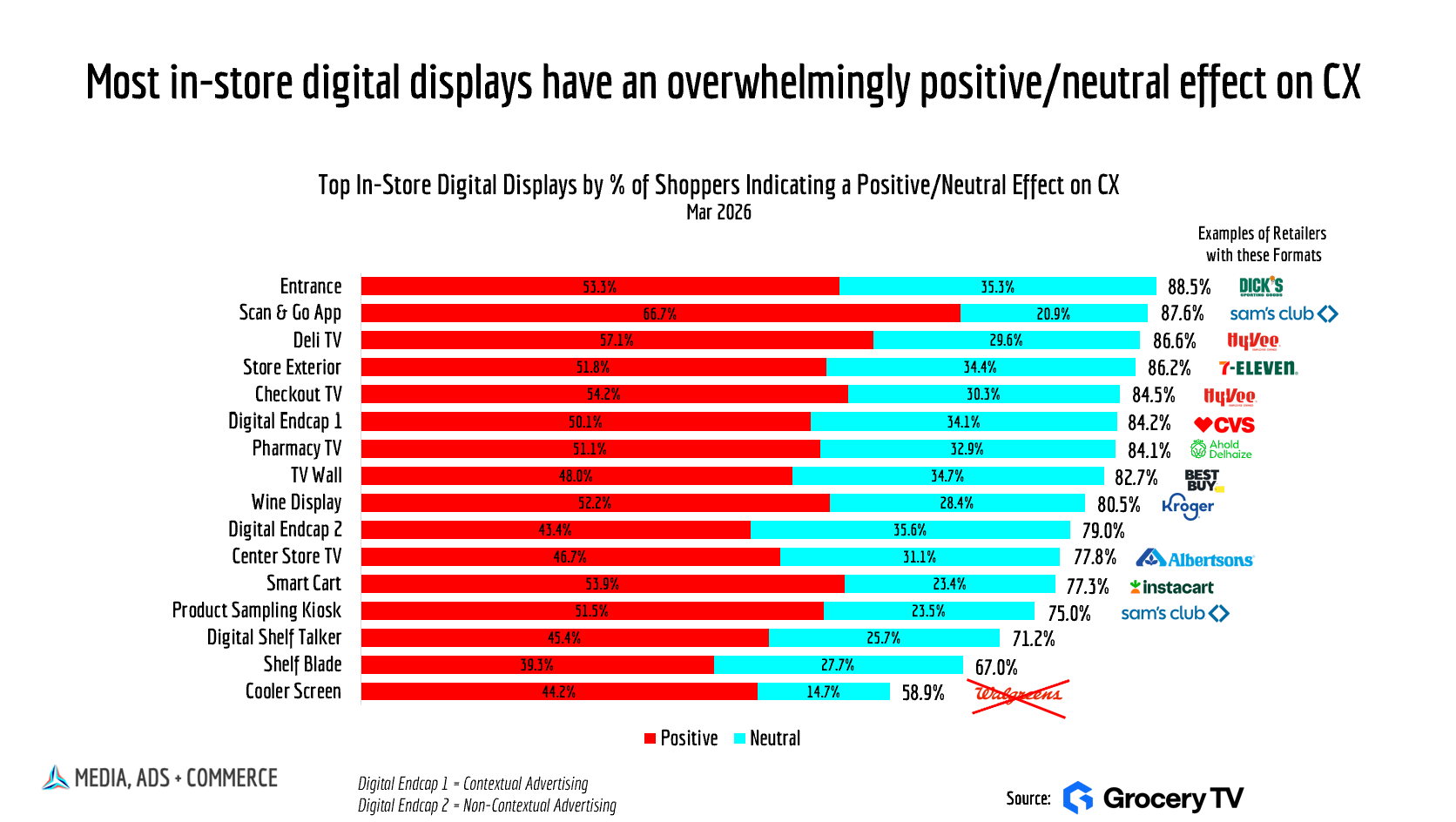
Rounding out the top five were Scan & Go Apps, Deli TV, Store Exterior, and Checkout TV, all of which are either at the store periphery (with little chance of disrupting the customer journey), and/or in high-dwell locations (where shoppers tend to stand and wait).
Displays involving active engagement like Scan & Go Apps (66.7%), Smart Carts (53.9%), and Product Sampling Kiosks (51.5%) all ranked high on Positive CX, but lower on neutral, as shoppers likely consider themselves either users or non-users of these activations.
This article is based on data from a new Grocery TV report, “In-Store Shopper Perception Report 2026,” which I co-authored.
Click here to download a full copy of the report.
Perhaps the most consequential finding from the 2026 study was the incredible positive shift in sentiment toward in-store digital displays vs. 2023.
10 out of 15 digital displays were rated by shoppers as being over 50% CX-positive. In the 2023 study, only 1 out of 10 reached that threshold.
12 out of 15 digital displays were rated by shoppers as being over 75% CX-positive /neutral. In the 2023 study, only 6 out of 10 reached that threshold.
The 10 digital displays included in the 2023 study saw an average 10-percentage point gain in positive CX rating over the past 3 years—from 41% to 51%.
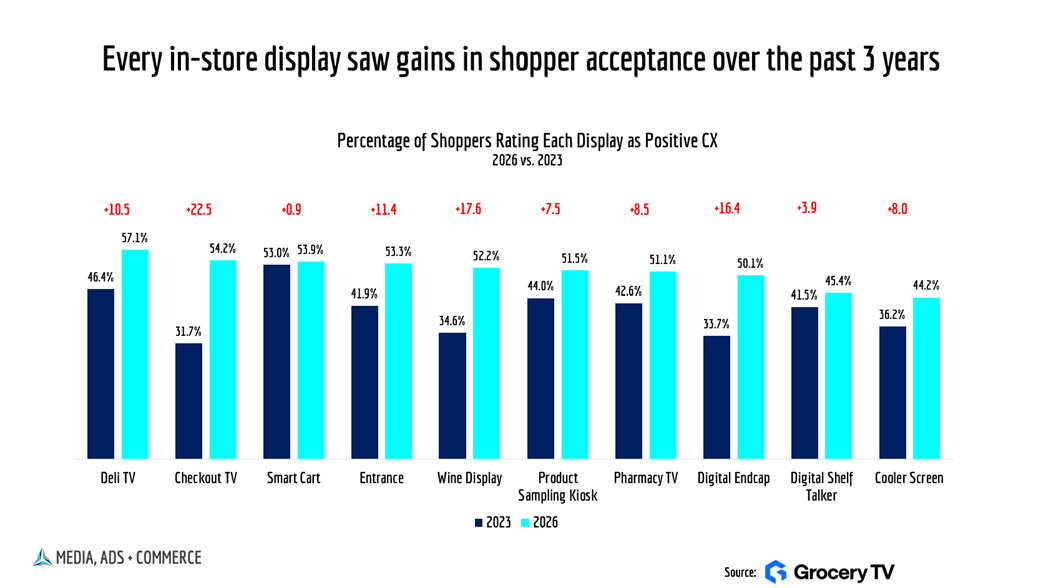
The top rising displays included Checkout TV, up 22.5 percentage points to 54.2%, followed by Wine Displays (up 17.6 points to 52.2%) and Digital Endcaps (up 16.4 points to 50.1%).
Several reasons could explain the growing overall acceptance of in-store digital displays, and especially among the top-gainers.
Higher prevalence of CX-positive executions – In 2023, Cooler Screens were among the most prominent and visible digital displays in store, while also rating lowest on CX. As Cooler Screens were removed from stores, and less intrusive displays were introduced, it likely had a positive impact on overall perception of in-store retail media.
Better familiarity with digital displays – With more executions in-market that appeal to consumers, growing familiarity tends to breed greater acceptance. Some of the top gaining displays have also been in-market the longest.
Improving creative executions – In the emergence of any new advertising medium, early creative tends to be repurposed from other channels. As brands and agencies mature in their knowledge and understanding of what works, they will tend to develop better quality creative that’s native to the channel.
The most common concerns among retailers rolling out—or still considering—in-store media networks is which displays to prioritize. The key requirement from retail merchants as the primary gatekeepers in this process: first do no harm to CX.
Fortunately, several store zones constitute a negligible, or even zero, risk of a negative impact on CX—the “no-brainers” where retailers can feel confident moving forward.
One of the most obvious no-brainers digital displays is the Store Entrance. Not only did it rank as the top in-store display in positive/neutral CX (aside from Scan & Go Apps), it boasted a net positive CX rating among ad-averse consumers. Even the toughest advertising critics don’t seem to have an issue with it! Other no-brainers include Deli, Pharmacy, Checkout, and even Digital Endcaps (with contextual ads).
Several displays fall under the “manageable risk” category. Each of these surfaces—including TV Walls, Wine Displays, Center Store, Smart Carts, and Product Sampling Kiosks—are worthwhile activations which may fit certain contexts better than others. Implementing will likely require more thoughtful execution, plus strong alignment with merchants and store ops given their unique integration with merchandising.
Finally, the higher risk surfaces like Digital Shelf Talkers, Digital Shelf Blades, and Cooler Doors should be deprioritized and perhaps avoided altogether. There may be edge cases where they make sense, but the retailers would need to build a strong case internally and carefully mitigate the risks of creating an interruptive CX.
KPM’s Foster wasn’t the first to show concern about the store turning into Times Square. When Rosalind Brewer first stepped into the CEO role at Walgreens in 2021, Cooler Screens was just getting underway with a major national expansion of digital cooler doors from 50 stores to several hundred across top US DMAs.
Bloomberg’s Austin Carr reported on Brewer’s initial reaction to seeing the digital cooler doors:
On a tour of various Walgreens stores, according to a court filing, she compared Cooler Screens’ fridges, derisively, to Las Vegas. (Brewer didn’t respond to a request for comment.) A source close to both companies says the word that trickled down from Brewer’s team was blunter: “Why do our stores look like an effing casino?”
The 2023 survey revealed a similar reaction from consumers, with Cooler Doors rating as the lowest performer. The same held true for the 2026 survey.
The Cooler Screens episode taught the industry a few key lessons:
1. Don’t overwhelm shoppers’ senses with digital displays—particularly large displays that dominate the aisle.
2. Don’t let digital displays come between the customer and the product.
3. Don’t allow media content to conflict with merchandising.
The biggest CX problem occurred when shoppers saw the digital planogram showing one product on the door, only to discover that it didn’t match the product—or even the category of products—that was behind the door.
Recent survey results supported this point, as the two next riskiest displays were Shelf Blades and Shelf Talkers. Both of these displays have the most potential after Cooler Doors to be interruptive and get between the shopper and the product. “Aisles are often already crowded,” said one survey respondent. “This would just add to the chaos.”
The survey also uncovered that ad personalization is something of a third rail with consumers. When asked which types of content they prefer on in-store digital displays, personalization ranked at the bottom with only 27.8% of shoppers in favor of it.
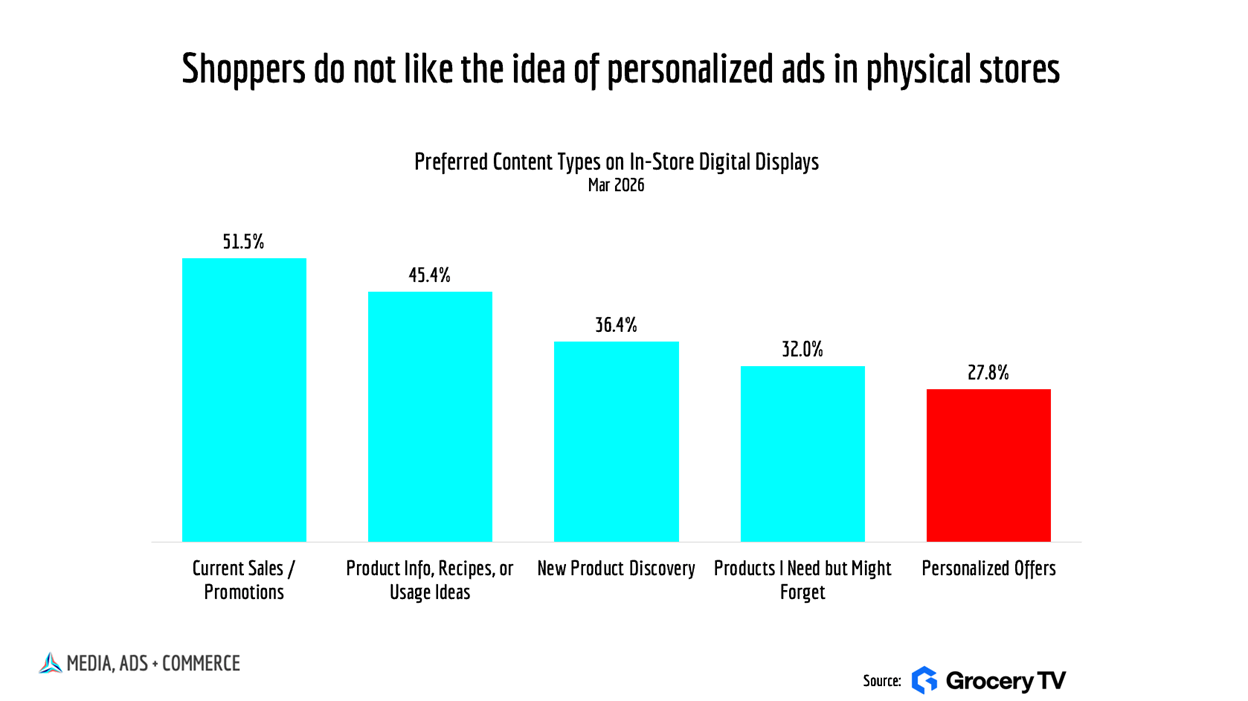
Retail tech investors salivate over the potential of personalized ads in the store, often without considering the consumer perspective. Comfort with targeted ads on smartphones is one thing, but it’s a very different thing in a public physical space. The idea that a screen might surface an ad tied to individual preferences or behaviors risks crossing a line from relevance to creepiness.
The smarter path is to lean into contextual targeting, such as day of week, time of day, location, and aggregate shopping behavior to deliver higher relevance in a consumer-friendly way. There’s more than enough signal to deliver high-impact experiences without eroding trust with shoppers.
With national retailers like Kroger, Albertsons, and CVS now expanding their in-store media networks, plus dozens of regional grocers actively in-market, US shoppers now routinely encounter digital displays.
The good news is that when shoppers experience in-store media in context, sentiment improves. More context-aware creative, tighter integration with merchandising, and formats that respect the pace and intent of in-store shopping can both elevate and modernize physical retail.
As a result, in-store retail media should no longer feel like a risky side project for merchants. It should be embraced as an opportunity for a more dynamic store experience where brands can reach customers in interesting and creative ways—and bolster the retailer’s top and bottom lines in the process.
When in-store retail media is CX first, it’s a win-win-win for shoppers, brands, and retailers.
Comments
Nothing yet. Say the first thing.
Sign in to join the conversation.