
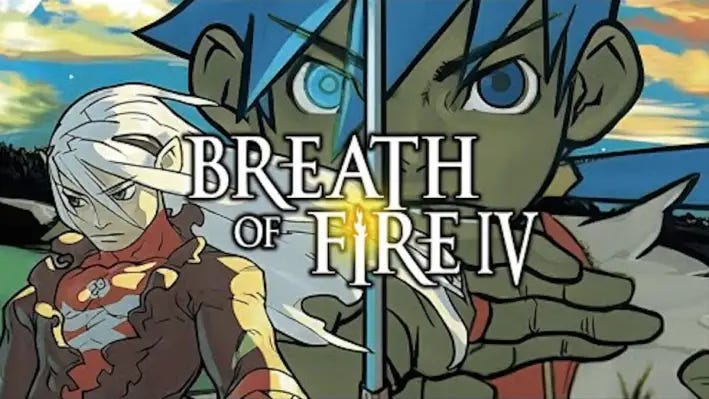
There’s a moment in the beautifully animated, generally solid PSX game Breath of Fire IV where the party is searching for a magic flute (not the Mozart one, a different magic flute). In the castle of Wyndia, the king tells Ryu and friends that the Oracle of Wind in some nearby woods knows where the flute is. So it’s off to the woods to navigate a dungeon. Once the party finds the Oracle, she reveals that that the flute is actually underneath the castle of Wyndia…where the party just was. So it’s back to the castle for a trek through another dungeon to nab the dang macguffin.
After griping about such obvious padding, what occurred to me was how happily I had enjoyed similar structures many a time in JRPGs: traverse a dungeon, find some information, traverse another dungeon, nab a treasure (or more information), and continue on until either the game ends or I die of old age. But in this case it didn’t work. Breath of Fire IV didn’t hook me into exploring the dungeons, however enjoyable that experience would be.
My experience reflects what I take to be a fairly typical view of how mechanics and plot interact in JRPGs, with games having distinct modes or sections of the game: plot and gameplay. The distinct modes will ideally reinforce each other, but in some sense remain separate. Under this view, the plot of Breath of Fire IV is the flute, the Oracle, and so forth, while the gameplay is the dungeon crawling, menus, and random battles.
However, wasn’t the dungeon as much a part of the experience as talking to the Oracle, for both the characters and the player? Ryu walked through that dungeon, and I was there right alongside him. I don’t think plot and mechanics are so easily separated, as I’ve argued many times before. But if I’m right, what is the plot of a JRPG, and how can we talk about with the usual tools of literary analysis?
While the terminology might change, an important concept when discussion fiction is to distinguish between the plot and the story. The story is the events of the fictional world as they proceed in time. The plot is what is presented in the actual work.
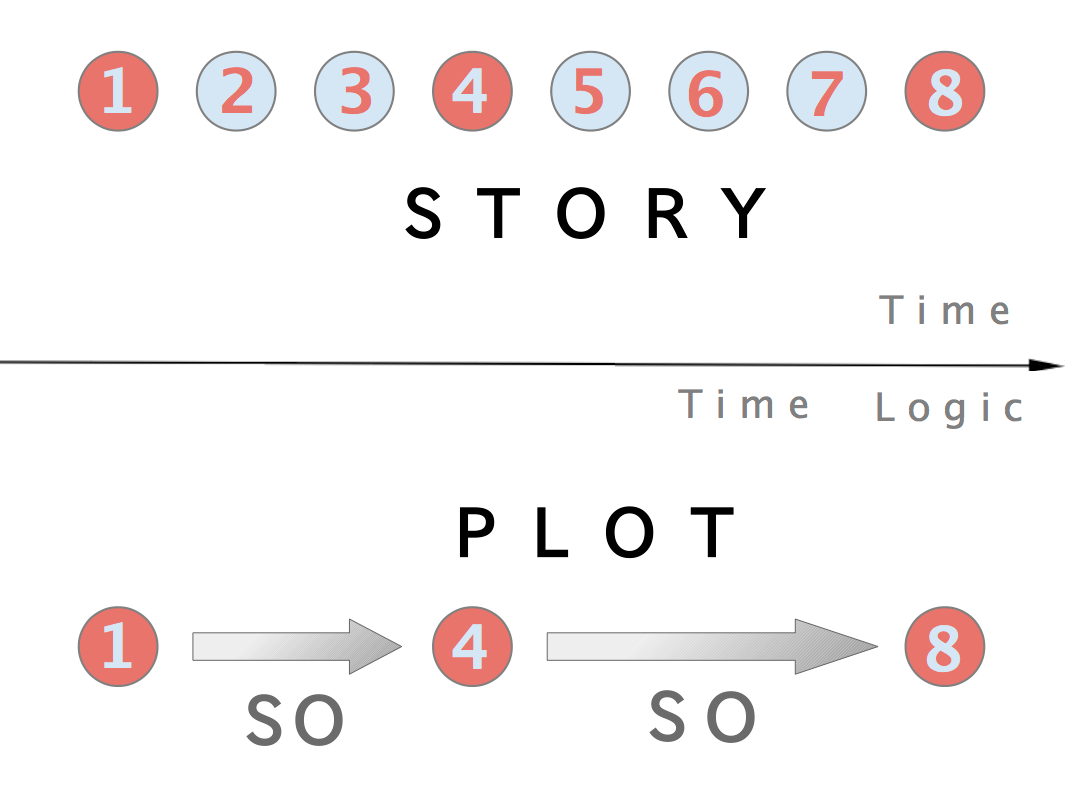
In Aspects of the Novel, E.M. Forster (who was top of the list in my best books of 2025) distinguished between the story as events proceeding because of time versus the plot as events proceeding because of cause and effect. Another way of looking at it is the plot is the parts of the story that the writer wants to show us, and in a format best suited to their purposes. While fairly obvious, it’s important to keep this in mind while thinking about narrative structure.
Like most things related to fiction, George Eliot is a master of this. In Middlemarch, Rosamond and Lydgate are discussing their upcoming wedding and future life. When we check in a few chapters later, they’re already married. Eliot skips the wedding scene because it’s not important to her book. Another good example is a movie like Memento, in which the plot presents scenes out of order in the chronology of the story. The flow of the plot doesn’t need to follow the timeline of the story, but can be chopped up and rearranged to suit the purposes of the work.
In adventure stories — which is my needlessly broad, unscientific category of fiction where people go on journeys, fight dragons, etc. etc. — often the actual adventuring of the story is skimmed or glossed over in the plot. While there is plenty of walking and eating in Lord of the Rings, there are also many moments that are summarized or skipped over. Even long-form, serialized formats like manga — probably the closest structural and historical cousin to JRPGs — feature montages or glossing over the bits not suited to the medium.
Games, by contrast, revel in the moments that would be boring or pointless to include in other mediums. I doubt that the upcoming live action adaptation of The Legend of Zelda will involve 45 minutes of Link fruitlessly hitting switches in the Water Temple. However, mechanical engagement allows us to experience and enjoy the adventure firsthand. All the wandering through temples or fighting monsters becomes fun when we’re the one swinging the sword.
This is all fine and good if we wall off the narrative and gameplay. Even in genres like JRPGs that embrace more traditional storytelling, the typical town —> overworld —> dungeon loop reinforces this disconnect between the plot and the mechanical sections.
However, that’s a matter of convention and framing. Players are reading dialogue and pushing a button during so-called “plot bits” and simple pushing different buttons during the more gameplay-focused sections. There’s no principled reason to consider dialogue as more representative of plot than any given random battle.
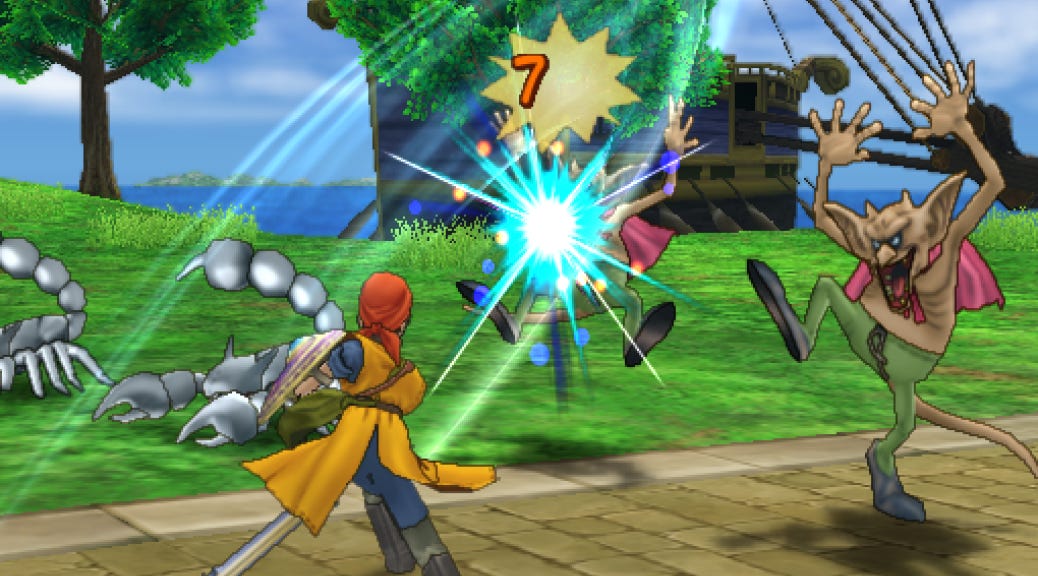
If we start to think of the mechanical journey of a JRPG — the dungeon crawling, the random battles, etc. — as part of the plot, we see that they’re in an unusual state. It’s a complete marriage of story and plot. JRPGs rarely gloss over anything, and certainly show in painstaking detail the parts of adventures that narratives in other mediums skim over. While there are often flashbacks and summaries in JRPGs, they are still presenting huge chunks of the story that wouldn’t be present if it were told in other mediums. Even One Piece skips over traversal once in a while, but we sail alongside the crew to every island in Dragon Quest VII.
In this case, E.M. Forster’s definition doesn’t seem to totally hold for JRPGs. While their is plenty of cause and effect in their narratives — Ryu goes to the woods to speak to the Oracle in order to find the flute — the sequence of the plot is guided as much by chronology and mechanical stresses. A detour down a side path to find a treasure chest is now part of the plot.
But if so, we’re ill-equipped to talk about it critically. The nice thing about a clean break of plot and gameplay is allows us to approach each with its own language, which is what games criticism usually does. Once we mix them up, how to think and discuss games becomes a little murky. It’s harder to criticize my Breath of Fire IV example because the dungeons may now be considered part of the pacing, regardless of our motivations to go there. If a boss fight is a climax, does that mean each dungeon can (or should) have a structure and rhythms that mimic other types of fiction?
It’s easy to see how traditional literary analysis breaks down in the face of choice and reactivity. It’s hard to chart a plot in terms of rising and falling action when it features major branching paths. Those two aspects of games are touted as their major defining features versus other mediums, for good reason. If you twisted my arm (or put a few drinks in me) I would wax about how the artistic merit of a game’s writing often rests on its ability to take advantage of its medium. Heck, I’ve even co-written a game that attempted to take the branching nature of RPGs to their limit.
What I find interesting about JRPGs is how they can still stress and warp our typical views of fiction when presenting narratives that wouldn’t be out of place in other mediums. JRPGs are linear and heavy on dialogue. Yet there are many other aspects of games, which at first blush seem purely mechanical, that can provide different experiences of a narrative when combined with more traditional storytelling.
While a touch cliche to say this, when we think of the plot of a JRPG as the whole game, we see how well the genre invites us to truly experience an adventure.
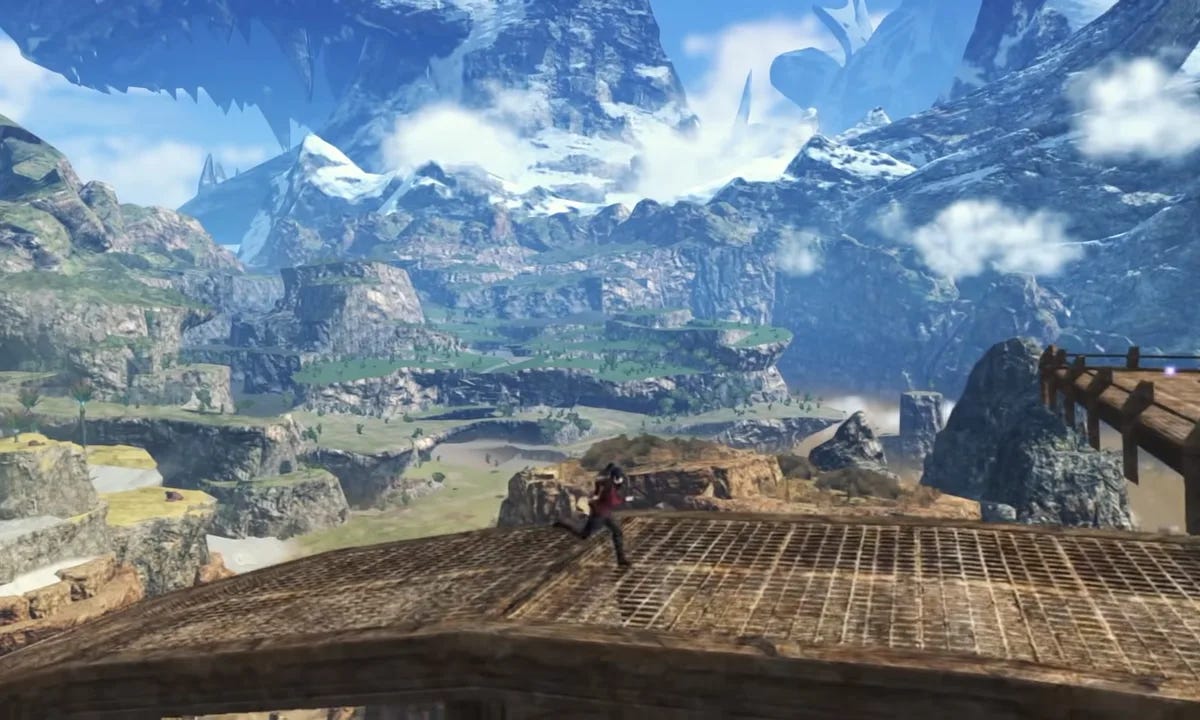
The journey of a game, especially JRPGs, is just as special to the medium as reactivity or branching paths. Mechanical interactivity underscores what the adventure of an adventure story actually is. Long journeys and countless battles allow us to emphasize with the characters. That meditative, repetitive climb to power is a reflection of the travails and triumphs our heroes are going through, and providing the experience of it is a powerful way to present a narrative. The grand journey is always stirring when described using the right words in a novel, but it is earned in a different way when we take each step alongside the characters.
The downside of thinking of plot in this way is, as I’ve said, that the existing critical language we’ve borrowed from other mediums isn’t well equipped to deal with it. We have a robust way of talking about pure mechanics, and often about plot structures unique to games (like branching paths), but the plot/story marriage of JRPGs complicates how we often discuss and think about narrative. While I don’t think we need to reinvent the wheel, conventions of fiction like the plot/story distinction or the typical “rising action” plot diagram either fall apart or aren’t very useful when discussing the plot of games. What’s more, I think relying on those conventional tools can distract from the beauty and appeal that games can provide.
I have nothing more to end this essay than a vague gesture toward a more holistic view and way of thinking about plot in games. But I think it’s important to take a work as a gestalt and also think about why it’s a game rather than a novel or comic. I’m still annoyed about trekking between the woods and castle just to grab a flute. But perhaps that was the point. Journeys are not always linear, nor are they convenient. I’m sure the backtracking was annoying to the characters, so why shouldn’t I be afforded the opportunity to actually experience that?
The entire Breath of Fire franchise is well worth checking out. A rare Capcom-developed JRPG series, the PSX entries (III and IV) feature truly stunning 2d animation, and a plethora of minigames. Being a sicko, I loved Breath of Fire: Dragon Quarter. That game has “cult classic” written all over it: a quasi-roguelike JRPG with an incredible, murky atmosphere.
Last week I had an unexpected day to myself, so I walked into a used bookstore, took a punt on a book, then read it next door eating lunch in a pub. I was lucky enough to grab the Starchild Trilogy by Frederik Pohl and Jack Williamson. While not as good as Pohl’s Gateway, the novels are classic 60s sci fi, with each entry broadening the scope of the plot and universe. The final novel especially breezes past huge, interesting ideas that merit an entire trilogy to themselves.
I’m having a fantastic time at the moment playing A Link Between Worlds. While this 3DS outing is a little too easy, the open structure, breezy tone and inventive powers more than make up for that. It’s a delight, particularly for those familiar with A Link to the Past.
A few years ago my wife introduced me to the crime writer Ruth Rendell, and I’ve since devoured most of her catalogue. While I don’t love her more conventional Inspector Wrexford novels, her standalone titles — some of which are written under the name Barbara Vine — are cruel, expertly plotted thrillers written with penetrating insight.
Something a little different for next essay: instead of a general topic, we’ll do a deep dive into a specific aspect of Dragon Quest XI. I’ll be examining how the mid-game vignettes set up, then demolish, some structural expectations.
No posts
Comments
Nothing yet. Say the first thing.
Sign in to join the conversation.