
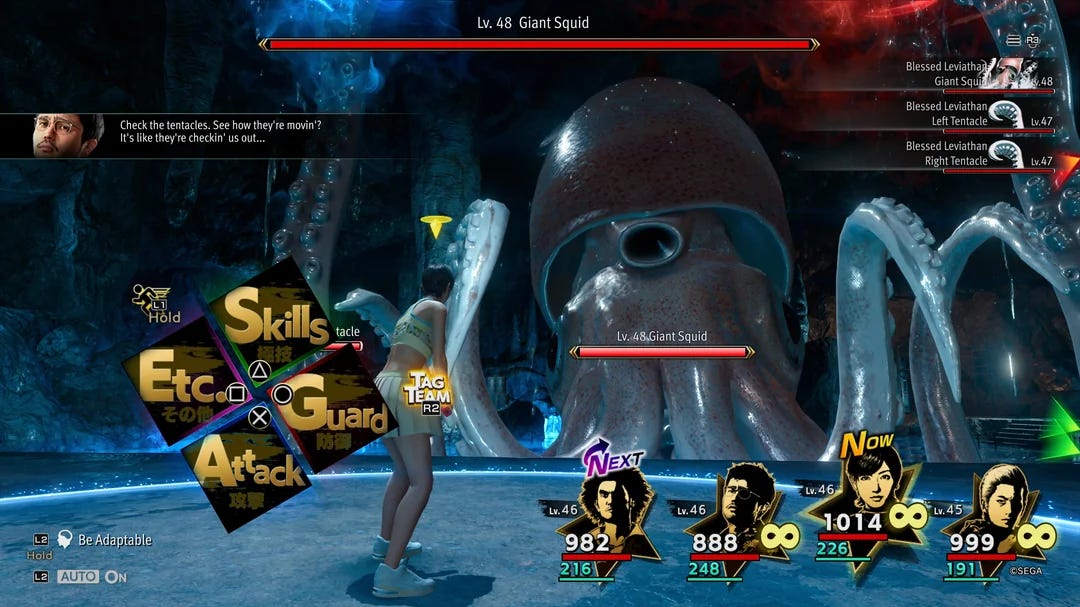
The long-running Yakuza series made two significant changes with its seventh entry Like A Dragon: a new protagonist in the form of easygoing Ichiban Kasuga, and switching the battle system from a real-time brawler to turn-based combat.
The battle system in LAD (and sequel Infinite Wealth) is JRPG to the core, packed with references to Dragon Quest and other fun touches, such as returning lead Kiryu able to temporarily break the turn-based combat. What’s more, while previous Yakuza games stuck mostly to various thugs as enemies, LAD introduces a variety of wacky foe designs that compliment the lighter tone.
This change in mechanics is explained in-universe: Ichiban’s imagination. The turn-based battles are simply how Ichiban sees what are otherwise more mundane, real-time fights — a result of him playing too much Dragon Quest and other JRPGs at an impressionable age. The new enemy designs are also a product of his imagination, explicitly called out in dialogue as not corresponding to the world of the fiction.
It’s a charming way to lampshade the change in mechanics and enemy design. This jokey explanation fades into the background until near the end of Infinite Wealth where, as above, Ichiban and crew battle a giant squid. While some long-time fans decried this fight as jumping the shark (well, either this or the actual fight against a shark that occurs right before), the sequence caused me to wonder about the battle system versus the world of Infinite Wealth.
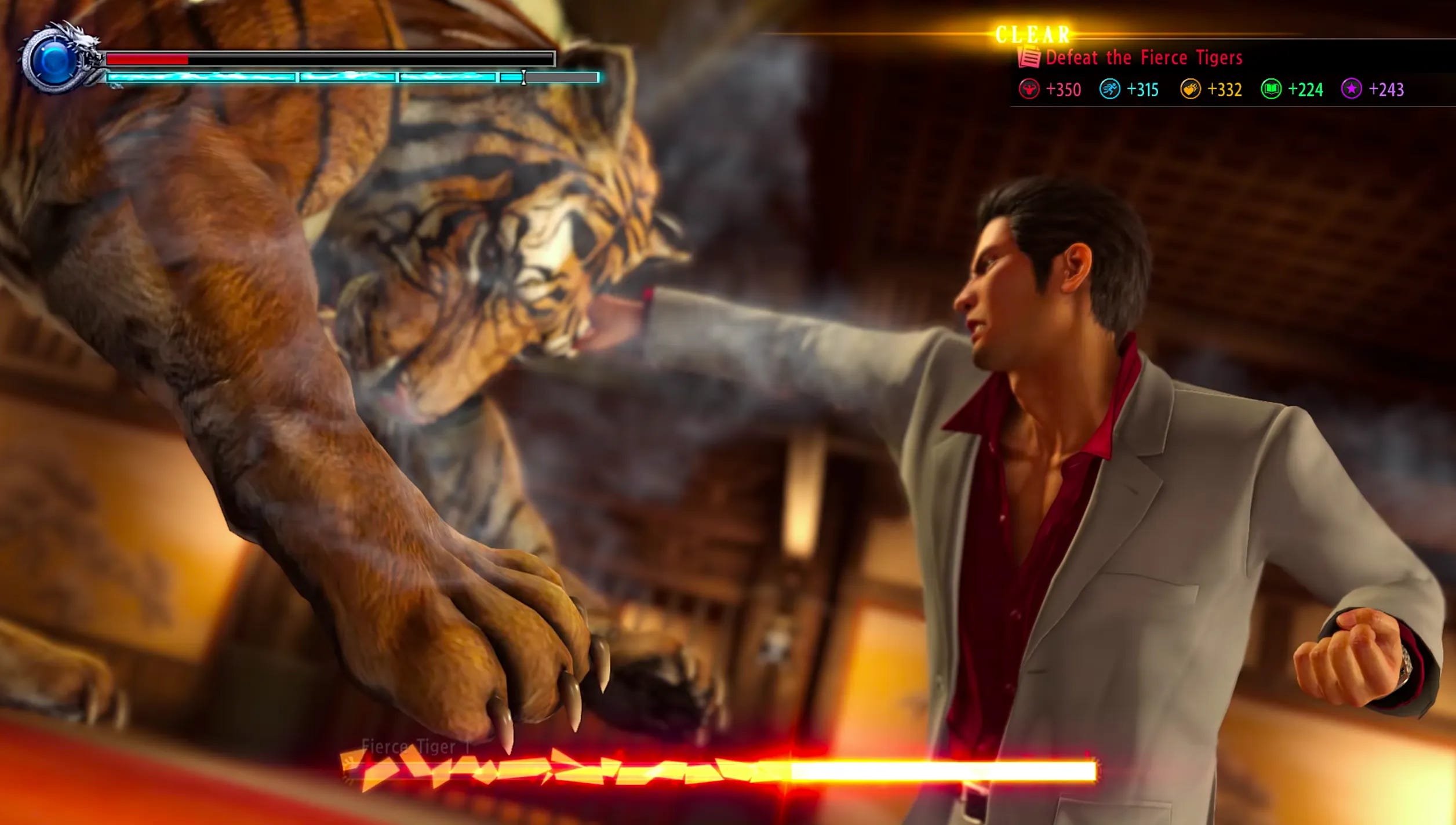
If what we’re seeing is a non-representational version of fights from Ichiban’s point of view, what’s actually happening? Maybe the squid is there, but it’s not so much a fight as dodging around an angry animal. Maybe it is a fight with a giant squid, but with a tone that leans more toward animal cruelty than boss battle. Maybe Ichiban is actually ruthlessly beating a man in a squid costume.
While a little pedantic to worry about this, the uncertainty about Ichiban versus the squid nicely demonstrates a larger point: are JRPG battles actually happening in the fiction? The presentation seems to preclude this. Everyone is taking turns, there’s a menu for the player’s choices, and the battle is often happening on a separate screen with a background that resembles, but doesn’t exactly match where the characters were just standing.
I’ve always thought of a JRPG battle as an abstraction of a fight in the world of the story — the mechanics simply presenting a comprehensible lens of a chaotic fight, similar to how tabletop RPGs and wargames work. This simple explanation, though, starts to unravel when we think about if that abstraction is in service of the story.
Non-diegetic elements are prominent in games. We understand that the health bars and inventory screens don’t exist in the fiction of the world. When the Chosen Undead is rummaging around in their bag, it’s obvious what they’re seeing is a jumble of swords and torches instead of the inventory grid that we as the player are looking at. It’s a helpful abstraction that that presents the information in a different way than it exists in the fiction — usually for the sake of comprehensibility or in service of another mechanic.
However, all mediums are awash in non-diegetic elements. Mediums shape the stories they tell, often by using non-diegetic elements to provide structure and a path into the world for the reader/viewer/player. We’re just so inured to their presence in other mediums we often overlook them when compared to games. Novels have narrators of various forms, along with typeface choices and quotation marks to help the reader understand what’s happening. Movies have lighting, a soundtrack, narration, editing — all aspects which are more or less essential for the viewer, but just as artificial as an inventory screen.
With this in mind, we can easily accept the same for a a typical turn-based JRPG battle, right? They’re just another non-diegetic element like an inventory screen or soundtrack. I’m not so sure about that, with the difference being degree of abstraction. Battles are events that are explicitly either not happening as presented or may not be happening at all, as the case with our squid.
This isn’t wholly unprecedented. There are examples of other mediums presenting events in a skewed way, maybe due to an unreliable narrator (Lolita or Rashomon spring to mind) or to enforce a certain point of view or theme, such as much of Jacob’s Ladder or the restarts in Run, Lola, Run. But none of these stylistic choices are quite so common as JRPG battles. They’re a non-diegetic element so ubiquitous we forget how artificial they are. But battle systems operate at a higher pitch of abstraction and artificiality than a voiceover or soundtrack. It’s a complete break with the logic of the fiction, layering an entirely sort of event on top of the character’s experiences.
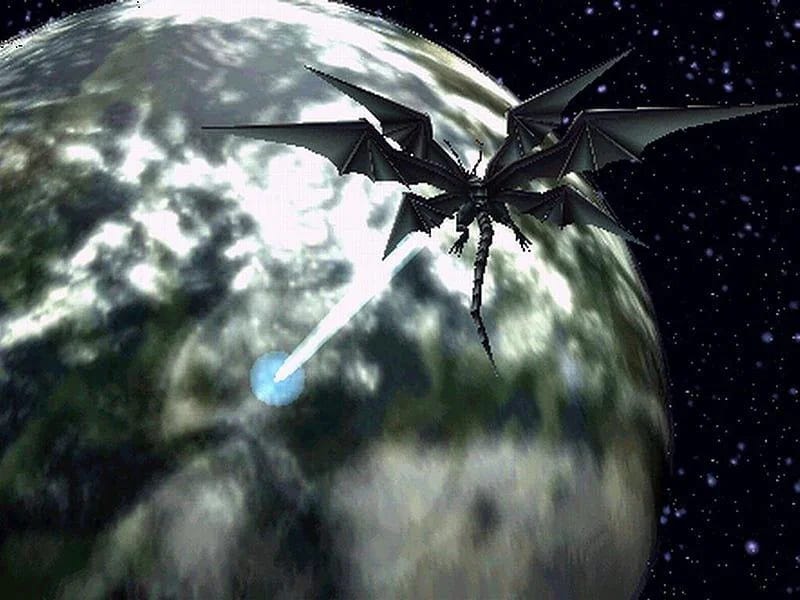
This gets to the point where some events of battle systems have no clear connection to the events of the fiction. The inventory screen is a more comprehensible representation of what’s in the world of the game: stuff in a bag. That logic works for most of JPRG battles. The “attack” command and subsequent animation aren’t occurring in the fictional world exactly as depicted, but we understand them as tracking in some sense the events of the fiction: a character hitting a monster with a sword. This breaks down when the non-diegetic presentation no longer tracks the fiction. Summons are the obvious example. When a Final Fantasy character summons Bahamut to blast a chunk out of the planet, how are we supposed to interpret it?
At the risk of sounding grandiose, the thesis of my substack (besides “Graham has slow days at work”) is that mechanics are as much a part of storytelling in games as the dialogue or scene composition. I think the non-diegetic presentation of most mechanics gels with how other non-diegetic elements are in service of a story. Those of us who sat through the poorly lit nighttime battles in the later seasons of Game of Thrones know that it’s hard to enjoy the events of a show when one can’t see what’s happening.
The thorny question, though, is how JRPG battles are supposed to serve the story, especially when they begin to drift from the fiction. Such an extreme layer of abstraction, even if it is taken for granted, seems to detract from the experience by causing these moments of friction. A good story requires trust from that reader, and undermining that trust well requires a clear purpose, such as an unreliable narrator. But the risk of JRPG battles is that they are undermining that trust in the narrative —since what we’re seeing isn’t corresponding to what’s happening to the characters — merely for the sake of looking cool.
Back to the squid. Giant squids have appeared as bosses in JRPGs many times before Infinite Wealth, likely due to the drama of the scene and the appeal of using the tentacles as minions that come and go during the fight. A notable example is Dragon Quest XI, the latest entry in a series that had a significant influence on LAD/Infinite Wealth.
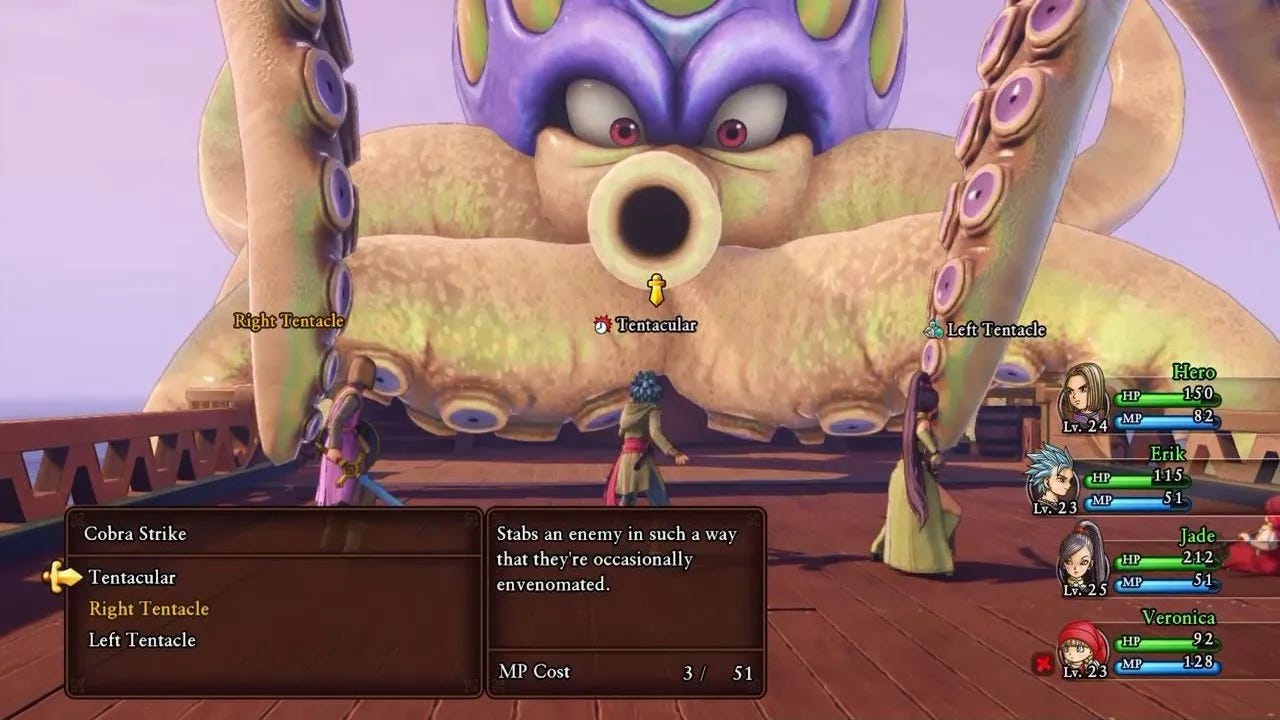
What strikes me about this squid fight is how much more seamless and (for lack of a better term) plausible it feels compared to Infinite Wealth. It’s in part due to a combination of setting and art style — DQ’s fantasy versus Infinite Wealth’s more grounded, modern setting — but also trying to explain the battle system in terms of Ichiban’s imagination does the abstraction a disservice. Calling attention to the battle system through a narrative conceit seems to harm its role as a presentational element, which is admittedly shaky to begin with.
However, it pays to put the scene in context. Ichiban and company have been through the wringer at this point, both physically and emotionally. The island they are travelling to looms in their minds as the end of the journey — the source of pain and evil. A threshold to the underworld needs a guardian, and here the guardian represents the otherworldly quality of the setting’s cult and the damage it has caused. The characters’ struggles are true, and that might be best represented by things not possible in the world of the fiction. Thus I come bearing bad news, but news that will set you free: the squid is a metaphor.
Being too literal-minded about how the non-diegetic battle systems correspond with the fictional world ignores that there are many aspects of the story these battles can represent. There are emotional experiences and truths that a literal depiction of events doesn’t capture. Fiction uses non-diegetic elements for this purpose: a swelling soundtrack or clever bit of narration to get us inside the minds of the characters. The abstracted elements of battle systems allows games to represent these emotional moments using the mechanics. I’ve certainly had times in my life that felt like being hit by a beam from Bahamut. JRPG battles help tell a story because the freedom of abstraction allows games to present such moments in a way that feels true, to both the audience and the characters.
So does Ichiban “really” fight a squid? Probably not, but he overcame an obstacle. He defeated the guardian to cross into the villain’s lair. Ichiban’s emotional journey is about wanting to be a hero, and every hero needs to slay a monster or two along the way.
Scott McCloud’s Understanding Comics provides a thoroughly readable exploration of how a medium shapes its story. A comic about how comics work, it’s an enjoyable read in and of itself, along with an informative breakdown of the language of one particular medium.
The second season of Frieren: Beyond Journey’s End just started, and I heartily recommend the series for everyone, especially as a gateway title for those who aren’t familiar or particularly interested in anime. Melancholy and beautifully animated, this fantasy tale is very smart about how it engages with genre conventions.
Fire N’ Ice (released as Solomon’s Key 2 in Japan and PAL regions) is a delightful puzzler for the NES. Pushing ice blocks onto fires starts out soothing, then eventually becomes a true head-scratcher. The creativity of the puzzles built from such simple elements is on par with Stephen’s Sausage Roll, albeit thankfully not as hard.
I periodically embrace my identity as a middle-aged dad, and recently that meant reading Allen Guelzo’s Gettysburg: The Last Invasion. This is a clear, readable work, highlighting some historical debates and placing the battle in the larger context of the American Civil War. It also features some fantastic 19th-century names and personalities, my favourite being the muttonchop-sporting artillery officer Freeman McGilvery.
For more of an overview, Guelzo also wrote Fateful Lightning: A New History of the Civil War and Reconstruction, a fantastic one-volume history of the war. What I especially enjoyed about it was that Guelzo paid more attention to the politics and negotiations (especially the internal politics of the Union) than most military histories, and he includes a long section on Reconstruction.
After praising Fire Emblem: Path of Radiance in my top games of the year article, it popped up in the Nintendo Switch Online service. My influence knows no bounds, apparently. It’s nice that such a great game is now more accessible, though of course easy enough to emulate these days.
I intend to continue this discussion, but zoom it out a little. I was considering in this essay how the battle system of a JRPG contributes to the plot. That leads to my next question: what exactly is the plot of a JRPG?
No posts
Comments
Nothing yet. Say the first thing.
Sign in to join the conversation.