
How were your 250th American birthday celebrations?
Did you stay in the moment with the smoky sizzle of hot dogs, the umami delight of a glutamate-rich burger with melted cheese, the sweet mouth-game sorting of a watermelon from its seeds? On a blisteringly hot day, did you feel cool drips of condensation down your fingers as they held on for dear life to an even colder glass of water, lemonade, or beer?
Or was it hard to stay in the moment as you reflected on the legend of America, tragic and heroic, past present and future, the sacking of our exceptional fortress of diversity and opportunity by a fortress mentality?
250 can be a big number for us mortals, especially when it’s a measure of years. That’s 25 decades. How many of those have you lived?
The number 25 has inherent power. Just look at it. Biceps and triceps or something, the mathematical product of our five fingers on each hand.
This is a primary care newsletter, not a math one. But before I move on from our American 250th birthday, I would like to mine the number 25 as ruler of time.
Seconds, minutes, hours, days, weeks, months, years, and decades. Twenty-five of each.
What can we do with our health in those units of precious time?
Can we tie a long line that tethers our present finite selves to something much, much bigger? Something like purpose?
Something like a legacy 250 years in the making?
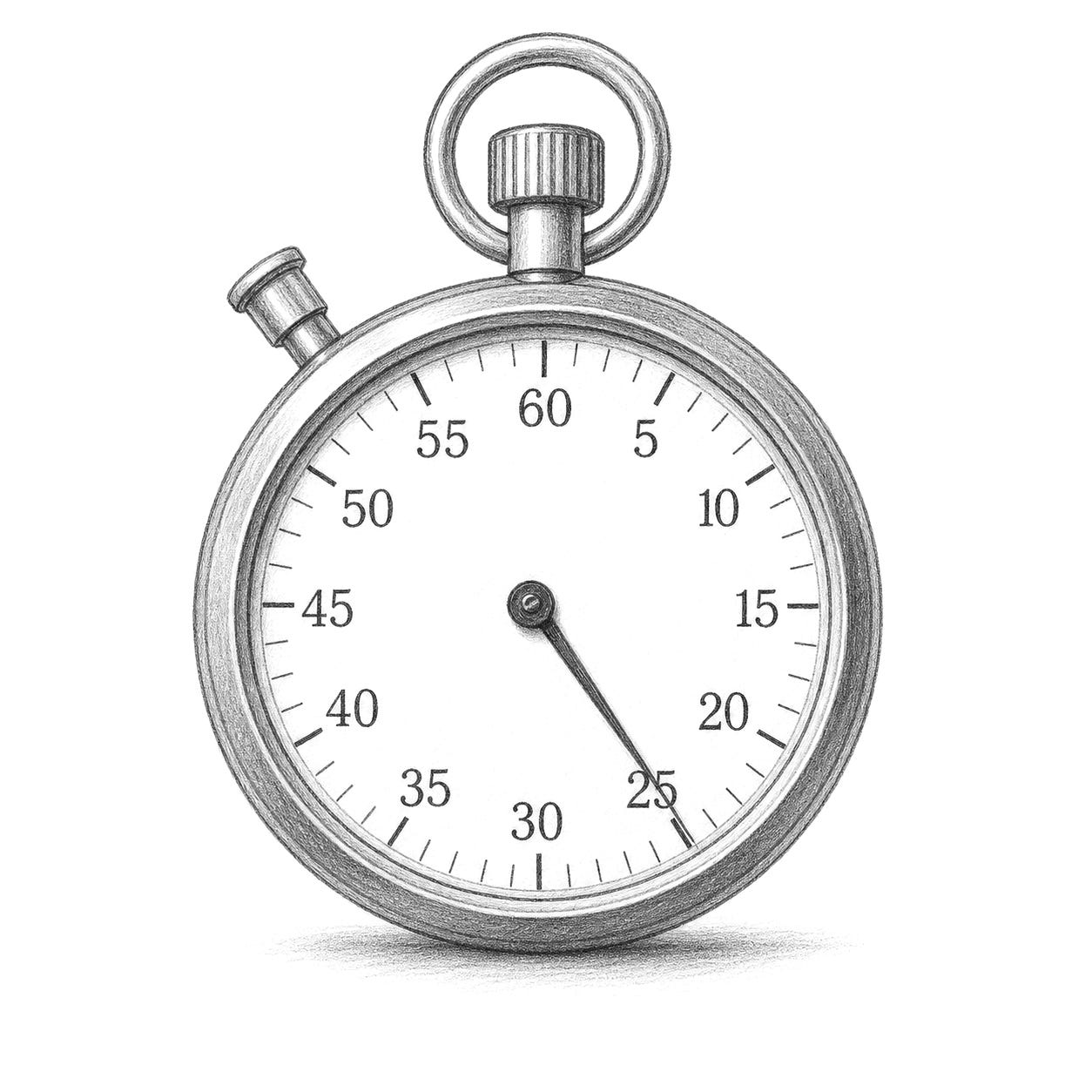
What is the most impactful thing we can do for our health in this shortest time frame?
Right now, before finishing this piece: breathe. Draw one slow breath in through your nose, maybe to a count of five, then let it out for longer than you took it in, maybe to a count of seven. Do it a couple times. That’s all. That lengthened exhale flips small switches in our nervous systems, easing us out of fight-or-flight and into something steadier. Sympathetic to parasympathetic. Channel that.
Have a few more seconds? Then stand up and get a glass of water. Not because we’re counting ounces, but because rising, moving, and drinking are elemental parts of tending ourselves.
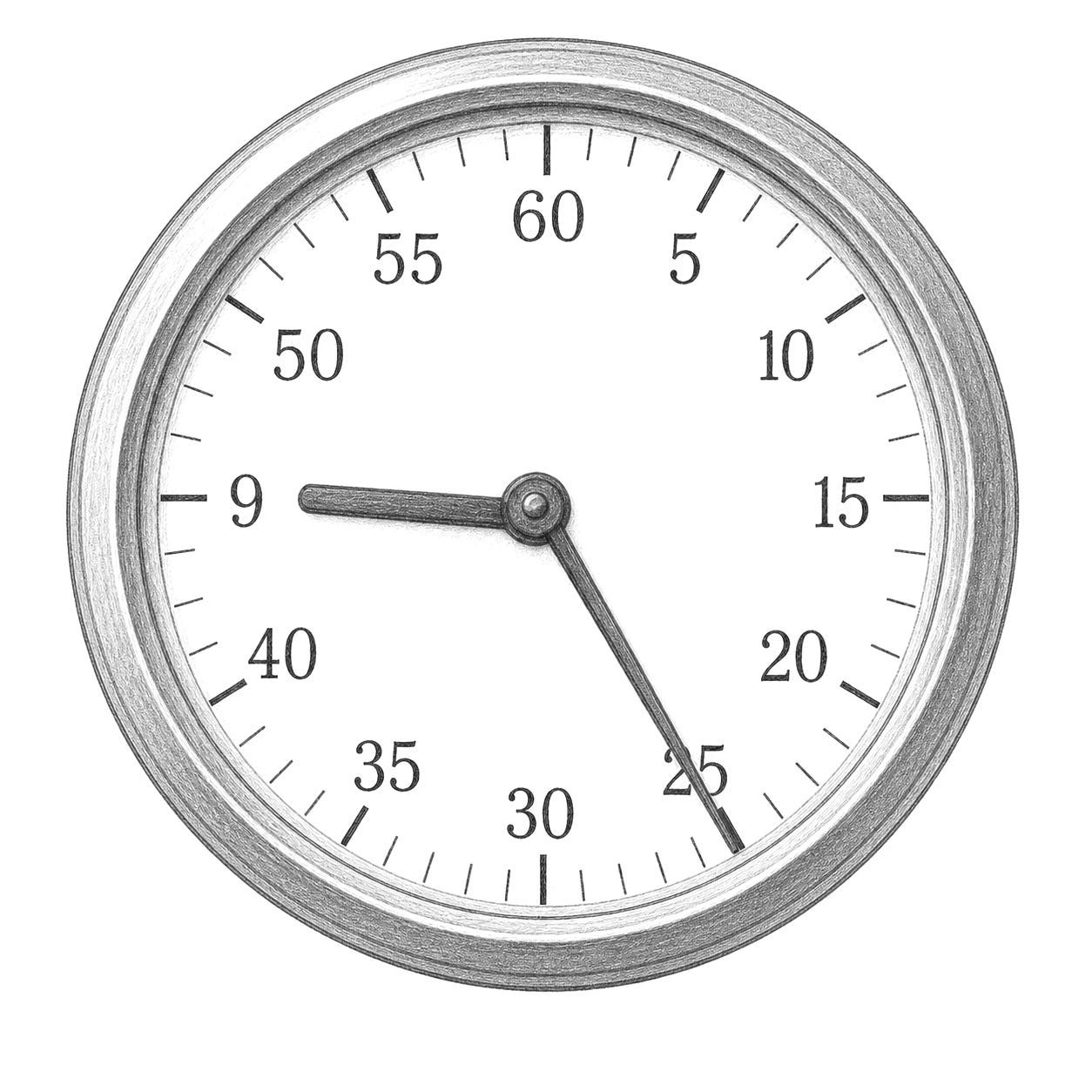
Next we have just twenty-five minutes. What actually moves the needle before the short hand hits 25? I would go for a walk, maybe a jog, outside, where even a little green in the city, a little sky and some daylight do quiet work on our mood and our muscle. People say that being sedentary is the new smoking. I would say that, too, and that losing our democracy is also the new smoking… but more on that towards the end of this piece.
Maybe call someone you love with those twenty-five minutes. Connection shouldn’t be underestimated; it’s one of the strongest predictors of a long life.
Or spend the time clearing one thing off the health to-do list you’ve been avoiding: book the screening, schedule the physical, set up the test. If you’d rather be still, meditate. Twenty-five minutes won’t remake our health. But it can be the hinge the day turns on, opening a door to deliberate care of self.
Twenty-five hours make up a single turn of our body clocks, just past one lap around the sun. One day, one night to spend working with our circadian rhythms rather than against them. The anchor is sleep: aim for something like seven-ish hours some guy says. The nightly restoration and polishing of our immune systems, memory, and cardiovascular systems depend upon rest. But don’t white-knuckle it or obsess over the number — equate good rest with sleep, and let the rhythm do the work. Open the shades and get daylight into your eyes soon after waking. Light sets the clock that tells our bodies when to feel alert and when to wind down. Then, as night comes, dim the screens or lose them, let the house go darker, and hold a bedtime close to last night’s if you can. But if Will Smith and DJ Jazzy Jeff are playing in a July 4th concert that gets postponed by rain and doesn't even start until after midnight with fireworks starting at 2:30 AM in Philly, screw it.
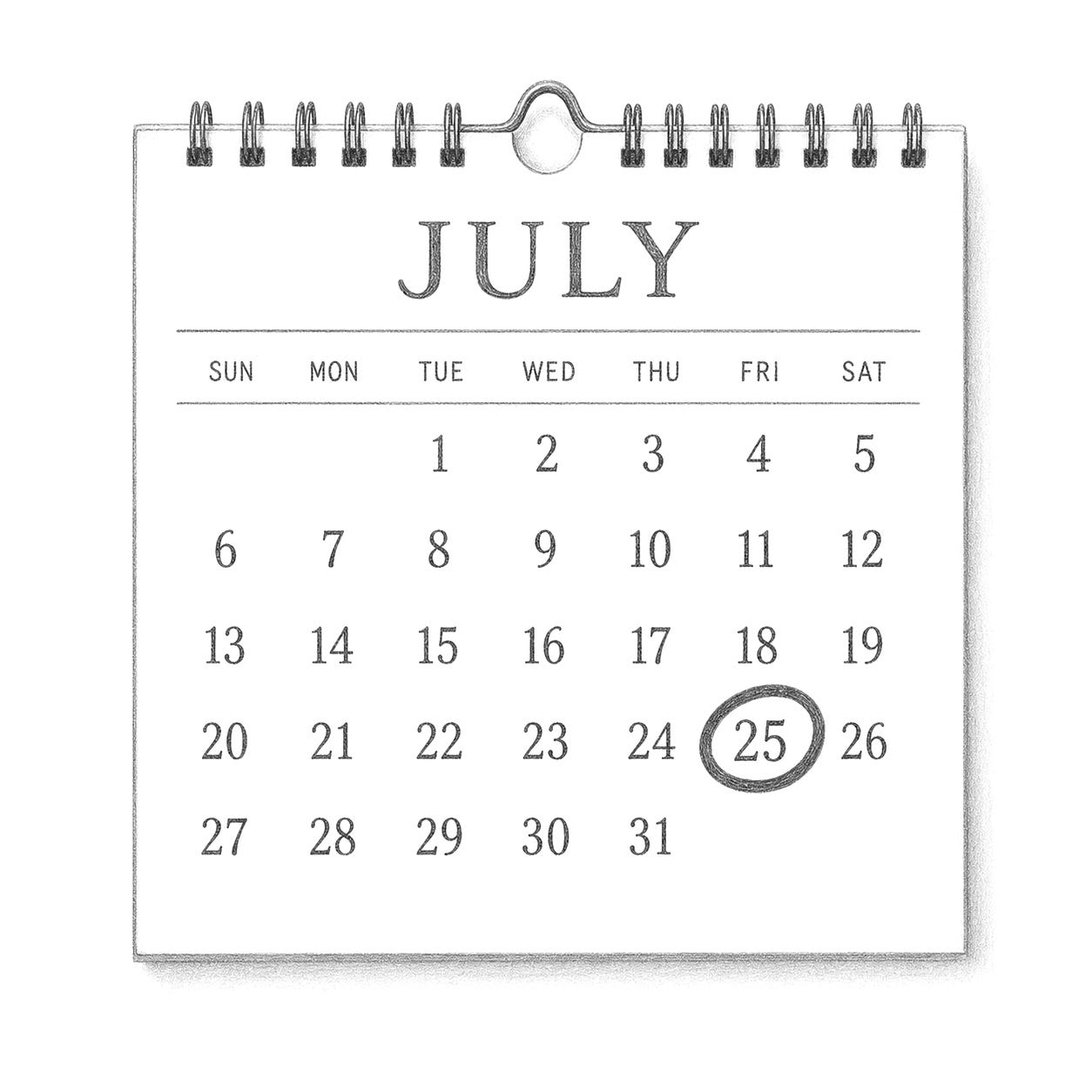
Twenty-five days is enough to plant one keystone habit and let it root. Don’t try to overhaul your whole life. Pick something small and daily. Walk or do something active for fifteen minutes after meals or at least after dinner. That blunts the blood-sugar spike and, over weeks, changes how our bodies handle food. If you can exercise, find a comfortable zone and try to hit at least two and a half hours per week. But I am a firm believer, from what I’ve witnessed, that the most long lived and content of my patients are the ones who just keep moving, puttering with purpose, gym membership or not. And those 10,000 steps a day are kind of overrated.
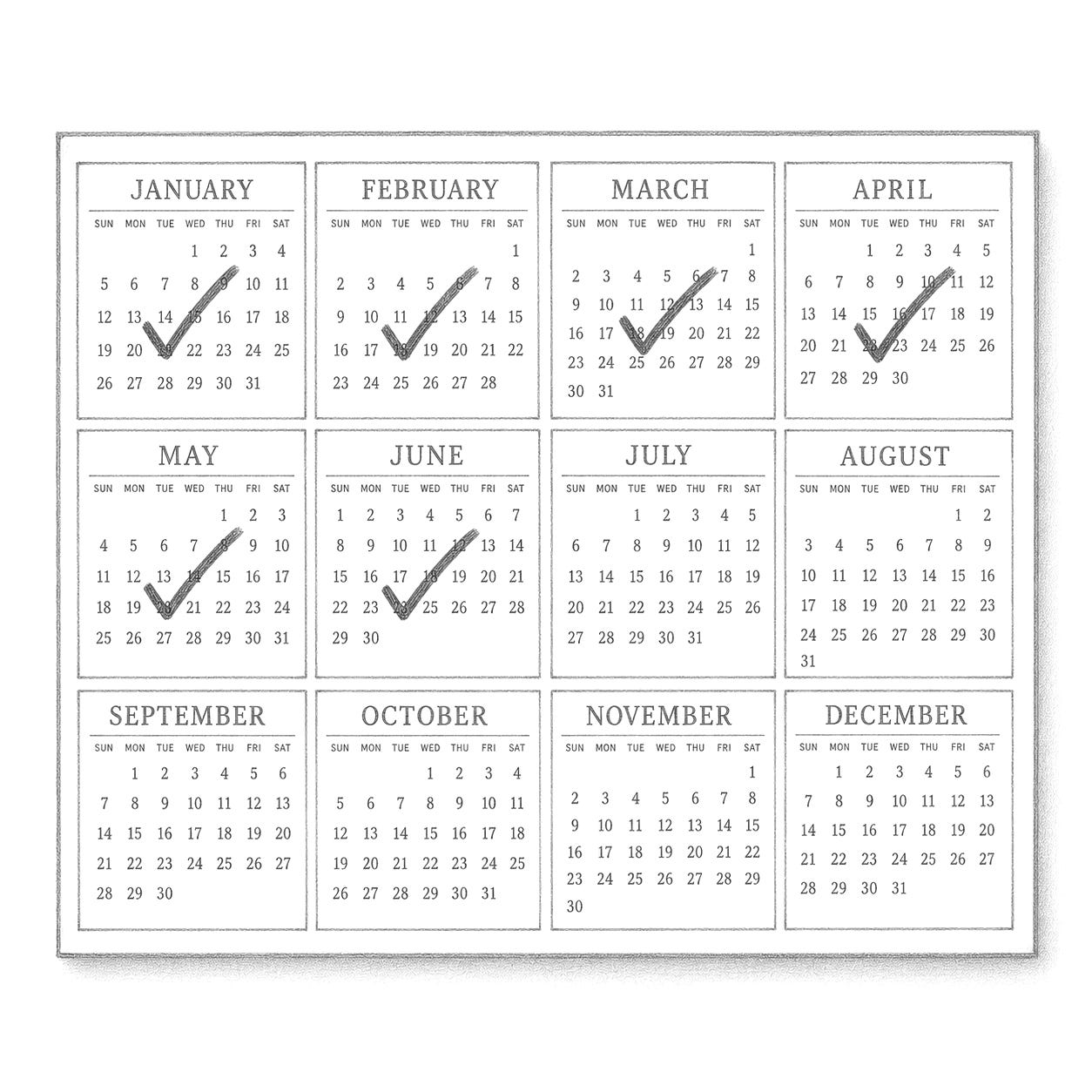
Half a year is habit territory, long enough for a new routine to stop feeling like effort and start feeling like the new normal. Almost automatic. Pick the foundations, the behaviors with the strongest evidence behind them, and let them compound. No supplements are needed. The throughline across four major studies I reviewed here is the same, and it's actionable and intuitive. A cluster of ordinary habits (not smoking, eating well such as a Mediterranean-style pattern, staying active, keeping a healthy weight, and going easy on alcohol) stacks up dramatic reductions in death and heart disease. Combined, these workhorses of health cut all-cause mortality by around 65% over a decade and coronary events by 80-plus percent, far outperforming what medications alone can do. The most encouraging part for the next two years: it's rarely too late to start. For example, middle-aged adults who newly adopted a healthy pattern cut their odds of dying by roughly 40% within four years, and even picking up just two of the five habits made a difference.
None of this benefit is guaranteed, but who doesn't shop with a mind for a good discount?
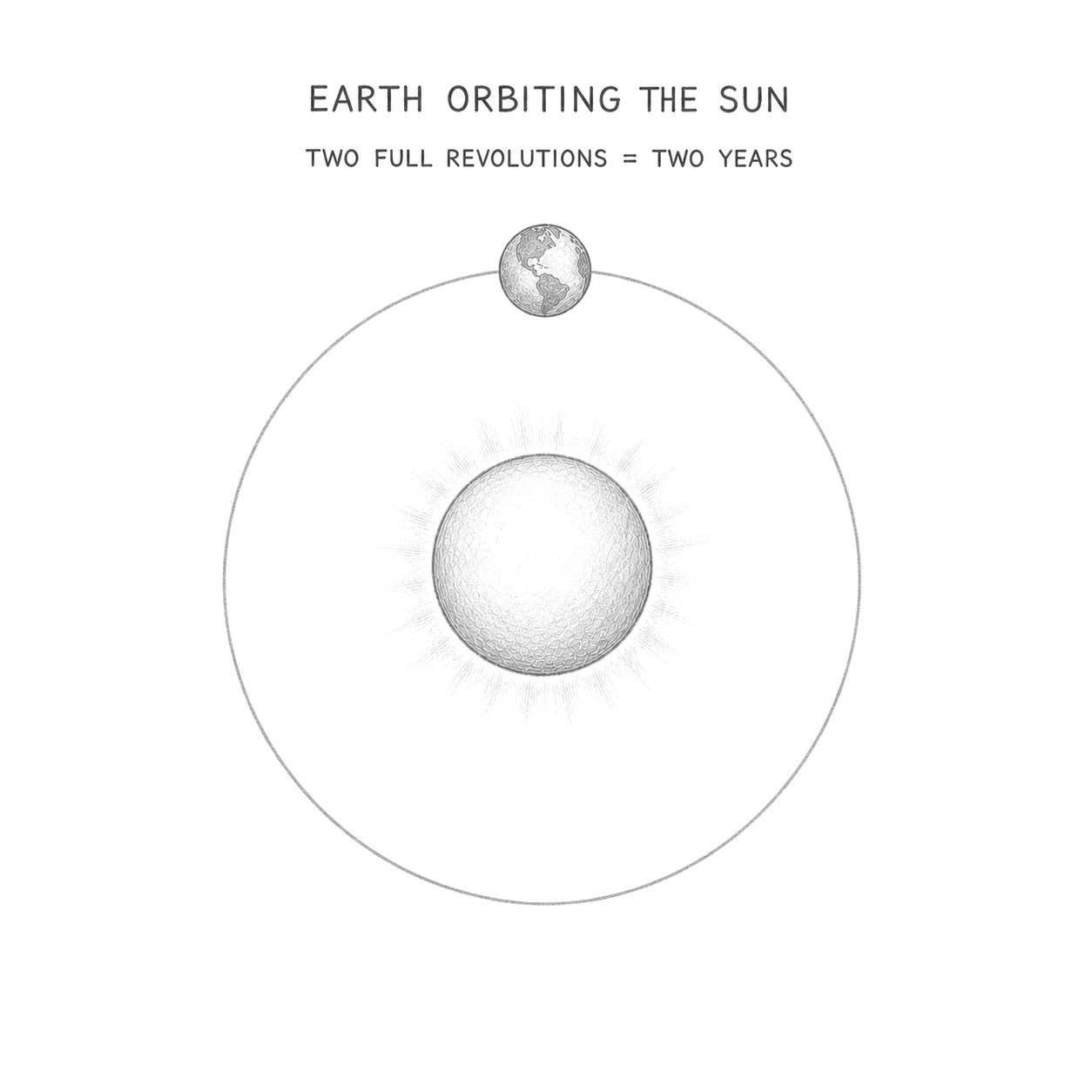
Give those same foundations two years to compound further, and hopefully the investment keeps growing. This is not a crypto scheme, unlike some out there. The habits we rooted over twenty-five weeks (eating well, moving regularly, keeping a reasonable weight, not smoking) cut the odds of dying and developing serious health problems. Two years is long enough to change our trajectory and short enough to start soon.
Two years gives sufficient time to close the gaps, even with a dysfunctional health care system. Get the screenings you’ve been postponing — colorectal, breast, cervical, and lung cancer screening save lives when done on schedule. Try not to skip the sometimes boring primary care surveillance: blood pressure, a lipid panel, a blood glucose screen. Stay or get current on the vaccines that have collectively saved some 154 million lives in the past 25 x 2 = 50 years. I’m biased, but I believe (and there is good evidence) that finding a primary care doctor and establishing ongoing care significantly helps. Continuity is one of the reasons I chose family medicine. Knowing someone over time and seeing the whole picture provides measurably better outcomes at lower cost.
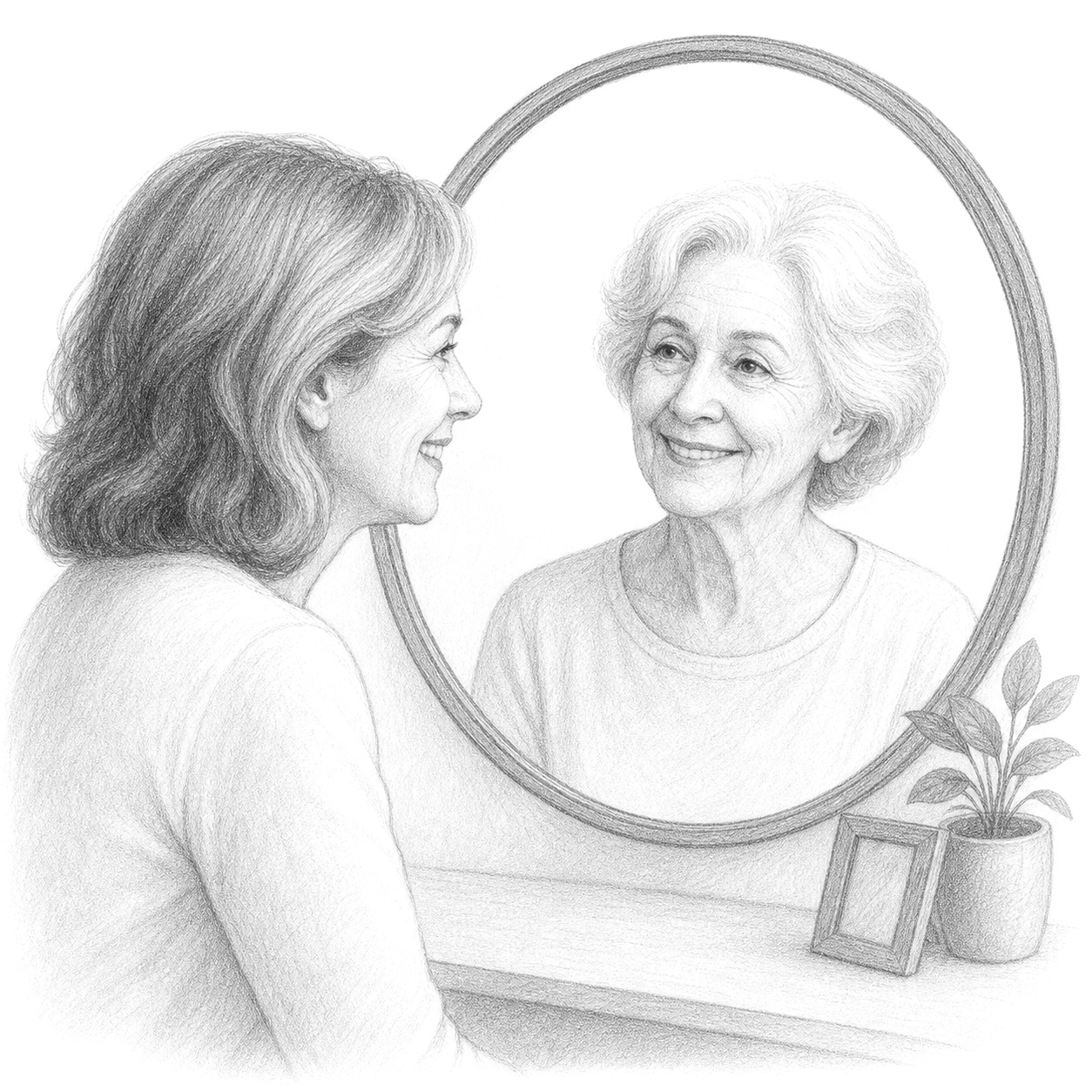
There are readers of this newsletter from age 15 years through 100 (as far as I know), so for the purposes of this post let’s consider the average middle aged person, and individuals can extrapolate from there. Twenty-five years is the horizon where midlife arithmetic comes due. The choices and random chances are stacking up now around blood pressure, blood sugar, cholesterol, stress, connection, adequate sleep, decent weight, DNA mutations and methylations, and whether we smoked. None of these are completely deterministic, and chance can be arbitrarily cruel. Nonetheless these usual suspects underwrite the story of our seventies and eighties and beyond if we can make it there. Reach 50 free of the five classic risk factors (hypertension, hyperlipidemia, diabetes, obesity, and smoking), and the evidence says we buy back more than a decade of life, most of it lived without cardiovascular disease. This is the great filter of midlife: the stretch where individual agency matters most, where we can’t keep getting away with things forever, and where even late corrections can still help.
But I believe that just chasing healthspan and never getting our knees scraped by struggle, our pace slowed by helping others, our personal best missed by running with the team is an ultimately unfulfilling and indeed immoral race. These same twenty-five years will decide whether the village around us — clean air and water, disease surveillance, research funding, the primary care that catches trouble early — is strengthened or hollowed out. Our shared environmental and social conditions shape the risk of dying far more than our genes do, and most of those conditions are set by policy, not willpower. So the long game runs on two tracks: tend your own health garden, and defend the shared infrastructure no amount of personal virtue can replace. Plant both trees now. Look around. Who is wildly chopping down the trees?
You won’t be here. Neither will I. But the choices we make about health, medicine, and community right now are the enduring bricks in a road that runs all the way to the year 2276. Will anyone still be walking at the end of it? I guarantee that many of the enlightened folks back in 1776, from founding fathers to mighty mothers, dared a dream about how this rough new experiment would turn out months, years, and many decades later.
Picture the world of 2276, should civilization make it there. Aging is treated as a condition to be managed, not an inevitability to be endured. Senescent cells are cleared, epigenetic clocks are turned back, worn out organs are regrown from a person’s own cells. Most of what kills us today is caught before it starts. A cancer reliably flagged by a fragment of its DNA years before a tumor forms, a metabolic drift corrected before it becomes truly harmful. Sensors, should we want them, woven into daily life to feed an intelligence that knows our biology better than any physician ever could. I hate to admit that, but maybe doctors hang around just to interpret, guide hard choices, hold a confidential space, and help us decide not just how to stay alive but why and for how long. Public health becomes reliably predictive rather than reactive by necessity. Outbreaks and pandemics are visible and crushable as they seed. Death, when it comes, is more often a choice than an ambush. Our still feverish planet is engineered and managed after a brutal illness, and maybe the natural world recovers as we grow cities and agriculture vertically.
But here is the thing that we should not simply let technology decide for us: who holds the keys.
Staying in my lane of health care, the same stream of data from inside our bodies, the same alien intelligence that knows everything about us, can be built to serve us or to serve a state. In one future, that data is ours; it flows to a physician/educator whose loyalty is to us and no one else. In the other, it flows upward to a system that can heal us or punish us with the same hand, that tunes our mood toward contentment and obedience… and calls it care. A system that lets the powerful live indefinitely while rationing life itself as a reward for said obedience. There, no confidential space exists between patient and doctor, because the doctor reports to the regime. The fascist doctor will see you now.
Both futures use the same technology. In my opinion only one is worth living in, and worth struggling for in the present.
The temptation and the methods that push us toward the second reality are not the property of any one party, per se, though it is self-evident to me which one is mashing the pedal to the metal in 2026. Rather this problem is ultimately structural, and it will outlast whoever holds power next. Beware of those plundering the data, overriding the experts, punishing the inconvenient findings. That is why the throughline matters. Authoritarian pressures have tested American democracy since the beginning, but especially now. Our imperfect, bipartisan stewardship of democratic guardrails is precisely the inheritance that must survive contact with tools powerful enough to make any government permanent. Totalitarian, really.
The people alive in 250 years might never know our names save for some instantaneous genealogy search, but the road to their world is paved in choices we make now. We witness federal databases merged into one centralized profile of every American. We watch scientific advisors replaced with loyalists and universities coerced with frozen grants. We watch official claims contradict the evidence on Tylenol, autism, and vaccines, former public health officials indicted, and prosecutors sending menacing letters to medical journals that publish inconvenient science. I could go on for another 25 pages.
So we must fight the small, winnable fights: for patients to own and protect their own records, their privacy of information, their empowered health choices. We need to collectively stand up for healthcare as a human right, even as it is cruelly stripped from millions and made unaffordable for millions more. It’s horrific enough to develop cancer, more painful still to be abandoned with it. That is where care and freedom become the same thing, towards a more perfect union between us all. Or we let it slip away, and watch with passivity as our collective health is dragged away by dragons hoarding more riches.
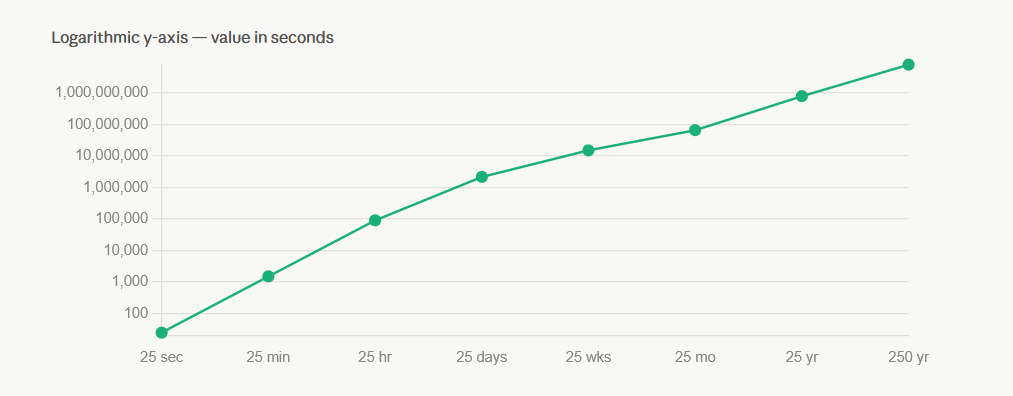
Let’s take a step back and look at the basically exponential increase of times described herein. In the next twenty-five seconds, we breathe air and reach for water. In twenty-five minutes, we walk, or call a friend, or cross one thing off a list. In twenty-five days, we root a single habit; in twenty-five weeks, we let the foundations like movement, food, sleep, and connection start to compound. By twenty-five months we’ve closed most gaps and have maybe even kept up with a doctor who knows us. By twenty-five years the arithmetic might pay out in years of life we can’t buy back any other way. And in two hundred and fifty, a familiar stranger inherits the world our choices are quietly drafting right now. That stranger is still family.
Here’s the trick the throughline reveals: it’s basically the same act at every scale. The breath and the vote, the after-dinner walk and the defense of a functioning village, are not different projects — they’re the same instinct to love what’s miraculously alive and worth protecting, pointed at different time horizons. None of it can be crammed into a pill and sold to us. We don’t have to check every box, win every struggle today. We just have to reach for the nearest one. As they say about planting fruit trees: the best time was twenty years ago, and the second best time is now.
So take the breath with me. Get the water. Start there.
Move on to a consideration of tradeoffs. Acknowledge our lack of complete control in matters of good health. Double down on connection, hope, and determination. Skip the supplement and open the windows.
Hold reverence for the future and the past, and most importantly, hold onto simple gratefulness for this tenuous, often exhilarating present.
Have you felt the thundering of fireworks lately?
Comments
Nothing yet. Say the first thing.
Sign in to join the conversation.