

NEWS#55 - GLOBAL EDITION

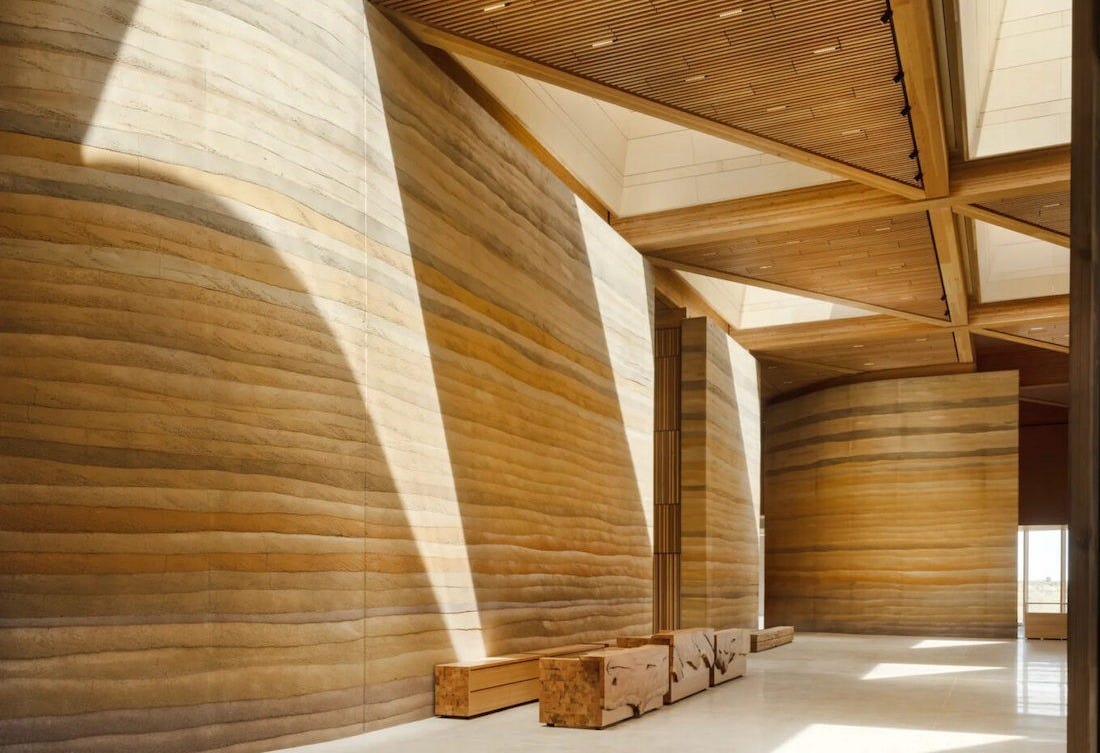
I use “current” when I mean now. I have avoided using “contemporary” automatically. Not because the word is wrong, but because overuse sometimes drains it of meaning. Still, there is a distinction between the two words worth preserving, because it shapes part of how I read design.
Current is what belongs to the now. Contemporary is what, by belonging to the now, is able to reveal something deeper about it. An object, an image, a house, or a brand may be current because it keeps pace with the present. But it only becomes contemporary when it helps us understand the forces that organize that present.
In the sense given to the term by the Italian philosopher Giorgio Agamben, being contemporary requires another kind of relationship with time: keeping one’s gaze fixed on one’s own era while also maintaining a certain distance from it; seeing not only its light, but also its darkness. To be contemporary is to read time, not merely follow it.
The current informs. The contemporary interprets. The current responds to the present. The contemporary reveals the present.
The distinction is not semantic. It separates two ways of designing, communicating, and constructing value.
One follows: it reproduces the trend, occupies the showcase, responds to the immediate brief, delivers what the market has already asked for. This design is current. And it tends to age quickly.
The other reads: it observes what is changing before it becomes consensus, perceives what has not yet been named, and translates that signal into project, decision, language, matter, and value. This is contemporary. Perhaps it is the only kind that matters to those who need to decide before the market does.
We have never been so up to date. Alerts, reports, trends, images, crises, forecasts, and diagnoses arrive all the time. Everything seems urgent. Everything demands a reaction. But not everything that is new reveals a real shift.
Artificial intelligence is no longer just technology. It cuts across work, language, authorship, trust, education, image, and power. The climate crisis is no longer just an environmental issue. It reaches matter, territory, housing, food, insurance, logistics, and ways of living. Disinformation is not only a media problem. It is also a crisis of evidence, belonging, and public trust.
The present is no longer a sequence of novelties. It has become a system of intersecting impacts.
That is why perhaps the most important question is not what is happening now. It is what, within what is happening now, deserves to remain as a way of reading.
There is a difference between information and repertoire.
Information circulates. Repertoire organizes.
Information explains an event. Repertoire allows us to recognize patterns, tensions, and consequences. With an excess of data and attention under dispute, scarcity is no longer a matter of access. It lies in the capacity for discernment.
That is why design is neither ornament nor showcase. It is an infrastructure for reading its own time and, therefore, for constructing value.
This edition begins there.
Not with design as object, style, or trend. But with design as a way of reading the present.
Because the contemporary is not the new. It is the present when it begins to reveal structure.


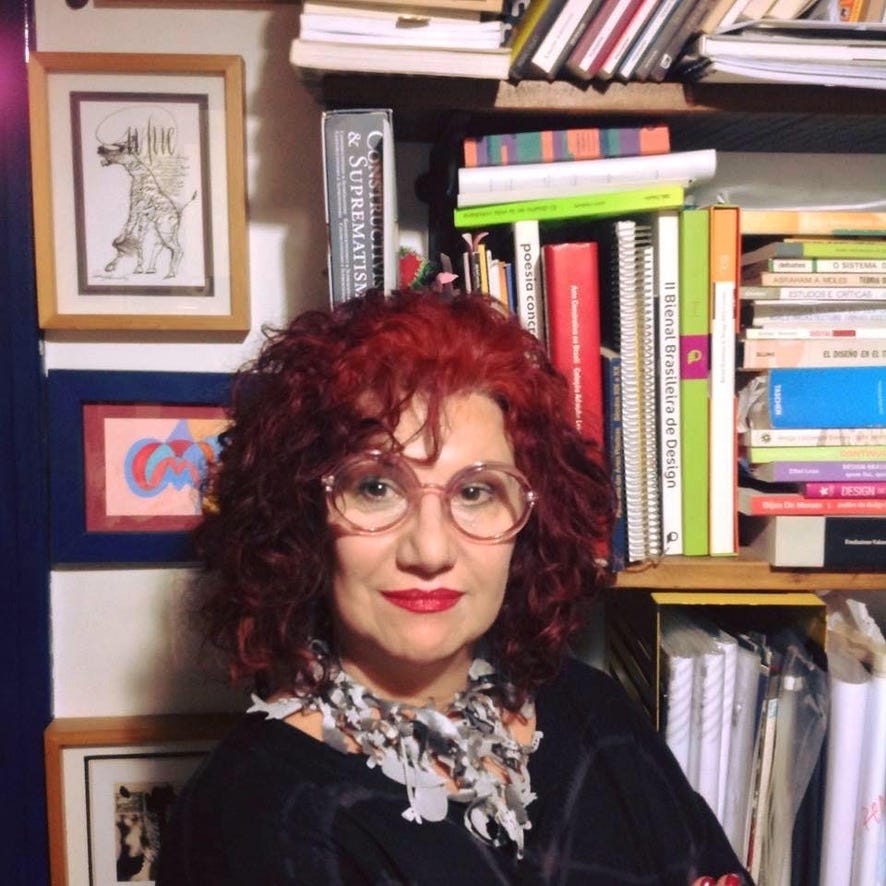
There are professionals who make design visible. Others help us understand why it matters. Mônica Cristina de Moura belongs to the second group. A researcher, professor at UNESP, and author of an important body of work in the field of design, Mônica Moura is one of the most consistent voices in the formulation of contemporary design in Brazil. Not only because she studies the subject, but because, over the course of decades, she has helped build a critical vocabulary through which to think about it, teach it, and expand it. Her position is rare: she does not treat design as market, style, or trend, but as a cultural, social, and political phenomenon. Her importance lies less in the idea of a signature than in the construction of thought. By articulating theory, criticism, memory, sustainability, inclusion, authorship, technology, and material culture, Mônica has helped shape a broader reading of Brazilian design - one capable of engaging with questions that extend beyond the country. In academic and research circles, her presence is well established. Internationally, her work is seen mainly within the Ibero-American context. But the most relevant point may be another one: the themes she works with are now global. How can we think about design in a present saturated with information? What remains? What produces meaning? How can memory, territory, and difference guide new ways of designing? This interview begins from that place. Not from design as a final object, but from design as a way of reading time.
1. You have built an important part of your thinking around the idea of contemporary design. What makes design truly contemporary today: the technology it uses, the language it produces, or its ability to critically read the time in which it exists?
Indeed, the path of research and teaching led me to perceive and deepen my understanding of contemporaneity and contemporary design, developing undergraduate and graduate courses on the subject for decades, at a time when this was not yet being discussed in Brazil. When I joined the Department and Graduate Program in Design at UNESP, FAAC, Bauru Campus, I had the opportunity to structure a research, extension, and teaching laboratory in contemporary design, as well as to lead a research group dedicated to this theme. And I am very pleased to see the term “contemporary design” more widely disseminated and used by many people today. What makes design truly contemporary is the designer’s ability to read the changes that are taking place, as well as those that are beginning to emerge and that directly affect society, the environment, and human, social, cultural, political, and economic relations. In other words, it is knowing how to read the present time and anticipate the near future. And this goes beyond the technical mastery of tools, technologies, processes, and materials. It means knowing how to observe the way people live, as well as every kind of life that inhabits the world around us, whether in our immediate or expanded territory. From this observation and critical reading, it becomes possible to translate these insights into projects, products, systems, and processes that respond to contemporary issues such as diversity, inclusion, equity, sustainability, memory, authorship, the handmade, subjectivity, and humanity.
2. In many countries, design has already entered the fields of public policy, industry, innovation, and culture. What changes for a society when the designer comes to be recognized as an agent of development - and not merely as an author of forms?
In countries where design is understood in its breadth and importance, public services, the economy, growth, and many aspects related to the broader meanings of well-being and quality of life become tangible and present in the daily lives of most people, or citizens. There are many areas in which design can be applied within a territory. If we think of all the areas related to the meaning of what is common - that is, what belongs to everyone - they should involve design professionals. This includes direct work in cultural, political, social, economic, educational, and community contexts, among many others we could list. At the same time, design should also be present in personal and private spheres. In other words, design is in everything around us. Beyond the idea of development, perhaps it is often necessary to pause certain processes and become aware of limits, finding proposals that can explore the richness of simplicity and of “un-developing.” We must therefore become aware of how much design practice extends beyond form, since project-based thinking involves improvements, applications, changes, new proposals, and the redesign of existing proposals across different fields of knowledge.
3. How can design contribute to the well-being of people and the planet without reducing this responsibility to sustainable rhetoric?
By working with a range of proposals, from preservation to innovation, and across different scales. After all, design can and should be applied from the micro to the macrocosm, understanding the changes and needs generated by them, as well as anticipating possibilities for improving life - not only human life, but every form of life around us. The pandemic placed us, tragically, before this reality. It requires understanding the planet as an interconnected system of traditional and highly innovative forms of knowledge, which can coexist simultaneously, through the comprehension of differences and the valuing of what is different. It means seeking political, social, and cultural awareness. It means questioning the impositions of massification, whether of information, production, or passing fashions. Without a doubt, sustainability, or design for sustainability, must go far beyond rhetoric and superficiality. It must seek depth in order to understand the breadth of what well-being means and the many variables involved in that term. There is no predetermined solution if the particularities and specificities of a community and territory are not taken into account. In other words, there is no single standard or model to be followed, but rather the need to act in ways that allow us to imagine and live new worlds. A reading recommendation in this sense: ACOSTA, Alberto. O Bem Viver: uma oportunidade para imaginar outros mundos. São Paulo: Editora Elefante, 2016.
4. If design has gained space in brands, experiences, technology, services, and new ways of life, why do so many designers still struggle to make a living from their own profession? Where is the failure: in education, in the market, or in the way society still understands design?
This is a complex question, and the answer is neither simple nor singular.In the case of our country, on the one hand, we can point to the lack of public policies and the lack of appreciation for design and for its professionals, scholars, teachers, and researchers. On the other hand, we must remember that education for this profession does not happen only inside educational institutions, because it depends on a broad repertoire that each professional develops throughout life. This is what enables the understanding and development of differentiated and more complex proposals, for example. There is another major clash, which is the importance of cultural, philosophical, and sociopolitical education - something that is often set aside in favor of what is more superficial, technological, or tied to the fashions of one moment or another. The world of work is also not simple. It often subverts creative capacity in the name of excessive profit, failing to invest in research and development or in company departments dedicated to design. Often, the market is degraded in the search for quick and fleeting solutions, without giving due importance to people from the professional to the consumer.



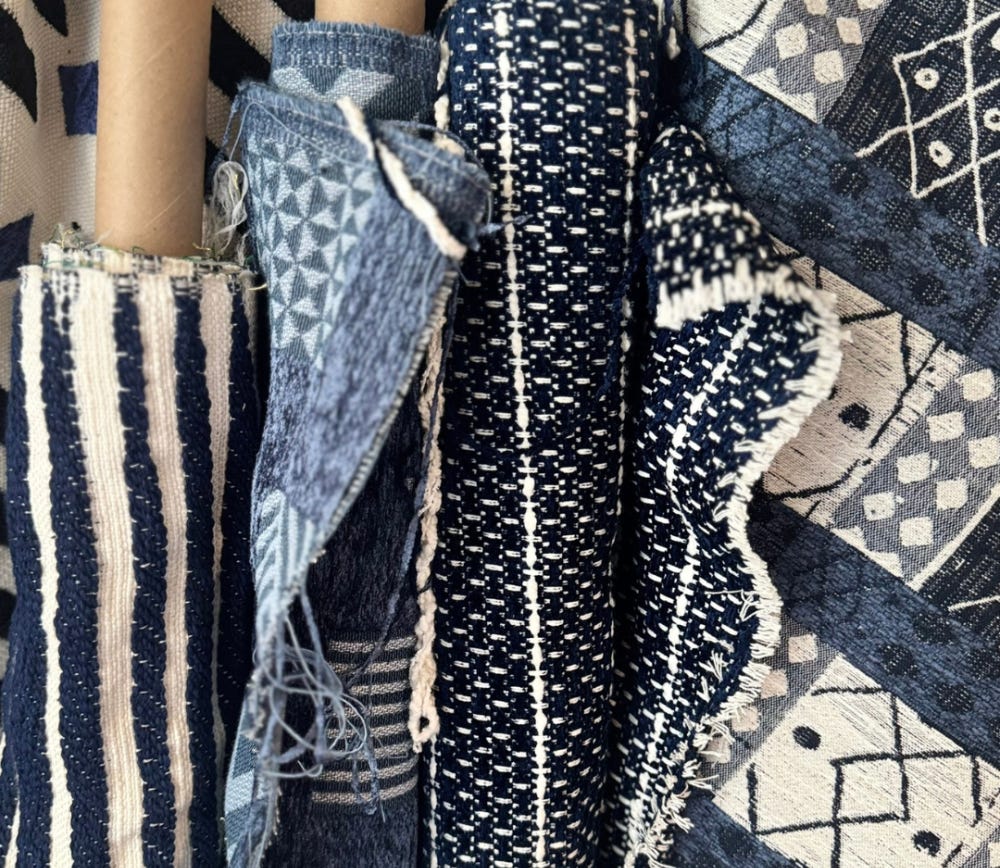
The Future Fabrics Expo 2026, created by The Sustainable Angle and held at the end of last month, changed both scale and address. By leaving London for Brussels, alongside the Textiles Recycling Expo, the fair made one thing clear: the conversation around sustainable materials has entered another stage.
The obvious reading would be to celebrate the materials themselves: mycelium, agricultural waste, regenerative fibres, bio-based alternatives, textile recycling. But the most important news may not be in the sample on the table.
It is in the move.
Brussels is Europe’s regulatory capital. By occupying that territory, the fair is no longer positioned only as a showcase for inspiration. It becomes part of a more demanding conversation: traceability, circularity, proof of origin, reduced dependence on fossil sources and real capacity for scale.
For years, low-impact textiles were treated as promise, exception or niche innovation. Now, the axis seems less seductive and more decisive. The question is no longer only which material looks new. It is which material can sustain a chain.
This shift moves textile from the field of surface to the field of infrastructure. Material is no longer merely finish, texture or visual language. It begins to carry information about origin, process, territory, emissions, waste and future.
There is, however, an evident tension. Material innovation has advanced faster than industrial adoption. The challenge is not only to find new fibres, plant-based leathers, natural pigments or bio-based solutions. It is to bring them to market without turning them into image capsules, expensive exceptions or gestures of reputation.
This debate also matters to interior architecture and decoration.
For a long time, textile occupied a secondary place in the project. It entered at the end, to soften spaces, add comfort or complete an already defined composition. It was the layer that dressed, warmed and made a room more welcoming.
That reading has become insufficient.
Today, textile is beginning to occupy a more complex position. It does not respond only to the appearance of an environment, but to the way that environment is perceived, used and remembered. It can organize colour, acoustics, light, texture, comfort, memory, identity and atmosphere.
In some projects, it appears before the colour palette. In others, before the furniture. Less consequence, more point of departure.
For this reason, to speak about textile is no longer to speak only about decoration. It is to speak about material, behaviour and system. In industry, textile now carries data, origin, impact and responsibility. In interiors, it organizes perception, memory and spatial narrative.
In both cases, it is no longer simply what covers a surface. It becomes what reveals a choice.
Perhaps the future of textiles does not lie only in the materials of the future. It lies in the ability to transform material into verifiable meaning.
When textile stops dressing the project, it begins to say what the project is made of.

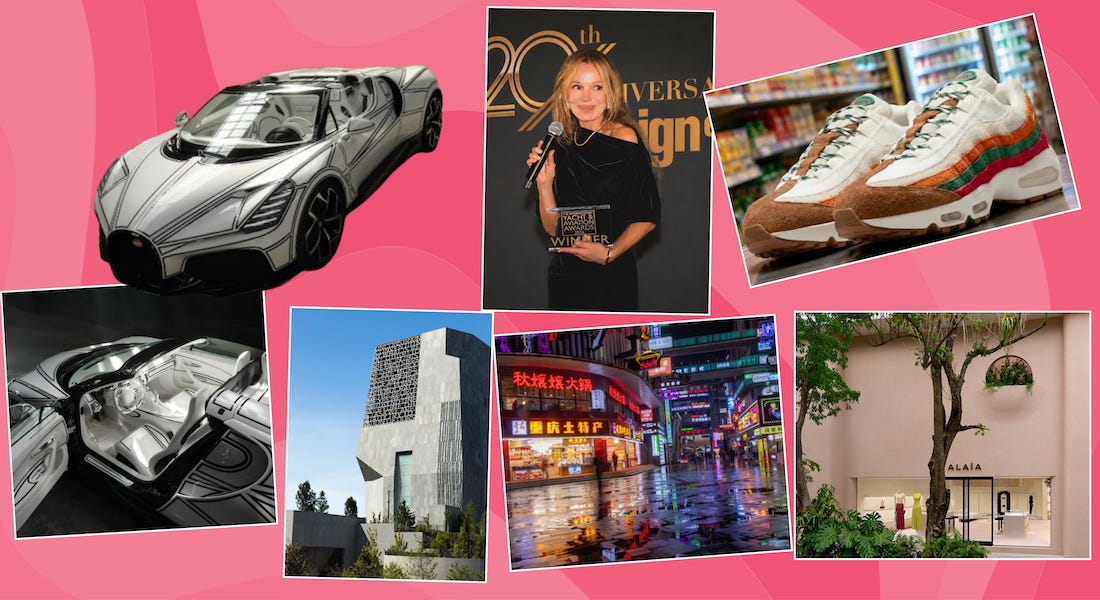
- Débora Aguiar’s studio won the Main Salon category at The International Yacht & Aviation Awards 2026, in Venice, for the interiors of the T450 M/Y Singolare, a 45-meter superyacht by Tankoa Yachts. The project translates the idea of a home on the water, with a residential atmosphere, natural materials, and integration with the seascape.
- 7-Eleven has filed a lawsuit against Nike to block the Air Max 95 “Konbini”, scheduled for release on July 11, 7-Eleven Day. The retailer claims the sneaker uses its green, orange, and red palette in a way that could suggest an official collaboration. A case about color, brand, and visual appropriation.
- Bugatti has turned the W16 Mistral Blanc Éternel into a one-off piece with real porcelain, created with KPM. The challenge was technical: because the material shrinks by about 17% during firing, each component had to be produced larger, fired in a kiln, and finished with precision in order to fit the hypercar.
- The Obama Presidential Center opened to the public on June 19, in Jackson Park, Chicago, and is already dividing critics: excessive monumentality, an opaque tower, a personalized scale, high cost, impact on the South Side, and the risk of gentrification. The discussion reveals the power of architecture and design in the construction of symbolic authority. For a project presented as a civic campus, the question remains: is this form compatible with Obama’s republican idea of public legacy?
- On TikTok, Chinamaxxing is turning China into an aspirational imaginary for Western Gen Z: tea, jianbing, mahjong, Labubu, skincare, and traditional medicine. The phenomenon matters because it shows how design, aesthetics, and routine become vectors of desire and soft power - often faster than geopolitics itself.
- At Alaïa’s first Miami boutique, designed by Halleroed, pink mosaic wraps the facade, floors, and walls. But the most interesting point is the furniture: Martin Brûlé brings together rare 20th-century pieces and contemporary designs, from Philippe Starck to Ron Arad and Tom Dixon. Here, furniture no longer merely occupies the space. It becomes a layer of the architecture.

No posts
Comments
Nothing yet. Say the first thing.
Sign in to join the conversation.