
NEWS#62 - GLOBAL EDITION

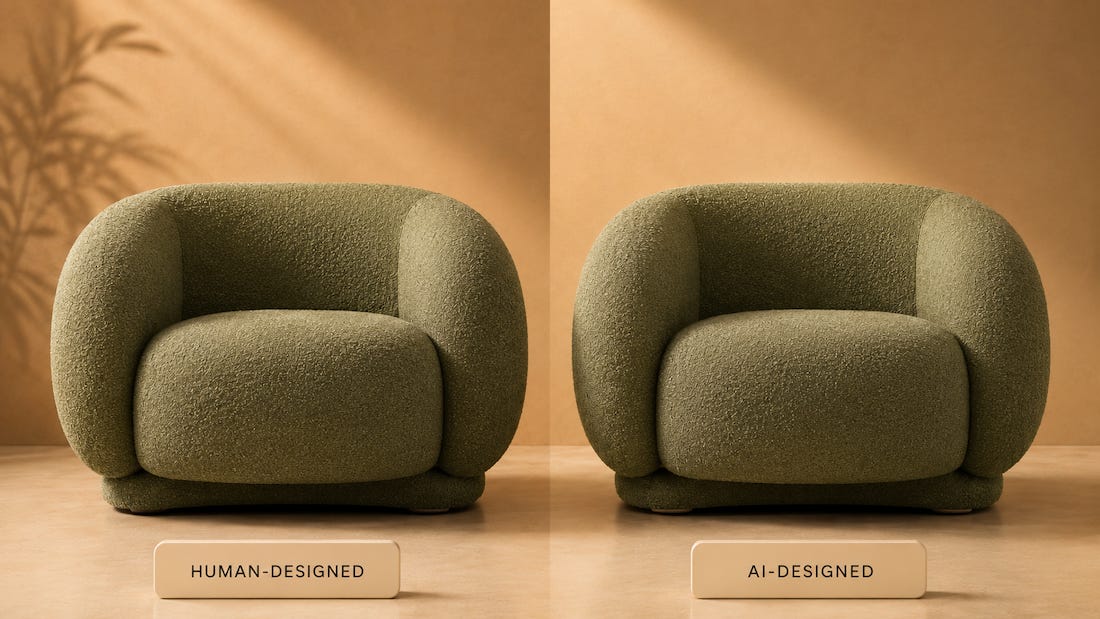
Two identical toothbrushes. Same appearance, same features, same function. The only difference was a single piece of information: one had been designed by humans; the other, by artificial intelligence. When 390 participants were asked to choose between them using sustainability as the criterion, 76.4% chose the version attributed to human designers.
Yet nothing about the object itself had changed.
The experiment was part of a study published in July in the Journal of the Academy of Marketing Science, examining how authorship shapes perceptions of sustainability. Across different tests, products presented as AI-designed were perceived as less sustainable than identical products attributed to humans.
The study does not show, however, that human design is environmentally more responsible. It reveals something more interesting: simply changing the information about who created an object can change what we believe we see in it.
The researchers wanted to understand why. The difference was not primarily explained by competence, effort or decision-making ability. The most significant factor was what they called genuine care: the perception that someone had genuinely cared when designing the object.
This expands the discussion around authorship. Form, material, function and performance remain fundamental, but they have never been the whole story. We also read objects through the intentions we imagine behind them. Authorship does not change the material. But it changes how we read it.
This is where the research raises a more uncomfortable question than the opposition between human and machine. If we believe an object is more responsible because we imagine that someone “cared” when designing it, are we recognising the value of intention -or simply replacing evidence with narrative?
Artificial intelligence makes this tension more visible because it unsettles relationships that, for a long time, seemed easier to identify. A name, a signature, a craft process, a place of origin or a story have always influenced the value we assign to things. What the experiment reveals is the extent to which this information also shapes - for better or worse - our perception of qualities we assume belong to the object itself.
As tools, authorship and creation become separated in increasingly less obvious ways, we may need to relearn how to distinguish intention from signature — and perception from evidence.


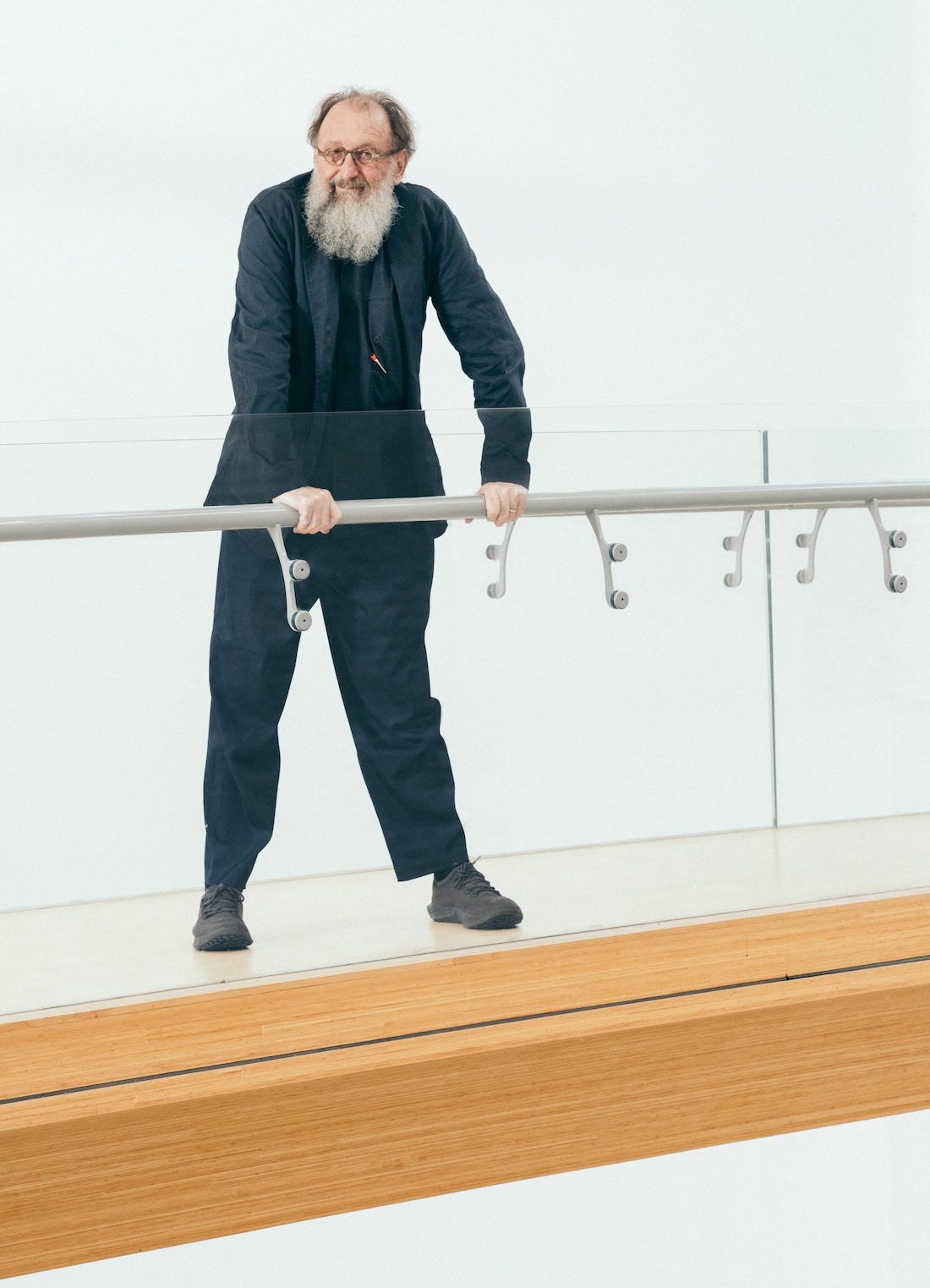
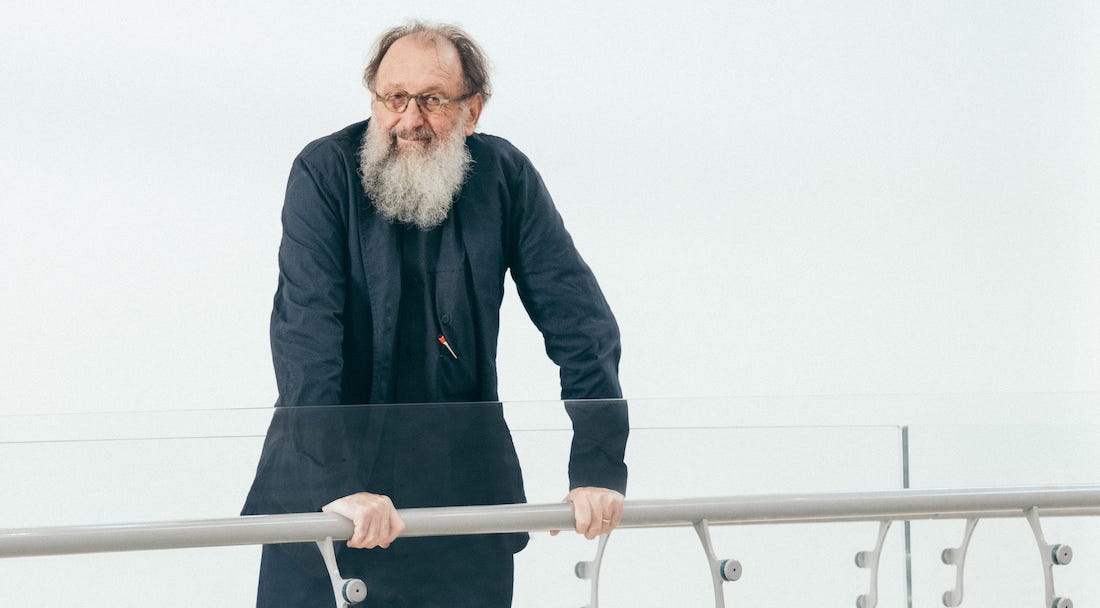
Michele De Lucchi has a rare quality among masters: the ease of someone who remains curious. He does not speak from the authority of an established body of work, but from the unsettled position of someone still searching. He thinks intuitively, brings opposites together and retains a genuine desire to discover what does not yet exist. Whenever I listen to him, I come away energised - and less complacent about design.A central figure in Italian Radical Architecture and one of the protagonists of Alchimia and Memphis, he served as design director at Olivetti and, with Giancarlo Fassina, created the Tolomeo lamp, awarded the Compasso d’Oro. Today, he is the founder of AMDL CIRCLE, a multidisciplinary studio dedicated to a humanistic approach to architecture and design. One of his statements captures this principle: “Architecture that does not consider its effect on people is boring architecture.” In July this year, he became the first Creative Director of Triennale Milano, also taking responsibility for the Museo del Design Italiano as part of the institution’s strategic cycle through 2030. The previous year, France named him Officier dans l’Ordre des Arts et des Lettres, while AMDL CIRCLE received the Premio Architetto Italiano 2025. In this conversation, De Lucchi speaks about desire, transgression, experience and artificial intelligence without retreating into the past. At 74, he still treats the future as material to work with.
1. Can design transform what a society learns to desire, or does it merely find increasingly intelligent ways of continuing to fuel desire?
I believe design should do neither. Instead, it should search for new dreams to bring into the world and make them desirable. In the lift at our studio here in Milan, there is a sign that says: do not give clients what they desire, but what they have never dared to desire. The real challenge today is to create a sustainability of the imagination: to ensure that the dreams we cultivate are genuinely sustainable and do not translate into the continuous consumption of the planet’s resources without any possibility of renewal.
2. What happens when a generation born to challenge the system begins to lead it? Does transforming Triennale Milano into a “laboratory of vitality” and building what you describe as a “sustainability of the collective imagination” mean that transgression has prevailed - or that the system has learned to absorb it?
Transgression prevails when it becomes capable of continuously generating further transgression - of conceiving it and inspiring it. Nothing remains unchanged over time, especially when it concerns human sensitivity and our ability to interpret the world in which we live. For me, Triennale’s journey, from the protests of the radical architecture years to the present day, means bringing in all those elements that best interpret and define the alternative. The alternative is always opposed to the most established reality, the most widely accepted truth, the most conventional attitude. Over the years, I have understood how important this search is: looking for the other side of the coin, bringing opposites together and generating new energy from that tension. This is what I sought to convey in my presentation as Creative Director of Triennale Milano.
3. After fifty years of designing futures, what does experience allow you to see in design that a young designer cannot yet see - and what does it prevent you from seeing? Does experience enhance our ability to recognise genuine transformations in the field, or does it increase our dependence on what has already worked?
The real point is that everything changes. When I compare the reality and the relationship I had with the world in the 1970s and 1980s with what I see and understand today, I can hardly find a logical thread connecting worlds that are constantly transforming. The ability to see the world as it evolves and to recognise the major issues that each era brings with it - such as unsustainability and artificial intelligence today - is what allows us to understand the possible alternatives. Every era is full of resources and opportunities to reflect on what the real alternatives might be: those we can influence and contribute to making better. Even when we cannot transform reality directly, we can at least bring to the surface the energy of thought concealed within interpretation and the confrontation between opposing extremes. The point, therefore, is not that experience alone changes the way we see things. The real value lies in the ability to observe how things are changing. It is not experience that alters our perspective, but the ability to perceive change.
4. What happens to creativity when we progressively eliminate the difficulty of making? At what point does a tool cease to expand human capabilities and begin to determine what human beings imagine?
I believe this question concerns, above all, the use of artificial intelligence. Its use has undoubtedly raised the baseline of our thinking: it pushes us to become more perceptive, to free ourselves from habitual ways of reasoning and from what has already been done, and to direct ourselves more decisively towards what does not yet exist. Artificial intelligence urges us to become, as we say here in the studio, “more human than humans.” It invites us to continuously compare rational ability with sensory perception, the artificial with the human. It helps us gain greater control and broaden our vision, rather than limiting ourselves to isolated subjects, by connecting them with many other elements that we would not normally consider. But it also leads us to place sensitivity and intuition above everything else: the ability to recognise what has value and what does not. When we ask artificial intelligence what intuition is, it replies that it is what we perceive before we reason, before we activate the rational mind. That is precisely where the beauty lies: before reasoning, something happens that we cannot control or manipulate, something that arises from the totality of our experiences, emotions and memories. Intuition is perhaps the most precious material of human existence.



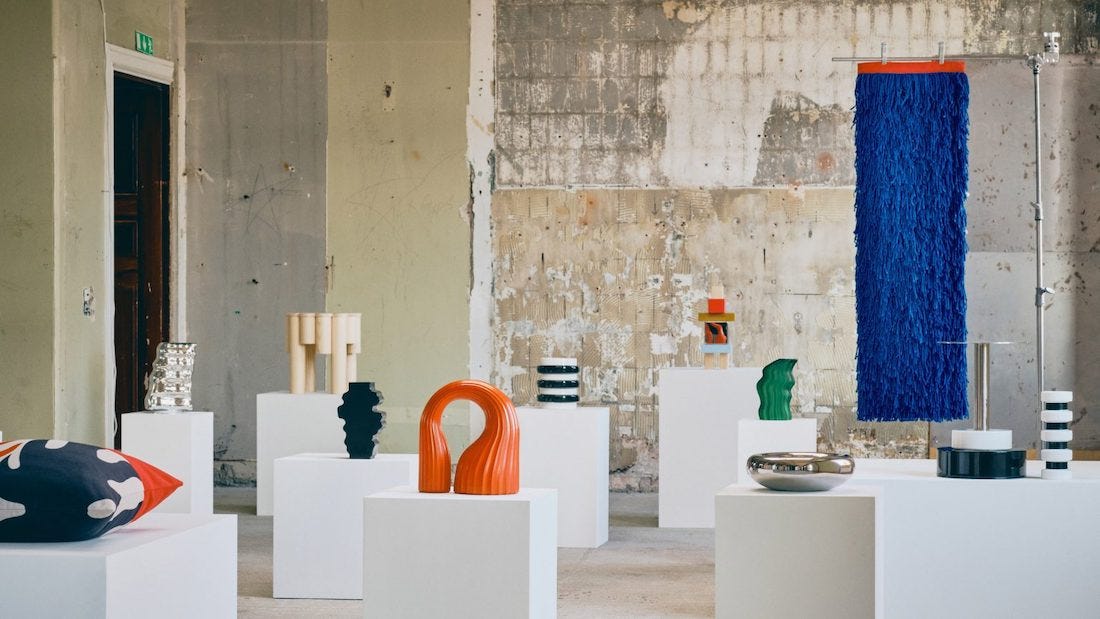
IKEA is once again testing the boundary between design and art with KONSTRUNDA, a limited-edition collection arriving in stores and online on 1 September. It brings together 22 pieces by seven artists and designers, spanning sculpture, furniture, glass, ceramics and textiles, around a single idea: bringing art closer to everyday life and allowing domestic objects to exist without always having to justify themselves through function.
Diversity is part of the project. Under the creative direction of Karin Gustavsson, distinctly different visual languages were brought into dialogue through shared materials, forms and colours. The curation works almost like a group exhibition: it creates relationships between works conceived independently and turns multiple authorships into a coherent collection.
But perhaps the most interesting aspect of KONSTRUNDA lies in a different tension: how do you preserve an authorial vision when it has to be produced at global scale? Akanksha Deo, for example, conceived a sculpture inspired by Ettore Sottsass and traditional Channapatna toys from India, initially using a broader range of materials. Faced with IKEA’s constraints of cost, raw materials and production, she had to simplify the idea - and found a new possibility within those limits.
The collection gains its strength precisely there: in the friction between creative freedom and industrial scale.

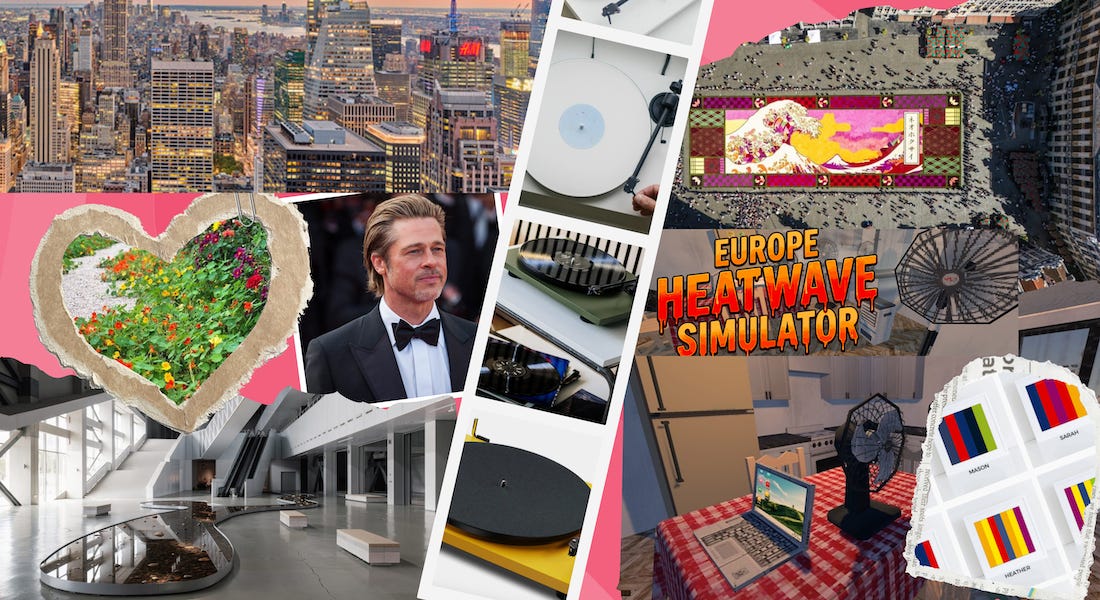
- Brad Pitt presents From Inside Out - The Architecture of Peter Zumthor, a new documentary by Wim Wenders, filmed over 14 years. More than a portrait of Zumthor’s buildings, the film explores how architecture is perceived and experienced, including through the use of 3D technology. Pitt had previously spoken publicly in support of Zumthor’s design for LACMA. The documentary premieres out of competition at the Venice Film Festival in September.
- American architecture is going through one of its longest downturns. In July, the Architecture Billings Index (ABI) fell to 46.6 - anything below 50 indicates contraction - marking a decline in 45 of the past 46 months. Because the index typically leads non-residential construction activity by 9 to 12 months, the figure is a warning sign: the slowdown in projects could extend into 2027.
- Lina Bo Bardi is the subject of her first major exhibition in China. On view at Shanghai’s Power Station of Art through 25 October, The Poetics of Survival brings together more than 300 works, including drawings, models, photographs and archival material. For the exhibition design, OPEN Architecture recreated the artificial pond Lina conceived for SESC Pompeia in 1977. More than referencing an element of the project, the gesture brings into the exhibition her idea of architecture as a space for encounter and collective life.
- Hokusai took over Brussels’ Grand-Place - in dahlias. For the 24th edition of the Flower Carpet, Hiro Sugiyama reinterpreted The Great Wave off Kanagawa across 1,680 square metres using more than 700,000 flowers. The work marked 160 years of relations between Belgium and Japan and lasted just four days. Perhaps that is part of its power: turning one of the most reproduced images in history into something monumental and deliberately ephemeral.
- Vinyl remains analogue, but getting started has become less complicated. Pro-Ject has expanded its E1.2 range with two versions: one with a built-in phono preamp, the other with Bluetooth 5.4 for streaming audio to wireless speakers and headphones. The idea is not to digitise the ritual, but to remove some of the technical complexity that puts beginners off. A good example of design simplifying access without dismantling the original experience.
- Extreme heat has reached Monet’s garden in Giverny. The heatwaves sweeping across France caused the nasturtiums along the central path to wither - something gardeners say they have never seen on this scale. They will have to be replanted for 2027. There is an uncomfortable irony in this: the landscape Monet transformed into painting now has to adapt to a climate he never knew.
- The climate crisis now has a playable version. In Europe Heatwave Simulator, from Swiss studio Blue Hood Games, the player faces 42°C, no air conditioning and 14 days to survive - while trying to keep up a work routine in a Paris apartment. Between open windows, mosquitoes, useless fans and questionable online purchases, dark humour turns an increasingly unexceptional European summer into a survival mechanic. When extreme heat becomes a video game, perhaps it is because it no longer feels like fiction.
- What if your name had its own colour palette? Designer Bernadette Sheridan involuntarily associates letters and numbers with colours - and turned that perception into a visualiser that colours each name according to what she sees. It is not a personality test, but it is fun. To close the edition: discover the colour of your name here.

Click and share with a friend.

No posts
Comments
Nothing yet. Say the first thing.
Sign in to join the conversation.