
I rarely share creative work here, but I am making an exception.
I grew up ostracized from the Jewish “community” because of my parent’s outspoken stance on Palestinian human rights. they continue to organize and write on the topic and were founders of Canada’s Independent Jewish Voices “a grassroots organization grounded in Jewish tradition that opposes all forms of racism and advocates for justice and peace for all in Palestine-Israel.” I’m very proud of them.
You can also listen to us, as a family, talk about this all here.
Despite of our apostasy, my family has tried in our way to keep a jewish traditional alive among us, at least the parts of that legacy that we want to honour: a commitment to internationalism, equality, peace, justice, learning, debate, inquiry, introspection, art, love and cosmopolitanism.
When I was a child, my parent organized highly unconventional annual Passover Seders (dinner ceremonies) to brought together their friends and political communities. I have continued this tradition in the many places I have lived, taking the opportunity to invite my loved-ones and comrades together to celebrate joy, sorrow, courage, commitment, solidarity and struggle. Passover is really one of the highlights of my year.
The Seder is organized around the Haggadah, a book or manual. The centerpiece is the telling of the Passover story of Moses leading a slave revolution, most famously related in the book of Exodus.
Most Haggadot are celebratory and triumphant: we are commanded to honour God and Moses, our liberators. But given Israel’s genocidal project, most recently revealed in Gaza where at least 70,000 people have been slaughtered and hundreds of thousands more have been killed, and given that the majority of my fellow jews in the diaspora support the actions of Israel’s fascist regime (although this is hopefully to be shifting), it is difficult for me to observe Passover without sorrow, fury and heartbreak.
And yet we again assemble, in defiance of such monumental horrors, in the shadow of us becoming our own nightmares, in spite of a regime that would call me and the people I love bad jews or traitors or all manner of other slurs. We gather again in the name of a long and fierce jewish legacy of antizionism and internationalism and socialism and queerness and revolutionary refusal, a tradition that the zionists are trying to erase. We gather again not only with other jews but with our friends and comrades and lovers and indeed with strangers to retell, again and again, a story of collective liberation.
I am sharing, below, the story I wrote as the core part of the haggadah I have worked on with my friends: a retelling of the tale of a slave revolution, this time from the imagined perspective of Miriam, the sister of Moses. I based her character in part on the many powerful jewish women and leaders I have known.
It is a story not only of liberation but also heartbreak, not only of triumph but also horror, not only of liberation but also betrayal, not only of love for one’s family and people, but also about love for the world... a reckless, wonderful, dangerous and impossible love for the world, “the wild card in an otherwise rigged deck.”
I hope it means something to you.
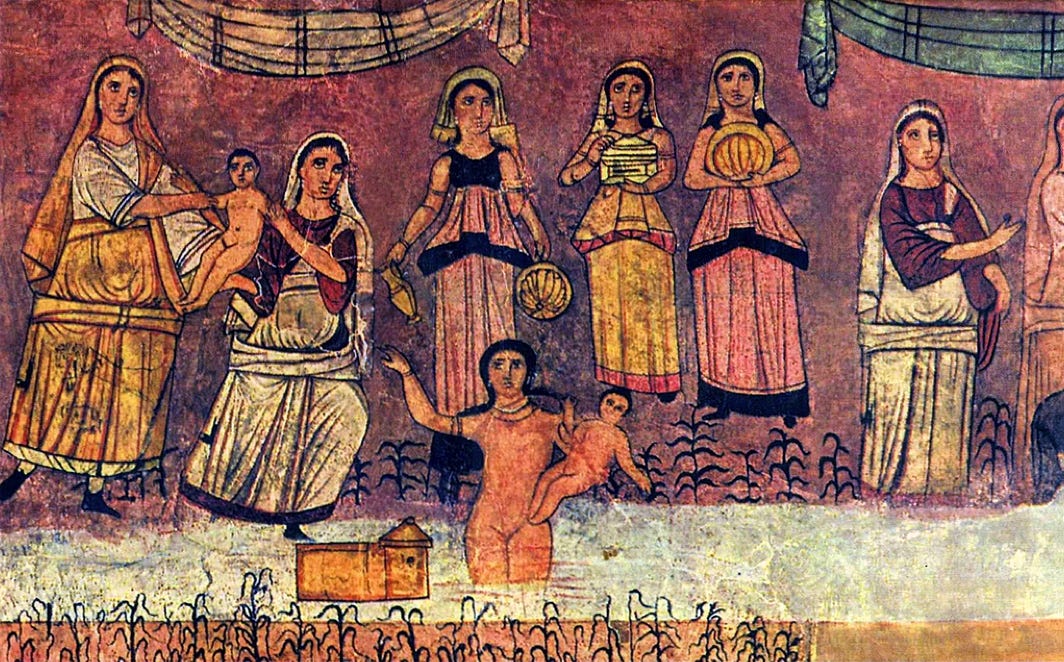
Dear M,
How does a slave begin a letter like this one? It is a letter on which her life depends, on which her world hinges. Yet she already suspects that her reader, who is her only hope, may not believe a word of it.
Let’s begin here: You have seen me every day of your life, but you don’t know me. I’ve known you all your life, but you haven’t spoken a word to me in two decades. My name, Miriam, was the first word you tried to speak, Mimi you called me when you were still a baby. That was of course long before your deepening voice began to stutter... Long before you were taught to believe the language of this foreign land was your mother tongue… long before you learned your anger could kill. Yes: I raised you before you became a prince.
Yesterday, I was among those slaves who watched you, a strong teenaged son of the pharaoh’s royal house, strike down you grandfather’s guard, that sadistic overseer. We saw his blood seep into the sand, mingling with the blood of the slave he had been beating. We all knew that overseer and we hated him. Each one of us had a story about his stupid cruelty.
His death was a miracle to us. It told us: they can be killed; we could be free.
As you stood shaking over the body of the cruel man whose skull you had crushed, I could see the question in your troubled eyes: Why would you, a prince, kill your grandfather’s soldier to save the life of this wretched, stupid slave? Why should you have cared?
Let me tell you: Something fierce and tireless inside you has awakened from its long dream. It will never go back to sleep.
You grew up believing you were the privileged son of the pharaoh’s house. But tell me: why did you feel you were born under the wrong star? Why did the injustice that cradled you every day haunt you every night? Why couldn’t you join your fellow noblemen in the sadistic games they play with the bodies of the powerless? Were you cursed by one of those strange, animal-headed gods? Were you broken?
The truth: you are in fact one of us, a slave turned into a prince, and I was the author of this ascension.
It was I, your sister by birth, who saved you from the wrath of the man you now call your grandfather, our oppressor for many generations. In the year of your birth he heard a prophecy that one of our boy-children, born that year, would destroy him and his dynasty. And so he decreed that all of our people’s male infants should be slaughtered.
Our people wailed nothing can be done! as the soldiers moved house to house. But something can always be done. Never concede before the fight.
When our real mother—yours and mine—delivered you in those dark days, it was I who hid you from the Pharaoh’s murderous men. I wove the waving reeds of the great river into a basket and coated that basket with pitch and so created a floating cradle for you. In it I placed you, bawling and screaming, in the gentle arm of the river.
You see, I was a favorite slave to Her Majesty, the Pharaoh’s firstborn daughter—that woman you think of as your mother. I arranged it so that my superstitious mistress, bereaved at her recent miscarriage, would find you there in that basket in the river and would imagine that you were a gift from her monstrous gods, a replacement for her own lost child, dead then only a week. It was I who suggested to the grieving Pharaoh’s daughter that our own true mother might act as a wet-nurse to you, so that you grew up for a time among your real kin.
And as you grew in our dusty house, a slave-child dressed like a prince, it was I who secretly taught you to speak and sing in our forbidden language. I suspect you’ve forgot it, but maybe you hear it in your dreams.
And what about four years later, on that sad day in the dry season when the Pharaoh’s firstborn daughter, the woman you imagine is your mother, came to collect you to be raised and educated in the palace? It was I who whispered comforts to you in our soft language, and dried your tears, taught you to encrypt your true heart in a chamber inside you more secret than the pharaoh’s golden tomb.
In their palace they raised a haughty prince. You learned not to tell one slave from another, so I doubt you recognized me in those years, though you saw me every day and issued me orders many times as I served in the palace. It had to be this way, but it was agony. I loved you.
It was I who recommended to the Pharaoh’s daughter that our wisest sage, a slave, could serve as your personal tutor. Do you think your interests in prophecy, in justice, and in revolution were accidental? Do you think your sense of duty and pride is yours alone? Oh, to be a prince! You never once had to ask yourself who made your world and why.
But we slaves have, secretly, patiently, diligently, raised you to become our champion. Even your name tells the truth. You have been taught by your adoptive mother, the Pharaoh’s arrogant daughter, that your name means beloved one. Yes, she was infatuated with you from the moment she found you floating in the reeds. In our language, however, your name means that which is drawn out: the short straw drawn from a bundle; the white-hot brand, fresh from the fire; the wild card in an otherwise rigged deck.
I’m sure these words will come as little comfort to you. You have been forced to run from all you have ever known. With the overseer’s blood on your hands, you now find yourself an exile. Even you cannot avoid your grandfather, the Pharaoh’s vengeance. Like all tyrants he can sense the insurrection brewing behind our too-wide smiles and too-deep bows. He loves you, in the way powerful men love to see themselves reflected in others. But he would execute even you try to stop the flood of our anger.
It’s not simply that you killed his overseer: he has more than enough men like that. It’s that, in doing so, and in acting to defend a slave, you broke his thousand-year spell. You have shown our people that the Pharaoh’s rule is vulnerable and arbitrary. You must flee because that spark could start a wildfire. Every tyrant fears the imagination.
But if you somehow read this as you wander in the desert, I want you to know that your actions in these recent days were not entirely an accident. They weren’t the result of your will alone. Your fate is a slow-growing tree that we planted and we cultivated. We could not have predicted your killing of that particular overseer, but we tilled the soil for it, or something like it. I did. It was me, brother, because I love you.
What comes next? Your actions have shown our people that this system of domination can be challenged, and they want liberation, and revenge. They will tell stories that you will return to lead us. I will tell these stories, and so will our brother, the wily Aaron, our greatest storyteller.
Do we need you? No, not on one level: we will rebel, and you are only one man among thousands. But our people need a myth, a story, to give us courage. You now play that role, even if you never asked to.
My hope is that this letter, which I will sneak into your travel bags, will find you, and that you read it, and that you believe it. I hope you will return to us with an army or with powerful magic and fulfil your destiny to liberate our people. And when you come back, I hope you will remember that whatever magic you possess is not yours alone but the gift of all of us, and of all those who came before us who were never allowed to dream, and a gift for all those who will be born from the stories we tell.
I love you.
Your sister, M.
Dear M,
So! It takes a mysterious pyrotechnics show in the desert for you to finally write to your sister, after so many years?
You wrote that you now believe me and my letter of so long ago, which I had imagined you had forgotten or simply never received. The words of your own sister were not enough I see; you only trust the voice of “your Lord” whom you hear in your head?
How typical.
I hope you will indulge my teasing. If I am honest, I write with tears of happiness in my eyes to learn you are alive, and that you did indeed receive my letter from all those years ago, and that now, for whatever reason, you have come to believe me and have determined to return to us in Mitzrayim.
Mine are also tears of joy to learn from your letter that I have a sister in your young wife, and also nephews in your sons! (Don’t be scandalized, dear brother, but I don’t share my bed with men, so I will trust you and your brother to bring children to our family). Hurry to us, dear M.
Now, to what really matters: politics. I honestly do not know what to make of the strange tale you have related to me in your letter. You write that you met god’s messenger in the form of a continuously burning bush deep in the desert. You write that it gave you instructions, powers and magical gifts from this all-powerful god. You write that this fiery messenger told you to return and to liberate us. You write that this god, the god of our ancestors, even, has promised us sweet lands on the other side of the desert, if we followed his laws. You write that you intend to follow these instructions and return to Mitzrayim to liberate us and lead us to this new home.
M., let me tell you that most of us enslaved people believe this almighty god, whose emissary you say you met, abandoned us a long time ago. Whatever promise he made to our ancestor, Jacob, has clearly been broken: we live like beasts here in Mitzrayim. How could a god who loves us permit this?
Now, you write that this god’s emissary, this ever-burning bush, told you to return to present your case to our council of elders? This is extremely stupid. Any god who truly knew us would not give such idiotic advice. Those old men argue forever among themselves and do nothing! It is their one and only passion to disagree with one another and compete for the Pharaoh’s bribes.
Any god who claimed us would know that it is we women who make the real decisions, not in the council hall but in the kitchens, laundries, brothels and bathhouses. Why did this god not tell you to meet with us? Maybe he has never set foot in such places.
And this magical staff you have been given that can change shape and command the elements… yes, perhaps it will impress those old men. But unless I prepare their wives and daughters first, you will in fact get nowhere with them. I have, of course, already begun this work.
As hard as I find your story to believe, I can sense that you believe it. I will keep my skepticism to myself because it is most important that, when you arrive, you not waver from your conviction: we need a prophet, especially the young people, otherwise they have no hope. Myself, I do not care for hope. Struggle is what moves me. Our cause is likely hopeless, but that does not mean we can abandon it. Hope, I suspect, is what those who will come after us will say we must have had, after we’ve won our revolution.
This god you spoke to is right about one thing: you are certainly no great orator. I doubt your exile working as a shepherd has improved your public speaking powers, especially in our slave language, of which you probably only remember a few words. Aaron, our brother, is on his way to you now, and I coached him to be a mesmerizing speaker in both languages. You will need to keep him close.
M.: I know your heart, for I tended its growth like a prized rose. I know you are hiding from me your own misgivings. I am not only speaking of your fear. You are a dreamer and a thinker, one who loves mysteries and ambiguities, who delights in puzzles and contradictions. Now you have been cast by this god of yours in the role of the leader who must be as certain as stone. I’m sorry, brother, but you will never overcome these insecurities, and I beg you to treasure them - they may be all that saves you from becoming a tyrant yourself.
But I speak also of another misgiving, which I share with you about this strange promise your god - our God - has made. He says he will rain down unspeakable misery on our oppressors, and not only against the arrogant family of the pharaoh, who deserve it (forgive me, for I know you care for some of them, but they do). No, this god also promises to unleash his wrath on every single person in Mitzrayim, even down to their slaves who are not of our people… how do these people deserve such horrors? And what is worse, as these plagues devastate the people and the land, this god of your… of ours… also tells you He will harden the heart of the Pharaoh, their leader, so that he will not concede or negotiate. This will necessitate further, more ruthless and devastating terror. Why is this the price that must be paid?
M.: even presuming this vision you have had is real, how can we come to trust and worship such a god? Listen: I want revenge. I want it for the murders, for the fear, for the misery that I see every day. I want to avenge the humiliation, all the times we have had to watch illiterate soldiers make our wisest men act like dogs for their sport, for all the time they have taken our daughters away on their wedding nights. Most of all I want revenge for what their oppression has made of our people: I want revenge for the fear, small-mindedness and corruption they have instilled in us as we struggle to survive them.
But, M., you, a sweet boy, you are my revenge. You, an unknowing spy in the Pharaoh’s house, a dreamer, covertly trained to be our champion, you are the vindication I want.
I want freedom for our people, yes, of course. And, strangely, I also want freedom for our oppressors. The pharaoh, the man you thought of as your grandfather, is a living example of how, when a people become addicted to decadence built on the misery of others, their souls rot from the inside. I want a revenge that ends this thing both our peoples have become.
But the revenge God promises is something dark. I fear it will not liberate us but transform us into something terrible.
I also want the land he has promised you, a country of our own. Or maybe that’s the only way I can imagine freedom. I want to not be afraid. But do not others already live on those lands of milk and honey? And to whom, exactly, is it promised? Only to those who follow you? What about those who refuse to follow? I wonder. But what other choice do we have?
Will you listen to the advice of a woman, your sister? I hope so. M, whether it is real or a figment of your imagination, this thing you saw, this burning bush, will give you a terrible power over our hearts, over our imaginations. As implausible as your story seems to me, I know our people are ready to believe it. They are ready to kill to make their belief into a reality. Maybe your God will create these plagues - frogs, a rain of blood, locusts... or maybe we will orchestrate these merciless plagues ourselves and then, later, tell our grand-children the heinous deed was God’s work, not ours.
Dear brother, keep your heart open. I will see you on the outskirts of the city where I long to hold you and your wife and sons. Meanwhile, we will prepare.
I love you. Your sister, M.
Dear M.
A miracle. A miracle. We are free. We have won.But as we prepare to leave Mitzrayim forever, I wonder, what have we lost?
And I wonder, will you read this? We have not spoken in weeks. Yes, you are busy leading our revolution. But I wonder: have you been avoiding me? Is there something inconvenient in my questions? Or maybe I have been avoiding you, as the plagues that you have called down wash over these people, as death spreads to every house…
Tonight, I held the body of a little boy in my arms. He was the same age as you when the Pharaoh’s daughter came to claim you all those years ago. This boy… our god struck him down for no reason. A sweet boy, with that ridiculous curl of hair. Like you, he was a dreamer, whose only crime was to be born to the wrong tribe... His mother would often come to the laundry where I worked, and she was so fucking funny. What a wit, with raunchy jokes and imitations of the Pharaoh’s family…
Yes, her son would have grown up to be a soldier, one who would see me as filth. But in that moment, dead in my arms, he was a beautiful, stilled creature, a broken bird. His mother was a conduit for hell itself, torn apart by grief, her grin is gone forever.
What is this God we have made, M.? And what is this god making of us? Our people are dancing for joy at this carnage. They are singing your name in the streets as we gather to make our exodus.
Yes: You and Aaron have been truly brilliant. Whether it is as you say and our god advised you every step of the way, or whether you orchestrated this ingenious plan, I cannot tell. But we have our freedom now.
The Pharaoh, shattered by pain, his dead kinsmen rotting in the halls of his palace, his servants and soldiers fled, has finally allowed us to leave, banished us, even. It happened exactly as you said it would: the more his people suffered, the more irrational the pharaoh became, as if this god of ours wanted him to murder his own people with the horrific plagues that his enchanted stubbornness necessitated.
Now, in a final act, our God has taken the firstborn of every house, not only of humans but even of animals. Your own adopted mother, M. - the pharaoh’s beloved daughter, struck dead, coughing up her guts, begging for mercy. The fields are in ruins, the smell of rot is on the land, the soil is as gray as the sky... and now we, their slaves, upon whom they depended for everything, we are leaving... how will the people of Mitzrayim survive?
But the people or Mitzrayim are besotted with us. The same woman whose dead child I held, she insisted on giving me all her golden jewellery and, with a terrible earnestness, wished me well on our journey, kissed my hands, offered me the last of her food. How is it possible after one loses a child? I see our people taking advantage of this bewitched generosity.
I cannot help but think that when, last night, we did as you told us and smeared lamb’s blood on our doorframes to ward off this god’s angel of death, we also lost something precious in that carnage. Something in us also died.
Dear M., please assure me that this thing we are doing will not simply be a turning of the tables but the overturning of them? My heart is sick and I long for a new land, a new life, more than anyone. But at what cost? Who will we be when we arrive?
And yet I also feel my blood hot with glory. We have built our revolution like we built their palaces, brick by brick, in defiance of history. You had the dream and shared it, with your quiet intensity. Aaron made it irresistible with his silver tongue and his diplomat’s grace.
But listen: I was the engineer, the one who could defy gravity and lift our people up. It was me who organized the people, calmed their fears, kept us together, organized hiding-places for our fighters, consoled the widows. I even convinced sisters and wives to betray the traitors among us, and had their throats quietly slit in the night, their bodies left for all to see in the market. All of my work, invisible but essential. This revolution will be a monument that will be retold for millennia. But I do not expect to be remembered in that story.
When we tell this story to our grandchildren, what will this story make of them? You are not the only prophet in the family, M. I can foresee a time when this story we have made together will be a small candle in the darkest, coldest times for our people. It will keep their souls alive in times of oppression and grief.
You roll your eyes at my worries. Aren’t we to be free now? you ask your anxious sister. Oh my dear boy, yes, for a time. But only for a little while. This Promised Land you will lead us to will not be ours forever: if we can take it as you foretell, others will take it from us in their turn, citing their own gods’ promises.
And, anyway, even in our own country there is nothing so special or righteous about us freed slaves that we won’t soon turn to being one another’s pharaoh. And when we do become our own pharaoh, what role will this story of our revolution be made to serve?
No, you are not the only prophet in this family. Let me tell you a secret: most of us receive multiple visions of the future. Last night, in my house, protected by the lambs’ blood on the doorframe, while our god’s angel of death slaughtered that funny woman’s son, last night, I had three dreams.
Dear brother, in the first dream we marched out of this dying city, led by a pillar of clouds by day, at night by a pillar of fire in the sky. As we came to the bank of the Red Sea, the Pharaoh had a change of heart and sent his murderous chariots after us. Night fell, we thought we were doomed. You raised that magical staff and the sea opened like a book and we walked down its spine to safety.
At dawn, as the last of us made it to the far shore, you wielded your staff like a scythe and the waves crashed down on our enemies and we watched them drown. There, on the far shore, I led us all in a song and a dance of thanks and joy that I felt I had known all my life. Even now I can remember every word and step. We three kin--you, Aaron and I--led the people for years after that. We three never made it to the Promised Land, but your children did.
But in the second dream we never even made it through the Red Sea. Dear brother, when you raised your staff, the waters refused to part. We died on the near shore, waiting for a miracle that never came. We died there not because of the Pharaoh’s vengeance, but our own. As our hope faded, our newfound taste for blood turned us on one another and we drew our dirty knives and bled out in the desert. When the chariots arrived, we were already dead.
The third dream? It is the hardest to relate, because in it I betray you.
Dear brother, we arrived at that far shore, indeed, free at last. But when the Red Sea had swallowed our enemies and we turned to look at ourselves, we found we were changed. And suddenly but certainly, some of us knew, without a doubt, that we were not wanted in your Promised Land, that we could never live by your father God’s strict commandments. And so we—those of us who never appeared in your visions, those of us who love one another wrong, those of us whose bodies couldn’t help but refuse—we left you there, on that far shore and walked away.
You pleaded to me to be reasonable. You shouted: Don’t be sacrificed on the altar of your stupid idealism. You screamed: No one will protect you out there among the savages. You cried: Don’t you know how this fucking world works? You cursed me and you begged me to stay. Then you cursed me again for making you beg. The hate in your eyes was more vicious than any look you had ever shot the Pharaoh.
But we, the exiles among exiles, did not follow you two brothers to your Promised Land. We took that other road, snaking off into the morning mist. We were crying, or maybe we were singing. I don’t know how many days we walked. Maybe it is an endless road and we are cursed to be wanderers, forced to make our home wherever we are in the world. Maybe we will never have any safety but one another and the friends we make along the way. But we promised ourselves we would not stop until we created a city where there dwelled no gods and no masters.
M., I do not know which of these three visions will become our reality. I don’t know if we get to choose. Maybe in some way all three will occur, side-by-side, just as we three siblings, you, me and Aaron, live in one anothers’ light and shadow.
Brother, given what might happen tomorrow as we begin our exodus, I wanted to share with you a truth I have been keeping from you all these years of our struggle. Are you ready?
You are not really my brother. At least not by blood. You are in fact the son of the now-dead woman you had thought of as your mother, the pharaoh’s daughter. You are, in fact, the pharaoh’s own flesh and blood. It is true that my mother, the mother also of Aaron, nursed you. It is true I guided your education and cultivation. And when, as a teenager, you killed that overseer and fled into exile, I saw my opportunity to instill in you a sense of purpose to serve our revolution. I sent you that first letter as an improbable gamble: the short straw drawn from a bundle. The white-hot brand, drawn fresh from the fire. The wild card in an otherwise rigged game.
I think you will understand why I did it, why I lied to you. In any case, is what I did any worse than what your god has done, filling you with a sense of purpose to drive you towards his own ends. I dare say your god’s ends are far more bloodthirsty than mine.
But you are my brother in spirit. Nothing will change that. Blood means nothing in such matters. We always make our families, some of us with more intention and care than others.
It’s nearly dawn. The flatbreads your god instructed us women to make are ready. Our people are beginning to gather on the edge of town, ready for our departure, hauling with them the treasures of this ruined land. You and Aaron will be leading at the head of the march, of course. It is expected.
If you need me, you’ll find me at the back, with our old and our sick, trying to make sure no one gets left behind.
I love you.
Your sister, M.
No posts
Comments
Nothing yet. Say the first thing.
Sign in to join the conversation.