
Provider data governance is where operations, strategy, and reality collide.
Done right, it brings order to chaos. Done wrong—or not at all—and you’re left with low quality and outdated data, delayed or unpaid claims, angry members, super angry providers, regulators asking you what’s happening over there, and a provider directory that inspires zero confidence. To put it more bluntly, you’re left with a raging dumpster fire.
Let’s break down four of the most common mistakes health plans make with provider data governance—and how to address them before they do real damage.
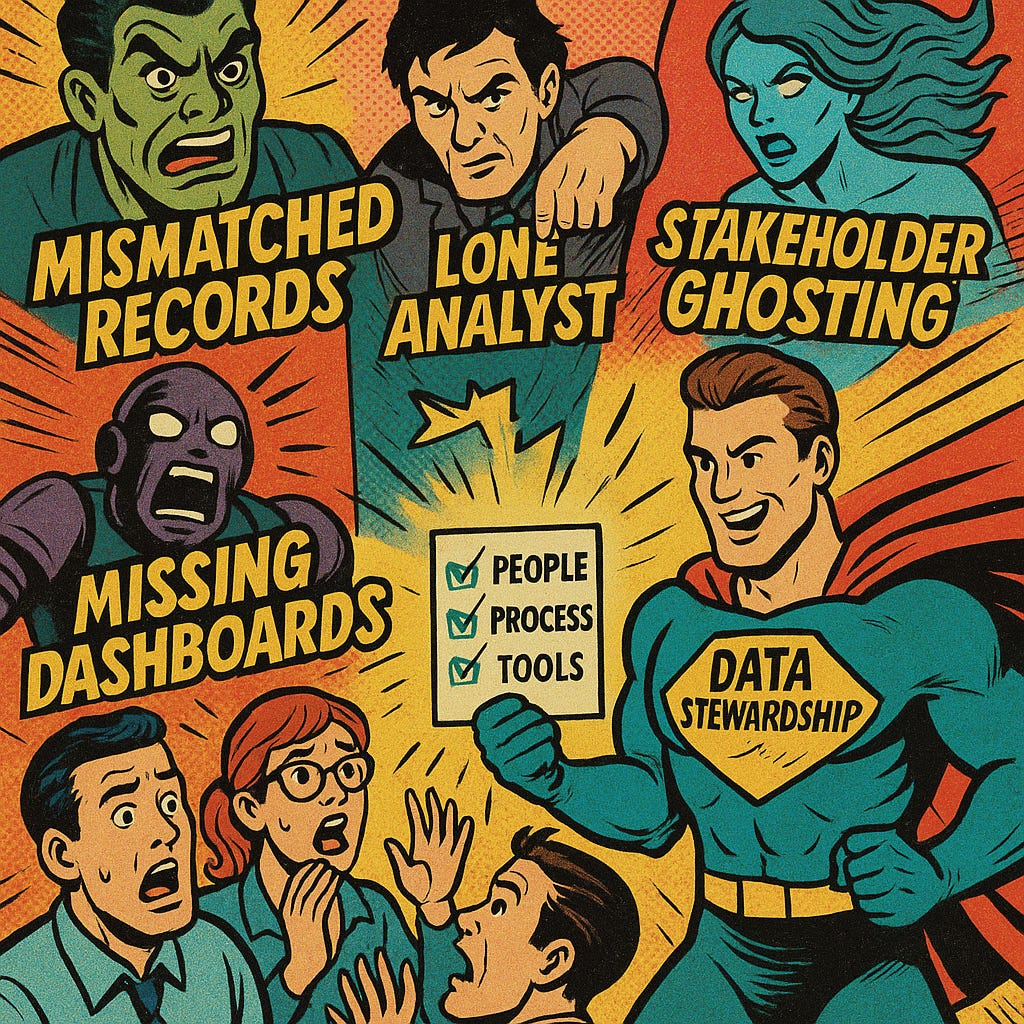
No governance program? Welcome to the Wild West.
Data lives in spreadsheets, in emails, in the heads of three overworked analysts—none of which agree with each other. You have multiple systems giving you different answers about whether a provider is in-network. There’s no clear ownership. Problems pile up faster than they get fixed. Teams are stuck playing Whac-a-Mole across member services, claims, and provider relations.
The fallout is predictable:
Delayed and denied claims
Inaccurate directories
Frustrated members and providers
Failed audits and stalled implementations
Serious constraints in scalability
Salespeople that can’t sell because your plan has a bad rep
Okay, maybe that’s a little dramatic, but at some point most plans have experienced at least a few of these issues, often simultaneously.
The fix: Start small, but start now. Even a basic Provider Data Governance Program (PDGP) with clear roles and responsibilities is better than chaos disguised as “institutional knowledge.”
A governance program is only as good as the people running it. And this isn’t a job for whoever has the least full calendar.
It might seem easy to think that “data governance” should be assigned to someone in IT. We love our tech folks and maybe there’s someone on your tech team that really, thoroughly “gets it”. And that’s great if that’s the case. But as impactful as provider data is, the business needs not just a seat at the table, but a hand on the rudder. You need a unicorn: someone who understands data and operations.
The right governance lead should:
Understand provider data models (and their quirks)
Know how the business actually uses provider data (across claims, directories, UM, etc.)
Communicate clearly with stakeholders across all levels
Be empowered to make decisions and drive change
The fix: Take your time assembling the team. Governance success is 90% people, 10% tools. (Let’s call that a SWAG.)
Governance doesn’t work in a vacuum. Provider data affects nearly every part of your plan:
Claims
Utilization Management
Enrollment
Customer Service
Finance and Medical Economics
Data Science and Reporting
Network Management
If you don’t have representation—or at least input—from each of these groups, you’ll miss key use cases, create friction, and fail to get buy-in when it matters.
And don’t stop internally. External partners like medical groups, IPAs, and health systems should have a seat at the table to ensure you have a rounded. They’re the ones submitting rosters, after all. Consider making this a topic in your quarterly JOC agenda and inviting key partners to participate. The outside perspective can only help.
The fix: Map out every group that uses or contributes to provider data. Then define how (and how often) they need to be involved in governance processes.
A governance program with no data quality checks is like a map with no compass. You think you’re moving forward—but you might just be going in circles.
You need visibility into whether the work is paying off. That means:
Dashboards that track KPIs
Trend monitoring over time
Alerts for anomalies
Root cause investigations
Cross-team follow-through
Whether you use Tableau, PowerBI, or Looker, the key is this: governance needs to be measurable, and tied to outcomes.
The fix: Don’t wait for complaints to tell you something’s wrong. Build monitoring into the process—and give your team the authority to act on what they find.
Bonus tip: Consider the KPIs that you want to monitor as you develop your detailed requirements for how you’ll structure and validate each data element in the system. Each requirement should also define the impact of the data element, where it comes from, where it’s used, and what the criticality is if it’s missing or wrong. (Hey, we didn’t say this would be easy. It is fun, though, right?)
There’s no “done” in provider data governance. New systems, new contracts, new people—change is constant.
That’s why the best programs focus on progress, not perfection. A mindset of continuous improvement will help your team adapt without losing ground.
Start where you are. Build smart. Measure as you go.
And if you need help, you-know-who is right here ready to jump in.
Comments
Nothing yet. Say the first thing.
Sign in to join the conversation.