
If you've managed provider data, you know provider changes can often catch you off-guard. Providers retire, relocate, change affiliations, or even go out of business without notifying payers in advance, creating potential risks around network adequacy, re-credentialing timelines, and fraud, waste, and abuse (FWA) detection.
What if, instead of reacting after the fact, you could proactively anticipate provider churn and reduce these risks?
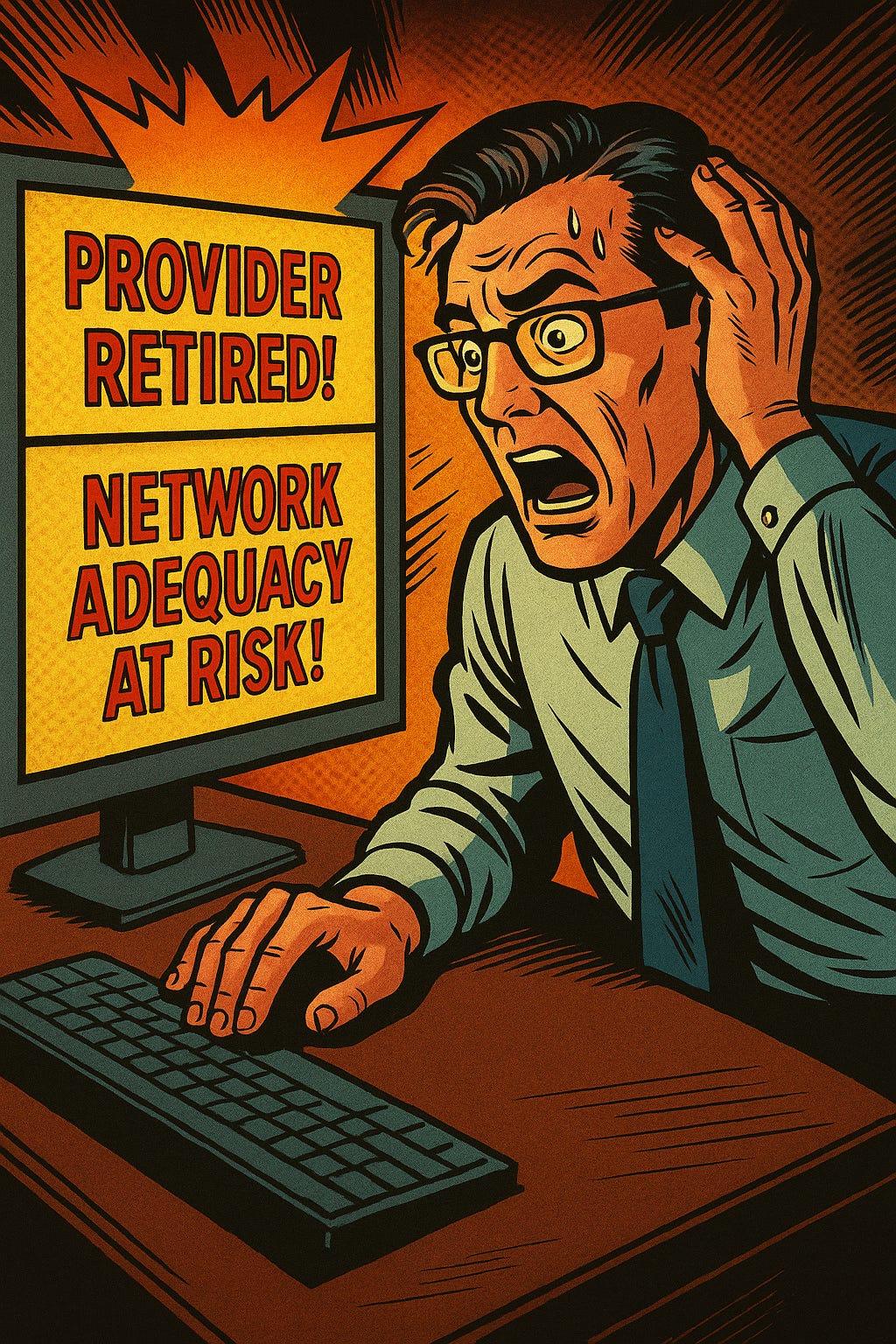
Unexpected provider churn poses risks beyond immediate claim issues. Critical areas impacted include:
Network Adequacy: Sudden provider departures create compliance gaps, risking fines and regulatory scrutiny.
Credentialing Delays: Late discovery of provider status changes leads to rushed re-credentialing processes or temporary gaps in credentialed providers, which could put members at risk for missing out on care or incurring out-of-pocket costs unexpectedly.
Fraud, Waste, and Abuse (FWA): Providers submitting claims long after a known retirement or relocation can signal potential FWA concerns.
Claims Pends: When providers change groups or locations, your claims system may pend those claims for additional provider setup.
Predictive churn modeling helps you mitigate these risks and maintain operational stability.
You don't need complex analytics to get started. Common indicators you already track can signal churn:
Credentialing Status: License expirations or renewals missed by providers.
Claims Patterns: Unexpectedly low or no claims activity can suggest provider transitions.
Demographic and Practice Changes: Address or affiliation changes reported through claims or external validation sources.
NPI Status: Routinely verifying your network against the national NPI registry can help you identify when a provider’s NPI has been deactivated - a bright red flag that they’re no longer practicing under that NPI.
Predictive insights need action to be valuable. Build simple workflows to effectively respond:
Early Alerts: Use indicators to trigger alerts to credentialing and network teams.
Outreach and Confirmation: Standardize timely outreach to verify provider status and plans.
Member Outreach: When a provider has changed locations or medical groups, moved out of the area, or stopped practicing, identifying the member impact can help your care teams ensure continuity of care for members.
Mitigation Strategies: Identify network gaps caused by churn and notify your network team so they can take decisive action to fill the gap.
Even modest lead times—weeks instead of days—can significantly reduce compliance risks and operational disruptions.
Begin with a focused pilot program. Track outcomes such as improved network adequacy compliance, reduced claim pends, and early FWA detection. Document these improvements clearly, allowing you to confidently scale predictive churn processes organization-wide.
For example, a 20% improvement in timely credentialing and a noticeable reduction in compliance fines can quickly justify the predictive churn initiative.
Predictive churn management is a practical approach that addresses critical business risks around network adequacy, credentialing, and compliance. Launch a manageable pilot, measure outcomes, and build a more resilient provider data strategy.
And here’s the obligatory pitch: You don’t have to go it alone when it comes to developing your provider data management strategy, including monitoring churn in your network. The Maven One team is here to help. We bring deep industry insights and expertise combined with robust technology to help payers of all shapes and sizes navigate the challenges of managing their provider data. Get in touch today to get started.
Comments
Nothing yet. Say the first thing.
Sign in to join the conversation.