
How brief, controlled reductions in limb blood flow can send protective signals throughout the body, what researchers think is happening, and why remote ischemic conditioning remains one of the strangest ideas in cardiovascular physiology
Someone puts a blood-pressure cuff around your arm.
They inflate it high enough that blood flow temporarily stops.
Five minutes later, they release it.
Blood rushes back.
Then they do it again.
And again.
At first glance, this sounds like something that should have absolutely nothing to do with your heart.
The cuff is on your arm.
Your coronary arteries are nowhere near it.
Yet researchers have spent decades investigating whether those short periods of controlled ischemia and reperfusion in a limb can somehow send a protective message to distant organs.
Including the heart.
Including the brain.
Including the kidneys.
The phenomenon is called remote ischemic conditioning, or RIC.
And this is one of those areas of physiology that makes me stop and ask:
How does the body even know?
How does an artery in your arm experience temporary ischemia and somehow communicate that information to tissue several feet away?
That is where this gets fascinating.
This research has been sitting in cardiovascular medicine for decades.
It isn’t secret.
It isn’t something I found buried in a government document.
But outside cardiology, vascular research and ischemia-reperfusion science, almost nobody talks about it.
And once you understand the biology, you may start looking at stress, exercise and vascular adaptation very differently.
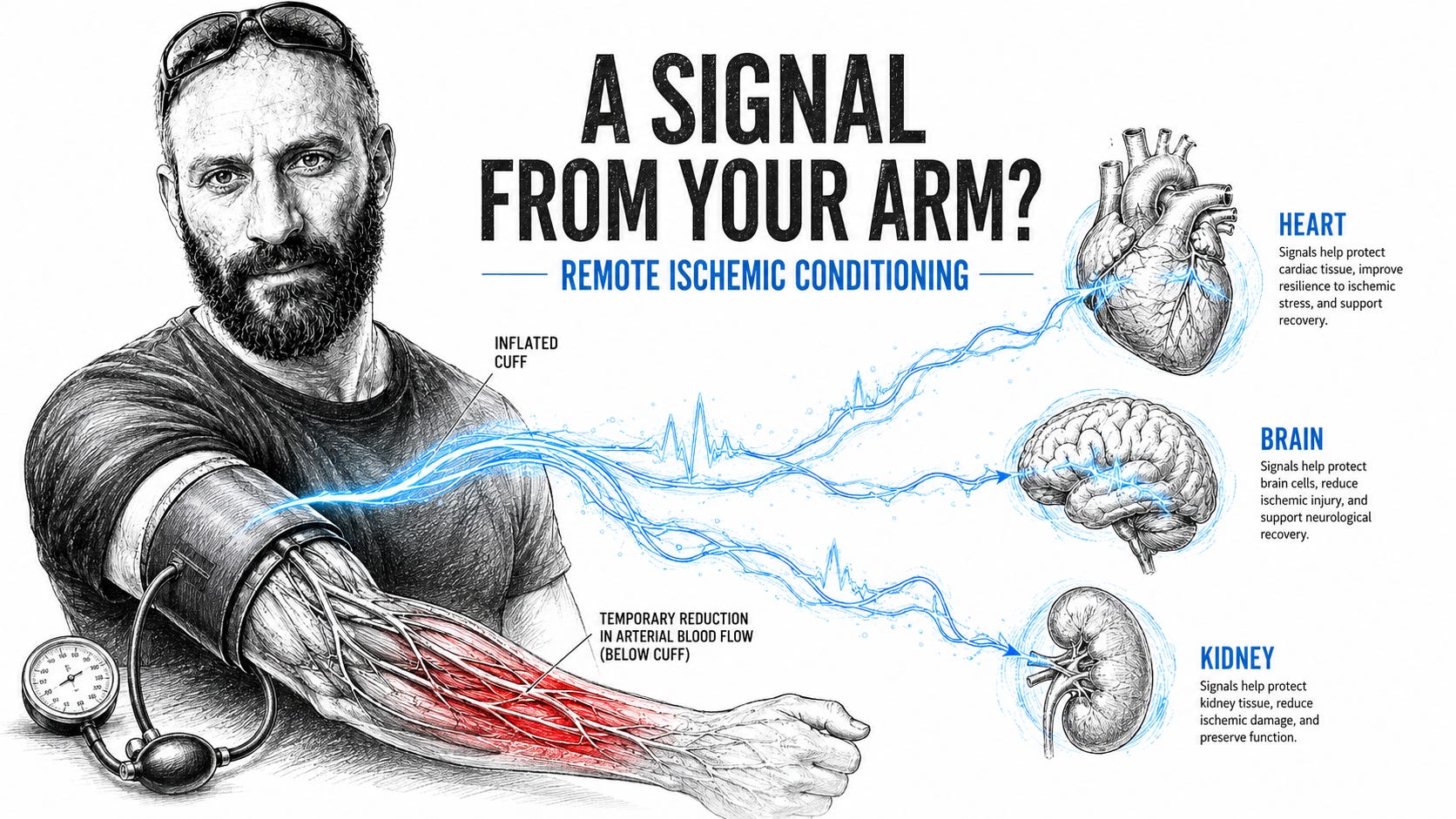
The foundation of ischemic conditioning goes back to experiments showing that several brief episodes of ischemia could make heart tissue more resistant to a subsequent longer ischemic insult.
Eventually researchers discovered something even stranger.
The protective stimulus did not necessarily have to occur in the heart.
Brief ischemia could be produced in a remote limb.
That is where remote ischemic conditioning came from.
Today, researchers usually create the stimulus with a blood-pressure-type cuff around an arm or leg.
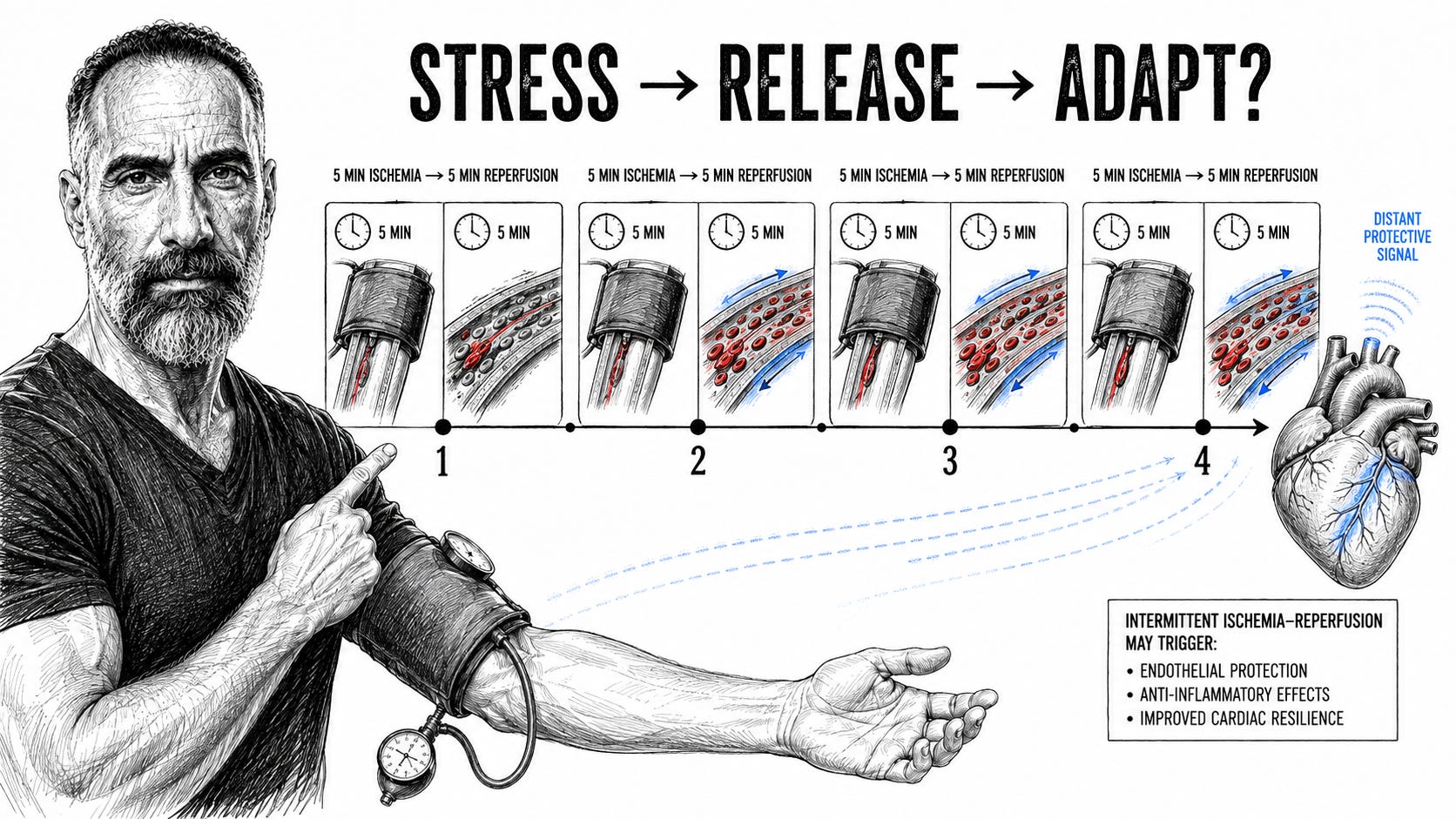
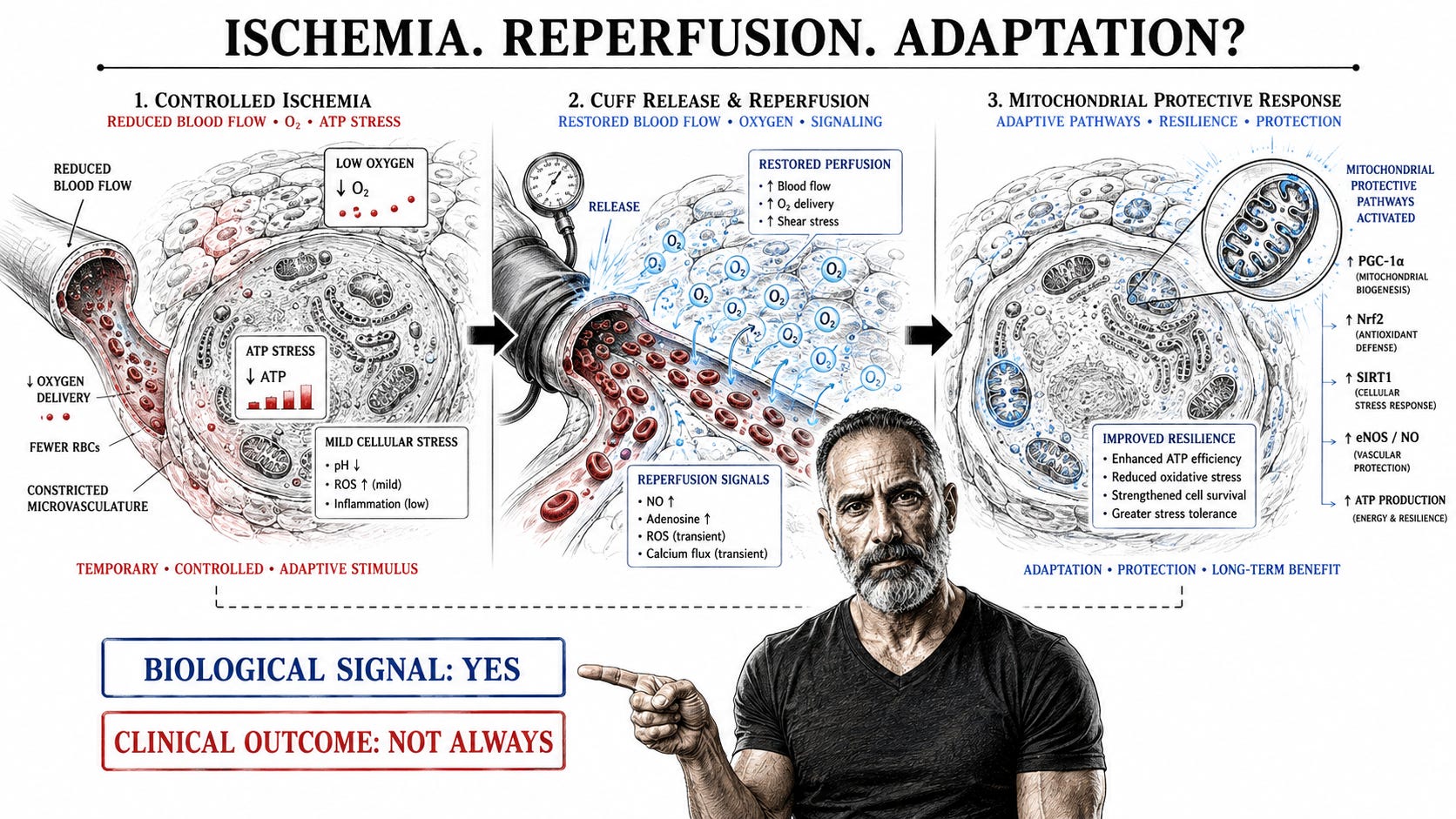
A commonly studied protocol has involved several cycles of approximately five minutes of cuff inflation followed by five minutes of complete deflation.
For example, one modern cardiovascular study used four cycles of five-minute upper-arm cuff inflation at 200 mmHg followed by five-minute deflation, performed twice daily for seven days. (PubMed)
Other trials have used the same basic 5-minute ischemia/5-minute reperfusion pattern over much longer periods. One chronic protocol used four cycles at 200 mmHg twice daily. (Springer)
That does not mean 200 mmHg twice daily is something I am prescribing for everyone reading this.
It means this is the biological stimulus researchers have been studying.
And the stimulus itself is simple:
Temporary ischemia.
Then reperfusion.
Temporary ischemia.
Then reperfusion.
Something about that alternating stress appears capable of activating protective biology beyond the limb itself.
That is the mystery.
This is the part we still do not completely understand.
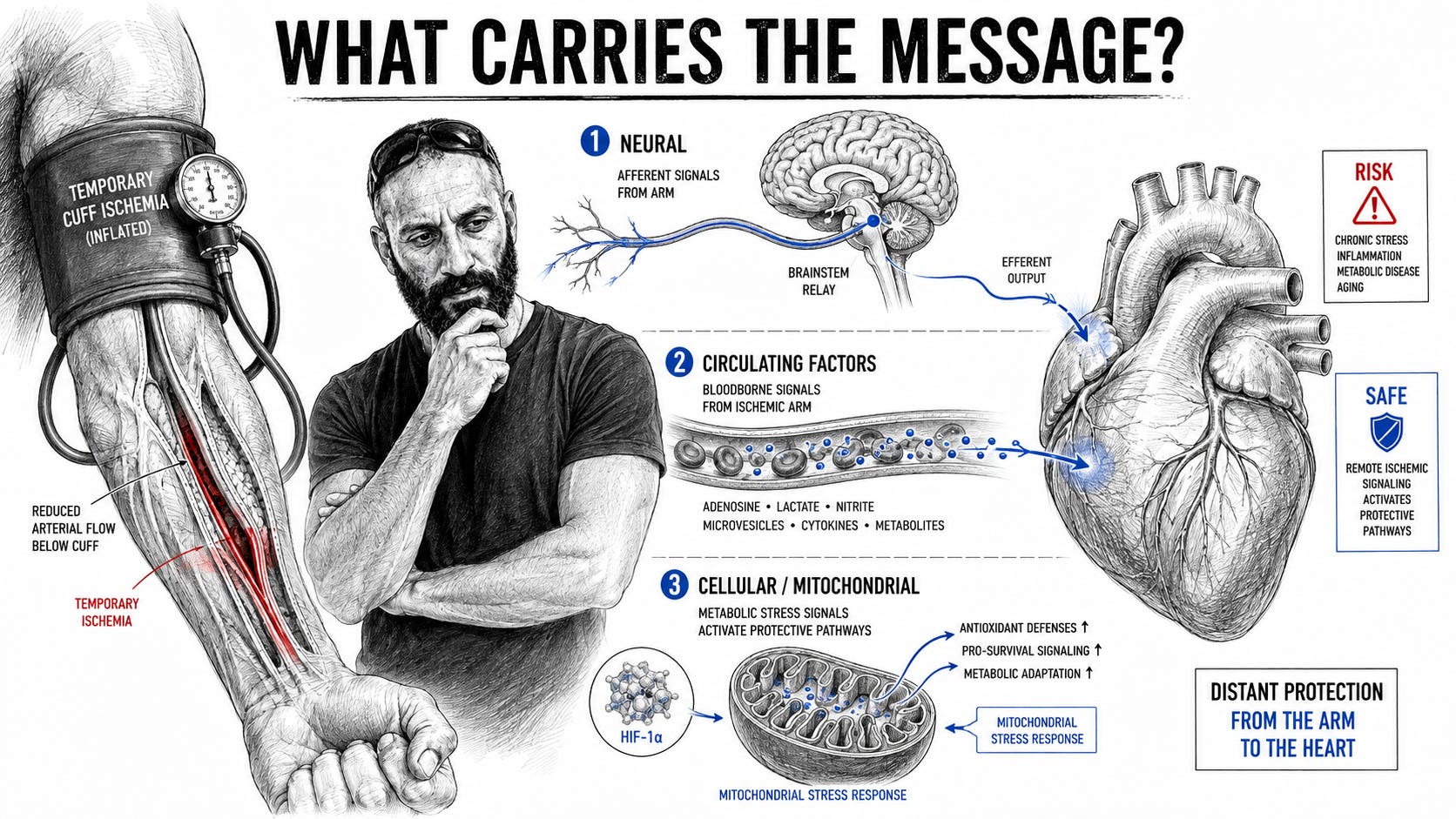
There probably isn’t one messenger.
Research has implicated several overlapping systems.
One possibility is neural signaling.
Temporary ischemia activates sensory nerves in the conditioned limb.
Those signals can interact with the autonomic nervous system and potentially influence distant organs.
Another possibility is circulating signaling molecules.
Research has investigated adenosine, bradykinin, opioids, nitric oxide-related species, cytokines, microRNAs and other circulating factors.
Then those signals may activate intracellular survival pathways inside distant tissue.
Researchers frequently discuss pathways such as RISK, SAFE, HIF-1α signaling, mitochondrial responses and regulation of the mitochondrial permeability transition pore.
Clinical research protocols describe this as a combination of circulating molecules, neurohumoral signaling and downstream mitochondrial/cellular responses rather than one simple pathway. (ClinicalTrials)
Think about what that means.
The arm experiences a controlled stress.
The body detects it.
Signals travel.
Distant tissue changes how it prepares for subsequent stress.
That is why I think the word conditioning matters.
This is not simply vasodilation.
This is not just increasing blood flow for ten minutes.
Researchers are asking whether a mild stress can alter how the body handles a more serious stress later.
That concept exists throughout biology.
Exercise does it.
Heat can do it.
Cold can do it.
Hypoxia can do it.
The body is constantly adapting to manageable stressors.
RIC appears to tap into another version of that adaptive system.
This distinction is important.
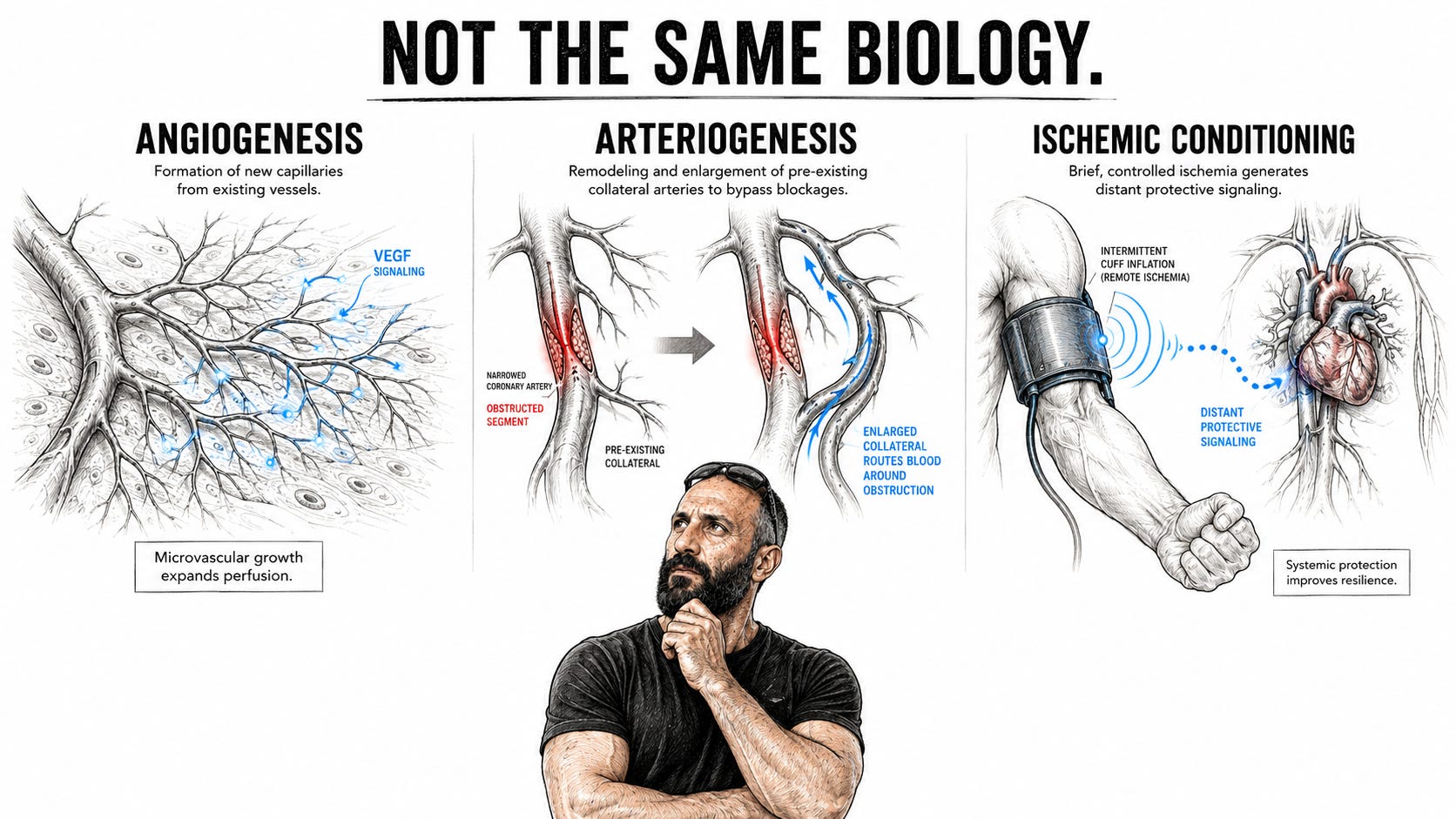
There are three words that often get mixed together:
Angiogenesis.
Arteriogenesis.
Remote ischemic conditioning.
They are related to vascular adaptation, but they are not interchangeable.
Angiogenesis generally refers to new capillary formation.
Arteriogenesis refers largely to the enlargement and remodeling of pre-existing collateral arterial connections.
Remote ischemic conditioning is a repeated ischemia/reperfusion stimulus intended to trigger systemic protective adaptations.
I would therefore be careful with statements such as:
“Put a cuff around your arm and grow new coronary arteries.”
We do not have evidence supporting that as a general therapeutic claim.
There is human research suggesting RIC can affect coronary microcirculatory function and endothelial physiology. One study reported improved coronary microcirculation following a one-week course of RIC in healthy subjects and patients with heart failure. (Dove Press)
Short-term meta-analytic work has also reported improvement in endothelial-function measurements in cardiovascular populations, though arterial-stiffness effects were not demonstrated. (Syddansk Universitet)
But microcirculation and endothelial function are not the same thing as physically producing a new coronary bypass vessel.
That leap would be too large.
The fascinating hypothesis is that repeated vascular stress may improve parts of the environment that influence vascular adaptation.
Whether that can be deliberately converted into meaningful coronary collateral growth remains a much harder question.
Here is another layer people often miss.
The stimulus isn’t simply restricting blood flow.
It is the cycle:
Ischemia.
Then reperfusion.
During ischemia, oxygen availability falls.
ATP production changes.
Metabolites accumulate.
Cellular stress sensors become activated.
Then blood returns.
Oxygen returns.
The tissue must deal with a sudden change in redox state.
That ischemia-reperfusion transition activates multiple stress-response pathways.
In severe circumstances, ischemia followed by reperfusion can itself damage tissue.
That phenomenon is called ischemia-reperfusion injury.
RIC essentially asks whether small, controlled, non-lethal exposures can teach biological systems to handle a later, more severe ischemic event differently.
That is why researchers became interested in it for myocardial infarction.
Could we condition the body’s protective pathways before or during restoration of coronary blood flow?
Early and smaller studies created tremendous interest.
But then came an important reality check.
The large CONDI-2/ERIC-PPCI trial tested RIC in patients with acute STEMI undergoing primary PCI and did not show a significant reduction in cardiac death or hospitalization for heart failure.
That trial matters because it demonstrates exactly why mechanism and outcome must be separated.
RIC biology is real.
But real biology does not guarantee clinically meaningful event reduction in every population. (PubMed)
That makes the subject more interesting to me, not less.
Why do some studies show changes in vascular physiology while major outcome trials fail?
Maybe patient selection matters.
Maybe medication matters.
Maybe age matters.
Maybe diabetes changes the response.
Maybe timing matters.
Maybe the stimulus needs to be repeated chronically rather than used once during an emergency.
Maybe the biology is genuine but simply too weak to alter outcomes on top of modern cardiovascular therapy.
Those questions remain open.
At this point, the main idea should be clear.
RIC appears capable of triggering a real systemic response.
But knowing that a pathway exists is different from knowing exactly how a healthy person should use it.
And this is where I want to become much more practical and much more careful.
The research has used specific cuff pressures, durations, cycle numbers and frequencies.
But there is currently no universally accepted home RIC prescription for cardiovascular prevention.
So in the paid section, I am going to show you exactly what researchers have actually done, what I would not copy blindly, who should avoid experimenting with vascular occlusion, what symptoms matter, and what frequency the available research has actually tested.
Comments
Nothing yet. Say the first thing.
Sign in to join the conversation.