
There is a strange moment that happens when someone begins questioning a health belief they have carried for decades.
Maybe they were taught breakfast is mandatory.
Maybe fat is dangerous.
Maybe salt is dangerous.
Maybe cholesterol is the entire cardiovascular story.
Maybe being thin automatically means being healthy.
Maybe taking medication means they have somehow failed.
Maybe fasting longer is always better.
Maybe meat is the problem.
Maybe plants are the problem.
The belief itself varies.
What interests me is what happens next.
When I ask, “Why do you believe that?” many people do not immediately have an answer.
They remember a parent saying it.
A teacher showing them a chart.
A doctor mentioning a number.
A television commercial.
A magazine.
A food label.
Or more recently, someone online speaking with absolute certainty.
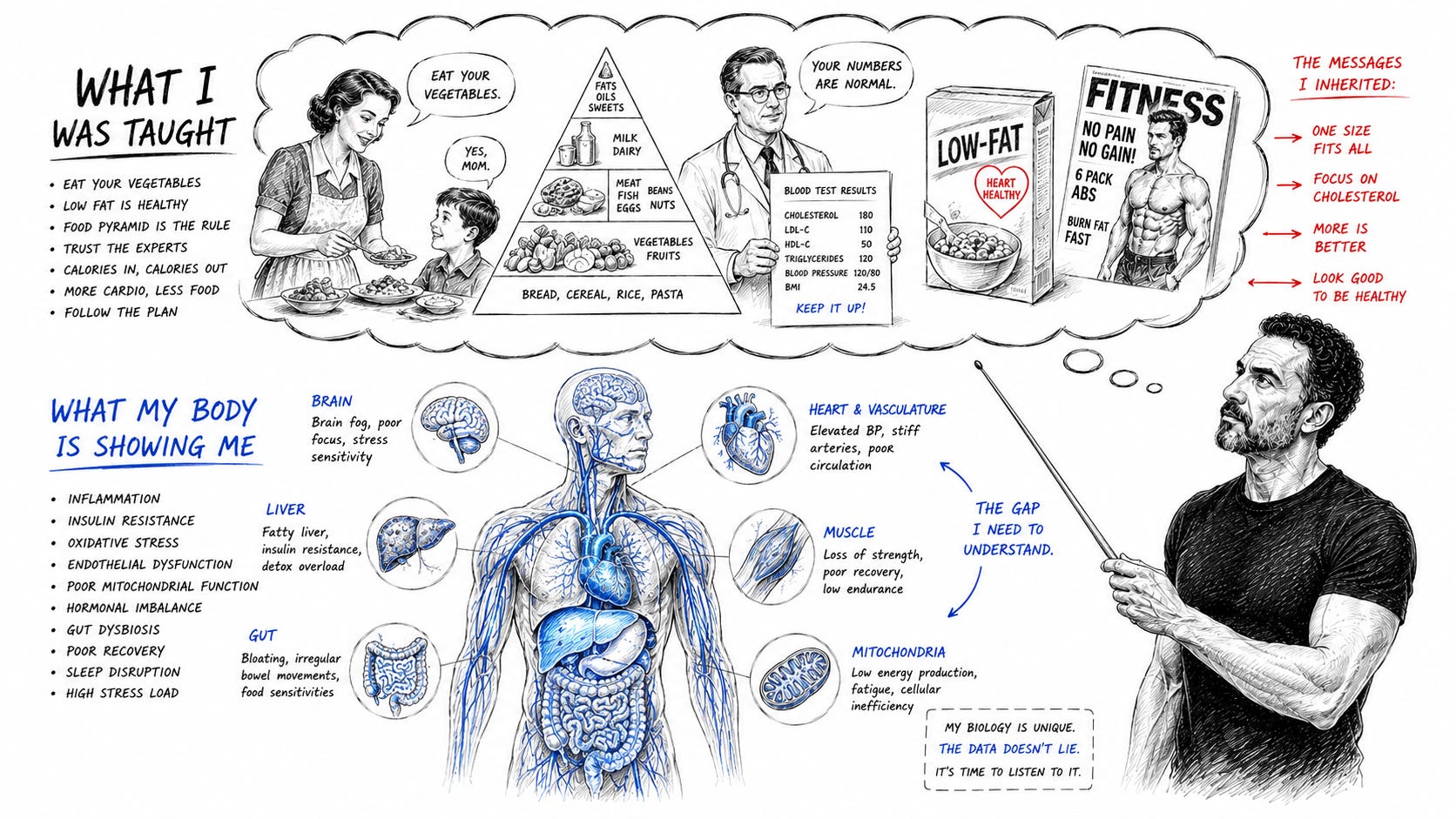
That realization is important because many of the ideas we consider personal were never really developed personally.
We inherited them.
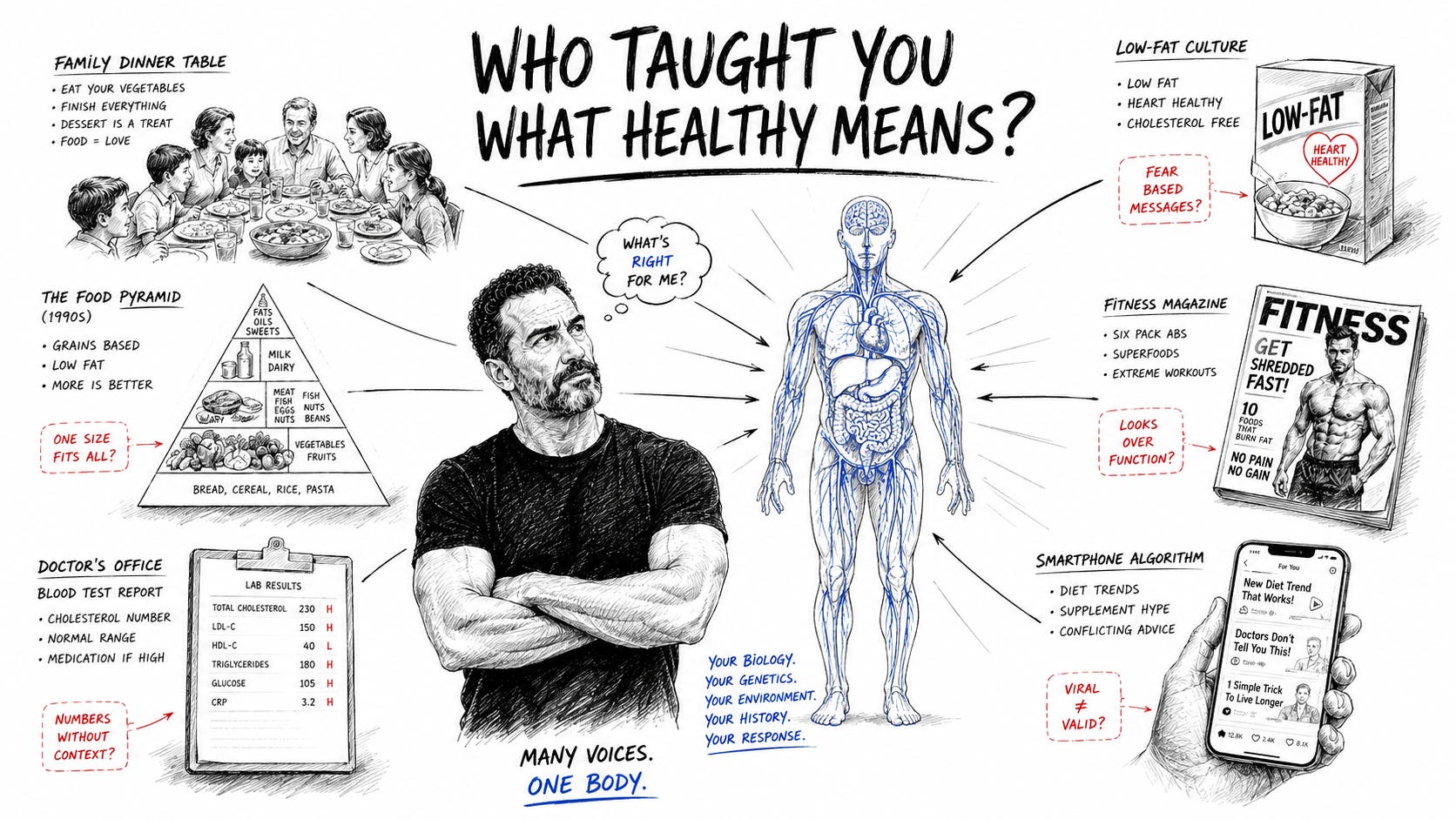
That was the central question behind my documentary, Who Taught You What Healthy Means?
The documentary follows that message from the family table, through school, medicine, advertising, fitness culture and eventually the algorithm inside your phone. Then it returns to the place where health is actually happening: inside your biology.
This article is the practical companion.
I want to help you examine the definition of health you inherited and replace rigid rules with better questions.
Not because every lesson you learned was wrong.
Many were useful.
Some may have protected you.
Some may still serve you today.
The goal is not to rebel against everything you were taught.
The goal is to determine which lessons still match the person you are now.
What if your definition of “healthy” was never really yours? Watch the full documentary on YouTube and see who taught you what healthy means. [documentary link]
One of the most useful exercises you can do is surprisingly simple.
Write down what you believe a healthy person does.
Do not research it first.
Do not try to give the scientifically correct answer.
Write what comes into your mind naturally.
What does a healthy breakfast look like?
How many meals should someone eat?
What should cholesterol look like?
What should body weight look like?
Should a healthy person need medication?
How much exercise should they perform?
Should they eat meat?
Should they avoid meat?
Should they fast?
Should they avoid carbohydrates?
Should they avoid saturated fat?
Should they take supplements?
You will begin noticing something.
Some answers will be based on evidence you have investigated.
Others will feel true simply because you have heard them repeatedly.
That distinction matters.
In the documentary, I described how the first definition of healthy often begins at the family table. Food becomes connected not only to nutrition but to belonging, reward, discipline, comfort and sometimes shame.
Then school adds another layer.
Population guidance gets compressed into simple diagrams because that is how you teach millions of people efficiently.
There is nothing inherently wrong with that.
The problem begins when a population-level teaching tool becomes interpreted as an individualized prescription.
As I said in the documentary:
“A public-health message is designed for a population. Your body is not a population.”
That distinction becomes more important as your biology changes.
The nutritional needs of a growing sixteen-year-old athlete are not identical to those of a seventy-year-old with chronic kidney disease.
The person working outside in extreme heat does not necessarily have the same electrolyte needs as the sedentary person with salt-sensitive hypertension.
Someone recovering from surgery has different protein demands than someone dealing with a condition that limits protein tolerance.
A useful health principle should survive context.
If it only works when context is ignored, it is not much of a principle.
So before changing your diet, supplements or lifestyle, ask where the rule came from.
Sometimes discovering the source of the belief is enough to loosen its grip.
Medicine gave us something extraordinarily valuable.
Measurement.
Blood pressure.
Glucose.
Kidney function.
Blood counts.
Lipoproteins.
Heart rhythm.
Bone density.
Imaging.
These measurements reveal problems we could never reliably detect by how someone feels.
That saves lives.
But there is another mistake we need to avoid.
Turning the measurement into the person.
Someone sees a cholesterol result and suddenly thinks:
“I am unhealthy.”
Another person sees that every marker falls inside a laboratory reference range and assumes:
“I must be healthy.”
Neither conclusion is automatically justified.
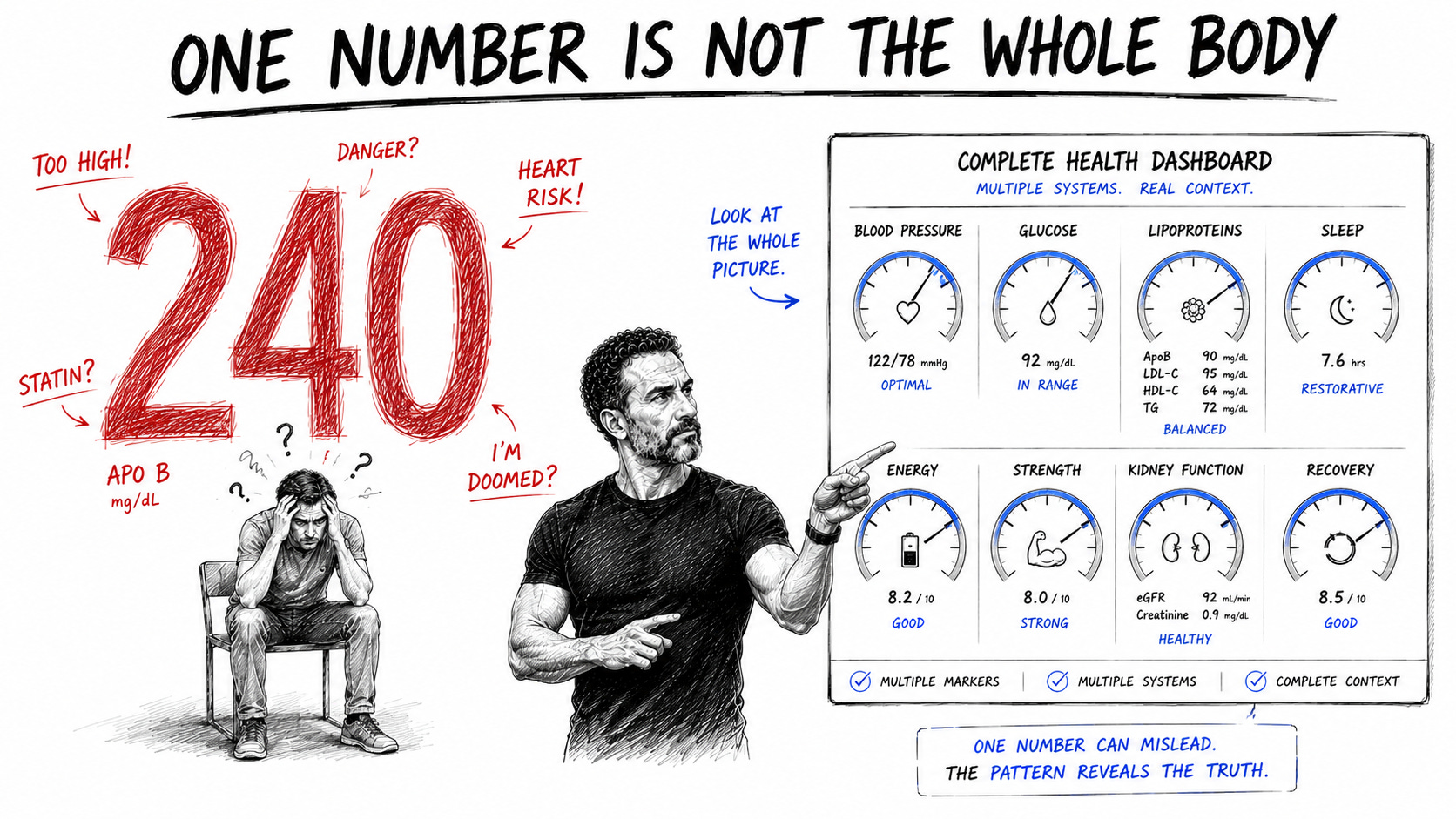
One marker is information.
It needs context.
Even BMI illustrates the problem. The World Health Organization describes BMI as a surrogate marker of fatness and notes that additional measures such as waist circumference can add useful information. (World Health Organization)
That does not make BMI useless.
It tells us what the tool is and what it is not.
The same principle applies everywhere.
A blood-pressure reading matters, but I also care about repeated measurements, medication, sleep, stress, kidney health, activity and what the pressure does over time.
An LDL-C result matters, but cardiovascular risk is not encoded inside one cholesterol number. Lipoprotein burden, blood pressure, smoking, diabetes, genetics, age and established disease all influence the larger picture.
A glucose reading matters, but one isolated fasting glucose is not the same thing as understanding glucose regulation across months.
What I want you to understand is this:
Measurement should increase understanding.
It should not shrink the entire human being into one number.
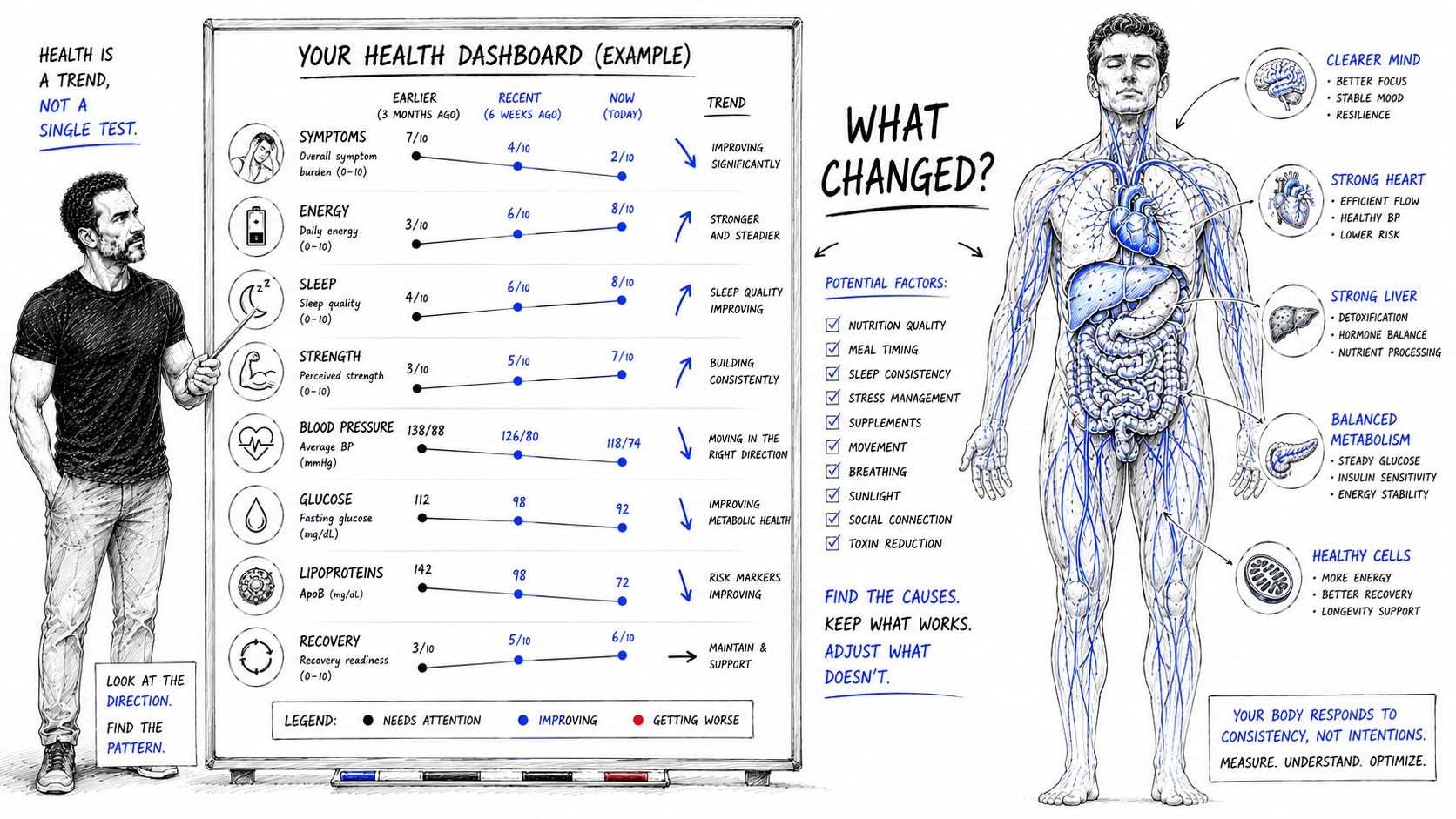
That is why I prefer a dashboard.
A dashboard gives you multiple signals.
Some signals are subjective:
Energy.
Sleep.
Mood.
Hunger.
Digestion.
Strength.
Recovery.
Exercise tolerance.
Pain.
Cognitive function.
Other signals are objective:
Blood pressure.
Waist circumference.
Glucose regulation.
Lipoproteins.
Kidney function.
Liver function.
Blood counts.
Selected hormone or thyroid markers when there is a clinical reason to measure them.
The goal is not to collect every laboratory marker imaginable.
The goal is to collect enough meaningful information to understand the pattern.
The documentary makes this distinction directly: the problem is not measurement. The problem is turning one measurement into the entire story.
One marker by itself does not tell the whole story.
The pattern matters.
The family, school and doctor used to have tremendous influence over health beliefs.
Now there is another teacher.
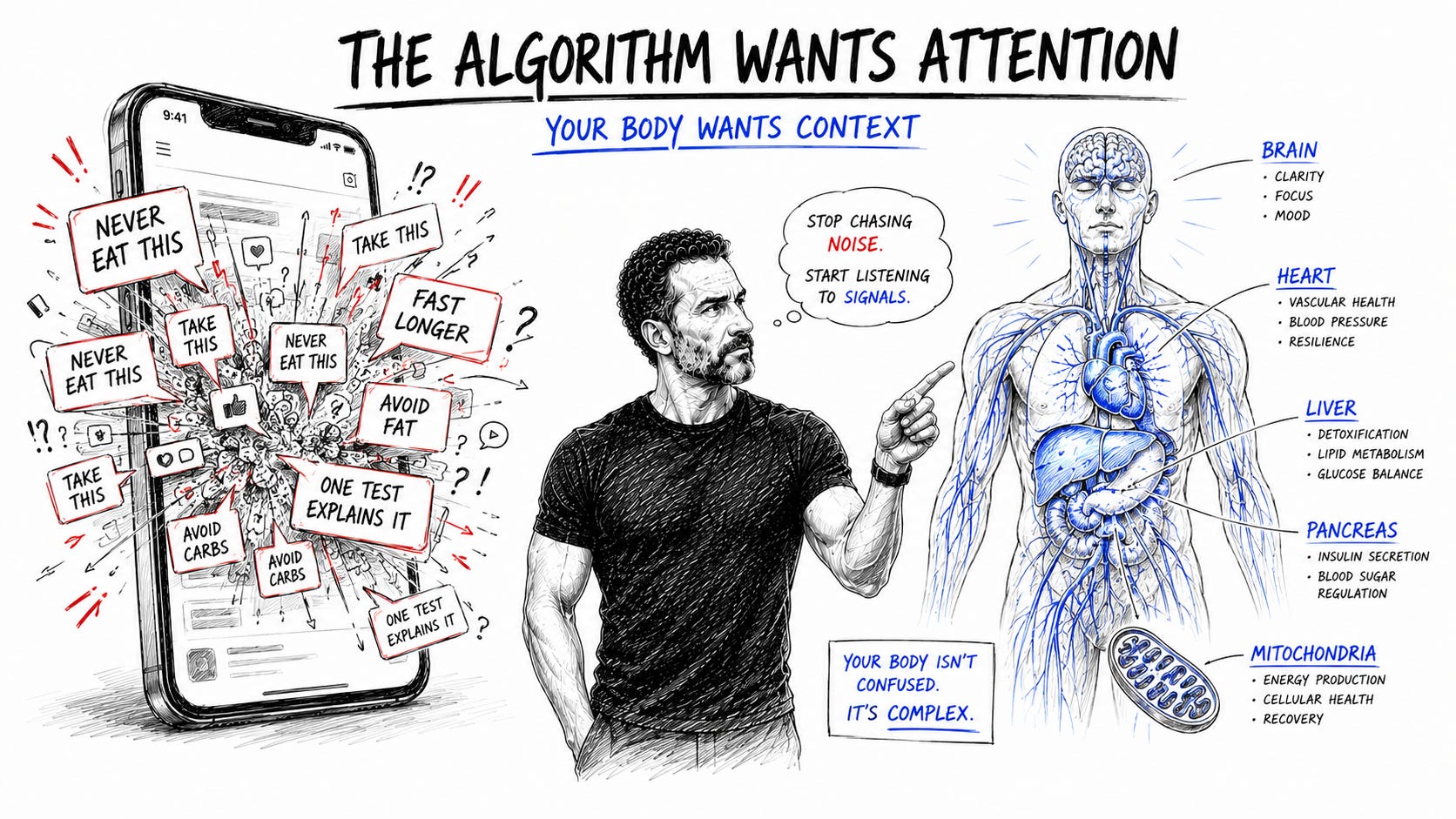
The algorithm.
This one is different because it learns from you while it teaches you.
Your phone notices what you stop on.
What you watch.
What you replay.
What makes you angry.
What scares you.
What gives you hope.
What you share.
And then it gives you more.
That creates a difficult environment for health information because biological truth is often conditional.
“It depends” is frequently the correct answer.
It depends on the person.
The disease.
The dose.
The duration.
The goal.
The baseline status.
The medication.
The trade-off.
The response.
But nuance competes poorly against certainty.
“One food is destroying your arteries” is emotionally stronger than a ten-minute explanation about dose, context and absolute risk.
“One supplement fixes everything” is easier to remember than a discussion about mechanisms, responders, nonresponders and conflicting human trials.
“One diet works for everyone” gives people certainty.
Biology often refuses to cooperate.
The documentary describes the result as more than misinformation. Constant contradictory health messaging can turn health itself into another source of stress.
This is why I do not want you replacing an old authority with a new influencer.
Including me.
The goal should never be dependence.
Good education should make you better at asking questions.
It should make you more capable of looking at evidence.
More capable of recognizing uncertainty.
More capable of discussing options intelligently with the professionals involved in your care.
If listening to someone makes you afraid to question them, that is worth noticing.
If every topic eventually leads to the same supplement, same diet, same test or same conclusion, notice that too.
Your biology deserves better than a predetermined answer.
Dietary labels have practical uses.
If someone tells me they are vegan, ketogenic, Mediterranean, vegetarian or carnivore, I immediately understand something about the foods they are likely eating.
The problem begins when the label stops describing the tool and starts defining the person.
Because tools are adjustable.
Identity is defended.
If a particular eating pattern improves your glucose control, digestion, energy and appetite, that information matters.
If six months later your sleep deteriorates, blood pressure changes, training suffers or laboratory markers move in an unwanted direction, that information also matters.
Changing the tool is not betrayal.
It is feedback.
In the documentary I make this point directly:
“When a diet is only a tool, you can adjust it when the tool stops working. When a diet becomes who you are, adjustment feels like betrayal.”
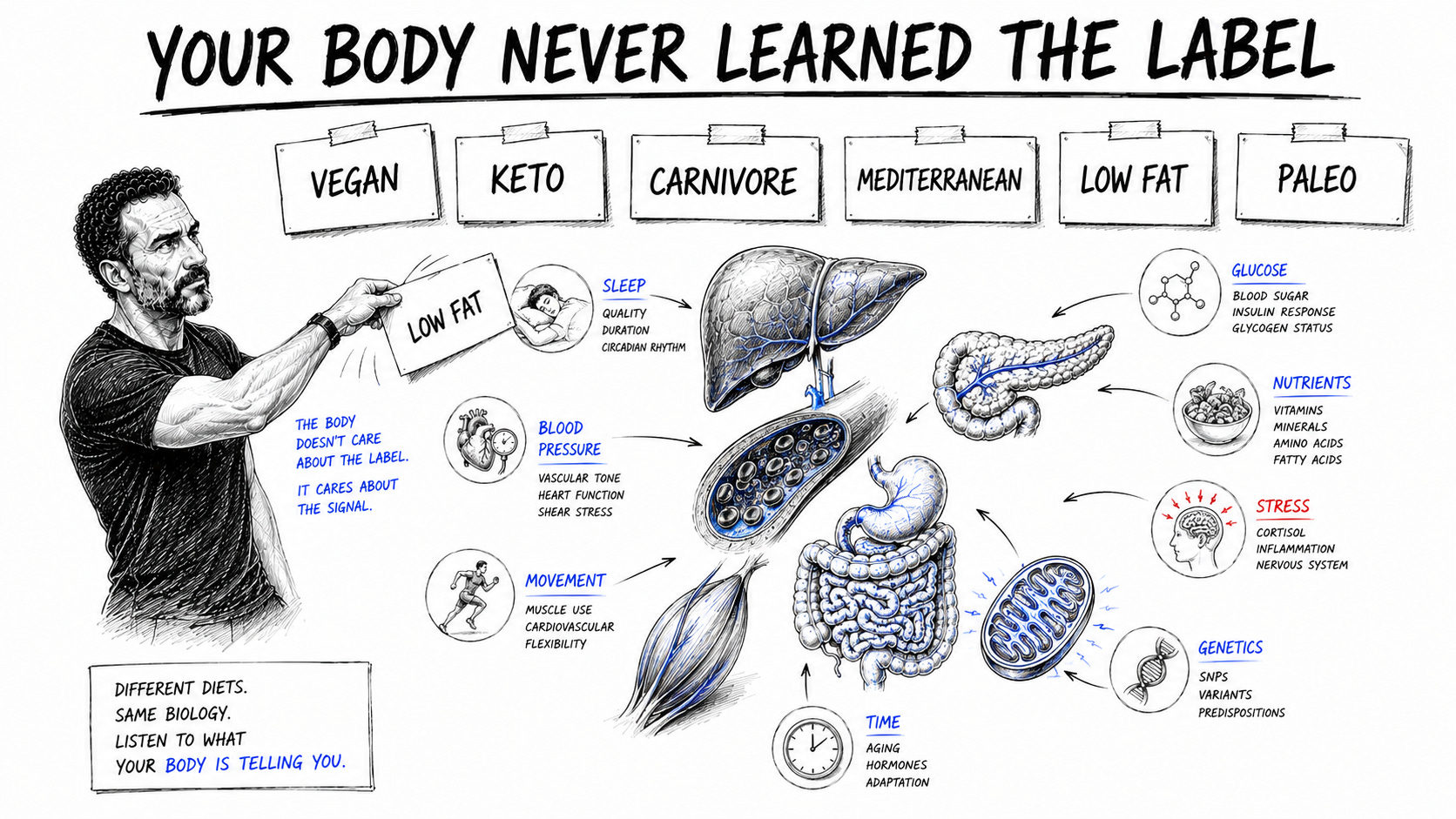
The body never joined the group.
Your liver does not know which diet community you belong to.
Your pancreas does not care what hashtag you use.
Your artery does not know what dietary philosophy you defended online yesterday.
Your physiology responds to conditions.
Nutrients.
Energy.
Sleep.
Blood pressure.
Movement.
Hormones.
Stress.
Immune activity.
Genetics.
Medications.
Age.
Disease.
Time.
That does not mean biological individuality makes science irrelevant.
Quite the opposite.
Evidence gives us boundaries and probabilities.
Context helps us determine how those findings apply to the individual.
There is growing scientific interest in precision and personalized nutrition precisely because metabolic responses to food are not identical between individuals. Research has documented substantial inter-individual variation in post-meal metabolic responses, and randomized studies are actively investigating whether personalized dietary approaches improve cardiometabolic outcomes. (PubMed Central (PMC))
The point is not that everyone needs a completely unique diet.
The point is that the same recommendation does not guarantee the same biological response.
Food is the input.
Biology is the interpreter.
This is where I want to replace the old definition with something more useful.
Health is not a look.
It is not one laboratory number.
It is not the absence of medication.
It is not perfect dietary compliance.
It is not a six-pack.
It is not waking at 5:00 AM.
It is not owning every wearable.
It is not avoiding every ingredient someone online has labeled inflammatory.
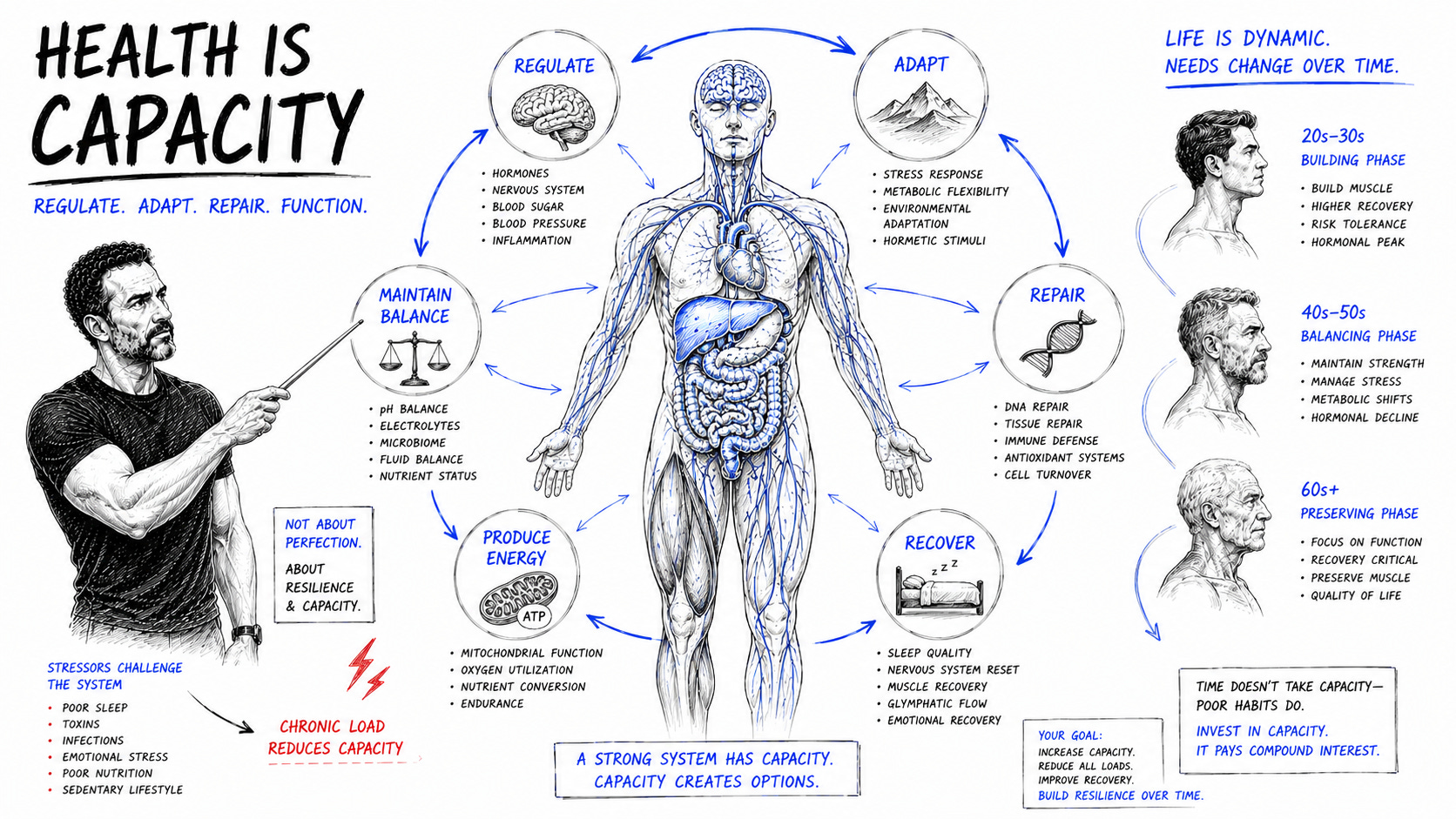
I think of health more as capacity.
The capacity to regulate.
The capacity to adapt.
The capacity to produce energy.
The capacity to recover.
The capacity to respond to stress and move back toward balance.
The capacity to maintain circulation where demand rises.
The capacity to mount an immune response when necessary and resolve it appropriately.
The capacity to sleep, move, think, digest, repair and function across time.
This does not mean disease disappears from the definition.
Someone living with cardiovascular disease, diabetes, autoimmune disease or another chronic condition still has real medical risk that needs appropriate treatment.
But health is not a binary switch where one diagnosis suddenly makes everything about a person unhealthy.
Health exists inside the relationship between biology, disease burden, environment, behavior, medical treatment and time.
That broader idea also fits with modern public-health frameworks, which recognize that health outcomes are influenced by much more than medical care alone. Social, environmental and behavioral conditions also shape health. (CDC)
And this definition allows for something our culture struggles with:
Change.
What worked for you at twenty-five may not be what you need at fifty-five.
What works during a period of intensive training may not be appropriate during illness.
What works when insulin resistance is severe may need adjustment after metabolic health improves.
What works before menopause may not produce the same response afterward.
The body changes.
The environment changes.
The goal changes.
Good health decisions are allowed to change with them.
That is physiology, not inconsistency.
This is the practical framework I promised in the documentary.
Whenever somebody gives you a health rule, run it through these five questions before turning it into a belief.
This question immediately restores context.
Is the recommendation intended for the general population?
Someone with hypertension?
Someone with diabetes?
An endurance athlete?
A sedentary adult?
A pregnant woman?
A seventy-five-year-old?
A child?
Someone recovering from surgery?
Someone with kidney disease?
Population guidance has a purpose.
Clinical treatment has a different purpose.
Performance nutrition has another.
Advice cannot be separated from the population it was designed to help.
This is where people frequently confuse symbols with goals.
Why are you losing weight?
Is the actual goal improved mobility?
Blood-pressure control?
Glucose regulation?
Sleep apnea improvement?
Better quality of life?
Why are you changing your diet?
Better digestion?
Lower ApoB?
More energy?
Improved athletic performance?
Better glucose control?
If you do not define the outcome, almost any change can look successful.
The scale goes down, but sleep collapses.
LDL-C goes down, but triglycerides rise dramatically.
Glucose improves, but exercise performance deteriorates.
One biomarker moves in the desired direction while adherence becomes impossible.
A symbol looks healthy.
A goal improves life.
You do not need a medical degree to ask this.
Ask what the intervention is supposed to change inside the body.
If someone recommends walking after meals, why?
If someone recommends protein, why?
If someone recommends reducing sodium, why?
If someone recommends fasting, why?
If someone recommends a medication, why?
If someone recommends a supplement, why?
Mechanism does not prove that something works clinically.
But understanding the proposed mechanism helps you ask better questions and recognize explanations that make no physiological sense.
Nearly every meaningful intervention has one.
A medication can reduce one risk while creating side effects in some people.
A longer fast may improve appetite control for one person while disrupting sleep in another.
Higher protein can support muscle preservation while requiring additional consideration in certain medical conditions.
More training can improve fitness until recovery cannot keep pace.
Lowering calories can reduce body weight, but aggressive restriction can also compromise lean tissue, hormones, mood or adherence.
The existence of a trade-off does not make an intervention bad.
It makes monitoring necessary.
This is the question that converts theory into personal evidence.
What are you going to measure?
What symptom should improve?
What laboratory marker should move?
What performance measure should change?
How long should it take?
What outcome would tell you to continue?
What result would make you reconsider?
Not whether someone on Instagram says it worked.
Not whether the diet community approves.
Not whether the supplement has thousands of five-star reviews.
What happened in your body?
That is where the rule meets reality.
The documentary summarizes this principle in one sentence:
“A health rule becomes useful when it survives contact with your biology.”
Now take those questions and apply them to yourself.
Pick one health belief you currently follow.
It might be:
“I need to fast sixteen hours every day.”
“I should never eat saturated fat.”
“I need to keep carbohydrates extremely low.”
“I need 10,000 steps.”
“My cholesterol has to be below a certain number.”
“I should never need medication.”
“I need to take this supplement forever.”
“I need to weigh what I weighed when I was thirty.”
Then write down where that belief came from.
Next, define the actual outcome you want.
Then decide what information would tell you whether the strategy is helping.
For someone working on cardiovascular health, that dashboard might include appropriate blood pressure measurements, lipoprotein markers, glucose regulation, exercise capacity, symptoms, sleep, smoking status, family history and clinical imaging when medically indicated.
For someone focused on metabolic health, the emphasis may shift toward waist change, glucose regulation, insulin sensitivity where appropriate, hunger, energy, sleep, movement and body composition.
For someone trying to improve physical function, strength, walking ability, balance, recovery and quality of life may matter as much as the scale.
The exact dashboard depends on the question.
Do not measure everything simply because a test exists.
Measure what helps answer the question you are asking.
Then look at trends.
A single rough night of sleep does not establish a sleep disorder.
One glucose measurement does not define metabolic health.
One blood-pressure reading is not the same thing as a blood-pressure pattern.
One unusually hard workout does not tell you whether your training program is working.
Biology unfolds over time.
Your monitoring should respect that.
And if you are dealing with chest pain, neurological symptoms, unexplained significant weight loss, severe shortness of breath, fainting, persistent abnormal bleeding or another concerning symptom, this framework is not a substitute for medical evaluation.
Knowing when not to self-experiment is also part of understanding your biology.
There is one final distinction I want to make because it matters.
Questioning inherited health beliefs is not the same thing as rejecting expertise.
I want good physicians.
Good nurses.
Good researchers.
Good dietitians.
Good therapists.
Good trainers.
Good educators.
We need people who spend years developing specialized knowledge.
The question is what good expertise should accomplish.
I believe a good expert should improve your judgment rather than replace it.
They should help you understand risk.
They should explain what is known and what remains uncertain.
They should tell you what needs monitoring.
They should recognize when something is outside their scope.
They should be willing to change direction when the evidence or your response changes.
And they should not reduce your entire health story to one isolated number.
The documentary puts it this way:
“Good guidance does not demand obedience. It builds understanding.”
That sentence summarizes what I want this entire series to accomplish.
I do not want you leaving one ideology and joining mine.
I want you becoming better equipped to think about your health.
To recognize patterns.
To ask better questions.
To understand the difference between mechanism and outcome.
To understand the difference between population guidance and individualized care.
To know when biology is giving you useful feedback.
And to know when the situation requires medical evaluation rather than another experiment.
That is what applying evidence to the individual actually means.
So return to the original question.
Who taught you what healthy means?
Your family contributed.
School contributed.
Medicine contributed.
Advertising contributed.
Fitness culture contributed.
The algorithm is contributing right now.
Some of those lessons were excellent.
Some were incomplete.
Some belonged to another era.
Some were intended for a population rather than you personally.
And some may have been wrong.
You do not need to throw everything away.
Examine it.
Ask who the advice was designed for.
Ask what outcome it is supposed to improve.
Understand the mechanism.
Look for the trade-offs.
And decide how you will know whether it worked in your body.
Then allow yourself to update the answer.
The healthy choice at twenty does not have to be the healthy choice at fifty.
The strategy that helped you lose seventy pounds does not necessarily have to remain unchanged after the weight is gone.
The diet that improved one condition does not deserve permanent immunity from reevaluation.
The medication you once did not need may become appropriate later, just as a medication that was once appropriate may require reassessment by the clinician managing it when circumstances change.
Health is not loyalty to a rule.
It is an ongoing relationship between your biology, environment, choices, medical reality and time. That is the definition I return to at the end of the documentary.
The next time you hear:
“Healthy people do this.”
Do not immediately accept it.
Do not immediately reject it either.
Ask:
Healthy for whom?
Healthy for what outcome?
Healthy under what conditions?
What does the evidence show?
And what is my biology saying in response?
You are allowed to update the definition you inherited.
Not according to fear.
Not according to ideology.
According to evidence, context and the body you actually live in.
I would love to hear yours.
What health belief did you grow up believing that you later had to reconsider? Was it about fat, cholesterol, salt, body weight, exercise, medication, fasting, carbohydrates, meat, plants or something completely different?
Drop it in the comments. I think many people will discover that they inherited more of their definition of “healthy” than they realized.
🩺 Find Your Root Cause (Free 12 Question Assessment)
https://mauricedaher.com/Custom_Protocol.html
Maurice Daher, CNS
Eat Based On Your Biology, Not Ideology™
Fix the signal. Everything follows.
Date: August 15, 2026
Time: 6:00 AM PDT
Disclaimer: This article is for educational purposes and is not intended to diagnose, treat or replace individualized medical care. Symptoms, laboratory results, medications and health risks should be interpreted within the appropriate clinical context. Seek medical evaluation for concerning, persistent or acute symptoms.
Do not copy, reproduce, republish, or distribute this article without written permission.
World Health Organization: Obesity and overweight
https://www.who.int/news-room/fact-sheets/detail/obesity-and-overweight
WHO describes BMI as a surrogate measure and notes the usefulness of additional measures such as waist circumference. (World Health Organization)
Human Postprandial Responses to Food and Potential for Precision Nutrition
https://pmc.ncbi.nlm.nih.gov/articles/PMC8265154/
Large human datasets demonstrate substantial inter-individual variability in metabolic responses to meals. (PubMed Central (PMC))
Personalized Nutrition and Cardiometabolic Health
https://pmc.ncbi.nlm.nih.gov/articles/PMC11271409/
A randomized clinical trial examining personalized dietary recommendations compared with general dietary advice. (PubMed Central (PMC))
CDC: Social Determinants of Health
https://www.cdc.gov/about/priorities/why-is-addressing-sdoh-important.html
Health outcomes are influenced by the broader conditions in which people live, work and age, not medical care alone. (CDC)
Comments
Nothing yet. Say the first thing.
Sign in to join the conversation.