
You probably have bay leaves sitting somewhere in your kitchen.
You throw one into a stew.
Maybe two into a pot of meat.
You let it simmer.
Then you pull the leaf out and forget about it.
But recently I started looking at bay leaf differently.
Not because I think we have discovered another miracle herb.
We haven’t.
I became interested because there is an unusual little body of human research suggesting that the ordinary culinary bay leaf, Laurus nobilis, may influence glucose metabolism and lipid biology at surprisingly modest amounts.
Then I found something else.
The liver story is much more complicated.
Some recent experimental work suggests bay leaf extracts may reduce hepatic fat accumulation, oxidative stress and inflammation.
Yet in 2026, researchers published a probable case of herb-induced liver injury associated with regular consumption of bay-leaf infusions.
Same plant.
Two completely different stories.
That is exactly why I wanted to write this article.
The question isn’t:
“Is bay leaf healthy?”
That question is too simple.
The better questions are:
What compounds are inside it?
What pathways do they influence?
What has actually been demonstrated in humans?
What dose was studied?
What happens to glucose?
What happens to cholesterol and triglycerides?
Does it do anything meaningful for ApoB?
What does it do to the liver?
What about the heart?
And when does a culinary herb become a concentrated biological intervention?
That distinction matters.
Food is the input.
Biology is the interpreter.
This matters more than people realize.
When I say bay leaf in this article, I am specifically talking about Mediterranean bay laurel:
Laurus nobilis.
There are other plants called “bay” or “laurel,” and they are not biologically interchangeable.
That means I would not pick leaves from an ornamental shrub, backyard hedge or unidentified laurel-looking tree and make tea from them.
The research we are discussing here is specifically around Laurus nobilis.
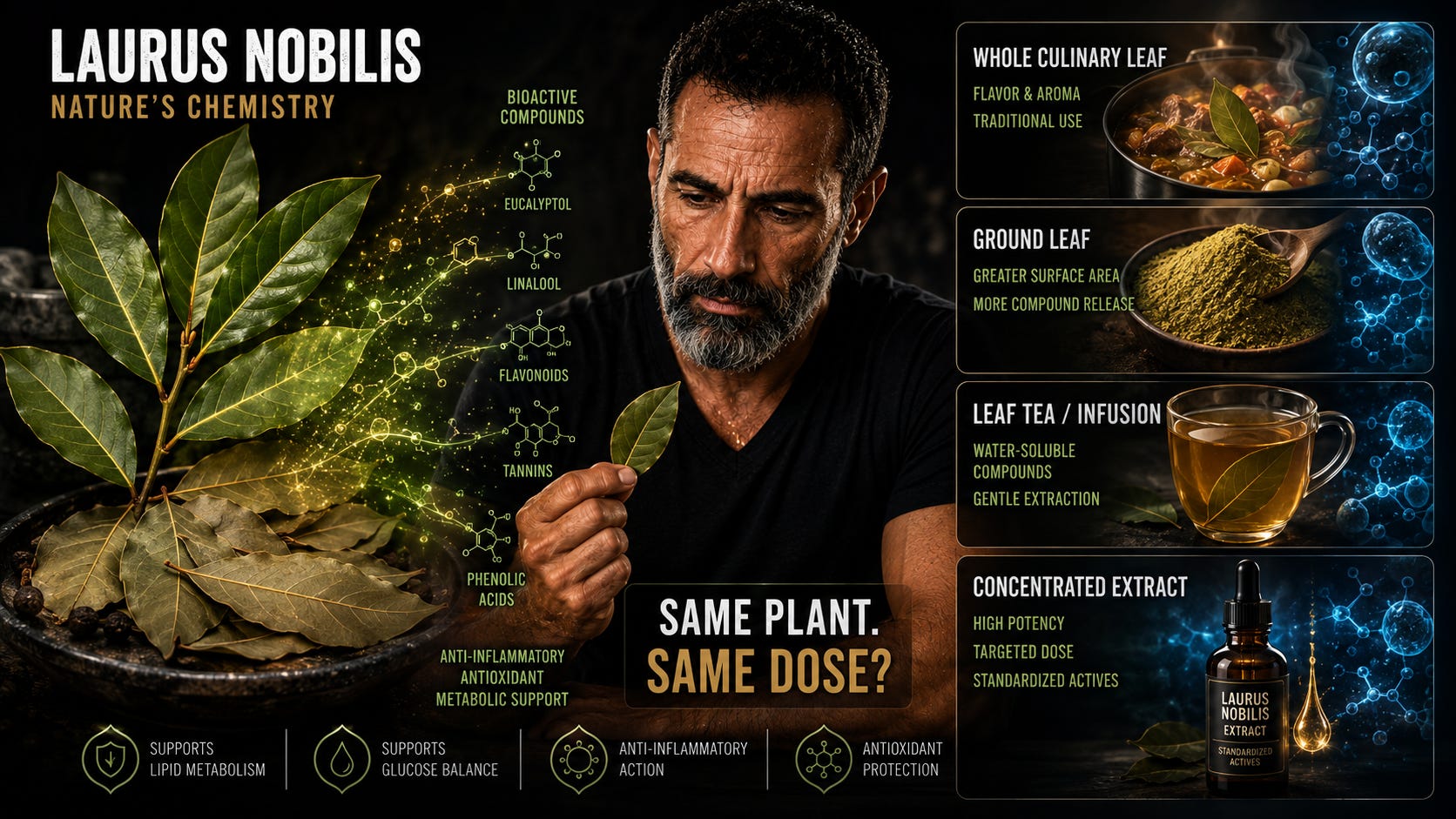
Bay leaf contains a mixture of volatile compounds, polyphenols and other plant molecules rather than one single active ingredient. Reviews of Laurus nobilis describe constituents including 1,8-cineole, terpenes, flavonoids and phenolic compounds that may contribute to antioxidant, metabolic and inflammatory effects observed experimentally. (PubMed Central (PMC))
That is our first important point.
Bay leaf is not one drug acting on one receptor.
It is a mixture.
And when you change the preparation, you change the exposure.
One leaf simmered in a pot of food is not the same intervention as:
1 gram of finely ground bay leaf.
Five grams brewed into concentrated tea.
An alcohol extract.
An essential oil.
Or a standardized commercial extract.
This becomes especially important when we get to safety.
This is probably the part that will get the most attention.
A small human trial published in 2009 enrolled 40 people with type 2 diabetes.
Participants received either:
1 gram of ground bay leaf per day,
2 grams per day,
3 grams per day,
or placebo.
They continued the intervention for 30 days.
The results were surprisingly large.
Across the bay-leaf groups, glucose reportedly fell by approximately 21 to 26%.
Total cholesterol fell approximately 20 to 24%.
LDL-C decreased approximately 32 to 40%.
Triglycerides fell substantially in some of the groups.
HDL-C increased in the 1- and 2-gram groups.
Importantly, the researchers did not observe a clear dose-response advantage from going from 1 gram to 3 grams. (PubMed)
PubMed:
https://pubmed.ncbi.nlm.nih.gov/19177188/
Now this is where I want to slow the conversation down.
Those numbers sound extraordinary.
If you read them on social media, it would be easy to conclude:
“Bay leaf lowers LDL by 40%. Everyone should start taking it.”
That is not what I would conclude.
This was a small study.
Only 40 participants.
They had type 2 diabetes.
The intervention lasted 30 days.
The study is now more than fifteen years old.
And we do not have a large series of well-controlled modern trials repeatedly demonstrating the same magnitude of effect.
That does not make the finding meaningless.
It makes it preliminary.
A second human study gives us a more restrained picture.
Thirty healthy volunteers consumed a bay-leaf infusion prepared from 5 grams of dried Laurus nobilis leaves in 100 mL of boiled water once daily for 10 days.
HDL increased modestly and significantly.
LDL and triglycerides moved slightly downward, but those changes were not convincing enough to establish a robust lipid-lowering effect. (PubMed)
PubMed:
https://pubmed.ncbi.nlm.nih.gov/32213118/
So what does the combined human evidence tell me?
Something is probably happening metabolically.
But we are nowhere near the evidence base we have for established lipid-lowering interventions.
And I want to make an important distinction for anyone following my cardiovascular work.
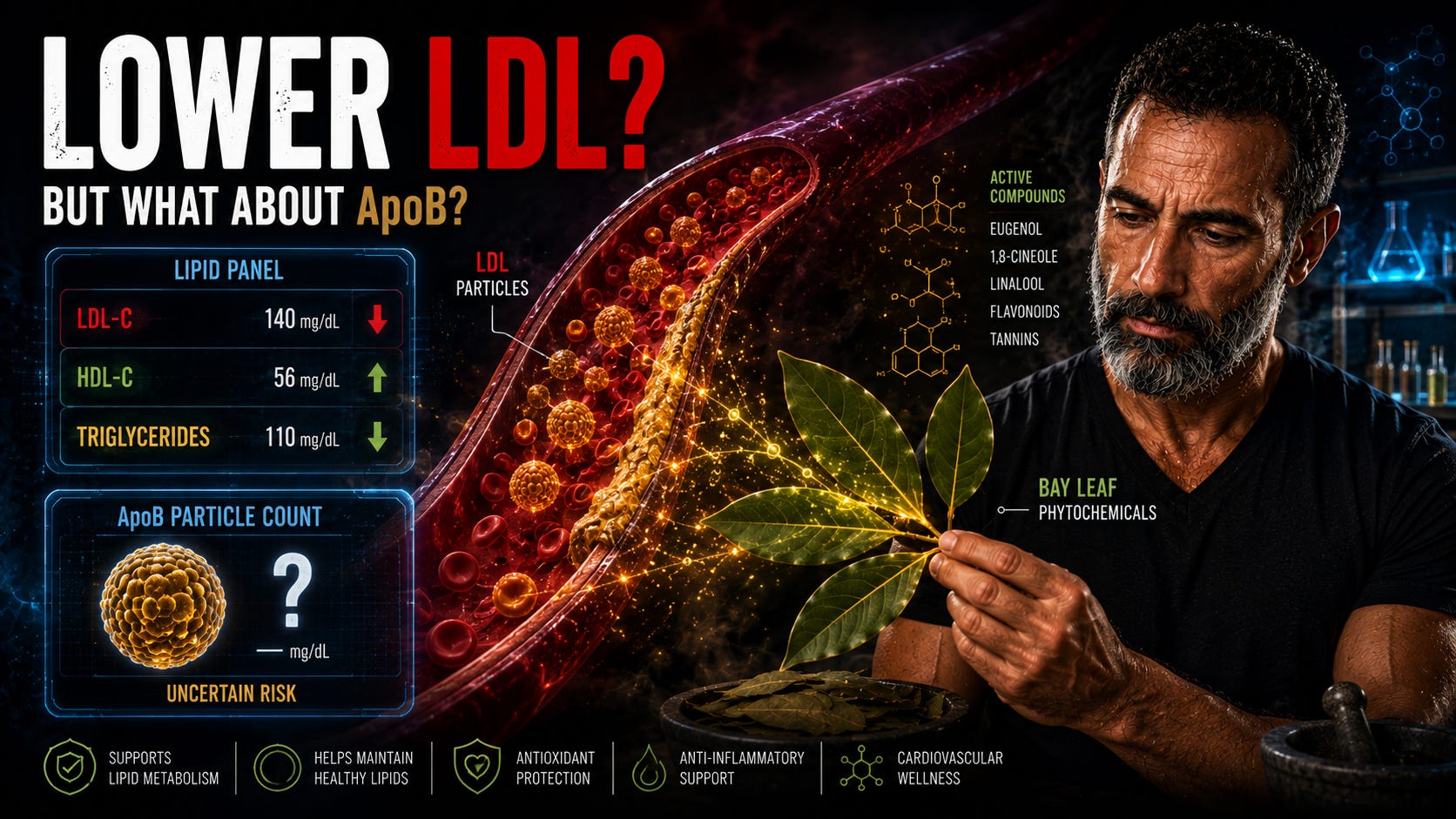
LDL-C is not ApoB.
The 2009 study measured conventional lipids.
It did not establish that bay leaf substantially lowers ApoB particle number.
It did not measure coronary plaque.
It did not measure cardiovascular events.
It did not show reduced heart attacks.
It did not demonstrate plaque regression.
So I would never tell someone with ApoB of 150, established coronary disease or a previous myocardial infarction:
“Take bay leaf instead.”
That would be irresponsible.
What I would say is:
There is enough metabolic signal here to make Laurus nobilis scientifically interesting.
There is not enough evidence to make it cardiovascular treatment.
That distinction is everything.
The glucose findings deserve attention too.
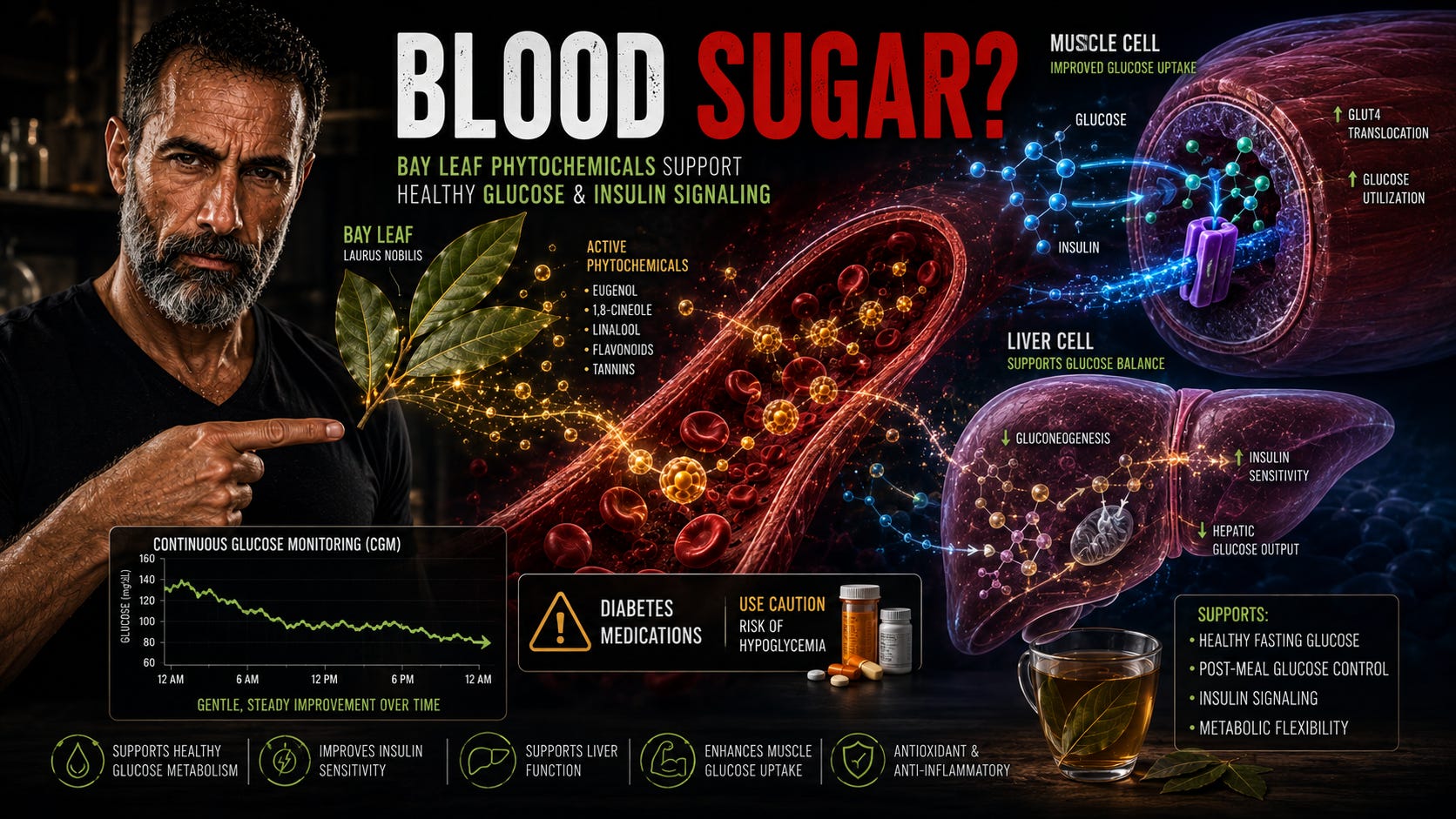
In the same type 2 diabetes trial, blood glucose decreased after bay-leaf supplementation. (PubMed)
Mechanistically, researchers have proposed several possible explanations.
Polyphenols and flavonoid-related compounds may influence oxidative stress and cellular glucose signaling.
Laboratory studies also suggest Laurus nobilis constituents can affect pathways involved in insulin sensitivity and glucose metabolism.
But again, mechanism is not the same thing as clinical proof.
The important point is that bay leaf appears capable of doing more than simply flavoring food.
At gram-level intake, it appears biologically active.
And once something becomes biologically active, the conversation changes.
Because a compound capable of lowering glucose may also matter to somebody taking:
insulin,
sulfonylureas,
metformin,
GLP-1 medication,
SGLT2 inhibitors,
or multiple glucose-lowering agents.
I am not saying bay leaf will automatically produce hypoglycemia.
The human data is far too limited for that conclusion.
I am saying that if you deliberately begin using concentrated or gram-level bay leaf as a metabolic intervention, glucose should be monitored rather than assumed.
This is where most people miss the point.
“Natural” does not mean biologically inactive.
If something is strong enough to help, it is strong enough to deserve respect.
Here I want to separate indirect cardiovascular biology from direct cardiovascular outcomes.
There are several reasons bay leaf attracts cardiovascular interest.
If an intervention meaningfully improves:
glucose regulation,
LDL-C,
triglycerides,
oxidative stress,
or inflammatory signaling,
those pathways can intersect with cardiovascular risk.
But that does not mean bay leaf has been proven to prevent cardiovascular disease.
It hasn’t.
The available human bay-leaf studies are small and mostly focused on surrogate metabolic markers.
We do not have high-quality evidence showing that Laurus nobilis reduces:
myocardial infarction,
stroke,
cardiovascular mortality,
coronary plaque volume,
CAC progression,
ApoB exposure,
or clinical atherosclerotic events.
So when somebody says:
“Bay leaf cleans your arteries,”
we have already gone much further than the science.
The scientifically defensible statement is more interesting anyway.
Bay leaf contains biologically active compounds that appear capable of influencing several metabolic pathways related to cardiovascular health, especially glucose and lipid metabolism.
Whether those changes translate into meaningful reductions in cardiovascular events is unknown.
That is the line I would hold.
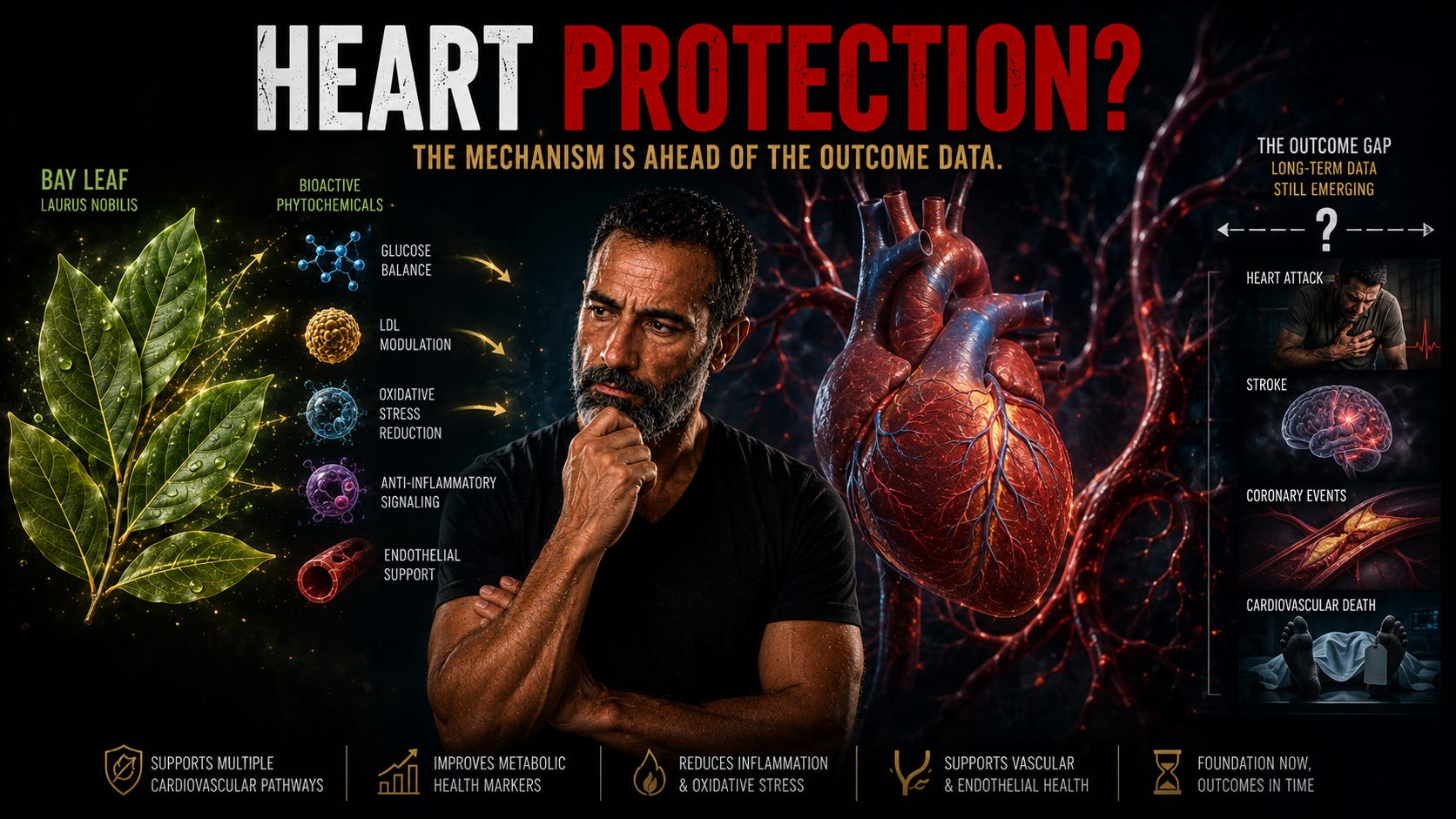
This is the section I think people need to pay the most attention to.
Because there are two seemingly opposing findings.
First, the encouraging side.
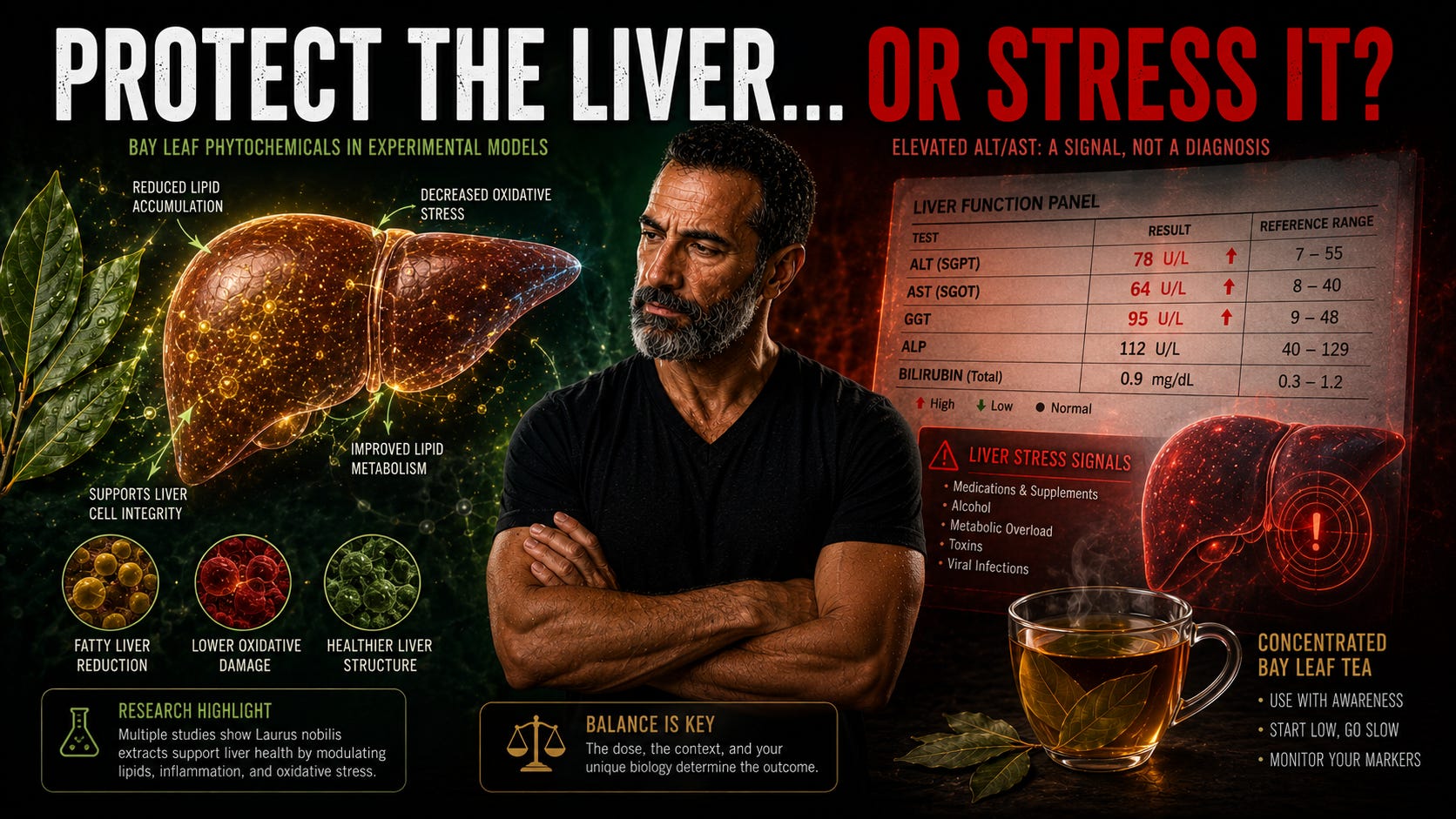
A 2025 study investigated a water extract of Laurus nobilis in liver cells and mice exposed to a high-fructose, high-fat model of metabolic fatty liver disease.
Bay-leaf water extract was associated with less hepatic lipid accumulation, lower inflammatory signaling, lower oxidative stress and changes in pathways involved in liver fat metabolism.
In the animals, ALT, AST and GGT were lower in bay-leaf-treated groups compared with the untreated high-fat/high-fructose group, and hepatic triglyceride and cholesterol accumulation also decreased. (PubMed)
PubMed:
https://pubmed.ncbi.nlm.nih.gov/40313587/
Researchers have also reported protective effects of Laurus nobilis water extract in alcohol-exposed liver cells and mice, including reductions in oxidative stress, inflammatory signaling and hepatic lipid accumulation. (PubMed)
PubMed:
https://pubmed.ncbi.nlm.nih.gov/39212582/
Sounds fantastic.
Except these were not human treatment trials.
And then came something that should make us much more careful.
In January 2026, researchers reported a 55-year-old woman who developed substantial liver-enzyme elevations after regularly consuming Laurus nobilis herbal infusions.
Her AST reached 196 U/L.
ALT reached 357 U/L and continued increasing during hospitalization.
Other common causes were investigated.
Liver biopsy favored a toxic-hepatitis pattern.
The researchers applied the updated RUCAM causality assessment and scored the case as “probable” herb-induced liver injury.
Her clinical and biochemical condition improved after stopping the bay-leaf tea. (PubMed)
PubMed:
https://pubmed.ncbi.nlm.nih.gov/41598335/
That is important.
One case report does not prove bay leaf commonly damages the liver.
It does not erase the experimental liver research.
But it does destroy the idea that unlimited concentrated bay-leaf tea must be harmless because bay leaf is a culinary herb.
Dose matters.
Preparation matters.
Duration matters.
Individual biology matters.
This is exactly why I would separate ordinary culinary exposure from concentrated medicinal exposure.
A bay leaf simmering in dinner is not the same biological experiment as drinking concentrated infusions every day for months.
At this point, the main idea should be clear.
Bay leaf is biologically more interesting than its reputation as a kitchen spice suggests.
But there is a large difference between something showing metabolic activity and something having a clinically established therapeutic dose.
In the paid section, I’m going to walk through exactly how much was used in the human research, how I would think about powder versus tea, why I would not chase higher doses, medication cautions, liver monitoring, who should avoid concentrated intake, and how I would test whether it is doing anything instead of guessing.
We have to begin with the research dose rather than inventing one.
The strongest human metabolic study used:
1 gram per day,
2 grams per day,
or 3 grams per day
of ground Laurus nobilis leaves in capsules for 30 days.
And something particularly useful happened.
More did not clearly perform better.
The researchers reported broadly similar responses among the three bay-leaf doses. (PubMed Central (PMC))
That immediately changes how I would think about this.
If 1 gram produced a biological response and 3 grams did not clearly outperform it, I see no rational reason to start at the highest dose.
This is especially true now that we have a published liver-injury case associated with habitual bay-leaf infusion consumption. (PubMed)
So if someone and their clinician decide to experiment with ground Laurus nobilis for metabolic purposes, I would think about it as a short monitored experiment, not a permanent supplement.
Dose studied:
1 to 3 grams daily.
My conservative starting point:
Around 1 gram daily.
Timing:
With a meal.
Frequency:
Once daily.
Initial duration:
Approximately 2 to 4 weeks before deciding whether there is any reason to continue.
Purpose:
To investigate whether an individual experiences a measurable response in glucose or conventional lipid markers.
Best used when:
There is a defined outcome being tracked rather than simply taking it “for health.”
Avoid or use caution when:
Pregnant or breastfeeding, known liver disease, unexplained elevated liver enzymes, significant kidney disease, history of herb-induced liver injury, diabetes medication use with tendency toward hypoglycemia, multiple cardiovascular medications, or upcoming surgery.
Possible side effects:
GI discomfort, nausea, abdominal symptoms, allergic reactions, and potentially abnormal glucose response. Rare hepatotoxicity cannot be excluded following the 2026 case report.
Stop or reduce if:
You develop nausea, loss of appetite, unusual fatigue, abdominal pain, dark urine, jaundice, generalized itching, dizziness, symptomatic low glucose, or another new unexplained reaction.
What to monitor:
Fasting glucose or CGM if glucose is the target. Lipid panel if lipids are the target. ALT, AST, ALP and bilirubin if using medicinal quantities repeatedly, particularly with pre-existing liver risk.
Retest timeline:
Roughly 4 weeks makes sense if you are trying to recreate the time frame used in the metabolic trial.
And I would not automatically cycle from 1 gram to 2 grams to 3 grams.
The study gives us no compelling reason to assume more is better. (PubMed Central (PMC))
This is where I would be more cautious.
The 2020 healthy-volunteer study used:
5 grams of dried Laurus nobilis leaves,
in approximately 100 mL of boiled water,
once daily,
for 10 days. (PubMed)
That study reported a modest improvement in HDL, while LDL and triglyceride changes were not clearly significant.
Then the 2026 liver-injury report described regular herbal-infusion consumption in a patient who developed probable Laurus nobilis-induced liver injury. (PubMed)
We do not have enough information to define a universal toxic threshold.
That is precisely the problem.
So I would not turn 5 grams of bay leaf tea every day into a permanent health ritual simply because one short study used it for ten days.
If someone wants bay-leaf tea occasionally for culinary enjoyment, that is a different question.
If somebody is brewing medicinal concentrations every day to treat cholesterol, glucose or fatty liver, I want much more caution.
I would especially avoid stacking:
ground bay leaf,
concentrated tea,
extract,
and essential oil
at the same time.
You would have no meaningful idea what your total exposure is.
And I would not ingest bay essential oil as a substitute for the leaf preparations used in the clinical studies.
Essential oils dramatically alter the concentration and chemical exposure.
They are not equivalent to eating ground leaf.
This depends entirely on why you are using it.
If the goal is glucose:
Fasting glucose.
Post-meal glucose if relevant.
CGM pattern if you already use one.
HbA1c is less useful for a very short experiment because it reflects a much longer period.
If the goal is lipids:
Total cholesterol.
LDL-C.
HDL-C.
Triglycerides.
Non-HDL cholesterol.
And if cardiovascular risk is the actual reason you care about cholesterol, I would still want ApoB.
Remember, the human bay-leaf trial did not establish an ApoB effect.
If the goal is liver health:
ALT.
AST.
GGT.
ALP.
Bilirubin.
And if fatty liver is a real clinical concern, I care much more about the complete metabolic picture than whether somebody added bay leaf.
Waist circumference.
Triglycerides.
Glucose.
Insulin where useful.
Alcohol exposure.
Energy balance.
Medication.
Liver imaging where clinically indicated.
This is a tool.
It is not the foundation.
I would be particularly cautious with medicinal bay-leaf use in someone who has:
Pre-existing liver disease.
Previously unexplained high ALT or AST.
A history of herb-induced liver injury.
Multiple medications metabolized through the liver.
Diabetes treated with glucose-lowering medication.
Frequent hypoglycemia.
Low blood pressure combined with multiple blood-pressure drugs.
Kidney disease.
Pregnancy or breastfeeding.
A known allergy to bay or related botanical products.
Upcoming surgery.
Complex cardiovascular disease where introducing another active compound could complicate medication management.
The clinical interaction literature for Laurus nobilis is not strong enough to give us precise interaction probabilities.
That does not mean interactions do not exist.
It means they are poorly characterized.
And if somebody is taking warfarin, antiplatelet therapy, antiarrhythmics, insulin, sulfonylureas, multiple antihypertensives or complex cardiac medication, I would discuss repeated medicinal intake with the prescribing clinician or pharmacist rather than assuming safety.
Also remember this:
Whole bay leaves are normally removed from food before eating.
They remain tough and rigid even after cooking.
Do not intentionally swallow whole leaves as your “dose.”
Use a known ground culinary product or properly prepared infusion if that is the form being used.
If somebody is otherwise appropriate for it and wants to test the idea rather than blindly adopt it forever, this is the structure that makes the most sense to me.
First, establish baseline.
Do not start three other supplements at the same time.
If your goal is cholesterol, get your lipid markers before starting.
If glucose is your target, establish what your glucose normally does.
If you have any reason to worry about liver function, get liver enzymes first.
Then introduce one variable.
For example:
Days 1 to 30:
Approximately 1 gram ground Laurus nobilis daily with a meal.
Keep the rest of the diet and lifestyle reasonably consistent.
Do not simultaneously dramatically change saturated fat, carbohydrate intake, fasting schedule, exercise volume and supplements.
Otherwise you will never know what produced the response.
Then retest the marker you were trying to change.
That is important.
Do not judge this by:
“I feel cleaner.”
“I think my circulation is better.”
“I heard bay leaf detoxes the liver.”
Measure the outcome.
If LDL-C moves dramatically but ApoB barely changes, that is interesting.
If glucose improves, that is interesting.
If nothing happens, that is also useful information.
If liver enzymes rise, stop the experiment and seek medical review.
Your biology answered.
You do not argue with the answer because a plant has a good reputation.
Here is where I land.
I think the human lipid findings are interesting enough that Laurus nobilis deserves further study.
I do not think the evidence is strong enough to call bay leaf a lipid-lowering therapy.
If someone has mildly unfavorable conventional lipids and wants to perform a carefully monitored food-based experiment, I understand the rationale.
If somebody has:
ApoB 160,
LDL-C 200,
familial hypercholesterolemia,
high Lp(a),
coronary plaque,
a prior myocardial infarction,
stroke,
peripheral arterial disease,
or diabetes with high cardiovascular risk,
bay leaf is not where I want the cardiovascular conversation to end.
It might sit somewhere in the background as a food-based experiment.
It does not replace appropriate cardiovascular risk management.
The arterial wall does not care that something is natural.
It responds to the biological exposure it receives.
After going through the research, I would put bay leaf into an interesting category.
More than a flavoring agent.
Less than an established therapy.
It contains biologically active compounds.
Small human studies suggest effects on glucose and lipid metabolism.
Preclinical research suggests effects on hepatic lipid accumulation, oxidative stress and inflammatory signaling.
But the human evidence is still thin.
And the liver-injury case reminds us that concentrated repeated exposure is not automatically harmless.
So my practical interpretation is simple.
Use bay leaf freely as a culinary herb if you tolerate it.
If you want to experiment with it therapeutically, define the outcome.
Use the lowest studied range.
Do not chase higher doses.
Do not assume tea is harmless because it is tea.
Do not stack multiple concentrated preparations.
Monitor the marker you actually care about.
And reassess.
Because the question is not:
“Does bay leaf work?”
The question is:
What are you trying to change?
What dose produced the evidence?
What happened in your body?
And was the benefit greater than the trade-off?
The pattern matters.
I would be curious to hear from you.
Have you ever used bay leaf deliberately rather than simply cooking with it?
Did you use ground leaf, tea or another preparation?
And if you noticed a change, did you actually measure your glucose, lipids or liver markers before and afterward?
Drop your experience below.
Free 12 Question Assessment:
https://mauricedaher.com/Custom_Protocol.html
Maurice Daher, CNS
Eat Based On Your Biology, Not Ideology™
Fix the signal. Everything follows.
Date: August 21, 2026
Time: 5:00 AM PDT
Disclaimer: This article is for educational purposes only and is not intended to diagnose, treat or replace individualized medical care. Bay leaf used medicinally may have biological effects and should not be used as a substitute for prescribed cardiovascular, diabetes, liver or other medical treatment. Discuss concentrated herbal use with your physician or pharmacist when medications or chronic disease are involved.
Do not copy, reproduce, republish, or distribute this article without written permission.
Bay Leaves Improve Glucose and Lipid Profile of People with Type 2 Diabetes
https://pubmed.ncbi.nlm.nih.gov/19177188/
Small human trial of 1, 2 or 3 g/day ground Laurus nobilis for 30 days. (PubMed)
Evaluation of Daily Laurus nobilis Tea Consumption on Lipid Profile Biomarkers in Healthy Volunteers
https://pubmed.ncbi.nlm.nih.gov/32213118/
Thirty healthy volunteers consumed an infusion made with 5 g dried leaves daily for 10 days. (PubMed)
Effect of Water Extract of Bay Laurel on Non-Alcoholic Fatty Liver Disease
https://pubmed.ncbi.nlm.nih.gov/40313587/
Cell and mouse research examining hepatic lipid accumulation, inflammation and oxidative stress. This is not a human treatment trial. (PubMed)
Laurus nobilis Leaves Suppress Alcohol-Related Liver Disease in Experimental Models
https://pubmed.ncbi.nlm.nih.gov/39212582/
Experimental hepatocyte and mouse study, not evidence that bay leaf treats human alcohol-related liver disease. (PubMed)
Herb-Induced Liver Injury by Laurus nobilis
https://pubmed.ncbi.nlm.nih.gov/41598335/
2026 case report describing probable herb-induced liver injury associated with regular bay-leaf infusions. (PubMed)
Comments
Nothing yet. Say the first thing.
Sign in to join the conversation.