
You open the laboratory portal.
You scroll past your name, date of birth, and page after page of numbers.
Some are black.
Some are red.
A few have arrows beside them.
And before you understand any of it, your eyes go looking for one word:
Normal.
When you see it, there is relief.
You think, “Good. Everything is fine.”
But then you get out of bed the next morning and you are still exhausted.
You still wake at 2 AM.
Your digestion still feels wrong.
Your recovery is getting worse.
You still feel something in your body that the report did not explain.
That creates a difficult question:
If my bloodwork is normal, why do I not feel normal?
That question sits at the center of my new documentary, What Bloodwork Cannot Tell You.
And I want to be clear from the beginning.
This is not an argument against bloodwork.
Bloodwork is one of the most valuable tools we have.
It can identify anemia, glucose abnormalities, electrolyte problems, organ dysfunction, inflammation, hormonal abnormalities, medication effects, nutritional problems, and conditions that you might never feel until they became much more serious.
The mistake is expecting a blood sample to answer questions it was never designed to answer.
A blood test is a photograph.
Your biology is the moving film.
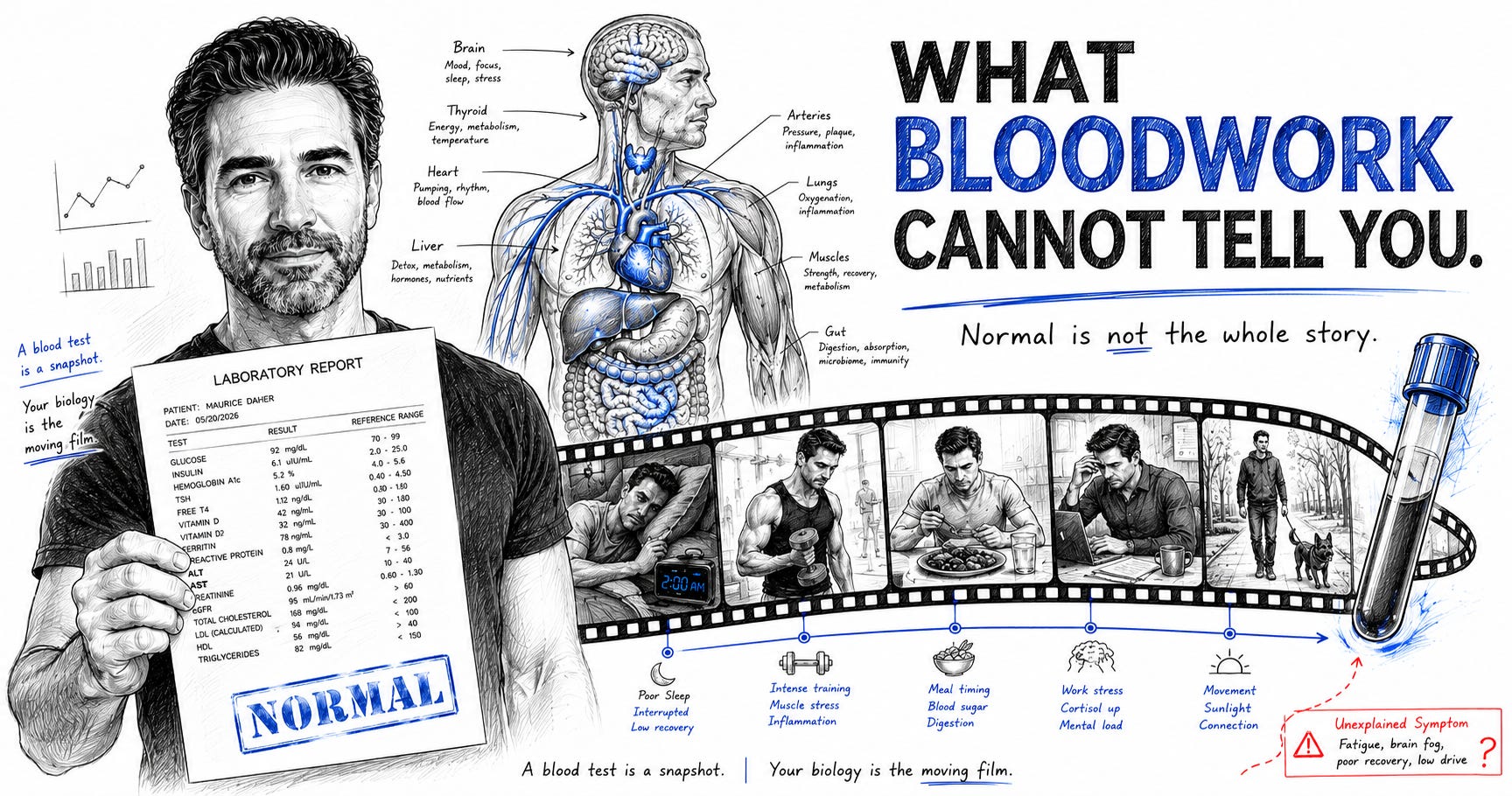
🧪 “Normal” Does Not Mean What Most People Think It Means
One of the first things I want people to understand is that the word normal on a laboratory report does not necessarily mean perfect.
It does not mean protected.
It does not mean symptom-free.
And it certainly does not mean that every system in your body has been examined.
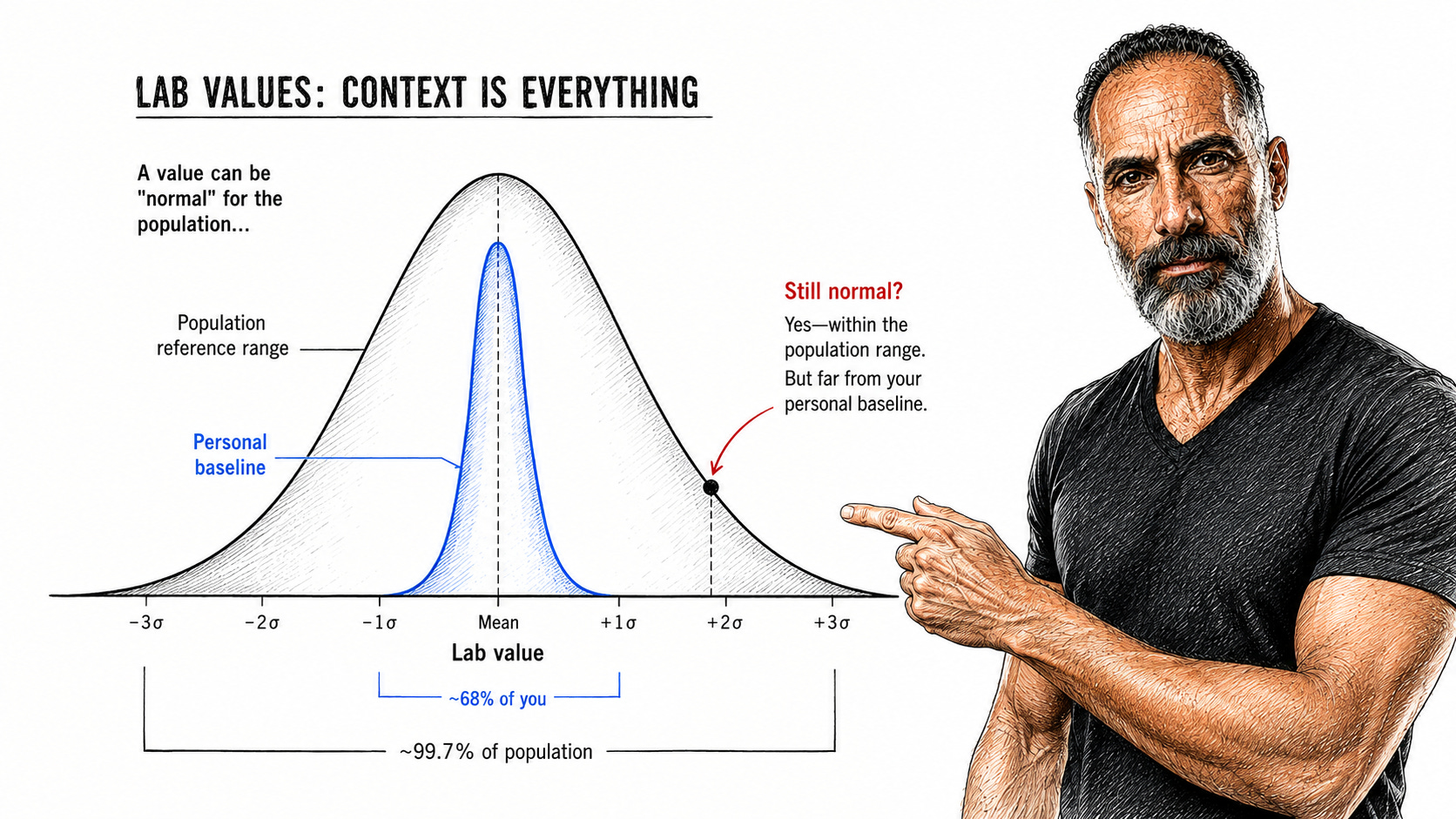
A laboratory reference interval usually tells us where a result sits relative to a selected reference population.
That is different from a clinical decision threshold.
This distinction matters.
A reference interval describes how measurements are distributed in a population. Clinical decision limits are established because a particular value has diagnostic, treatment, or risk implications.
Those are not interchangeable concepts.
This is well established in laboratory medicine. Reference intervals are tools used to help interpret results, but they depend on the population, analytical method, age, sex, and other variables. They should not automatically be treated as a border between healthy and unhealthy. (PubMed)
That means you can have a number slightly outside the printed range and not necessarily have disease.
It also means you can have a number inside the range that still deserves investigation.
The little red flag beside a number is not a diagnosis.
And the absence of a red flag is not a certificate saying everything in your body is working perfectly.
The laboratory highlights numbers.
It does not know your entire story.
📈 Sometimes the Best Reference Range Is Your Own History
Imagine that your creatinine has barely changed for six years.
Or your hemoglobin.
Or your thyroid marker.
Or your liver enzymes.
Then something starts moving.
Every new result is still technically within the laboratory range.
But the direction has changed.
That matters.
It does not automatically mean disease. Hydration, exercise, medication, aging, body composition, illness, weight change, and laboratory variation can all move a marker.
But the change deserves a question.
Because your body is not only being compared with thousands of other people.
It is also being compared with itself.
Research into personalized reference intervals supports this concept. An individual’s stable biological range can be considerably narrower than the broad population range. A series of previous measurements can therefore add information that one isolated result cannot. (PubMed)
This is why I keep telling people:
Do not throw away your old bloodwork.
Those old reports are part of your biological history.
One number tells me where you are.
A trend starts telling me where you are going.
And trends become even more useful when the testing conditions are reasonably consistent.
That brings us to something that gets overlooked constantly.
What happened before the blood was drawn?
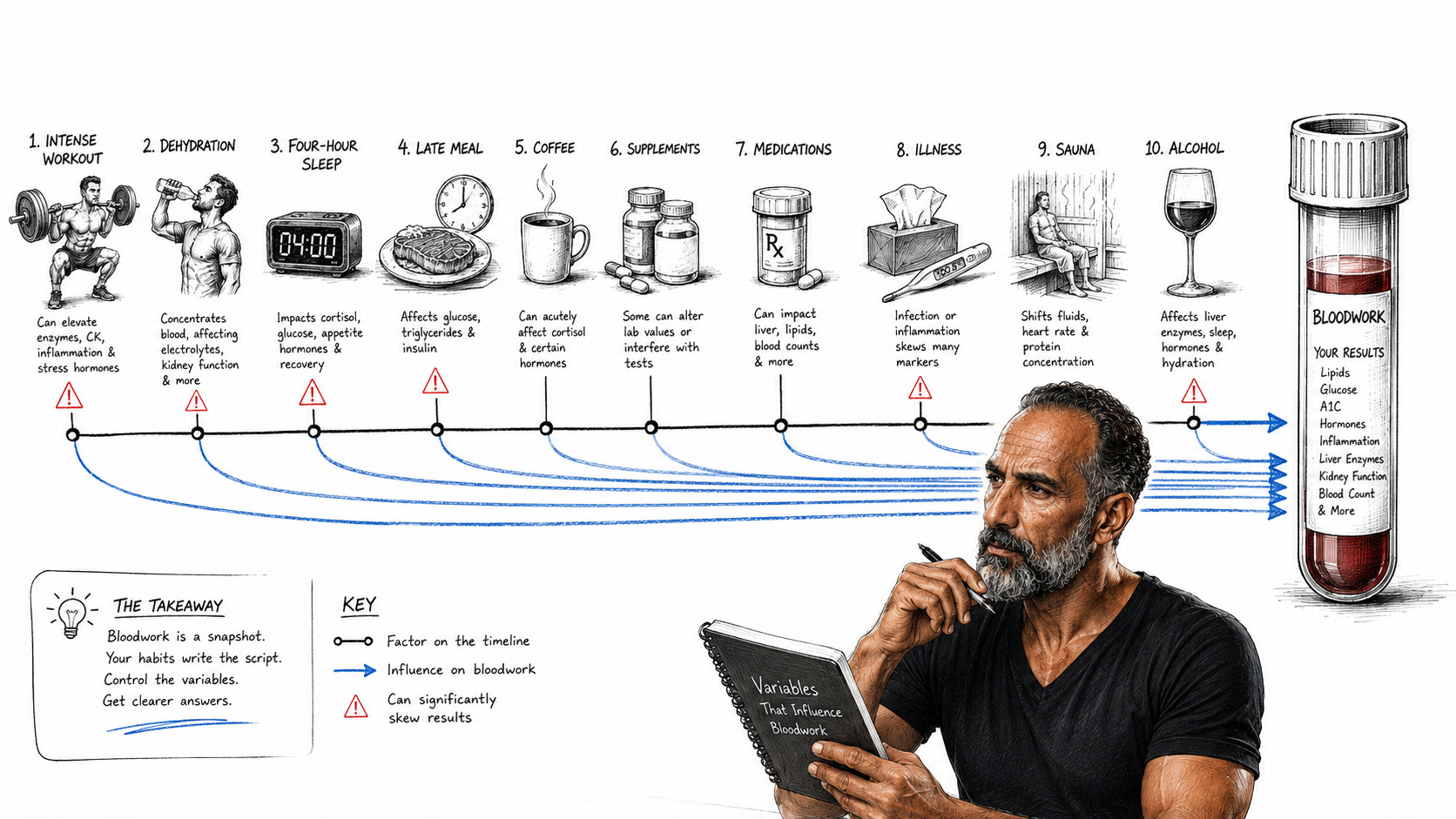
⏰ Your Blood Tube Does Not Come With a Diary
The laboratory receives your blood.
It does not receive the story of the previous 24 hours.
It does not know that you trained legs hard the night before.
It does not know you slept four hours.
It does not know you were dehydrated.
It does not know you changed a medication.
It does not know you took biotin.
It does not know you fasted twice as long as usual.
It does not know you were fighting an infection.
Yet those things can matter.
Exercise can change muscle-related enzymes and metabolic measurements.
Hydration changes concentration.
Meals alter glucose and triglycerides.
Hormones can vary with time of day.
Acute illness changes inflammatory markers.
Medications and supplements can alter physiology, and some can interfere with particular laboratory assays.
Even posture, tourniquet time, sample handling, transportation, storage, and laboratory method can influence certain results.
This does not mean you explain every abnormal test away.
That is the opposite mistake.
It means unexpected results sometimes need confirmation under controlled conditions before we build an entire health theory around them.
When I want to compare two tests, I prefer the conditions to be as similar as practical.
Similar fasting status.
Similar time of day.
Similar exercise conditions.
Same laboratory when possible.
And documentation of medication or supplement changes.
That makes the biological signal easier to separate from the noise.
Biological variation is a recognized part of laboratory interpretation, which is one reason a change in digits does not automatically mean a meaningful physiological change. (PubMed)
Before you ask what the number means, ask what happened before the number was measured.
🫀 The Body Is Not the Blood Tube
This is where things become much more interesting.
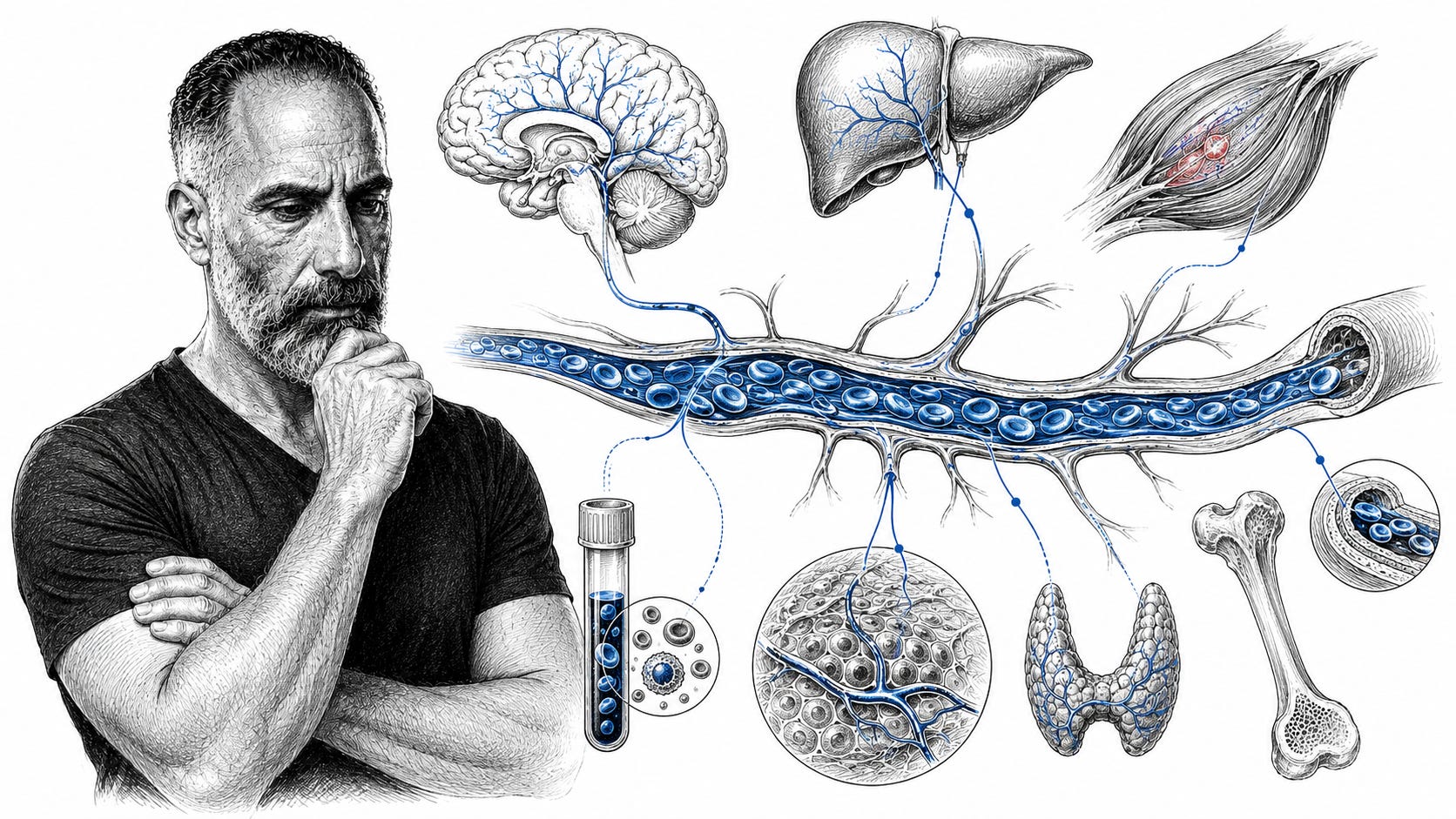
Blood is a transport system.
It carries hormones, nutrients, gases, cells, proteins, signals and waste products between tissues.
Because blood is easy to collect, it gives us an extraordinary window into physiology.
But blood is not identical to the tissues it serves.
A circulating nutrient concentration does not automatically tell us how much is stored in tissue.
A hormone concentration does not necessarily reveal receptor sensitivity or what happens downstream after that hormone binds.
Sometimes the body actively defends a blood concentration because that concentration is essential for survival.
Calcium is a good example.
Blood calcium is tightly regulated because nerves, muscle and the heart depend on it.
So having a normal serum calcium does not tell us everything about bone density, calcium intake, vitamin D status, parathyroid signaling or bone turnover.
The same principle extends far beyond calcium.
Blood often shows us what is circulating.
It may not directly tell us what is stored.
What is happening inside the tissue.
How sensitive a receptor is.
Or how much reserve remains.
Blood is the messenger.
It is not every room inside the house.
And that is why sometimes the next appropriate test is not more bloodwork.
Sometimes it is imaging.
Sometimes urine.
Sometimes physiological testing.
Sometimes an examination.
Sometimes genetic testing.
Sometimes a biopsy.
Sometimes the next step is simply watching the pattern carefully and repeating the original test.
The right tool depends on the question.
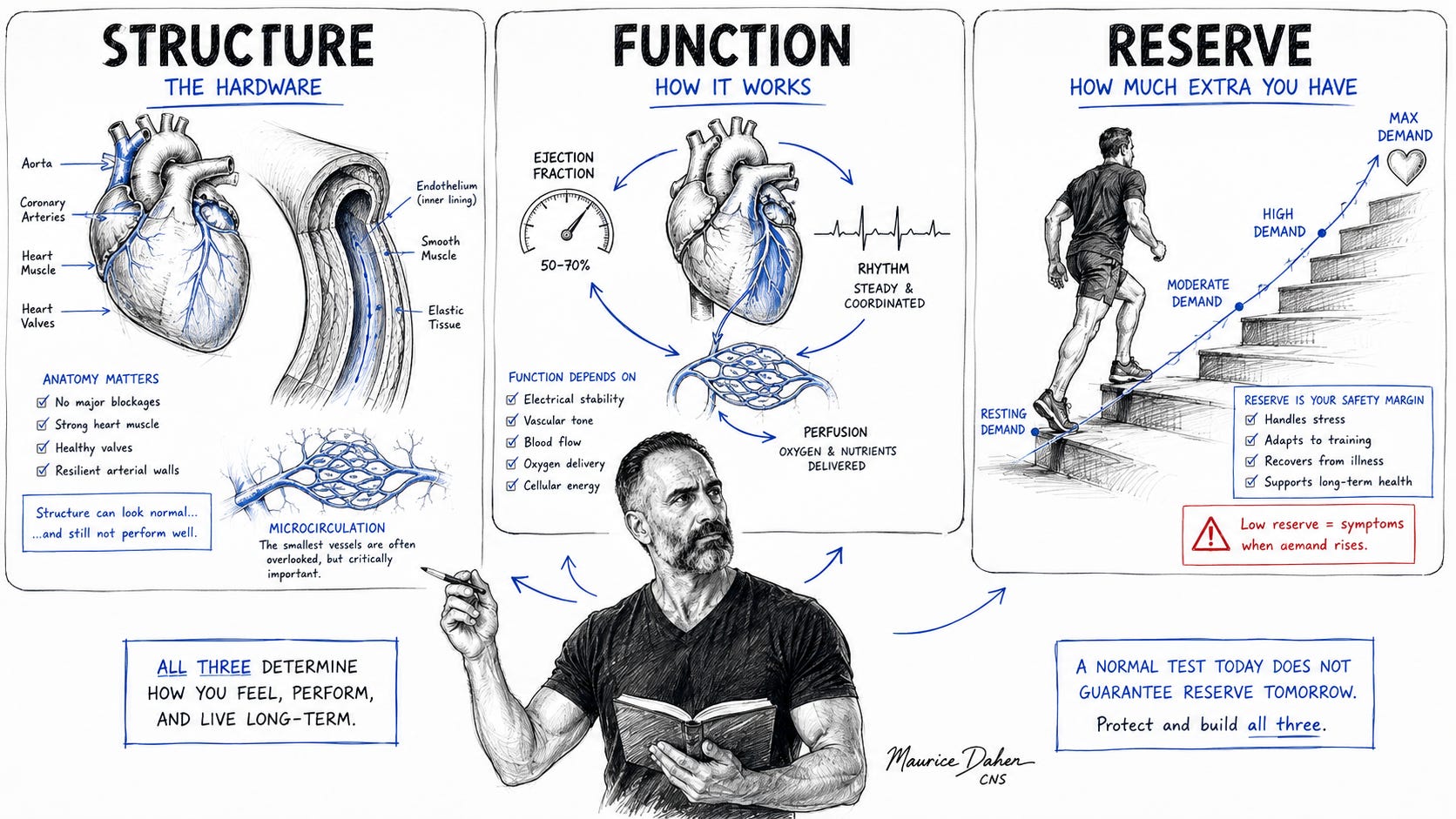
🧠 Structure, Function and Reserve Are Not the Same Thing
I think this is one of the most useful ways to understand what routine bloodwork cannot show alone.
Separate three ideas.
Structure is what something physically looks like.
Function is what it is doing.
Reserve is how much capacity remains when the system is challenged.
Routine laboratory testing can sometimes give clues about all three.
But it does not completely measure all three.
You can have coronary plaque while a routine chemistry panel looks completely ordinary.
An echocardiogram can show the structure and pumping function of the heart in ways a blood panel cannot.
A coronary calcium scan or other cardiovascular imaging can reveal structural information that a lipid panel does not directly show.
Likewise, kidney markers can remain relatively stable while renal reserve changes. Liver enzymes can sometimes be within range despite structural liver disease, and elevated liver enzymes do not automatically prove permanent structural damage.
Normal chemistry does not guarantee normal structure.
Normal structure does not guarantee ideal function.
And normal function sitting quietly in a chair does not necessarily tell us what happens when demand increases.
This does not mean everyone needs every scan.
That would create another problem.
More testing brings cost, radiation in some cases, incidental findings, false positives and unnecessary procedures.
The correct test follows the clinical question.
Not fear.
Not curiosity alone.
The question.
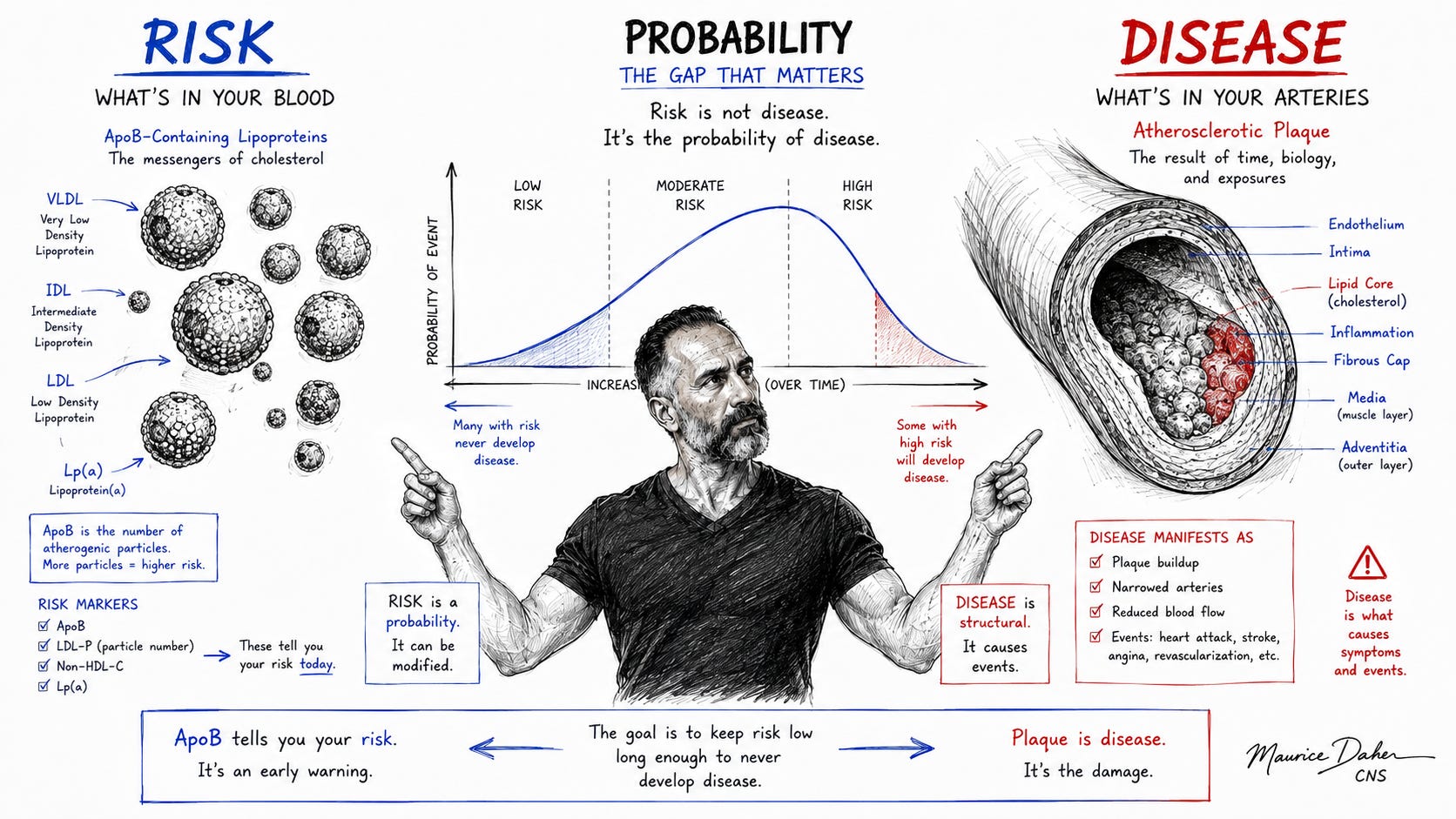
❤️ Risk Is Not the Same Thing as Disease
This comes up constantly in cardiovascular conversations.
ApoB.
LDL.
Lp(a).
Glucose.
A1c.
Inflammatory markers.
These measurements can help us estimate risk, exposure or underlying physiology.
That is enormously valuable.
But a risk marker is not the same thing as directly imaging disease.
And a diagnosis is not the same thing as destiny.
A high-risk marker does not guarantee that an event will happen.
A low-risk marker does not make the probability zero.
The marker gains meaning when we place it beside age, blood pressure, smoking, diabetes status, family history, medications, symptoms, duration of exposure and, when appropriate, imaging.
This is where conversations online tend to fall apart.
One person sees a high marker and assumes catastrophe is inevitable.
Another person gets reassuring imaging and decides the marker no longer matters.
Both interpretations remove time from the biology.
Atherosclerosis does not appear as one laboratory result.
It develops through cumulative exposure, individual susceptibility, arterial biology and time.
Risk is probability.
Disease is a condition.
Neither should be confused with fate.
The purpose of identifying risk is not to scare someone.
It is to give us an opportunity to change the trajectory while there is still time to do something about it.
At this point, the main idea should be clear.
The problem is not that bloodwork is unreliable.
The problem is expecting a laboratory report to tell us everything about a living human being.
In the paid section, I am going to show you the practical framework I use when I review laboratory results, including how I evaluate collection conditions, trends, related markers, symptoms, reference ranges, additional testing, and when a result needs medical follow-up rather than another supplement.
Comments
Nothing yet. Say the first thing.
Sign in to join the conversation.