
Dear friends,
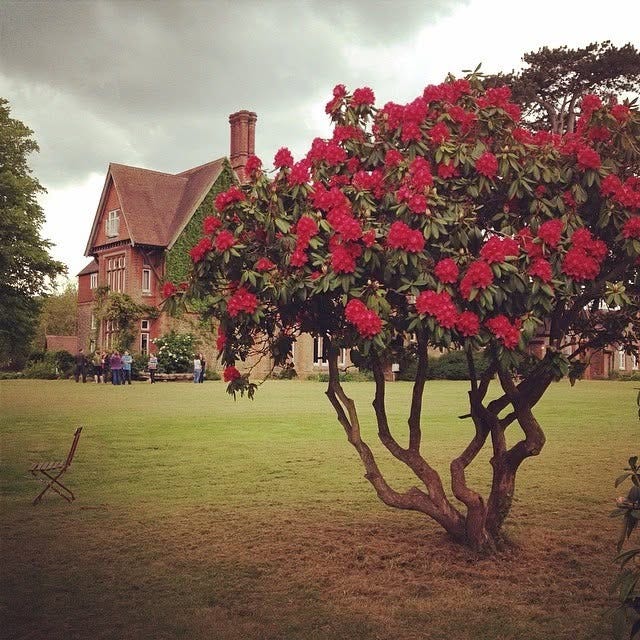
Twelve summers ago, I was “Writer-in-Residence” for the UK branch of L’Abri, an intentional Christian community founded in the fifties in Switzerland by Francis Schaeffer. It is designed to be a safe space to ask hard questions about life and faith in the context of the L’Abri workers’ combined homes. While in a rambling manor house in tiny Greatham, England, in the summer of 2014, some of us read and discussed Søren Kierkegaard’s Philosophical Fragments out loud in a “study” group. Of course, we did not get very far because we paused and dissected every sentence and, eventually, ran out of time. I was also reading and thinking quite a lot about the writing of Blaise Pascal and Simone Weil, especially in their descriptions of both other-worldly and this-worldly moments of conversion. In this post, I want to share with you a few of my blogs from that summer. Please keep in mind that that was 12 years ago, and these posts need more editing than I need time for! I also need to develop and write more nuanced ideas about the connections between these three thinkers. But there is still something special about these entries from the moment of discovered connections, especially if you are not very familiar with one or more of these amazing thinkers.
*Speaking of amazing Christian thinkers—don’t forget about my upcoming Zoom class on The Christian Imagination (More info HERE or at the bottom of this post).*
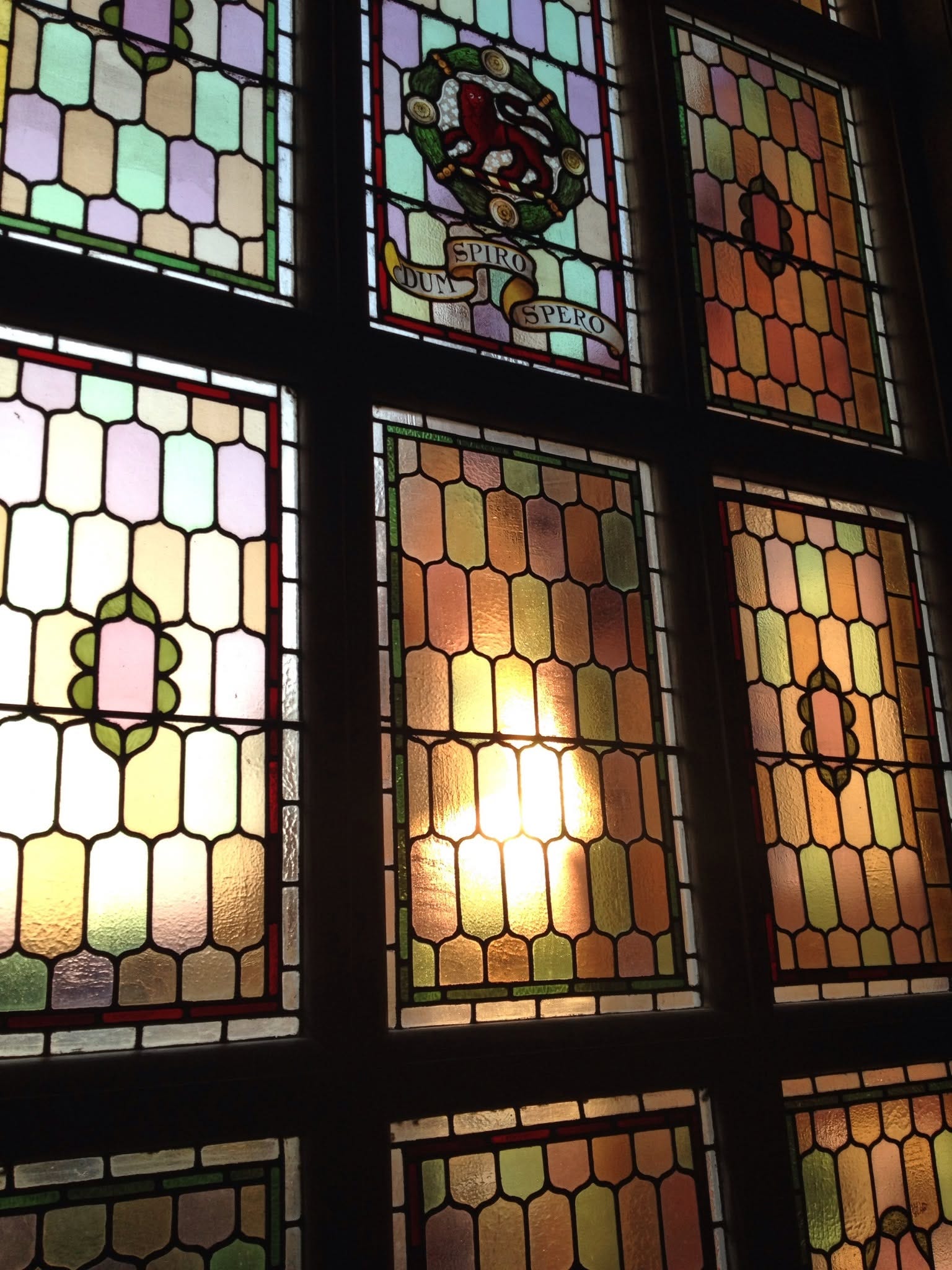
Entry 1:
So, here I am. At L’abri. It was a good, easy trip over, but I am pretty exhausted.
On the plane over, my mind was full, reeling as I fell in and out of that restless plane sleep. During the past few weeks, I have had several enlightening, disturbing, challenging, hard, beautiful conversations with friends (both new and old) about some of the most difficult questions concerning faith. The timing of the conversations is quite striking—although these conversations about struggles, doubts, belief, etc. have contained themes that have been near to my recent spiritual life and have reflected the language of my own recent soul. I feel as if my own questions have been clarified—my appetite for a deeper understanding of the reality of mystery has been whetted.
Because of this, I could not help but read Pascal’s Pensées on the plane—I felt truly driven to do it. Blaise Pascal and Simone Weil have left some of the deepest imprints on my heart and mind over the last few months. And it keeps happening, especially with Pascal.
Please read this amazing section from Pensées:
“We never keep to the present. We recall the past; we anticipate the future as if we found it too slow in coming and were trying to hurry it up, or we recall the past as if to stay its too rapid flight. We are so unwise that we wander about in times that do not belong to us, and do not think of the only one that does, so vain that we dream of times that are not and blindly flee the only one that is. The fact is that the present usually hurts. We thrust it out of sight because it distresses us, and if we find it enjoyable, we are sorry to see it slip away. We try to give it the support of the future, and think how we are going to arrange things over which have no control for a time we can never be sure of reaching.
Let each of us examine his thoughts; he will find them wholly concerned with the past or the future. We almost never think of the present, and if we do think of it, it is only to see what light it throws on our plans for the future. The present is never our end. The past and present are our means, the future alone our end. Thus we never actually live, but hope to live, and since we are always planning how to be happy, it is inevitable that we should never be so.”
After reading this beautiful passage, I remembered one of my favorite L’abri lectures entitled "The Sacrament of the Present Moment” by Andrew Fellows. Andrew argues along the same lines as Pascal—but he continually makes the point that we meet God only in the present. How does this relate to Pascal’s comment about the pain of the present? It is so hard, so frightening, to slow down--to wait, to believe in the sacred nature of the present moment. We are always running forwards and backwards—is this running into the future or back into the past another way to avoid God, to be distracted, to avoid facing the painful light of reality? Why? There is a lot I could say about this but this is already crazily long.
Entry 2:
Still relating to this theme of the present moment, I wanted to share a fantastic, lyrical quotation from Kierkegaard’s Philosophical Fragments in which K explains the very moment of conversion from “untruth” to “truth” from “not to be” to “to be”. He writes:
“And now, the moment. A moment such as this is unique. To be sure, it is short and temporal, as the moment is; it is passing, as the moment is, past, as the moment in the next moment, and yet it is decisive, and yet it is filled with the eternal. A moment such as this must have a special name. Let us call it: the fullness of time.”
I realize that this quote is out of context and needs a great deal of explanation (K is contrasting the Socratic method of learning to this act of what he calls “conversion”), but I will not do that right now. For now, I want to just mention Kierkegaard’s focus on the passing, yet still eternal, moment of conversion, in which the “divine teacher” creates both the condition (an awakened knowledge of our “untruth”) and the movement to truth. K later emphasizes that this moment can be neither recollected properly or recereated, and that God cannot be “drawn over to our side” again just through our controlled attempts at reconstruction. We experience this movement from untruth to truth in the fullness of the moment. Although Kierkegaard here is referring to the singular defining moment of Christian conversion, I wonder how this also relates to the process of a sort of sanctification, of lifelong miniature movements in the moment towards deeper, greater understandings of specific truths. Learning here can be seen as—in a sense—a mystical experience.
**There is a note in the Kierkegaard text next to the phrase “the fullness of time” that references Galatians 4:4 (and reading this scripture alongside the poetry of this Kierkegaard passage adds to the beauty and the mystery of the point):
“But when the time had fully come, God sent his Son, born of the woman, born under law, to redeem those under law, that we might receive the full rights of sons.”
2026 Insertion: I also love reading this Kierkegaard quote and Galatians 4:4 alongside the beautiful last verse of “Elijah” from The Mountain Goats. I love the way songwriter, John Darnielle, connnects the “fullness of time” with the “empty tomb” as well as the birth of Christ.
(Listen HERE and find all lyrics HERE):
“Set the table Let the incense burn in every room
Those three extra places
One for me, one for your doubts
And one for God
Feel the fullness of time in the empty tomb
Feel the future kicking in your womb
I'm coming home, I'm coming home”
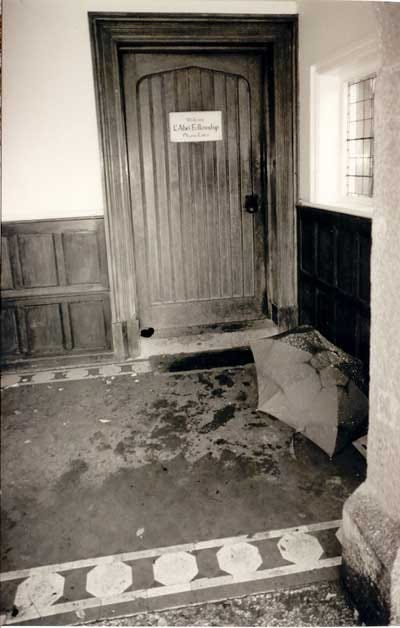
Entry 3:
As mentioned before, the writings of both Simone Weil and Blaise Pascal have been very important to me of late. I think it fascinating to look here at the words they use to describe their initial and profound encounters with God—mystical experiences, “the fullness of the moment” as Kierkegaard says. Both of their accounts indicate instances of passivity on their part, testifying to the weight and glory of the experience, the Presence being forced upon them.
Simone Weil even claims that she was “possessed by Christ” while reading George Herbert’s “Love”. Weil, a thinker and activist who had no interest and perhaps little previous exposure to Christianity, was struck by the strange, unexpected reality of this “possession”. She claims that:
“God in his mercy had prevented me from reading the mystics, so that it should be evident to me that I had not invented this absolutely unexpected contact.”
Then she goes onto say some beautiful, fascinating, challenging, important things:
“Yet I still half refused, not my love but my intelligence. For it seemed to me certain, and I still think so today, that one can never wrestle enough with God if one does so out of pure regard for the truth. Christ likes us to prefer truth to him because, before being Christ, he is truth. If one turns aside from him to go toward the truth, one will not go far before falling into his arms.”
To read Weil’s full account look here.
Pascal’s famous close call with death/conversion moment beautifully coloured his life, writing, perspective until his death, when a piece of cloth detailing his encounter was found sewn onto the inside of his jacket. It said this:
“From about half past ten in the evening to about half an hour after midnight.
Fire.
God of Abraham, God of Isaac, God of Jacob.
Not the God of philosophers and scholars.
Absolute Certainty: Beyond reason. Joy. Peace.
Forgetfulness of the world and everything but God.
The world has not known Thee, but I have known Thee.
Joy! Joy! Joy! Tears of Joy!”
These glorious moments of conversion—moments both inside the “fullness of time” and outside of time and in eternity—are profound mysteries, a thinning of the veil, fleeting moments that are solidified forever.
Thank you for reading!
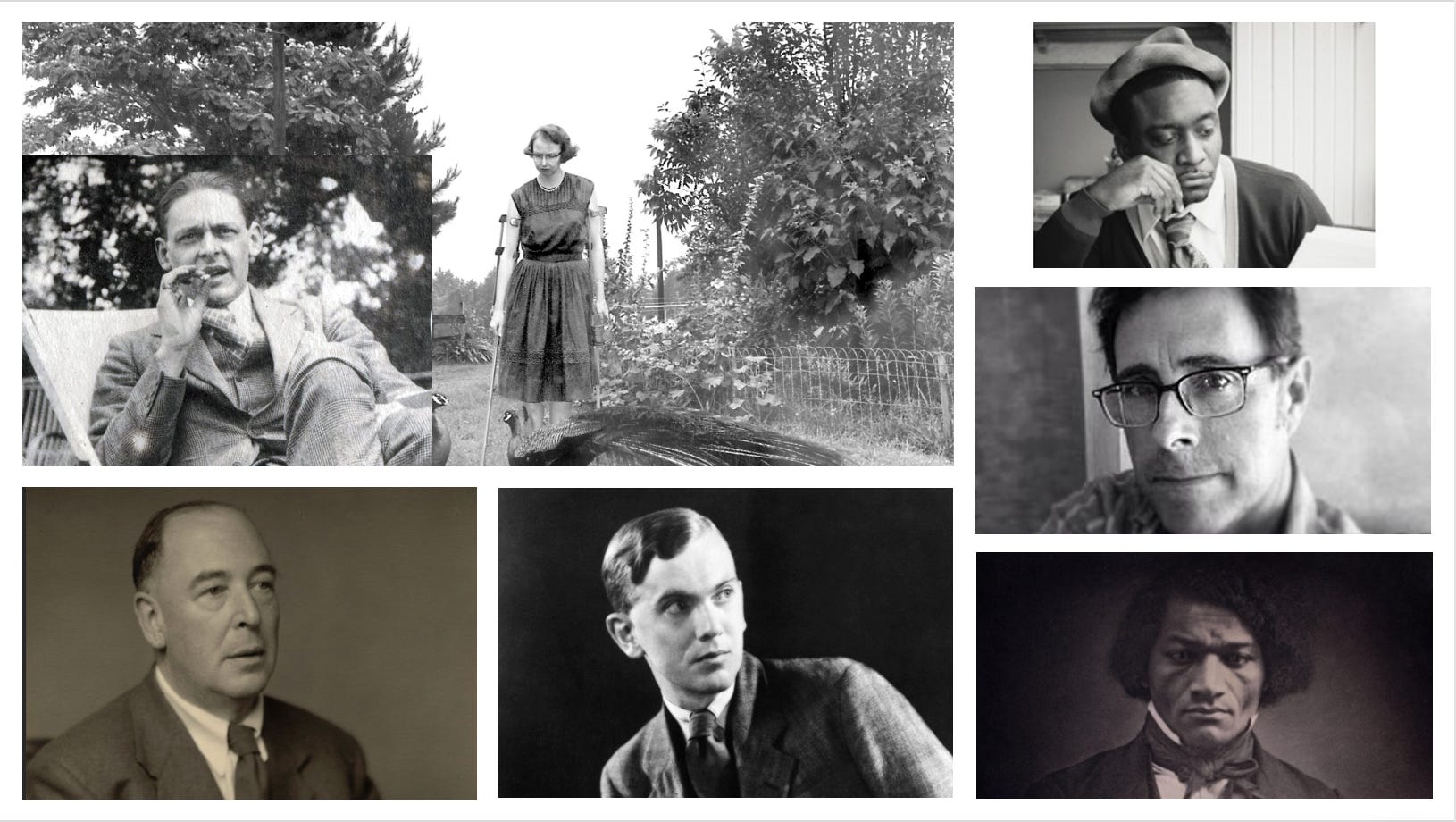
Don’t forget about my upcoming CHRISTIAN IMAGINATION CLASS:
Class Title: The Christian Imagination
Meeting Dates: July 9- August 27
Meeting Times: Thursday nights from 7-8:30 (all classes will be recorded)
Fee: $100
Artists Discussed: Graham Greene, Flannery O’Connor, T.S. Eliot, Leif Enger, Sho Baraka, C.S. Lewis, Christian Wiman, Frederick Douglass & others
Class Description: In this interdisciplinary class, we will read fiction and poetry, listen to music, and look at visual art that encourage us to recognize the mystery of God and the paradoxical nature of the human condition. We will also read essays from artists and scholars to discuss what it means for the artist of faith to create meaningful things for which faith is, as O’Connor notes, “the light by which I see.” Last of all, we will address why every Christian needs to value the imagination and what this might look like in practice.
More info and syllabus: CLICK HERE
Registration Info: CLICK HERE
Payment Info:

Comments
Nothing yet. Say the first thing.
Sign in to join the conversation.