
Welcome to The Empathetic Imagination! This newsletter was born out of my interest in the relationship between the arts and spiritual formation, particularly the cultivation of empathy (which also led to my book). In this weekly newsletter, we will look at the connections between art, theology, and the hard work of being a loving, truthful human being. You can read more about me here. You can also check out info for a class I am teaching on The Christian Imagination in July here.
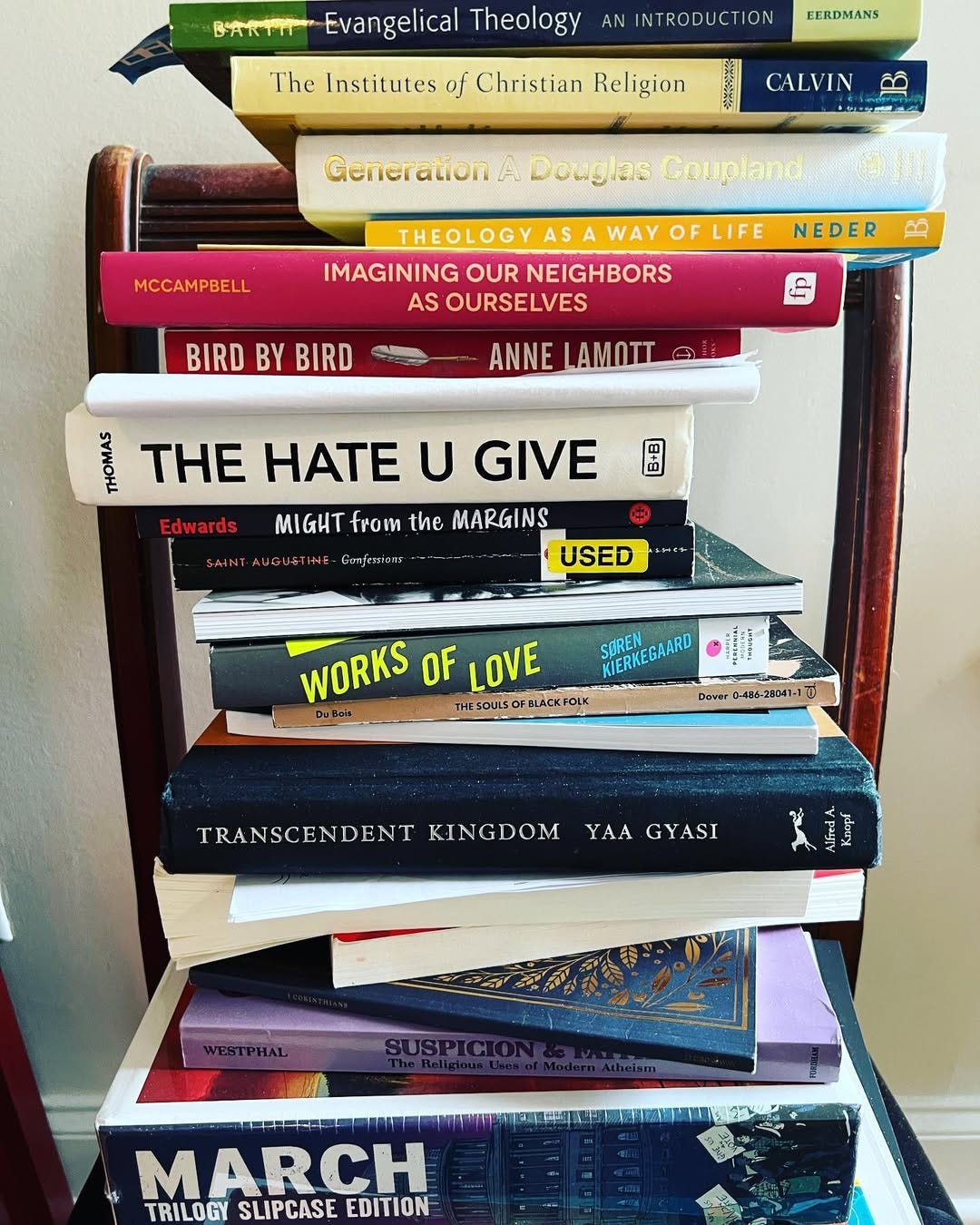
I was at a party last week, and someone asked me to name my favorite book. This is an almost impossible question for any book lover! We had to narrow it down to fiction before I could get anywhere. There are so many novels that I love, and I love them for different reasons. Some read smoothly and provide pure enjoyment. Others are complex and experimental, and I love the feeling I get when I reach a point of finally understanding something!
Do I love the writing style, the narrative structure, the plot, the themes, the character development? Of course, a real masterpiece excels in all these categories.
As many of you know, my main area of research and teaching is contemporary literature. Having said that, I teach and read in all periods and many areas of literature, from ancient texts to last week’s bestseller.
For now, here are the top three novels that I keep coming back to, utterly amazed.
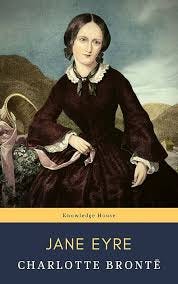
Jane Eyre has long been my #1 choice. It’s a bit of a strange choice for me because, as I said above, my main academic area is contemporary literature. But it’s also not a strange choice for me because of its prophetic critique of false Christianity, a topic that occupies a large space in my mind. Jane Eyre is, above all else, a novel that illustrates true Christian love (in many different forms) while deconstructing cultural Christianity and exposing hypocrisy. Along with this, it’s just a great read—the Gothic mystery elements are always especially captivating for students reading it for the first time. I also love that Brontë takes a few jabs at the ever-popular Byronic hero, so much so that—as my dear friend, Victorianist Jennifer Holberg points out—” When Jane first meets the Byronic hero (Rochester), she knocks him off his horse on his ass!”. What’s not to love?
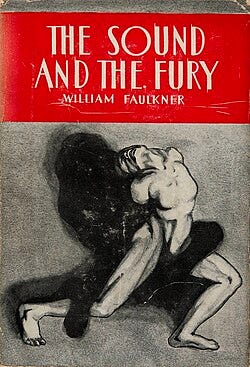
Oh, Faulkner. This novel is COMPLEX. This novel is WORK. This novel breaks my heart and fills me with joy. The Sound and the Fury is a product of both high Modernism and Southern Gothic dysfunction. In the despairing postwar period that produced masterpieces from Joyce, Woolf, and Eliot, Faulkner wrestles with the same big questions of meaning, God (or no god), and suffering in the context of a genteel yet morally bankrupt Mississippi. The author tells the fragmented story of the aristocratic Compson family from the point of view of three of its members—a mentally disabled adult with the cognitive faculty of a toddler, a brilliant and suicidal college student, and an amoral capitalist, driven only by greed and revenge. In his characteristic lush poetic prose, Faulkner wrestles with the validity of this famous existentialist assertion from Shakespeare’s Macbeth about the meaninglessness of life: “It is a tale/ Told by an idiot, full of sound and fury,/ Signifying nothing.” But is it? This deeply philosophical novel ends on Easter Sunday in an African American church, the most needy Compson child attending with his beloved mother-surrogate, Dilsey. The family’s faithful maid, Dilsey—a stand-in for Faulkner’s own beloved childhood caregiver, Caroline Barr—makes sense out of the chaos of life and the novel. But is it enough? Which version of reality is real?
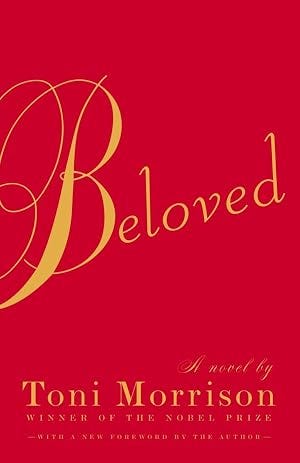
Toni Morrison’s 1987 novel Beloved is a book that every American should read, must read to prompt us into taking vulnerable, embodied steps towards truly loving our neighbors as ourselves. Morrison guides us in this process, enabling us to imaginatively identify and participate in one of America’s personal and collective formative traumas. Beloved is the great American contemporary novel that shows us the importance of telling the American story—the painful, tragic context in which we see the formation of “Black” and “white” Americas—what MLK referred to as the “Two Americas.” Beloved is based loosely on a historical news clipping account of the tragic events of the life of an escaped slave, Margaret Garner. In an act of fierce love and protection, Garner cut the throat of her infant daughter to prevent her from being taken back into slavery by an abusive slave-owner. In the retelling of this event, Morrison aspires to explore the interior world of this woman that she—or anyone—knows little about. In the process of telling the story of Margaret Garner, who Morrison names “Sethe” in the novel, we are introduced to the cruel institution that formed Sethe’s bruised and battered psyche.
The novel also serves as a memorial to the “Sixty million and more” Africans and African Americans as it imagines the disorientation, pain, chaos, and confusion of their brutal diasporic experiences. This myriad of voices that we never heard, that history has forgotten (or more accurately, never knew) has not been memorialized in America until very recently. You can read more of my thoughts on this masterpiece HERE or in my BOOK.
Please share some of your favorite (for whatever reason) novels in the comments! Before I share my honorable mentions and favorites in other categories, I want to remind everyone about my class on The Christian Imagination that runs on Thursday evenings from July 9 to August 27 (classes will be recorded in case you cannot attend all!). The class fee is just $100! We will be reading and discussing the authors pictured below (and quite a few others!). You can find the class syllabus, reading list, and registration info HERE. There will be a free information/ intro meeting THIS TUESDAY, July 2, at 7:00 pm ET. All are welcome! HERE IS THE ZOOM LINK.
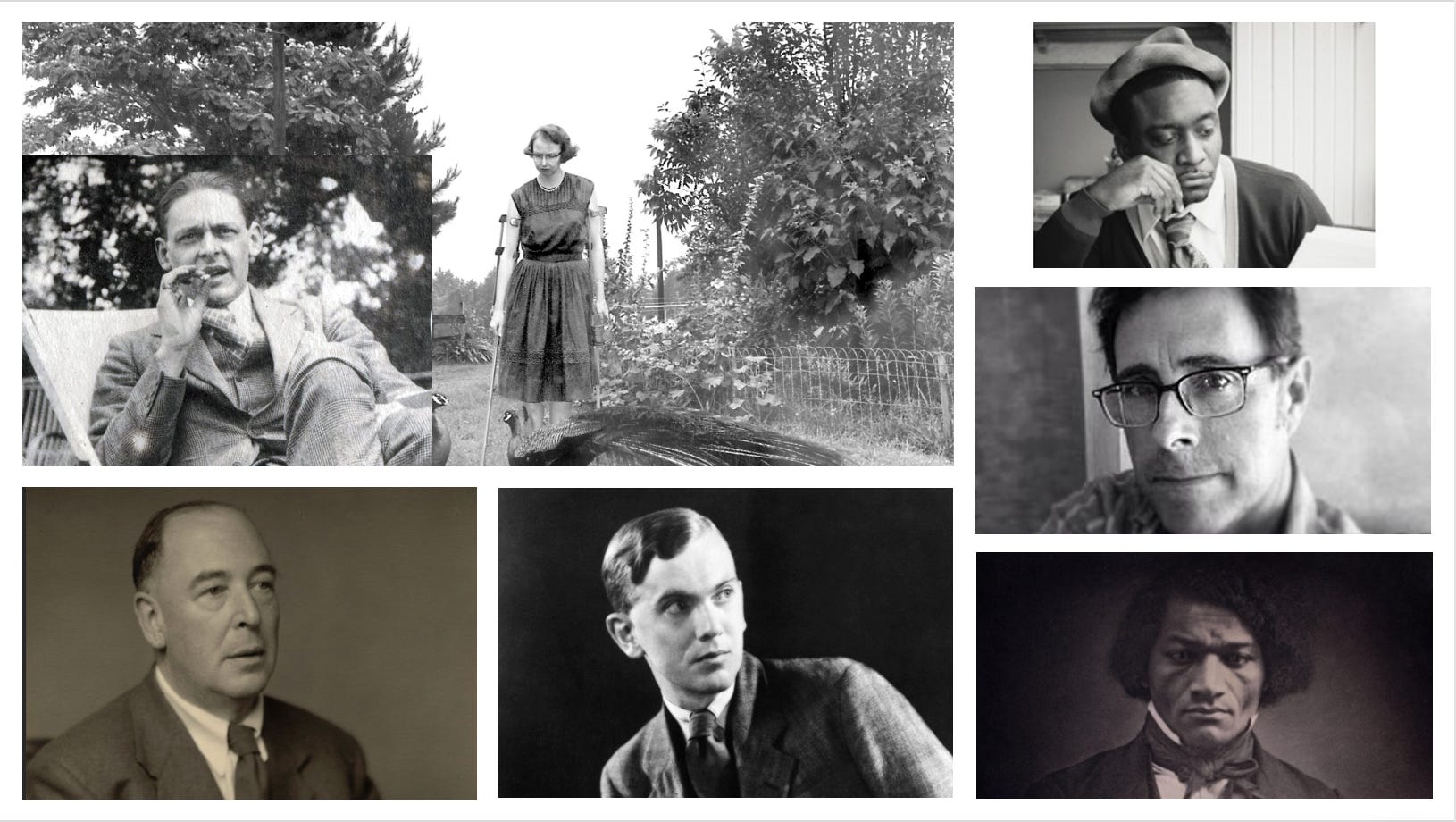
Here are some of my other very favorites!
More Novels: White Noise, Mrs. Dalloway, Till We Have Faces, Great Expectations, Heart of Darkness, Frankenstein, A Heartbreaking Work of Staggering Genius, and so many others!
Favorite Poem: The Waste Land is tied with Four Quartets (Oh, how I love Eliot!)
Favorite Shakespeare Play: Othello
Favorite Book of Philosophy: Blaise Pascal’s Pensées
Favorite Graphic Novel: Maus or Watchmen
Favorite Memoir: Narrative of the Life of Frederick Douglass, an American Slave or Men We Reaped
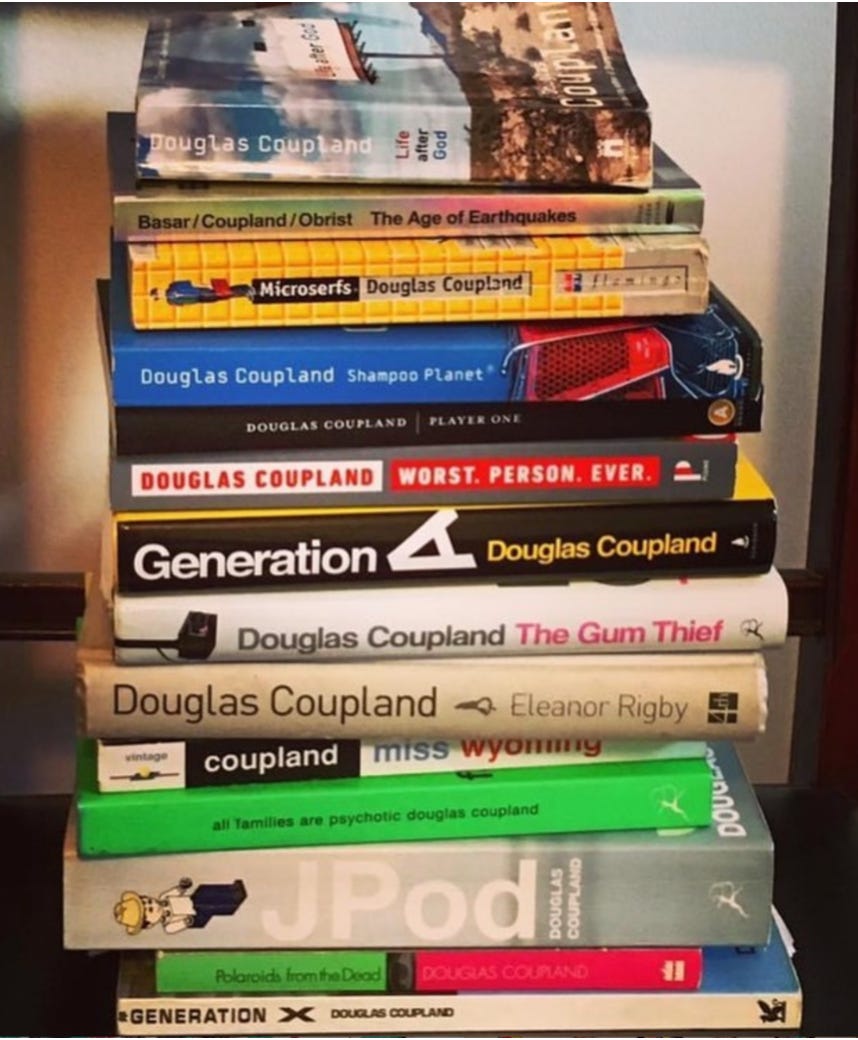
Many of you know that my doctoral dissertation and so much of my academic focus have been on the writing of contemporary Canadian author Douglas Coupland.
He gets a special space in my list of my favorites. I love so many of his books, but these two are at the top of my list:
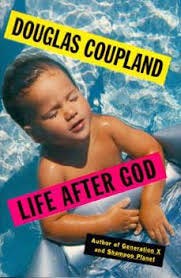
This 1994 collection of short stories (that, according to the author, is meant to work together as a novel) is about a search for God in a post-Christian culture. Each story examines the ways that characters who were brought up in “secular” homes explore what seem to be innate desires for transcendence and meaning.
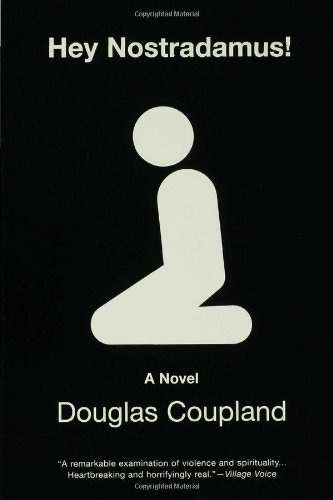
This 2003 novel about the aftermath of a school shooting opens with these lines:
“I believe that what separates humanity from everything else in this world — spaghetti, binder paper, deep-sea creatures, edelweiss and Mount McKinley — is that humanity alone has the capacity at any given moment to commit all possible sins. Even those of us who try to live a good and true life remain as far from grace as the Hillside Strangler or any demon who ever tried to poison the village well. What happened that morning only confirms this.”
Perhaps you can see just from these lines what interests me in this very theologically rich novel. In this harrowing but beautiful story, Coupland positions grace against and above religious legalism. You can read a bit more from me on this novel here.
Thanks for reading! Please do share some of your favorites below!
Comments
Nothing yet. Say the first thing.
Sign in to join the conversation.