
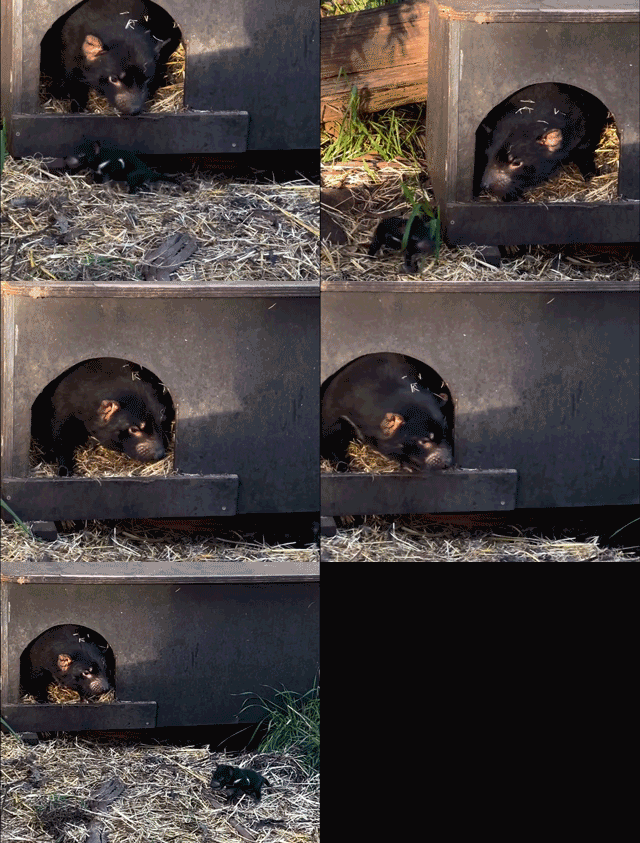
Hermione is an experienced Tasmanian devil mamma at the Trowunna Wildlife Sanctuary who knows a thing or two about raising joeys. It’s important to let the little one explore, but when they get scared, give them a quick call and they’ll know how to come right back. It’s the devil way.
Tasmanian devils are indeed little talkers, employing a range of vocalizations that can include raspy screams, shrieks, growls, snorts and grunts. They most often use these calls to signal and warn other devils during their nocturnal feeding frenzies. While they do tolerate other devils when a found carcass is large enough to share, they like to posture and display dominance as they feed. Marc at Wild Ambience takes wildlife sound recordings and his recordings of Tasmanian devil sounds can be found in the link below.
I did a more in-depth dive into the lives of these carnivorous marsupials a few months back. Click below for a refresher.
Recently, the University of Tasmania reported a bit of positive news about the new strain of Devil Facial Tumor, dubbed DFT2, that university researchers have been tracking since its discovery in 2014. Compared to the original strain of DFT that has impacted much of the devil population, researchers have found that DFT2 is spreading at a slower speed than anticipated and remains contained to one region, with populations remaining stable. Dr. Rodrigo Hamede from the University’s School of Natural Sciences says that this finding “suggests there may be some capacity for devils to adapt and live with this cancer over time.” While the risks to Tasmanian devils remain, the findings are changing the way scientists understand the disease.
Meanwhile, a partnership between Colossal Biosciences and the university are running vaccine safety trials in fat-tailed dunnarts, a biologically relevant marsupial, to test whether correcting devil-specific mutations might reduce their susceptibility to the disease. The partnership will employ a two-pronged approach: development of a field-ready oral bait vaccine designed to train the devils’ immune system to destroy DFT1/DFT2 cells; and gene-editing research on the gene identified as the origin of DFT1. The hope is that the university’s current body of vaccine work will be accelerated under this process, allowing them to explore a gene-editing strategy in parallel that could enhance the vaccine. Tasmanian devils are currently listed by the IUCN as Endangered, with the populations of this apex predator and keystone species threatened by the highly contagious disease.
The source for today’s gif is here.
WildAmbiance: Tasmaian Devil Sounds & Calls
University of Tasmania: “Tasmanian devils showing signs of coexistence with second cancer,” 7/22/26
Comments
Nothing yet. Say the first thing.
Sign in to join the conversation.