
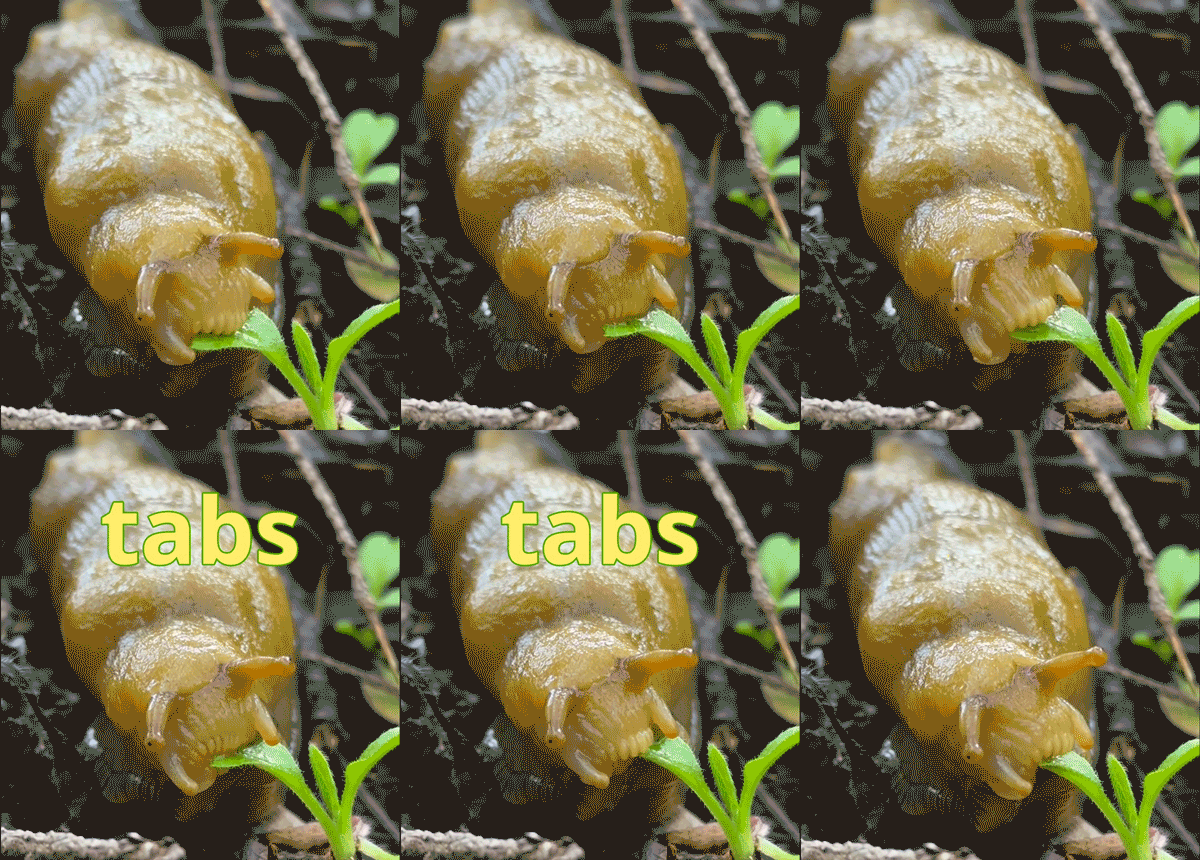
The National Park Service in Muir Woods took this footage of a contempletive banana slug having a small nosh. They write:
Banana slugs are decomposers, consuming dead plant and animal matter. They also indulge in the occasional mushroom or seedling treat, all with the use of their radula. Located at the front, underside of the slug, this tongue-like structure is composed of thousands of microscopic “teeth” that allow for grinding up food before it heads down the esophagus. This feasting satiates not only the slug, but redwood forest ecosystems like Muir Woods!
Radulae are found most mollusks (except for bivalves) and act as their primary feeding apparatus. The form varies by group, but the radula typically works as a scraping organ, where the animal uses small rows of teeth to rake food into its mouth. In most species, the teeth are fixed to a fleshy tongue-like organ, giving the animal the animal the ability to bend them sideways. In gastropods, the slug or snail will retract its tongue-like organ (the odontophore) and use it’s rows of curved teeth (made of chitin) to scrape the surface of their food, raking it into their esophagus. Or they may use their radula as a rasp, feeding directly on a plant for example.
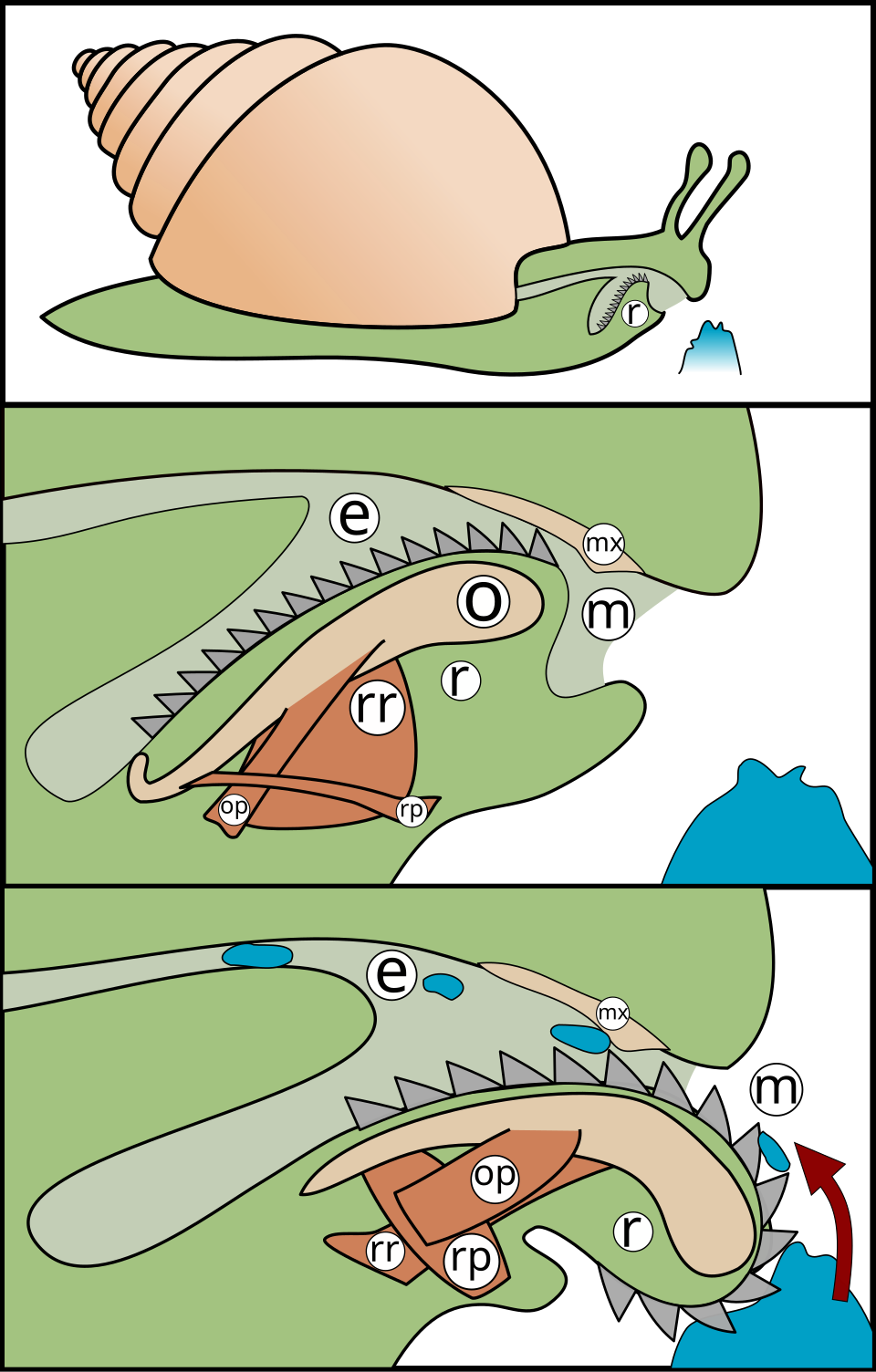
As their teeth wear down, the mollusk will produce new ones, which will migrate slowly from the back of the mouth cavity where they are generated to the front, replacing those that are worn out. The number and shape of teeth will vary by species and is based largely on their feeding regimen, carnivorous gastropods generally needing fewer teeth. Some mollusks have more than 100,000 teeth, arranged in nested, v-shaped rows. One species of deep-water gastropod with an ancient lineage has over 200 teeth per row.
Those lacy tracks that you have probably seen in gardens were made by snails or slugs, scraping up food like algae from a surface, traces of radulae in action.
The source for today’s gif is here.
Comments
Nothing yet. Say the first thing.
Sign in to join the conversation.