
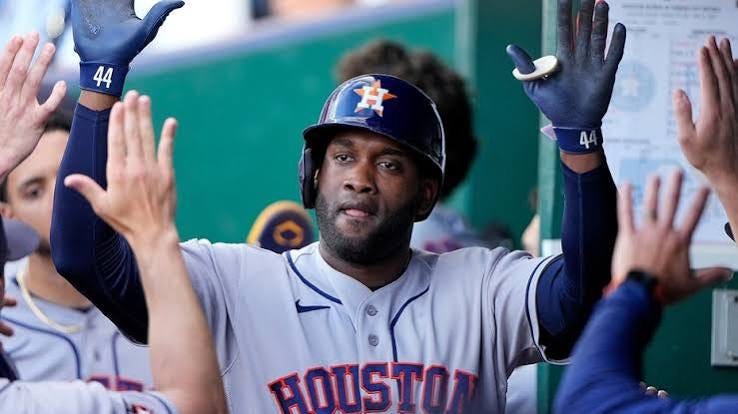
He stands as the perfectly assembled product of all these Cuban decades, from Martin Dihigo to Minnie Minoso to Luis Tiant to Omar Linares to Braudilio Vinent to Orlando “El Duque” Hernandez to Aroldis Chapman. Now we wonder if Yordan Alvarez, in the midst of the greatest major league season that either a Cuban or a Houston Astro ever had, is actually at the end of the line.
There has only been one Cuban to win a Most Valuable Player award after a full major league season. That was Zoilo Versalles, Minnesota’s shortstop in 1965. If Houston, the surprise leader in the American League West, makes the playoffs, Alvarez might well be a unanimous selection. True, some kneejerk voters might point out that Alvarez doesn’t lead the A.L. in WAR, since he’s a tick behind Detroit’s Kevin McGonigle (?), but he leads the major leagues in batting average, on-base percentage, slugging percentage (by 68 percentage points), OPS (108 points), total bases and intentional walks, and he leads his league in runs, hits, runs batted in and home runs (tied with Junior Caminero). Moreover, he has an .862 OPS in two-strike situations with a .282 average. He is a candidate to win both the conventional Triple Crown, which has happened once since 1967, and the “slash” version, and he only turned 29 in June.
Alvarez has 84 walks and 91 strikeouts, and he is a career .300 hitter with a .976 OPS, second to Aaron Judge among active players. He already has 205 career home runs, was the Rookie of the Year in 2019, and stroked a home run off Philadelphia’s Jose Alvarado that basically won the 2022 World Series. An ankle sprain and a broken finger limited Alvarez to 48 games last year, and in a way he was forgotten as 2026 dawned, even though he’s still 6-foot-4, 235.
His schooling was impeccable. His father Agustin always warned him about chasing bad pitches, and in Cuba’s 15-and-under league he struck out seven times in 142 plate appearances. In his second season for Las Tunas in Cuba’s top league, Alvarez hit .351 in 125 appearances and hit only one home run, but also struck out just 10 times. The grounders would become rockets eventually, and Alvarez began filling out after he defected at age 17, and lived in a safe house in Haiti with future Houston teammate Yuli Gurriel. Astros scout Charlie Gonzalez pounded the table to sign him after Alvarez worked out in Florida, but Houston had spent its international bonus money. So had the Dodgers, but they shelled out $2 million, paid the $2 million penalty, and signed him.
Alvarez with the Dodgers? The eyes glaze over that one. But this is the same organization that let Roberto Clemente and Vladimir Guerrero slip through its fingers, and when the Dodgers sought Houston reliever Josh Fields, Astros’ general manager Jeff Luhnow mentioned Alvarez. Except that general manager Andrew Friedman thought Luhnow was referencing Yadier Alvarez, who had signed for $16 million. No way that was happening, so Luhnow asked his scouts which player he should request next. “The guy I’ve been telling you about,” Gonzalez told him, and thus Yordan, the other Alvarez, came to Houston.
In fairness, Alvarez didn’t have a defensive position then, and the National League didn’t yet have the designated hitter. Still, Fields-for-Alvarez might dislodge Larry Andersen-for-Jeff Bagwell as Houston’s most glorious trade.
Cubans were once a novelty in baseball in MLB, with all their escape stories. Kendrys Morales tried to get out eight times, was hauled back into port eight times, and finally succeeded in the ninth. He became a slugger for the Angels. Rene Arocha disappeared during a flight layover in Miami, and Rey Ordonez bolted when the Cuban national team was at the World University Games in Buffalo. El Duque was stranded in the Bahamas for three days when his boat broke down, and Yasiel Puig tried to defect 13 times, and was at one point held captive by smugglers until he got through.
Eventually the Obama administration and the Cuban regime agreed to let Cuban players come to MLB without such dramatics. But that deal didn’t kick in until 2018, when Donald Trump was President, and he canceled it the next year. In 2021, nine Cubans defected during a tournament in Mexico but, by then, Cuban players were leaving home as young teenagers and finding residency in other Caribbean nations.
As Cuba’s poverty deepens, its beloved national team suffers. This spring, Cuba was eliminated in the first round of the World Baseball Classic for the first time. Last fall, Yordan Reyes left Cuba for the Dominican Republic after he impressed scouts with his power at the World Cup in Taiwan. Reyes is 5-foot-11. He’s also 12 years old.
Scouts can only dream of what the Cuban national team could have done if unshackled. Linares, Orestes Kindelan and Victor “El Loco” Mesa (whose son Victor Jr. plays for Tampa Bay) looked like All-Stars every time Cuba showed up at the Olympics, where it won gold three times. But the talent pool was no secret. Some Cubans who left before Castro locked the door found greatness in America, including Tiant, A.L. Cy Young Award winner Mike Cuellar, and Hall of Famer Tony Perez.
The Havana Sugar Kings were proud members of the Triple-A International League, and players circled those trips, with a eye toward various postgame entertainments.
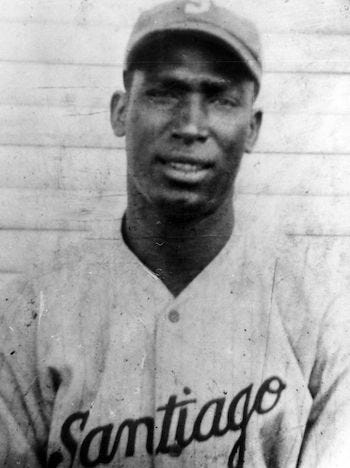
But anyone who visited Cuba heard the stories of Dihigo, the Shohei Ohtani of his day.
Dihigo is in the Mexican and Cuban Halls of Fame and also in Cooperstown. In 1938 he pitched a no-hitter in the Mexican League, went 18-2 with an 0.96 ERA and led the league in strikeouts. Dihigo spent the league championship game locked up with the opposing pitcher, Satchel Paige. He won it, 2-1, with a home run.
Buck Leonard called Dihigo “the best player who ever lived, black or white.” Johnny Mize, who played for a team Dihigo managed in the Dominican, said the same thing, and Dihigo was 38 then. “I thought I was having a good year and they were walking him to pitch to me,” Mize said.
Dihigo threw no-hitters for teams in three different countries. Counting his days in Mexico, Cuba, various winter leagues and the American Negro Leagues, he is given credit for winning 288 games, and he completed 120 games in Cuba alone. He also hit .317 in Mexico and over .300 in nine Cuban League seasons. But it wasn’t just the numbers, which Dihigo built by playing year-round. Al Campanis, the former Dodger general manager, scouted Clemente, played with Jackie Robinson and of course was all too familiar with Willie Mays. He often said he never saw a player like Dihigo.
And there were times when Dihigo let a kid carry his gloves to the ballpark. Sometimes that kid was Minoso, who would lead the American League in hits in 1960, when he was 36.
Considering the uncertainty of what’s to come, fans should know and savor the Cubans they see each night, guys like Hall of Fame-bound closer Chapman in Boston, Yandy Diaz in Tampa Bay, Randy Arozarena in Seattle, Andy Pages of the Dodgers, Yasiel Iglesias in Atlanta, Adrian Morejon of San Diego, etc. They all look up to Yordan Alvarez, as does everyone else, but the melancholy dread is that, one day, an island will come down to one man.
Comments
Nothing yet. Say the first thing.
Sign in to join the conversation.