
You probably receive more automated calls than you would like. A bank reminds you about a payment, an insurer wants you to renew a policy, a hospital confirms an appointment, or a company calls five minutes after you fill out an online form. Until recently, there was usually a person sitting in a call centre somewhere making that call. Increasingly, there might not be.
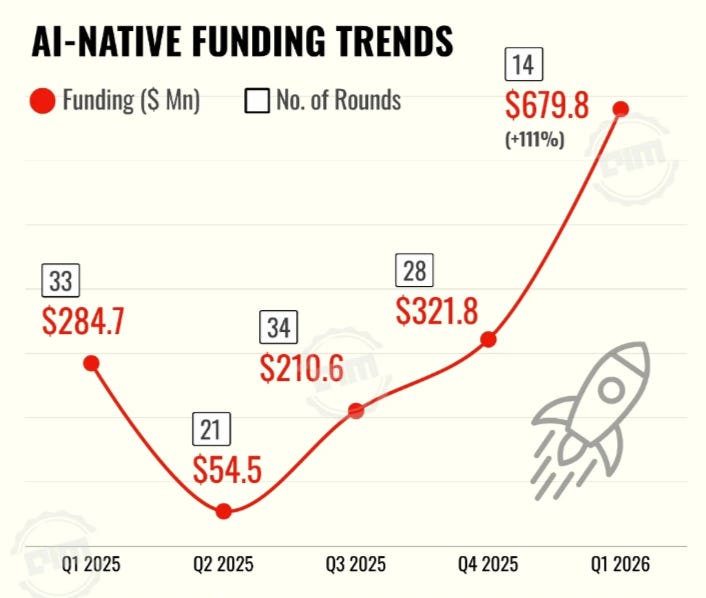
India’s Voice AI business is having its biggest funding year yet. Tracxn currently counts 31 Voice AI companies in the country, with 20 of them having raised institutional capital. Together, these companies have attracted around $449 million.
In 2026 alone, funding had reached around $329 million across five rounds by August, compared with $12.9 million during the same period last year. That works out to a 2,442% increase. A large part of this jump comes from Sarvam, which accounts for $350 million of the sector’s $449 million in total funding.
But funding isn’t the only sign of growth. Eight Indian Voice AI startups were founded in 2023, the highest for any year in the past decade. Three more appeared in 2024 and another five in 2025. The ecosystem now includes companies such as Sarvam, SquadStack, Gnani.ai, GreyLabs and Ringg AI. Seven of these companies have already reached Series A or beyond, while investors such as Accel, General Catalyst, Lightspeed, Peak XV and Elevation Capital are backing companies in the space.
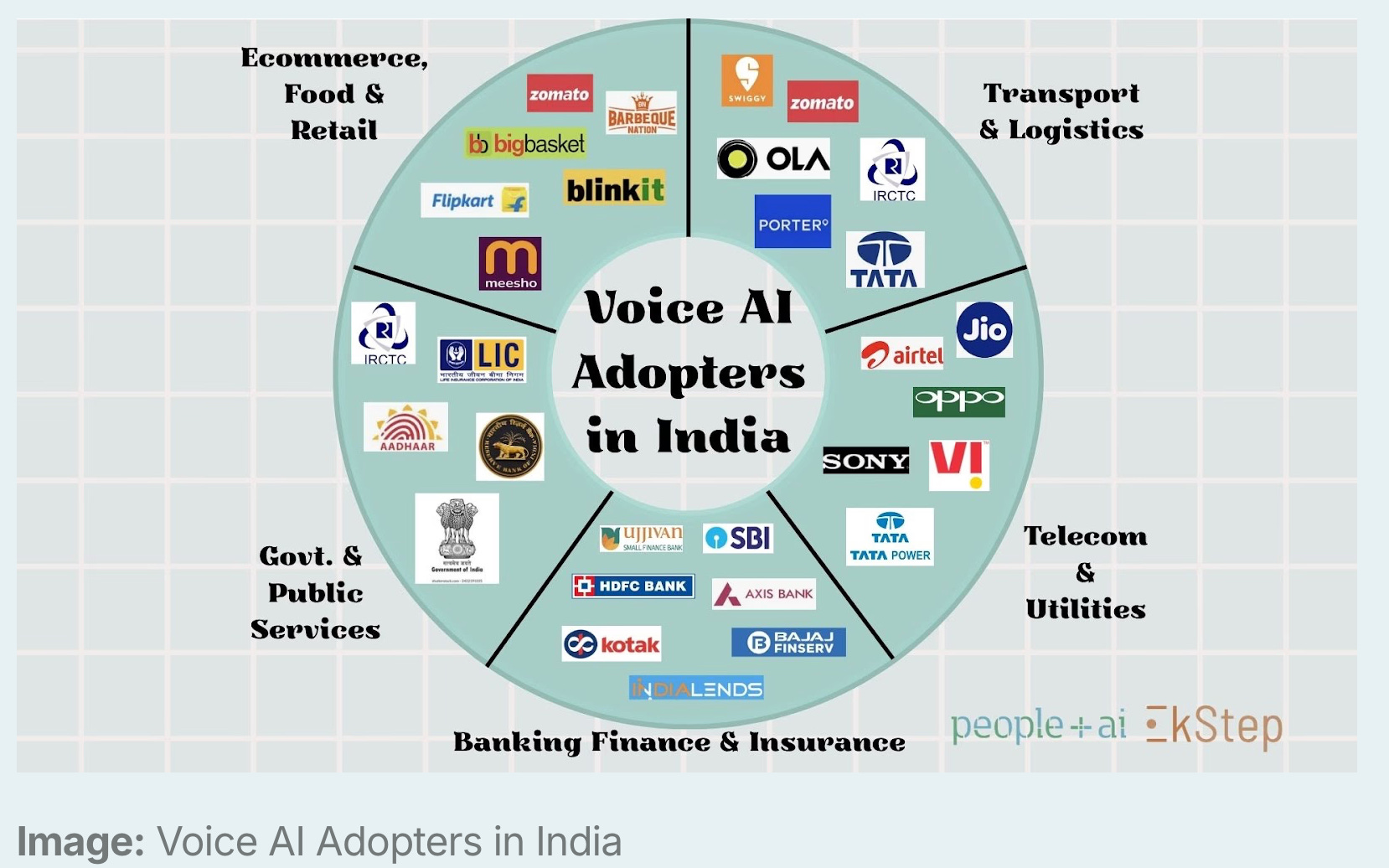
The sudden interest makes more sense when you look at what Voice AI has become. For years, talking to a machine meant listening to an IVR menu, pressing a number and hoping you eventually reached a human. Generative AI has changed what that machine can do.
A voice agent can now listen to what you say, understand the context, respond almost immediately and carry a conversation instead of following a rigid menu. Connect that agent to a company’s software and it can potentially qualify a sales lead, remind you about an EMI, confirm an appointment, answer a customer query or record why a payment has been delayed.
For businesses, that turns Voice AI into something much more useful than another AI demo. It becomes a way of automating work that already costs them money. Bolna has estimated that a human caller can effectively cost a company around ₹6-7 per minute once salary, recruitment, training, management and employee attrition are included. Its Voice AI calls, on the other hand, can cost roughly ₹2.5 per minute at scale.
The savings can become significant when millions of minutes are involved. A business handling 1 million minutes of calls a month could save around ₹35-45 lakh if its cost per minute falls from ₹6-7 to ₹2.5. That is what turns Voice AI from an interesting technology into a serious business proposition.
And this is where India becomes particularly interesting. The country spent decades building one of the world’s largest BPO industries by using relatively affordable human talent to handle customer support, sales and other business processes. Voice AI companies are now trying to automate parts of the same work.
Businesses are also becoming more comfortable paying for AI. What started as small experiments is now turning into larger contracts. In sectors such as banking, financial services, insurance and healthcare, some enterprise AI projects that began as $20,000-30,000 pilots are reportedly growing into annual contracts worth $100,000-500,000. That gives investors something much more tangible to bet on than the promise of what AI might eventually do.

Gnani.ai shows how quickly Voice AI is scaling. The Bengaluru company handles more than 30 million spoken interactions every day across 12+ languages and works with over 200 enterprises across banking, insurance, telecom, automotive and government. According to the company, its recurring revenue has been growing 2-3x annually, and it added around 120 customers over the past year. Gnani has raised $21.9 million so far.
There is another reason India is particularly suited for Voice AI: language. Conversations here rarely stay within one language. A customer might start in Hindi, use English banking terms and switch to Marathi while explaining a problem. Someone else might speak Tamil mixed with English while standing next to traffic on a weak phone connection.
India has 22 scheduled languages, hundreds of dialects and enormous variation in accents. An AI agent needs to understand all of this quickly enough to keep the conversation natural. For businesses trying to use Voice AI across the country, solving this problem determines how many customers the technology can actually serve.
That is what Indian startups are building for. Navana.ai, for example, develops voice agents across 22 languages and has worked with IISc Bengaluru on RESPIN, an open-source speech dataset containing more than 10,000 hours of audio across nine languages and 38 dialects. Gnani.ai has built its own speech and language models, while Sarvam is developing speech technology specifically for Indian languages.
So making an AI voice sound Indian is only part of the challenge. The bigger task is making sure it understands the Indian speaking back.
And understanding you is only one step. Think about what needs to happen when a bank’s AI agent calls someone about an overdue payment. The system needs to recognise who is speaking, understand the response, decide what it is allowed to say, record the outcome, update the bank’s software and sometimes transfer the conversation to a human. That requires speech recognition, language models, text-to-speech technology, telephony infrastructure and enterprise software to work together in real time.
This is where the actual competition between Voice AI startups may eventually happen. Powerful AI models are becoming easier to access through APIs, which means simply having a good model may not remain a meaningful advantage. A startup that understands Indian speech better, owns useful conversational data, integrates deeply with a bank or insurer and reliably completes an entire workflow could be much harder to replace.
There are limits to how far this automation can go. Voice agents can misunderstand people, hallucinate answers or struggle with unusual situations. Privacy and consent also become more important when conversations involve financial or personal information. Companies in regulated sectors will therefore need strict controls around what an AI agent can say, what information it can access and when a human needs to take over.
The bigger question, then, is not whether machines will replace every call-centre employee. They probably will not. What matters is how quickly the boundary between work done by people and work done by software is beginning to move. India built a huge services industry around people answering phones. Voice AI is now testing how much of that conversation can be handled by software instead.
If you made it this far, hopefully the next automated call you receive will make you wonder whether there is actually a person on the other end.
We’ll be back in your inbox next week with another business rabbit hole worth going down.
Got a story you’d like us to unpack? Send it our way. If we brew it, there might just be a little Filter Coffee surprise waiting for you.
See you on the next brew.
No posts
Comments
Nothing yet. Say the first thing.
Sign in to join the conversation.