
Hi! Hope your Sunday has begun well ☀️
Chai in hand, responsibilities politely ignored? Perfect.
If you’re going to scroll anyway, might as well make it productive.
Watch how a Bengaluru company is trying to give India its own place on the global performance motorcycle map. Electric, fast, and very homegrown.
Tanvi Dessai went inside Ultraviolette to see how they’re pulling it off.
Watch here:
There was a time when climbing Mount Everest was the kind of achievement people spent years preparing for. It was expensive, dangerous and largely reserved for some of the world’s most experienced mountaineers. Reaching the summit was never guaranteed, no matter how much preparation went into it.
Everest is still dangerous, of course.
So what changed?
Well, today, an entire ecosystem has been built around the person trying to climb it. Everest is no longer just the world’s highest mountain. Every spring, it also turns into one of the biggest seasonal businesses in the Himalayas.
Hundreds of climbers arrive in Nepal willing to spend anywhere between ₹35 lakh and ₹1 crore for a shot at the summit. This money, beyond the expedition company, travels through an enormous network of Sherpas, airlines, hotels, helicopter operators, insurers, oxygen suppliers, doctors, satellite communication providers and local businesses long before the climber gets anywhere close to the summit.
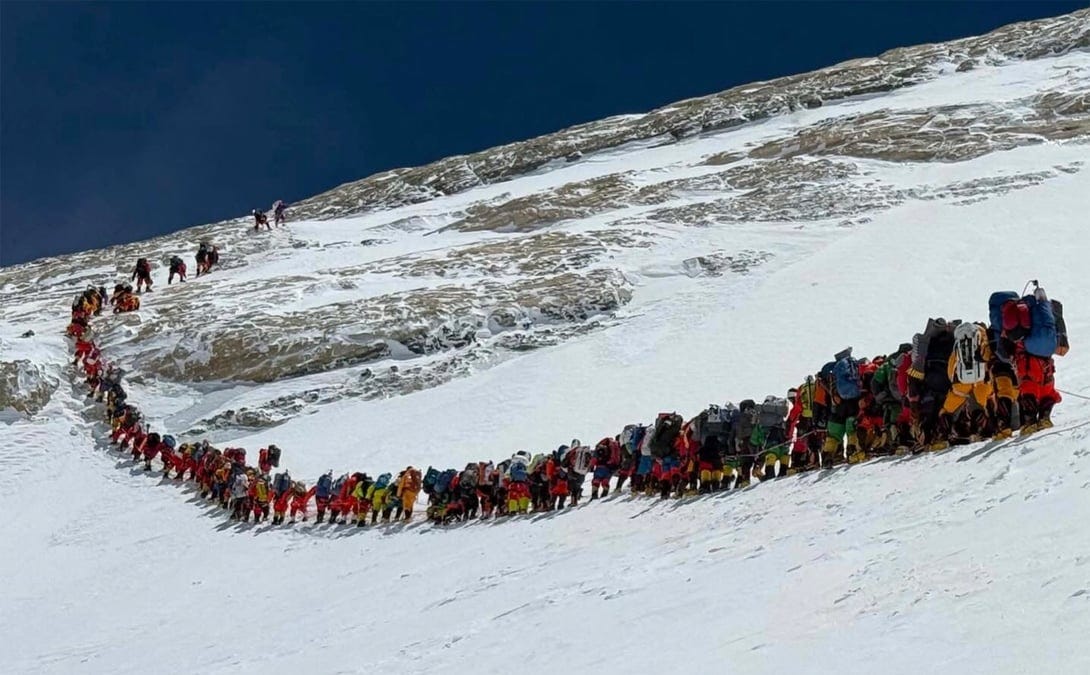
And business has never been better. The 2026 spring climbing season became the busiest in Everest’s history. Nepal issued a record 495 permits to climb the mountain, while Everest recorded 1,008 successful summit ascents during the season, also a record.
The summit tally includes Sherpas and guides, some of whom climb multiple times while supporting different teams. All those permits brought Nepal more than NPR 1 billion, or roughly ₹65 to ₹70 crore, from Everest alone.
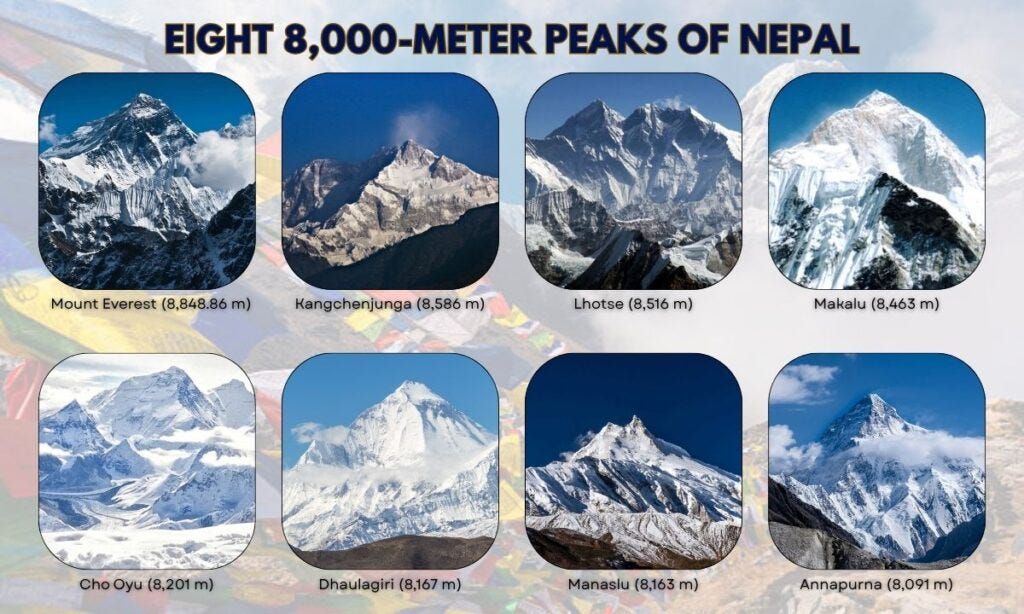
And Everest isn’t the only mountain Nepal can make money from. The country is home to eight of the world’s 14 peaks above 8,000 metres, more than any other country. But the money is surprisingly concentrated at the very top.
During the 2026 spring season, Nepal collected around NPR 1.26 billion in climbing royalties across 31 mountains. Everest alone contributed more than NPR 1 billion of that. By comparison, Lhotse, the world’s fourth-highest mountain, generated around NPR 54 million, while Makalu, the fifth-highest, brought in roughly NPR 32 million. Put simply, Everest accounted for roughly 85% of Nepal’s spring mountaineering royalty revenue.
That’s a sizeable amount for selling permission to climb a mountain, but it is only the first cheque in a much longer chain of payments.
Consider what happens when someone books an Everest expedition. Depending on the operator and level of support, the bill can range from around $40,000 to well above $100,000, roughly ₹35 lakh to ₹85 lakh. Luxury expeditions can cross ₹1 crore. Only a fraction of that goes to the Nepalese government as permit fees. To understand where the rest goes, you have to follow the climber all the way from Kathmandu to 8,849 metres.
The spending starts almost immediately after they land. Climbers stay in Kathmandu hotels, eat at restaurants and buy or rent equipment before flying to Lukla, the tiny Himalayan airport that serves as the gateway to the Everest region. Trekking agencies arrange permits and logistics, while travel companies and local transport operators handle everything required to get people and equipment moving. So even before anyone starts climbing, one Everest attempt has already generated business for several industries.
Then the climber enters the Khumbu region and an even more local economy takes over. Porters carry luggage across mountain trails and suspension bridges. Yak owners transport food, fuel and equipment. Tea houses accommodate climbers for days as they slowly acclimatise to thinner air. Guides, cooks and support workers keep expeditions moving. For many businesses along this route, the trekking and climbing seasons are not supplementary income. They are the business.
And reaching Base Camp is actually where the complicated part begins because running an expedition higher up Everest is essentially an extreme logistics operation.
Think about Camp IV. It sits nearly 8,000 metres above sea level in the “death zone”, where oxygen levels are so low that the human body cannot survive indefinitely. Most climbers spend only a few hours there before beginning their final summit attempt. Yet somebody still has to put a tent there. Somebody has to carry the oxygen, sleeping bags, food, fuel, medical supplies and other equipment needed to keep climbers alive for those few hours.
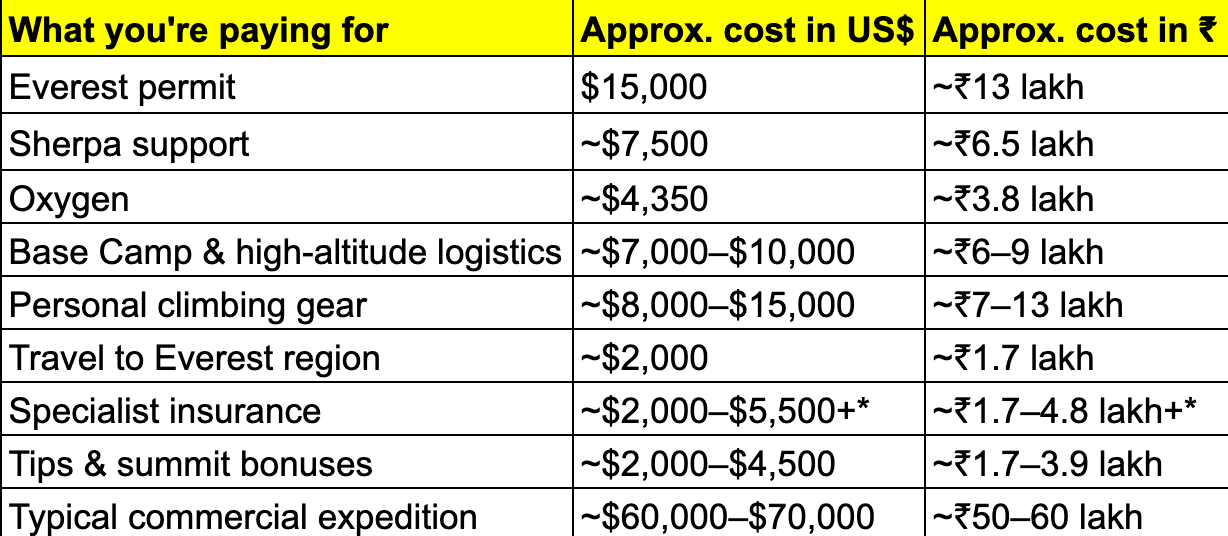
*Indicative comprehensive insurance covering high-altitude medical emergencies/rescue and potentially trip cancellation. Actual premiums vary substantially depending on the climber’s age, nationality, trip value, policy limits and coverage.
Note: These aren’t meant to be added together because expedition operators bundle several of these costs into their packages. The final bill also varies depending on the operator, level of Sherpa support, oxygen allocation and services included.
Almost everything required at these camps has to travel through some of the world’s most dangerous terrain. Establishing them can require weeks of planning and repeated journeys by highly trained Sherpas carrying heavy loads through icefalls and steep ridges. Everest may look like an adventure business from the outside, but behind the photographs is one of the toughest supply chains you could possibly design.
And much of that supply chain depends on Sherpas.
Calling them simply “mountain guides” doesn’t quite explain their role in this economy. Sherpas fix ropes, establish camps, transport supplies, carry oxygen cylinders and guide clients through dangerous sections of the mountain. Some make multiple summit attempts during the same season while supporting different expeditions.
Experienced high-altitude Sherpas can earn between $5,000 and $10,000 or more during a climbing season, making it one of the better-paying professions in Nepal.
Their expertise has also become an export of its own. Experienced Nepalese mountaineers now work on expeditions in Antarctica, Alaska, South America and other extreme environments. In a strange way, Nepal isn’t only selling access to its mountains. It has also developed a workforce with skills valuable on mountains around the world.
Then there is oxygen. For most commercial climbers, attempting Everest at nearly 9,000 metres without supplemental oxygen would be extraordinarily difficult. A climber may use five to eight cylinders during an expedition, with each cylinder costing hundreds of dollars even before transport is considered.
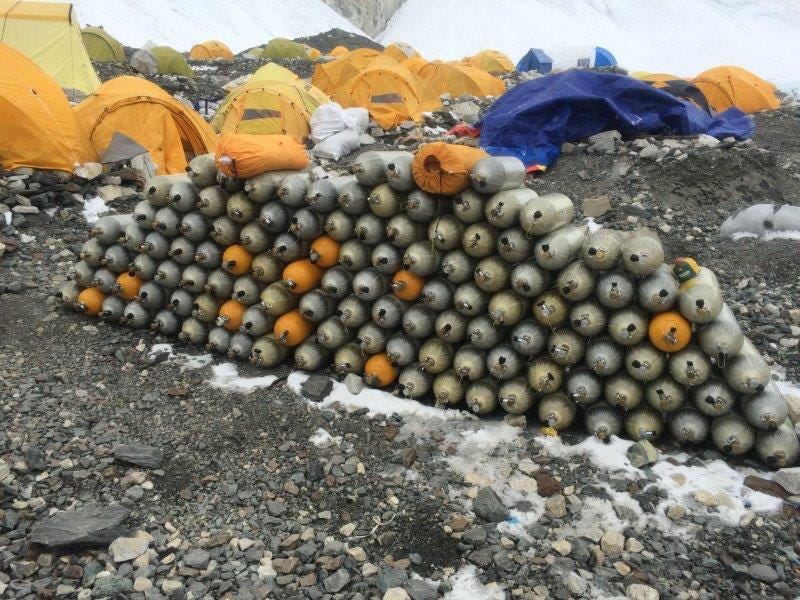
And getting oxygen to Everest isn’t like ordering a cylinder on Blinkit. It needs to be manufactured, filled, tested, transported across countries, moved through Nepal and eventually carried by people to camps thousands of metres above Base Camp. Multiply that by hundreds of climbers and their guides every season, and oxygen alone becomes a specialised international supply chain.
But what happens when something goes wrong? With so much money riding on an expedition this risky, insurance becomes a big part of the equation.
Your regular holiday travel policy usually isn’t enough. Many policies exclude high-altitude mountaineering beyond specific limits, which means Everest climbers need specialist adventure insurance covering extreme altitude, emergency treatment, evacuation and, depending on the policy, accidental death and repatriation.
The really interesting part is what happens after the policy is sold. A helicopter evacuation in the Himalayas can cost anywhere from $5,000 to $10,000 or more, and insurers often end up footing that bill. So insurance doesn’t merely compensate climbers after an accident. It effectively helps finance a significant part of Nepal’s mountain rescue ecosystem, connecting climbers with helicopter companies, hospitals, rescue coordinators and medical providers.
Technology has found its way into this ecosystem too. Satellite internet connects Base Camp with the outside world. Weather forecasting companies help expedition leaders identify the narrow windows when conditions might allow a summit attempt. GPS devices and satellite communicators help teams track climbers, while wearable devices can monitor health data at extreme altitude.
Each technological improvement can make expeditions safer or easier to manage, but it also creates another business serving people willing to spend heavily on reaching the top.
And that brings us to perhaps the biggest change in the Everest economy: the customer.
Everest was once overwhelmingly the domain of highly experienced mountaineers willing to accept enormous uncertainty and relatively basic conditions. Today, part of the market looks increasingly like premium adventure tourism. Some expedition packages cost more than $150,000 and offer private Sherpa support, additional oxygen, heated dining tents, satellite internet, dedicated weather forecasting and enhanced medical backup.
Nobody has made Everest easy. The altitude remains the same, the weather remains unpredictable and the mountain can still be deadly. What companies have done is make everything surrounding the climb more sophisticated, comfortable and manageable for people who can afford it.
That demand gave Nepal something businesses dream about: pricing power. The government has increased the cost of Everest permits over time, yet climbers continue to come. Most tourist destinations risk losing customers when prices rise. Everest has an unusual advantage because there isn’t another Everest down the road offering a cheaper package.
Nepal is home to eight of the world’s fourteen mountains above 8,000 metres, including the highest one. It is selling access to geography, and geography is rather difficult to copy.
That doesn’t mean the model can grow forever without consequences. More climbers concentrated into narrow weather windows can create dangerous queues near the summit. Climate change is making glaciers and icefalls more unstable, potentially increasing operating and insurance costs.
That leaves Nepal with a tricky equation. More climbers mean more permits, more jobs and more money flowing into the Himalayan economy. But more climbers also mean greater pressure on routes, Sherpas, rescue systems and the mountain itself. Nepal cannot simply keep adding people to Everest and expect the economics to work forever.
And that is what makes this business so unusual. Over decades, Nepal has built an entire commercial ecosystem around access to that geography, turning a few weeks of climbing every spring into income for guides, hotels, airlines, helicopter companies, insurers, equipment suppliers and entire mountain communities.
But Everest also comes with a constraint most businesses don’t have. You can build another hotel, buy another helicopter or hire another guide. You cannot build another Everest.
For Nepal, the next phase of the mountaineering economy will therefore be less about getting more people onto the mountain and more about making every climbing season safer, better managed and more valuable.
A small note before we go.
The inspiration for this story came while reading about the passing of Nims Dai and his fellow mountaineers. Reading about their lives sent us down a rabbit hole into the mountaineering economy, particularly the world around Mount Everest.
That got us curious. What actually happens when someone decides to climb Everest? Who gets them there? How does oxygen reach 8,000 metres? Who pays when a rescue is needed? And how many people and businesses depend on that one decision to climb?
One question led to another, and eventually to the story you just read.
May Nims Dai and his fellow mountaineers rest in peace 🤍
Hope you enjoyed this slightly different rabbit hole. We’ll be back next week with another one.
No posts
Comments
Nothing yet. Say the first thing.
Sign in to join the conversation.