
Since its earliest days Hollywood has been known as ‘the dream factory’ and as we all know dreams come in many forms, including nightmares. Every organisation likes to tell stories about itself, especially the stories they’d like others to hear and there is no organisation more equipped to tell a good story than the film industry.
Those in the industry more than happy to tell horror stories, tales of woe or precautionary tales as in many ways they serve to make Hollywood’s fairytales much more appealing. I think their favourite storyline is the rags to riches story, followed closely by the riches to rags story, and maybe even a combination of the two. The rags to riches to rags take is how the story of Marie Provost has been framed, so in this post we’re going to sort fantasy from fact.
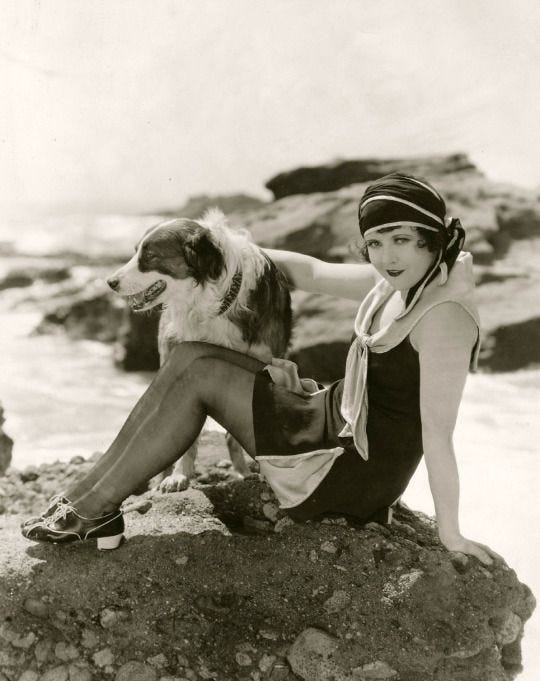
Marie Prevost was a Canadian-born actress who over a 20-year career made 121 films that included both silents and talkies. Her career started in 1915, at the age of 18, after she landed a job as a secretary in a law firm which represented the Keystone Film Company. While running an errand at the Studios she was hastily pushed into a bit part in His Father’s Footsteps. Mack Sennett, impressed by her big, bright eyes, her natural comic sense and her on-screen allure subsequently summoned her to his office where he signed her to a contract and turned her into one of his “Bathing Beauties”.
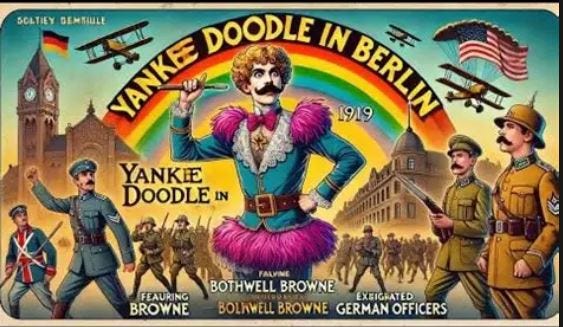
Initially cast in minor comedic roles as the sexy, innocent young girl, in 1919 she was given the lead in Yankee Doodle in Berlin. The film was a hit and was quickly followed by the romance Love, Honor, and Behave, another hit. By 1921 Prevost wanted to move to a studio less interested in making money and more concerned with creativity. She signed with Universal where Irving Thalberg took an interest in her and her star potential. She received a great deal of publicity with Thalberg staging a promotional event at Coney Island where she marked the end of her days as a bathing beauty by burning her swimsuit.
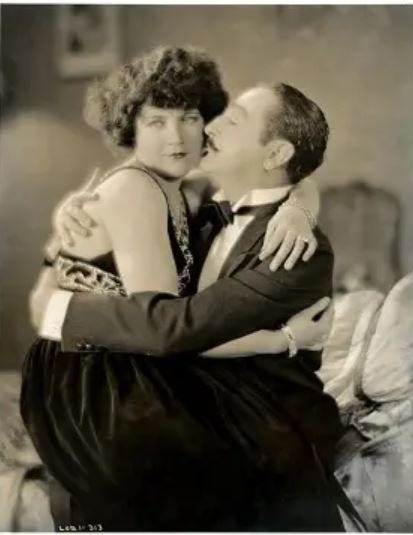
At Universal Marie remained stuck in light comedies, so she moved again, this time to Warner Bros where her career flourished largely as a result of working with Ernst Lubitsch. Following good reviews in The Beautiful and Damned Lubitsch cast her opposite Adolphe Menjou in The Marriage Circle. More good reviews followed and Lubitsch cast her again in Three Women and then in Kiss Me Again. Under his guidance she developed a sophisticated, nuanced performer and came to be seen as the embodiment of the Jazz Age’s modern woman.
In 1926 Marie met with successive misfortunes. Warner Bros. decided to not renew her contract nor that of her husband Kenneth Harlan. A short time later Marie’s mother Hughina died in an automobile accident alongside actress Vera Steadman and studio owner Al Christie when their vehicle overturned. Many believe that these events and her subsequent marriage problems fuelled her depression and her descent into alcoholism.
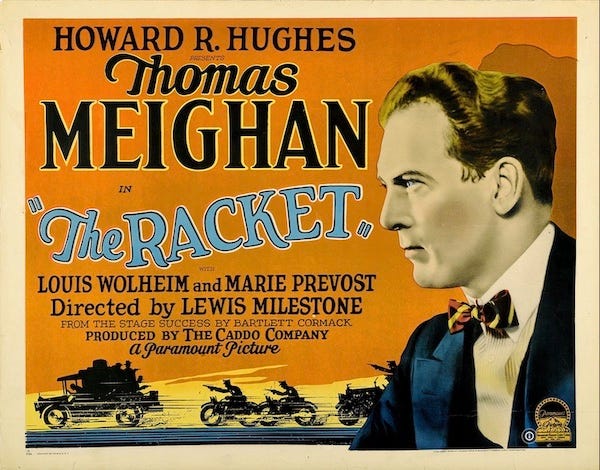
Marie began burying herself in her work, starring in numerous roles as a temptress who by the end become an honorable heroine. After seeing Prevost in The Beautiful and Damned Howard Hughes cast her in what was her last leading role in The Racket. As was often the case with Hughes, he had a brief affair with Marie which left her heartbroken and even more depressed.
Her depression also led to binge eating and significant weight gain while she struggled to get any work beyond minor or supporting roles. Cecil B. DeMille did offer her a co-starring role in his final silent film The Godless Girl opposite Lina Basquette. Prevost was reportedly comfortable with her diminished status, enjoyed good reviews for her role in the film and was signed to a contract with MGM.
She continued to worked steadily in supporting roles, alongside Joan Crawford in Paid, with Academy Award winner Helen Hayes in The Sin of Madelon Claudet and in Three Wise Girls with Jean Harlow. By 1934, she was out of work, she was struggling financially and her weight problems led to crash dieting as she chased bit parts. She made her last on-screen appearance as a waitress in Ten Laps to Go.
Prevost died in January 1937, at the age of 40, from a combination of acute alcoholism and malnutrition. Her body was not discovered for several days after neighbours complained about her dog’s incessant barking. A houseboy found her body and when Police entered they found several empty liquor bottles along with a promissory note to Joan Crawford for $110. In an attempt to wake her the dog had bitten at her legs and this was the source of the rumour that she has been partially eaten by her dog, which was not true
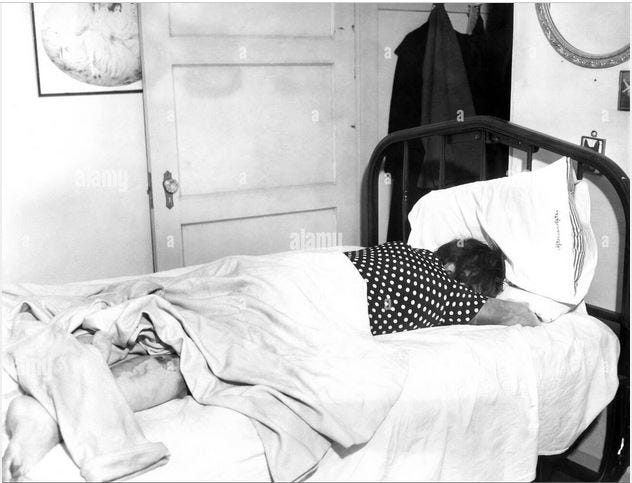
Her funeral (which was paid for by Joan Crawford) at the Hollywood Memorial Cemetery was attended by Crawford, Clark Gable, Wallace Beery, Douglas Fairbanks Jr., Mack Sennett, and Barbara Stanwyck. Prevost’s sister had her remains cremated and combined them with those of their mother and took them away with her. The location of her ashes is now unknown.
Prevost’s impoverished circumstances inspired columnist Louella Parsons to advocate for better care for destitute film workers and set in motion the establishment of the Motion Picture & Television Country House and Hospital which provided medical care for employees of the television and motion picture industry who didn’t have the means to look after themselves.
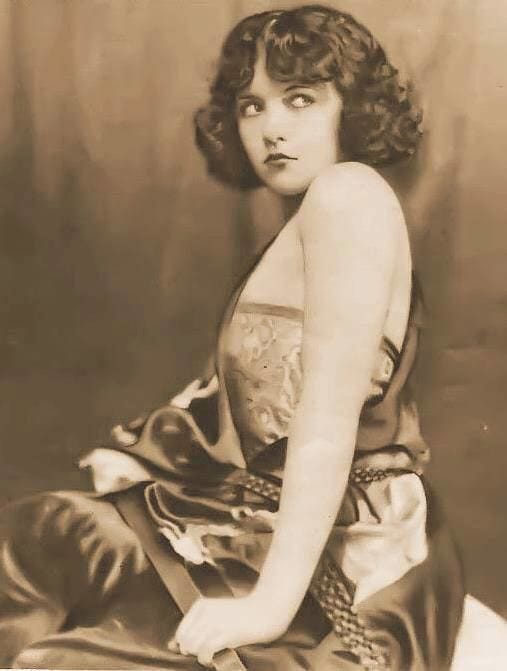
In 1960 Marie was post-humously honoured with a star on the Hollywood Walk of Fame. And while about 75% of all American silent films have been lost Marie’s films have fared slightly better with several of her early Mack Sennett silent shorts and a number of her features from the 1920s widely believed to be lost or to survive only in fragments. If you choose to check out some of her surviving silent films you’ll surely see what it was that excited audiences at the time.
Comments
Nothing yet. Say the first thing.
Sign in to join the conversation.