
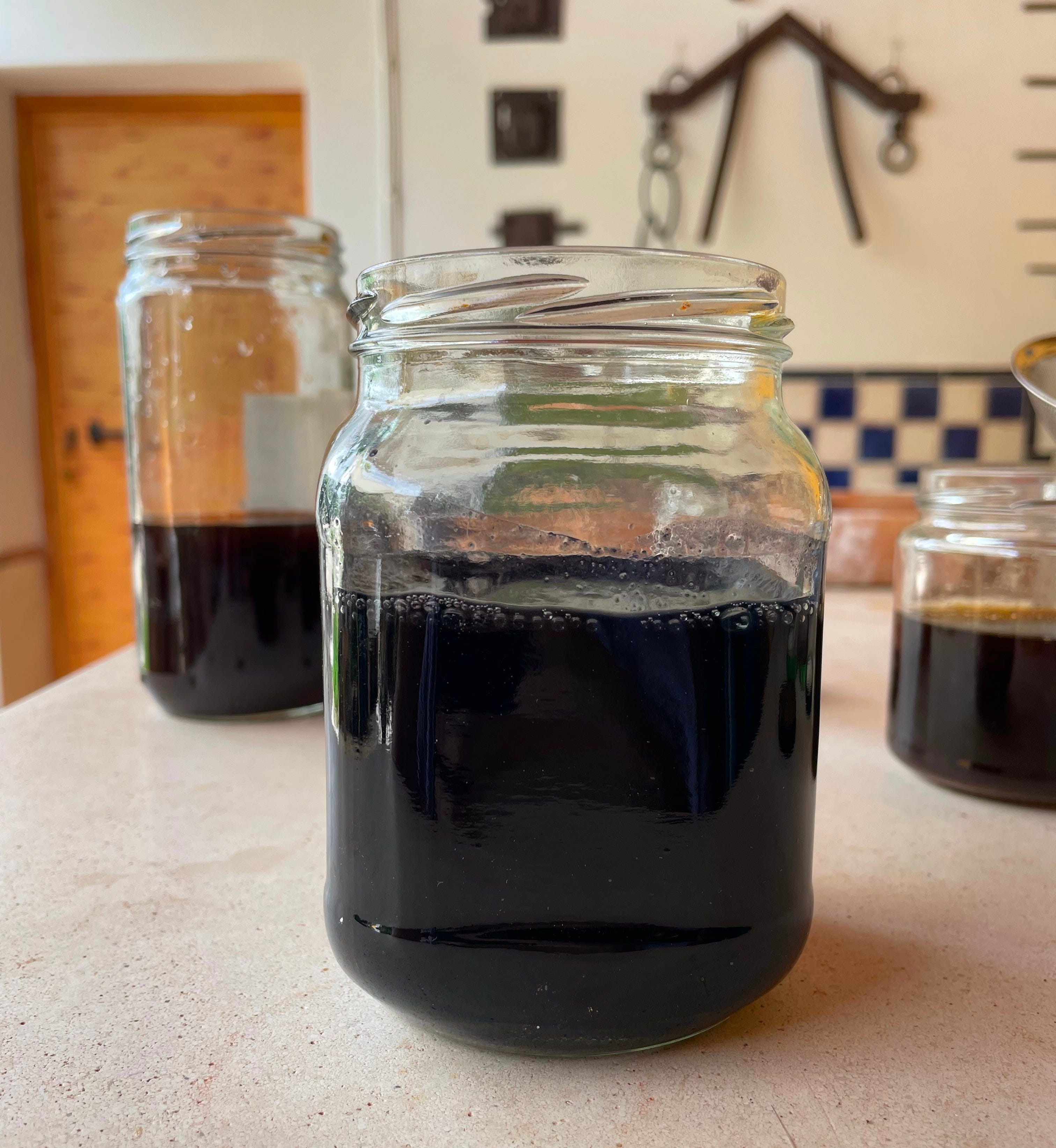
In this post of the Pigment Guide, we turn away from mineral pigments to learn about ink. Ink has been prepared for millennia to write (and to make tattoos, which I will cover soon in another post). Iron gall ink is one of the most classic recipes, and very popular during the Middle Ages.
Conservation studies about iron gall inks have increased exponentially in the past years. The reason is that this type of ink eats away paper and parchment over the centuries, and old texts are consequently lost. In order to prevent their disappearance, there are numerous conservation studies trying to understand the chemistry of old recipes, and how to preserve texts written with this kind of ink.
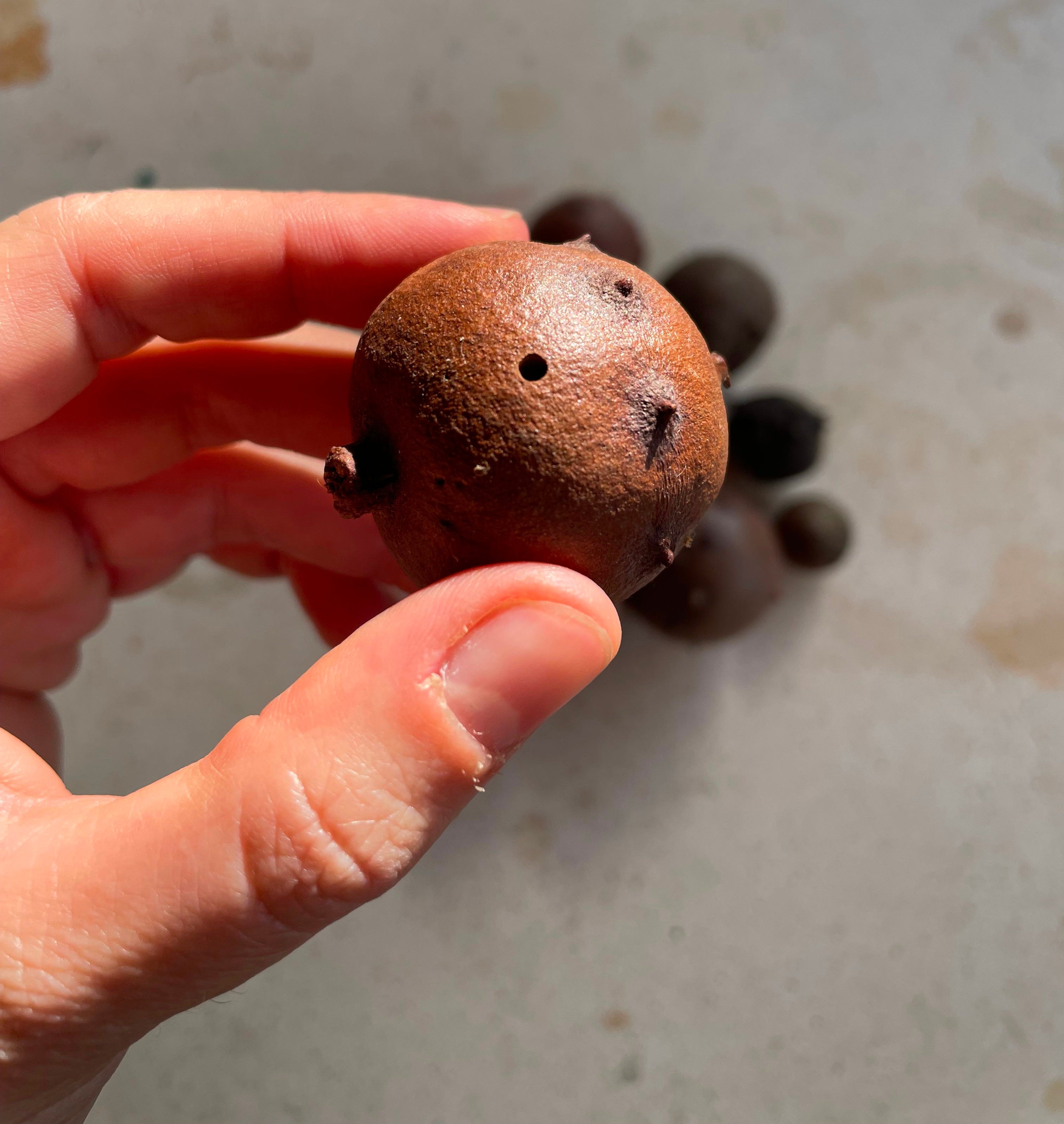
The main ingredients to make iron gall ink are, of course, iron and oak galls. The first mention of nut gall ink found in ancient texts comes from Pliny the Elder’s Natural History. Curiously, he doesn’t describe it as ink per se, but as a way to detect the authenticity of verdigris (copper acetate), a green pigment:
The adulteration, however, which is the most difficult to detect, is made with copperas (…). The fraud may also be detected by using a leaf of papyrus, which has been steeped in an infusion of nut-galls; for it becomes black immediately upon the genuine verdigris being applied.1
Oddly enough, his trick doesn’t work, because the reaction to the gallic acid (the pigment turning black) only happens when there is iron present in the pigment, but not with true verdigris. The verdigris had to be adulterated with iron to react that way. What he recommends has the opposite effect of his intention. Only with the fake verdigris (copperas) would the nut-galls infusion turn black.
However, his account tells us that in the 1st century CE it was already known that the galls’ powder reacted to metallic salts, changing color, even if Pliny didn’t know that iron was the metal causing this chemical reaction.
There are typologically distinct inks as early as the 3rd century BCE. From that time to the 5th century CE there were pure soot or charcoal-based inks; soot inks with the addition of copper or lead; mixed inks containing soot and iron-gall inks or tannins; and pure iron-gall inks2.
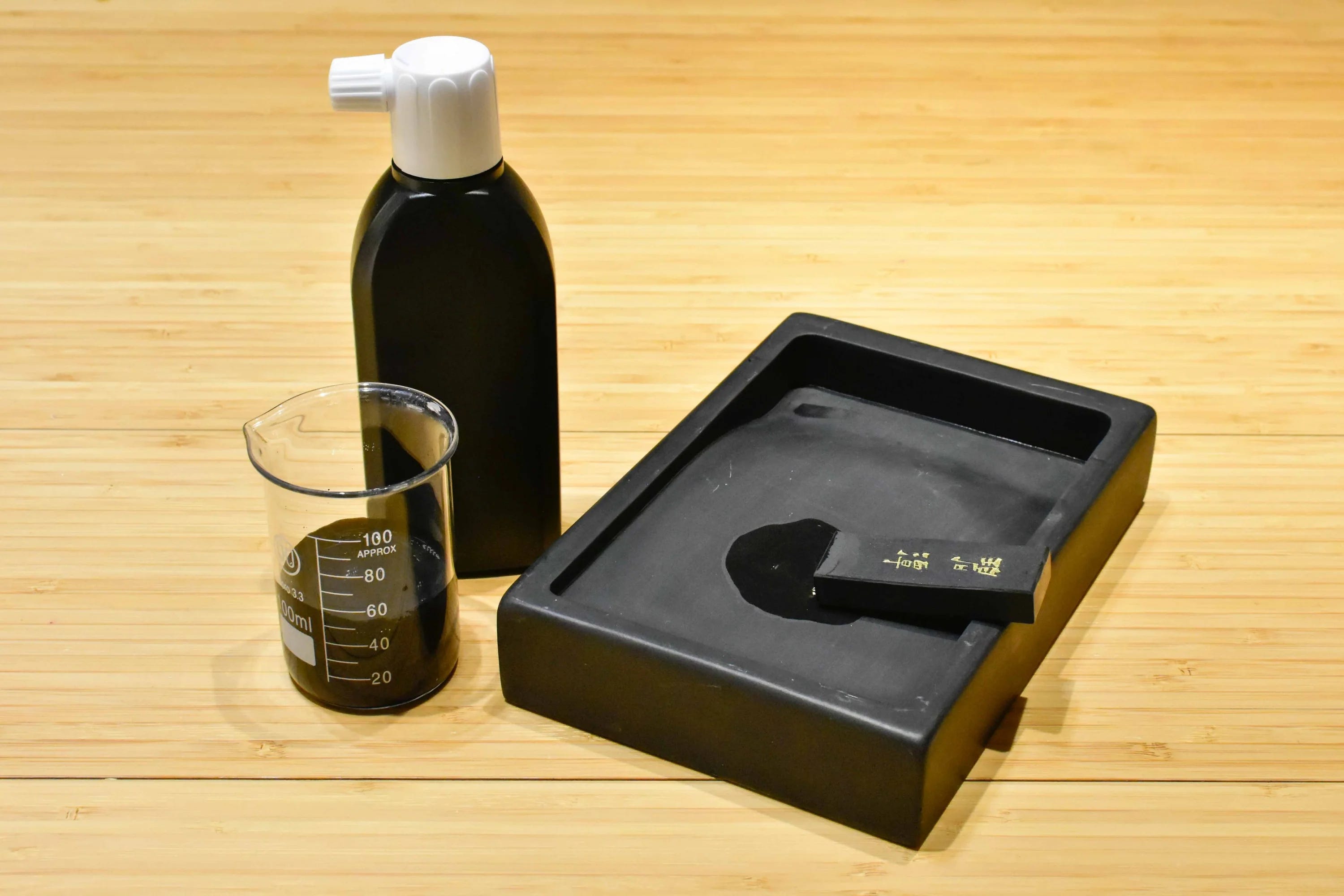
Most inks from Antiquity were made mixing soot or charcoal with a binder dissolved in a water-soluble medium. The typical binders for these inks were gum Arabic (in Egypt) or animal glue (in China). The inks were stored as dry cakes, and had to be mixed with water at the moment of writing (this is still done in Japan, they sell these pretty solid bars of ink that you have to rub on a with water to make into ink).
Iron gall inks are stablished by the 5th century CE in the Middle East, where all the recipes most likely originated (more about this below). The confusion between using iron and copper continues until at least the 10th century. I haven’t seen an explanation for this confusion, but my interpretation is that it comes from the name ‘copperas’ (caparrosa in the Spanish sources). The word copperas seems to imply ‘copper’, when it is in fact iron sulphate (also called vitriol). Copper sulphate and iron sulphate were mixed up in early recipes.
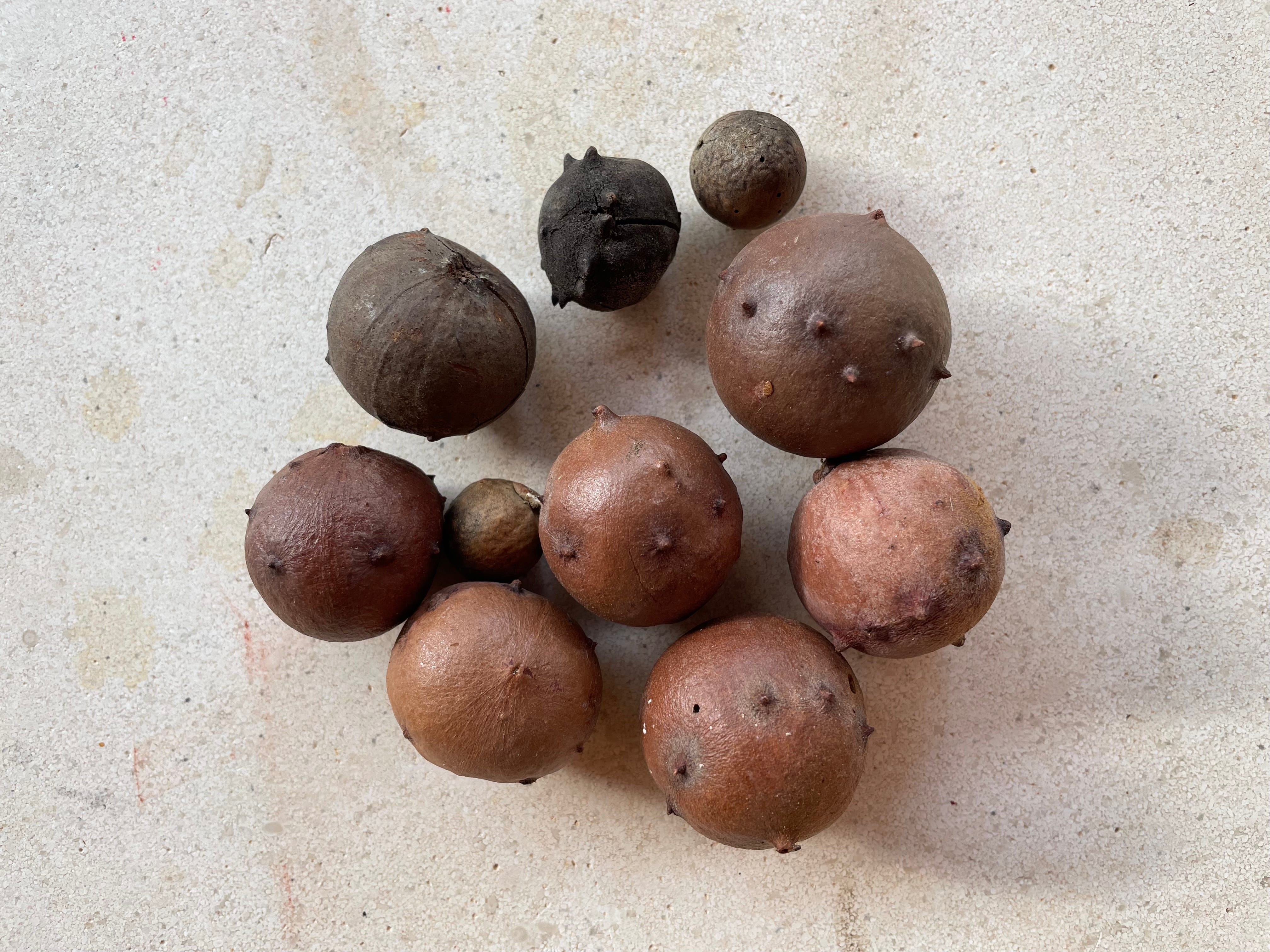
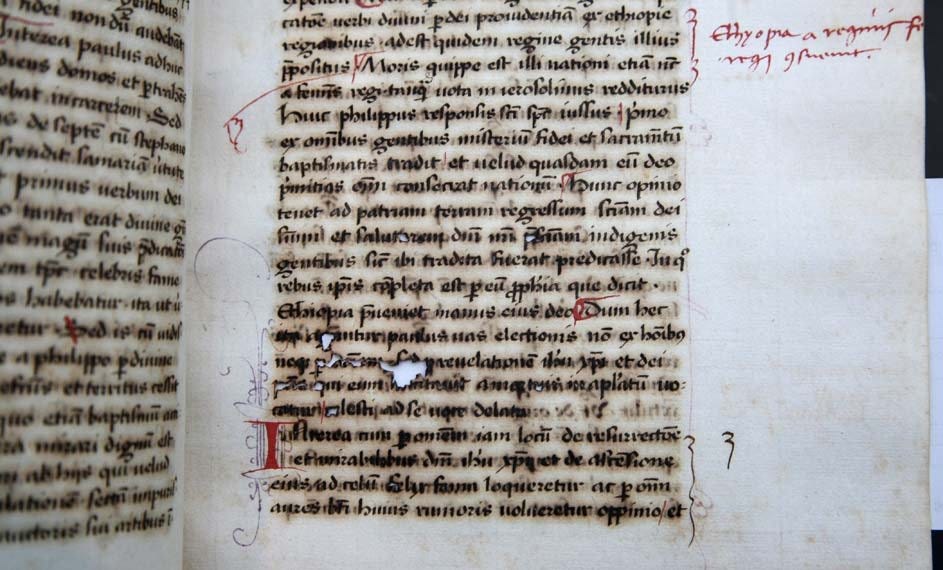
Iron gall inks became dominant during the Middle Ages all around the Mediterranean. It became the ink used in Christian monasteries, which is why most texts from the European Middle Ages were written with this kind of ink, instead of charcoal-based inks. The supremacy of iron gall ink continued until the 19th century, when aniline dyes finally replaced them.
I’ve found several recipes from manuscripts in Spain’s National Library. Although the manuscripts are from the 16th century, the origins of the recipes are probably older—from medieval Spain—which means they are of Moorish origin. Oak gall inks came to Spain from the Middle East, same as gum Arabic. Much knowledge got to Europe through al-Andalus, with botany probably being the most important.
For many centuries, there wasn’t a single recipe for iron gall ink, but dozens with small variations. Every scribe had their own method, probably born out of their own experimentation. The main ingredients though, are always the same: oak galls, iron salts, and gum Arabic. The process could change greatly though: from 3 to 15 soaking days, leave the mix in the sun or don’t, boiling, (sometimes at first, sometimes at the end), or the addition of other ingredients to change the color or texture of the ink.
Juan Vázquez del Mármol was a priest and proof-reader of books for the Council of Castilla in the 16th century. He served as chaplain in the Royal Chapel of Granada, but had studied theology at the University of Salamanca, and wrote several books throughout his lifetime. He collected, from other manuscripts, a recipe book to make all kinds of inks, plus a few secrets like how to make golden lettering without gold, or silver lettering without silver.
Comments
Nothing yet. Say the first thing.
Sign in to join the conversation.