
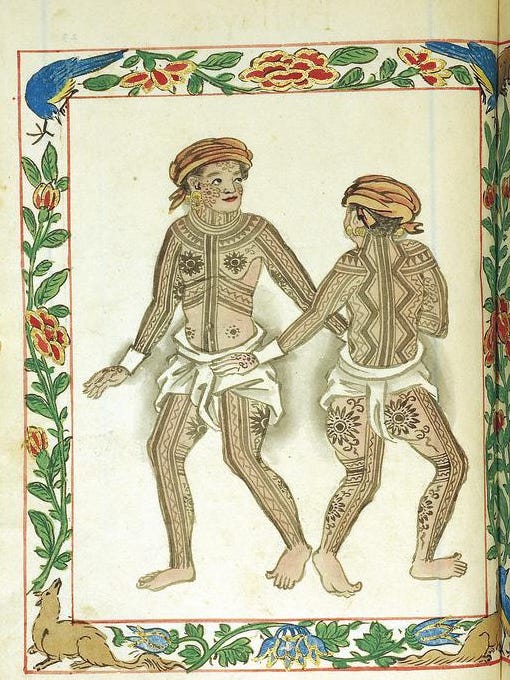
I was recently attending an online talk by Lanae Cable, a member of the Maori research collective Kauae Raro. While listening, I suddenly wondered about ochre and tattoos. Tattooing is an important Māori tradition and ochre is also an important part of Māori culture, but I’d never seen ochre tattoos—only in black.
When the talk finished, I asked her if ochre was used in Māori tattooing and she said that it wasn’t. This prompted more questions in my head: why not? Is it unhealthy to use mineral pigments for tattooing? Why are most tattoos black and with what materials were they made in ancient times? This, as always, is a lacuna in artistic, historical and museum research in general. We tend to think about symbols and meaning, but rarely wonder about materials.
Wondering about the first tattoos is as much a guessing game as it is to wonder about any other prehistoric practices where material remains are scarce—or absent altogether. It is assumed that one of the first symbolic practices ever carried in the Middle Stone Age had to be body painting—the body was, most likely, the first canvas.
We have some certainty that Paleolithic peoples entering caves had their bodies painted with red ochre, or their clothes painted with red ochre, because there are many red stains on the walls of narrow passages that cannot be explained any other way than paint-covered people rubbing against the walls when crawling by.
To know about the first tattoos is more difficult. We know that the oldest tattooed body found so far is Ötzi the Iceman, a man who died in the Alps 5200 years ago. He had 61 tattoos all over his body, and the environmental conditions in which he died, allowed for an exceptional preservation of his tattooed skin. This tells us that having tattoos might have been a common practice during his lifetime, and probably older, even if we don’t have concrete proof beyond him.
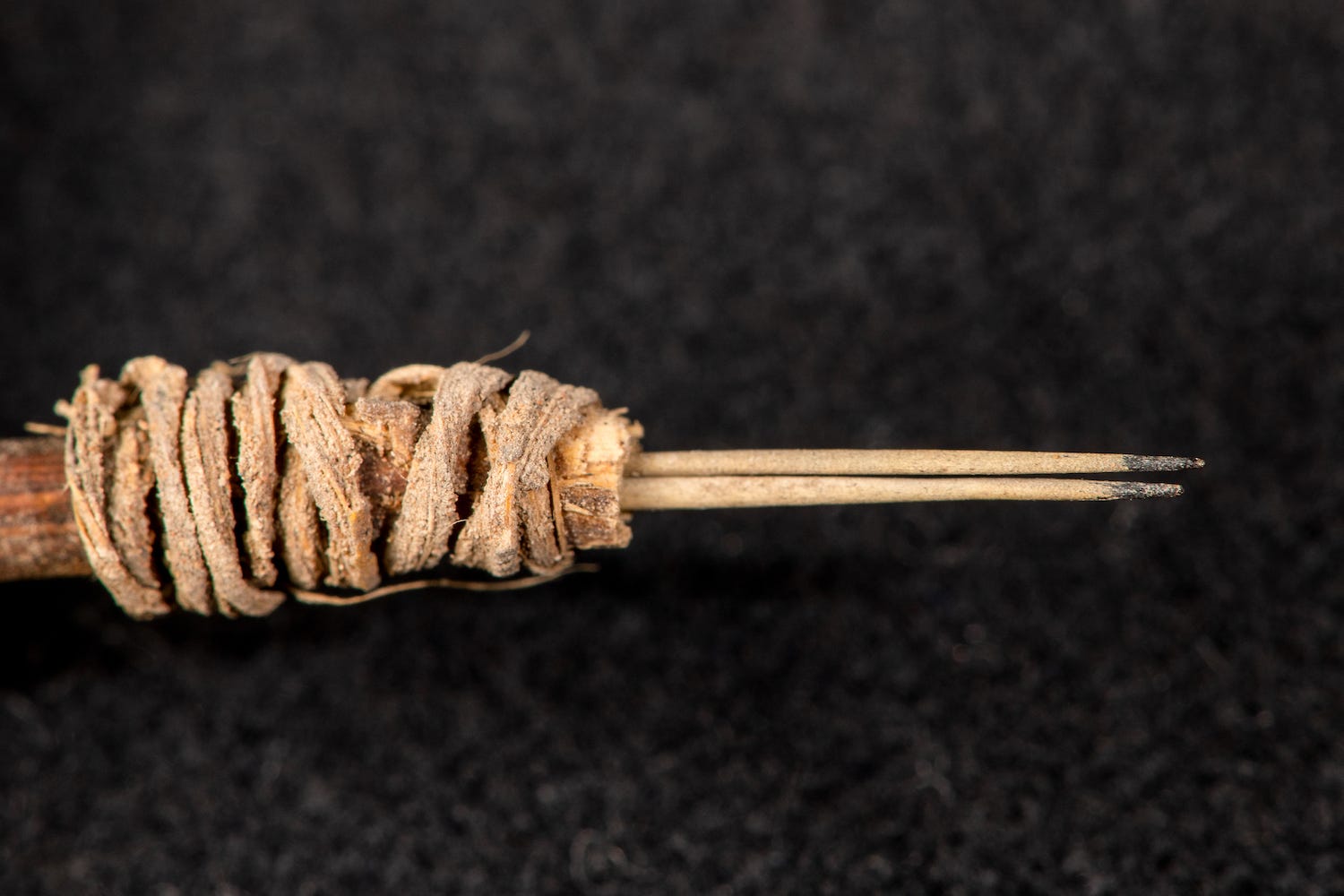
For a while, it was assumed that Ötzi’s tattoos were made as small cuts on the skin where the charcoal had been rubbed in, but a recent experiment carried out by archeologist Aaron Deter-Wolf along with tattooists Maya Sialuk Koch Madsen and Daniel Ridday proved otherwise. Ridday volunteered to try different tools to mark his own skin, and the whole process of healing was documented and compared with Ötzi’s tattoos.
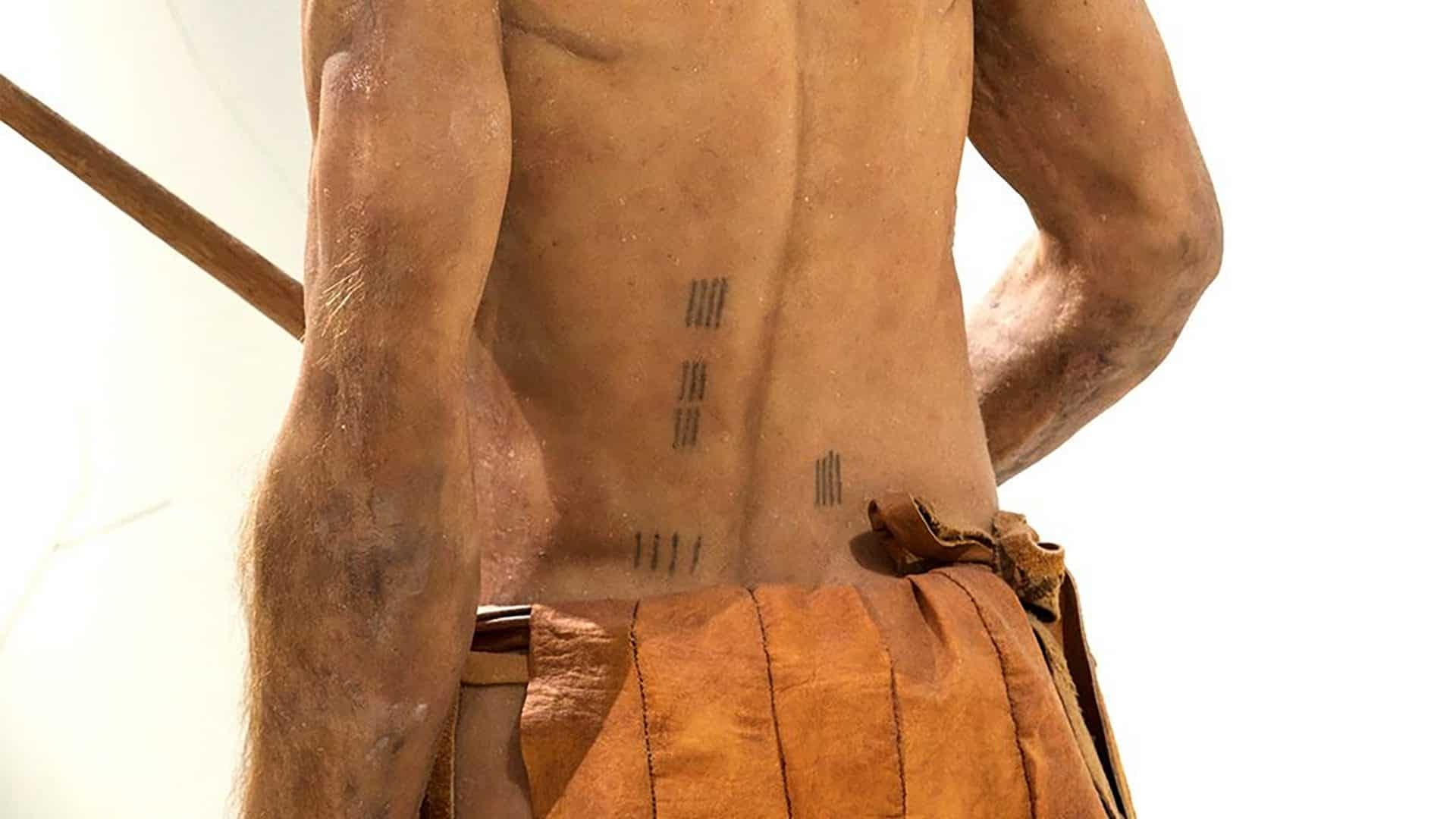
The results were a surprise, because Ötzi’s tattoos were more similar to the ones made in the hand-poking technique than to any of the others (including the slice-and-rub method, or the Inuit sewing of the skin with an ink-soaked thread). I haven’t found definitive proof of what the ink contained, but most of the studies suppose it was pulverized charcoal.
Besides the myth that Captain Cook was the first westerner to see tattooed people (he wasn’t, neither he brought the first tattooed people to Europe), Western culture has had long-held prejudices against tattoos—prejudices that reach our present day.
However, until the 20th century, a very high number of peoples practiced tattooing for cultural and spiritual reasons, and it wasn’t until the first half of the century that the practice started disappearing altogether worldwide. The disappearance was a result of some cultures rejecting tattoos, mainly Christianity, Islam, and Imperial Japan and China.
Christian missionaries rejected tattoos for being a practice foreign and strange to them, and Islam because it is forbidden to alter the body you were given by God. In the case of China and Japan, it was a way to assimilate indigenous people into the elite’s culture, and later, during the People’s Republic of China, a way to end what it was seen as barbaric and superstitious customs.
In our modern view, tattooing has more to do with drawing than with writing, but in most indigenous cultures all over the globe, the words used to describe ‘tattooing’ and ‘writing’ are synonymous. In contemporary Western culture, tattoos are mainly perceived as an ornament, but in ancient and indigenous traditions tattooing is fundamentally understood as a form of writing on the skin. Tattoos were a visual language that other people could read, and they told stories about:
identity, genealogy, status, achievement, and medicine, as well as ontological relations with ancestors, spirits and animals.1
An interesting aspect about traditional tattoos is that most of them were abstract and geometric designs: lines, dots, diamonds, circles, triangles, crosses…figurative designs (like animals) are scarce until the 19th century, and when they appear they are usually schematic representations, not realistic.
Tattoos had many functions. The most common were apotropaic (to ward off evil), medicinal (applied on areas where there was pain), ethnic identity (belonging to a particular people), a coming-of-age mark to show you’d become an adult (for both boys and girls), to increase fertility, and for beautification.
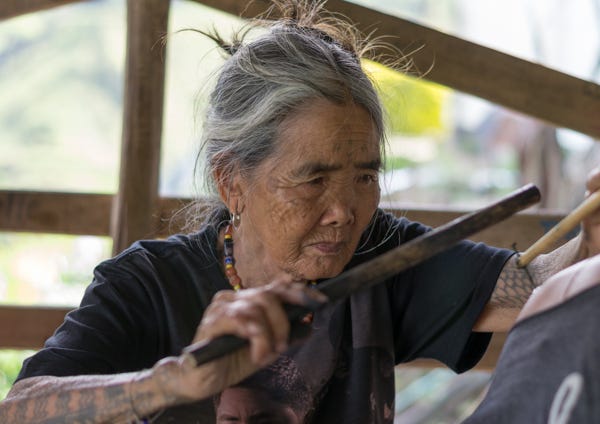
The most important function might have been the connection to the ancestors. One of the most extended believes was that your ancestors wouldn’t recognize you in the afterlife without your tattoos, or that you couldn’t cross to the other side after death without them. Tattoos were a kind of cosmic passport that allowed a peaceful transition to the afterlife, and that you’d be embraced by your ancestors once there.
In most cultures, women were more likely to have tattoos and to be the tattooers. Being a tattoo artist was a revered profession. In some cases, elderly experienced women fulfilled the role of tattooists—sometimes the women of your own family—and other times it was a job carried by a specific person. It was a sacred labor, and usually accompanied by rituals, offerings, praying, etc.
In the traditions where men were the tattooers, tattoos were usually connected to a warrior culture, and were an expression of your bravery in the battlefield. In both cases, the work of a tattooist was highly valued and getting a tattoo could be very expensive, requiring payments only the elites could afford.
There were rules and taboos before, during and after receiving a tattoo. Some of the most common were fasting, both before, but especially after the tattoo had been applied, not being touched by anyone for a few days while the skin was healing, and other people were forbidden to watch the act of tattooing.
The practice was strongly gendered: the purpose of the tattoo, the design, the part of the body where it was applied, and the tattooer were all determined by the sex of the person receiving the tattoo. In a huge generalization, women’s tattoos had more of a spiritual motive—the connection to the ancestors was more likely to fall under women, as well as the role of priestesses, because they were considered to be more in tune with the spiritual realm. They also got tattoos for fertility and beauty.
Men’s tattoo culture was mainly about war and hunting. Warriors got tattoos as marks of honor, because of feats in battle, after slaying their enemies, etc. They gained the right to have a tattoo after concrete achievements—killing their first enemy in battle—and they proudly showed these marks of courage. Tattoos were also connected to “being a real man”—it was those achievements that qualified you to fully be an adult man in the tribe, and only after them did you have the right to get married.
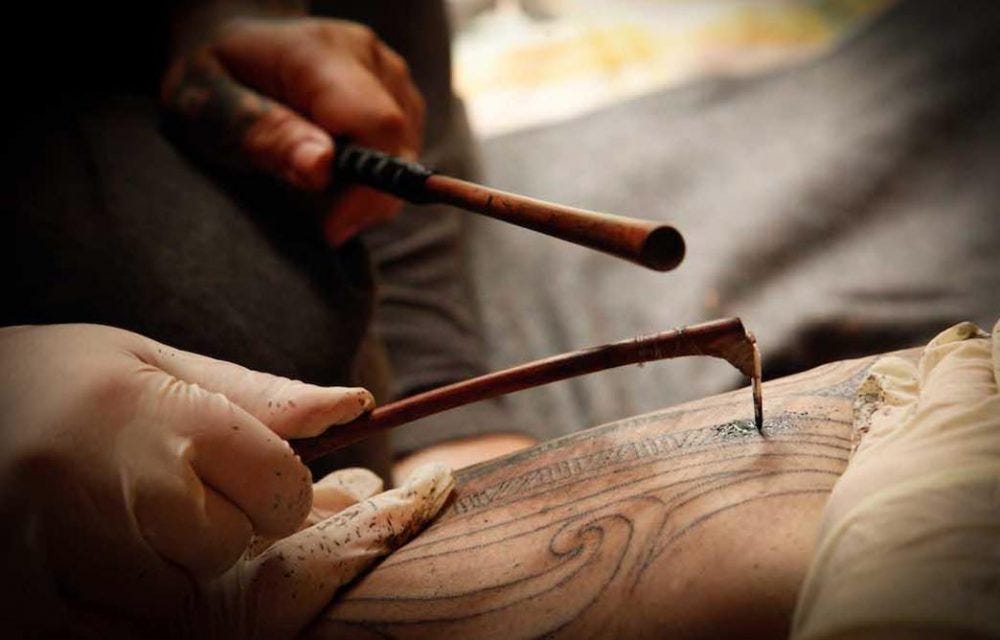
Nevertheless, both men and women shared some fundamental aspects of tattooing: belonging to an ethnic group, being able to join the ancestors in the afterlife, coming of age (the endurance of the pain was an important aspect for both girls and boys—they proved their courage this way) and tattooing for medicinal purposes.
One of the most surprising facts I’ve learned is that facial tattoos are the dominant in almost any ancient and indigenous culture. The idea is shocking when you consider more recent believes about facial tattoos being only wore by disturbed people and criminals. However, it makes sense when you think the face is the most visible part of the body, and the first thing we see when we look at other people.
These ideas probably come from the urge to erase the practice of tattooing, making facial tattoos as undesirable as possible. Māori chiefs’ designs are some of the best well-known cases, but facial tattooing was practiced all over Asia, Africa, Oceania and America, and it’s making a comeback in some places where indigenous identities are being reclaimed.
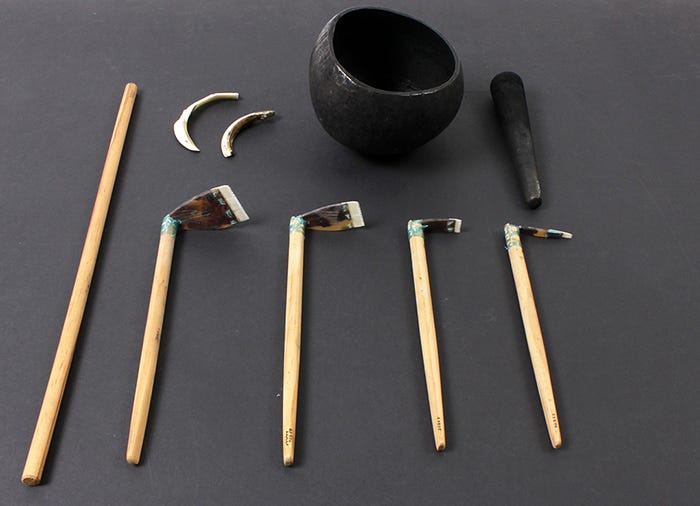
99% of tattoos all over the world were black, so that tells us the materials for traditional tattooing didn’t vary all that much: they were slightly different types of soot, ash and charcoal. The materials the charcoal came from varied depending on the plants, wood and resin available in each place. The binders were actually more interesting because they varied more often, and their ritual value changed from group to group.
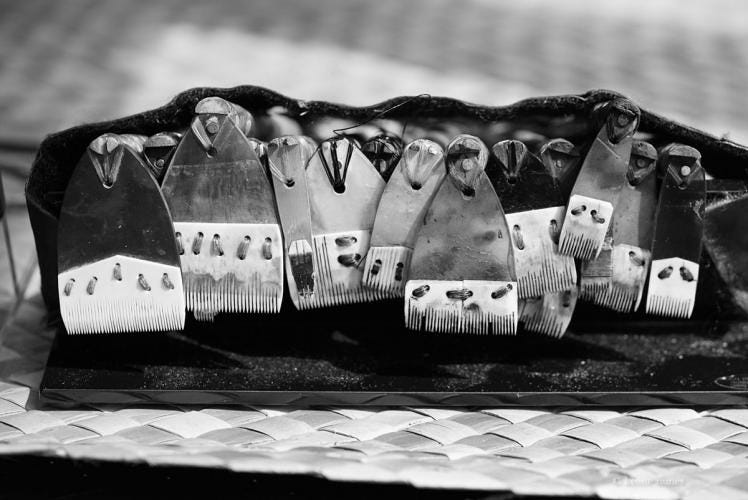
There were several ways to get tattoos: cutting or pricking the skin with a bone or stone blade, then applying the pigment, hand-poking with a sharp point like a sliver of bone or a cactus thorn already covered in pigment, or the one that sounds more painful—subdermal skin-stitching (only used in the Arctic as far as I know).
There are hundreds of examples, but I cover some here mentioning the pigment and method of tattooing. I talk in past tense because these traditions all but disappeared at the beginning of the 20th century. Only very elderly people wear the traditional tattoos nowadays, with the exception of some young tattoo artists trying to revive the ancient traditions of their people in places like Polynesia, the Arctic or the Amazon.
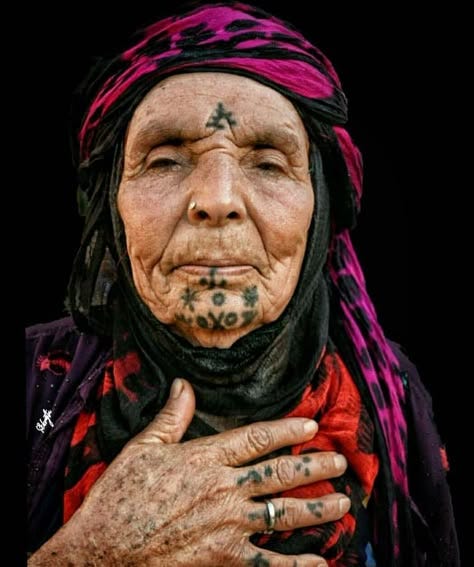
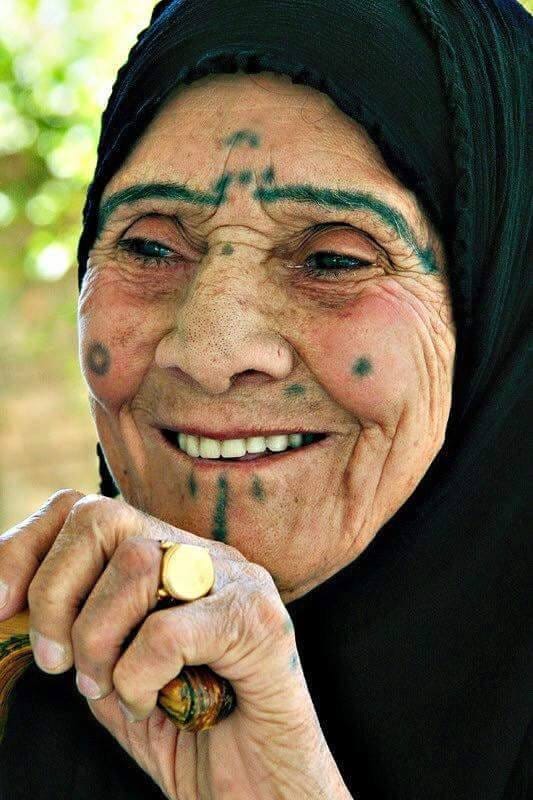
Among the Amazigh women of Northen Africa, the technique used was hand-poking, and the pigment used was lampblack (produced by burning oil or resin and collecting the fine soot that results from combustion) mixed with juice squeezed from the leaves of fava beans. To heal the skin afterwards, they used ashes of watermelon rinds, saffron, henna, or crushed belladonna. Women were the tattooists and the ones who received tattoos: the one on the chin was the most common, but they could have others on the cheeks and the forehead.
Iraqi women were also the tattooers or daggagah. The pigment was kohl or basmah: a lampblack that could include indigo, and the tool was a sewing needle. Tattoos were applied for fertility and beauty. Other forms of tattooing included sympathetic “love magic” (making sure you kept the love of your husband) and were aided by someone reading the Quran while the tattoo was being applied. This is an interesting example of syncretic spirituality because tattoos are a pre-Islamic tradition, but the reading of the Quran strengthened the magic of the tattoo.
In Bosnia and Herzegovina, there was another example of syncretism: the tattoos were a pagan tradition that joined Catholicism in the Balkans. Again, elderly women were the tattooers, and the pigment used was the soot of resinous pinesap collected on a plate, combined with honey, water, saliva and mother’s milk to her daughter. The ink could contain animal milk, egg yolk, juniper berry juice, holy water or sugar. Tattoos were placed on the arms and hands, sometimes on the chest. The ingredientes of the ink clearly have magical properties, since they are not necessary for the tattoos per se.
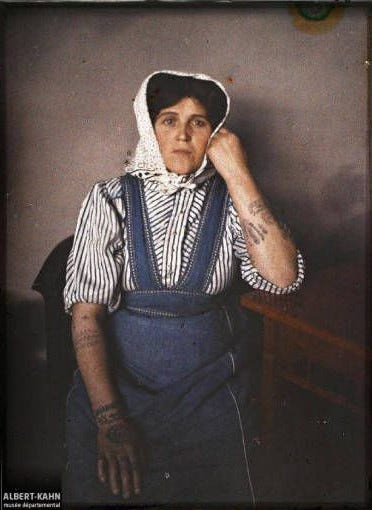
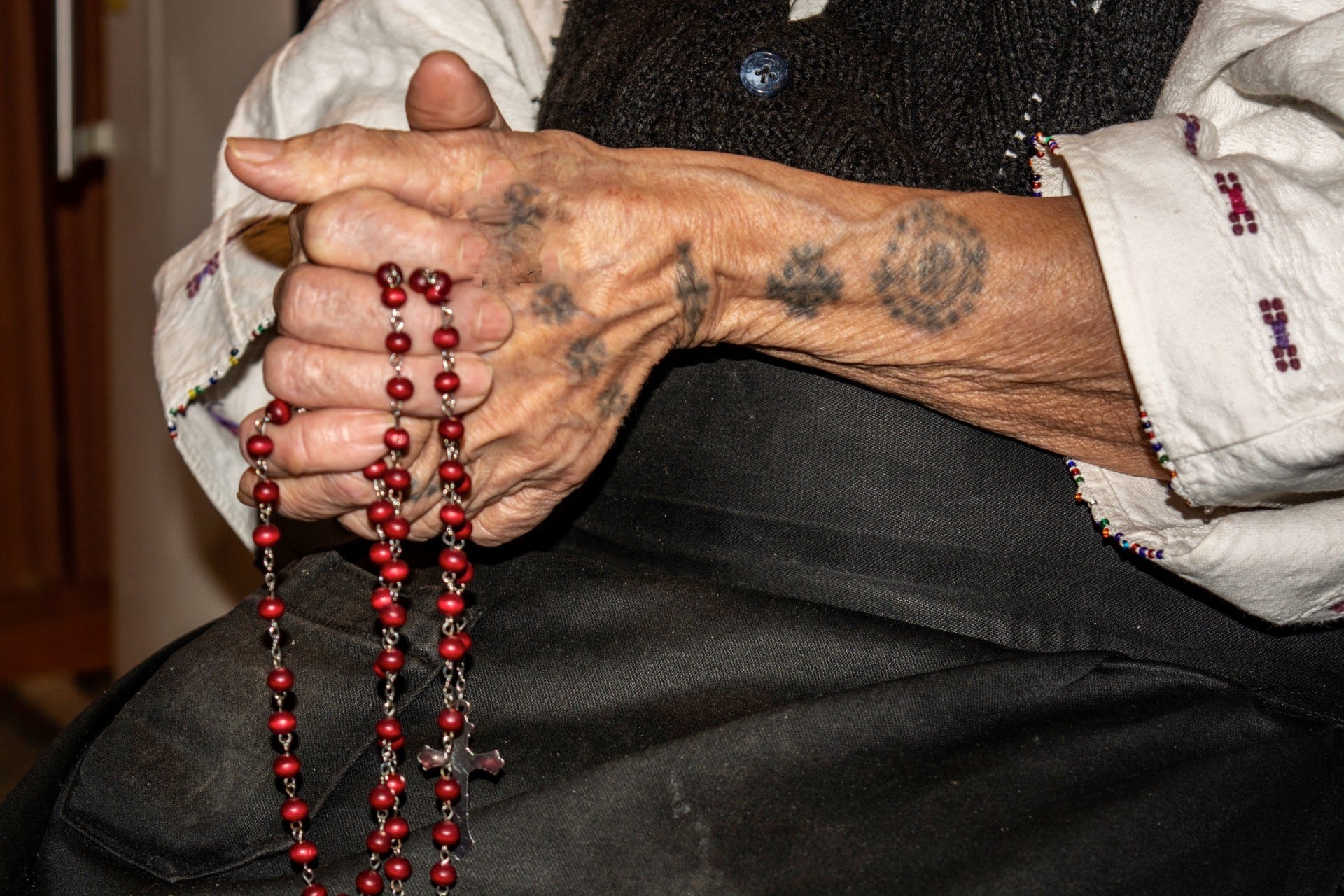
Another particularity of this tradition is that there were specific dates that were “tattooing days”: Annunciation Day (March 25th) and Palm Sunday, but especially Saint Joseph’s Day (March 19th). The purpose of the tattoos was clearly syncretic, too: they were about fertility, springtime, new life, and the position of the sun, but they also showed you were Catholic, and tattooing days were Catholic festivities. Balkan men could have tattoos, too, but they were more common among women.
In Japan, tattooing was common among some indigenous groups like the Ruykyuan from the Ruykyu Islands, and the Ainu of Hokkaido. Ryukyuan women thought they would face torment in the afterlife if they weren’t tattooed.
Both Ryukyuan and Ainu tattooers were female, and most clients were female too, although men could have tattoos as well. They used Chinese and India inks, but also soot from the hearth, because it carried the essence of the hearth spirit, a crucial kami. As a female deity, the hearth goddess enjoyed exclusive worship from women, who were considered spiritually superior to men.
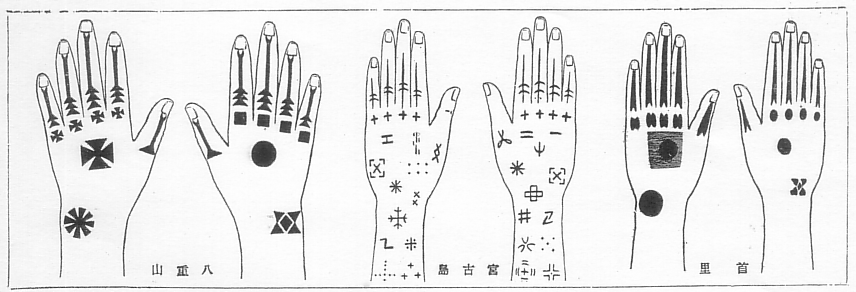
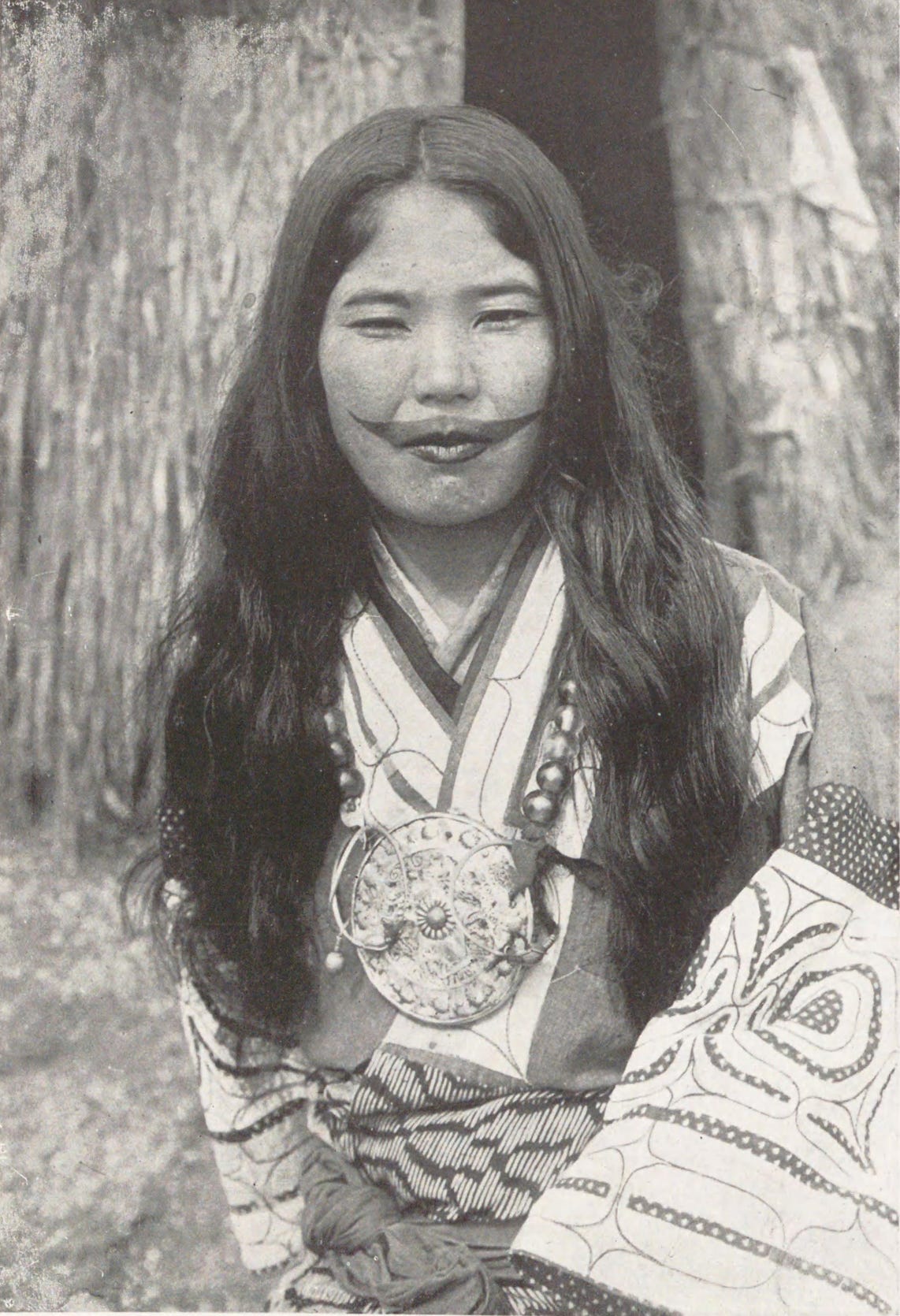
The Ainu fire goddess, Fuchi, was adorned with tattoos herself, and the soot from her sacred fires was used to create women’s tattoos, imbuing them with protective properties: women, through their exclusive worship and use of hearth soot in tattooing, maintained a direct link to the divine2.
From the end of the 18th century and through the 19th, the Japanese empire issued strong punishments (fines) and public humiliation to people who had (or applied) tattoos in these islands. Their goal was to assimilate the indigenous peoples of Japan into the elite’s culture, obliterating their individual cultural identities.
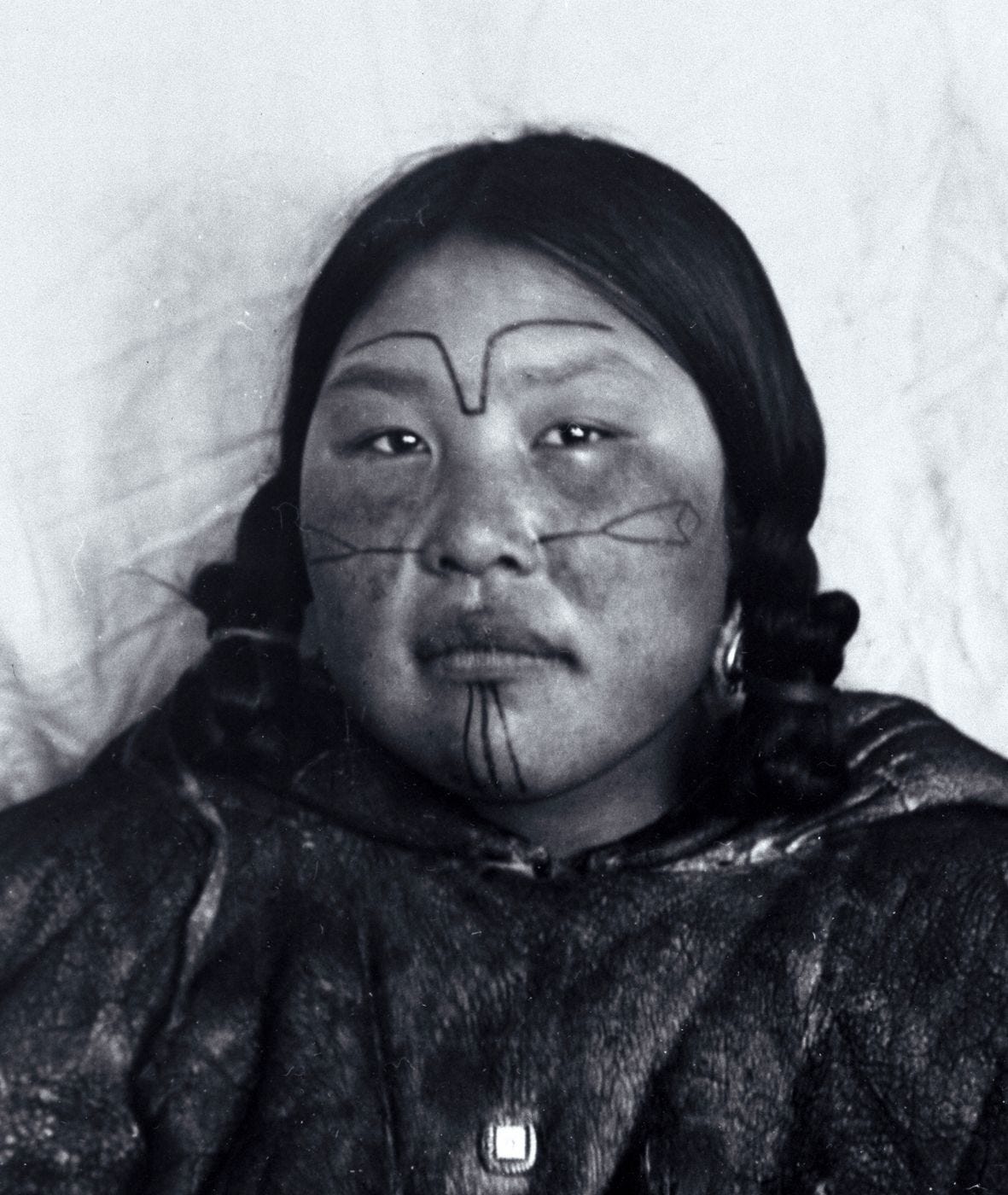
The Chukotka, from the easternmost peninsula of Asia, had tattoos since at least 500 BCE. They were most common among women and tattoo artists were elderly women because of their extensive training as skin seamstress (parkas, pants, boots, mammal-skin tent covers).
Tattoos were stitched into the face, arms, and other body parts, and they were about tribal identity—their clan or family. Lampblack soot was the primary pigment used to darken the sinew thread for stitching, but also dark graphite, because it was a spirit stone. The black pigments were mixed with human urine—its high ammonia content helped reduce the scabbing of a new tattoo and promoted healing. The needles were slivers of bone, and the sinew thread came from reindeer, bowhead or gray whales’s tendons.
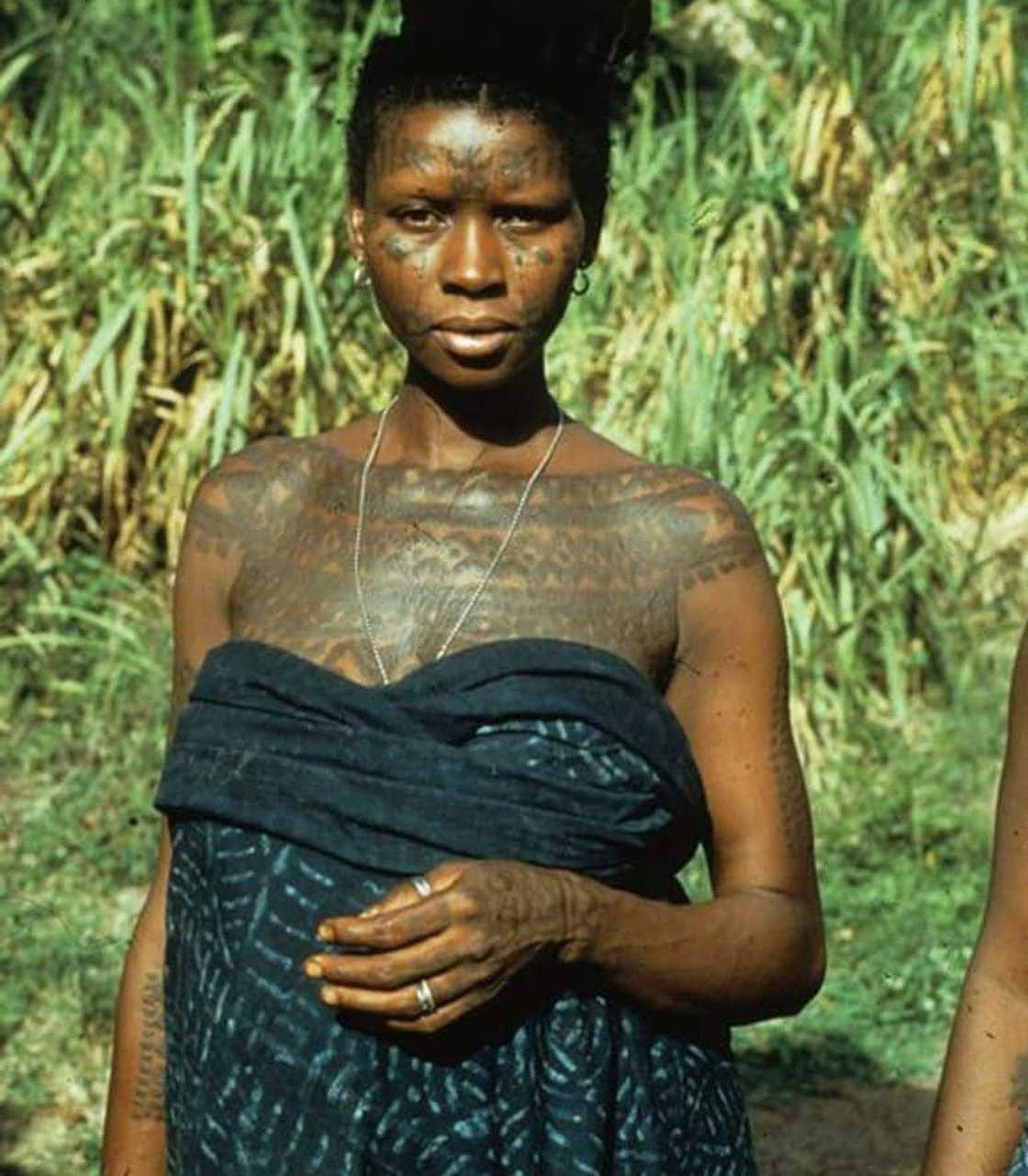
In Nigeria, women were the tattooed ones as well. The tattoos were made with cuts, in a process more similar to scarification, but with the addition of pigment. They had extensive designs covering the chest, the face, and the arms. These tattoos have relief because of the way they are applied. Scarification is a common practice among African tribes, sometimes it is accompanied by ink and sometimes is just a relief on the skin.
In the Arctic, the Cocopah women applied linear designs on their chins with mesquite or cactus thorns. The Inuit peoples of the Artic believed that women had to be tattooed to enter the realm of ancestors, which was presided over by female deities who were themselves tattooed and who brought tattooing to humankind. This is a very old tradition—women have been tattoists among the Innuit for at least 3000 years.
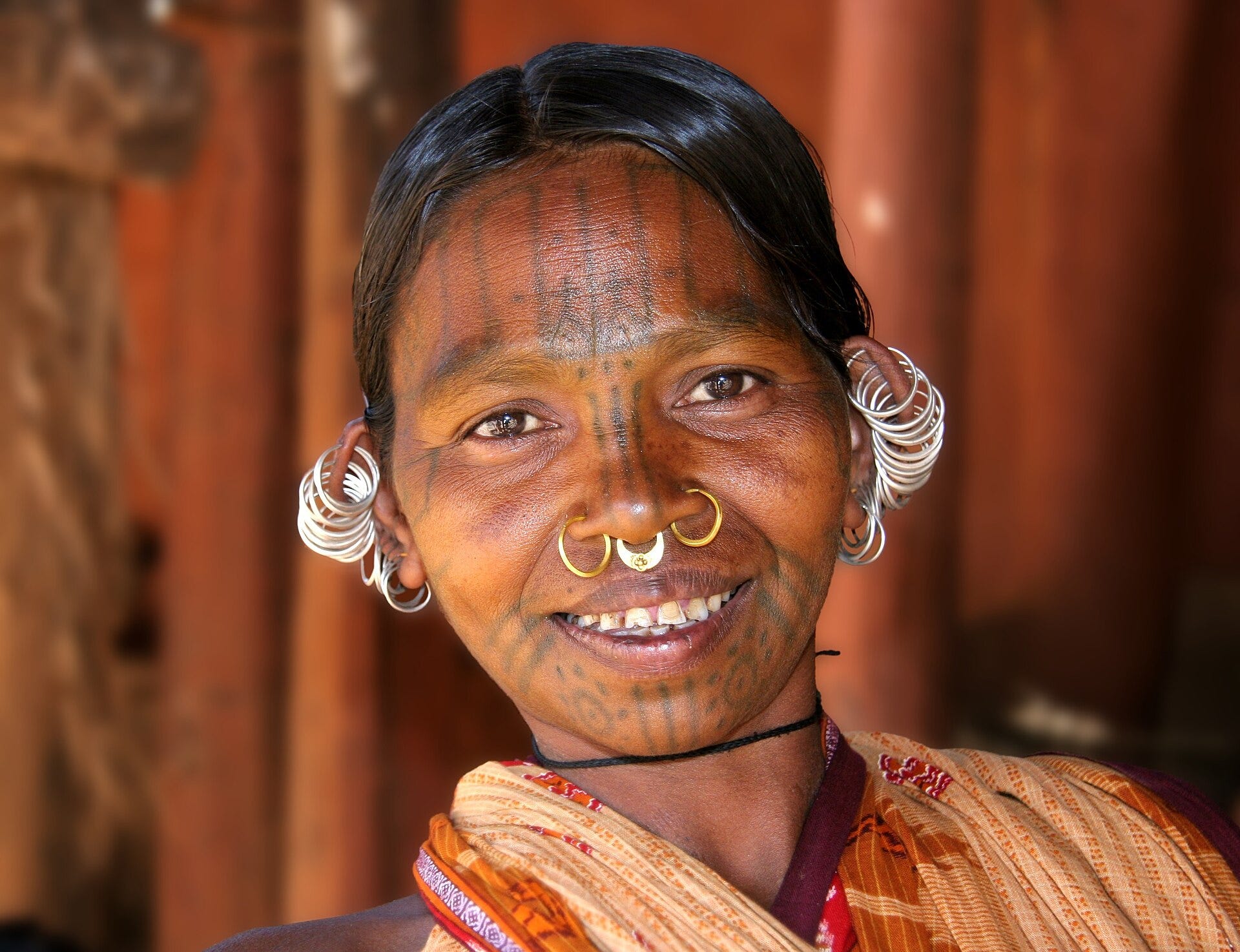
In Madhya Pradesh, India, among the Khonds and Baiga people, women continue to be tattooed today. Traditional tattoos were made of the juice of the bhilawan tree or a concoction of the cast burnt skin of a snake mixed with black til (Sesamun indicum). The skin was pricked with a needle and additional juice rubbed onto the wound. The tattoos are very painful, but have a potent sexual meaning: women expressed their desire and beauty through them. They were considered to have medicinal properties and act as talismans as well.
Among the Atayal people of northern Taiwan, girls wore their tribe’s tattoo on the forehead, and weaving skills allowed them to earn intricate cheek tattoos, since a “real woman” was defined by her weaving skills. Exceptional weavers gained tattoos on their chests, hands and legs, mirroring the chest tattoos of great warriors. Atayal tattoo artists, revered women, learned from their mothers or aunts.
Tattoos were so highly valued, that the expense of a woman’s facial tattooing exceeded the cost of a girl’s wedding dowry. Tattoos were applied through hand-taping with a wooden handle tipped with citrus thorns, while a single piece of wood served as a hammer, and a rattan or bamboo splint was used to scrape away the blood.
These are only a handful of all the female tattoo traditions around the world. Many tattoos were worn by men and women, but I was surprised that it was such a prominent practice among women, and wished to reflect that in the post.
There will be a second post about tattooing where I will cover traditionally male tattoos and tattooed mummies, which is another interesting source of knowledge about tattooing, although much more difficult to interpret. Stay tuned for more fascinating facts about this ancient practice.
This article is free for everyone to read, but my posts take a lot of time to research and write, and all the ideas are original, and mine. If you would like to leave me a tip, you’d help my research and I’ll be immensely grateful to you.
More reading about pigments and aesthetics:
Toxic beauty (II): cinnabar and eating clay
·
January 7, 2025

Before the holidays, I posted about two historical beauty practices that were highly toxic. In fact, many of the beauty practices from the past (and from today) aren’t healthy from us. In some cases, we are not aware of it, because there hasn’t been a study yet about the repercussions of this or that ingredient.
Toxic beauty (I): lead white and belladonna
·
December 9, 2024
The yearning to be beautiful it’s one of the strongest in our lives: we want to be admired, accepted, and desired. It’s not a trifle want, because it responds to some of our fundamental needs—being socially accepted, getting a partner and maybe having children. As a result,
Krutak, L. (2025): Indigenous tattoo traditions: humankind through skin and ink. Princeton University Press.
Krutak, L. (2025): Indigenous tattoo traditions: humankind through skin and ink. Princeton University Press.
Comments
Nothing yet. Say the first thing.
Sign in to join the conversation.