
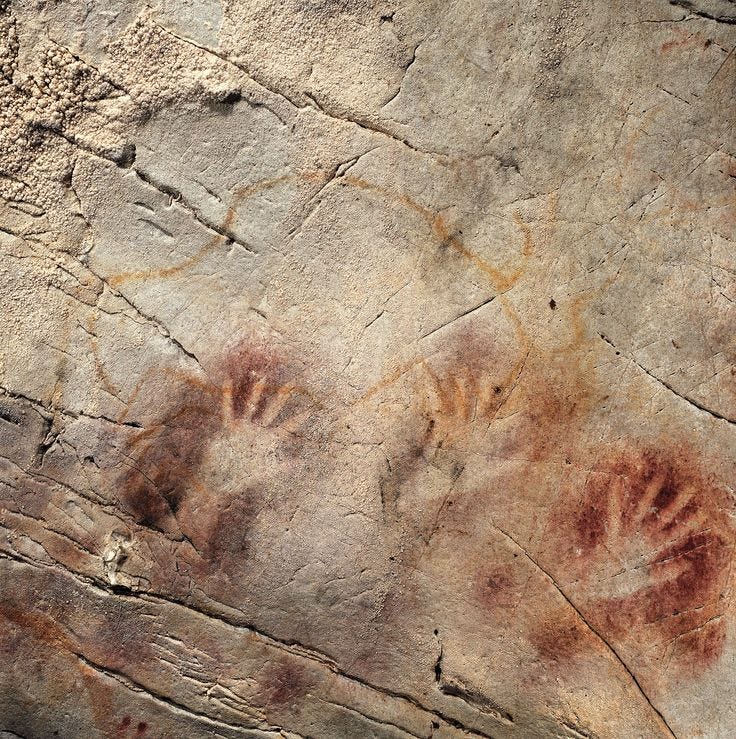
In this post, I cover six topics that are usually controversial or misunderstood about prehistoric art: Neanderthals’ symbolic abilities, the role of women and children in prehistoric art, abstraction vs. figuration, the potential reasons behind rock art, the idea that prehistoric technology was ‘primitive’, and if we should call prehistoric images ‘art’, or something else altogether.
These are some of my reflections after the research I’ve been doing for my master’s thesis. One of the points of my thesis is that prehistory is wildly misunderstood and badly represented in education, and my work aims to correct that. I am basically designing a rock art lesson through experimental archeology, while trying to teach a view of prehistory that is based in scientific research instead of long-held biases and assumptions.
Instead of citing my references at the end, they are embedded in the text. You can click on them and read the articles that back up my assertions. I find that’s easier for digital platforms than a long list of papers at the end. I hope you enjoy it. Feel free to leave your thoughts in the comments at the end.
One of the most interesting—and controversial—topics in prehistoric archaeology today is whether Neanderthals possessed symbolic abilities much closer to those of Homo sapiens than had previously been considered possible. The traditional theory held that Neanderthals became extinct because they were cognitively inferior to Homo sapiens and unable to compete equally with them for resources. Other theories suggest that Homo sapiens actively ‘eliminated’ the competition due to an early form of xenophobia and rejection of the ‘other’1. However, these ideas are increasingly being called into question.
One of the milestones of this paradigm shift was the Neanderthal Genome Project carried out by the Max Planck Institute for Evolutionary Anthropology in Leipzig. The most astonishing result of this study was the proof of hybridization between Neanderthals and Modern Humans: Eurasian populations contain between 1% and 4% Neanderthal DNA, meaning that, in a sense, Neanderthals did not truly become extinct, but rather mixed with Homo sapiens populations until they literally became part of us.
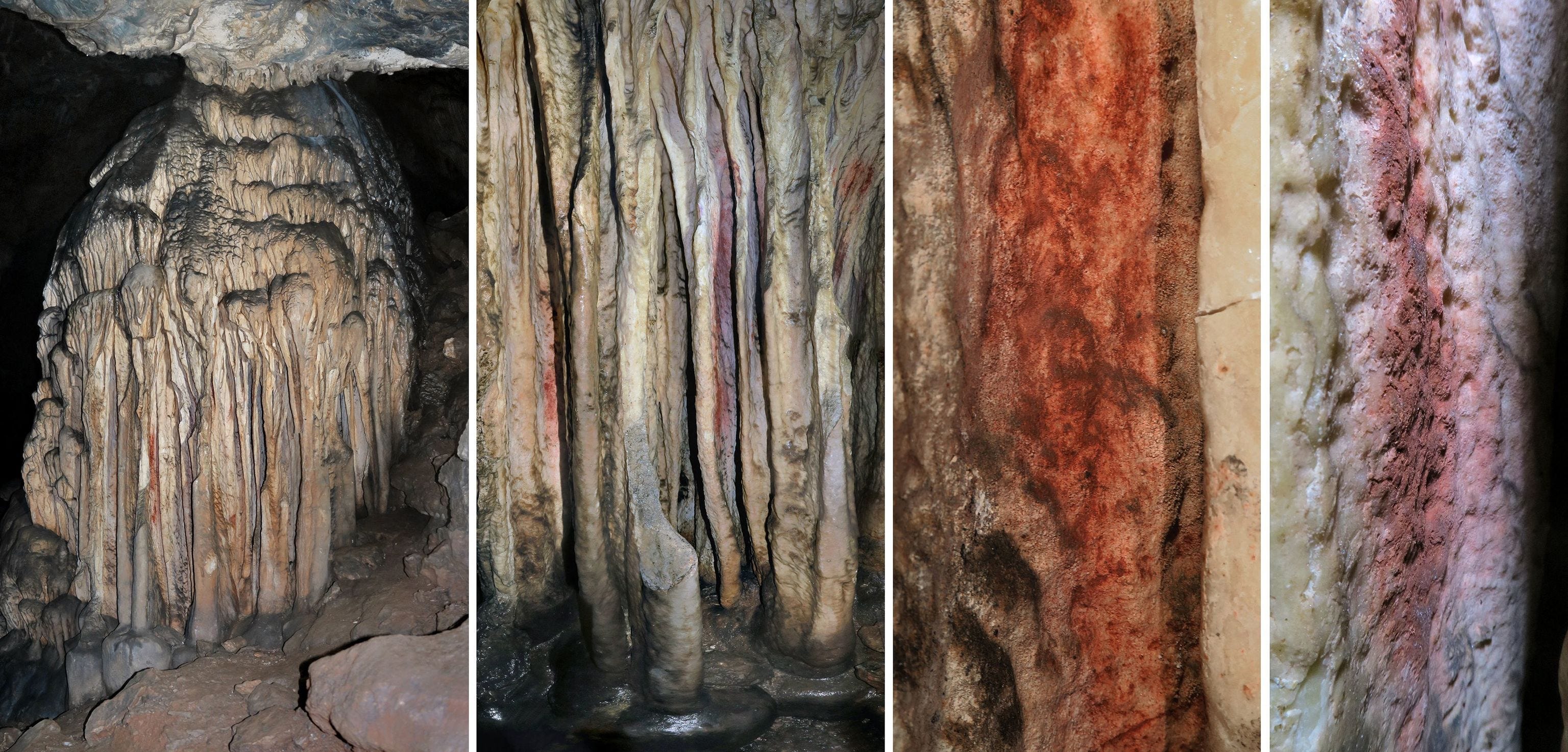
This idea shook the foundations of our understanding of our species and its evolution. A few years later, another major development followed with the publication of uranium-thorium dating results from three Paleolithic caves in Spain: La Pasiega in Cantabria, Maltravieso in Extremadura, and Ardales in Málaga.
The dating of these cave paintings is around 65 ka, an extraordinarily ancient age, and in the specific case of the Iberian Peninsula, it indicates something even more surprising: these markings must have been made by Neanderthals. There is currently no evidence of Homo sapiens in the Peninsula before 45 ka, meaning these dates precede art made by Modern Humans in the Iberian Peninsula by approximately 20,000 years.
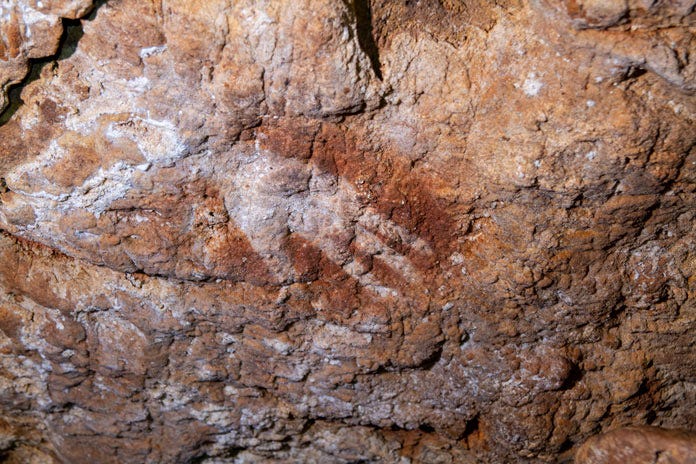
Criticism of this publication and doubts regarding the dating method quickly emerged, along with responses defending the methodology. Nevertheless, the idea that Neanderthals possessed symbolic abilities is becoming increasingly present in the archaeological record. Andalusia is currently one of the key places in the world for studying and debating these issues, which is one of the reasons I am familiar with it. Regardless of whether these paintings were made by Neanderthals or not, at the moment the Cave of Ardales is an enormously important piece of cultural and scientific heritage because of the answers it may contain, along with the other sites investigated around this issue.
Much of the resistance surrounding the idea of Neanderthals painting may stem not so much from the evidence itself, but from resistance to a paradigm shift in human evolution—the questioning of an old paradigm in which Homo sapiens’ cognitive abilities were clearly superior, and the reason why our species outcompeted all other hominins emerging as the sole victor of a metaphorical evolutionary race. But when that cognitive divide becomes less clear, our understanding of our species and its evolution begins to wobble, something that may discomfort some researchers.
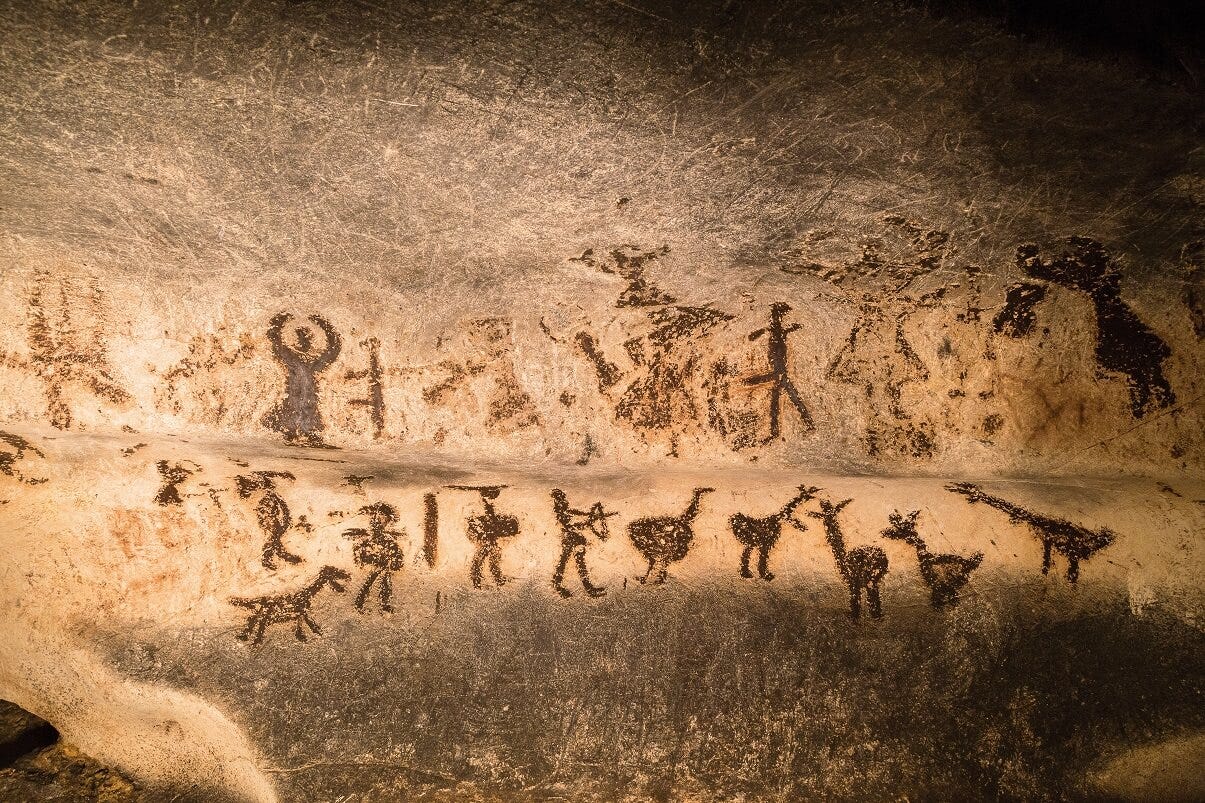
Schematic painting remains relatively little known and undervalued for several reasons. Historically, the best-known examples of rock art are the great Paleolithic caves such as Altamira, Lascaux, or Chauvet, with their numerous large animal figures. The artistic quality of these examples is undeniable, but here we encounter a widespread prejudice in the perception and interpretation of Art History: realistic figuration is always valued above other forms of visual expression.
Comments
Nothing yet. Say the first thing.
Sign in to join the conversation.