
Welcome back to the Pigment Guide! It’s been a minute. This has been the first time I have delayed my posting schedule, and it has been due to stress and exhaustion. I don’t believe we should apologize for not being online 24/7, however, since this is my paid content, it is important to me to fulfill my own commitment for the content I charge for.
Therefore, if you are one of my paid subscribers, I am very sorry for the delay this past month. If you are considering renewing a monthly subscription, here it is a short-time offer to encourage you to continue being a supporter of Pigments, Colors & Other Stories. You can also join the paid subscription through this offer and enjoy a 20% off the normal rate for the next three months:
Get 20% off for the next three months!
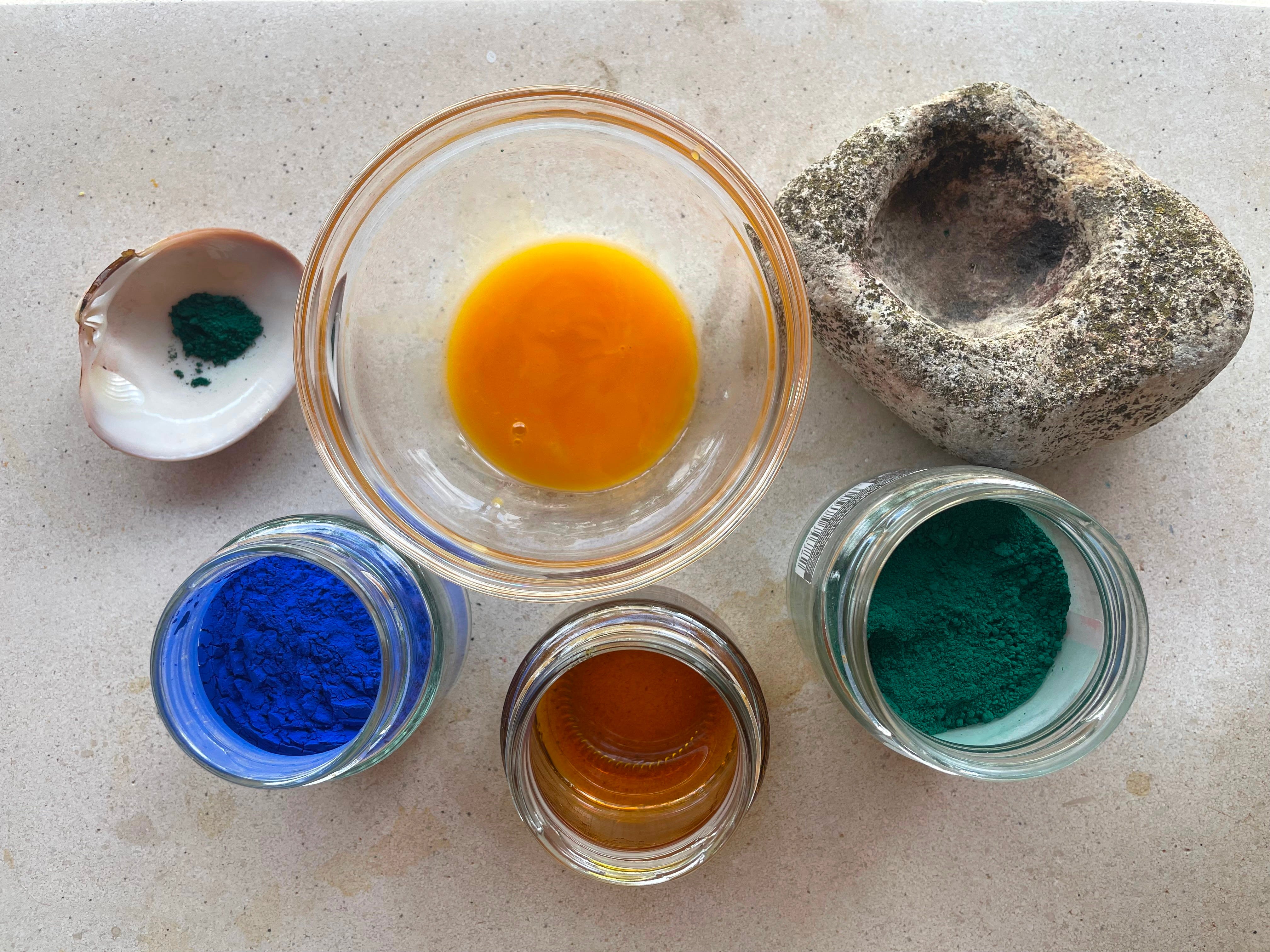
All right, let’s get into it! In this post, I am covering the history and recipe for egg tempera. As we have covered before in previous posts of the Pigment Guide, each type of paint usually consists of a pigment + a binder. The binder is what decides the paint’s texture, shine and how quickly it dries. There is not much information about what kind of binders were used in prehistory because binders usually disappear (I imagine they evaporate) over thousands of years, although you can guess the most likely suspects: animal fat (the one I consider most likely based on my own experiments), plant oils, water, egg or even milk.
About a year ago, I met archeologist Neemías Santos da Rosa, who is working on the use of prehistoric binders at the University of Bordeaux, in France. They are using a especial chamber to simulate the effect of the passing of time and the weather on paint over thousands of years. Something like a super accelerated time machine creating hurricane-like winds on samples of rock art. They are trying to stablish what recipes are most durable, and what are the most likely binders for the kind of rock art that has endured until our time.
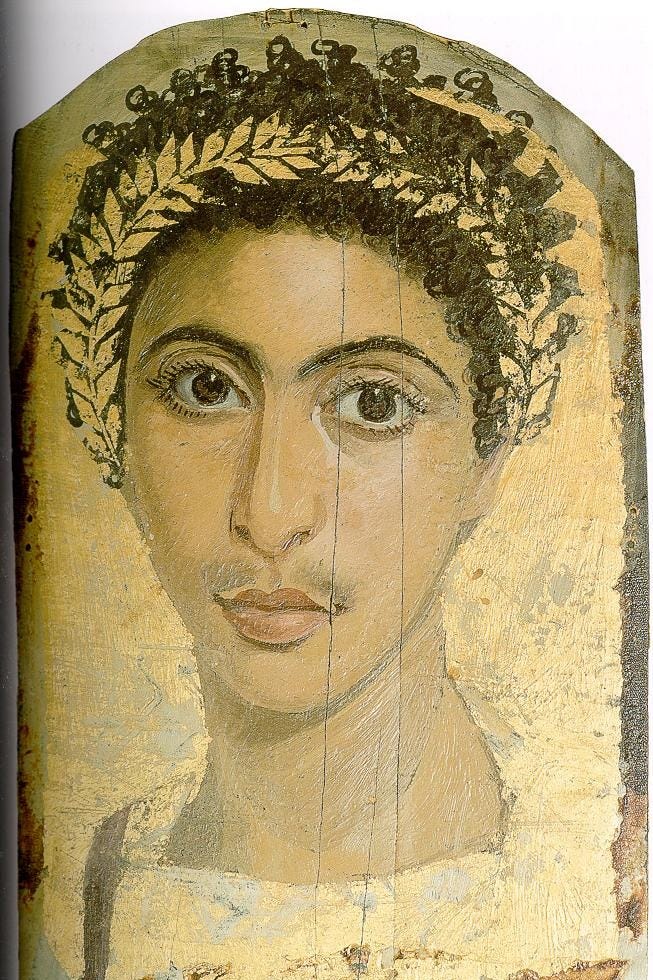
And guess what is the most resistant binder they have found so far: blood. They know the Bushmen or San people, native to southern Africa, still use animal blood to make paint with red ochre, and guessed it could be a binder in use since thousands of years ago. At first, I thought the idea of using blood was just a misguided conception of how to paint red when there is no paint shop around, but it makes sense when you think blood is incredibly hard to clean and it adheres to fiber like no other stain. That is, it is a very good binder because it is a strong adhesive.
I’ve often wondered about the use of egg in Paleolithic painting, as well as the use of honey. However, I tend to think that both egg and honey were too good a source of nourishment to use them for paint. There could be exceptions, of course, if paint was considered sacred enough to sacrifice valuable sugar and protein sources for art (and for all we know, it was sacred enough) but I still think animal fat was a more likely source of binders. It would have been a surplus product of hunting, and they wouldn’t have to sacrifice food for it.
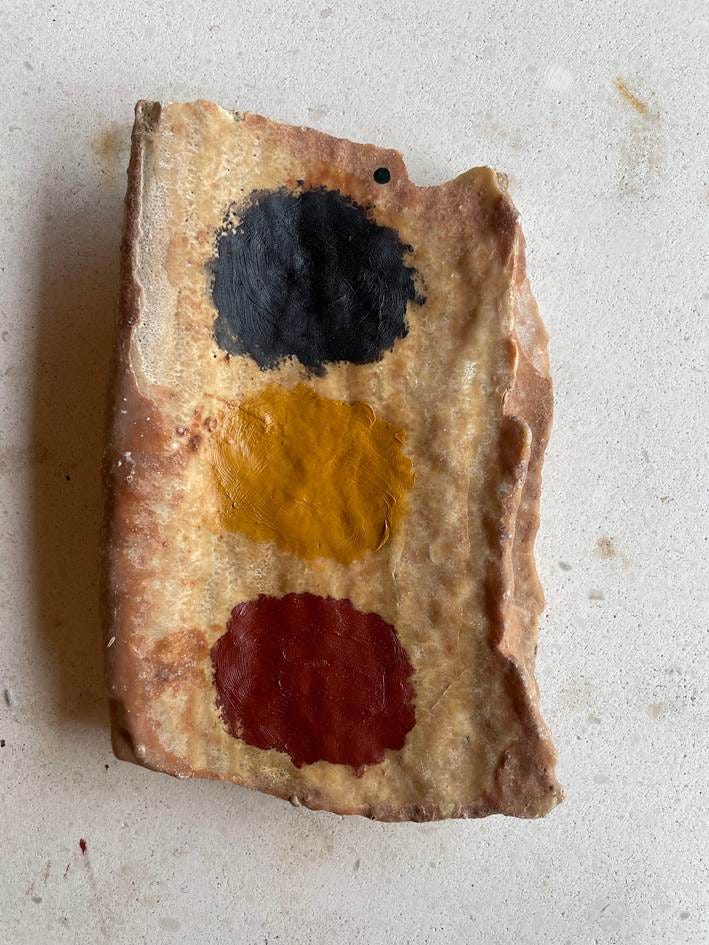
Now, after the appearance of agriculture and the domestication of animals that occurred during the Neolithic, starting about 11.000 years ago in modern-day Turkey (but much later in other regions of the world), using eggs to make paint would have been much easier. If you keep chickens, you get a constant source of eggs, you wouldn’t have to forage in the wild for them.
This introduction (I cannot help but talk about prehistoric archeology at every opportunity) served to say the history of binders is tricky, and it is often hard to say when and where a paint technique appeared in history. You need costly lab tests to prove the exact binder, and sometimes, like the case mentioned above, there is nothing left to analyze. You also need to be very careful when taking samples, since you risk damaging the artwork when doing so. In particularly frail paintings, you won’t even get permission to take a sample.
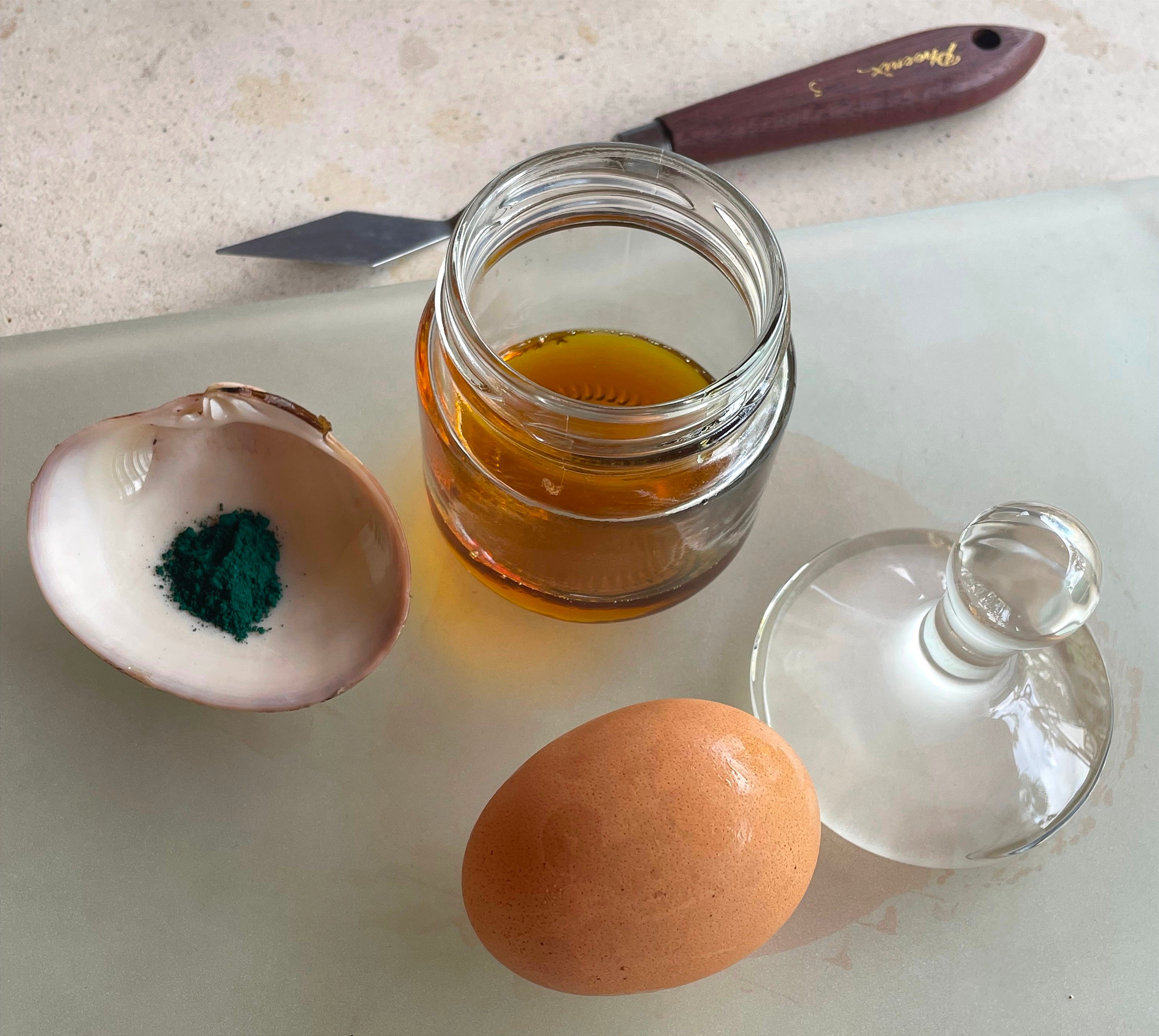
The other problem is that painting techniques and color-making have been secretive trades all along, so you won’t find many paint recipes’ handbooks until the end of the Middle Ages. Even today, with all the technology available to material research and art conservation, binder’s characterization can be challenging. These materials change on a molecular level with aging and degradation, and ancient paint is composed of several thin layers with different components, which makes harder to separate the different ingredients used. In some ways, the painting techniques of the past still remain a mystery.
Comments
Nothing yet. Say the first thing.
Sign in to join the conversation.