
In this blog, I’d like to cover my process and considerations when working with athletes in the context of their race nutrition strategy for endurance events (e.g., from the marathon onwards, as many of these considerations don’t really apply in the same way to shorter distances given we don’t face the same physiological limitations).
Needless to say, athletes are extremely different in terms of their 1) power output (simply put, how fast they are running in absolute terms), 2) metabolic flexibility (i.e., the ability to use different substrates at different intensities) 3) gut tolerance during exercise (i.e., potential issues with nausea, cramping, or worse), 4) relative intensity they race at (which tends to depend on the event duration and athlete level). These factors make any pre-made / generic / standardized fueling plan far from optimal. Guidelines give us a starting point when we don’t know anything about the athlete in question or their event, but as we work with an individual, we must do better and strive to understand what are the individual characteristics that determine the optimal plan for them.
So how do we get there?
As you might know, I’ve developed a great interest in metabolic flexibility and how the interplay of (genetics), training, and diet impacts our ability to rely on different substrates during exercise and, as such, our ability to perform optimally in a long-duration event. I’ve discussed extensively periodized nutrition and my initial experiments (see here), as well as my current approach for my recent races (here), resulting from possibly hundreds of tests since I bought a metabolic cart.
Briefly, my high-carb diet resulted in extremely low fat oxidation rates (0.2 g/min), which combined with my inability to intake high amounts of carbohydrates (low gut tolerance) led to poor(er) than expected performance in events longer than the marathon, until I periodized my diet (some may call it carb-cycling), greately increased my metabolic flexibility, and improved my performance in the 50 km and beyond while typically relying on ~30 grams of carbohydrate per hour. I am of course aware that my rate is on the low side, but protecting my gut is my number one priority, and I had to find ways to make this work. Others might do well at rates that are even 4 times higher, which again speaks to the great individual variability in all things human physiology and performance. I am not here to tell you to eat less, or I’d be the same as the ones telling everyone to eat more (carbs). I’m here to try to elaborate on my thought process when it comes to truly individualizing fueling for an athlete, hoping there are some useful pointers for you in there.
In the past year, I have also had the opportunity to test many of my athletes at my lab, and here below I will summarize my current process and show some of the tools I built for them, so that we can better prepare for the demands of their events, based on their unique physiology, as opposed to generic guidelines that can fail many individuals (just like they have failed me and held me back in the past).
Clearly, I do not have all the answers (and I am always open to learn more and update my thinking), but here is how I work at the moment.
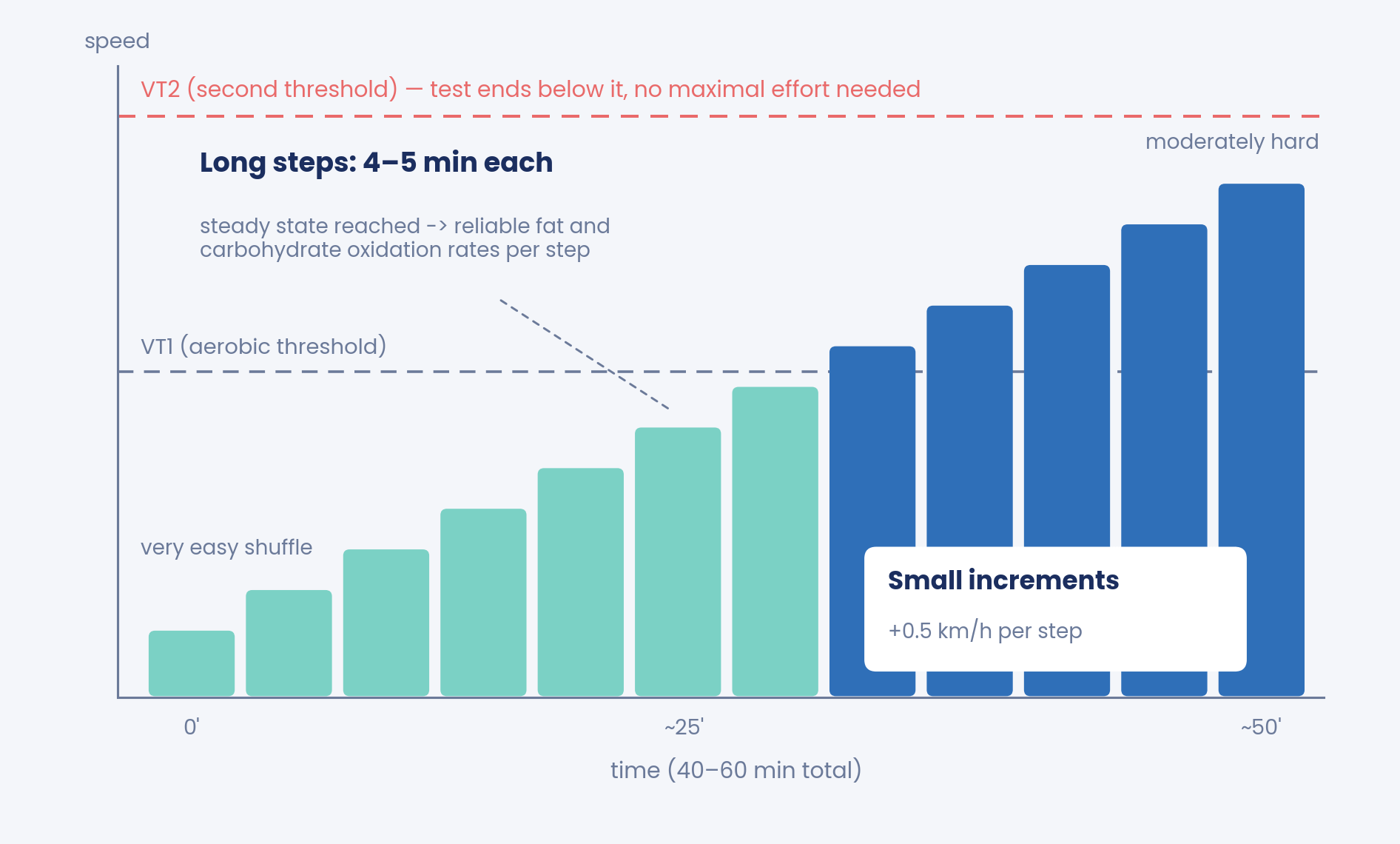
If I had to pick one single test that provides me the most useful data to assess metabolic flexibility and substrate utilization for a long endurance event, it would be a 40-60-minute long incremental test with small increments in intensity (e.g. 0.5 km/h per step) and long steps (e.g. 4-5 minutes each) where we go from a super easy jog to a moderate intensity that is typically below the second threshold (VT2).
This range of intensities covers the spectrum we care about for marathons and ultramarathons, while the long steps and small increments in intensity allow us to reach steady states, which are necessary to derive oxidation rates that are reliable (something that would not be the case with the typical short steps and large increments of VO2max tests).
This is indeed the test that I’ve started doing with all my athletes when they come to the lab:
Additionally, I’ve started doing a second test, exactly the same, but typically shorter, more focused on what we expect race intensities to be, in a fatigued state.
Metabolism is not static, and we know that fat oxidation rates increase over time with exercise, even when we fuel at high rates (e.g., elite athletes can easily get to 1 gram/minute of fat oxidation while intaking 80+ grams of carbohydrates per hour). For this reason, I think it is key to assess how we are doing after an hour or two (or three, all depending on how long the race is). I also think that at times, especially for athletes who have a particularly high-carb diet, fresh-state tests tend to penalize them, or to show fat oxidation rates that are quite low, because they are blunted by e.g. their breakfast. Still, I want to test athletes in realistic race/training conditions, and it would not be meaningful, in my opinion, to test them fasted if that’s not part of their routine.
The problem is easily solved by the ‘double protocol’ in which we do a test in a fresh state, they then go running outside for a number of hours, come back to the lab, and we test again to see if their metabolism has changed and what the impact of that would be in terms of their race nutrition. In my experience, this protocol is not particularly useful if fat oxidation rates at baseline are already high; for example, my own rates don’t change much because I start at 1 gram and that’s already a very high rate that is basically capped. However, if the athlete is moderately low in fat oxidation, e.g., 0.4-0.6 grams/minute, then I think the test can help us understand if they are stuck there or if the body switches to something that spares more glycogen as the training or race goes on. Hence the protocol:
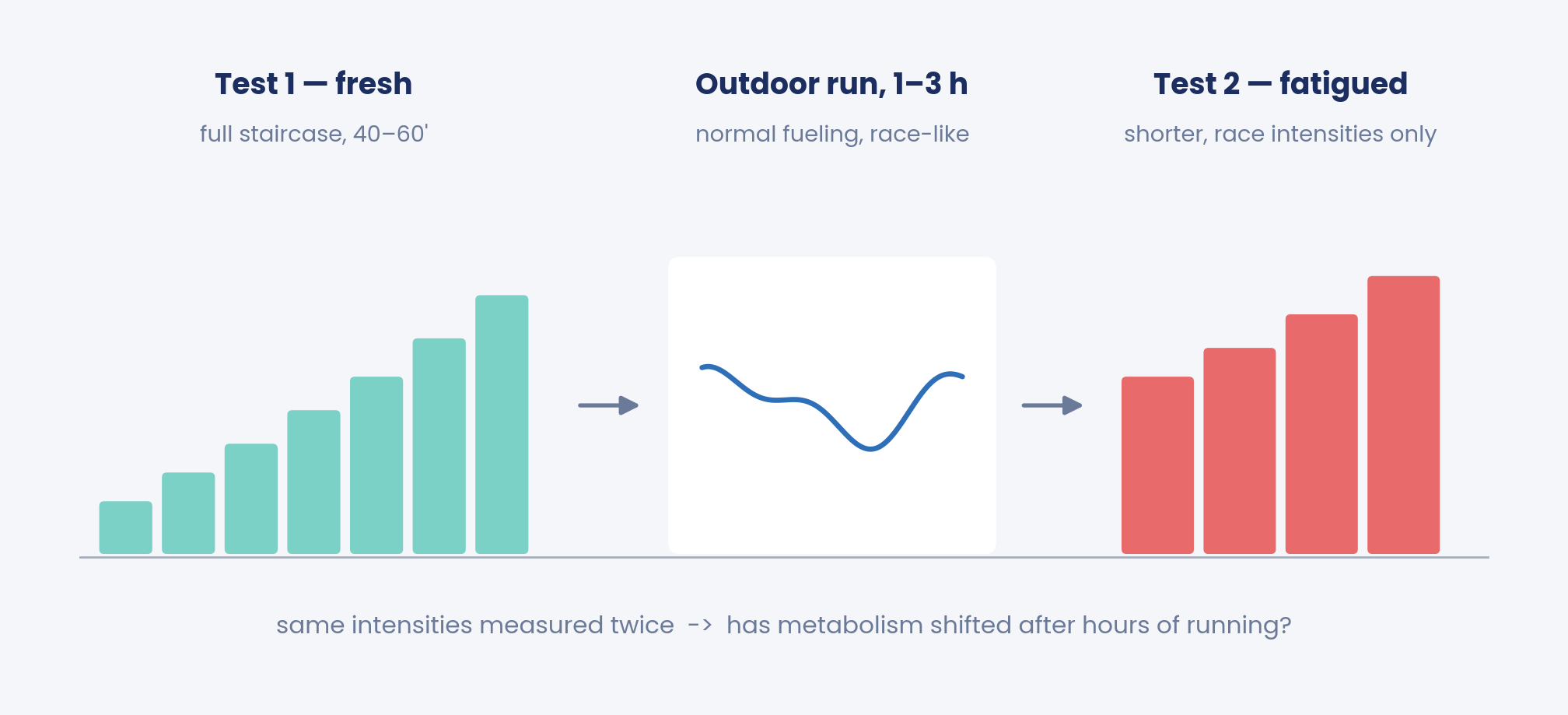
Later we will see some data resulting from these protocols. My main points here are that 1) long tests able to reach steady states at race intensities are necessary, while typical incremental (“VO2max”) tests are of less use, 2) metabolism is dynamic and for long events, measuring fresh and fatigued can be insightful for many athletes.
Our protocol above allows us to assess metabolic flexibility (fat and carbohydrate oxidation rates at different intensities); however, we also need to know how long we are going to be racing and at what intensity, in order to build our individualized fueling plan.
For this purpose, I built various tools, relying on my athletes' workout data. I’ll use the example of a marathoner here because the math is simpler (with respect to ultratrail, where we have more variables).
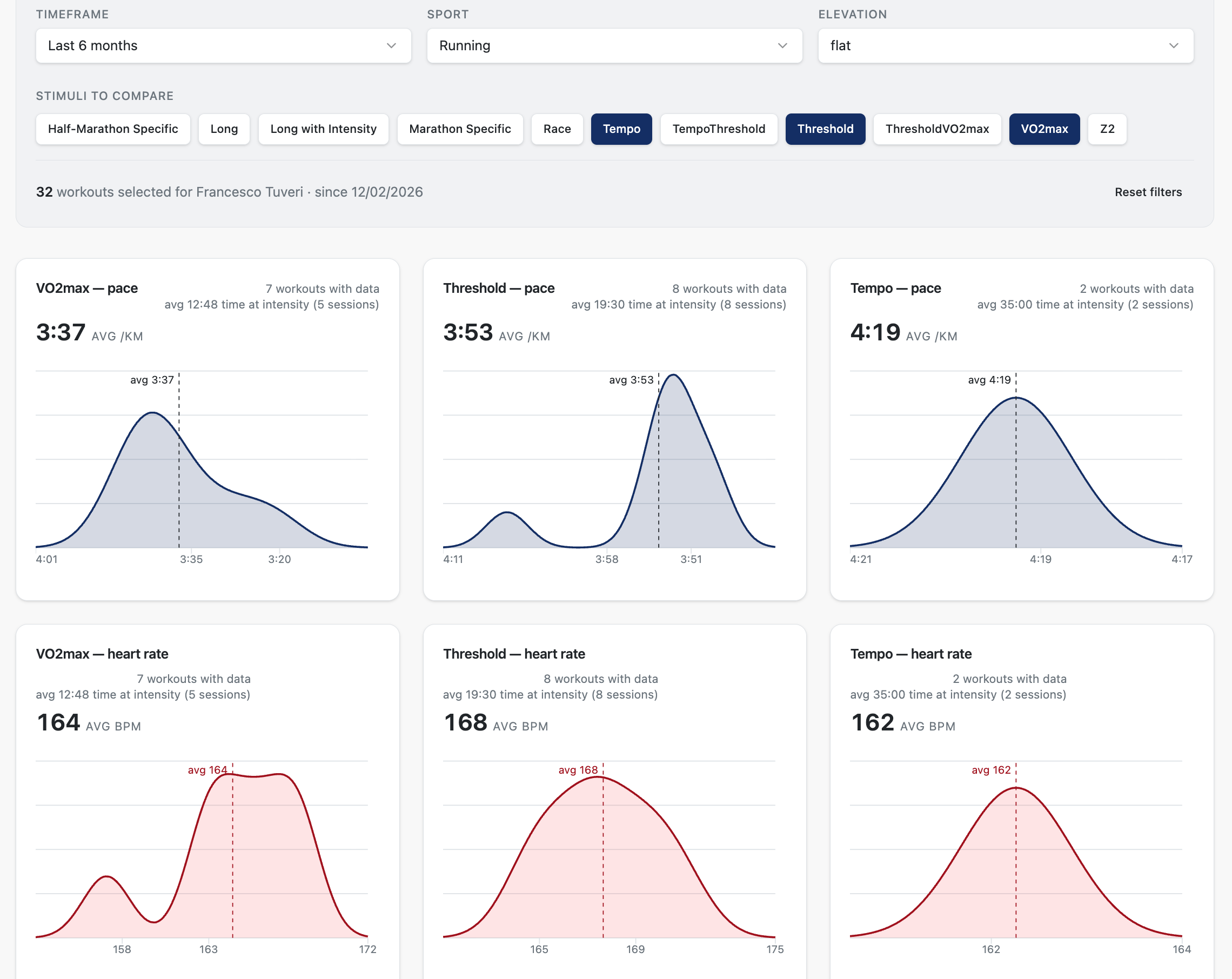
First, I log details about their individual workouts every time they do a key session (e.g., intervals, long runs, or pretty much anything that is not an easy run), then I aggregate this data to get a nice overview of the current state of affairs, for example using the density plots below for grade-adjusted pace and heart rate:
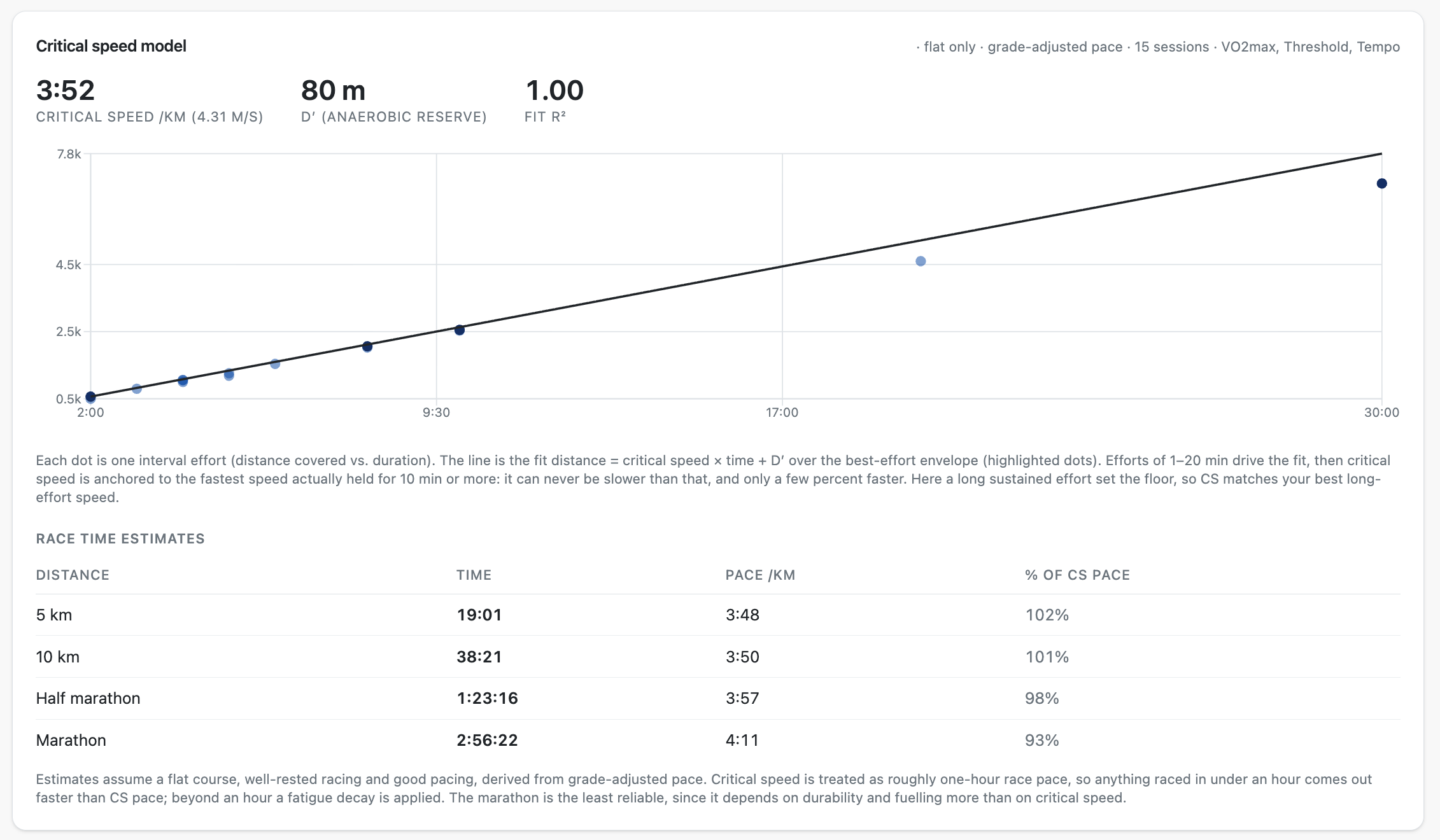
From this data, I can estimate Critical Speed, and from that, we can estimate marathon time, for example:
Given that these models are also generic and make lots of assumptions, I built some extra tools that give me more insights into the specific strengths and limiters of an athlete, so that we can adjust the estimate above (if we have poor durability, the estimate is probably optimistic):
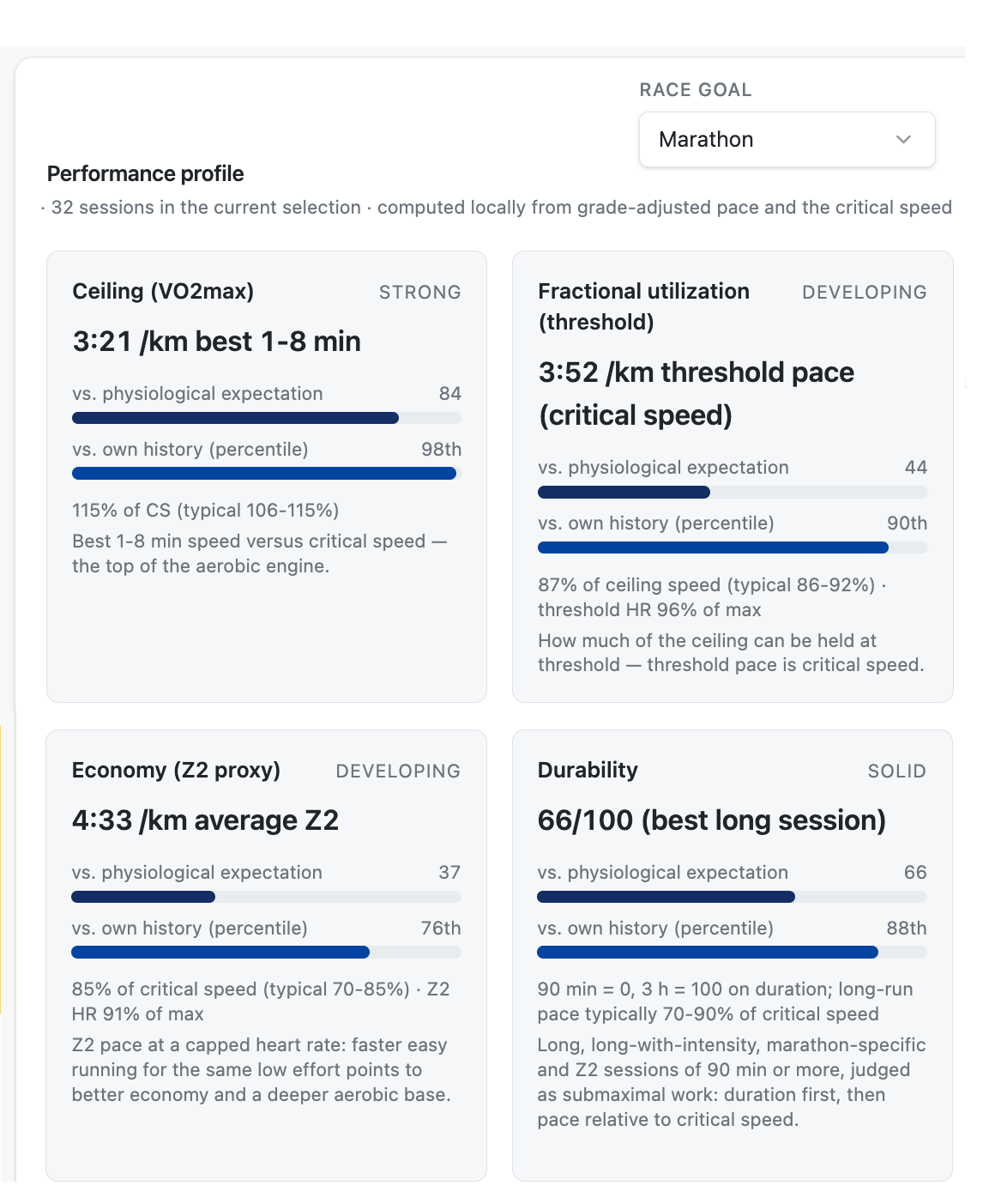
This whole process gives us a race expected time and intensity, which we can derive for any event based on historical data of the athlete, and will be an important parameter to build our fueling plan, which is the next step.
Why are we fueling?
As discussed earlier, race fueling should depend on a few factors:
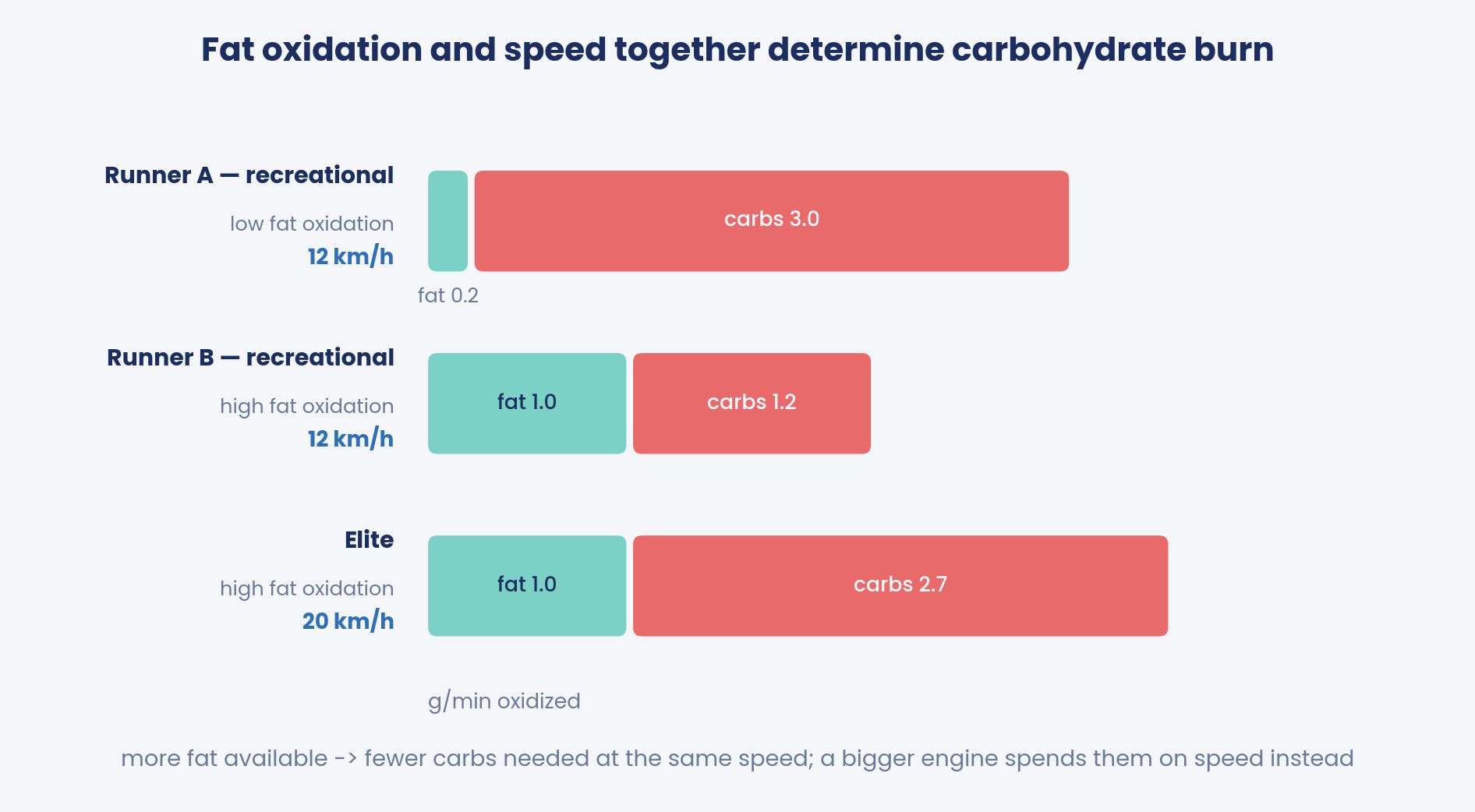
1. Your power output: the higher your capacity to produce a certain output, the more carbohydrate you will burn, regardless of your fat oxidation, which can only account for so much. This is why elite athletes’ intake should be higher than, e.g., my own.
2. Your metabolic flexibility in relation to the duration of the event. The more fat you can burn, the less glycogen you will burn, and therefore the less likely you are to “hit the wall”, since glycogen is a limited resource. Contrary to common belief, hitting the wall is not primarily a matter of eating too few carbohydrates during the race but could happen for the opposite reason, e.g., fat oxidation rates are too low, forcing the body to rely heavily on carbohydrates and deplete glycogen quickly. In reality, multiple factors play a role, with the biggest one by far being poor pacing and overly optimistic starts, which not only deplete your glycogen faster, but also speed up neuromuscular fatigue, muscular damage, and the buildup of byproducts that also lead to increased fatigue (e.g., hydrogen ions). Start slower. Finally, keep in mind that apparently no amount of carbohydrate intake can spare muscle glycogen - and only liver glycogen is impacted by carbohydrate intake during exercise (see Matt Carpenter’s excellent video on the topic), which makes a strong argument for the importance of metabolic flexibility even if you have ‘an iron gut’.
3. Maintaining blood glucose levels: there is plenty of new research on this, but in short, this is another important reason why we need a certain (low, about 10-15 grams/hour) level of carbohydrate intake even when we are very metabolically flexible and when the race is short enough for glycogen stores to last.
4. Central effects: the brain likes carbs, to the point that even mouth rinsing improves performance; hence, frequent sips might be a good idea even if the overall rate is not particularly high, unless it leads to nausea.
Based on points 3) and 4) above, we know that we need a somewhat constant intake of carbohydrates, so that we can maintain blood glucose levels and keep the brain happy. This is more important that it might seem at first, because it becomes a reason to ‘protect the gut’ and use a rate that is appropriate for us also in terms of our tolerance: having loads of carbs for 2-3 hours and then being unable to eat for another 2 hours, is not the same as having a constant flow of (fewer) carbs throughout the event, even if the total amount we intake is the same.
Let’s get back to our tests and protocols. Given that the metabolic test I carry out with my athletes covers race intensities, it will provide us with the oxidation rates that the athlete is expected to have on race day, and therefore will take care also of points 1) and 2) above, or the absolute intensity of the effort (again, the reason why elites need more carbs than non-elites, despite their higher fat oxidation rates, is that when you ran at a fast speed in absolute terms, you burn lots of carbs even if it is a relatively low/moderate speed for you because you are an incredible athlete) as well as the relative intensity of the effort (how much fat and carbs we burn relatively to our full profile).
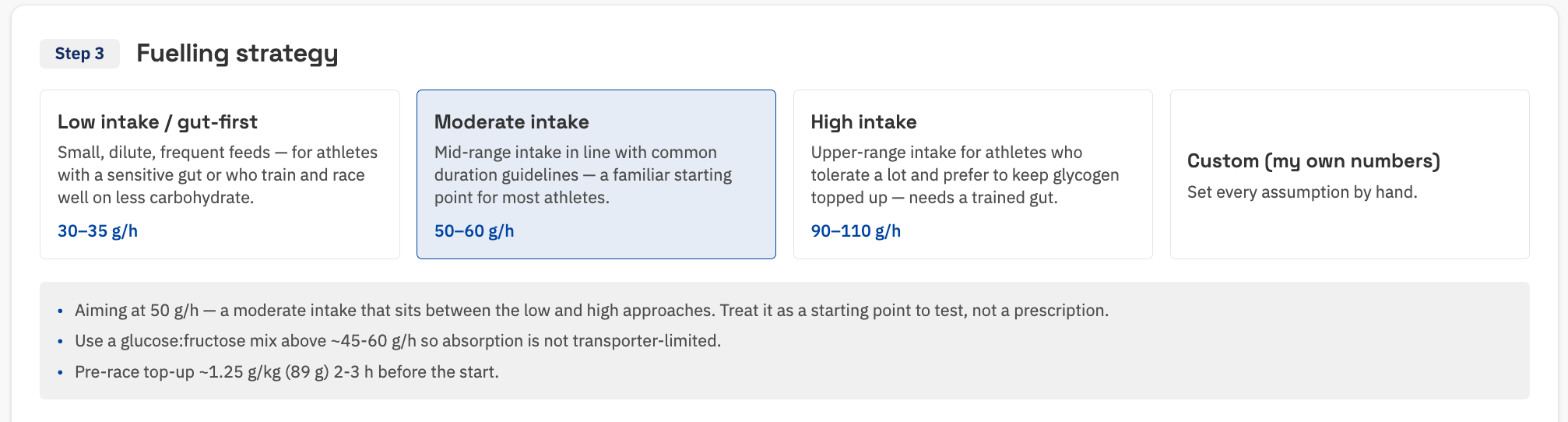
Knowing the athlete and history of intake, we can start with a plan that reflects their past behavior (in terms of intensity for a similar race as well as carbohydrate intake per hour):
We then load their metabolic profile data and look at fat and carbohydrate oxidation rates at race intensity or near race intensity:
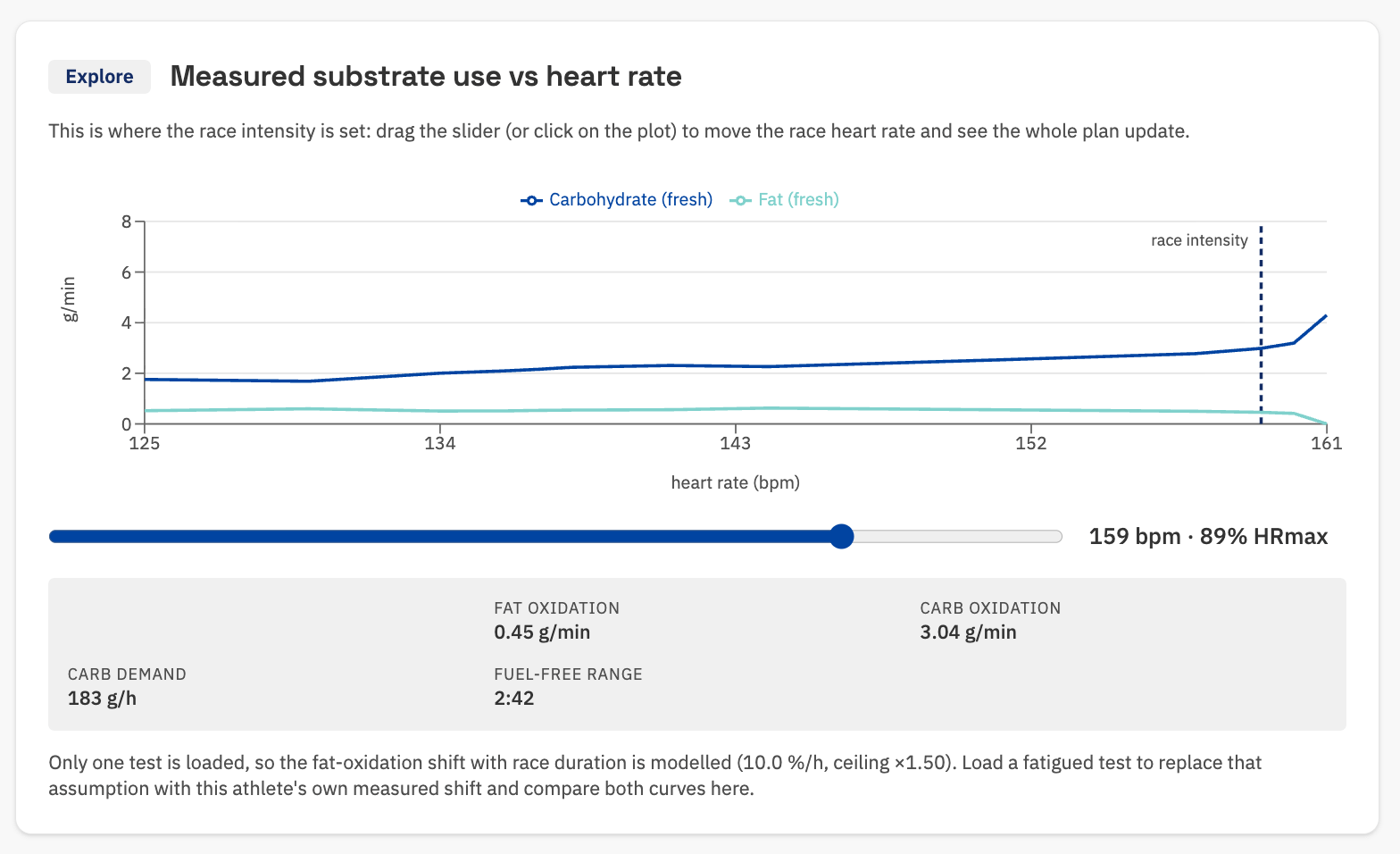
We can see that for a sub-3 hour marathon at this athlete’s metabolic profile, we have 2 hours and 42’ of fuel-free range (which of course is not true, just an oversimplification, but it gives us an idea of how much time we need, given fat and oxidation rates, to get close to depleting glycogen), and when adding our 50 grams/hour fueling plan, we have plenty spared:
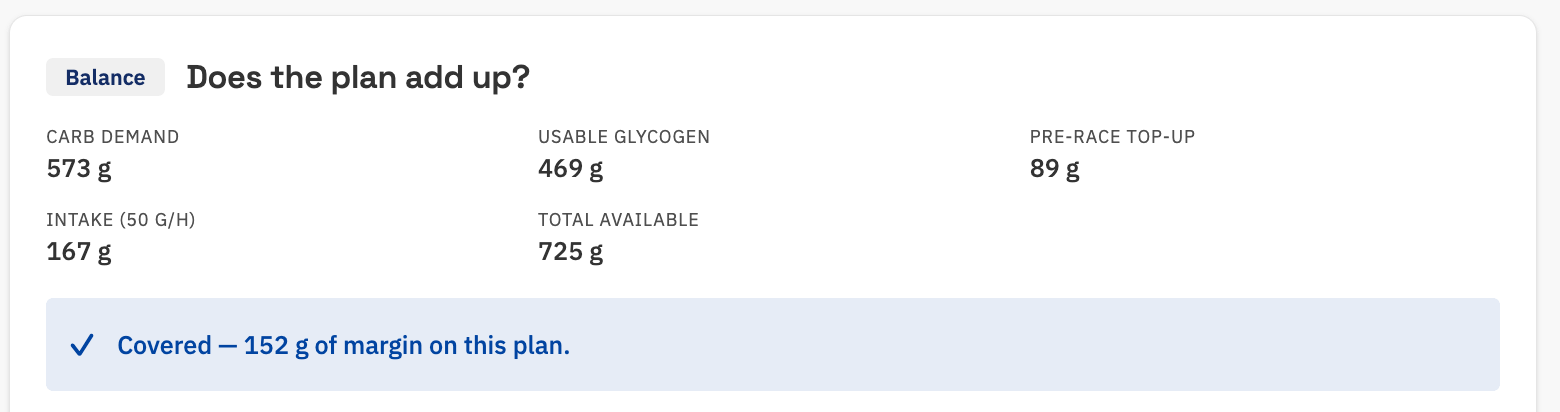
For a much longer race, 0.4 grams per minute tends to be on the low side and might become a limiter, but for this athlete and marathon goal, we can certainly get away with it without extra interventions.
Below is another example where we look at ultratrail, and specifically a race of 70km with 3000m of vertical gain. In this case, the athlete is expected to take about 9 hours, and here we have both tests mentioned earlier, hence fresh state and fatigued state.
In this case, we can appreciate how metabolism is shifting between tests with fat oxidation rates increasing over time (20% increase in fat oxidation after 3 hours of running):
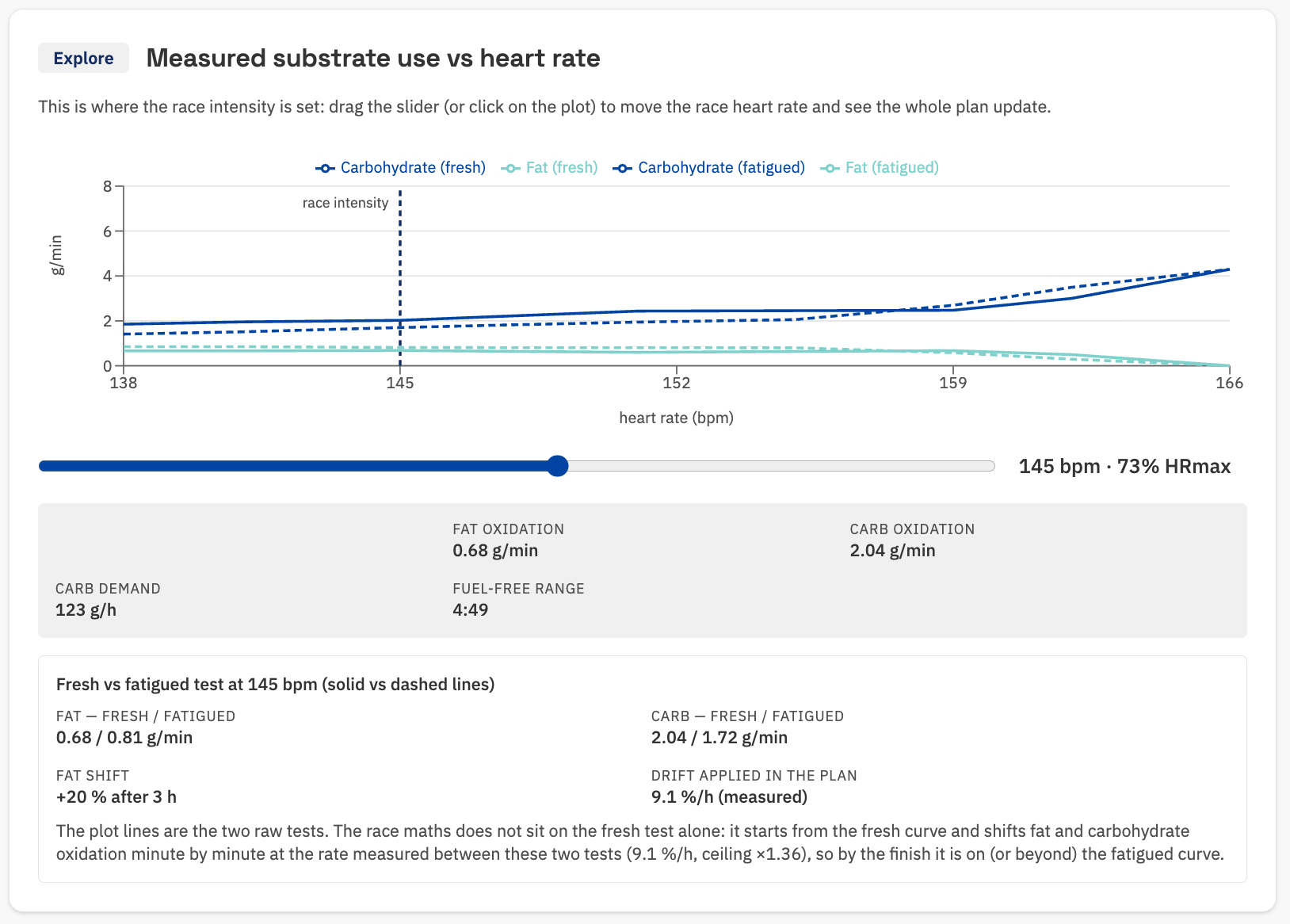
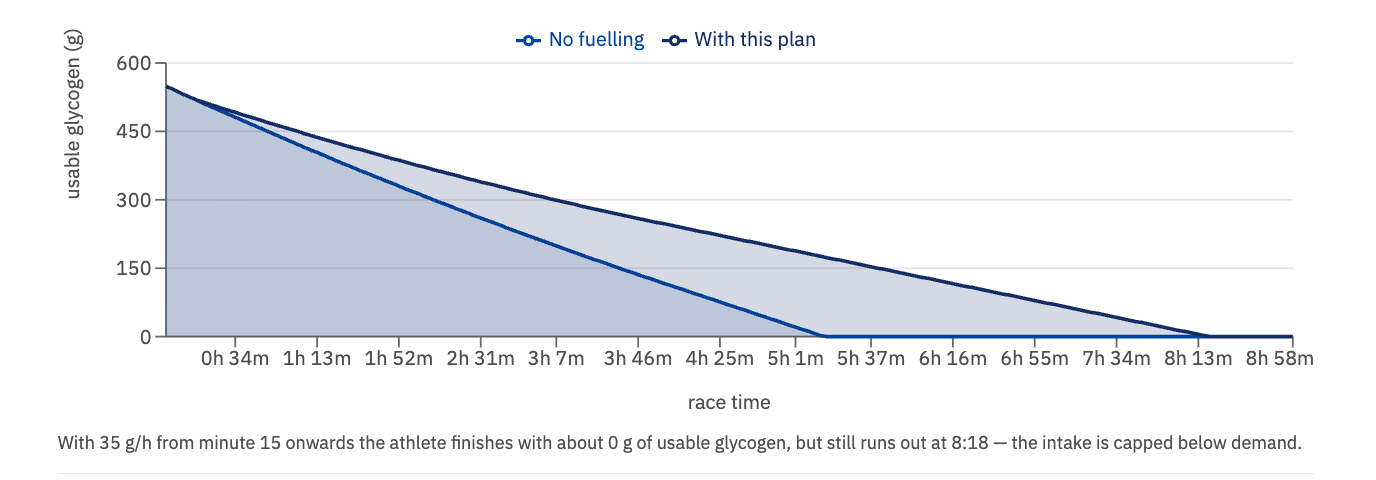
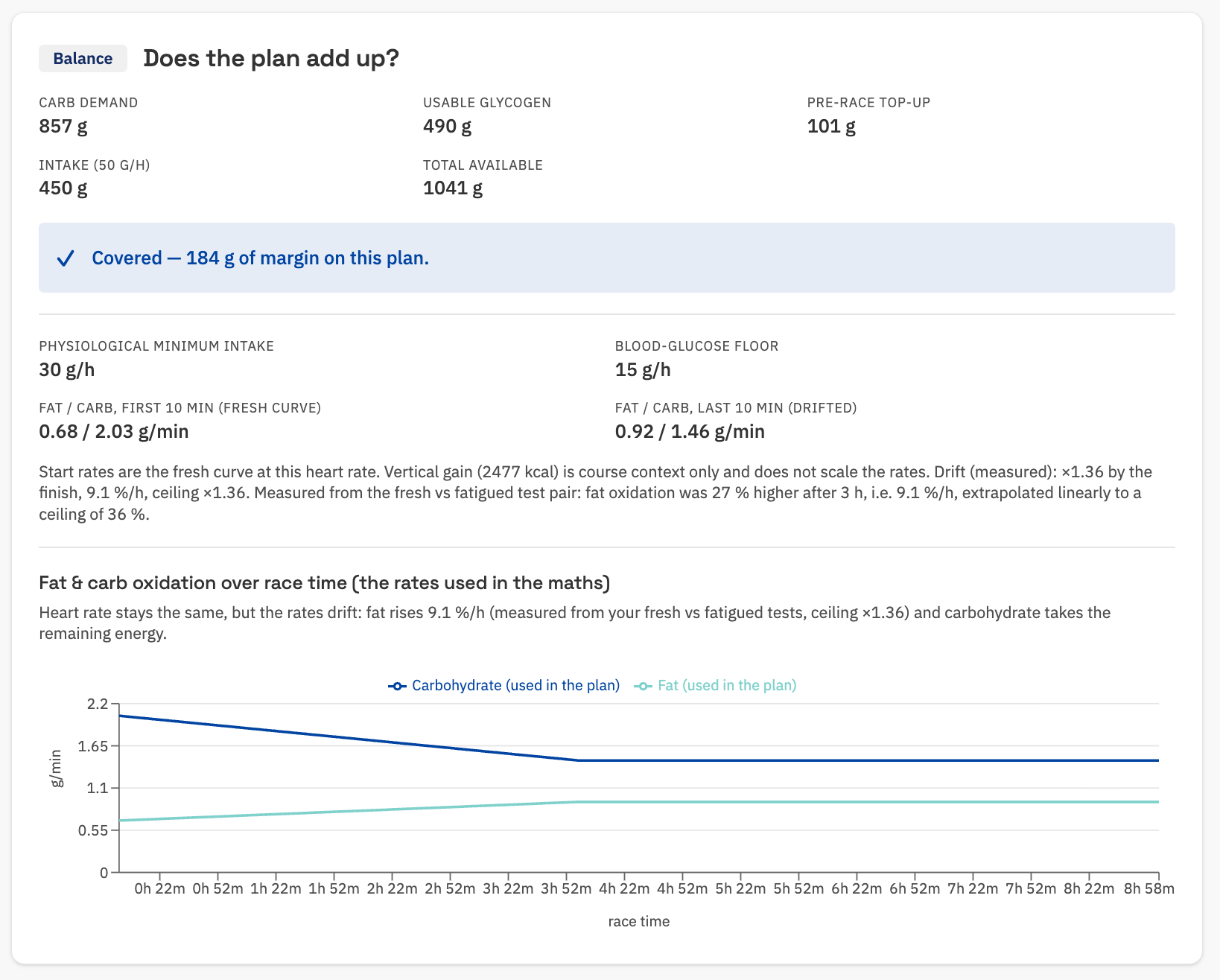
Given this athlete’s rates, which are higher than the previous example, and also given a lower relative intensity for the race, we have a longer fuel-free range (almost 5 hours), but the race is also much longer, to the point that if we were to target a relatively low intake (e.g. 30 grams per hour, which would be fine for a marathon) we would not meet the demands of the ultra trail race:
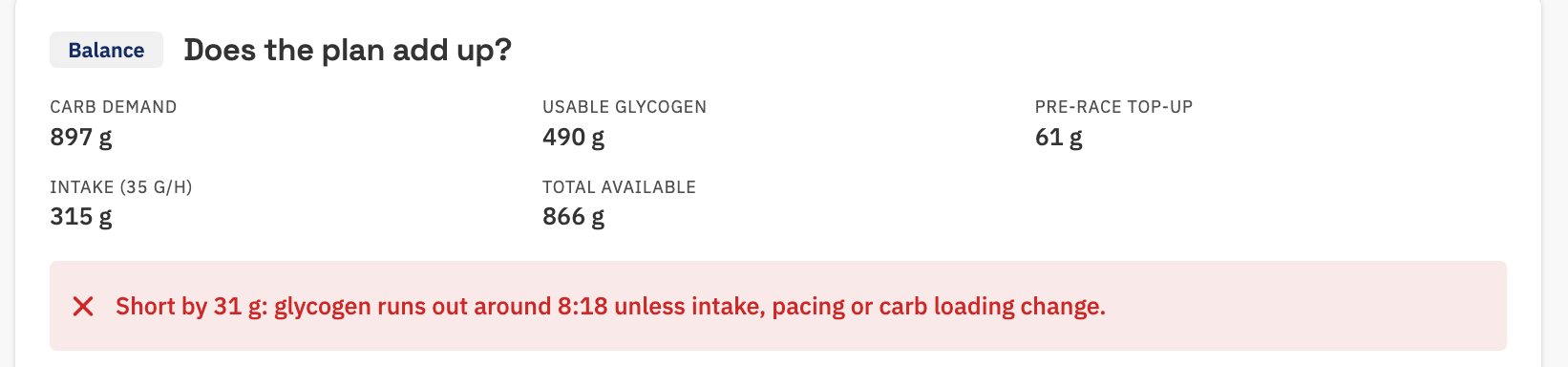
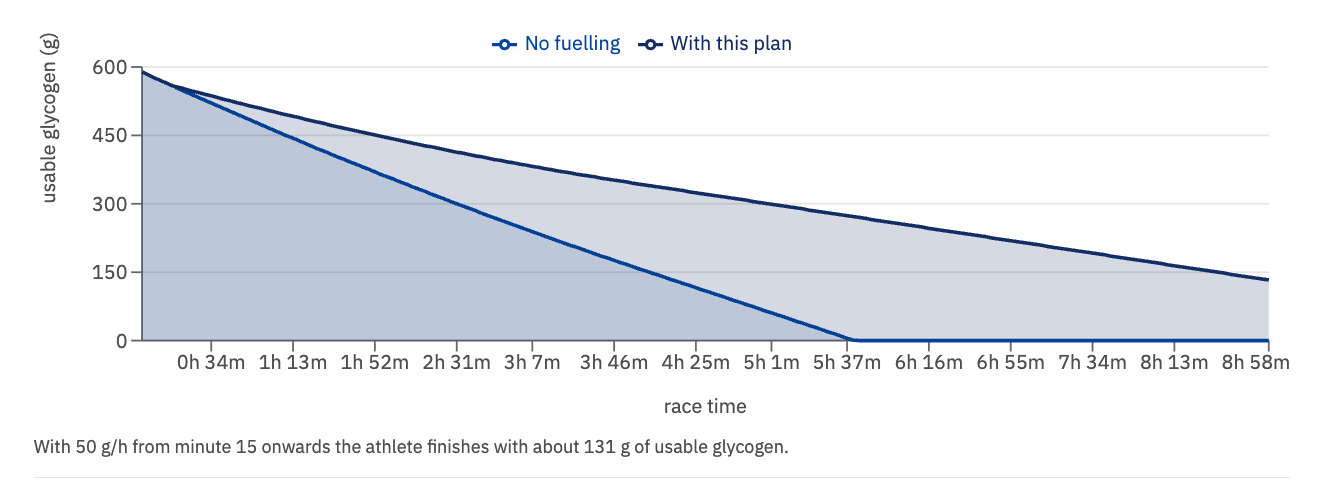
While with 50 grams/hour we get there:
Finally, I’ve said earlier how my optimal intake rate is pretty low given high fat oxidation rates, poor gut tolerance, and relatively low race intensity for an ultramarathon.
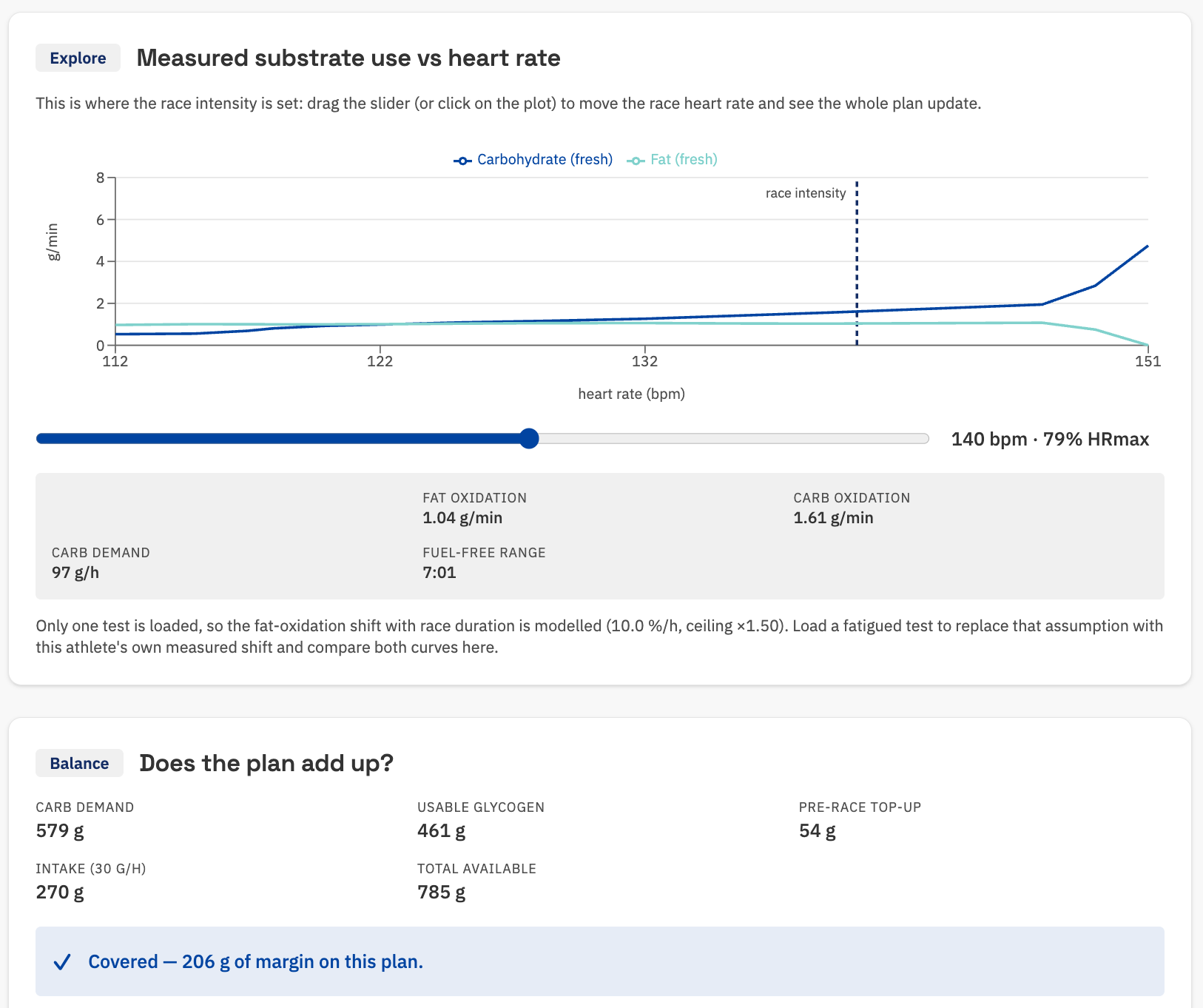
Looking at my lab data plus the race intensity of the events I can sustain for e.g. 8-9 hours (low Z2), you can see my fuel-free range is 7 hours, and 30 grams per hour of carbohydrate is plenty for me:
This whole process and the tools shown above are always improving, but I feel like at the moment I have a decent framework to start a conversation and work towards an optimal plan for an athlete's goals, as opposed to simply relying on generic guidelines that have little to do with an individual’s metabolism.
The exercise above is useful to determine a rate that, with a safe margin, should lead to optimal performance, given that we are not running into premature fatigue because of low glycogen. My preferred way for my individual case is to be metabolically flexible, for the reasons mentioned several times. For others, especially elites burning lots more per unit of time, a higher carbohydrate intake rate might be a solution that leads to the same outcome (i.e., optimal performance). Again, this is about individualization, not about “a universal solution,” as there is no such thing, in my opinion.
Given that we are in the era of “maximizing carb intake”, I will add a few considerations on that as well, especially for non-elites that are unlikely to need such rates. Going very high in terms of intake with respect to our needs increases the risk of self-sabotaging dramatically. Even if we are able to tolerate a certain amount of carbs per hour in training, the race can be a different beast: different temperatures, possibly running at night when the body might be less inclined to absorb food, very different stress levels with all that implies for the gut, a different diet and different training regime in the days preceding the race, etc. - something to be aware of.
On the flip side, despite no established link between particularly high intakes and performance, you can certainly give it a try if you have never experienced gastrointestinal trouble and would like to see if you can perceive a positive effect. It is certainly true that often it takes a while for research to catch up, and also that experimentation and trial and error remain an important part of finding what is optimal for an individual in many things training- and racing-related, in my opinion.
As it often happens, our history can teach us a lot, and if in previous races you tried high rates and consistently had no issues, great, we can keep that going. However, given that we have a clear link between higher rates and higher gastrointestinal issues, we need to be aware of the tradeoffs and risks involved (it would be a pity to DNF because of something our body didn’t really need). In this context, greater metabolic flexibility is simply another tool in the toolbox, which allows us to take fewer risks as well as adjust rates on the go should something unexpected happen in a race (as we can function well at various rates of carbohydrate intake, as opposed to being unable to function without taking in a particularly high rate). Many ways to go about it, as you can see.
To conclude, keep in mind that Yomif Kejelcha ran a sub-2 marathon with a fueling plan of 70 grams/hour, missed 2 bottles, and eventually had about ~55 grams/hour of carbs. Sub-2. Somewhat similarly, Tom Evans, who burns 1.4 grams of fat at his first threshold, reduced his intake after years of gastrointestinal trouble, and eventually won UTMB. They individualized their intake to match their physiology and the demands of the events they cared about, as opposed to “maximizing carbohydrate intake”, which seems to be the common advice these days.
Alright, I hope this was informative and gave you a decent overview of how I’m thinking about race nutrition and trying to individualize it to the specific demands of the event and physiology of the athletes I’m working with.
The interplay of power output and metabolic flexibility is particularly interesting to me, as it shows how recreational runners can potentially do great with limited or moderate carbohydrate intake, therefore easily protecting their gut (#1 cause of DNFs), if metabolically flexible. At the same time, given that fat oxidation rates tend to be capped at 1-1.4 g/min even for elite athletes, their carbohydrate requirements remain substantial (and will be further impacted by race duration). It follows that if you are not an elite and are not generating a huge power output, fueling like one could be a quick way to sabotage your own race (unnecessarily!).
Please feel free to reach out should you be interested in working with me.
Happy running and thank you for reading!
Please apply here should you be interested in working with me.
You can also learn more about my coaching, here.
Thank you!
Our book is out and available for purchase from Human Kinetics’ website, here (or on Amazon).
No paywalls here. All my content is and will remain free.
As a HRV4Training user, the best way to help is to sign up for HRV4Training Pro.
Thank you for supporting my work.

Marco holds a PhD cum laude in applied machine learning, a M.Sc. cum laude in computer science engineering, and a M.Sc. cum laude in human movement sciences and high-performance coaching. He is a certified Ultrarunning Coach.
Marco has published more than 50 papers and patents at the intersection between physiology, health, technology, and human performance.
He is co-founder of HRV4Training, Endurance Coach at Destination Unknown, advisor at Oura and augo, guest lecturer at VU Amsterdam, and editor for IEEE Pervasive Computing Magazine. He loves running.
Social:
Personal Substack
Strava
Instagram
Comments
Nothing yet. Say the first thing.
Sign in to join the conversation.