
Like you, I’m in too many Whatsapp group chats. But this past week, someone posted a quote that struck an interesting conversation in the group.
“We don’t really heal anything; we simply let it go.” - Carl Jung
Simple. Elegant. And for a lot of people I work with, it is quietly infuriating.
If you’ve started practicing self-reflection in your life, you’ve likely started incorporating some form of ‘the work’. This includes therapy, breathwork, journaling, and even attending retreats. But after these modalities, you still feel the same familiar ache pressing on your chest, you know, “just let it go” sounds like “just be happy.” Beautiful in theory. Harder to practice.
So let’s talk about what’s really going on.

If you are aware of wounds you have, you may have realized these aren’t just wounds. Over time, these wounds become a story. Slowly, without you noticing, the story becomes you. You cannot separate yourself from the one who has experienced these ‘little’ traumas because your mind is closely associated with your true self.
Take Amanda, a client who came to me after years of therapy. Every time she was presented with an opportunity, be it a promotion, a relationship, a new project at work, she’d say, “I’m not ready yet, I’m still working through my stuff.” The healing had become her permanent address. And that identity offers something powerful in return: protection.
If you’re the one who’s been hurt and still working through things, rejection doesn’t hurt as much. Failure doesn’t sting as much. The victim’s identity is not a weakness; it’s a cell you’ve built with careful walls.
The trouble is, cells have doors. What you don’t realize is you’ve been holding the key the whole time.
I see this pattern all too often, and I have embodied it myself at times. A client has a breakthrough moment where they are laughing freely, speaking their truth, and feeling genuinely excited about something. For a few minutes, they’re completely present, completely themselves.
Then I’ll say, “See? You were free just then.”
Then something shifts. The walls go back up. They return to the familiar story, back to the cell, door bolted from the inside.
Freedom asks something terrifying of us: to become someone new. The uncomfortable cell is familiar. It’s ours. We know its walls.
Two Truths You Don’t Have to Choose Between
In this conversation, there are two camps, and most people feel pressure to pick one.
Camp One says the story is the problem. The moment you stop identifying with it, you are free. Right now, in this present moment, none of your past actually exists except as a thought you keep choosing to think. Change the thought, change your destiny.
And honestly? That’s true.
Camp Two says not so fast. The human brain doesn’t logic its way out of deep pain. You have to move through it gradually by feeling, naming, and understanding why it lives where it lives before you can transcend it.
And that’s true too.
The mistake is believing you only get to use one.
Where you place your attention is where you place your energy - Joe Dispenza
What I’ve seen, in my own life and in the people I work with, is that real shifts tend to move in two stages.
Stage one is understanding. You learn why you built the walls and why certain rooms feel unsafe. Why do the same patterns keep showing up in different disguises? You’re learning to be with the fearful parts of yourself gently without judgment.
Think of water evaporating. It doesn’t just disappear. It slowly changes from liquid to gas. It becomes lighter and takes up less space. You’re becoming more aware of it and giving it room to breathe, so it stops running the show.
Stage two is becoming. Once you’ve created enough interior space, stop reinforcing the old story. Joe Dispenza says, ‘Where you place your attention is where you place your energy.’ Affirmations don’t cut it here. You start becoming a new version of you through living differently until the new version of you becomes your new default.
Real security doesn’t come from the absence of wounds, but from knowing they don’t define you.
When you recognize you’ve been carrying a backpack of patterns, identities and judgements, you can decide to put them down. This is the moment when the opinions of others lose their grip. Rejection loses its sting, and the pressure of the rat race loses its appeal.
This isn’t because life gets easier, but because you are no longer running from yourself. For the first time, you’re walking toward your true self.
The door to the cell is open. It’s always been open. And there have been times when you have stood in the doorway and even felt the air on the other side. But now you have the conviction to step forward and never look back. That old self got you to the doorway, and like a caterpillar becoming a butterfly, to transform is to move forward without looking back.
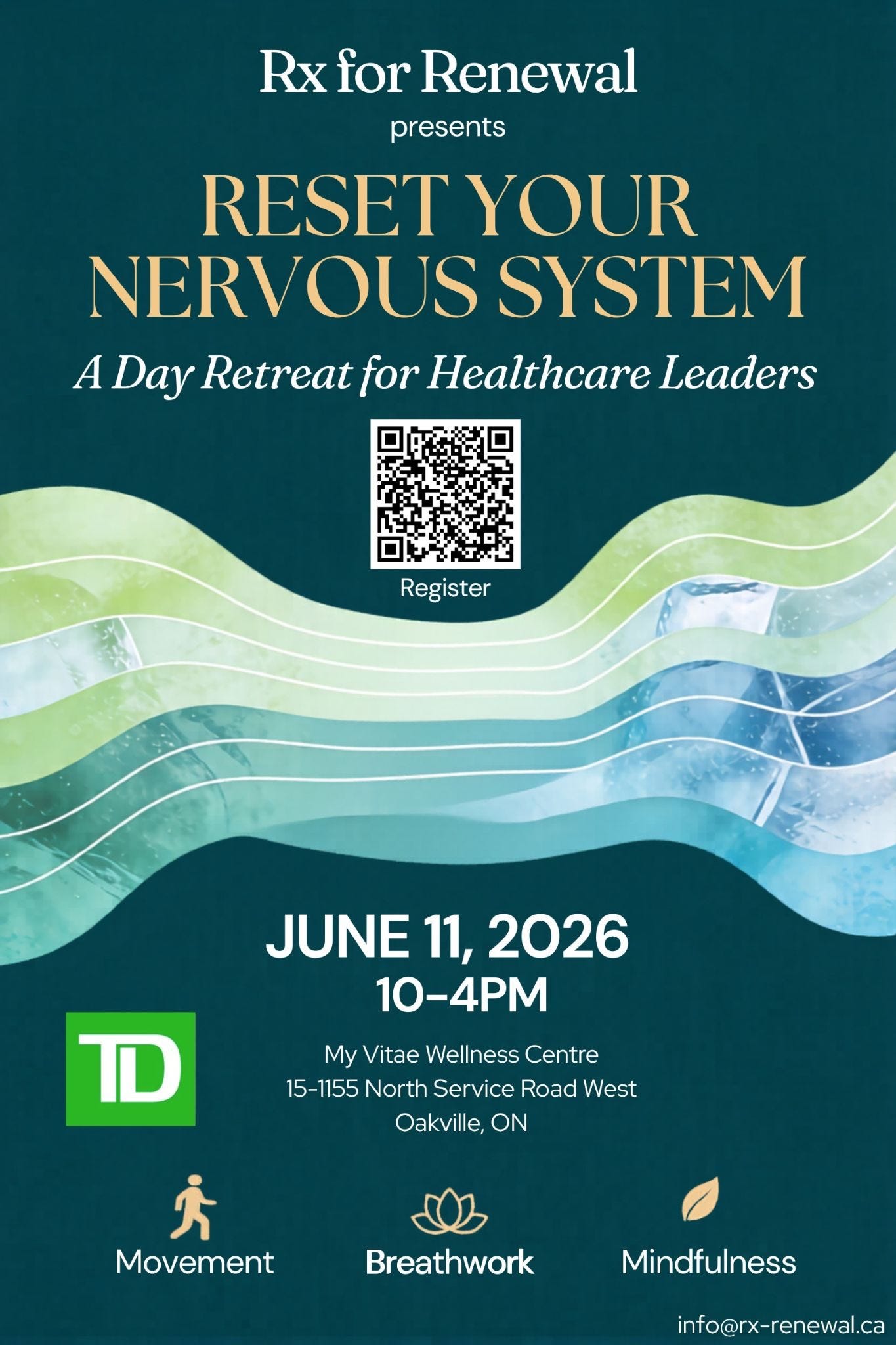
To shift into experiencing this process of letting go and how breathwork can support you, register for the upcoming Rx for Renewal Retreat. The theme is ‘Equilibria’ as we educate ourselves and explore how self-regulation and nervous system balance can help you live a fuller life.
Thanks for reading Prescribing Awareness! This post is public so feel free to share it.
Manjit Hansra is the founder of Rx for Renewal. Through keynote speaking, 1:1 coaching, and curated retreats, I share evidence-based tools to help professionals prevent and manage burnout. Check my offerings HERE and book a complimentary call to improve your mental fitness HERE.
Comments
Nothing yet. Say the first thing.
Sign in to join the conversation.