
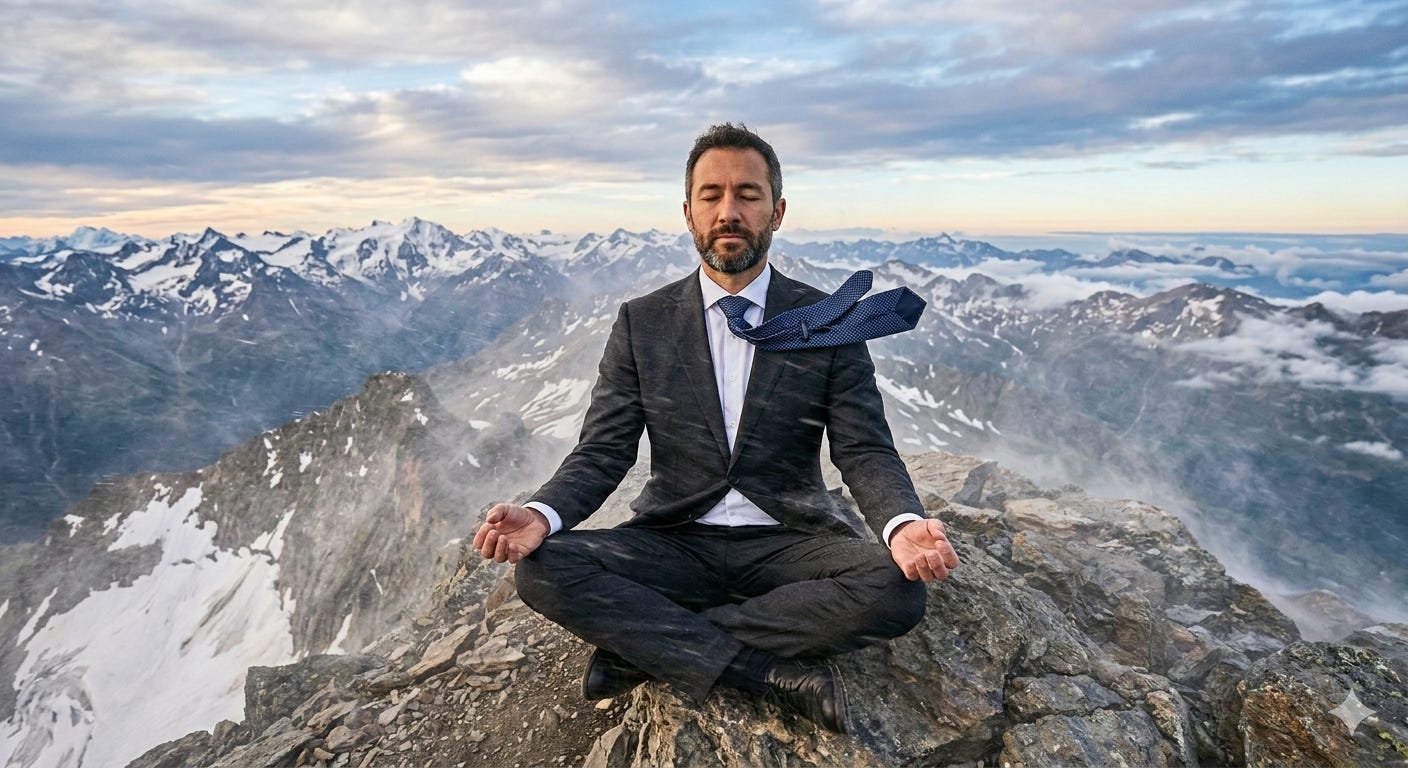
Say “meditation” out loud. What comes to mind? Do you picture a skinny Indian man or woman sitting cross-legged with their eyes closed on a mountaintop? That image does something subtle but powerful. It creates distance. It quietly tells your subconscious, “That’s not for me,” and without even trying, you opt out.
The image doesn’t convey why the person is meditating. They’re not doing it because life is easy; they’re doing it because the mind is hard. The practice exists because of the chaos, not despite it. The mountaintop isn’t an escape. It’s the training ground.
I am surrounded by high performers. Most track their sleep, watch their diet, and have colour-coded Google calendars filled from 8 am-6 pm. They read the books, hire trainers, and log their workouts. In my experience, most driven professionals invest in every system in their life except the one that runs all the others. Why? Because stopping feels like failing. We have built an identity around output and around doing while tying our self-worth to what that doing gives us. Sitting quietly with no goal, metric, or deliverable genuinely threatens that identity. Sitting still isn’t hard because of your schedule. It’s hard because of your ego.
If your mind generates most of your suffering, ignoring it is likely the worst decision you could ever make. You rely on plumbing infrastructure without maintaining it. You wouldn’t ignore a leaking pipe in your basement. You would never let a critical business system run unchecked for years. Yet, this is exactly what most high-performing professionals do with their minds and wonder if they’re burnt out.
The Western world has given us ways to bypass the mind entirely. It’s like handing an iPad to a misbehaving child. The kid quiets down. You get a moment of peace. But the child doesn’t learn anything. They don’t learn how to build patience or manage their feelings; they are just temporarily occupied. When the screen goes away, you’re right back where you started, except now it’s worse, because you’ve taught them that discomfort gets rewarded with distraction. This is what we’ve done with the mind.
Most people approach meditation for the wrong reasons. They want calm, better sleep, and less stress. These are reasonable hopes, but when it gets uncomfortable (15 seconds into a sit), they quit and conclude that meditation simply isn’t for them. What they’ve discovered is the entire point of the practice, and they walked away.
The discomfort doesn’t mean it’s not working; it’s the work. The goal was never to empty the mind. That’s the most persistent and damaging myth about this practice. The goal is to notice the noise. To notice the internal judge, the anxiety, and the restless planning without being controlled by it. You’re not trying to silence the unruly child; you’re learning to be present during its tantrum. The key reframe is realizing you’re not failing every time a thought appears. In actuality, you’re succeeding when you notice it.
Language shapes perception more than we realize. The word meditation carries centuries of cultural baggage. So drop it. Call it mental training. Call it a sitting practice. Call it two minutes of doing nothing on purpose. The name matters far less than the act, and the act is straightforward: you sit with your mind instead of running from it. Let the unruly child throw its tantrum, and don’t reach for the iPad. Over time, the child learns. And so do you.
For years, my job was to provide medication for patients. Pills for cholesterol and high blood pressure offer external solutions for internal problems. We get prescriptions for everything except the thing we need the most.
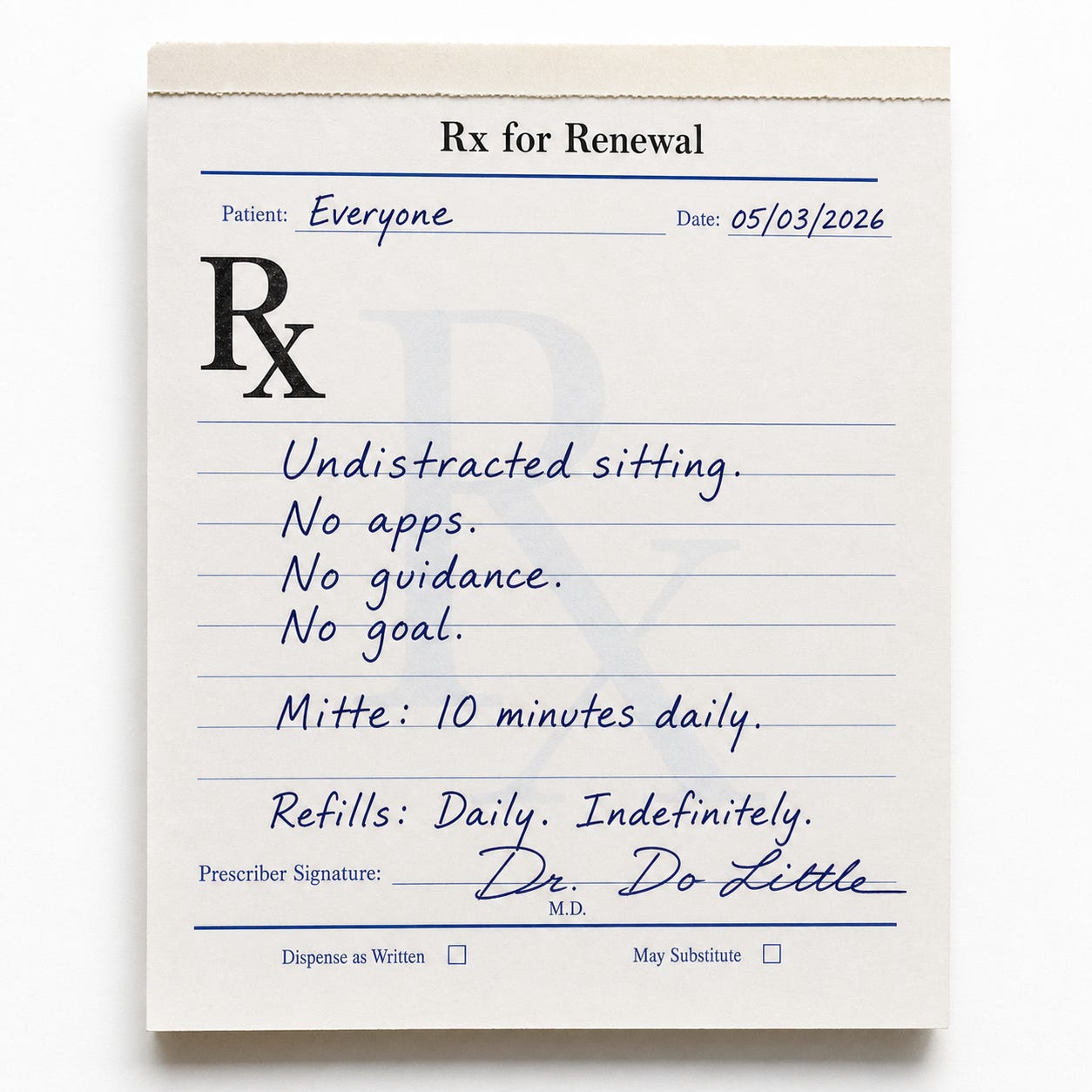
No app. No guided voice. No goal. Ten minutes, a chair, and your own company. The reason nobody wants this prescription is the same reason it works — it requires you to face the mind that has been running the show unchecked, likely for decades. That is not comfortable. But comfort was never the point. We chase finish lines that society keeps moving further away. This practice asks something different of you.
It gently reminds you to ‘Find the starting line.’
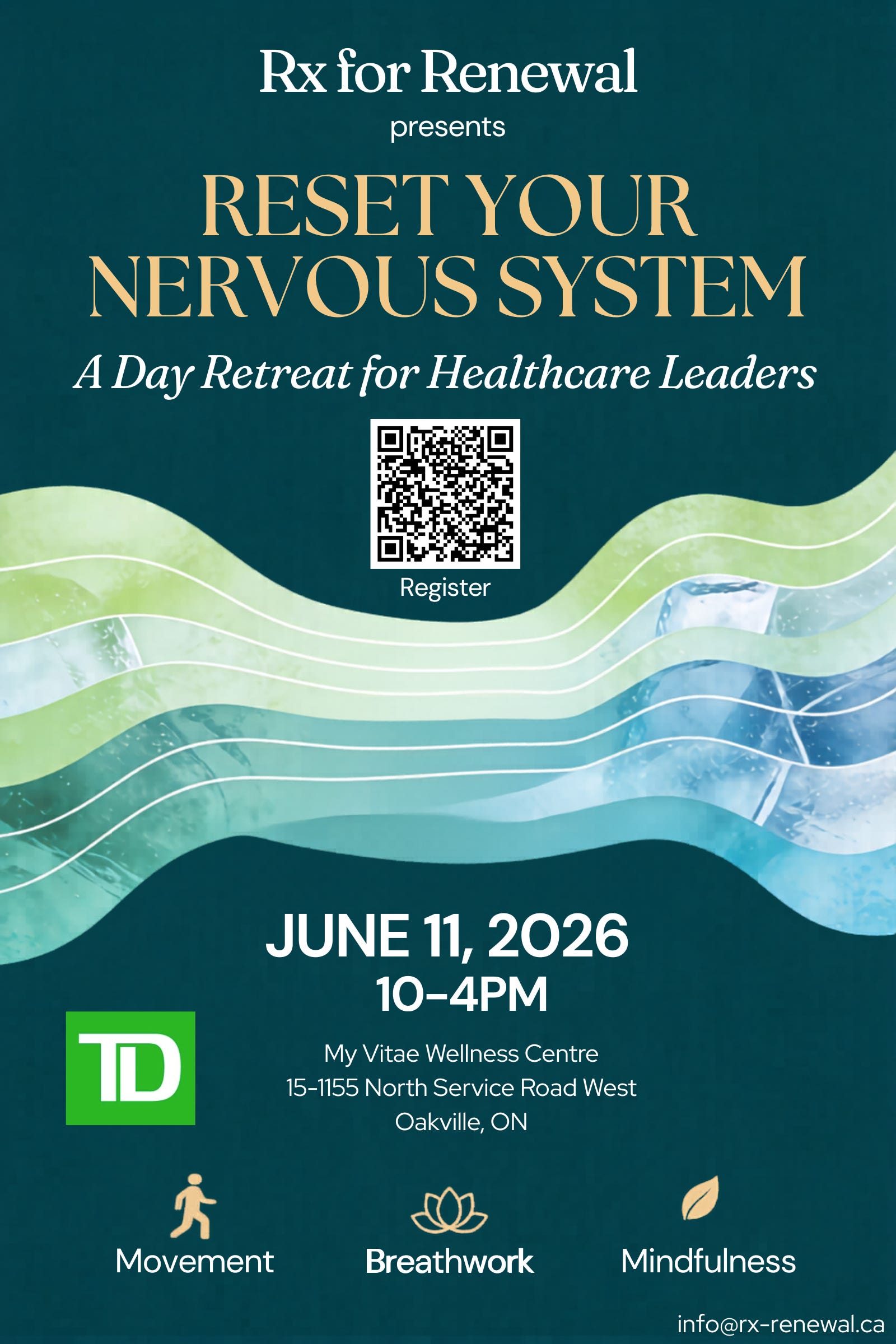
If you are a healthcare provider looking to find this starting line, check out our 8th offering of Rx for Renewal Retreat on June 11th. The theme is ‘Finding your Equilibrium,’ and we will dive deeper into practices to balance your nervous system.
Thanks for reading Prescribing Awareness! This post is public so feel free to share it.
Manjit Hansra is the founder of Rx for Renewal. Through keynote speaking, 1:1 coaching, and curated retreats, I share evidence-based tools to help professionals prevent and manage burnout. Check my offerings HERE and book a complimentary call to improve your mental fitness HERE.
Comments
Nothing yet. Say the first thing.
Sign in to join the conversation.