
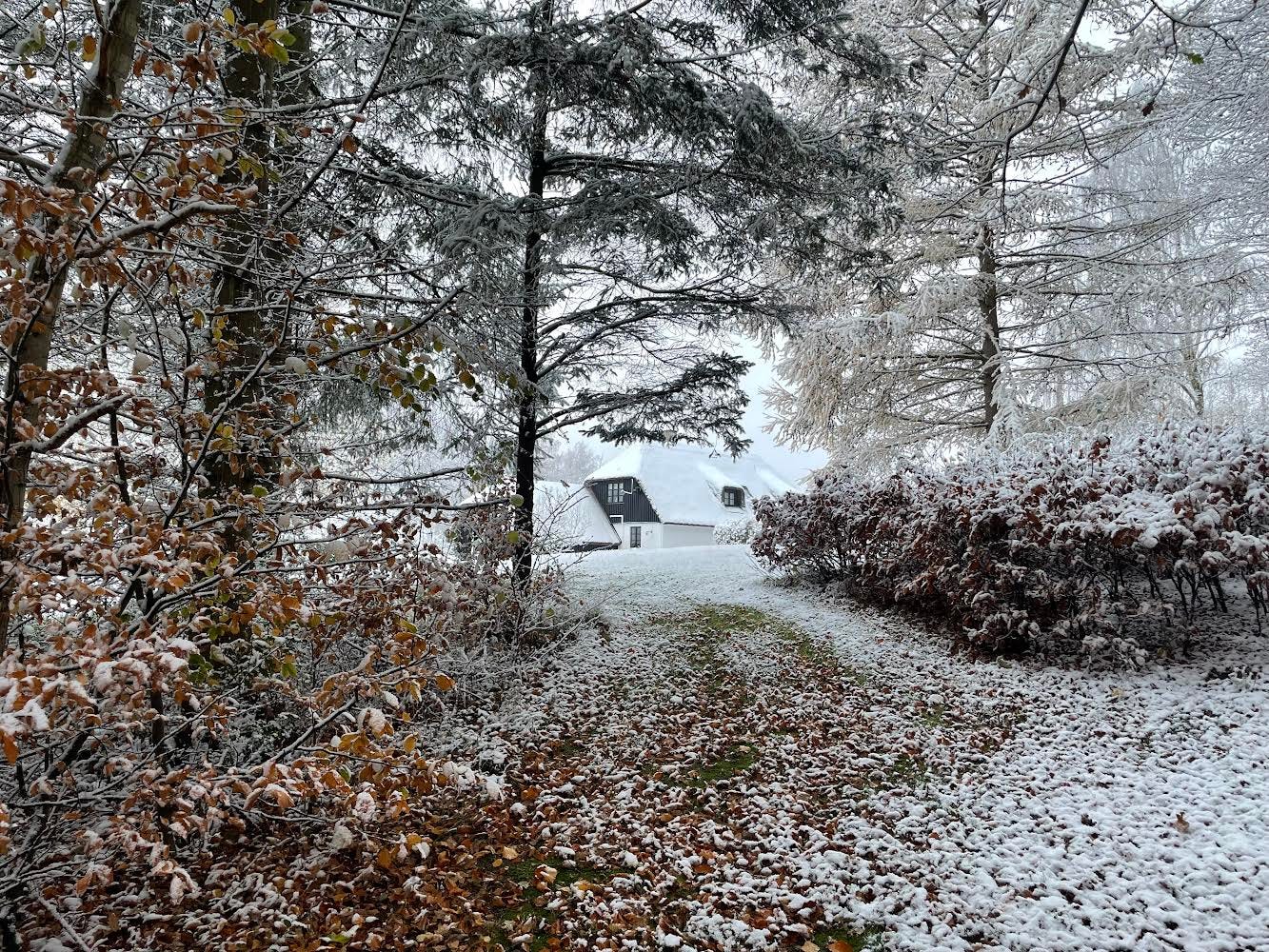
The first day of the month, I wake up to Narnia. A pristine white coat of snow stretches as far as the eye can see. Torn between “Wow, beautiful!” and “How very dare it snow when I have places to go and things to do!” I set out on my daily forest walk. I am listening on audible to Dan Millman’s ‘Laws of spirit’ and we are at the part where he is telling a story to illustrate the importance of our beliefs about possibility. The gist of the story is that when asked to do a challenging thing (at this point in the story the challenge is hitting a tree with a rock from a seemingly ‘impossible’ distance) success depends on whether or not you believe it’s possible or not.
This stuff is stuff I’ve taught a lot, and know a little about. I believe that beliefs to a large extent influence reality. If you know you can’t hit a target/ get a job/ make a cake then you are probably right. You probably won’t even try that hard in order to make sure you confirm your bias. Beliefs are the filters that colour our world. They enable us or block us, and live in us as unquestioned realities. If you look at the world through rose-tinted spectacles you will literally experience the world differently than if you look at the world through shades. If you look at the world through a ‘possible for me’ lens you will see opportunities that an ‘impossible for me’ lens doesn’t allow. Beliefs come from the decisions we make about experience, which come in turn from earlier beliefs formed about earlier experiences. If I have an early school experience in which I’m told or it’s implied that I’m crap at maths (I was), I will internalise that ( keep telling myself) and probably go on to avoid all maths-related situations like the plague after school (I have successfully so far). Such beliefs persist in the mind largely unconsciously but they impact our future decisions. We tend to treat them as facts and argue for them vehemently (“I am crap at maths” = fact). But they are not facts, they are decisions we once made and have continued to make ever since. And the good news is that decisions are present and active, and so you can choose again and decide differently. Many beliefs change in the natural course of events over the years. I used to believe that perms were an excellent idea, and that I looked like a bobby-dazzler in yellow leg-warmers. I’m no longer quite so convinced. I have also changed some really important limiting belief decisions over time - I decided at an early age I couldn’t do public speaking, for example. That limited me in my work so I decided to change it. I worked on practicing and learning how, and working with tolerating the distress of trying. And now I can. We can all choose to examine beliefs and consciously decide to give them an overhaul anytime. When you you start to shift the limiting ones, magic can happen. You can be a sponsor or a monster for yourself and others depending on whether your beliefs empower or disempower your behaviour. Change your beliefs and you can literally change your world.
A favourite story of mine that is often told to illustrate this is about tethering baby elephants. If they are tethered to a stick which is strong enough to hold them when they are small and young, they learn that they can’t get away. As full grown elephants they could easily pull up the stick and escape but they don’t. Their belief is that they can’t so they don’t even try. Elephants you say, aha but we are cleverer than that! However a study was done with Harvard undergraduates (who you’d think would be pretty clever) in 2000 which seems to show otherwise. Researchers created a competition for the IT students with a big prize at the end for the student who managed to contact the person with the highest position in Microsoft. At the end of the challenge it emerged that no-one had done anything. Not one of the students had bothered to even try, because, it turned out, they all thought that the others were bound to do better. If anyone had just bothered to speak to a janitor at Microsoft they would have won the prize but their beliefs about what was possible had held them back. No-one won the prize. The next week the researchers set the same task again after debriefing (or de-beliefing) the students. This time everyone went for it and several of them managed to get a conversation with people at the very top of the organisation.
Walking down the snowy forest path the story in my ear suddenly stops and I realised that my earbud has dropped out of my ear into the snow and leaves. My earbud is white. The snow is white. I’ve potentially walked quite a few steps since it dropped. Any rational being would have stopped, marked the spot and systematically searched the area. I just lost my shit. Started ripping my clothes off to check if it had dropped in there. Crawling around the area on my hands and knees, all the time accompanied by panicky, mega-helpful thoughts like “I’m screwed” “I’ll never find it in a million years” “There goes £150”. Then I switched for a bit to the equally helpful beating-myself-up channel with highhanded thoughts like “Well, you’ll never find it in this mindset. “You need to believe it’s possible”. I spent a few minutes trying to ‘assume the attitude’ of one who believed I could find it, scanning the area and calling in help from St Anthony, the borrowers and anyone I could think of who might help find lost things. Half an hour on, I still hadn’t found it. I reverted to crying for a bit, then marked the area with a stick, gave up and went home, ruefully googling the cost of a new set.
An astonishing historical example shows that unless you believe something, you quite literally don’t see it. The great explorer Magellan kept diaries. In one entry he recounts arriving on a beach in Tierra del Fuego. The locals had a canoe culture and had never seen ships before . Ships were just not part of their experience so as the vessels approached they literally did not see them. Magellan pointed at the ships, they could see nothing. He had to take the locals out to touch the ships and climb on board before the cultural trance was broken and they were re-entranced into a new reality. How many of us have symbolic ships on our horizons that we can't see because of our limiting beliefs about us, the world – and about what’s possible. If we can’t see ships how can we see our potentials, abilities and capacity for greatness if we’ve entrained ourselves to believe otherwise?
Great sports people rarely question their ability to hit a target or jump a hurdle. Great musicians don’t question their ability to play the right notes on their instrument the next time they pick it up. They have practiced to a degree where they have a solid belief in their ability to make it happen. Seeing has caused believing. In the same way most of us don’t question that that we can walk or drive a car or cook a meal. But once upon a time you we couldn’t do any of those things. We had to practice them and automate them. What other certainties do you have in your life that enable your success in that way? For me I know I’m amongst other things an excellent speller, and parallel-parker and I’ve grown to know with certainty that a solution to whatever problem I currently have will always come if I give it time. These are beliefs I’m happy not to question. But what of the dodgy ones? One such unhelpful one I’m working with at the minute is my belief that as I get older my memory isn’t so great as it was. I’m learning Danish and this belief does not support that. So I need to keep examining the evidence and interrogating the truth of my thoughts around that if I want to help myself out. After all I’m 56 and have managed in one year to become more fluent in Danish than I ever was in French after 6 years to ‘A level’ standard. My memory can’t be that bad. The way I choose to sell my experience to myself, and the evidence I choose to focus on, will help or hinder what happens going forward.
During the day after losing my earbuds, I question a lot of my beliefs about myself and the nature of the universe. Surely this morning was a test. I know the universe sets exams and it can’t be a coincidence that I was listening to that particular chapter and then this happened. The universe must have had a hand in it. I felt was pretty damned sure I’d failed the test though. Comprehensively. And what am I supposed to learn from this? What possible lesson is there in dropping an expensive piece of kit on a snowy forest floor. Many chattering monkeys in my head, much overthinking and pessimism. Throughout this time my intuition was trying to get a look in with “It’s not over til it’s over”/“Hang on, the story is not at the end until you understand it” type thoughts. The monkeys were winning however and I didn’t have much hope.
Later in the day, when the snow clears, Dave offers to help me go out to search for the needle in the haystack again. I need to be coerced a bit because I don’t see the point, but Dave is optimistic. On the way he tells me that there is a way of connecting the earbud with my smart phone and getting it to make a sound so that you can locate it. My spirits soar at the thought and I really begin to believe we’ll find it. We return to the area where I lost it and while we try (unsuccessfully) to connect to the earbud, we start to look around. It’s still a big challenge - the ground all around is completely covered in leaves and snow. But now I have hope. Dave goes all CSI, systematically and carefully turning over leaves with a big stick. I follow suit. I find the ear bud buried under a pile of leaves in a matter of seconds. I choose to believe that my change in belief about the possibility of finding it was the difference that made the difference. And that that was the learning. That’s my belief. You may choose to believe differently, and you can choose to believe anything you like,
but choose wisely because everything you currently see in your life is the result of your beliefs. And that’s another belief. End of story.
No posts
Comments
Nothing yet. Say the first thing.
Sign in to join the conversation.