
Hello and welcome to my newsletter about food, people and planet. It’s free to read, but you could choose to be a paid subscriber to support me.
My new book In Good Taste: What Shapes What We Eat and Drink - And Why it Matters is out now and available on Waterstones, Amazon, bookshop.org and more.
Happy Earth Day just passed. Delighted to be reconnecting with the mother ship with your support. I noted endless social media posts about saving waste, eating beans, buying locally and seasonally. But the truth is we’ve lost our connection to how our food is grown. The further we get from how food is produced, the easier it is to waste it or take it for granted.
I’ve spent time trying to understand the gap between the way we eat and the systems that produce our food in the past few years. We talk about recipes, flavour and culture but none of it exists without this.
I’m far more comfortable in the city than on soil but I spent time with farmers who are working closely with nature learning from them, asking questions, and often feeling completely out of my depth. Hope you enjoy the series of little films I made with food systems storyteller Lola Lee, alumna of my British Library Food Matters masterclass.
When something is cheap and plentiful, do we value it enough? The humble potato is a case in point. It is one of the most binned foods in the UK, with bags often selling for pennies in my local shops. Potato consumption has been on the decline globally, and we mostly eat the processed kind. And yet, potatoes hit a sweet spot of good food on several fronts. They’re affordable, nutritious, versatile and delicious.
New potatoes, in particular, come with specific benefits. So when a chance to kick off the Jersey Royal potato season, in Jersey, with a group of journalists and social media influencers I jumped at it. This is not a sponsored post, but it is the result of a press trip.
Jersey used to be part of mainland Europe, until rising tides cut it off. It’s still closer to France than the UK, with which it has an interesting relationship. It is a British Isle but not part of the UK. While it has its own government and independence, it is a Crown Dependency and still answerable to the King, benefiting from military support if needed. It’s part of the EEC but not the EU. In short, it’s complicated.
Here’s five things you need to know about Jersey Royals:
Their production dates back to almost 150 years on the island and is still highly manual
They’re often grown on a côtil, an ancient growing system of steep south facing fields, some with sweeping views of the bay.
The conditions on the island give them their buttery taste and texture. Farms on one part of the island use washed up seaweed as natural fertiliser
They are harvested quickly and graded into three sizes of the perfect kidney-bean shape
They have less of something called "dry matter" in them. The papery skin and texture means they are a sponge for flavour.
I’m no medic, but here are some health benefits if you’re so inclined.
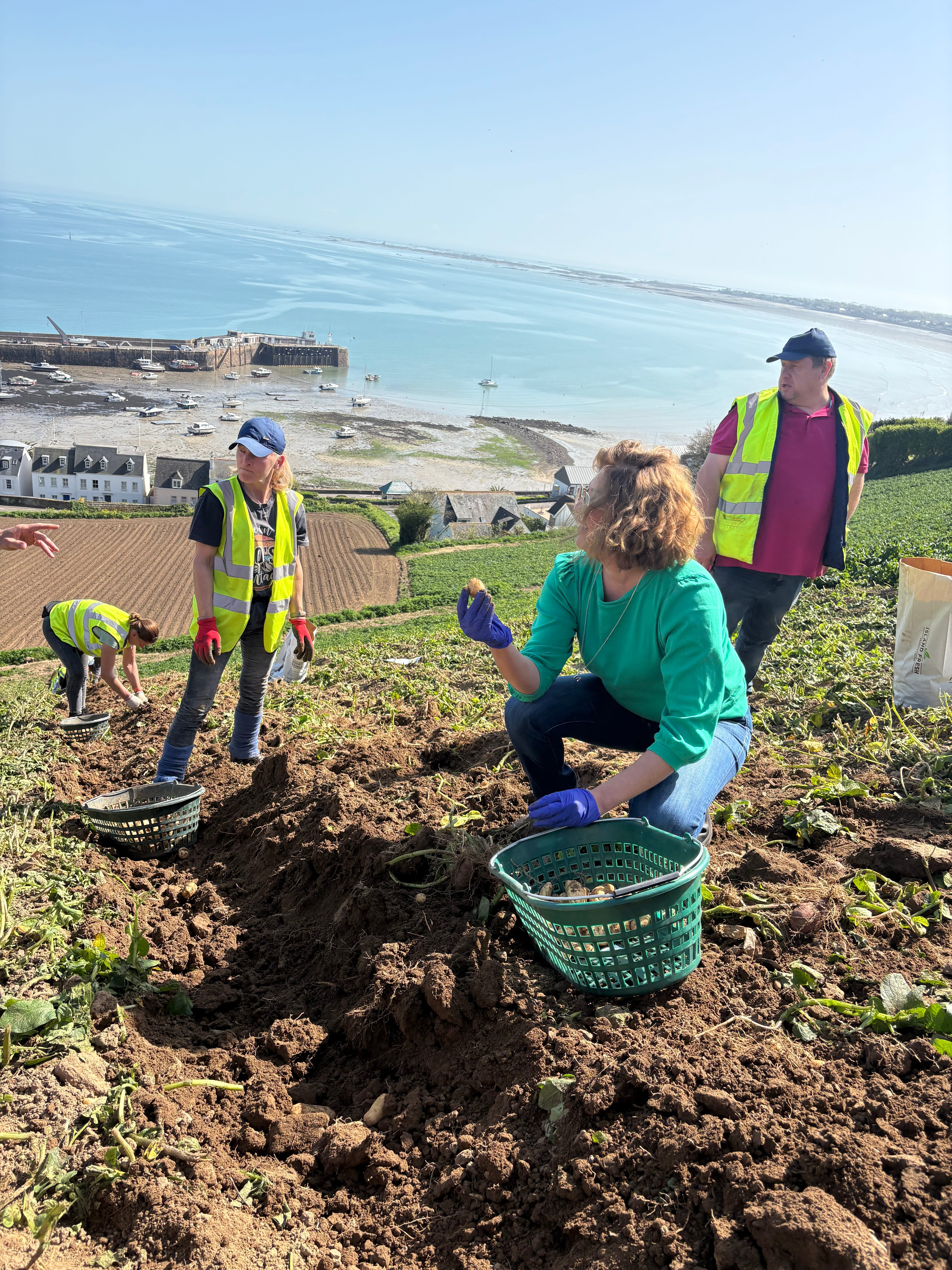
The Scotland-headquartered UK company Albert Bartlett took over The Jersey Royal Company streamlining the island’s production and marketing. The trip was a masterclass in storytelling about local and seasonal produce, provenance, the people behind our food and the difference it makes to our plates. We had a go at harvesting, planting seedlings for next year and sampled a gazillion ways to enjoy the spud. Have a look here (note: not giving up my day jobs any time soon!).
Michel Roux Jr flew out to cook Jersey Royals three ways for us - Crushed with Gremolata, topped with seaweed butter and simmered with clams and mussels. It was all exceptional but we agreed, these potatoes really don’t need much doing to them. Steamed, with quality butter and salt is magic. Add spices or herbs if you must. I can confirm they make excellent saag aloo and a recipe for sour, sticky sautéed Bengali potatoes follows.
If you haven’t been to Jersey yet, take this as a food and travel recommendation. We were taken on an epicurean tour of the island in between tatty tours. Jersey is barely half an hour away by flight. I couldn’t resist making some jokes about tax-evading billionaires on my way there, but I was quite smitten by how warm, calm and beautiful it was.
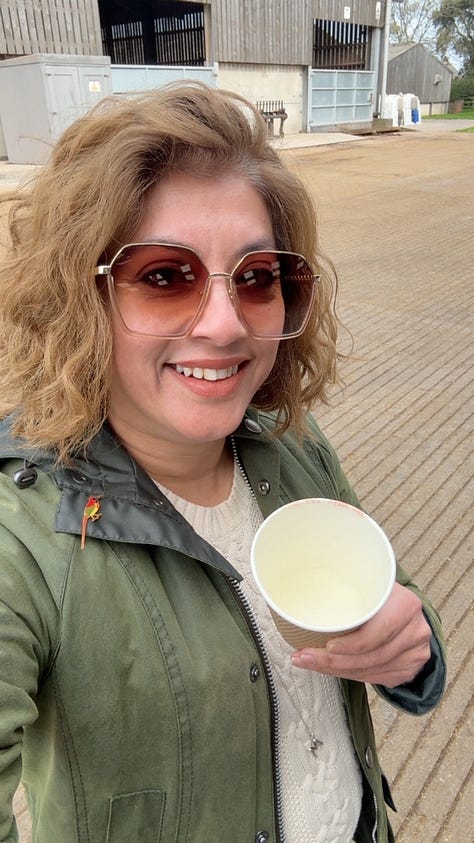
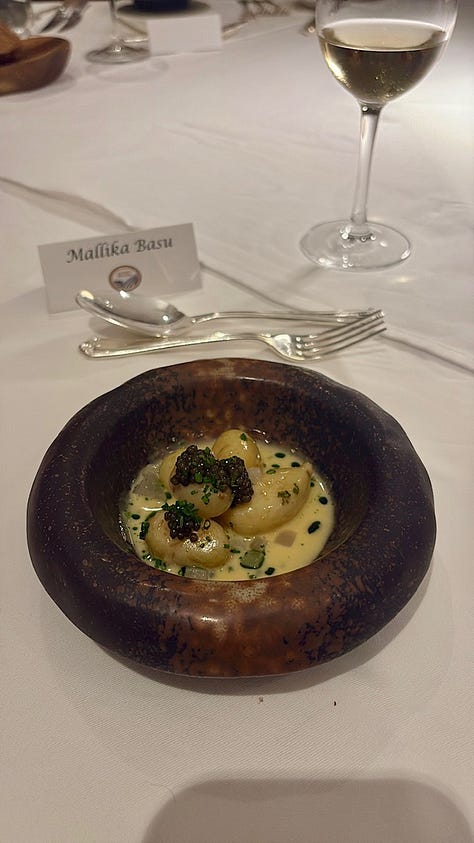
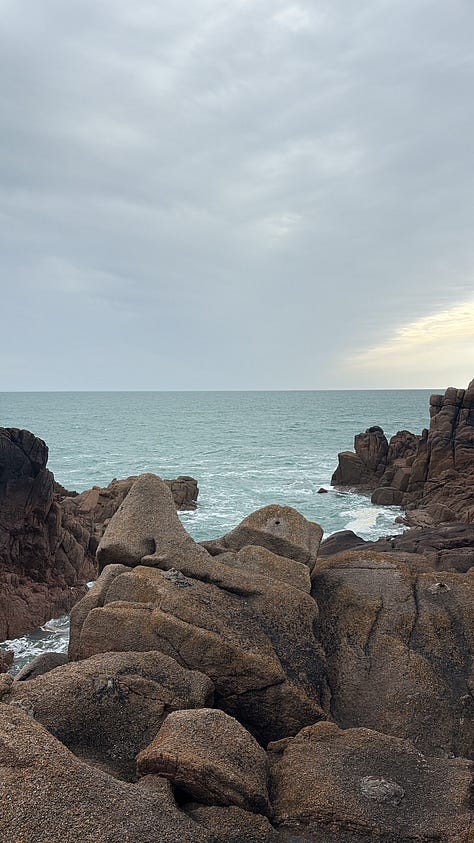
Genuine Jersey is a kitemark of the island’s produce and founder John Garton drove us around sharing all the stories. One of the things I learnt is that the Channel crossing to the UK is an expensive monopolistic transport route, which makes it commercially more sensible for producers to send their products east despite the UK’s proximity. While Brexit made a considerable impact on its economy, residents were not allowed to vote in the referendum.
Here’s what to travel for:
Lobster, crabmeat and the freshest of seasonal fish.
Jersey’s only female fisherman Gabrielle Sian Mason runs Driftwood Cafe with her partner and served us a stunning lunch. The ban on sea bass fishing had only just been lifted post growing season too, which made it taste even sweeter.
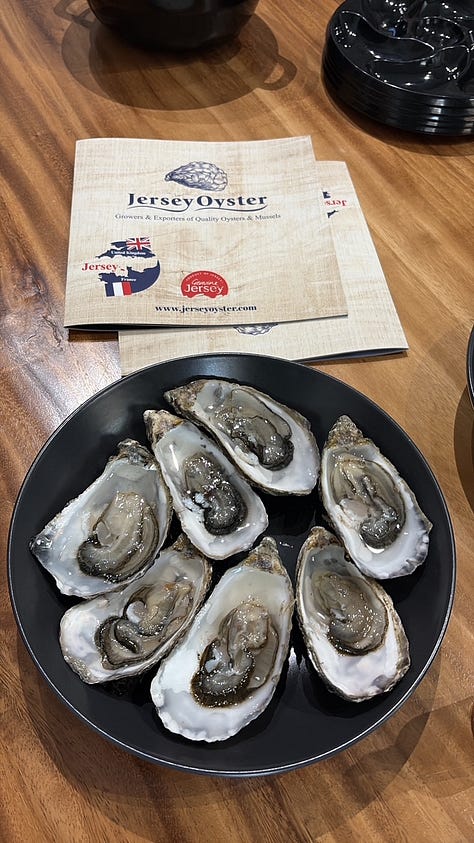
Fresh Jersey oysters
Jersey produces more oysters than England, Scotland and Wales combined although only a small percentage of France. Jersey Oyster Company is a third generation family business. I am not a fan of oysters but I ate four, with a variety of toppings (tabasco all the way). I believe their fresh, clear taste comes from Jersey’s famous high tidal range and the clean water that sweeps over them. You can read more here.
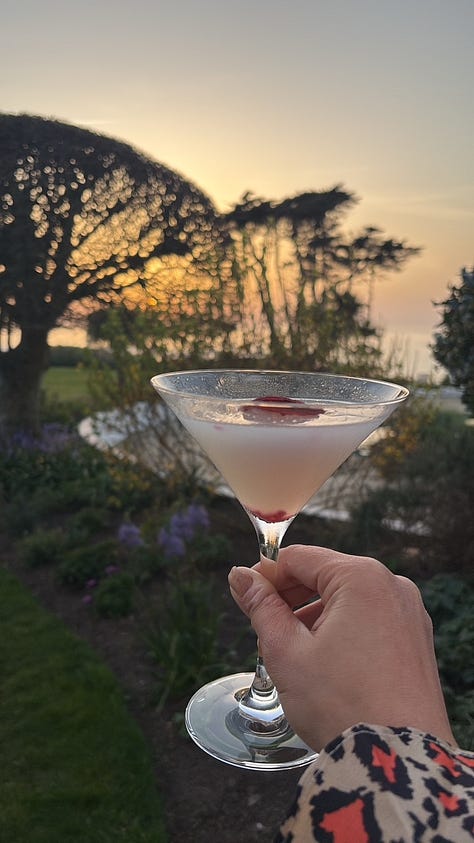
Cocktails in golden hour
Atlantic Hotel, where we stayed, has a stunning poolside with sweeping views of the bay. It’s a great spot to enjoy a sunset martini or two with Royal Mash, sustainable vodka created from waste Jersey Royal potatoes. Award-winning chef Will Holland celebrates Jersey produce at the restaurant and his ex dairy Jersey cow beef was unusually tender and delicate.
Jersey cows - raw milk, butter and ice cream
These protected cattle are the second most popular dairy breed in the world. The milk from Jersey cows largely stays on the island for locals, although ice cream and butter (available only at Marks & Spencer) do make it to the UK. If you see “Jersey butter” elsewhere in the UK, it usually comes from the breed of cows, not the island, and doesn’t benefit from Jersey’s terroir.
The cows are grass-fed and carefully looked after in a closed-loop system, where they provide fertiliser for crops and even help generate electricity. Their milk, at around 6% fat, has an unctuous, almost creamy mouthfeel. It was sensational.
Jersey fine tea
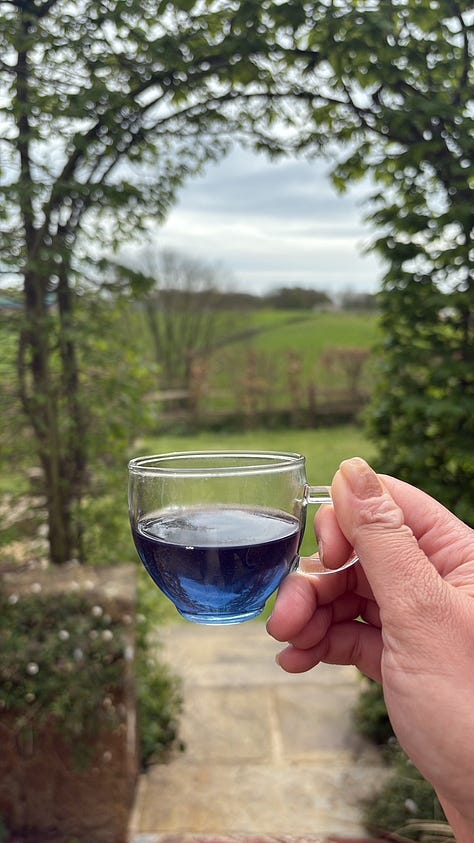
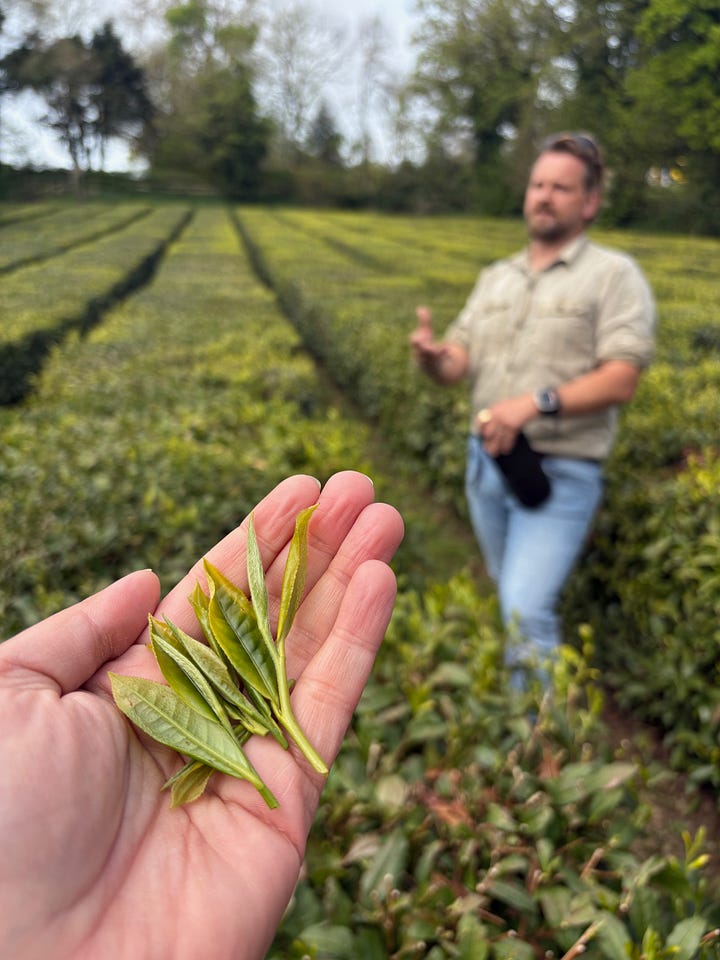
Jersey used to be a centre for tea processing with tax advantages likely the best reason. Agroecologically-minded Matt Bartlett started a tea plantation as an experiment some seven years ago and has richly biodiverse plantations (one where we recorded eight kinds of birdsong). We sipped freshly brewed green, black and his very own butterfly infusion that changes colour. It’s all quite magical.
Honesty boxes
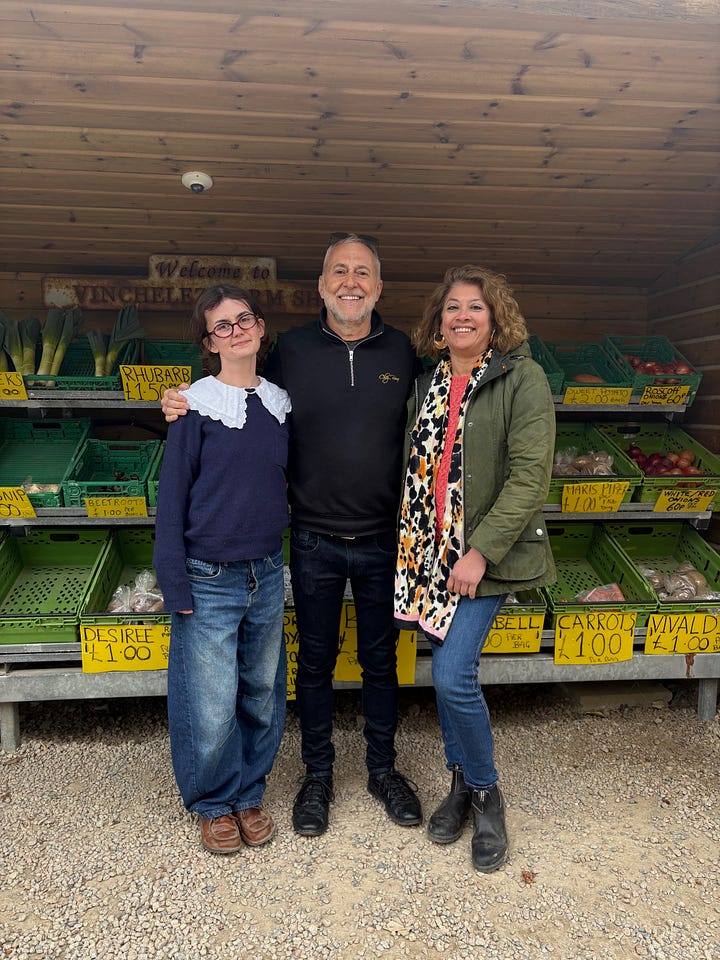
The most incredible selection of farm fresh seasonal produce is dotted across the island with easy ways to pay online. I loved that you could grab some fruit and veg en route while driving past pristine beaches, without even stopping at a shop!
But dishonesty is not tolerated lightly. A routine grifter was subject to an expletive ridden rant by farmer Christine Hellio at Manor Farm. Christine wears a “f*cket” necklace around her neck with many other choice expletive artefacts in and around their home.
Feels like a good moment to remind ourselves that the people behind great food and drink are the best people. We ate some wonderful meals with farmers and local food heroes including dinner at the female-run, east Asia inspired The Salty Dog with Michel in tow. He didn’t seem remotely pained to be in our company. That’s me and Lucy Bridge of Good Food doing a pincer movement on him in the pics. In fact, he looked like he was having a marvellous time just like the rest of us were!
Last week I told you my British Library “Food Matters for Food Lovers” masterclass was back. I’ve heard a third of spaces are already booked, with two months to go. If you’d like to come along, please book soon.
I have more exciting news.
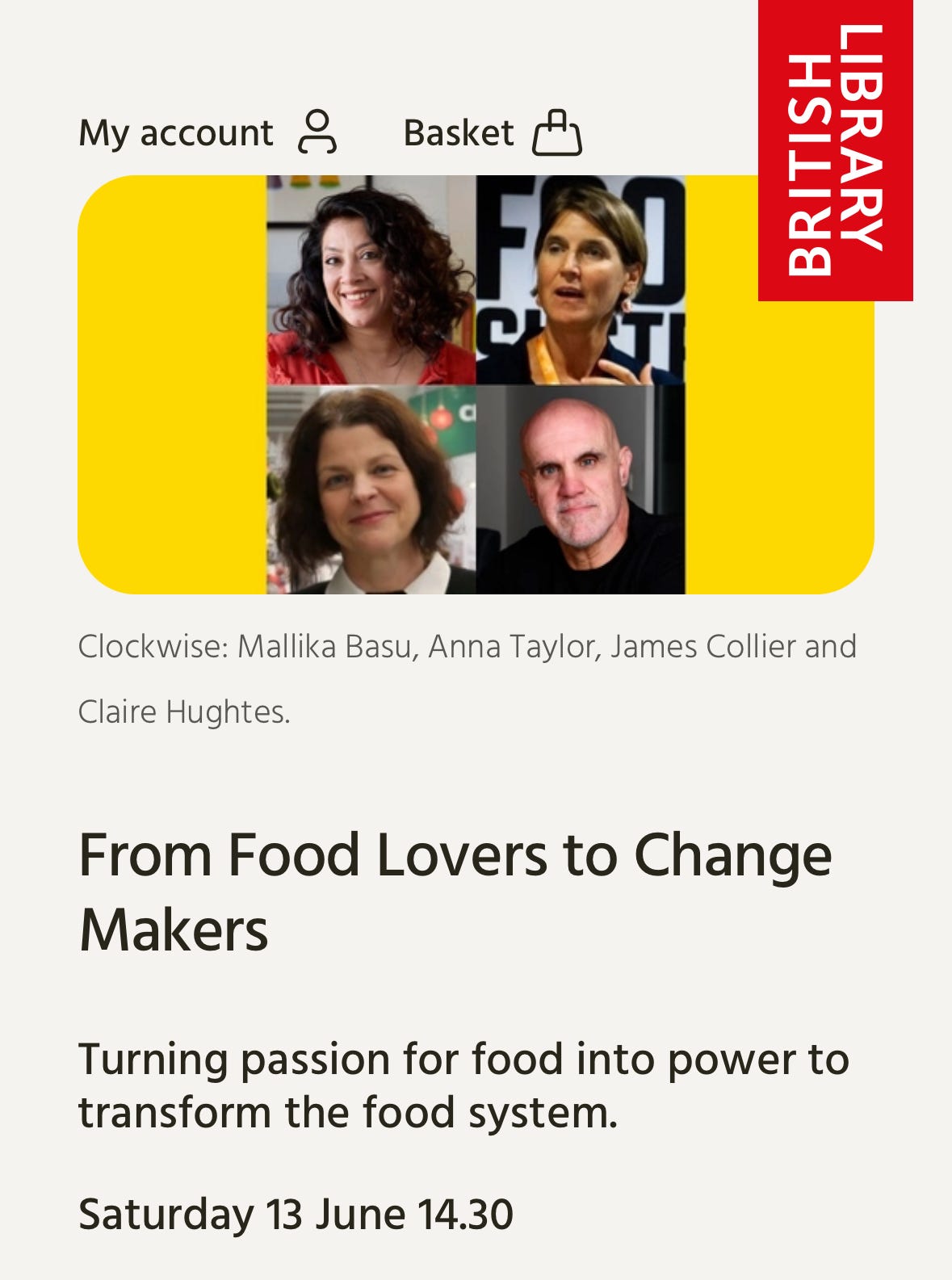
I’m also chairing a session titled From Food Lovers to Changemakers: Turning passion for food into power to transform the food system. I’ll be joined by James Collier, (co-founder of Huel), Anna Taylor (Executive Director of The Food Foundation), and Claire Hughes (former Head of Innovation at Sainsbury’s). We’ll challenge assumptions and look at how curiosity and small, everyday decisions can help food lovers become tastemakers and changemakers nudging the system towards better outcomes for people and planet.
Very grateful to Angela Clutton for asking me along and helping co-create the session. Book to come along here.
This week’s podcast is with Rob Percival, Head of Policy at the Soil Association and author of The Meat Paradox, on something I love eating: chicken.
Not to put anyone off their favourite bird, but we do need to talk about it.
You may have noticed labels like “slower reared” and “higher welfare” appearing on packs. Something is shifting and the way most chicken is produced isn’t quite as straightforward as it seems.
We farm over a billion birds a year in the UK alone. A whole chicken can cost the same as a cup of coffee. There are moves to improve welfare, but not everyone in the industry is on board.
We get into how chickens are actually raised, what those labels really mean and what to look out for when you’re buying or cooking. It’s on YouTube, Spotify and Apple. I hope you’ll have a listen. And don’t worry, it hasn’t put me off chicken tonight (or ever).

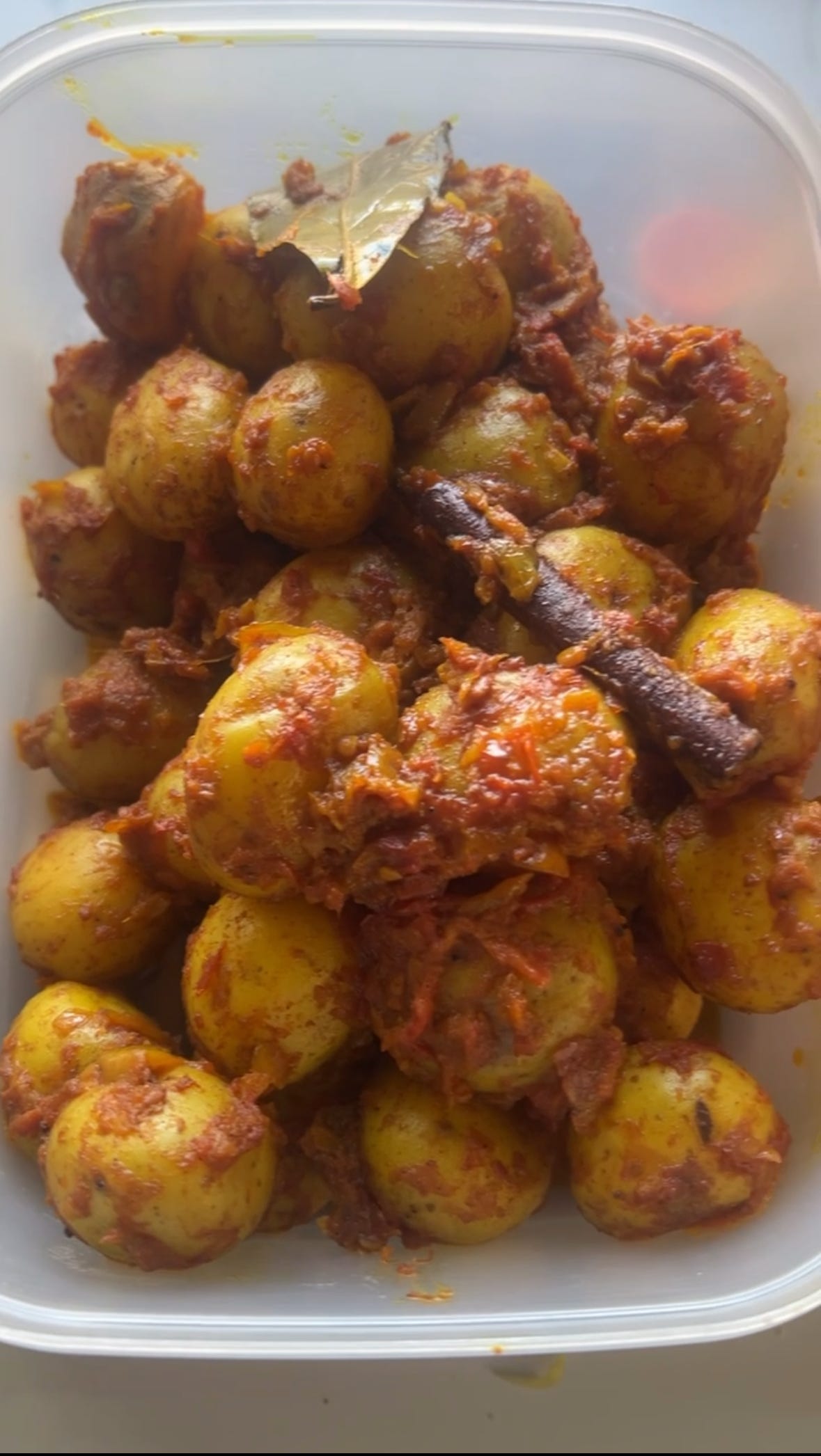
As it happens, I also celebrated Bengali New Year last week. A lovely lunch at Sohini of Smoke and Lime’s home, followed by taking my body weight in aloor daum, Bengali sautéed potatoes, to a slightly chaotic community gathering on Sunday.
Aloor daum is a heritage recipe and a lesson in simplicity. You absolutely have to make the garam masala as it’s very specifically Bengali, and give the spices time to work their magic into the potatoes.
I trebled the recipe and cooked 2.25kg of potatoes, which disappeared in no time. A hand blender for finely chopping the onions, ginger and tomatoes, and a pressure cooker for steaming the potatoes, meant it all came together rather easily. Bengalis were full of praise, potatoes are firmly on my mind, and I hope you enjoy this as much as we did.
Garam masala: 4 cloves, 4 green cardamoms, 1 inch stick cinnamon
750g baby new potatoes
4 tbsp neutral oil
¼ tsp white sugar
1 bay leaf
1 stick cinnamon
1 medium onion, chopped into small pieces
1 inch ginger, peeled and grated finely
250g ripe tomatoes, chopped small
1 tsp turmeric powder
½ tsp chilli powder
Salt to taste
Start with the garam masala so it’s ready to go later. Dry roast the cloves, green cardamoms and cinnamon in a small pan until fragrant, then grind to a fine powder in a washable coffee or spice grinder. Set aside.
Scrub and steam the new potatoes. I put them in my pressure cooker on high for two minutes, a trick I learnt from Catherine Phipps.
Bring the neutral oil to medium-high heat in a wok or kadai. When hot, add the sugar and, as it caramelises, toss in the bay leaf and cinnamon.
Add the onion with a sprinkle of salt and cook for about 7 minutes, until it starts taking colour. Stir in the ginger and cook for another 3–5 minutes, until the mixture is a deeper gold.
Add the chopped tomatoes and cook until soft and pulpy. Stir in the turmeric and chilli powder, lower the heat to medium and cook for around 5 minutes, until the raw smell of the spices disappears. You really have to trust your nose on this one, sorry not sorry.
Add the cooked potatoes and mix well, coating them in the masala. Season with salt to taste.
Finish with the freshly ground garam masala, mixing it through evenly. Check the seasoning, then leave to sit for at least 4 hours, preferably overnight, before serving. The potatoes will taste even better.
That’s all from me this week. Thank you for being here, caring and sharing. Until next week!

Comments
Nothing yet. Say the first thing.
Sign in to join the conversation.