
At its best, the internet is a virtual playground for those who indulge. One key feature that shaped the internet into this irresistible and addictive third place is meme culture.
The art of the internet meme clues people into a massive inside joke, transmitting ideas, dialogue or symbols through imagery, writing or videos that inform pop culture. From Lagos to Australia, red-carpet moments, global political events, or even relatable life experiences evolve from a solitary tweet or image into a viral shared joke. Until brands began to capitalize on them.
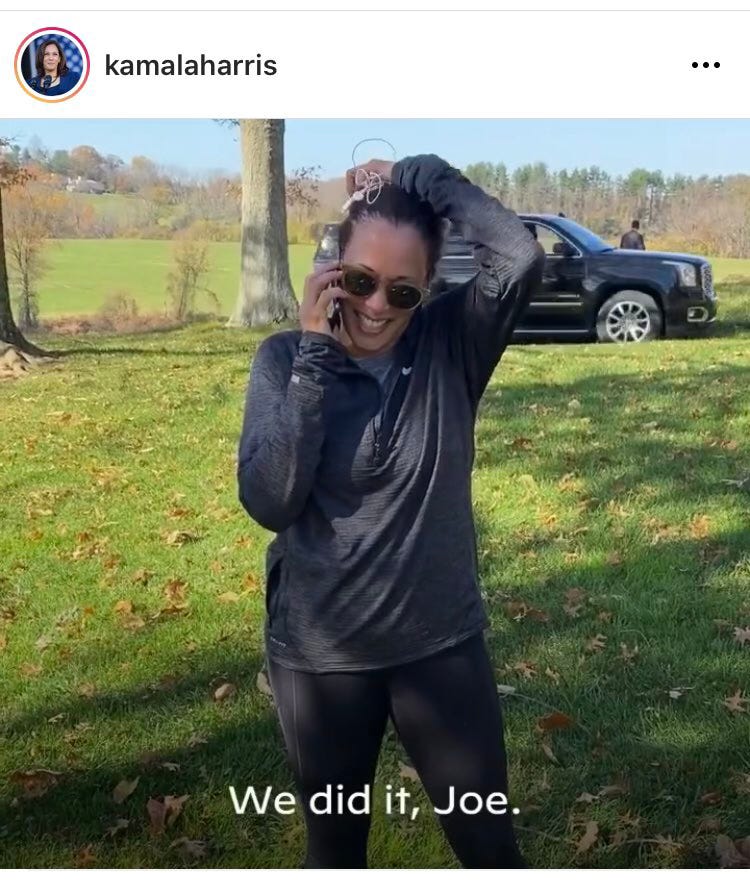
When brands first tapped into meme culture, it was refreshing to experience shared humanity with the renegade social media managers who dared to be funny while contributing to the corporate bottom line. The resulting engagement rates have mutated from humorous visual communication into a legitimate marketing strategy, requiring social media managers to be funny on demand while juggling unending task lists, trends and ever-changing algorithm updates. It’s also why memes have become more cringe and why institutions are losing legitimacy.
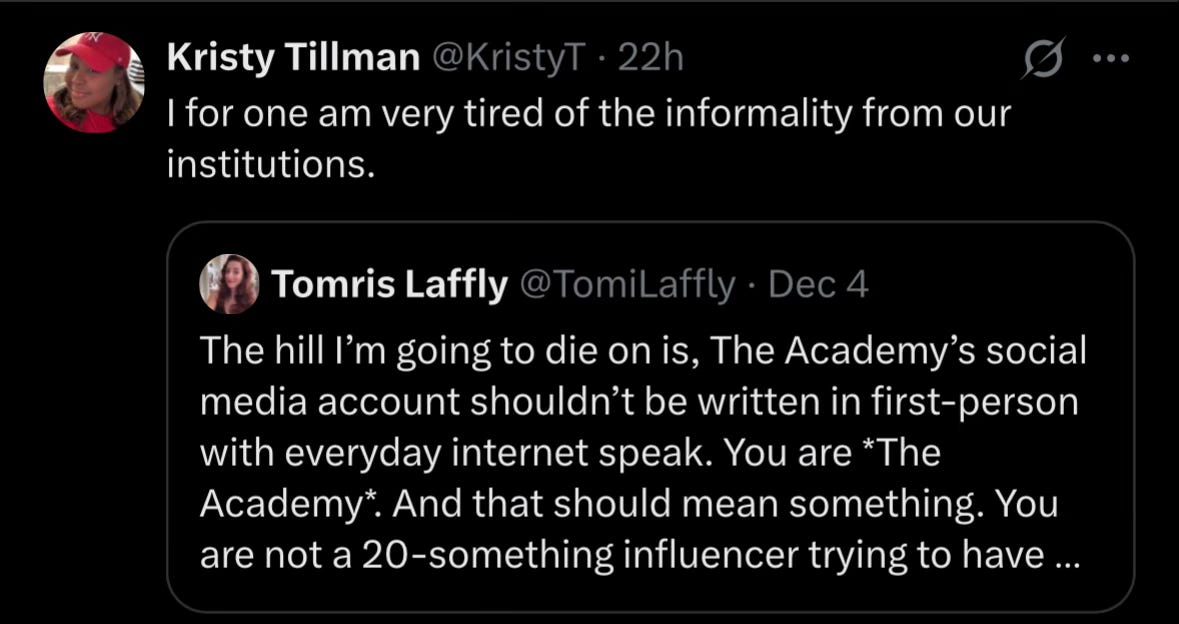
Here’s my take: brands and institutions need to read the room before netizens start to turn on them for crossing these two lanes.
The IP lane
Since memes are dynamic and collaborative, brands these days no longer need to do the heavy lifting required to build culture-defining moments and catchphrases. It’s not uncommon for marketers to stay up observing cultural events for memeable moments.
It begs the question of what brands will do when social platforms no longer support memes or viral content as we know it.
The more brands race to slap their narrative on existing meme templates, the more they risk obscurity and even cultural appropriation allegations.
The appropriateness lane
Since the post-COVID TikTok boom, employers from tech to CPG have fired workers for posting TikTok videos that may/may not have been perceived as brand memes had they come from the official social media account. The legal rationale behind these terminations (brand perception, legal ramifications, etc) would hold water if institutions and corporations didn’t partake in the same informality required of their workers. It mostly demonstrated a lack of integrity and misalignment between internal and external brand values. If your staff can’t post a cheeky (non-offensive) video without the risk of losing their jobs, is the brand really as unhinged as the social media account cosplays?
While promoting the final season of the summer I turned pretty, Amazon Prime India posted a viral meme mocking a random Twitter user’s engagement ring.
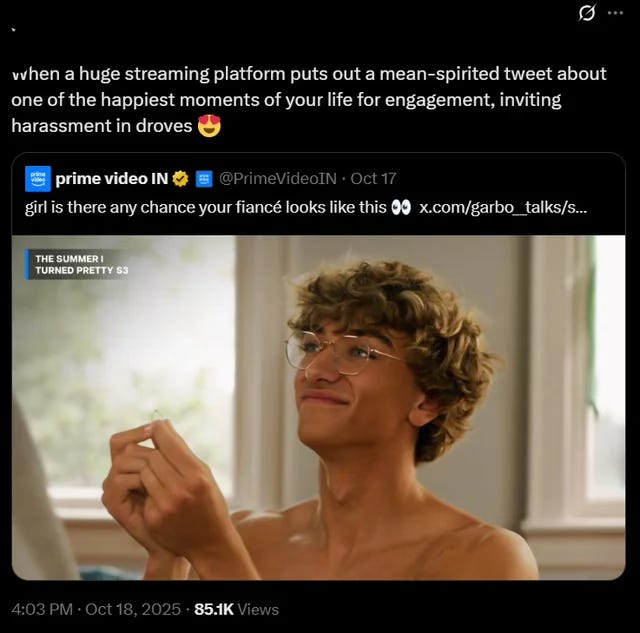
One might argue that bureaucracy would’ve solved this in seconds - a senior editor would’ve flagged the post for propriety. However, this debacle - and I assume resulting job loss only emphasizes why brands need to act appropriately and like the cringey, overfamiliar boomer at the team function.
As Steve Orlofsky writes for The Week, “A magazine spread won't hear one of you and your friends' inside jokes and use it to try and sell you something”.
The outliers here are, of course, smaller brands that have direct, human, and almost 1:1 proximity to the audience. Founder-led brands have this advantage because they’re connecting with a person, not a corporate entity.
There’s no straightforward answer to this, especially since memes don’t contribute much to brand equity and sales.
Many businesses and corporations have successfully cultivated a cult-like following without posting a single meme on social media. Appropriateness is the way forward - to inspire connection and community, rather than blatant attention-seeking strategies. If your brand must use memes, it’s helpful to lean into a running narrative within the universe you’ve curated for you and your audience.
Here are some of my favourite examples of brand memes that hit the spot for me.
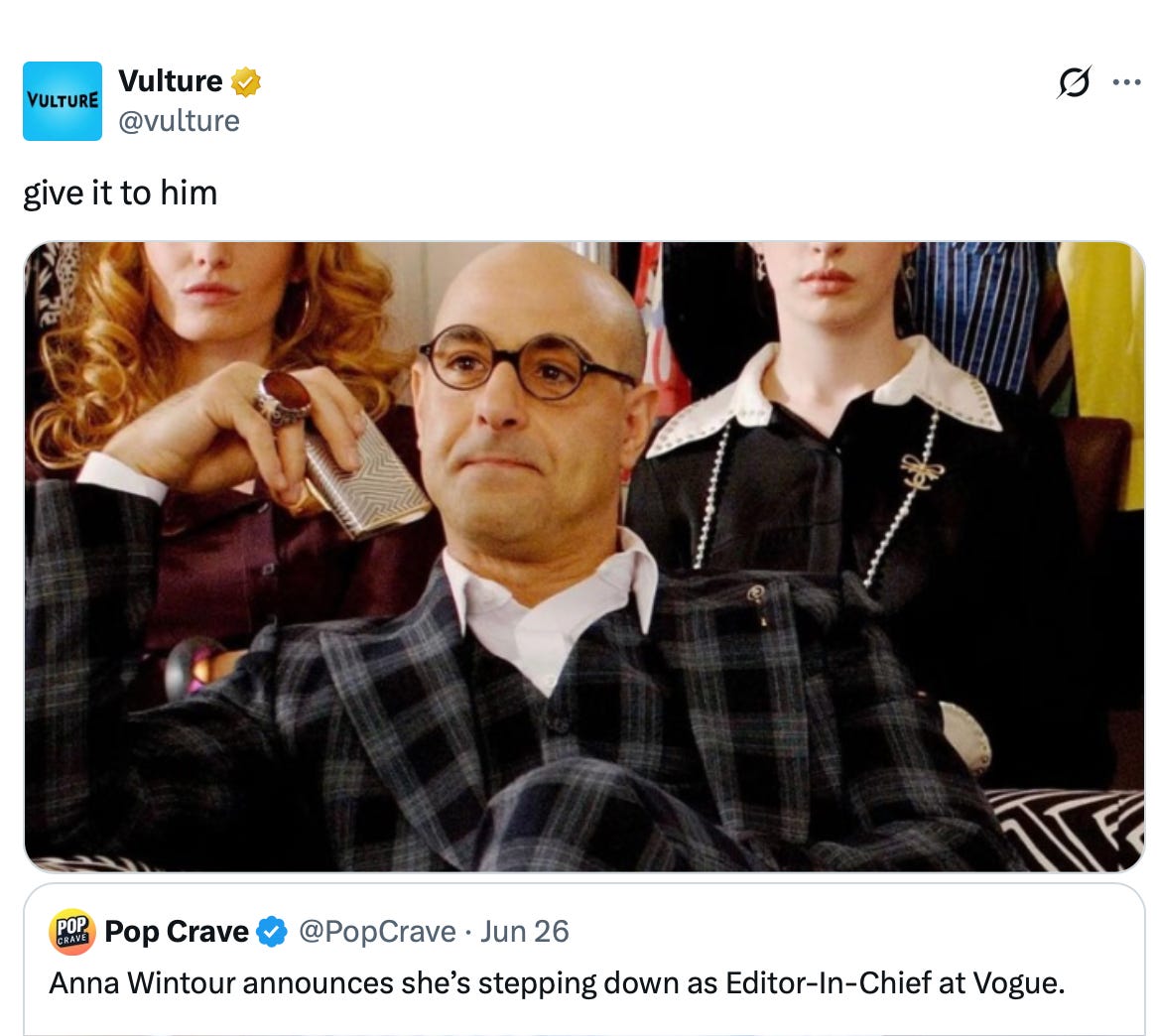
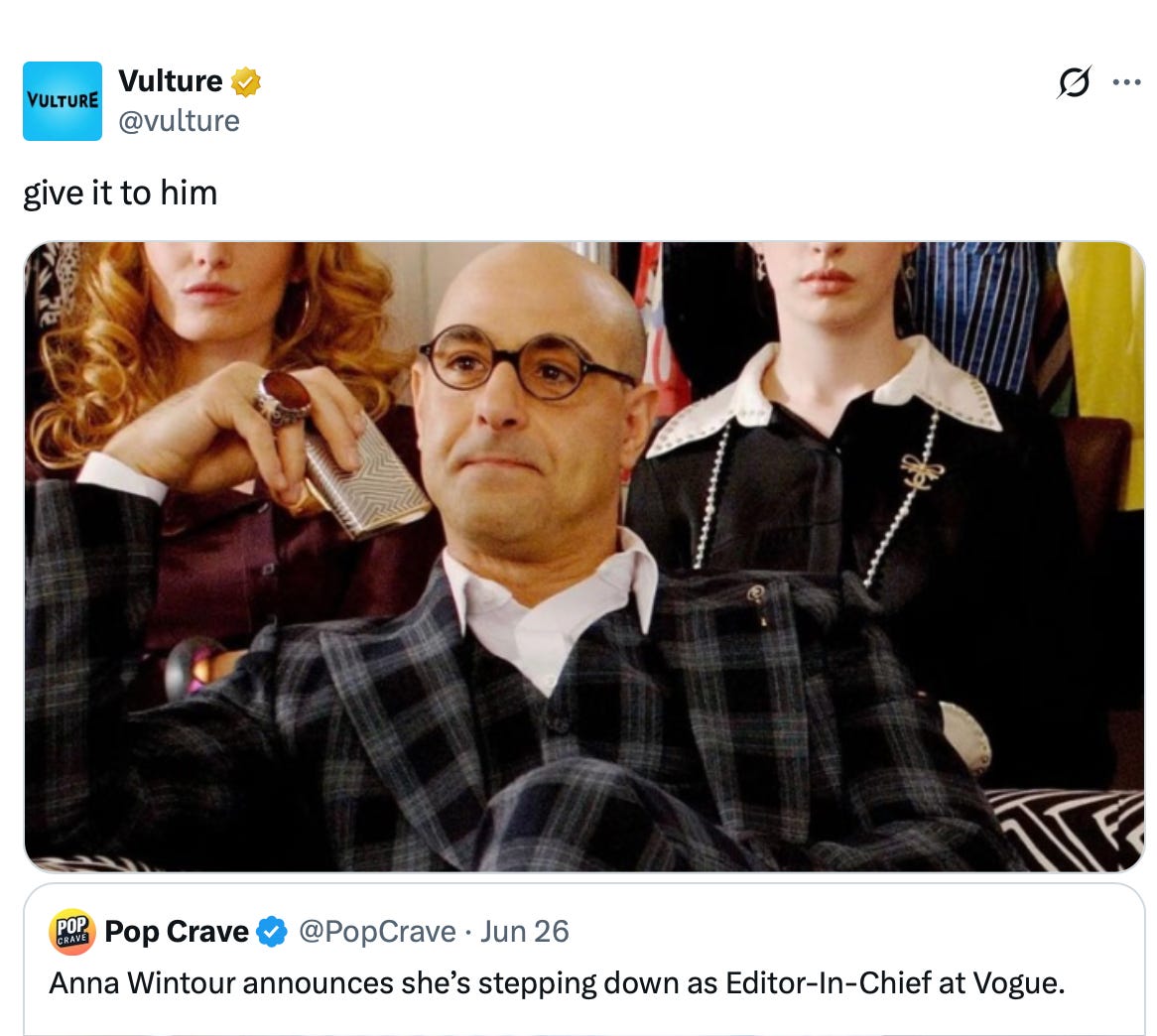
Vulture, a curator of culture, responds to Anna Wintour stepping down with an iconic meme referencing a similar event from The Devil Wears Prada.
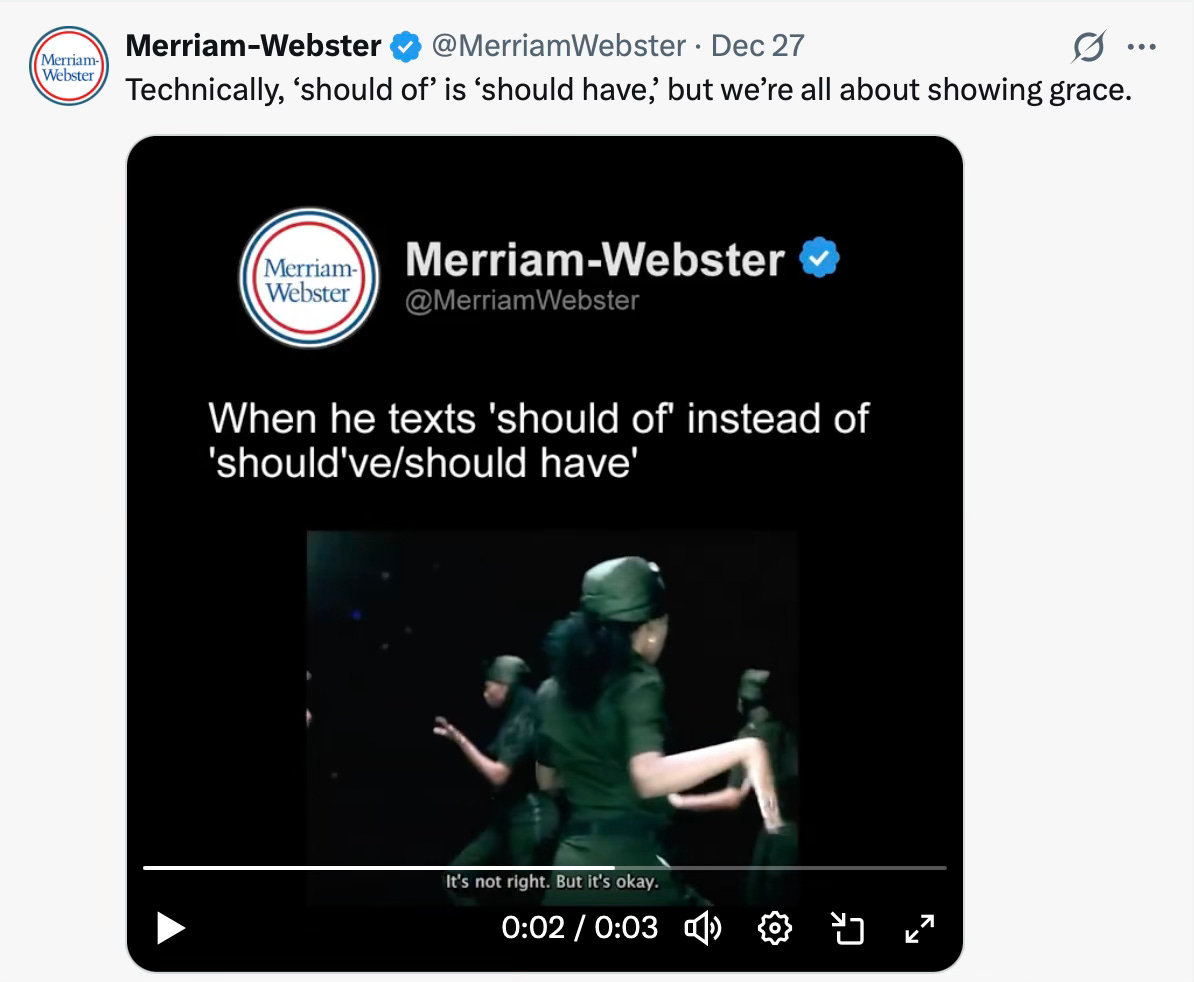
The Merriam-Webster Dictionary account on X. They’re a central character in the conversation surrounding language, so the memes they post typically lean into the running narrative around language and internet parlance.
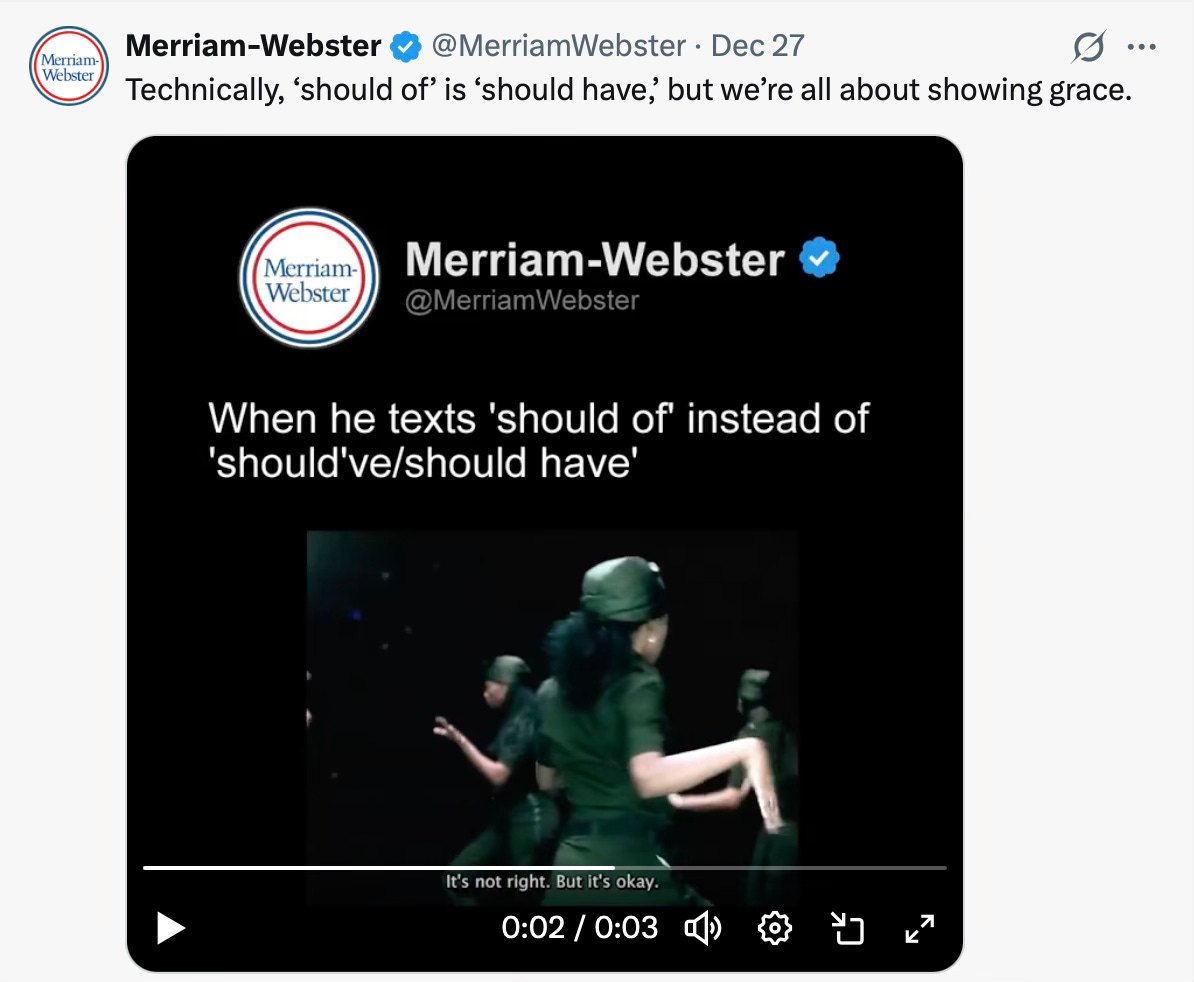
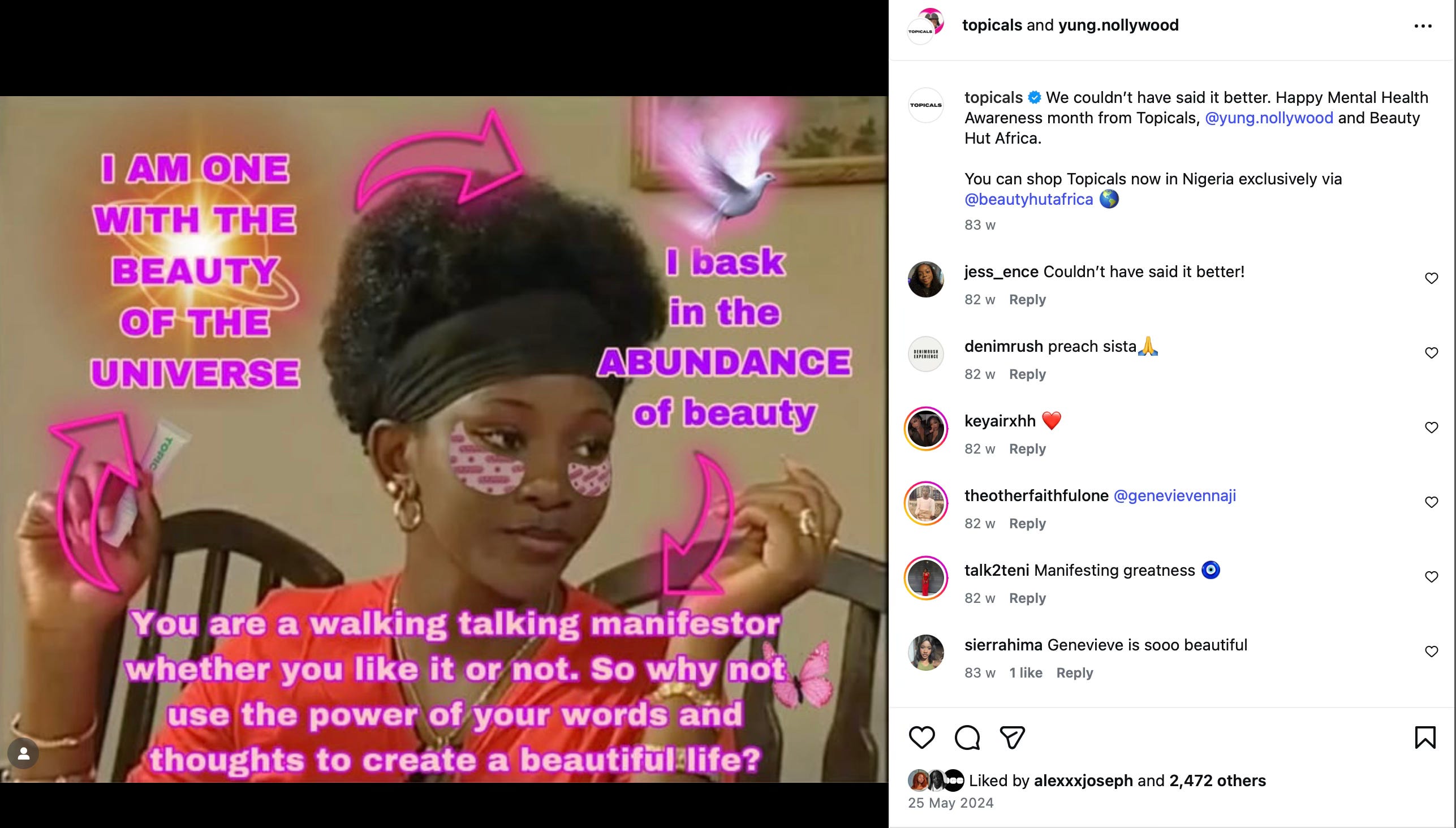
Topicals x Yung Nollywood (tapping into a niche Nollwood icon. Topicals has a presence in Nigeria through its partnership with the country’s version of Sephora, BeautyHut and its 2024 #LagosLovesTopicals campaign x brand trip.
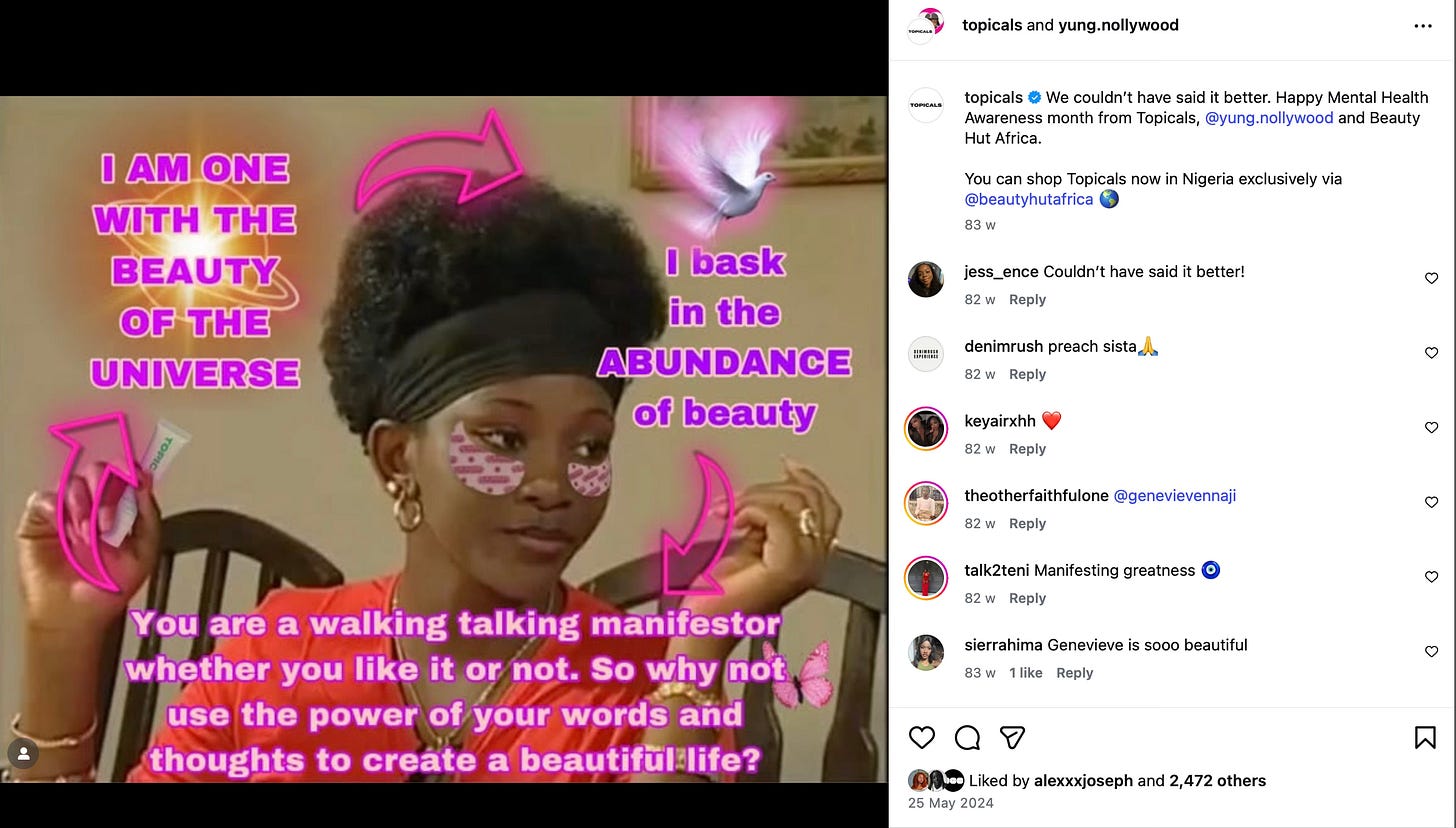
What these three examples have in common is originality, since the jokes don’t rely on existing viral templates to resonate with the target audience. Most noteworthy is how their overall content strategy and brand presence remain relevant and anchored in a consistent narrative.
As AI and algorithms shape the media landscape, brands and their marketing teams can benefit from rethinking the long-term ramifications of meme marketing in their outreach efforts and instead focus on building community authentically.
No posts
Comments
Nothing yet. Say the first thing.
Sign in to join the conversation.