
For decades, depression has been explained to the public as a problem of chemistry—specifically, a lack of serotonin. It’s a story most people can recite effortlessly. Patients hear it in exam rooms, clinicians repeat it with good intentions, pharmaceutical ads etched it into collective memory. The idea is so familiar that questioning it can feel almost rude, like interrupting a well-rehearsed script.
In the latest episode of the Making Therapy Better podcast, Bruce sits down with Joanna Moncrieff, MD. Joanna’s work asks a very important and simple question: What happens when we actually look at the evidence behind that story?
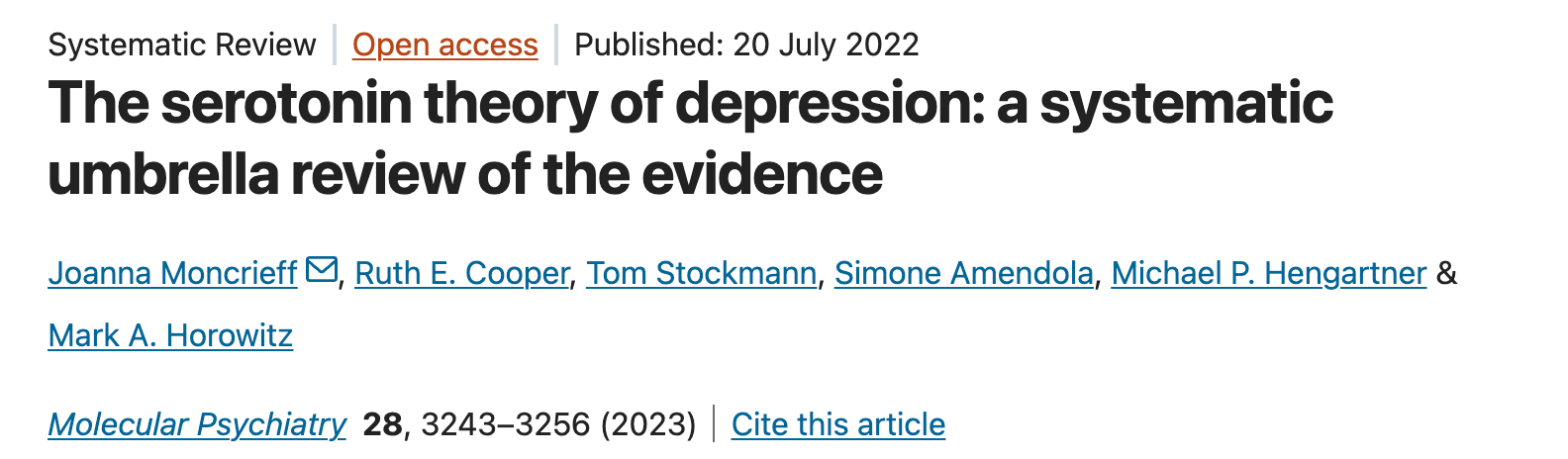
What her team found—after reviewing decades of serotonin research across multiple lines of inquiry— it's something surprising and, at the same time, unsettling. According to her research published in a well-known journal, there is no consistent, compelling evidence that people with depression have a serotonin deficiency. No clear biological abnormality that reliably distinguishes depressed from non-depressed individuals. And crucially, no evidence that any supposed serotonin difference precedes depression in a way that would support a causal explanation.
This last point matters more than it first appears. Biology always changes when humans are distressed. Our brains, bodies, hormones, and nervous systems respond to grief, fear, loss, anger, and exhaustion. That doesn’t mean those biological changes caused the suffering. Confusing correlation with cause is how a plausible idea slowly hardens into dogma. What’s striking is how little of this is actually controversial in the scientific literature. Many psychiatrists already knew that the chemical imbalance story was, at best, an oversimplification. But knowing something privately and correcting it publicly are very different acts.
When Joanna’s review was published, the public response was immediate: If depression isn’t a chemical imbalance, what have we been told all these years? The professional response was more revealing. First came minimization—we knew that already, it doesn’t matter. Then deflection—maybe it’s not serotonin, but it’s something else: inflammation, glutamate, circuitry. When that didn’t land, complexity itself became the shield. Enough technical language, enough moving targets, and confusion does the work that evidence no longer can. What emerged wasn’t a scientific debate so much as a public-relations reflex: preserve the impression that depression is fundamentally a biological disease, even if the biology keeps slipping through our fingers.
This matters because stories shape choices.
One of the most common rebuttals Joanna hears is: Okay, maybe depression isn’t caused by low serotonin, but antidepressants still work. That claim rests on placebo-controlled trials showing a small statistical difference between antidepressants and placebo. When you look closely, that difference is often less than two points on standard depression scales—below thresholds most researchers consider clinically meaningful.
More importantly, those trials are rarely truly “blind.” People can often tell when they’re taking the active drug because something feels different. Dry mouth. Nausea. Emotional blunting. That awareness amplifies expectancy: I must be on the real thing. The placebo effect grows stronger for those on the drug and weaker for those who realize they’re not. When active placebos were used in earlier decades—placebos that mimicked side effects without targeting mood—the advantage of antidepressants often disappeared.
None of this means antidepressants “do nothing.” They are psychoactive substances. They enter the brain. They alter mental states. One common effect is emotional numbing. If you dull emotional intensity, depression scores often go down. But that is a very different intervention than correcting an underlying disease process—and most people would think differently about taking these medications if that distinction were made explicit.
A drug that numbs emotion is not neutral. It changes how people experience themselves, their relationships, their grief, their anger, and their motivations. And yet most trials last only a few weeks, while real-world use stretches into months or years. We simply don’t have robust data on the long-term consequences of widespread emotional dampening—especially when paired with minimal follow-up and infrequent clinical contact.
Ironically, one of the strongest predictors of improvement in antidepressant trials isn’t the drug at all. It’s the number of appointments. Regular check-ins. Being seen. Being monitored by someone attentive and concerned. Human contact consistently outperforms the medication effect itself.
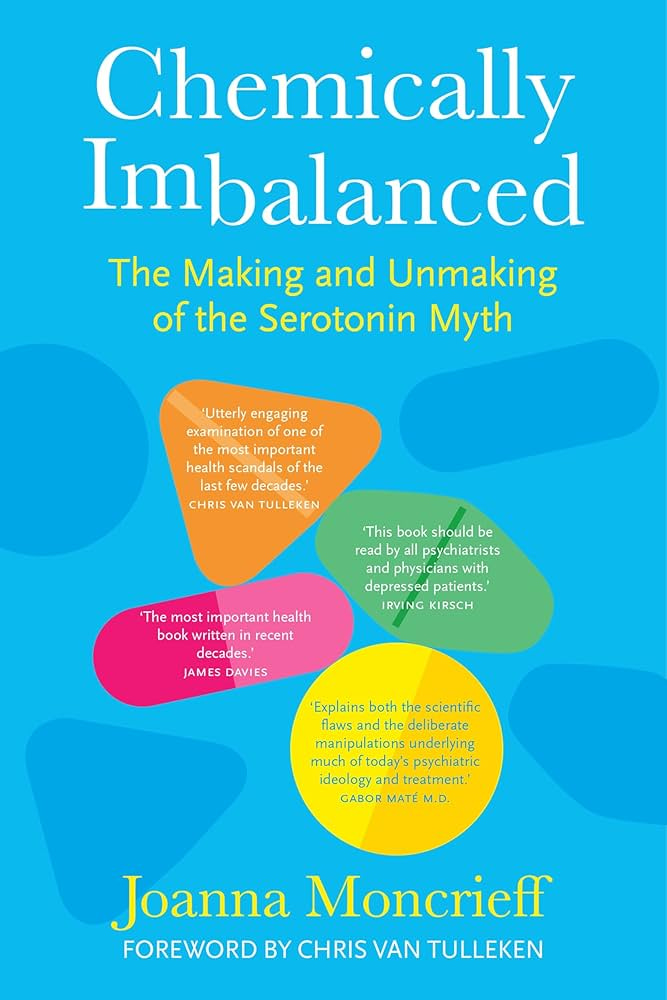
Joanna offers a different way of thinking about depression—one that sounds almost radical only because we’ve drifted so far from it. Depression as grief. Depression as response. Depression as what happens when an intelligent, sensitive organism encounters loss, rupture, humiliation, or prolonged strain. Not just grief for death, but grief for relationships, for work, for identity, for imagined futures that quietly disappear. She also elaborates about that in her most recent book “Chemically Imbalanced: The Making and Unmaking of the Serotonin Myth”
This view doesn’t deny biology or minimize suffering. It places emotional pain back into the context of a life being lived. It allows depression to be meaningful without being romanticized, and it preserves the possibility of agency—not the cruel kind that blames people for their pain, but the hopeful kind that says emotional states can change, teach, and guide.
There’s research showing that biological explanations may actually make people feel less hopeful over time. If your distress is framed as a faulty brain, recovery can feel like luck rather than something influenced by action, support, or understanding. Seeing depression as human—rather than defective—may be harder in the short term, but it offers more room for movement in the long run.
Toward the end of the conversation, Joanna spoke about the future of psychiatric treatments, including psychedelics. Her concern was a pattern recognition. Promising ideas risk being absorbed into the same profit-driven logic: fewer insights, more maintenance dosing; less meaning-making, more receptors. The danger is to repeat the same story with different molecules.
At Making Therapy Better, we keep circling back to a simple question: What actually helps people change?
The answer rarely fits neatly into a pill bottle or a single mechanism. This conversation is a reminder that when explanations become too tidy, they often stop being true. And when a field becomes too invested in a story, it can forget to listen—to evidence, to patients, and sometimes even to itself.
🎧 Listen to the full episode of Making Therapy Better with Joanna Moncrieff.
We think it’s one worth sitting with.
Imagine you’re someone looking for help. You’ve been carrying something heavy for a long time—an ache in your mood, a knot in your anxiety, a sense that something isn’t working in your life. You decide to try therapy. You google “therapist near me,” click through a half-dozen websites, and arrive at a list of names. Degrees. A paragraph about specialization. A phone number.
That’s it.
For many people, that’s where the story ends. They don’t schedule. They never reach the office. They “drop out” before ever beginning. In research on premature psychotherapy termination—where up to 40–60 % of clients disengage before completing treatment—most drop out after only a couple of sessions—but a significant portion never fully engage at all.
What we know about disengagement points to something deeply human: people don’t commit to strangers. Drop-off is tied not only to practical barriers, but to perceptions of the therapist’s trustworthiness, competence, and relatability. Clients who see a therapist as less credible or less personally resonant are more likely to walk away—not because their problems are less real, but because the bridge between “seeking help” and “receiving help” requires something more than a name on a page.
Therapy is fundamentally relational. It thrives on alliance, the sense that two people are aligned in purpose and understanding. Research on therapist self-disclosure and transparency points in the same direction: when clients can glimpse the person behind the credentials—how they think, how they talk, how they approach their work—it can support trust and informed decision-making before the first session ever begins.
Some clinicians offer free phone or consultation calls for this reason: a brief human contact point that helps clients test the waters before committing to a full session. But phone calls are limited. They filter out people who are anxious about speaking before they know someone. They privilege those who are already comfortable initiating conversation. They still leave much of the “fit” unexamined.
What if potential clients could see you before they meet you? Not a polished commercial—but a curated video where you introduce yourself in your own words: your approach to care, the kinds of struggles you feel most aligned with, and what a person might notice in a first session with you. A short moment of presence that helps someone decide: I feel seen. I think I could be understood here.
CarePaths is designed with this reality in mind. We’re building a therapist portal where licensed clinicians have a dedicated professional page, anchored by a curated introduction video. It’s more than marketing. It’s about reducing the fragile gap between decision and engagement—giving people enough context to feel seen and understood before they ever book a first session.
Early work in engagement research across digital mental health—and longstanding patterns of dropout in traditional care—suggests that when clients can form even a small sense of connection or familiarity before starting, they’re more likely to follow through and invest in the work ahead. This isn’t just convenience. It’s psychological readiness. It’s lowering the emotional activation cost required to take a step that already feels charged with hope, fear, and uncertainty.
CarePaths will make that possible. To support clinicians in creating these videos without prohibitive cost, we’ll be offering high-quality video production at a promotional rate for platform users. The intention isn’t polish for its own sake—it’s accessibility, clarity, and authentic presence.
If therapy works through relationship, then how we introduce ourselves as therapists matters more than we’ve been willing to admit. This project is one small way of taking that idea seriously—and of aligning clinical values with the systems that surround care.
More soon.
Is there someone you would love to see on the show?
Is there a topic you’re eager for us to explore in depth?
If so, send us an email at: makingtherapybetter@carepaths.com.
We would be glad to consider your suggestions for future episodes.
Thank you for listening and for being part of this community.
Warmly,
The Making Therapy Better Team
Comments
Nothing yet. Say the first thing.
Sign in to join the conversation.