
First off, before we get to the chess: if you were one of those people who said they’d like to read my writing about movies, books, music, etc, then DO I HAVE NEWS FOR YOU. I’ve started publishing the occasional essay on culture, with a particular focus on the craft of storytelling — my professional specialty in the filmmaking and book work I do — on another Substack, Recognitions.1
The first essay, on why the political debate around the outstanding film One Battle After Another is insane and misreads the whole point of the film (and the book it’s loosely based on, Thomas Pynchon’s Vineland), is already up if you’d care to check it out. If you’re interested, go ahead and subscribe and you’ll be kept in the loop, though I’ll also continue to mention these pieces here.
Okay, now it’s chess time. Over the last two months, I have managed to lose to three very young kids — we’re talking in the 8-10 year-old range — who were all rated between 1340 and 1410. I think it’s safe to say that these kids are up-and-comers and underrated, but even still, my rating is a good 200 points higher… so while I could maybe blame one such loss on bad luck or underrated kids, I can’t do the same with three.
It’s been a good experience for me, honestly. I’ve grown to care a little less about my rating and accept that I’m going to have these stretches where my results over the board don’t reflect my abilities. After the most recent L, I felt more at peace after a bad loss than I have since the start of my chess career, which I mainly attribute to my practices outside of chess rather than any sort of magical equanimity I’ve developed in this one part of my life.
More importantly for our purposes, though, I’ve also been gifted a very valuable batch of lessons. One of them is that I’m going to simplify my opening repertoire: all three losses (hilariously, all with the White pieces) put me out of book within a small number of moves, solidifying a sense I’ve had lately that my openings require me to prepare for far too many responses from Black. I want to focus on more contained approaches that limit where the game can go rather than having to know a million different types of systems.
But the lesson I want to highlight today has to do with the middlegame. Across the scope of this newsletter, I’ve often talked about wanting to play more aggressively. I managed to do that in a recent game, and it paid dividends. The problem with playing more aggressively, though, is that… you have to play more aggressively.
What do I mean by this annoying tautological statement? I mean that part of playing more aggressively often involves sacrificing material or structural security for a dynamic advantage, usually in the form of time. But advantages aren’t permanent, and that time can be wasted.
This concept played a role in to two of my three losses. The exception hinged on a miscalculation: I should’ve won a clean pawn, but I didn’t calculate the sequence out far enough, misplacing my rook. After a nice find by my opponent, I was down a piece instead of up a pawn. This happens; it was a tricky tactic, and I screwed it up. Next time, hopefully, I won’t.
The other two, however, both came down to the error of failing to capitalize on a concrete advantage.
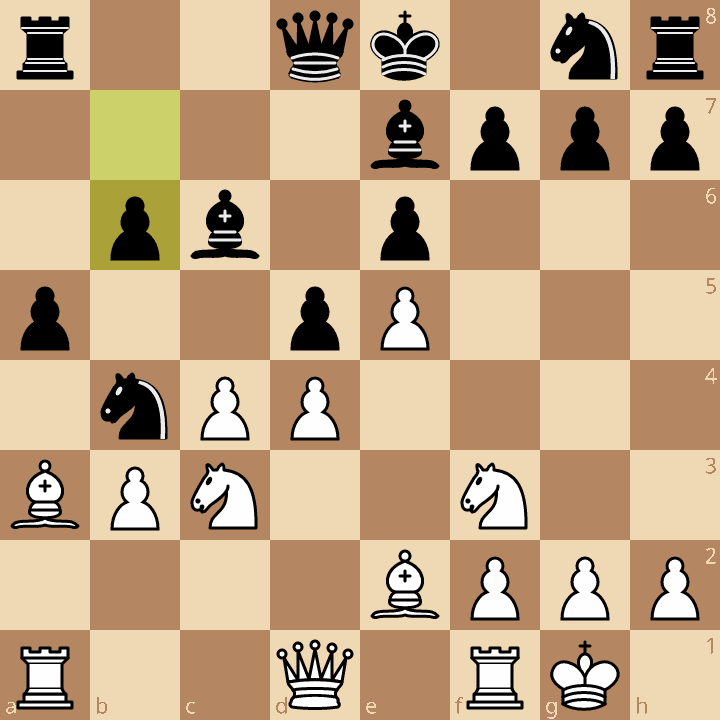
Let’s start with this one. We’re playing kind of a weird advanced French that we transposed to from a Sicilian. My opponent clearly did not know how to play the advanced French, and he pushed his c-pawn, a strategic error. The result was that I had a space advantage, more active pieces, AND a lead in development. This is usually a good combo. That is usually a GREAT combo.
But… what do I do now?
Looking at the position in retrospect, it isn’t hard to see a path forward: it goes straight down the c-file. Put the rook on c1, trade my bad black bishop for White’s only developed knight, and then open the file with cxd5. Or I could start playing on the kingside, where my pawn chain is pointing.
During the game, though, I talked myself out of both of these plans. I can’t even remember exactly why. The predominant feeling that sticks with me is fear of committing to the wrong approach. I didn’t want to waste the advantage with a wrong move. I wanted to find the perfect move. So I played Qd2?, which doesn’t accomplish anything, because I figured that, hey, how bad could it be to finish development? And then, after Black put his rook on the c-file with Rc8, I played an even worse move, Bb2?.
This might not be surprising to hear, but like many writers, I can be a bit of a perfectionist. I have a long history of bailing on writing projects because I’ve convinced myself they aren’t good enough, even though I know, and any successful writer will tell you, that all writing projects start off bad and only get good over time.
Chess is an absolute nightmare for this kind of thinking. Especially in the age of engines, you know there’s an optimal move out there on the board, and if you get fixated on finding it, it can steer you away from playing the merely good moves that will win you nearly any chess game. Chess isn’t won by perfect moves; it’s lost by mistakes and blunders.
Bb2? came directly from this attitude. I didn’t see the perfect plan, so I decided to keep moving my pieces back and forth, hoping my opponent would screw up. I don’t want to give up the bishop pair — having the bishop pair is good! And then when my opponent DID screw up, I screwed up even worse, playing a move that just straight-up blundered a pawn. By that point, I’d fallen too deep into the well of perfection and couldn’t see a practical way out.
In the second game in which I squandered an advantage, my mistake was less egregious, and so even more illustrative of the point I’m making.
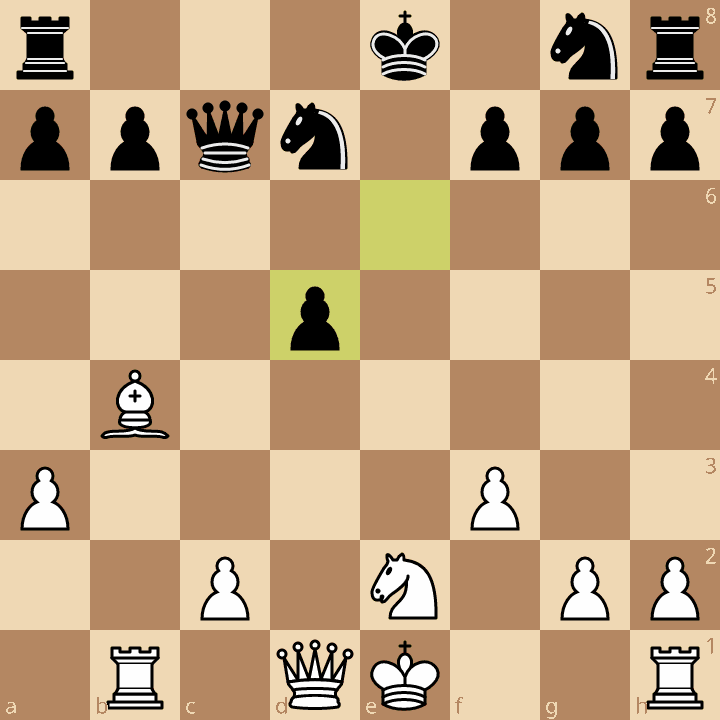
I’m down a pawn, which I sacrificed early in the game. The sacrifice actually wasn’t sound, but it still worked out: I once again have more piece activity and am ahead in development, exactly the reasons why you sacrifice a pawn. Even better, my bishop is preventing Black from castling.
I am also not castled, but I can if I want to. When I’m not castled, I often feel like I left home without checking to make sure the burners are off. It feels unsafe, stressful, wrong. My brain ITCHES to castle. But I also realized, in this position, that all of my advantages — my development, my activity, my block on his castling — could go away at any second. I suspected that this was the moment to strike. I see Qxd5, but I dismiss it due to Black’s response of Qxc2, threatening my rook. And then I think… ah, what the hell, I can castle. Black still can’t. My advantage can’t be that fragile.
It certainly can be. I castle, and then Black plays a5, forcing my bishop off of the diagonal and regaining the ability to castle himself. The game is now dead even, and after a couple of optimal moves by both my opponent and me, we liquidate into an endgame with four rooks on the board that I then proceed to play so badly that after the game, the kid very earnestly goes, “Why did you do that?”
I don’t know, kid. I don’t know.
This situation illustrates the problem of calculating under a certain mindset. I literally needed to calculate Qxd5 a single ply further to see that Qxc2 is suicidal; after Rc1, White has an absolutely monstrous attack.2 But I was already worried about my uncastled king, and so I just assumed that the Black queen being that deep in my territory spelled doom.
And Qxd5 isn’t even the best move. That honor goes to either Nc3 or Nd4, both of which improve my knight and threaten Qe2+, exploiting the uncastled king before Black can do anything about it.
These are moves that you consider when you understand that your advantage could go away at any moment, that the window of opportunity could close awfully fast, and that you have to take lean in, not back away. Castling is the equivalent of turning down the dream job-offer because you’d have to move to an unfamiliar city, or declining to ask someone out on a date because you’re scared of being rejected. It’s safe. Unfortunately, safe is not always safe. Sometimes, safe is very dangerous indeed, as I discovered when I couldn’t figure out where to put my rooks in that endgame.
In the first part of my over the board career, I played solid but conservative systems that allowed me to grind out draws against better players. When I decided that I wanted to play more aggressively and go for the win, I knew there would be growing pains — and these are the growing pains.
The truth is that, when you play aggressively and take risks, your margin for error is often smaller than it is when you play with an emphasis on defense. As soon as you take your foot off the gas pedal, the entire nature of the game can change in a single move, and often in a quotidian, unspectacular move. The window of opportunity doesn’t remain open for long.
Ironically, though, this is how I’ve built my real career. I’ve always taken the risk when it was available, and I’ve consistently passed up the safe, stable jobs. It has, for the most part, worked, but only because I’ve remained committed to it. At any point, I could’ve decided to just take a steady role somewhere, in a business I didn’t necessarily want to be working in, and all of the advantages I’d gained through the risks I’d taken would’ve gone away.
The more chess I play, the more I find that it resembles life. And the challenge I’m currently setting for myself is whether I can bring some of what I’ve learned from life back into chess.
After all: I’ve got 25 years of life on these ten-year-olds. At least that’s one area where I have an edge.
Why start another Substack, you might ask? Well, I have no doubt that you chess fans have wide-ranging interests, but I don’t know how much appetite someone who is just interested in movies, books, music, etc might have for deep investigations of chess.
The better move for Black is Ngf6, at which point White has a small but definite edge and an easier position to play.
No posts
Comments
Nothing yet. Say the first thing.
Sign in to join the conversation.