
This article is dedicated to all the brave men and women who fought in the Great War. And to my ancestor Corporal Samuel Finkle, Company B of the 328th Infantry Division, who was killed-in-action on September 6, 1918.
It is called the first modern war. Roving tanks, automatic bullets, fighter aviation, and noxious gases defined a conflict that spread across four continents. Defensive trench warfare dominated and destroyed the European landscape. Nationalism spurred militarism and vice-versa, complementing growing imperialistic tendencies. Centuries-old dynasties were challenged and crumbled under pressure from modernization and the working class. In the aftermath of Allied victory and Germanic defeat, a shockwave rippled into Asia as Western leaders turned to cartography to solve questions of empire and politics.
Europe became a chess board, emperors fell, Russia overthrew its Tsar, the modern Middle East was formed, and America entered the world stage.
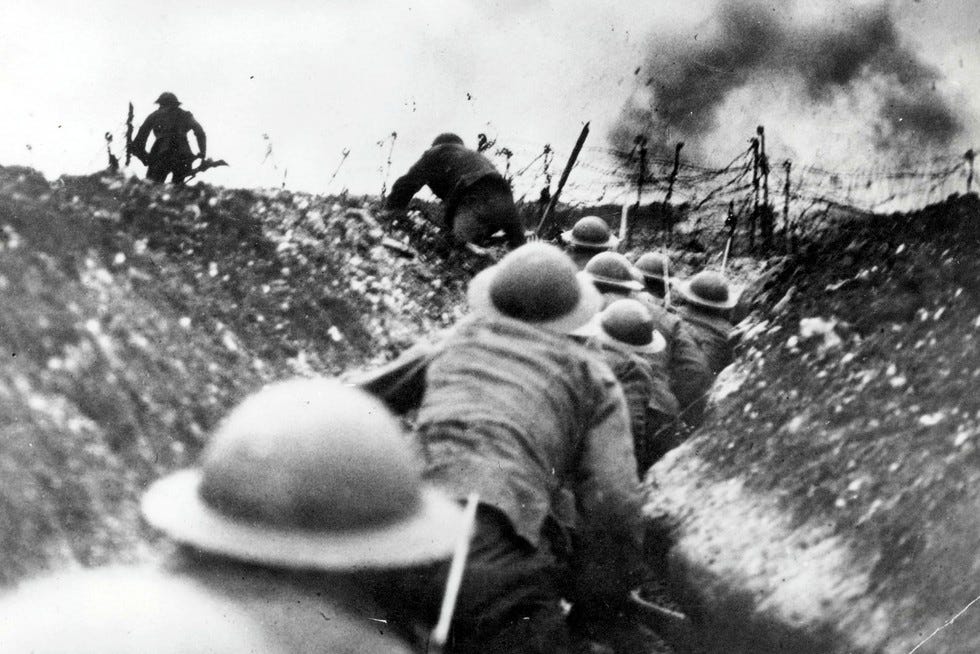
If you are not familiar with what I just wrote, or honestly have know idea what I’m talking about, you’re not alone. Despite being only 112 years removed from the onset of the First World War, also called the “Great War,” its impact is overshadowed by the Second World War, which occurred 25 years later. In much the same way the Korean War is often interpreted as the predecessor to Vietnam, WWI lives in the shadow of World War II. Most Americans cannot enumerate its causes, identify the major players, or determine why it mattered. Those who do often make a beeline to downplay the war as the igniter for Hitler’s rise to power, and thus call it the “main cause” of WWII.
It’s a shame, really, that so many lives were lost and circumstances changed for WWI to be obscured. While no fault can be named (and not that it should be), there was a unique failure in the American education system. Europeans have dedicated monuments and preserved its First World War history. Maybe you’re thinking to yourself, well, wasn’t the war fought in Europe? Wouldn’t they, of course, commemorate it more than the United States?
Yes, that is factually true. But America sent around 4.8 million of their own to Europe. Over a million American soldiers fought in the largest battle of the conflict (Meuse-Argonne Offensive). More than 100,000 died overseas fighting to protect freedom and democracy on European soil. Where are our commemorations? Why doesn’t World War I receive more attention in our schoolbooks?
The First World War was a global conflict steeped in nationalistic competition between empires. For centuries, the great powers of Europe contended in faraway lands to control the most and exploit the finest. “Imperial fever” hit the United States after the end of its own bloody civil war, when the Western frontier was mapped and interest moved across oceans and seas. America wanted to compete with the “big, bad wolves” of Europe, hoping to gain a seat at the table of world leaders.
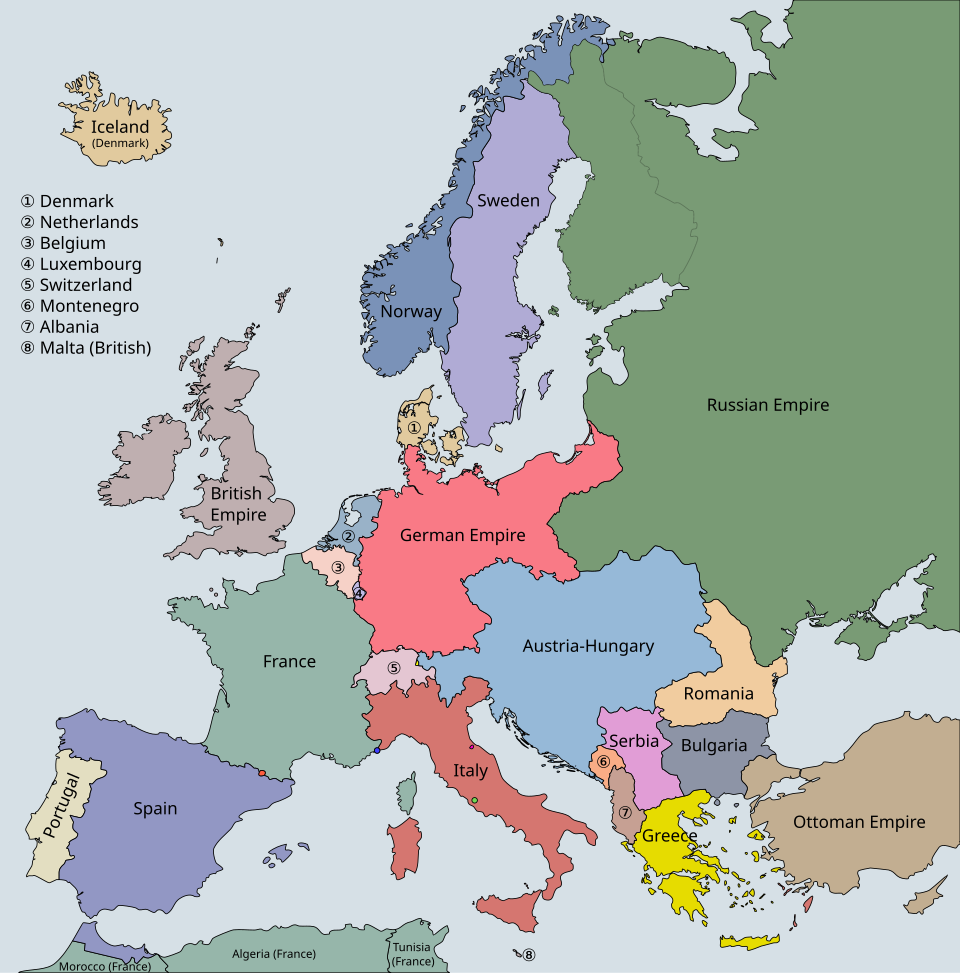
Leadership in the early 1900s meant gaining control and maintaining power, laced with oppression and corruption. Ill-intentions to govern undeveloped nations spurred the systematic destruction and dismantling of entire cultures. By 1910, Great Britain, France, Belgium, Italy, and Germany held a monopoly on at least 80% of the world’s land surface. Back in Europe, the now-defunct Austro-Hungarian Empire had its sights set on its neighbors, rather than Africa or Southeast Asia.
The United States watched from afar as the heir to Austria-Hungary was shot dead while on a diplomatic mission to Bosnia by an aggravated Serbian national. Americans read in newspapers how Austria-Hungary joined forces with Germany’s powerful military to mobilize troops along their joint borders. We stood at wharves and docks, hoping that our ships weren’t torpedoed by German U-Boats, while British and French vessels were targeted to the point of commercial cessation.
While we sympathized, we weren’t overtly concerned. Other matters closer to home captured more of our attention: women’s suffrage activists took to the streets, anarchists and communists started deadly riots, Henry Ford pioneered his Model-T, eugenics intimidated millions of new immigrants, and anti-alcohol legislation was gaining momentum.
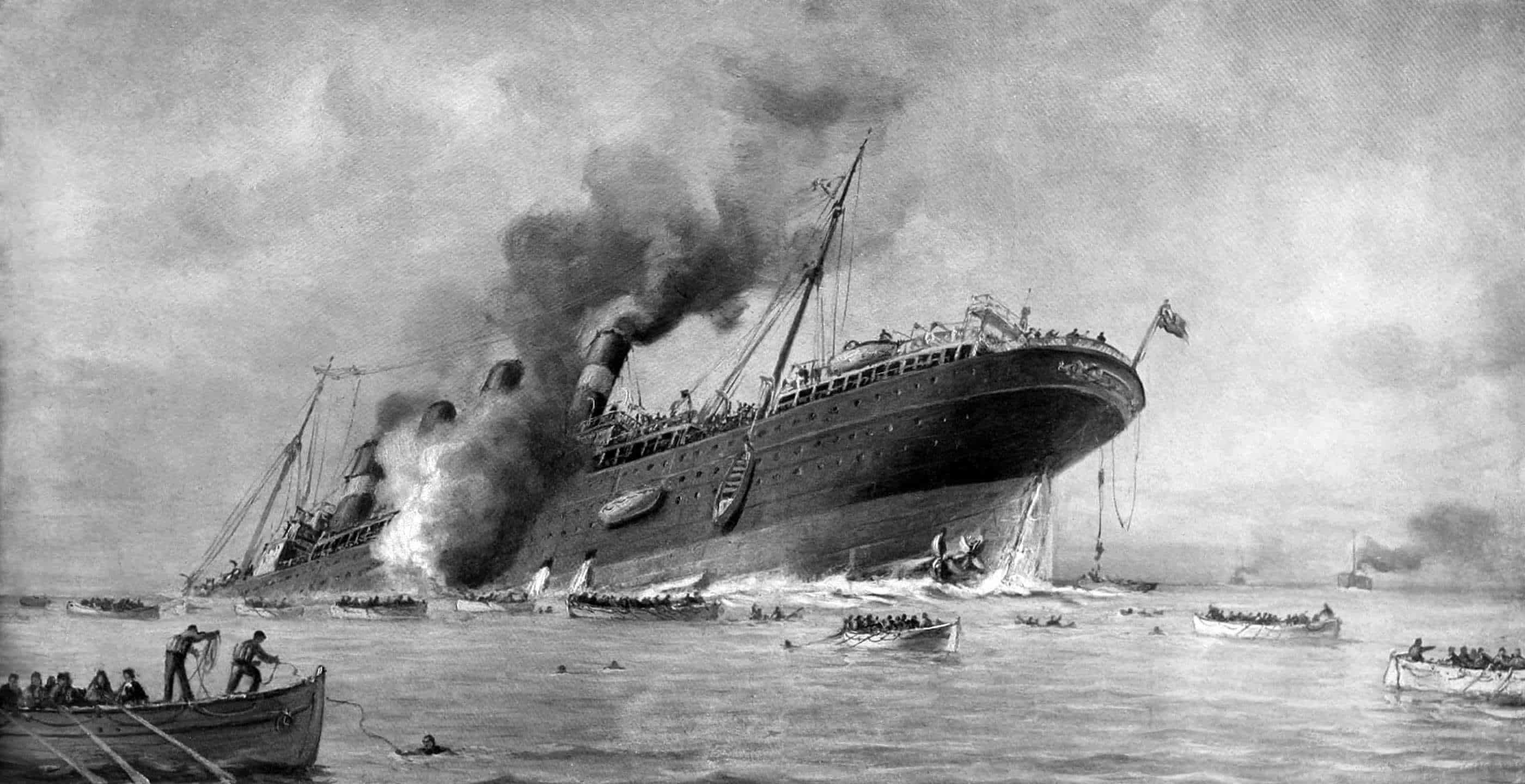
It wasn't until a direct attack threatened future American lives. In 1915, one year into the war, the British passenger vessel Lusitania was hit by a U-Boat, killing over one hundred Americans on board. President Woodrow Wilson felt pressured to respond, but with what force? The United States Army was at an all-time low, with just over 100,000 enlisted men. After the quick and decisive Spanish-American War (1898), from which we gained Guam, Puerto Rico, and the Philippines, America began to exercise more discretion and caution in involving itself in foreign conflicts.
Wilson could not, in good conscience, send troops to Europe to fight what many viewed as a “European affair.” It was wholly unheard of to enter a potentially devastating conflict in the name of alliances if there was no obvious advantage or consequence. What would America stand to gain from engaging in a battle between empires? We were a federation built on election and rights, one founded on the principles of no kings, tyrants, or rampant injustice (although this never came to full fruition). Austria-Hungary’s fight with Europe’s kings, emperors, and divinely-ordained rulers did not appeal to the republican American democracy.
Although reduced commerce across the Atlantic hit the American market, our late-blooming Industrial Revolution powered the nation through hardship. Travel to and from Europe impacted only those who wished to sail, which boiled-down to businessmen and immigrants. This harsh halt in immigration to the United States hurt the hopeful migrants more than it did American society, whose xenophobic public likely cherished the “reprieve.”
Everything changed in 1917. In an attempt to prevent America from entering the conflict at a later date, Germany asked Mexico to start a war with the United States. Assuming that Mexico would fight for its land seized in the Mexican-American War (1846-1848), the German Secretary of State Arthur Zimmerman offered full financial and military support. Mexico never received that message, as it was intercepted and decoded by Great Britain. The “Zimmerman Telegram” was passed along to Woodrow Wilson, who then could not ignore the war any longer.
Our first troops sailed to France in June 1917. By the following summer, America amassed a major presence as an allied power. Initially, Americans were invited to fight in the French military under the flag of France. General John Pershing, commander of American Expeditionary Forces in Europe, ensured that America represented itself and that any glory conducted by American troops reflected back on the United States.
Back home, Americans were split on the matter. The overarching themes of security, freedom, and protection from tyranny struck at our revolutionary heartstrings — but it did not shake the terrible feeling of sending sons, brothers, and husbands off to a foreign conflict for the very first time. As the death toll rose and more Americans were subjected to the horrors of modern war, people began to lose sight of “Wilson’s war” and what we were doing there.
Families learned of their loved ones’ burials in countrysides and towns whose names they could not pronounce, and whose coordinates they could not locate on a map. At the same time, Suffragettes demanded equal voting rights for women, the NAACP pushed for civil rights legislation, picketers wanted to stop “non-whites” from entering the country, and temperance workers waged their own war on alcohol.
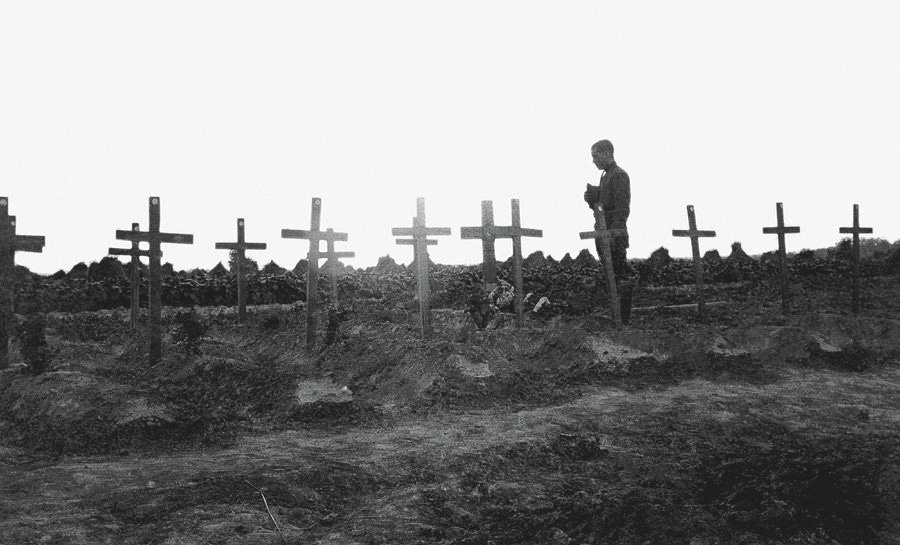
We moved on from the First World War because life exploded on our own shores. After guns were laid down in November 1918, families could finally retrieve the bodies of their fallen kin from the soils of France and Belgium. Men with missing limbs, blindness, and “shell shock” came home to no employment or federal support. Women returned to domestic duties after filling men’s roles on the home front and frontlines. It was time to move forward. It was a new decade, after all.
The United States did not suffer because of World War I. It is a major reason why we do not commemorate it like our European allies. In fact, we boomed from it. As one of the only Western powers able to provide loans, supplies, and support after the conflict, we quickly became a world power through our ability to loan money and help Europe rebuild: Great Britain was financially drained, France’s air was thickened with chlorine gas, Belgium’s land was pock-marked by bombing raids, and Russia installed a new, untested system of government.
Our troops were physically disabled and emotionally destroyed. Entire families had been wiped out by the Spanish Influenza pandemic. As Wilson enacted the Red Scare of 1919-1920, certain political affiliations became criminal. But we did not suffer. We roared.
The “Roaring 20s” described a decade of indulgence, luxury, and economic irresponsibility. Rather than a recession, America experienced a “boom” in production and consumption. Despite strict laws against alcohol sale, we partied in underground clubs and behind closed doors. The average American could now own a car, enjoy a new-fangled concept called a “weekend,” and invest in the stock market. All the while, we sent money to Europe to help them rebuild.
When German troops fired mustard gas across the French border, when German U-Boats sank ships full of innocent people, and when the Kaiser professed the supremacy of German nationalism — America found an enemy in all things Germanic.
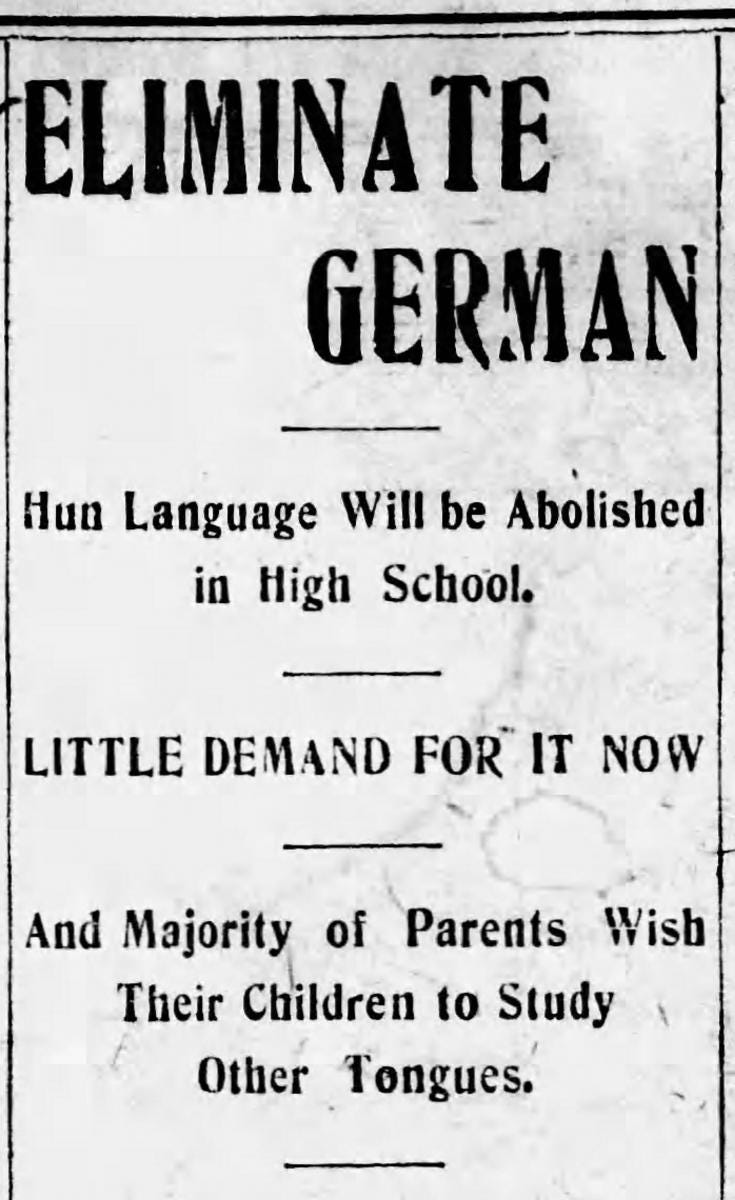
One of the darkest periods in American history originates from the wave of anti-German sentiment in the wake of World War I. For the duration of the conflict and into the 1920s, German culture was vilified. The language was banned from being taught in schools, German books were burned, those with German last names were attacked, German brewers were shut down, and Dachshunds were killed by the thousands.
Germans made up the largest ethnic group in the United States, and still do.
And the American government turned a blind eye to these hate crimes. In fact, it encouraged it. Media printings, radio, and silent films of the day echoed these harsh ideas to create anti-German sentiment across the country. It’s not surprising that you may not have never heard about this. How could we find room for sympathy when the German government was about to commit the worst atrocities in our modern era only 20 years later?
While we toasted to jazz music in smoky speakeasies, Germany crumbled under the weight of its conditional surrender. It struggled to pay reparations and feed its own people. After forcibly losing its colonies and disbanding their military, despair fed a new evil: Nazism. Even if sympathy for the plight of German-Americans did reach American hearts, Germany returned to being our enemy once it invaded Poland in 1939.
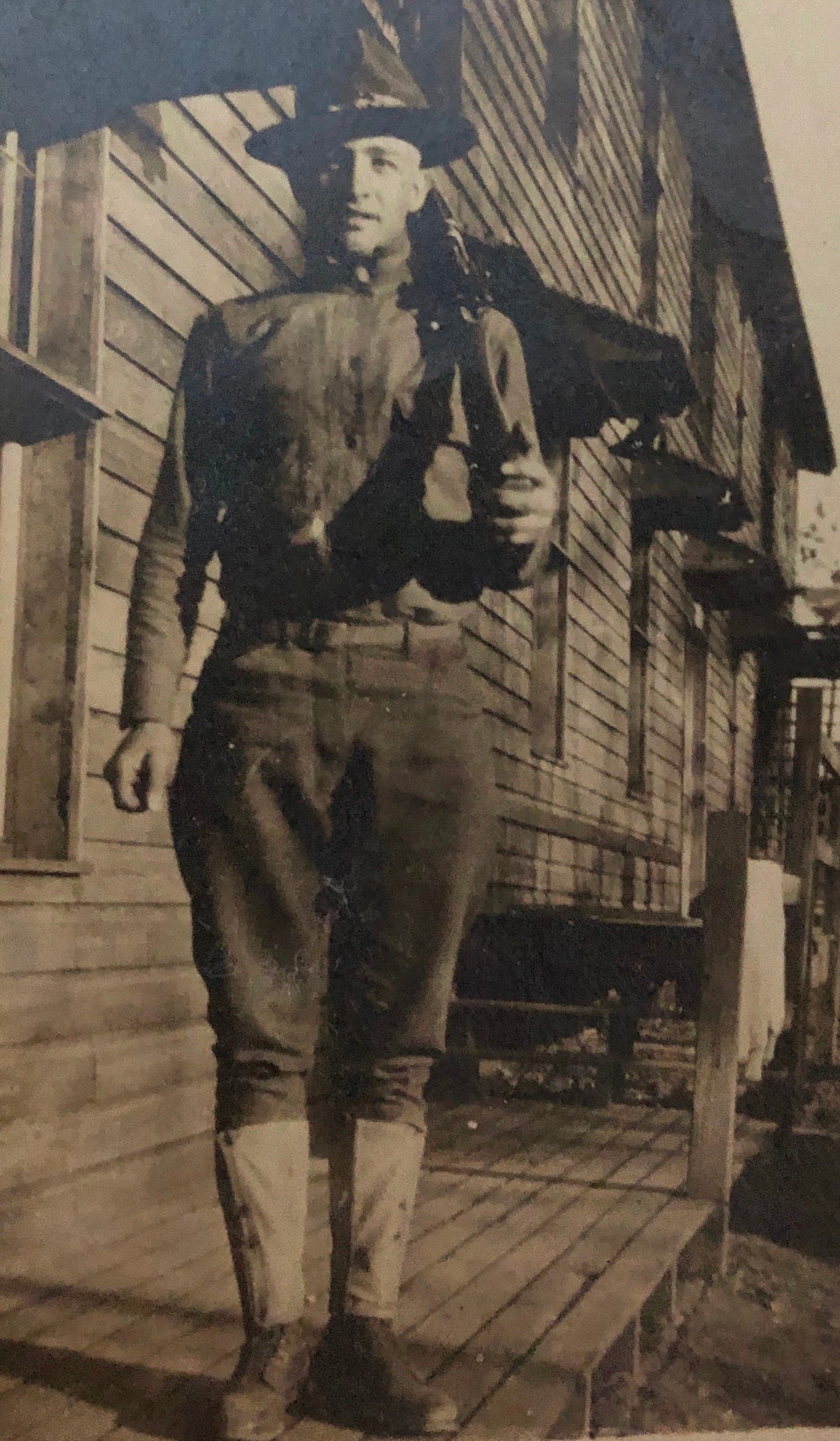
World War I directly led to World War II. Of course it did, it’s in the name. But we’re missing the point: the First World War did not serve only to give us the tragedy that was the Second. If anything, that should've caused an increase in Great War education and awareness, not a dispassionate disinterest. The world watched as the 80th anniversary of D-Day was rightfully commemorated by world leaders on Normandy’s sandy beaches. Even I couldn’t tell you what we did in 2014 or 2018, on the 100th anniversary of the start and finish of World War I. Maybe I wasn’t paying close enough attention, but doesn’t that make my point?
No posts
Comments
Nothing yet. Say the first thing.
Sign in to join the conversation.