
Data from the last decade shows that around 60% of Americans have at least one ancestor who lived through the American Revolution.1 That’s over 180 million people today. That’s at least one blood relative who, whether through participation or perpetuation, contributed to the formation of our nation.
This year, scholars will preach the principles of the American Revolution. Cities will boast their Revolutionary ties and connections. Museums will gather stories and artifacts of this pivotal moment in our nation’s history. In this time of immigration tension and toil, what role does the immigrant play in the 250th? And to the more recent Americans reading this: here is why you should care about the 250th.
The American Dream (and its modern equivalent) is more than the ideals of the Founding Era. That Dream, of course, has shifted with the decades, adapting to our domestic and global circumstances. But the core remains the same: we all want a chance at America. Waves of generations flocked to our shores for a better life, including my entire family. My first immigrant ancestor arrived at Castle Garden in 1877 and the final relative at Ellis Island in 1931.
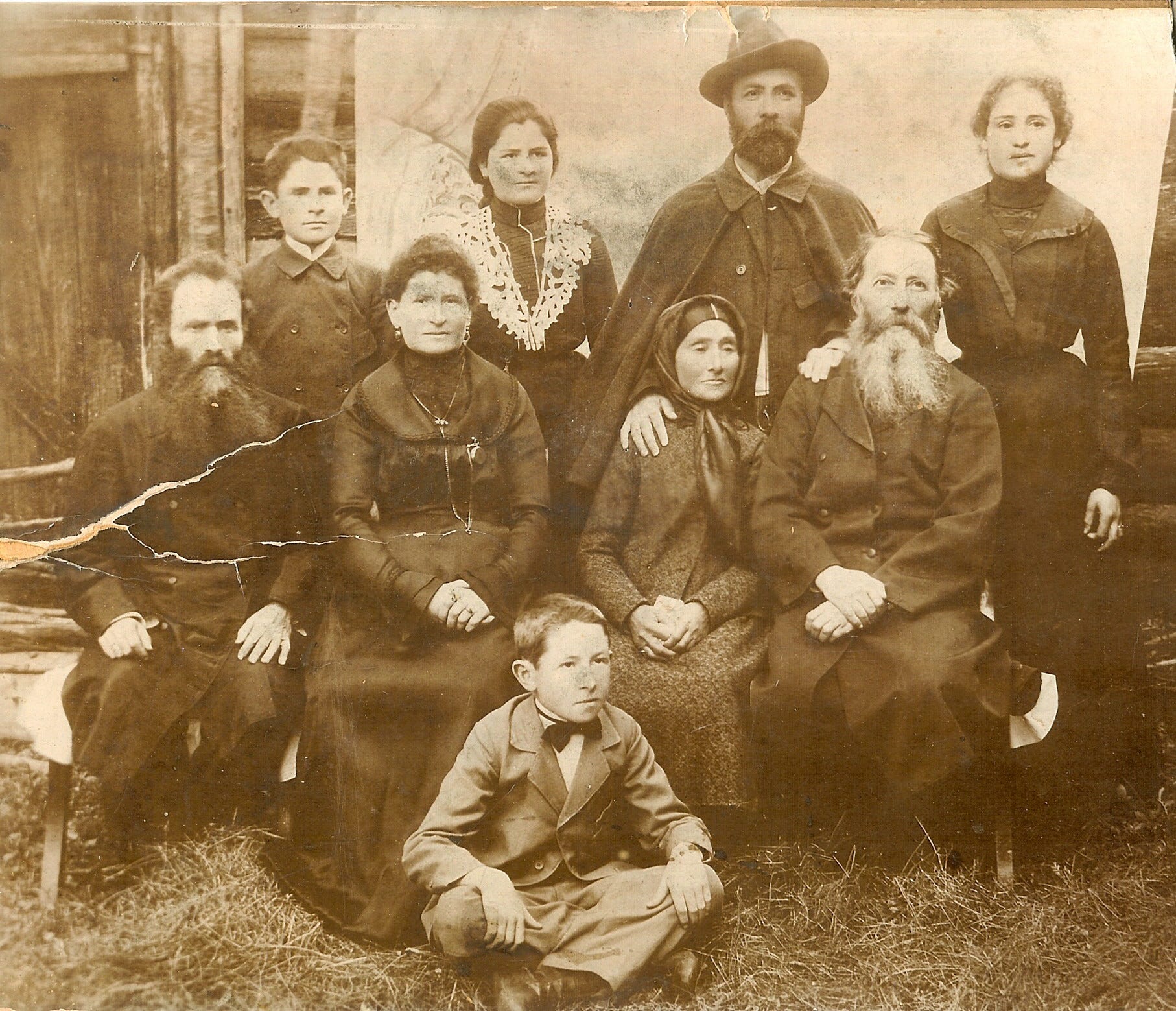
Sitting in my suburban home writing this article, I am so far removed from the feelings of my immigrant ancestors. I cannot tell you what it would be like to see Lady Liberty on the horizon after weeks or months of third-class steerage. I cannot tell you what my family endured while assimilating to life in the United States, changing their ethnic first names to something more palatable, learning English and forgetting their mother tongues. But as a historian, I can tell you what the main causes of the American Revolution were. I can tell you why immigrants continue to dream of America, even though the Dream itself is out of reach for many.
As part of my LLC, I lovingly research Revolutionary ancestors for clients. It brings me great joy to connect someone with the most integral part of “Americanness.” But I would be lying if I didn’t say that part of me experiences a sense of longing — even a sense of loss — at not being able to claim an original American identity. Some of you reading this might find this ludicrous. What an absurd thought! Your ancestors DID contribute to the formation of our nation.
Yes, my recent relatives fought in the World Wars under the American flag and died bravely for our freedom. My maternal line strove to achieve what was historically kept from women. We love to wave an American flag on the Fourth of July and commemorate with the standard barbecue and fireworks. But the current political climate has made an “other” out of those who have settled in the created nation. Venomous discourse on who qualifies to “get America” has soured this year’s celebrations.
For almost half the country, the Revolution serves as the beginning of a safe haven, one to be appreciated decades or even centuries later. We are benefactors of the brave men and women who put their lives and livelihoods on the line to see the American Experiment succeed.
As Americans watch as ICE raids, First Amendment violations, and antisemitic attacks ravage our society, it’s hard to connect with the bygone era of “all men are created equal.” We find ourselves leaning more towards “give me liberty or give me death” in the last year. When immigration itself is being challenged and vilified — blamed for hardships only caused at the executive level of our government — America250 feels like it only belongs to those who can claim it. Additionally, many citizens with ancestral ties to the founding are feeling disenchanted with the message of this milestone event.
Here is how to take it back.
Museums around the country are commemorating America250, no matter if they have an affiliation with the era or not. I research all eras of our nation’s soon-to-be 250 years, but focus mainly on the 19th and early 20th centuries. As a wartime historian, I've noticed trends among institutions that focus on acknowledging the accomplishments, feats, and endeavors of not just later Americans, but all Americans.
While over half of the United States can claim that colonial tie, the other half likely have a connection to a later, equally momentous occasion in our history: the War of 1812, Oregon Trail, Civil War, Women’s Suffrage, World War I & II, or the Civil Rights Movement (just to name a few).
These events are marked by great change and a shift in either power dynamic, morality, and/or global presence. American history is continuing. It did not freeze when the British surrendered at Yorktown in 1781, or when the Constitution was ratified by 1790. For those of us with immigrant parents or who are immigrants ourselves, you continue to progress American history forward.
And let’s not forget about the contributions by the 100 millions of immigrants who landed on American shores since the Revolution.2 I’m talking to you, person in history class who could not raise their hand and say “My great-great-grand-whoever fought in that battle.” I’m also talking to you, person who could not give a fun fact about who they're distantly related to (seriously, it seems like so many people are genetically connected to George Washington!)
What has been absent from much of the official discussion on America250 is the impact by newcomers. As a historian, I love to spotlight positive military, political, and social action committed by our fan-favorite historical figures. They are, generally, the “old White men” of our classroom textbooks.
In recent years, the humanities enacted more of an initiative to include diverse voices and perspectives in everyday dialogue. Museums and organizations have showcased more content on racial and gender minorities, as well as the experience of the LGBTQA+ historic community. In order for America250 to truly embody what is symbolizes, all contributions and experiences must be included: the good, the bad, and the plain ugly.
I champion the institutions that have already exhibited these types of events and programming for the 250th.
The Revolutionary War was the first of its kind: no other colony or subservient nation had successfully broken-off from a mother country to form its own, independent entity in world history.
I love studying the American Revolution. It laid the groundwork for a country that would later welcome my displaced family with open arms. It led to an environment where we were no longer in fear for our lives and instead could flourish. Many of us are feeling uneasy about shouting “Go, America!” from the rooftops this summer, especially if you are a person of color or a member of a targeted group.
Without the Revolution, and without the principles it stood for, the United States would have failed decades ago. It is unfortunate that the political climate and compounding turmoil in our country have shrouded America250 in such dark clouds.
If the environment were healthier, safer, and more reflective of the “Spirit of ‘76,” great things could have come out of this anniversary. The Revolutionary torch has been continuously passed for generations, landing at the feet of newly-arrived passengers at our harbors, railcar riders at our stations, dreamers at our borders, and Green Card holders at our airports. Let’s carry it through 2026 in homage to the founding of a nation that has historically received so many with open arms.
No posts
Comments
Nothing yet. Say the first thing.
Sign in to join the conversation.