
In the final unit of high school U.S. Government, my students studied federal regulations and civic duty. We went over their responsibility as citizens, why certain laws exist, and the gray areas surrounding constitutionally-protected rights like the freedom of speech. As a millennial who was raised on Eminem’s music, I noticed several overlaps between Slim Shady’s lyrics and how American government functions. So, I took lines from the clean version of “Mosh” (Encore, 2004) and we analyzed them.
As educators, it behooves us to keep up with not just “the times,” but also the manner in which our students learn. Long-gone are the days of lugging bulky textbooks to class or submitting test answers on a Scantron (really aged myself with that one). Gen Z and Gen Alpha get their news from very odd sources. They’d rather listen to an influencer break down the latest international conflict or the recent Supreme Court decision than some “talking head” on their parent’s TV.
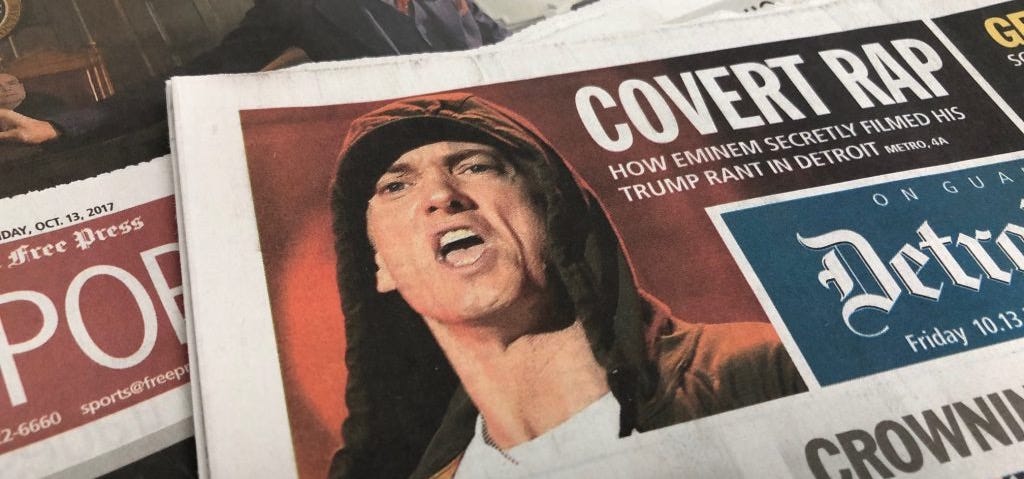
As a young “Stan,” I did not understand all the references that Eminem spat. I was only eight years old when the Eminem Show released. The caustic lyrics against former President Bush on “White America” or “Square Dance” meant nothing to me — but the anger is what I grasped and held onto. On the way home from school, where I was inundated with stale civics worksheets and grainy Schoolhouse Rock videos, I learned more about how my government operated from a raging rap star. Not all of the information provided was positive, productive, or effective. The key takeaway for little Madeline was that Marshall Mathers rapped about politics and social justice— something gravely different from the usual “guns, drugs, and girls” discourse by other artists.
Many of us memorized “Without Me” as kids, right? This catchy song with a slower flow and nonsensical sounds is an early 2000s classic. We often overlook the most critical lyric of all, one that strikes at the heart of free speech regulation: the Federal Communications Commission (FCC). Mathers penned this song in rebuttal to censorship on his prior album, The Marshall Mathers LP (2000), which offensively targeted members of the LGBT community and poked fun at the tragic Columbine massacre.
So the FCC won’t let me be
Or let me be me, so let me see
They tried to shut me down on MTV
But it feels so empty without me
“Without Me”
- Eminem Show, 2002
My class’s U.S. Government unit specifically required me to address the role of the FCC, along with other regulatory agencies like the FTC and FAA. I took this opportunity to debate with these teenagers (ones who have unlimited access to the internet and all that comes with it) the ethics of censorship, especially by the feds. Prior to the lesson, most of my students agreed that artists should be able to express their art unrestricted by the government. They cited their own social medias, stating how no one’s views should be hampered and no one should be “told what to say” in a democratic society — unless it is clear that it leads to direct harm.
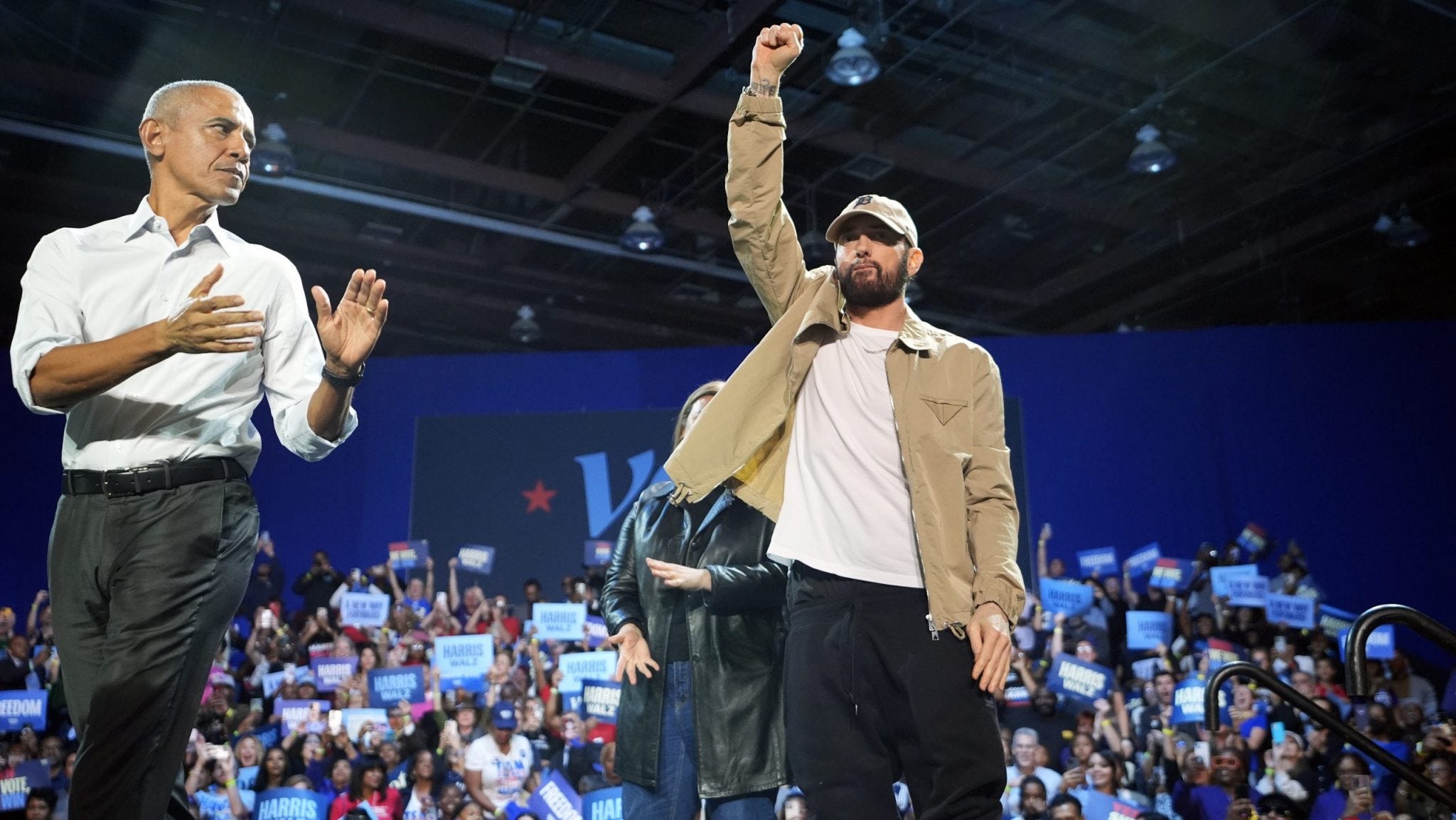
Eminem’s cleverness and originality placed him at the top of the rap game. Through creatively constructed lyrics, he explains his behavior and thought process. Mathers openly expresses his political views, flanked by decimating insults at competitors and critics.
As historians, social studies teachers, academics, and intellectuals, we bring critical thought and concerns to the general public. In a twisted way, Eminem educates his audience on historically important events. These “calls” to social action respond directly to current affairs. Since his first studio album Infinite (1996), Eminem has increased the depth of his writing and reached new arenas of consideration. Each new album produced tracks that challenged the American narrative or mentality.
This pandemic got us in a recession
We need to reopen America (What?)
Black people dyin’, they want equal rights
White people wanna get haircuts (Haha)
Some people protest, some people riot (What?)
But we ain’t never escapin’ this virus (Nah)
‘Til the cops that are racially biased (What?)
We no longer enable these liars
You get ‘em on tape, they stick to a story
Like Spider-Man crawlin’ upside of a wall and (Yeah)
Some are just unabiding as lawmen (Yeah)
Like Garrett Rolfe and like Derek Chauvin
- “These Demons”
Music to Be Murdered By, 2020
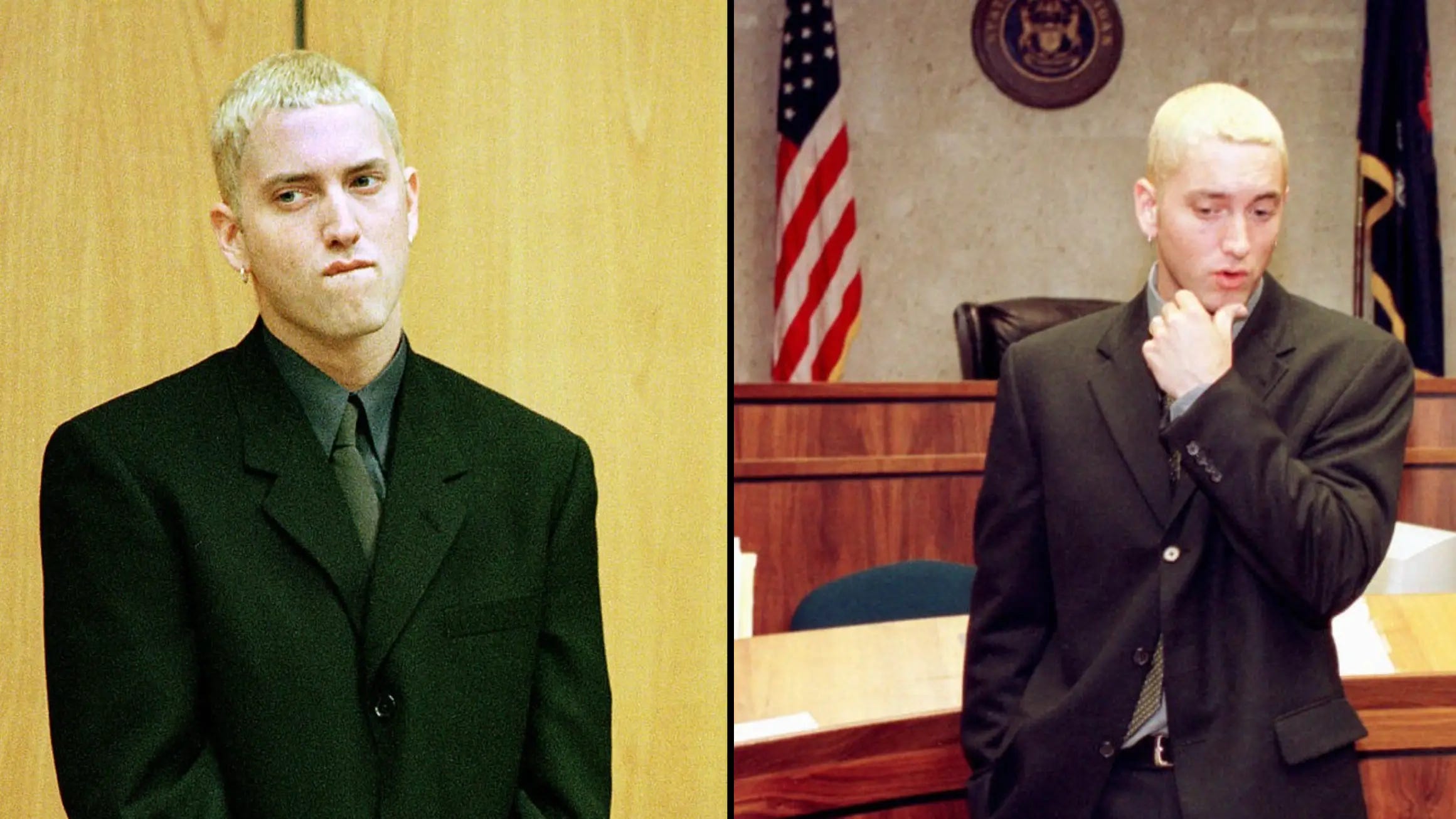
Shady’s lyrics are neither school-appropriate nor soothing to the listener. I’ll be the first to say that he is not a role model for children. There have been times when Eminem’s lyrics got him on a watch list by the Bush and Trump Administrations for how openly they mentioned rioting, storming government offices, and assassination. Those same lyrics that I analyzed with my high schoolers got him in extremely hot water.
In that particular lesson, we examined the limits of freedom of speech and expression, what qualifies as hate speech, and when can legal action be taken for threatening words. I latched onto their belief that words should be restricted if there is intent to cause harm. We debated harsh lyrics and whether or not those lines should be taken seriously. I also introduced the parents’ perspective and how music can radicalize an entire generation, even if accidentally.
Imagine it pourin', just rainin' down on us
Moshpits outside the Oval Office
Someone's tryna tell us somethin', maybe this is God just
Sayin' we're responsible for this monster, this coward
That we have empowered, this is Bin Laden
Look at his head noddin'
How could we allow somethin' like this without pumpin' our fists?
Now this is our final hour
Let me be the voice and your strength and your choice
Let me simplify the rhyme just to amplify the noise
Try to amplify it, times it, and multiply it by six
'Teen million people all equal at this high pitch
Maybe we can reach Al-Qaeda through my speech
Let the president answer a higher anarchy
Strap him with an AK-47, let him go
Fight his own war, let him impress daddy that way
No more blood for oil
We got our own battles to fight on our own soil
No more psychological warfare
To trick us to thinkin' that we ain't loyal
If we don't serve our own country, we're patronizin' a hero
Look in his eyes, it's all lies
The stars and stripes have been swiped, washed out, and wiped
And replaced with his own face, mosh now or die
If I get sniped tonight, you'll know why
'Cause I told you to fight
- “Mosh”
Encore, 2004
What do we teach in our schools? Or maybe the question should be: What should we teach in our schools? My students had never paid attention to my classes nearly as much as they did in that one lesson. Teaching government is painfully dry and boring. In order to reach the next generation, and to educate them effectively to be better humans and Americans, maybe it’s time we think outside the box.
Eminem’s songs serve as case studies on how to be an informed citizen. Mathers’ lyrics, however, are not a substitute for rationality and reason: they complement the news and supplement one perspective out of many. I caution you to use discretion when incorporating rap songs into your lesson plans, and I challenge you to consider Slim Shady for your next class on 21st Century politics.
Disclaimer: The views expressed in Eminem’s music do not reflect my own.
No posts
Comments
Nothing yet. Say the first thing.
Sign in to join the conversation.