
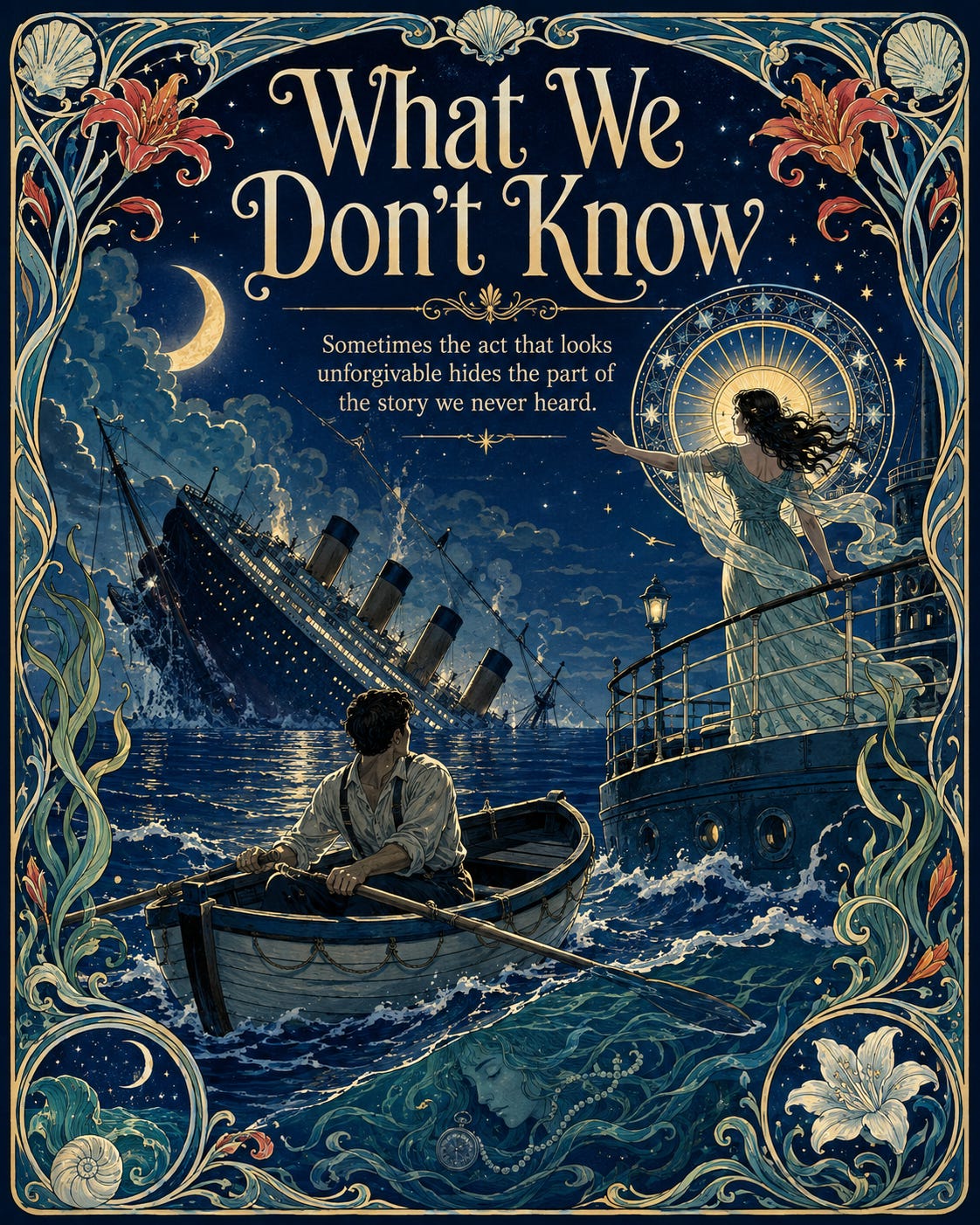
The teacher did not tell the children that the story had a lesson, because she knew that the moment you announce the lesson, you have already ruined half the story. She closed the book in front of her, rested her hands on the desk, and simply told them she wanted to tell them something.
A cruise ship was travelling through the night when disaster struck. It did not really matter whether it was a collision, a fire or a mechanical failure. What mattered was that within minutes the corridors filled with water, shouting and people running toward the lifeboats, unsure whether they were running toward life or simply away from fear.
Among them was a married couple.
They reached one of the last lifeboats and realised there was room for only one more person.
The teacher paused.
The children watched her.
The man looked at his wife, pushed her back and jumped into the boat. She remained on the deck of the sinking ship as the distance between them grew.
Before she disappeared from sight, she shouted something to him.
The teacher stopped again and smiled.
“What do you think she said?”
The answers came immediately.
“I hate you.”
“You’re a coward.”
“I’ll never forgive you.”
A girl in the back row said she probably shouted that he had never loved her. Someone else said she would have cursed him until the moment she died.
The classroom came alive. Everyone had an opinion about the man.
Everyone except one boy sitting near the window, who had said nothing.
The teacher looked at him.
“And you?”
The boy raised his eyes.
“I think she told him to take care of their child.”
The room went quiet.
The teacher looked at him for a few seconds longer than necessary.
“Have you heard this story before?”
The boy shook his head.
“No. But my mother said something like that to my father before she died.”
The teacher did not answer immediately. Then she simply told him that his answer was correct and continued the story.
The ship sank.
The man survived.
He returned home and raised their daughter alone. He never spoke much about that night. Whenever his daughter asked about her mother, he told her stories from before. How she laughed when she was angry. How she almost always burned the first pan of food she tried to cook. How she sang the wrong lyrics to songs and insisted that her version was the correct one.
About the ship, he said almost nothing.
His daughter grew up believing that there were questions her father either could not or would not answer.
Years passed.
After his death, she began clearing out the house where she had grown up. Inside a drawer she found an old diary. Most of the pages were filled with small, ordinary things: bills, jobs that needed doing, things he wanted to remember.
Somewhere in the middle, she found her mother.
Shortly before that journey, her mother had learned that she was gravely ill. The prognosis gave her very little time. They had decided not to tell their daughter yet. First, they wanted to understand for themselves what they were supposed to do with the few weeks or months they probably had left.
Then the shipwreck came and gave them only seconds to make a decision no human being should ever have to make.
In the diary, her father had written that until the final moment he had wanted to stay with his wife on the ship. For one second, it had seemed almost obvious to him. If she was going to die, he would die too.
Then he thought of their daughter.
A child who, in a single night, could lose both her parents.
His wife understood what he was thinking before he had time to say anything.
“Go,” she told him.
And he went.
Years later, he still did not know whether he had done the right thing. He only knew why he had done it.
The teacher finished the story without explaining anything else.
There was no “therefore.” No “this is why you should.” No list of examples about how we ought to behave toward friends, partners or the people we love.
The children had already condemned the man within seconds. They had seen a woman left behind on a sinking ship and a man saving himself, and they had filled in everything that was missing.
Coward. Selfish. Traitor.
Then they learned one more fact and the entire story changed.
Perhaps that was enough.
Because most of the time, when we look at someone else’s life, we do not see the whole story. We see only the moment that happened to pass in front of us.
And we rush to write the missing parts ourselves.
Comments
Nothing yet. Say the first thing.
Sign in to join the conversation.