
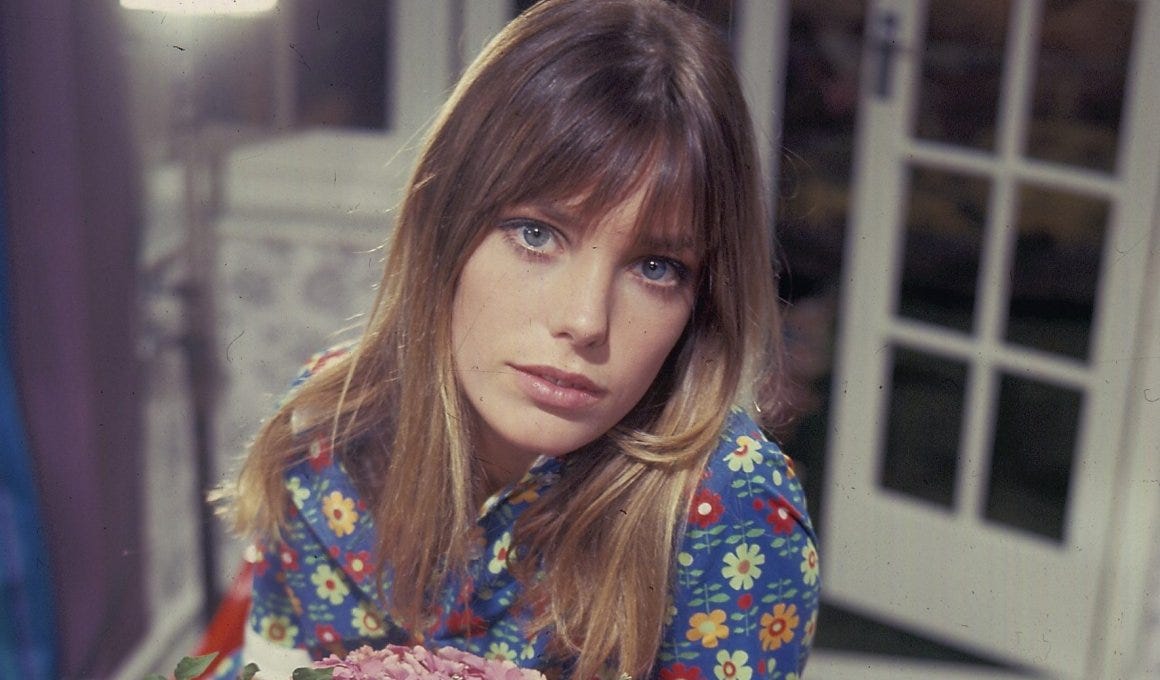
Jane Birkin was afraid of two things, and neither of them had much to do with her own death. The first was the possibility of living longer than everyone she loved, of becoming the last person left carrying the faces, voices, relationships and memories of a life that could no longer be shared with anyone else. The second was almost ironic: she feared that after she was gone, the world would remember the Birkin bag more clearly than the woman whose name it carried.
Her second fear seemed to be confirmed almost immediately after her death. When news broke that Birkin had been found dead in her Paris apartment on Sunday, July 16, 2023, countless stories about the famous Hermès bag appeared almost at once. She was 76, and her health had been fragile for years. She had lived with leukaemia for a long time and had suffered a stroke in September 2021.
But if there was one thing that could never be contained inside a luxury accessory, it was the life of Jane Birkin.
She had already endured losses that felt like losing pieces of herself. Her eldest daughter, photographer Kate Barry, died in December 2013 at the age of 46 after falling from the fourth floor of the building where she lived in Paris. The exact circumstances of her death were widely discussed, but for her mother the only certainty was the loss itself, one she never truly made peace with.
Long before that, she had lost Serge Gainsbourg.
Gainsbourg was not simply a great love. He was a mentor, collaborator, artistic guide and one of the people who shaped both her life and public image. From 1968, when they met while filming Slogan, until 1980, when their relationship ended, they became one of the most recognisable couples in European popular culture.
Their relationship, however, was never quite the romantic myth later created by photographs. Gainsbourg’s alcoholism, controlling behaviour and episodes of abuse eventually made life together impossible. Birkin left, but the bond between them did not simply disappear with the end of the relationship.
Film director Jacques Doillon, who was Birkin’s partner for thirteen years, was among those who believed that she was never quite the same person after Gainsbourg died in March 1991.
Birkin herself resisted the suggestion that she had loved him more than every other man in her life. To admit such a thing, she said, would be unfair to the other people she had loved and who had loved her.
And there was one man in particular she never wanted to diminish: her father.
Jane Birkin was born into a family that already had its own unusual relationship with art and adventure. Her mother, Judy Campbell, was an actress. Her father, David Birkin, served in the Royal Navy and worked with British intelligence during the Second World War.
She spoke about him with admiration. She described night operations in which, under minimal moonlight, he approached the Brittany coast, transported agents and collected British airmen to bring them safely back to England. According to Birkin’s own recollection, he took part in around forty such missions.
For her, her father was one of the very few people she believed had loved her entirely without conditions. The other, she said, was Gainsbourg.
The timing of their deaths was almost unbearable. The two men died within only a few days of each other in 1991. For a woman who feared loss more than almost anything else, that week left a space that never fully closed.
Her childhood in London, meanwhile, had none of the confidence that would later become part of her image. She remembered herself as a painfully shy and very thin girl who was teased for her appearance, particularly for having a smaller chest than many of her classmates.
It is one of the strange ironies of her life. The woman who would later become an international symbol of seemingly effortless sensuality grew up feeling deeply uncomfortable in her own body.
At seventeen, she fell passionately in love with John Barry, the composer who would later become one of cinema’s most celebrated musical figures. They married and had her first daughter, Kate, but the marriage lasted only four years.
Birkin believed she had never truly been central to Barry’s life. When he decided to move to the United States, they separated with considerably less warfare than often accompanies the end of a great love.
At 21, Jane Birkin was already a divorced mother.
Then she decided to change country, language and life.
Acting was not entirely new territory for Birkin. She had already appeared in a small role in Michelangelo Antonioni’s Blow-Up, although she later admitted that when she got the part she barely understood who the Italian director was.
The real leap came when she auditioned for the French film Slogan despite speaking virtually no French.
That was where she met Serge Gainsbourg.
Their first encounter did not necessarily suggest what was to come, but before long he became a central figure in both her personal and artistic life.
Around the same period, Birkin appeared in Jacques Deray’s La Piscine and made a decision that would define the rest of her life: she moved to France.
She was British, but France adopted her so completely that for later generations it became almost difficult to imagine her anywhere else but Paris.
Then came the song.
Je t’aime… moi non plus had not originally been written for Jane Birkin. Gainsbourg had first recorded it with Brigitte Bardot, but later persuaded Birkin to record the song with him.
Her thin, almost boyish voice changed the character of the song completely.
The result became scandal, hit and cultural event at the same time. Its breathing, sensuality and provocative intimacy made the recording impossible to ignore.
And with it, Birkin became impossible to ignore too.
Strangely, she often said she could not stand listening to herself sing it.
Her relationship with Gainsbourg produced their daughter Charlotte Gainsbourg, who would almost inevitably follow her parents into acting and music. Decades later, the bond between mother and daughter became the subject of the documentary Jane by Charlotte.
The film was completed in 2021 and shown at Cannes. Birkin appeared beside her daughter looking physically weakened by illness but still unmistakably present, with that rare quality some people have of seeming already halfway transformed into myth before they have actually left the world.
She also had a third daughter.
Lou Doillon was born from Birkin’s long relationship with Jacques Doillon and likewise followed an artistic path, working as a musician, actress and model.
Birkin’s family was never a neat or orderly one. It was a family made of art, separations, intense relationships, losses and people who remained connected even after those relationships had changed shape.
Perhaps that was why she feared so deeply the loneliness of being the last survivor.
And then, of course, there is the bag.
Its origin story has almost the lightness of a scene from a French comedy. In the early 1980s, Birkin happened to be travelling on a plane near Jean-Louis Dumas, then head of Hermès.
Birkin was carrying the wicker basket she famously took almost everywhere. At some point it opened, spilling its contents across the aircraft.
She complained about how difficult it was to find a genuinely practical bag large enough to carry everything a woman might need for a weekend without becoming awkward or useless.
Dumas listened.
And designed.
In 1984, the first Birkin bag appeared.
An object born from a minor everyday inconvenience gradually became one of the most recognisable symbols of luxury in the world. Birkin bags became rare, extraordinarily expensive and collectible, with some eventually treated almost as investment assets.
The woman who inspired them had a far more complicated relationship with what they became.
When controversy emerged in the mid-2010s over the use of crocodile skin in their production, Birkin even asked for her name to be removed from a particular version of the bag until changes were made to production practices.
It was entirely consistent with her character. If an object carrying her name conflicted with what she believed, she was prepared to distance herself even from the most powerful commercial symbol associated with her.
Jane Birkin spent much of her life beside famous men, but she was never simply John Barry’s wife, Serge Gainsbourg’s partner or Jacques Doillon’s companion. She lived among people who left powerful marks on the arts, but she created one of her own.
She acted in films, recorded music, performed on stage, spoke publicly about political and social causes and became involved in activism. More than that, she created an image that influenced generations of women without ever looking as though it had been deliberately manufactured.
The hair, the simple jeans, the white shirts, the wicker basket, the almost childlike awkwardness that somehow coexisted with sensuality became style precisely because they never seemed to be trying to become style.
Behind all of it, however, was a woman carrying losses.
She lost her father and Gainsbourg almost at the same time. She lost her daughter Kate. She lived long enough to understand how quickly life can take away people you once assumed would always be there.
But she did not live long enough to become the person she feared becoming most.
The last one left.
When she died, Charlotte and Lou were still here.
Perhaps her second great fear did not come entirely true either. Yes, the Birkin bag will continue to exist in shop windows, auctions and lists of objects sold for absurd sums of money. Her name will remain attached to it even for people who know nothing about the woman behind it.
But there is also Je t’aime… moi non plus. There are her films, her recordings, Charlotte looking at her mother through the camera in Jane by Charlotte, and the photographs of an Englishwoman who arrived in France without speaking the language and became part of the country’s cultural memory.
Above all, there is a life that refused to become only one story.
Jane Birkin feared that we would remember her as a handbag.
In the end, the handbag is only one of the things that reminds us Jane Birkin was here.
Comments
Nothing yet. Say the first thing.
Sign in to join the conversation.