
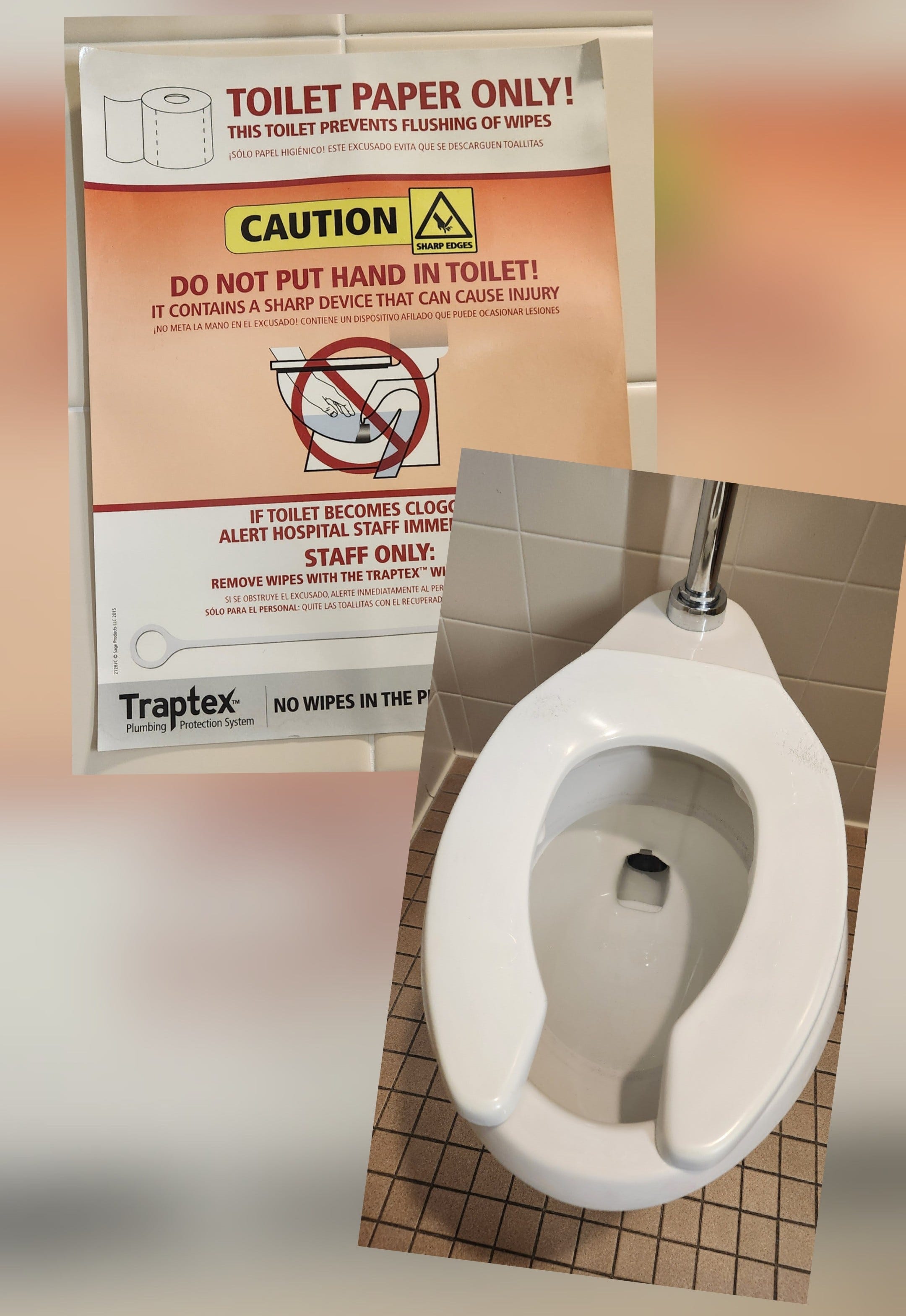
World Toilet Day was last week. I wanted to commemorate it with a post, but hospitals – which is where I was – aren’t great places to write. Especially not when you’re the patient. But I did at least snap a picture of the toilet in room 7236 where I’d spent the last 24 hours.
Before I turn to my hospital toilet and why I was so interested in it, allow me a quick digression into World Toilet Day. November 19th is probably not a day you pay much attention to (unless you were one of the .3% of people celebrating your birthday). Similarly, most of us use a toilet – a clean, functioning, even pleasant one – multiple times a day without a second thought. But for some 3.4 billion people, a clean, functioning toilet (and waste collection/treatment system) would mean the world.
Jack Sim, however, understands. A Singaporean entrepreneur and philanthropist, in his early 40’s at the time, in 2001 created the World Toilet Organization (WTO) and established the 19th day of November as World Toilet Day. After a dozen years the annual observance had grown enough that it needed a new home, and in 2013 the WTO transferred the annual day of international observance to the United Nations. As part of working toward U.N. Sustainable Development Goal #6 of safe and affordable sanitation for all, the international body uses World Toilet Day “to inform, engage and inspire people to take action” toward that vision.
Lest you think that poor sanitation is “other people’s problem”, in fact, more than two million Americans lack basic sanitation. It’s shameful, a stain on a nation whose leader likes to throw around adjectives like “shithole” for other countries, handily ignoring the problems within our borders. Maybe I’ll circle back to that topic for next year’s Toilet Day.
But what was on my mind in my hospital room last week was something a little different. I couldn’t help but think about the number of Americans who have access to toilets but don’t know how to use them. They are given the luxury of perfectly functioning toilets and treatment systems but, through their willful ignorance and misuse, cause all manner of unnecessary havoc and expense.
Toilets are designed to flush three things: pee, poop, and reasonable amounts of toilet paper, all of which readily decompose. But some people – maybe most people – flush items that aren’t on that short list. They confuse toilets with trash cans. Interestingly, the confusion only goes in one direction: they’d never pee into their trash can, but they routinely flush dental floss, condoms, cigarette butts and wipes. Each of these is problematic, but these days the number one culprit behind clogged toilets is wipes. Which is why I took a picture of the toilet in my Minneapolis hospital room.
At the base of the toilet bowl was a small device that encircled the outlet – barely noticeable if you didn’t know what to look for. I’d seen a similar contraption a little over a year earlier at the Medical University of South Carolina where my mother was cared for after her stroke. In that first case, it was the ominous, eye-level sign on the wall behind the toilet that first caught my attention:
DO NOT PUT HAND IN TOILET!
IT CONTAINS A SHARP DEVICE THAT CAN CAUSE INJURY!
Prompted by the poster, I peered into the ceramic stool at my feet and saw what all the fuss was about: small razor-like protrusions - each about the size and shape of the plastic daggers that came with young my sons’ Playmobile® knights - rimming the circumference of the exit pipe. Unlike my sons’ toys, however, the submerged toilet daggers were legitimate defense weapons. Their razor-like barbs were designed to latch onto the unyielding non-woven fabric of errant wipes as they tried to pass through the orifice, holding them back before they could enter the pipes and cause problems.
In a quiet moment last year, I asked one of the South Carolina nursing assistants about the “Do not put hand in toilet” sign. Who the heck puts their hand in the toilet, especially a hospital toilet? Lord knows what lurks in hospital waste systems. She told me that despite plenty of signage, some people still try to flush wipes, which then get caught on the dagger-containing gizmo lurking below. Not wanting to get caught doing something stupid like flushing a wipe, visitors then make their second foolish move by trying to pull the wipes out. But after slicing their fingers on the little daggers, they now had two embarrassing messes: a clogged toilet and bleeding fingers. At least the medical attendants are well equipped to fix one of those problems.
The finger-slicing device at the bottom of the Charleston hospital toilet turned out to be a Traptex® Plumbing Protection for Toilets. Fast forward to last week, I found the exact same thing in my Minneapolis hospital toilet. The Traptex isn’t cheap – a few hundred dollars plus installation costs – but neither are clogged pipes. A single emergency plumbing repair can easily cost a few hundred dollars, not to mention the health risks and disruption to hospital operations that come when sewage backs up into a patient’s bathroom.
Beyond the on-site expense caused by flushed wipes, the National Association of Clean Water Agencies (NACWA) in 2020 estimated that American wastewater utilities spent about $441 million per year dealing with the mayhem that “flushable” wipes cause to their systems. The problem was bad enough that in 2021 the city of Charleston SC sued a consortium of American wipes manufacturers and got them to, among other things, change the wording on their packages. Now the descriptor “flushable” can be used only if the wipes meet disintegration standards that make them safe for pipes, septic systems, and centralized treatment systems. (Note: Some wipes still contain microplastics, and nearly all are packaged in plastic, so I am staying with toilet paper.)
The pandemic was a particularly challenging time for toilets. Between toilet paper shortages, gastrointestinal problems associated with the Coronavirus, and crazed attempts to disinfect our way out of the disease, the sale of wipes surged. More wipes were flushed which brought more clogged pipes. When pipes clog, sewage backs up into toilets and basements, or, for blockages further downstream, overflows into streams and rivers.
I remember my first visit back to my hair stylist in 2020 after months of home isolation. She and I were both masked and were catching up on pandemic life as she snipped my overgrown mop. Somehow the conversation made its way to toilets, with a comment from me about the epidemic of clogged pipes. She laughed and said she knew all about it. With toilet paper in short supply, she, like millions of others, turned to wipes. And she flushed them. When the toilet backed up, her boyfriend, who owned the house where they lived, came to the rescue. He also gave her a bit of a lecture. Understandable.
After that embarrassing experience, my pandemic-era hair stylist learned to treat toilets with the respect they deserve – there are only three things she flushes. (If you’ve forgotten what those three things are, go back and re-read this from the beginning.) Though World Toilet Day 2026 is still 51 weeks away, I hope that you don’t wait another day to start respecting the toilets in your life. And keep your hands out while you’re at it.
Toilet Day is every day. Pass it on.
There are lots of things that shouldn’t go into your toilet, but there are also lots of things that shouldn’t go down your kitchen sink. The surge in plumbing emergencies the day after Thanksgiving has earned it the moniker “Brown Friday”. Before the holiday begins, and before guests start putting who-knows-what down your kitchen sink, read this overview from USA Today. It’s good advice any day of the week.
In case you’re concerned about my hospital stay, I’m A-Okay. I got a new hip for the holidays and hope to be dancing by spring.
No posts
Comments
Nothing yet. Say the first thing.
Sign in to join the conversation.