
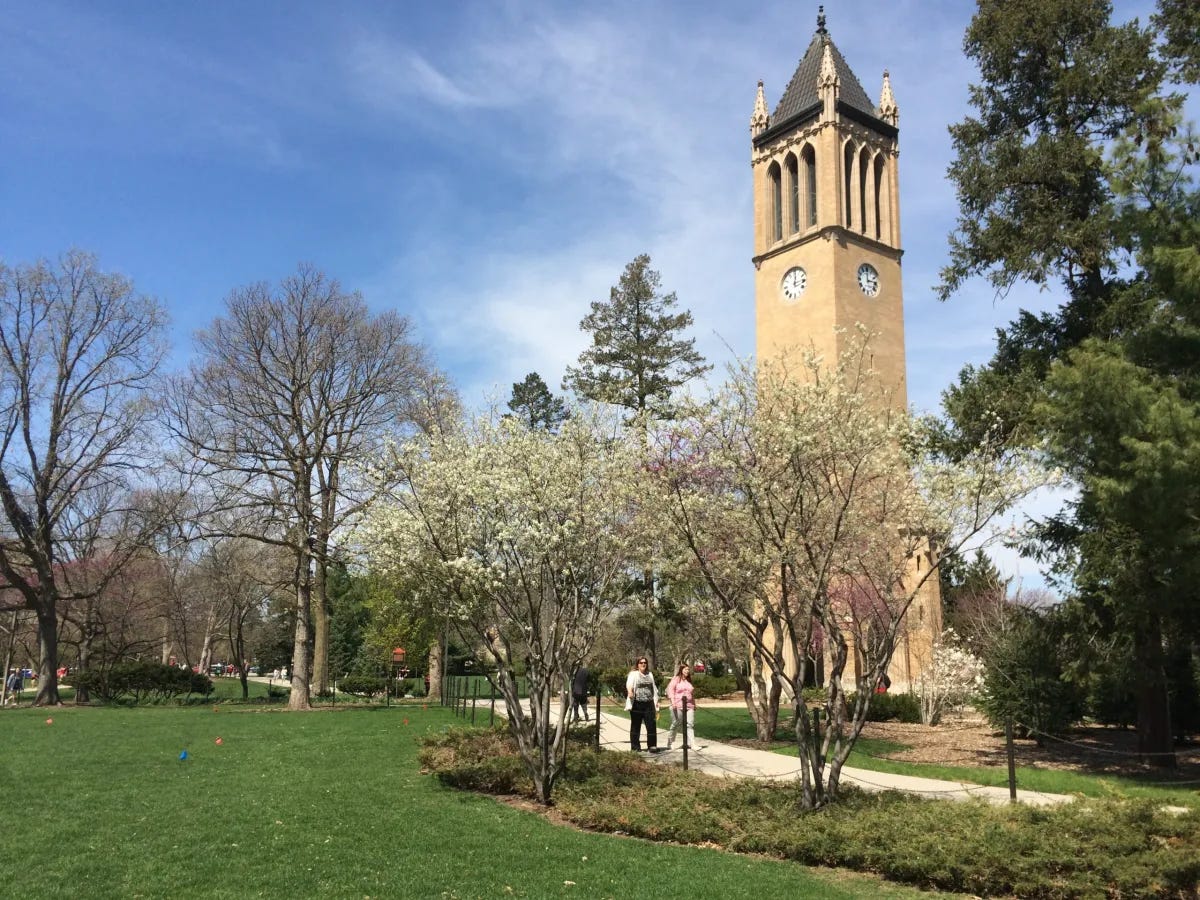
Turns out that Iowa State University underpaid one of its female professors by around three-quarters of a million dollars and owes about half a million dollars in interest, plus damages, totaling $2.5 million.
The kicker is that Silvia Cianzio, professor emeritus of agronomy, learned about being paid less than her male peers when she became chair of the agronomy department’s diversity, equity and inclusion committee.
Critics of diversity, equity and inclusion — DEI for short — at Iowa’s state universities are so opposed to DEI that they have made efforts to promote it illegal. Moreover, gaining any relief from the current U.S. president’s administration is a nonstarter.
A saving grace in Iowa’s law is that Iowa State, the University of Iowa and University of Northern Iowa still must follow 1972 Title IX law that prohibits discrimination based on sex in education programs and activities that receive federal financial aid, existing civil rights and age discrimination laws and the Americans with Disabilities Act.
They just cannot have offices that recruit and train faculty and staff based on DEI principles or promote diversity, equity and inclusion, which is what a committee like the one through which Cianzio learned she was underpaid would do.
Here is a fact: Employees at the state universities are scared to say much on this topic because of the assault on diversity, equity and inclusion. They point to Andrea Tinoco and Iowa Memorial Union Senior Associate Director Cory Lockwood.
Tinoco, then the U of I’s leadership and student organization development assistant director, was caught in a secretly recorded video for use as a Fox (news) shaming last year as she talked about ways the university could get around the anti-DEI law. The video showed Tinoco saying, among other things, “On behalf of my office, we’re still going to talk about DEI, we’re still going to do all the DEI things.”
She was demoted and took a 5% pay cut as punishment. Comments Lockwood made were deemed to be within bounds of what he could say about DEI and he was spared demotion.
Over at ISU, you may recall Sue Harper, of the former Center for LGBTQIA+ Student Success and now co-curricular student development director in Multicultural Student Affairs. She was portrayed in a deceptive, heavily edited four-minute video by the right-wing hatchet shop Accuracy in Media as saying people supportive of LGBTQIA+ students would help those students within the parameters of Iowa law.
Accuracy in Media tried to imply that Iowa State was circumventing the law despite an exchange like this in the secretly recorded video:
“We are finding ways to be in compliance with the law and still do the work that needs to be done,” Harper says.
“Absolutely,” the interviewer responds, feigning agreement.
The effects of Iowa Attorney General Brenna Bird threatening prosecution because of secretly recorded and edited videos have been felt. Hooray, say the anti-diversity, equity and inclusion crowd. Good Lord, say those still stunned by the notion that white men — women, too, in some instances — face deep discrimination in Iowa.
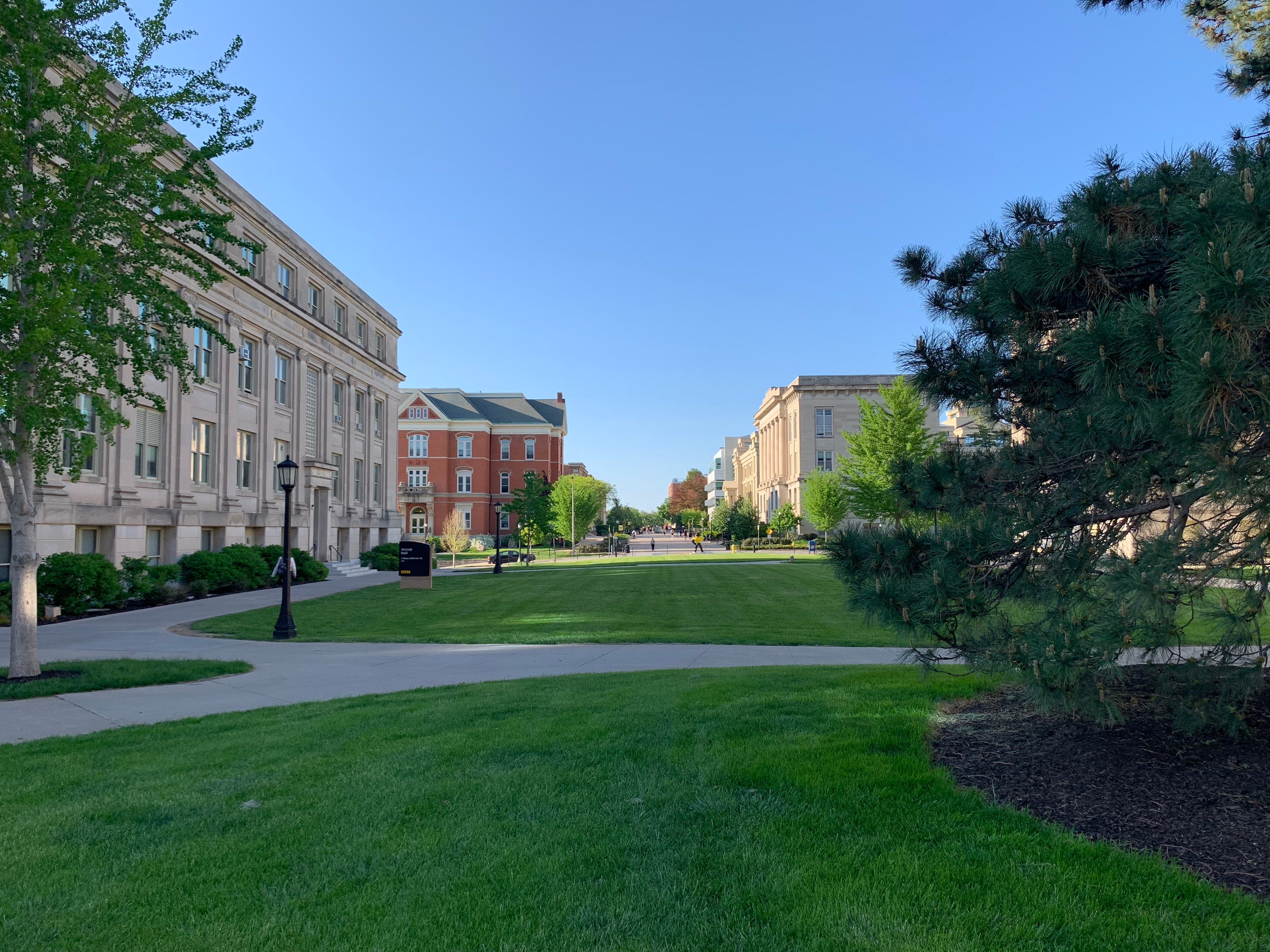
Having a University of Iowa Center for Intellectual Freedom to address conservatives’ concerns about balance in what is taught at the University of Iowa will take time. New center guidelines the Board of Regents adopted July 29 on how the center will be run take final authority out of the hands of Luciano de Castro, the center’s interim director, catalyst and University of Iowa economics professor, who wanted broad unilateral spending authority to run the center.
“On July 29, 2025, the first day Professor de Castro met (regents) Executive Director Braun, Braun stated that the university requires approval for expenditures and commented: ‘It seems just so natural that I would be the person approving the expenses,’” a July 17, 2026, Gazette story by Vanessa Miller quoted de Castro as writing in one of his reports that lamented roadblocks he felt U of I administrators were throwing at him.
“At the time, professor de Castro viewed this as a routine administrative arrangement. He later came to understand that it was, in practice, a mechanism for controlling the center’s operations.”
U of I President Barbara Wilson said at a regents meeting last week that the university administration wants to work with the regents to provide civic education to students.
RELATED: IOWA CENTER FOR INTELLECTUAL FREEDOM’S START PLAGUED WITH CONFUSION, MISTRUST
Miller’s reporting, which I cite frequently because of its depth on this topic, also says the regents’ three-member committee will begin planning for the center without de Castro while he is out of the country.
This comes after the regents adopted rules that could clear up confusion that has existed since the politically motivated center was created by the Republican-led Iowa Legislature. The regents created a Center for Intellectual Freedom Committee to provide oversight of the center and make recommendations to the full board. De Castro and, eventually, the permanent director the regents hire will report directly to that committee.
Committee members are Christine Hensley, Robert Cramer and Steve Lacy. Hensley chairs the committee and said at last week’s regents meeting that it would meet to get on the same page and brief de Castro when he returns to the United States.
Meanwhile, classes at the center, which has an annual $1 million budget, are delayed until fall 2028.
RELATED: THE UNIVERSITY OF IOWA’S CENTER FOR INTELLECTUAL FREEDOM IS A HOT MESS, by Daniel Henderson
De Castro strongly indicated in emails he sent to various people earlier this year that he wanted full authority over the center and its budget while serving as interim director. The policy manual revision adopted by the regents makes clear that the committee’s staff is led by de Castro and, eventually, by the permanent director.
De Castro told The Daily Iowan in a March story that he is passionate about the center and the challenges of getting it off the ground. His annual salary for his center duties is a reported $140,000, The Daily Iowan reported.
Thanks for reading Lyle Muller Doesn't Have a Fancy Column Title. This post is public so feel free to share it.
The regents are accepting applications for the permanent director through Aug. 14. They set the salary range at $200,000 to $450,000.
The job description says the center’s director must give the committee periodic reports on, lifting from the regent’s docket here:
1. The status of the Center’s statutory responsibilities under Iowa Code chapter 263C.
2. The Center’s proposed annual budget and actual expenditures.
3. Progress in developing and delivering academic programming, outreach activities, and other initiatives undertaken by the Center.
4. The Center’s planned public programming and speaker activities for informational purposes.
5. The Center’s annual report required by Iowa Code chapter 263C.
The center’s director still has authority under Iowa law to make personnel decisions, bring in guest speakers and carry out the always applicable other duties as assigned or, in this case, as mandated by Iowa Code Chapter 263C.
RELATED: CENTER FOR INTELLECTUAL FREEEDOM GETS A CAPTIVE AUDIENCE, by Todd Dorman
That the University of Iowa center will be under a regents committee’s control raises an interesting dynamic because of Iowa’s current gubernatorial race. The race is considered competitive this year. Democrat Rob Sand, if elected governor, would appoint three regents in 2027 and three more in 2029 to a board that currently has only one registered Democrat. Another regent seat is vacant.
Count on it: Iowa’s next governor will influence who leads the Board of Regents and who serves on the three-member Center for Intellectual Freedom Committee.
A Democratic governor could expect pushback from the Republican-led Legislature when it comes to getting nominees confirmed. But, the November election will include the question of how the University of Iowa Center for Intellectual Freedom should be run.
That’s what happens when a politically motivated entity is created. A lot can happen before those classes are to begin in 2028.
Here are a few other long-shot thoughts. What if Democrats mustered enough power in the Legislature to eliminate the U of I center? Or to restore diversity, equity and inclusion to positions of prominence in state government so that committees like the one Silvia Cianzio chaired do not have to tiptoe around what they say about so-called “woke” ideas such as equal pay for women doing the same job?
You might not expect that in a state as red as Iowa, but it is a question worth pondering — and one that could be on the minds of Republicans and Democrats seeking control of the Statehouse as they campaign for your votes.
Lyle Muller is a member of the Iowa Writers’ Collaborative. Check out some of the collaborative’s most recent reporting in this week’s summary.

No posts
Comments
Nothing yet. Say the first thing.
Sign in to join the conversation.