
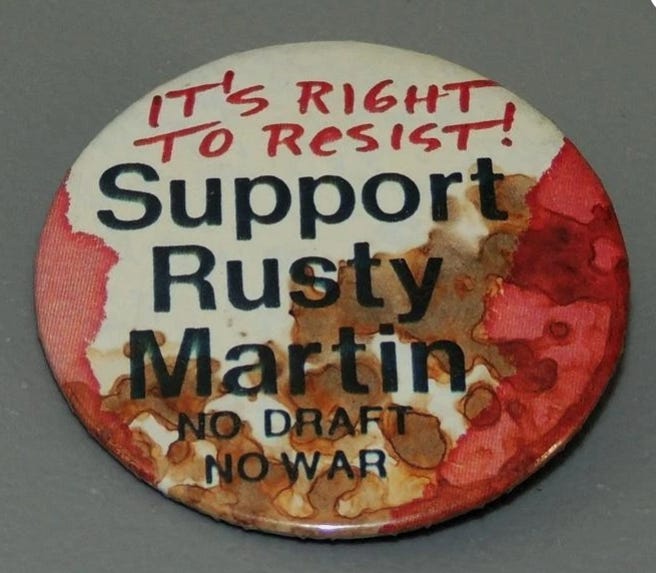
I learned about Rusty Martin in 1982, when federal officials charged him with refusing to register for the draft in 1980. He was president of the University of Northern Iowa student body then and, thus, all over state and, in some cases, national news.
I finally met him a few years later when he was leading the rent control movement in Iowa City. He was charismatic and controversial. He also was fined $10,000 and placed on three years of probation in April 1985 in the draft evasion case after being convicted.
It was stunning a few weeks ago to see him on Facebook, announcing his pending death.
“I’ve got early onset Alzheimer’s, a fatal illness that destroys the brain and body. I was diagnosed in 2023. I probably had it for several years previous,” Martin, 66, of Des Moines, wrote July 27, 2026, on Facebook.
“I still know who I am, and I still have lots of opinions. What I don’t have are very many memories of past events and relationships.
“I plan to end my life peacefully, legally, with my beloved wife Kay Meyer and family members by my side, in Switzerland on Tuesday, August 18th.”
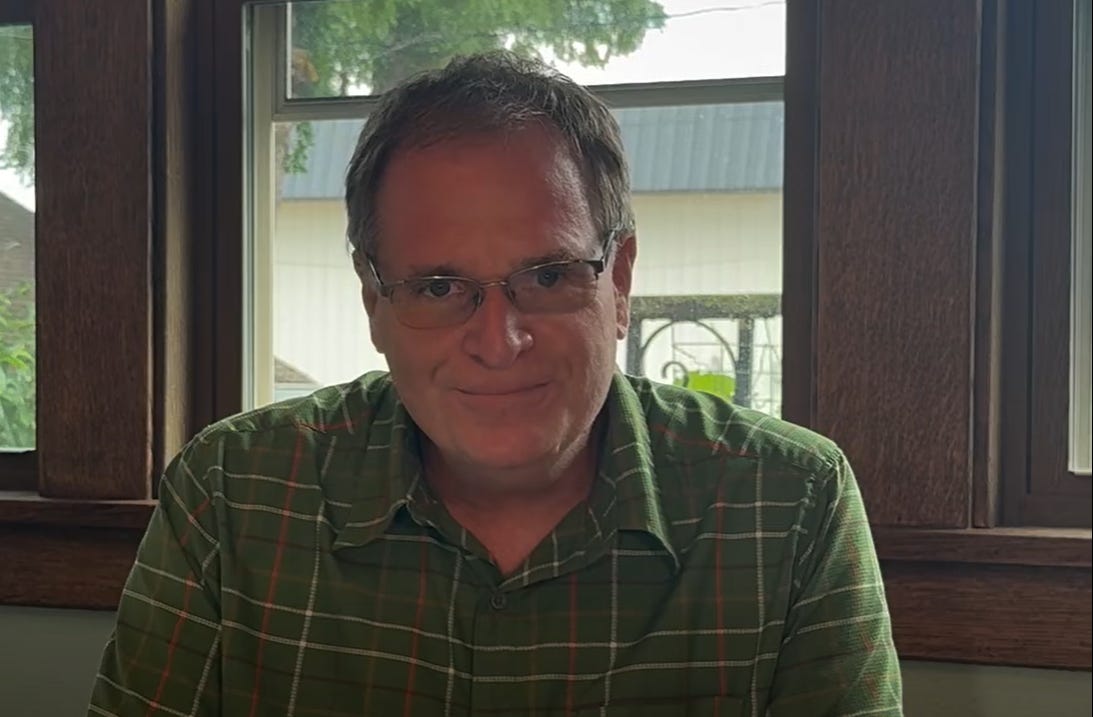
Even in death, Rusty Martin is controversial and drawing attention, but this time his cause is supporting treatment and laws that help people with Alzheimer’s and other cognitive diseases. His decision also raises an old issue: Is suicide moral?
In his mind, and the minds of many, the answer is yes.
“Alzheimer’s is a long goodbye,” he told The Des Moines Register in a video posted Aug. 9. “So, when you tell somebody that, they don’t know what it means.”
It means slowly diminishing skills to the point where you do not know who your family is, who you are or where you are. Ultimately, the brain forgets how to make your body function. That includes breathing and making the heart beat. It is a miserable death.
My friend and former colleague, Cindy Hadish, wrote about this when I was at the former IowaWatch news outlet, which is part of Investigate Midwest, and we produced a video that is worth a view if you have the chance.
RELATED: ‘ALZHEIMER’S TSUNAMI’ THREATENS GROWING DEMENTIA CARE DEMANDS AS MEDICAID FUNDING GETS TOUGHER,” by Cindy Hadish, IowaWatch via Investigate Midwest
Tributes for Martin poured in on Facebook:
“My mom had Alzheimer’s and we lost her before we lost her eight years ago. May the Lord bless you and keep you. May He shine His light upon you and your family…”
“I have a personal friend in Canada who manages a MAID (Medical Assistance In Dying) Clinic there. They understand dying with dignity!”
“My humble thanks for so openly sharing your story and the entire process. You have awakened me and most likely many others.”
“No idea, if you remember me - and if you don’t... please don’t be sad - I do remember you... and I surely will.”
RELATED: UNABLE TO CHOOSE DEATH AT HOME, DES MOINES MAN GOES ABROAD, by Jason Clayworth, Axios
The United States had been out of Vietnam for five years when Martin refused to register for the draft in 1980. President Jimmy Carter had reinstated mandatory registration that year. Martin called the draft “a cautious step towards reinstituting the peacetime draft.”
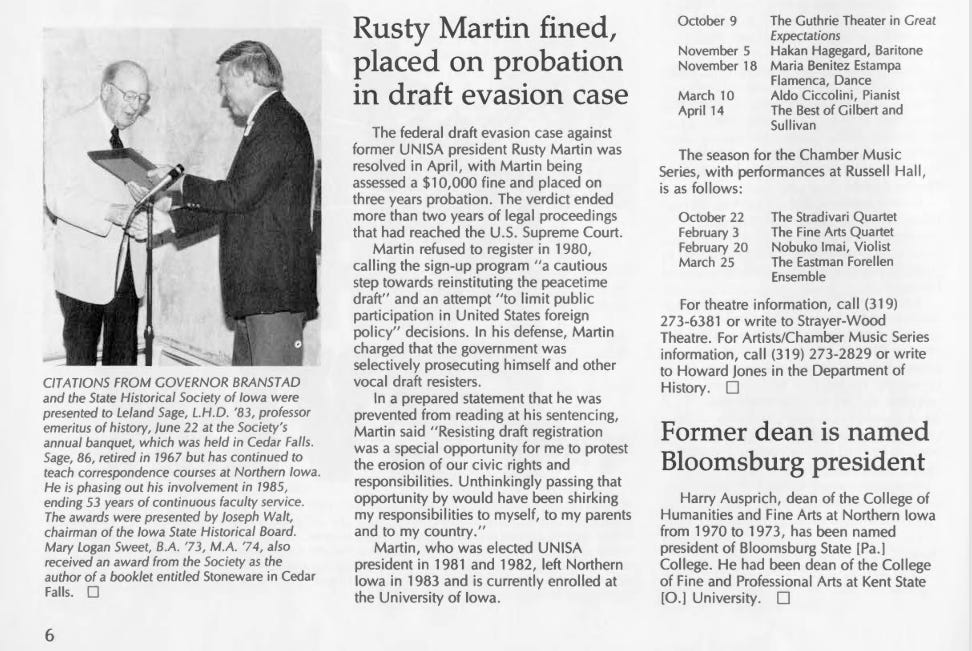
He had a prepared statement for his sentencing but was not allowed to read it.
“Resisting draft registration was a special opportunity for me to protest the erosion of our civic rights and responsibilities. Unthinkingly passing that opportunity by would have been shirking my responsibilities to myself, to my parents and to my country.”
The federal government suspended efforts to enforce mandatory registration in 1986.
Martin enrolled at the University of Iowa to finish his studies and rallied renters — mainly U of I students — to support a local rent control ordinance. Interviewing and talking with him, I saw the intensity he still had for a political issue he cared about but also saw a friendly, open and accessible person. No wonder he had so many friends.
The measure failed. Now, Iowa law prohibits cities from having local rent control.
Martin, meanwhile, settled into regular politics as a research staffer and communications director for Iowa Senate Democrats for 24 years before retiring. He wrote that he was diagnosed with Alzheimer’s in early 2024.
“I started planning to legally end my life the day I was diagnosed. Unfortunately, to end my life in a legal, dignified manner, I’m forced to travel halfway around the world to Switzerland,” he said in a Facebook video posted Aug. 12.
Sure, some groups and denominations oppose euthanasia and physician-assisted suicide.
“Sanctioning of euthanasia and assisted suicide leads to increased use of euthanasia without consent, circumvention of the law, and abuse of the vulnerable,” a statement from the Euthanasia Prevention Coalition USA says. “Depression is the most common factor in requests for assisted suicide yet it can be diagnosed and treated successfully.”
The World Medical Association, a consortium of 115 national medical associations, also opposes euthanasia. “The WMA reiterates its strong commitment to the principles of medical ethics and that utmost respect has to be maintained for human life,” its statement on the matter states.
The medical association’s position is not altogether rigid. “Separately, the physician who respects the basic right of the patient to decline medical treatment does not act unethically in forgoing or withholding unwanted care, even if respecting such a wish results in the death of the patient.”
Martin’s last ask is that Iowans lobby candidates for governor and the Legislature for a right-to-die-with-dignity law. An attempt to pass one in 2026 did not advance out of a subcommittee.
In the Aug. 12 video, which he calls “a few last thoughts,” Martin said he was heading off to Switzerland the next day.
“I have an important message to share, and I’d like you to pass it on. If you or someone you know, appears to be having memory issues, get it checked out,” he said.
“Did you know that there’s a blood test that tells you for certain if you have Alzheimer’s or not? I wish I had that test back in 2021. That’s when I started talking with my doctor about the struggles I was having at work, and at home.”
Martin certainly had his detractors. But, he also had a wide swath of friends and supporters. He appears to be comfortable with all of it in his final days.
“Wow, I’m so lucky to be who I am,” he says at the end of The Register video. “To me, that’s enough.”
Editor’s note: the story was corrected Friday night, Aug. 14, to insert the inadvertently missing “Northern” for the university where Martin was student body president.
Lyle Muller is a member of the Iowa Writers’ Collaborative. The collaborative features some of Iowa’s best writers. Here is a list to check out. Find a topic you like and subscribe,
You may read the collaborative’s most recent reporting in this week’s summary.
And order this book about an Iowa United Methodist Church’s attempts to wrestle with controversies since its 1841 founding.

No posts
Comments
Nothing yet. Say the first thing.
Sign in to join the conversation.