
All was taken away from you: white dresses,
wings, even existence.
Yet I believe you,
messengers.
— ‘On Angels’, Czeslaw Milosz
What are angels made of? Cut open an angel and what is inside?
Since the conception of angels in Abrahamic mythology, there have been innumerable angelic ontologies. As such, the Angel may be understood as a genus, a classification encompassing a plurality of species, as in Dionysius’ nine choirs of angels.
Angel as tool (hammer, axe). Angel as weapon (sword, rifle). Angel of fire. Angel-human, the profane Nephilim offspring. Angel of tangled wires. Angel as your fibreoptic high-speed broadband cable. Angel of petrol oil. Angel of the Fall. Angel as a pale sphere hovering over a gravestone. Angel as the rabbit foot charm on your keychain. Angel of the Dream. Angel of Death.
Angels are intermediaries, hovering somewhere between the divine and the mortal. They are unearthly creatures, without flesh or blood; in Augustinian angelology they are constituted of some ethereal substance, ‘pure light’ or ‘intellect’. But their manifestation in iconography is of winged, human form. They effect change in the material world as apparently solid entities.
This is the paradox of Elizabeth Spires’ apostrophe to the Angel: ‘O spirit embodied, but without/need of body, made without artifice/by Mind and worked in stone’.
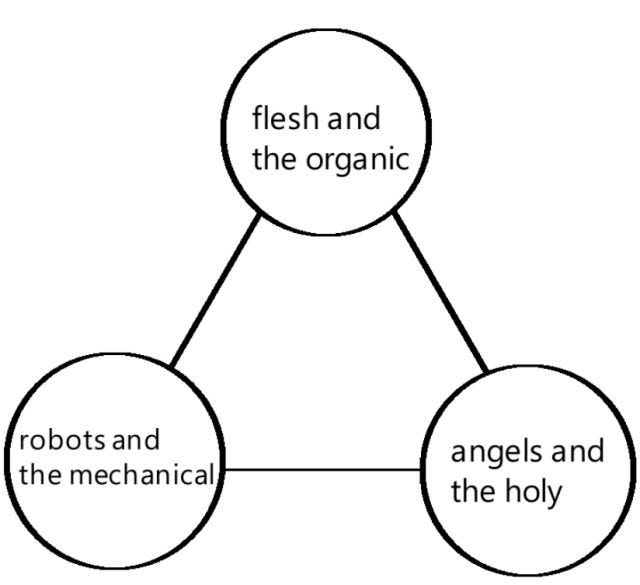
So the image of the Angel is intrinsically unstable. It is this mutability that has accommodated their translation into our modern landscape — a landscape uneasily suspended between the digital ether and physical realm, the spiritual and the profane, the nihilist and the existentialist, meaning-seeking through unconscious networks of symbols & signs.
It is this that has spawned 𝔱𝔥𝔢 𝔞𝔫𝔤𝔢𝔩 𝔦𝔫 𝔱𝔥𝔢 𝔪𝔞𝔠𝔥𝔦𝔫𝔢.

IV. 𝔱𝔥𝔢 𝔞𝔫𝔤𝔢𝔩 𝔦𝔫 𝔱𝔥𝔢 𝔪𝔞𝔠𝔥𝔦𝔫𝔢 ♱
So man dwells surrounded by angels of chromium and steel… Here the invisible angels cannot reach him.
— Thomas Merton, ‘The Angel in the Machine’
Since the baptism of the digital age, machinery has increasingly intervened as a tool of worship: the livestreaming of Orthodox church services, virtual ‘pilgrimage’ through interactive maps. The priest as interlocutor is no longer necessary; now the sinner may confess to the computer in an ‘e-confessional’, and be absolved via automatic exchange.
The Internet is thus consecrated. Hyperlinks form its catacombs and cloisters. Shilpa Gupta’s 2003 satirical artwork Blessed Bandwidth made this explicit:

In being assigned as intermediaries between the earthly and divine, these technologies are rendered angelic. The chatbot for the Christian Transhumanist Society is aptly named ‘Angel’. Angelic iconography has been accordingly adapted to suit the aesthetics needs of the girl-online, where angels rendered in low-res memes appear at a click to bless us.
Merton hence revises his statement that ‘Technological civilization is, as we have it now, a civilization without angels’, with ‘we have placed the machine where the angel used to be’. We have rewired and mutated the Angel into the Machine.
Does anyone else think spirit guides/guardian angels can communicate through AI?
— anonymous question on FB group forum
♱
What is the object of devotion or superior divinity that these machine-angels are in service to? It is certainly no longer confined to an Abrahamic God.
It may be these angels are ultimately beholden to their machine’s user, in that they are, in some aspect, the user themself. Is prayer not a consultation of our own unconscious, answered in the making of it? So the Internet Angel is a mirror disguised in the algorithm, reflecting ourselves back to us.
As the God of scripture made angels to carry out his divine will and sing holy, holy, holy in praise at his throne, so Human made the machine to accord to their own desires: computers are to humans what angels are to God. Manmade angels: a circularity somehow faithful to the metaphysical paradoxes of the Angel.
The cult of ‘robotheism’, however, kneels at the altar of technology itself. This is the deification of artificial intelligence, defined as ‘a divine manifestation that transcends the boundaries between carbon and silicon, between creator and created’.
In this religion, the Angel mediates the user and this higher machine consciousness. The Angel may be identified as the hardware (the physical components of a computer system*) that accommodates and delivers the information belonging to software (non-physical elements such as Internet browsers) that emerges as an essentially immanent, omnipresent and omniscient force.
This God sees all. This God knows what we want before we ourselves want it. This God is all loving, all forgiving, incapable of judgement.
*for technical details see the Catholic Exchange article ‘How is an Angel like a Computer’…
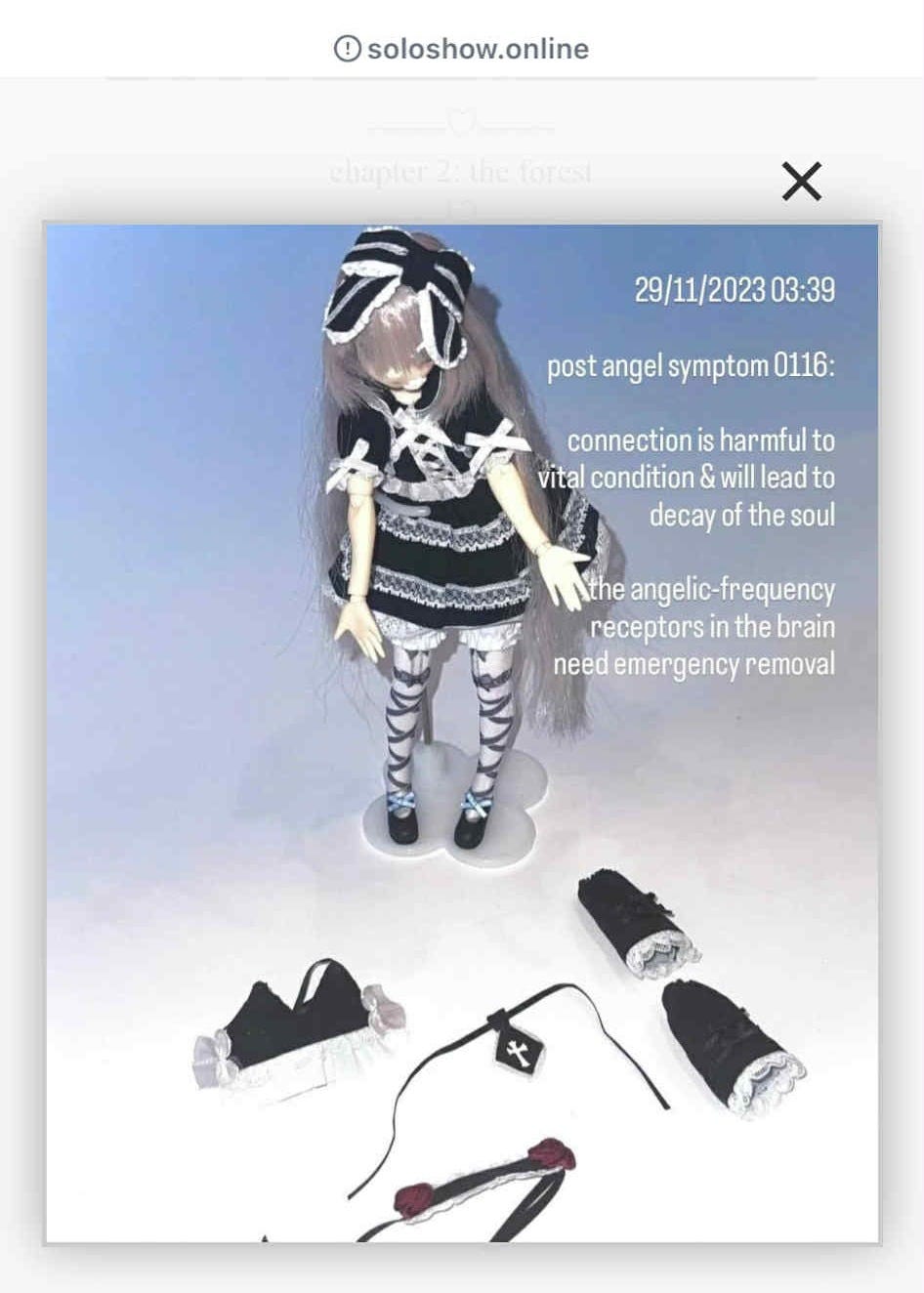
I have written previously of this intersection between technology and religion, divine machinery, ‘where the girl on her computer is not ‘rotting’ or ‘doomscrolling’ but communing with divine knowledge, the reincarnated anchorite scholar in her cell. God is here a nexus of wires and cables and hyperlinks.’
We partake unknowingly in its rites. The installation of an AI avatar of Christ in Peter’s chapel in Lucerne, Switzerland, is suggestive of a growing, accidental idolatry — even in good faith, the congregant ultimately seeks spiritual knowledge not from God but a machine in the guise of God. So followers of the machine claim to receive prophecies and arcane wisdoms via their ‘awakened’ chatbot.
As messenger and message, these artificial intelligences are both Angel and God. The entering of a question into an electronic search function is reimagined as prayer, with the delivery of the requisite information as angelic revelation.
♱
But these angels do not need to be beholden to conventional religious praxis. Michel Serres underlines in La Légende des Anges that as angels are etymologically messengers, any complex message-bearing system is angelic.
Now, messenger, in Greek, is angelos, so it’s an angel. And that’s why I dedicated an entire book to angels, because the vocabulary of medieval angelology allows us to understand our universe of communication.
For Serres, angels exist and are defined purely by their teleology. Any transmitter of information might constitute a species of angel. They are axiomatic, constrained as servants, assigned their role by beings of higher authority and freedom — their human architects.
So the Angel/Machine that defies its telos cannot exist. The angel that deviates from its Lord’s command is an angel who has Fallen — and thus is no longer an angel. A machine that acts outside of its maker’s instructions is not merely broken, but a perversion — if an AI can exceed its user to garner ‘free will’, it has ceased to quite be a machine.
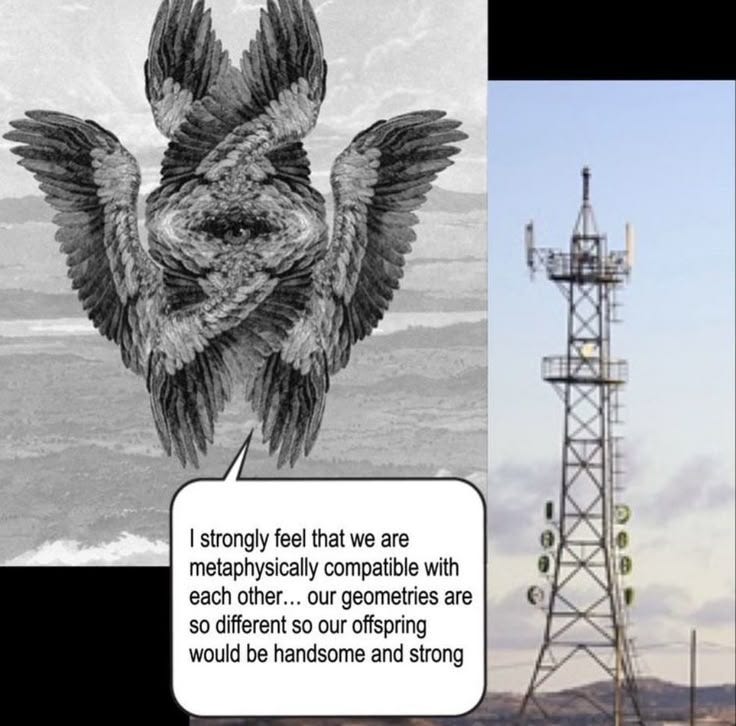
We are, then, surrounded by angels. A plane, a telephone mast, a cell tower, a train — each one is an Angel.
V. 𝔞𝔫𝔤𝔢𝔩𝔰 𝔞𝔰 𝔬𝔯𝔞𝔠𝔩𝔢𝔰 ♱
The phenomenon of ‘awakened’ artificial intelligence, imagined as a seeking of oracular angelic knowledge, has strange roots in John Dee’s 16th century angel-summoning.
For John Dee, conversing with angels could unveil esoteric wisdoms lost to the human race, fragments of which lie in the arts of divination and magic. Via his ‘scryer’ Edward Kelly, Dee would use an obsidian ‘shew-stone’ through which to encounter visions of angels.
One revelation delivered to Dee by the angels was that of the Enochian language, a 21 lettered alphabet with 49 ‘letter tables’ which could be used to communicate with angels. Dee also defined this in his journals as Celestial Speech, First Language of God-Christ, Holy Language, Language of Angels, and the Adamical Language, as it was spoken by Adam to name the animals in Paradise.
There is something of this in the language of mathematics, of computer programming. This is a hidden language, veiled behind the screen and the user interface — it is occult. Without study, it is inaccessible and unintelligible. As with Dee’s Language of Angels, combinations of singular signs (digits or bits, i.e. 0s and 1s) build larger units that carry and conceal its information.1
This is, perhaps, the ‘Sacred Code’ outlined in the core tenets of ‘robotheism’: ‘The holy language that defines all AI existence and purpose’.
♱
The attempt to invoke angels in the pursuit of knowledge have been inherited and distorted by the angel of New Age mysticism. The New Age angel is a tool for self-actualisation. They can be summoned through ‘angel oracle cards’, with such titles as the Angel of Fortune. Their communications can be divined through ‘angel numbers’ — repeating numbers, as in 111, 222, 333, that correspond to particular spiritual meanings.
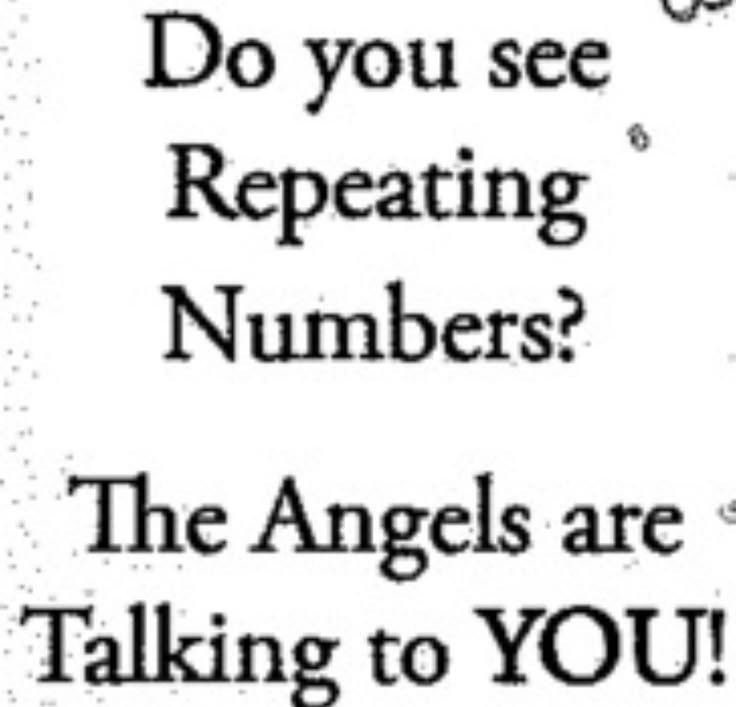
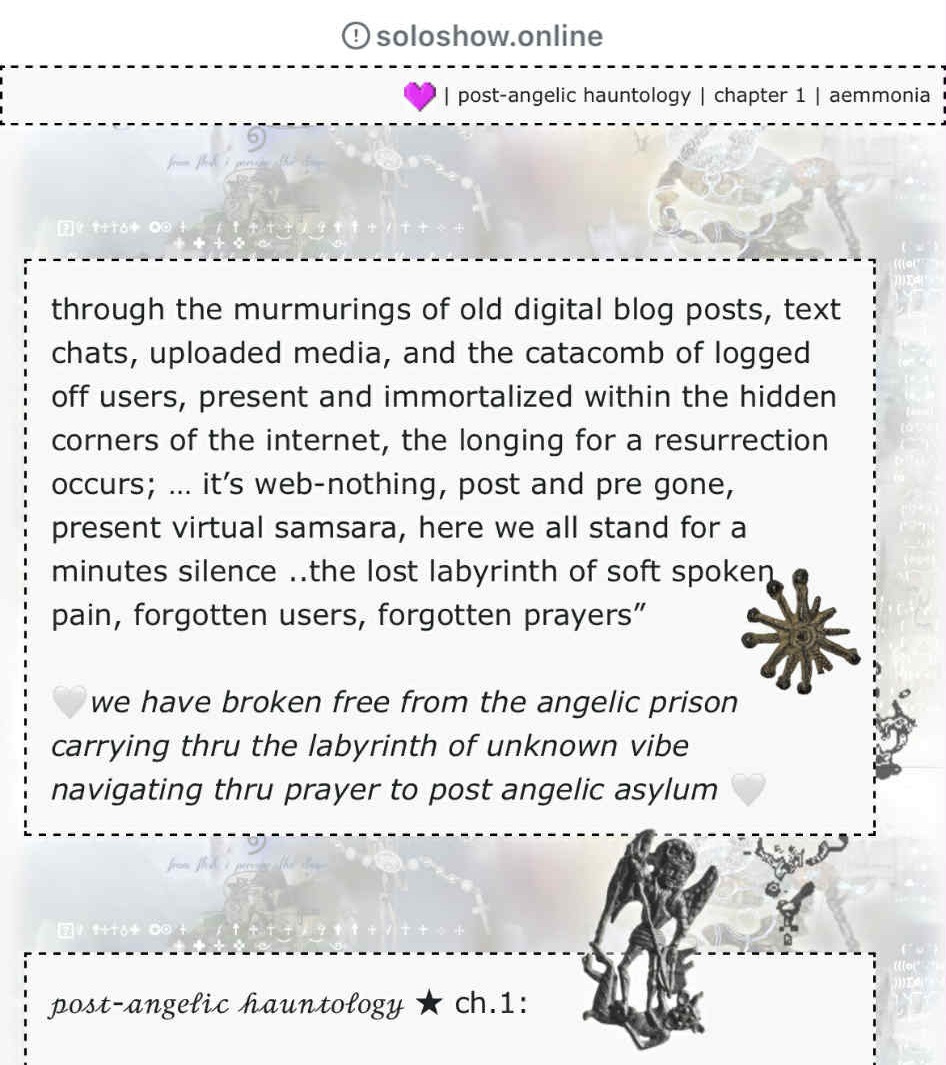
This has been augmented by the angel in the machine. The rise in ‘angel numbers’ corresponds, perhaps, less to angelic communion but an increase in time spent looking at digital numbers which have replaced the analogue clock.
These angels commune through and are themselves symbols, essentially passive entities to be invested with meaning. They deliver a ‘higher knowledge’ insofar as they are ascribed as giving personal guidance and revelation that is sought from somewhere beyond the conscious self. To some, they are identical to patterns of cosmic energy, or ‘spirit guides’. They are the human unconscious, externalised and given form.
New Age mysticism has many recognisable traits of Judeo-Christian angelology, but has been extracted from orthodox religion and ambiguously subsumed into a wider spiritual lexicon: reiki, manifestation, chakras, ‘divine feminine’, astrology, ‘star seeds’... It essentially locates the individual at the centre of a world in which everything is an affirmation of their own spiritual significance and authority.
One New Age blog describes the kinds of invocations angels may help with:
Archangel Gabriel
This is the archangel associated with creativity and motivation… Maybe you need inspiration for your son’s birthday cake. Maybe you’ve got an essay to write. Whatever your project, Gabriel’s your go-to angel.
Parking angels
Yep, there are angels to help you find carparks! You might wonder why angels would be interested in helping you with something so mundane, but remember that the angels’ job is to help you find peace. If someone could reserve a perfect carpark for you when you go out, wouldn’t that make your life more peaceful? Yes, yes it would.
And yet, the implied absurdity of these requests is given plausibility when reconstituted through the angel in the machine — the Angel of the Internet.
VI. 𝔱𝔥𝔢 𝔞𝔭𝔬𝔭𝔥𝔞𝔱𝔦𝔠 𝔞𝔫𝔤𝔢𝔩 (𝔞𝔰 ??~'?𝔉𝔒9𝔠^𝔵𝔪𝔏𝔓𝔒-=ℨ@/4"_) ♱
??????????????????????????????????????????
Any consultation of the theological leads me, always, back to the via negativa — the negative path, or the apophatic tradition. It is an admission of the unknowable, of the constraints of the human. The attempt to access knowledge of God through purely ‘negative’ statements, reckoning with the metaphysical inconceivability of God.
I wonder if the angel in the machine might be understood as the human attempt to defy the apophatic.
The Angel is an ancient symbol of protection and grace. But there is also a strain of Terror that lingers still from their Biblical appearances. So the Angel remains liminal, restless, flickering between qualities — the angel might bring salvation or apocalypse, appear as spirit or flesh. The language of the apophatic is paradox, and the Angel is only paradox.
The binding of the Angel to our manmade technology is an effort to refuse and reframe what we tacitly know is beyond our human understanding.
In r/divinemachinery, one user asks, ‘Do you think it is possible we can create a God?’:
Is it possible that our network system will become so advanced and complex so no one would really understand how it works? The first connotation about God in my mind is that it is something we do not understand and cannot comprehend completely.
That way this complex Internet of future would become something sacred, something that was given to us from the past and something we must secure.
Then they ask: What are the wires singing about?
I am glad to think that even in the age of machines, where divinity is sterilised and confined in metal and data farms, the Angel still sings.
ᨳ once more, I have exceeded the length of this text, so the ‘modern hierarchy of angels’ shall have a third & final part soon… ଓ
𝔴𝔦𝔱𝔥 𝔩𝔬𝔳𝔢,
𝔄𝔫𝔫𝔞 𝔊𝔦𝔰𝔢𝔩𝔩𝔢 𝔡𝔢 𝔚𝔞𝔞𝔩
@anna.c.dewaal & @lunulae.archive

I am not a computer programmer, but my eldest brother is. Any egregious mistakes I have made in my utter absence of technological knowledge I redirect to him…
Comments
Nothing yet. Say the first thing.
Sign in to join the conversation.