
Who, if I cried out, would hear me among the Angels’
Orders? and even if one of them pressed me
suddenly to his heart: I’d be consumed
in his more potent being.
— ‘The First Elegy’, R.M. Rilke, trans. Edward Snow
𝔠𝔬𝔫𝔱𝔢𝔫𝔱𝔰 ᨳ ଓ
I. a brief primer on the medieval nine choirs of angels
II. my own study of angels; the first three orders of a modern angelic hierarchy, 𝔱𝔥𝔢 𝔞𝔯𝔠𝔥𝔞𝔫𝔤𝔢𝔩, 𝔱𝔥𝔢 𝔤𝔲𝔞𝔯𝔡𝔦𝔞𝔫 𝔞𝔫𝔤𝔢𝔩. and 𝔱𝔥𝔢 𝔄𝔫𝔤𝔢𝔩 𝔦𝔫 𝔱𝔥𝔢 ℌ𝔬𝔲𝔰𝔢 {other six published in part II}
♱
It is because I am a poor worshipper (devotee, lamb of God, daughter-of-Christ), that this is a testament about angels.
I cannot claim to know what God is, if there is one. I am unable to reconcile myself to any orthodoxy. But I have my own kind of delicate faith, like every believer and every sect quietly making their own theological canon: the reaping from and reinterpretation of scripture, inflected by one’s own individual (un)conscious, one’s omens, prejudices, dreams, griefs, hopes, apparitions, parables, rites, phenomenal experience both mundane and mystical.
My own doctrine has at its heart the imperative of the Persian poet Hafez: ‘Start seeing everything as God, but keep it a secret’. This is Li-Young Lee’s poetics of embeddedness, a world ‘haunted by God’, George Herbert’s ‘Heaven in ordinary’. And if my devotion is predicated not on the ineffable but the imminent, intermediary, the material that yields up a reckoning of the spiritual, then maybe it is something to do with angels.
♱ 𝔪𝔢𝔡𝔦𝔢𝔳𝔞𝔩 𝔞𝔫𝔤𝔢𝔩𝔬𝔩𝔬𝔤𝔶, 𝔞 𝔭𝔯𝔦𝔪𝔢𝔯 ♱
The concept of an angelic hierarchy commonly derives from De Coelesti Hierarchia, written by Pseudo-Dionysius the Areopagite c. 5th century. Here, there are nine types of celestial entity or ‘choirs’, extrapolated from both Biblical canon and apocrypha, in three ‘spheres’. They are ordered within an overall hierarchy in relation to their proximity to God.
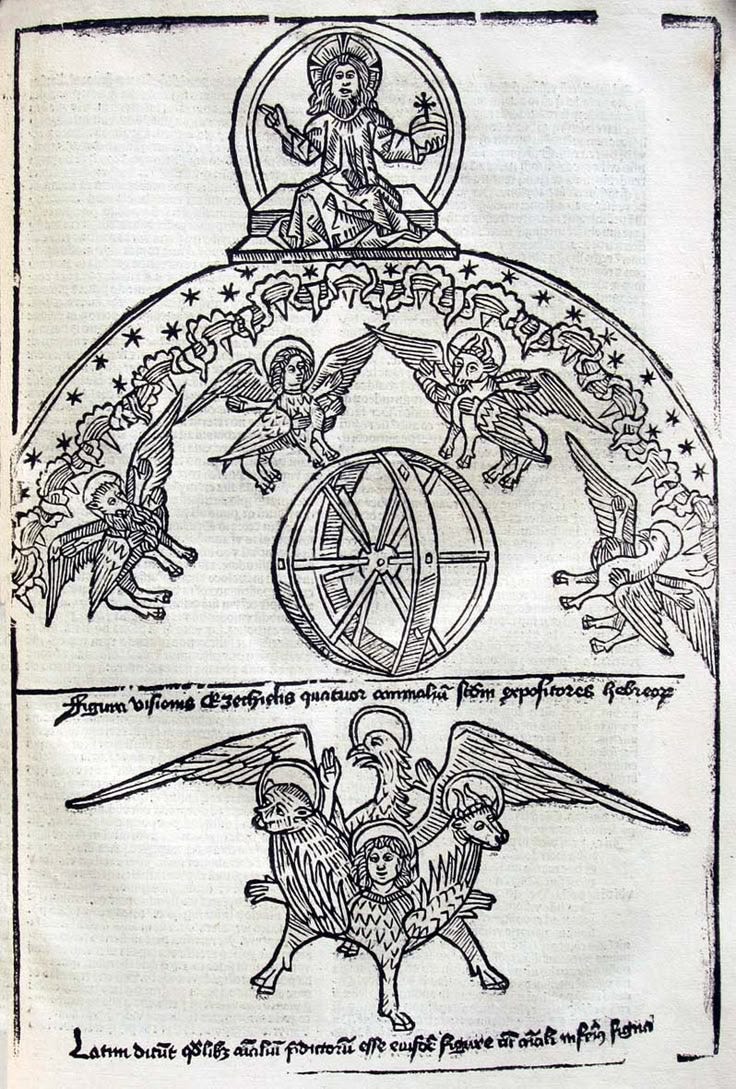
{ First & highest triad. Attend & adore God directly. }
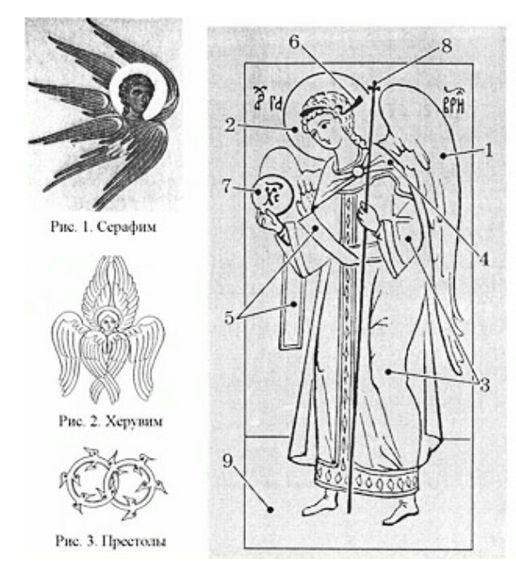
I. 𝕾𝖊𝖗𝖆𝖕𝖍𝖎𝖒 ~ six wings cover their face and feet (Isaiah 6:1–3). They are attendants, repeating, unresting, ‘Holy, holy, holy’, in their ‘burning love’ for God (Revelation 4:4-8).
II. ℭ𝔥𝔢𝔯𝔲𝔟𝔦𝔪 ~ four wings and four heads: of man, eagle, lion, and ox (Ezekiel 1:5-11). Assigned to protect special places, as with Eden and the Tree of Life (Genesis 3:24), otherwise characterised by wisdom & knowledge (Aquinas).
III. 𝔗𝔥𝔯𝔬𝔫𝔢𝔰 (𝔒𝔭𝔥𝔞𝔫𝔦𝔪) ~ flaming, rotating rings or wheels within wheels, covered with eyes (Ezekial 1:15-21), (Daniel 7:9), as the chariots that bear God. They contemplate divine judgement and justice.
{ Second triad. Fulfil God’s plan in the world. }
IV. 𝔇𝔬𝔪𝔦𝔫𝔦𝔬𝔫𝔰 ~ ‘lordships’, ruling over the commands of lower choirs and governing celestial objects (stars, planets). (Colossians 1:16.)
V. 𝔙𝔦𝔯𝔱𝔲𝔢𝔰 ~ spirits of motion, overseeing the operation of movement in the universe, as with elements, seasons, nature.
VI. 𝔓𝔬𝔴𝔢𝔯𝔰 ~ army of warrior angels to serve God, battling against demonic forces, keepers of divine, lawful authority (Ephesians 3:10.)
{ Third & lowest triad. Interact with humanity. }
VII. 𝔓𝔯𝔦𝔫𝔠𝔦𝔭𝔞𝔩𝔦𝔱𝔦𝔢𝔰 ~ defined by purity of intention, assigned as guardians of earthly kingdoms, states, provinces and religious institutions.
VIII. 𝔄𝔯𝔠𝔥𝔞𝔫𝔤𝔢𝔩𝔰 ~ leader and messenger angels, as in the Annunciation and Apocalypse (Luke 1:26-38). Michael, who led angelic forces against Lucifer (Jude 1:9) (Revelations 12:7-9), is the only explicitly named archangel in the Bible. There are thought to be 7 archangels, with Gabriel and Raphael commonly venerated in canon alongside Michael.
IX. 𝔄𝔫𝔤𝔢𝔩𝔰 ~ usually guardian angels of mortals, closest to the material world (Hebrew 1:7), (Psalm 91:11).
♱ 𝖙𝖍𝖊 𝖒𝖔𝖉𝖊𝖗𝖓 (𝖓𝖔𝖓)𝖍𝖎𝖊𝖗𝖆𝖗𝖈𝖍𝖞 𝖔𝖋 𝖆𝖓𝖌𝖊𝖑𝖘 ♱
The Dionysian orders of the angel that have persisted most in the human imagination beyond medieval theologies are I. 𝔱𝔥𝔢 𝔞𝔯𝔠𝔥𝔞𝔫𝔤𝔢𝔩 and II. 𝔱𝔥𝔢 𝔤𝔲𝔞𝔯𝔡𝔦𝔞𝔫 𝔞𝔫𝔤𝔢𝔩. The Victorian appropriation of the angelic as feminine morality begat III. 𝔱𝔥𝔢 𝔄𝔫𝔤𝔢𝔩 𝔦𝔫 𝔱𝔥𝔢 ℌ𝔬𝔲𝔰𝔢.
IV. 𝔱𝔥𝔢 𝔞𝔫𝔤𝔢𝔩 𝔦𝔫 𝔱𝔥𝔢 𝔪𝔞𝔠𝔥𝔦𝔫𝔢 was born of synthesising religion with technology, invites the seeking of V. 𝔞𝔫𝔤𝔢𝔩𝔰 𝔞𝔰 𝔬𝔯𝔞𝔠𝔩𝔢𝔰, the New Age inheritance of John Dee’s early modern angelic communions. These gesture towards the incomprehensible angel, VI. 𝔱𝔥𝔢 𝔞𝔭𝔬𝔭𝔥𝔞𝔱𝔦𝔠 𝔞𝔫𝔤𝔢𝔩 (𝔞𝔰 ??~'?𝔉𝔒9𝔠^𝔵𝔪𝔏𝔓𝔒-=ℨ@/4"_).
Such alternative angelic ontologies are suggestive of VII. 𝔞𝔫𝔤𝔢𝔩𝔨𝔦𝔫, VIII. 𝔱𝔥𝔢 𝔞𝔫𝔤𝔢𝔩 𝔦𝔫 𝔞𝔫𝔦𝔪𝔞𝔩 𝔣𝔬𝔯𝔪, and finally, IX. 𝔱𝔥𝔢 𝔞𝔫𝔤𝔢𝔩𝔦𝔠 𝔦𝔫 𝔥𝔲𝔪𝔞𝔫 𝔦𝔫𝔠𝔞𝔯𝔫𝔞𝔱𝔦𝔬𝔫.
I. 𝔱𝔥𝔢 {𝔞𝔯𝔠𝔥}𝔞𝔫𝔤𝔢𝔩 𝔞𝔰 𝔗𝔢𝔯𝔯𝔬𝔯 ♱
Every Angel is terror, writes Rilke. Angels (it’s said) don’t know whether they’re moving among/the living or the dead.
Of all holy iconography, I am drawn most to the Annunciation: the Virgin Mary enclosed before the angel Gabriel, who kneels in the garden with lilies in hand, the Holy Spirit hovering in the white dove. Mary is always serene, here, beatific and composed.
Be not afraid.
I wonder what it would be like to have a creature of the heavens descend upon my young girl-self and tell me that I was pregnant with the child of God. The horror and the violation: the infiltration into the safety of the house and then the body. Two years ago a lecturer on tragedy drew a parallel between the Annunciation and Yeats’ ‘Leda and the Swan’; it has haunted me since.
At this year’s Siena exhibition in the National Gallery there are two huge frescoes, pale with the red spectre of an underdrawing. Here, Mary cowers before the angel. This version, by Ambrogio Lorenzetti in c. 1335, remained unfinished — a later, completed painting restores the Madonna to solemn blankness.
In another painting, Francesco di Vannuccio in c. 1380, the heads of red-winged angels cluster in the corner. A white finger without a body points down at the girl. She leans away and clutches her book.
There are so few depictions of Mary like this — Mary as she must have been, a teenaged girl not any less holy for her terror before angels.
I think of the battle of the angels against the fallen in Milton’s Paradise Lost, with heavenly armour and flaming swords. This reddit thread compiles Milton’s references to angelic strength, durability, feats of supernatural power. These angels are among the powers, perhaps, of Dionysius’s hierarchy.
The physical attributes of the archangels, the messenger-angels, angelos who descend to Mary, are not described in the Bible. But the imperative, do not be afraid, spoken 144 times in the Bible, invokes the angels of Ezekiel, the ophanim of many eyes, whirling, geometric. The ‘biblically accurate angels’, without any human likeness.
My father rebuffs them. Not his angels. They are a symptom of the fevers of the desert.
In Lent, I listen to my mother sing the St John’s Passion in Saint Paul’s Cathedral, sitting at the back by myself. There is a little mouse and it runs between the legs of the audience seeking refuge. It is so small and so scared and the cathedral is so vast. I think that this must be what it is like to encounter an angel.
II. 𝔱𝔥𝔢 𝔤𝔲𝔞𝔯𝔡𝔦𝔞𝔫 𝔞𝔫𝔤𝔢𝔩 ♱
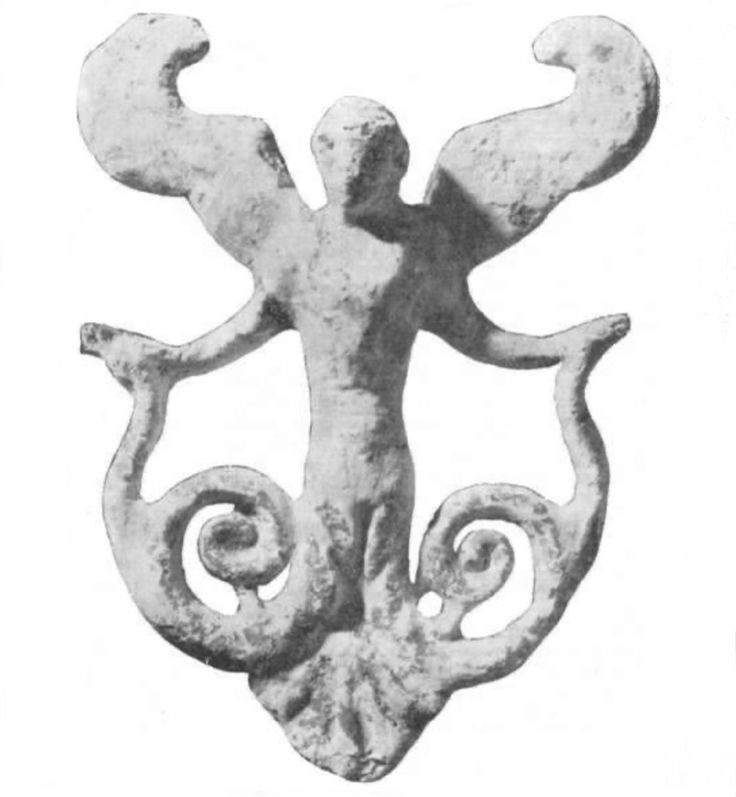
There are two upside down angels carved into stone in the church of Saint Peter, in Rowlstone. I had forgotten them, though I know this church well. They keep Saint Peter, who was crucified upside down, company — I find this somehow heartrending.
These are the angels as guardians, protectors, the angels I imagined around my bed as a child while I slept — the most beloved of modern angelic conceptions. An angel is commissioned as a guard for each human soul, Saint Jerome writes. They are the angels of the nighttime prayer, recited to ward off nightmares:
Matthew, Mark, Luke and John
Bless the bed that I lie on.
Four corners to my bed
Four angels round my head;
One to watch and one to pray,
And two to bear my soul away.
They are the angels that stand over graves. The two angels carved on a 14th century tomb, drawing back a curtain on a tomb to reveal the effigy. They do not seem to fight, but they watch and witness and tend.
On the holy isle of Iona, I discover the grave slab of a Prioress named Anna, who lived in the now-ruined nunnery. Her grave is engraved with her dogs and two angels that protect her in death, as in life. She has my name so, egotistically, I take this to heart.
These carvings of medieval guardian angels are benign, lacking in Terror, but they have a strangeness and clumsiness to them — a strangeness bled out of the angel by the Victorians.
I am susceptible to these Victorian guardian angels, sentimental. I love, against all my sophisticated aesthetic sensibilities, those saccharine angels of Christmas cards, clutching harps and doves. The Angels Message by George Hillyard Swinstead, La Jeune Fille A L'ange by Paul Alfred de Curzon.
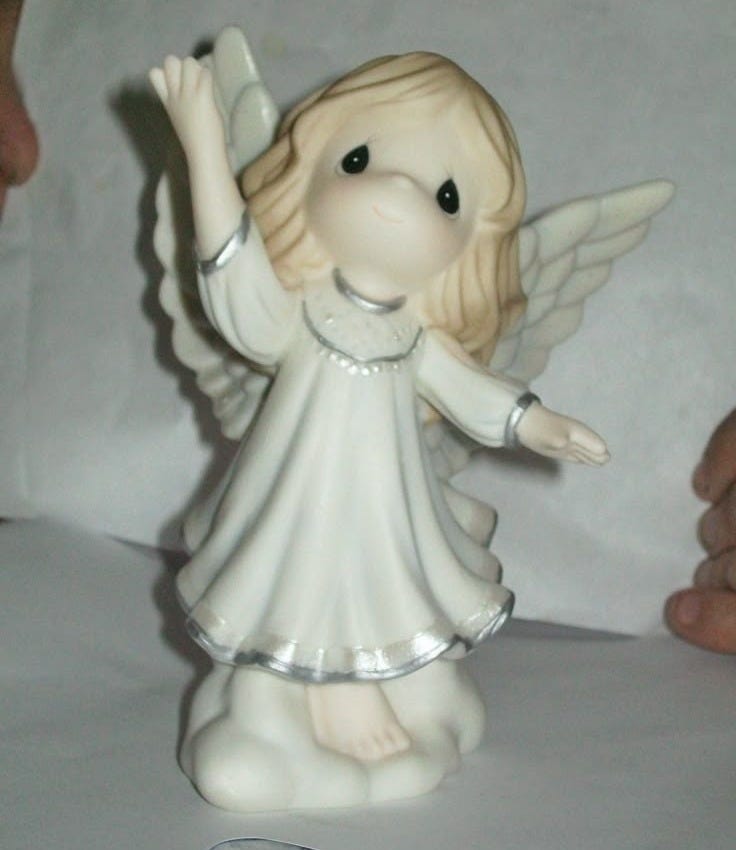
So I keep a china angel in a primrose yellow dress by my bedside. I covet the Precious Moments angels, the sort of darling kitsch porcelain generally reserved for the graves of little girls. They give comfort, reek of sweetness. They are the descendants of the first guardian angels.
An angel is a bird with a person in the middle. (Age 4)
Sophine is a beautiful angel . . . She always comes to my room while I am asleep and makes my flowers grow. (Age 4)
— children talk about angels, from Drawing Angels Near, Mimi Doe and Garland Waller
III. 𝔱𝔥𝔢 𝔄𝔫𝔤𝔢𝔩 𝔦𝔫 𝔱𝔥𝔢 ℌ𝔬𝔲𝔰𝔢 ♱
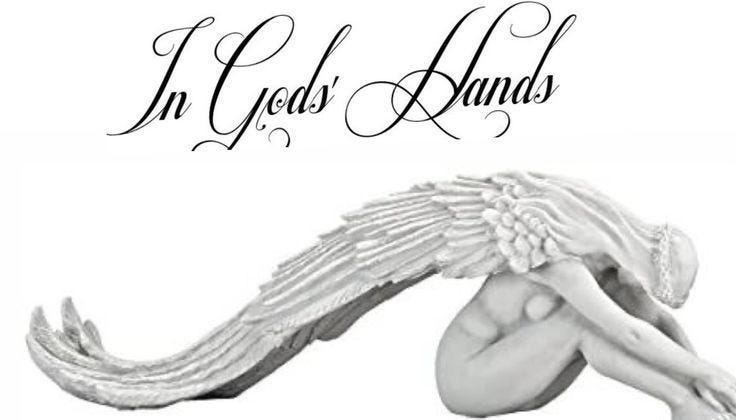
An unfortunate symptom of this Victorian angel, however, was the fashioning of the angel in the mortal body, the angel as analogy and archetype.
The Angel in the House, the virgin girl, milk-white in purity, closer to the heavens than to earthly soil. She is, as Virginia Woolf writes, ‘so constituted that she never had a mind or a wish of her own … Above all—I need not say it—she was pure. Her purity was supposed to be her chief beauty—her blushes, her great grace.’
She goes to an early grave because her perfection is untenable for the fallen world, and she is made even more perfect in death. So Beth in Little Women, so Eva (whose full name Evangeline even contains angel) in Uncle Tom’s Cabin, must die:
The bed was draped in white; and there, beneath the drooping angel-figure, lay a little sleeping form,—sleeping never to waken!
This is the aesthetic and moral cult of the angel-girl. She is the manmade ideal condemning every woman.
Her monstrous counterpart is the Madwoman in the Attic, according to Gilbert and Gubar’s feministic poetics, the angel’s dark, shadowy double: ‘the monster may not only be concealed behind the angel, she may actually turn out to reside within (or in the lower half of) the angel.’ This is the dichotomy of the Evil Queen, lascivious and worldly, threatening the innocence of Snow White.
The angel in the house is already, metaphorically, dead — executed into the perfection of art, as in Coventry Patmor’s 1854 poem of the same name. But she must be killed again: before the female writer can begin to write, Woolf declares, she must ‘kill’ this ‘angel in the house’.
♱
They all have tired mouths
And luminous, illimitable souls;
And a longing (as if for sin)
Trembles at times through their dreams.They all resemble one another,
In God's garden they are silent
Like many, many intervals
In His mighty melody.But when they spread their wings
They awaken the winds
That stir as though God
With His far-reaching master hands
Turned the pages of the dark book of Beginning.
— ‘The Angels’, R.M. Rilke, trans. Jessie Lemont
꒰ঌ I became rather over-zealous in writing this text and so have had to divide this document in two. The sequel of the last six angelic orders will be published later this week. ໒꒱
𝔴𝔦𝔱𝔥 𝔩𝔬𝔳𝔢,
𝔄𝔫𝔫𝔞 𝔊𝔦𝔰𝔢𝔩𝔩𝔢 𝔡𝔢 𝔚𝔞𝔞𝔩 ˚₊‧꒰ა ♡ ໒꒱ ‧₊˚
@anna.c.dewaal & @lunulae.archive
Comments
Nothing yet. Say the first thing.
Sign in to join the conversation.