
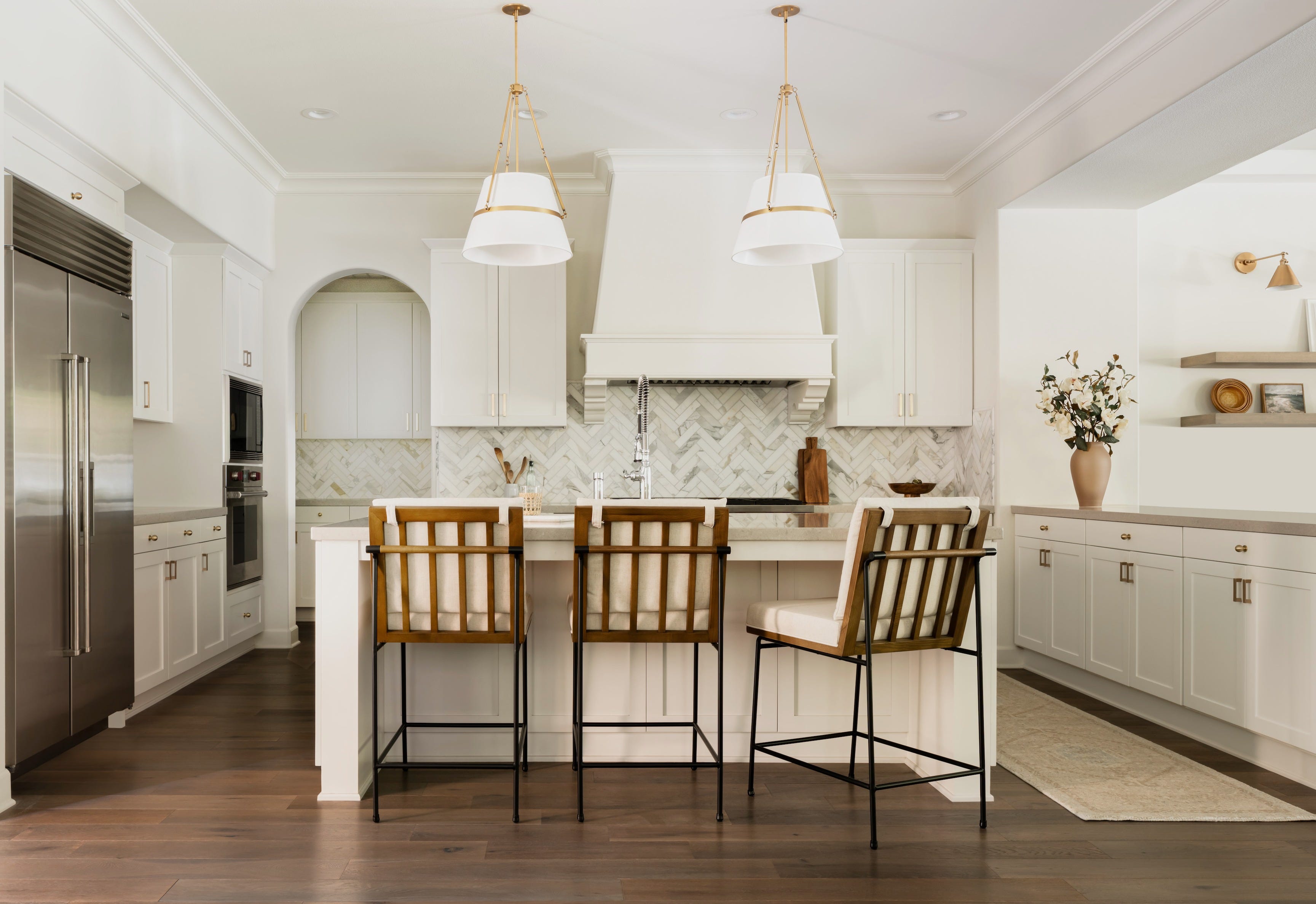
The irony is that truly timeless rooms rarely begin with trends at all.
When you look at homes that still feel relevant twenty or thirty years later, they almost always have the same qualities. They aren’t trying to capture a moment, they’re built on principles that outlast one.
People often assume beautiful rooms are the result of expensive furniture or beautiful finishes.
In reality, proportion does most of the work.
A sofa that’s too large can overwhelm a room just as easily as one that’s too small can leave it feeling disconnected. Overscaled lighting can dominate a space, while undersized lighting disappears entirely. Coffee tables, rugs, artwork, ceiling heights- they all need to relate to one another before a room ever feels comfortable.
It’s one of those things people notice without realizing they’re noticing it.
When the proportions are right, a room feels calm. When they’re not, something always feels slightly off.
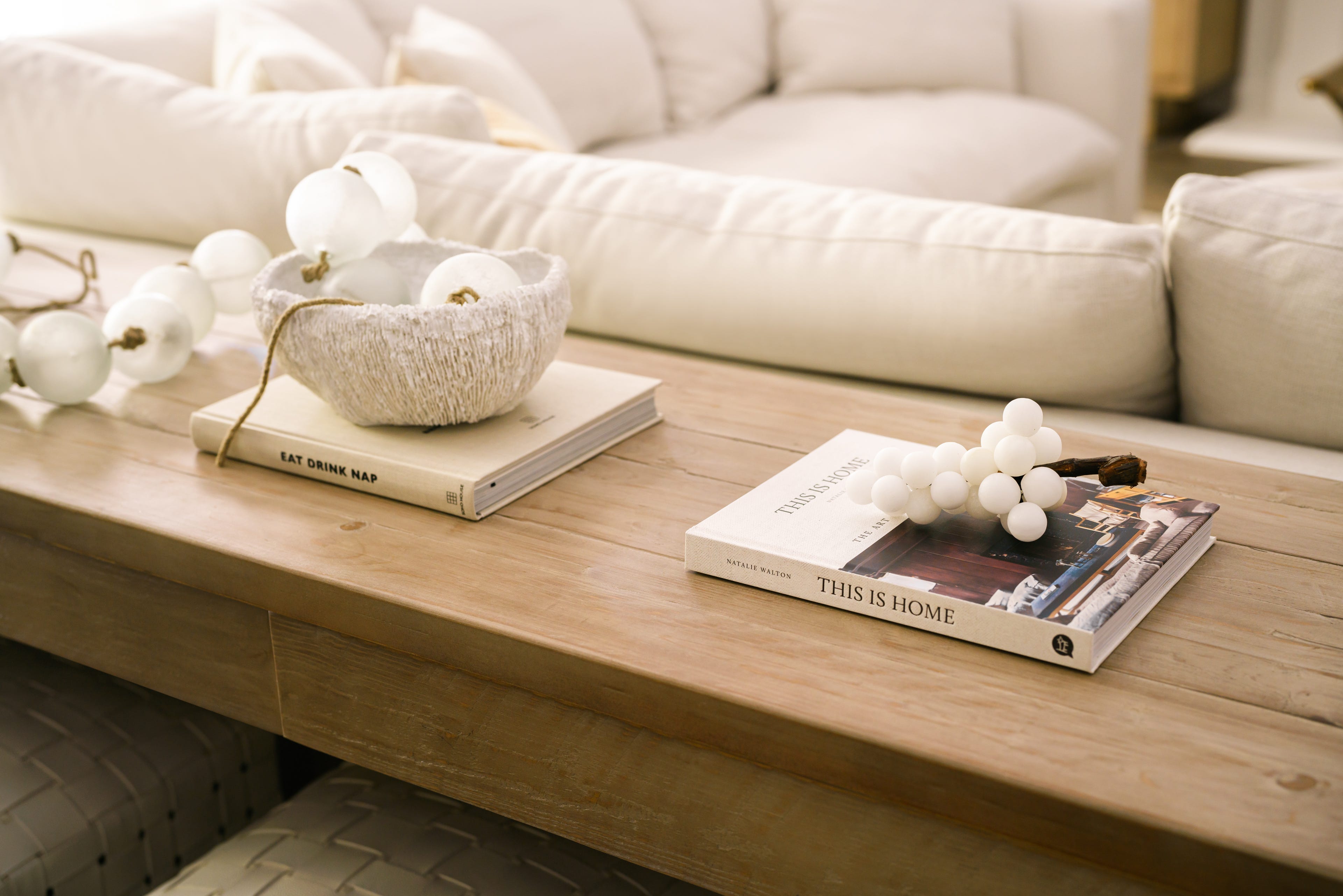
I almost always encourage clients to invest in materials before decorative finishes.
Natural stone, solid wood, unlacquered brass, linen, wool- these are materials that tend to improve with age rather than fight against it.
They develop character through use instead of showing wear as damage.
That’s a very different mindset than designing around materials that need to stay perfect forever. Homes are meant to be lived in. The finishes should acknowledge that.
One of the most common mistakes I see is trying to fill every corner.
Not every wall needs artwork.
Not every surface needs styling.
Not every room needs another chair.
Often the most luxurious spaces are the ones that leave enough room for the architecture and materials to breathe.
Restraint isn’t about minimalism. It’s about allowing the important elements to stand out.
The rooms that stay interesting over time almost never come from a single style.
A contemporary sofa might sit beside an antique cabinet.
A polished marble countertop can feel warmer when paired with reclaimed wood.
Clean architectural lines become more inviting when they’re softened with vintage pieces, woven textures, or handmade objects.
Those contrasts create depth. They also make it much harder for a room to feel tied to a particular decade.
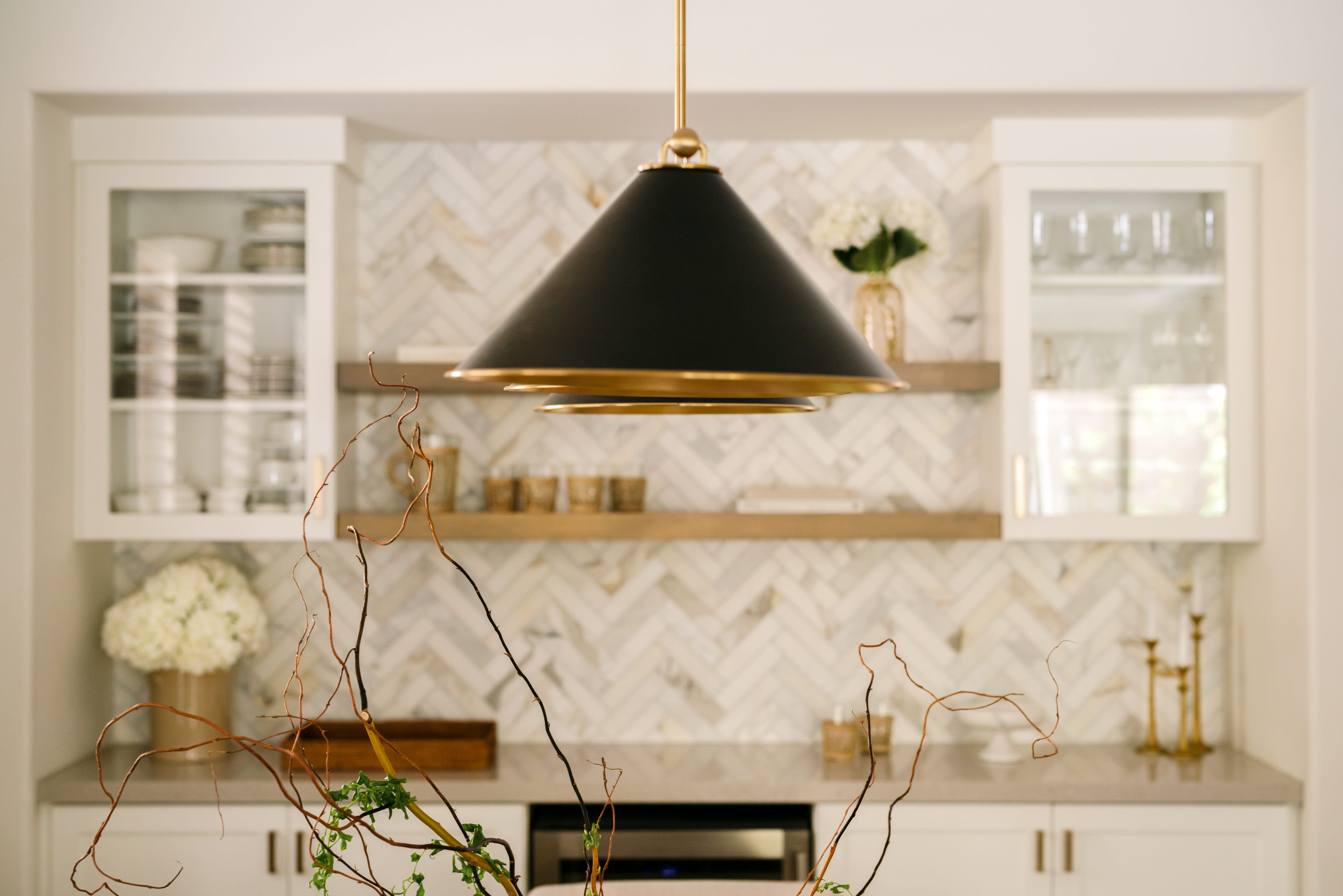
Light is one of the few design elements that can’t be purchased.
The same room can feel entirely different depending on the time of day, the season, or the direction it faces.
Natural light reveals texture, softens color, and gives materials a richness that artificial lighting can’t fully recreate.
It’s one of the reasons I think about windows, window treatments, and lighting together rather than as separate decisions.
I don’t believe timeless interiors are perfectly coordinated. I think they’re thoughtfully composed.
They leave room for a home to evolve. Art can change. Books accumulate. Furniture gets rearranged. Materials age.
The best homes don’t become less beautiful because life happens inside them, they become more personal.
That’s ultimately what makes a room feel timeless. Not that nothing ever changes. But that the design was never dependent on what was fashionable in the first place.
No posts
Comments
Nothing yet. Say the first thing.
Sign in to join the conversation.